
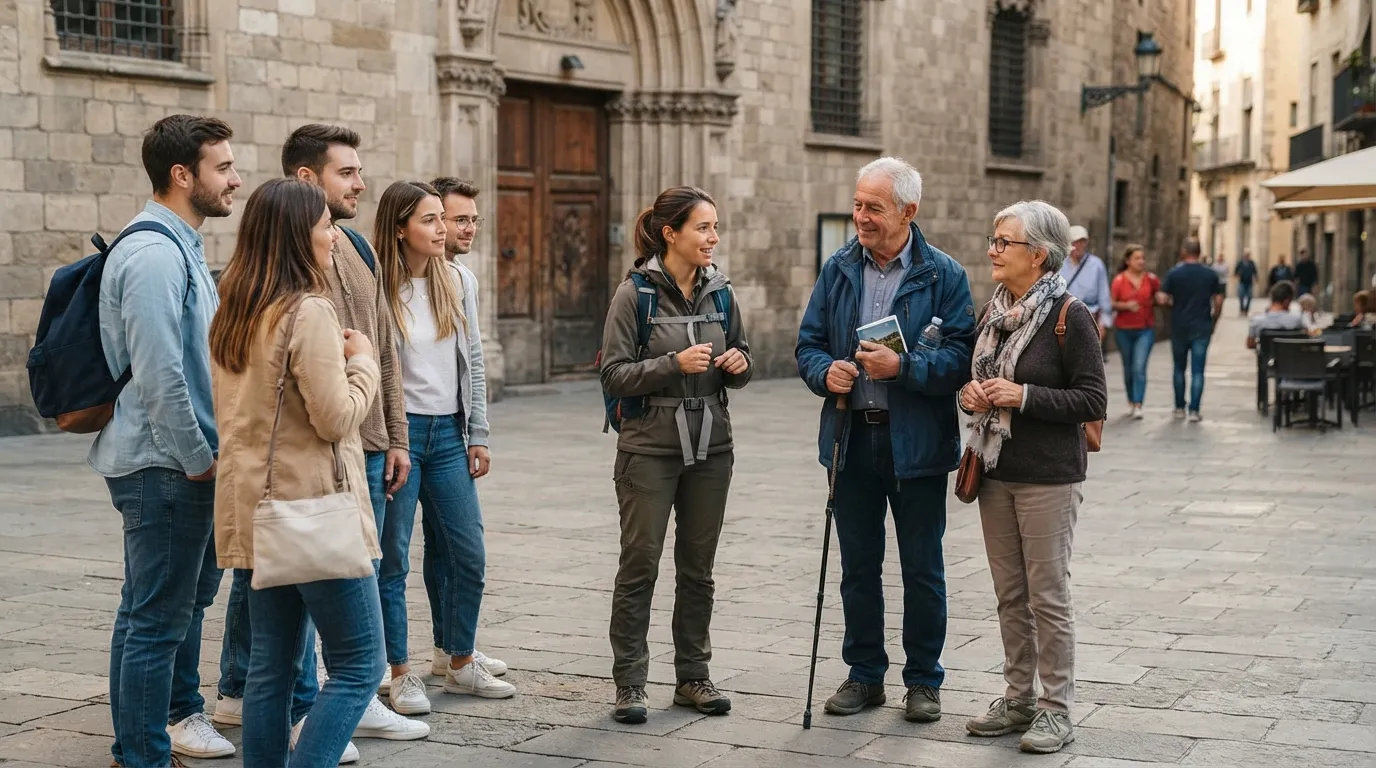
Most people assume a tour guide treats everyone in the group exactly the same, same script, same pace, same rules for all twenty strangers standing in a piazza. That’s the theory tourists walk in believing. The reality, once you’ve spent three or four days trailing a good guide, looks nothing like that.
Somewhere around the halfway mark of a trip, once trust has quietly built up, guides start making small adjustments for older travelers that nobody else in the group ever clocks. Here’s what’s actually happening behind the scenes once a guide decides someone is worth watching out for.
#14 – The Pharmacy They Scouted Before Anyone Got Sick
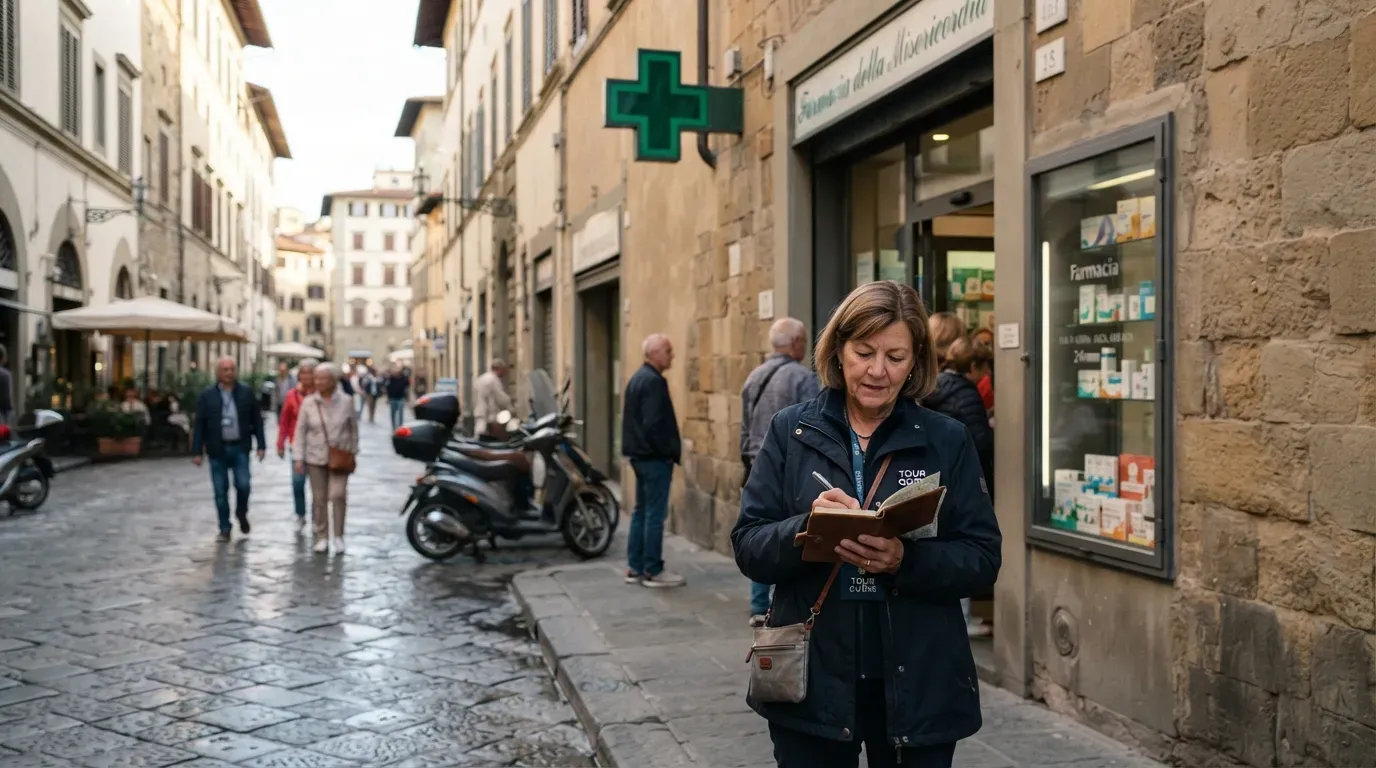
By day two or three, an experienced guide has usually already located the nearest pharmacy, clinic, or urgent care near the hotel, even though nobody has said a word about needing one. It isn’t paranoia. It’s pattern recognition built from years of watching older travelers quietly deal with blisters, blood pressure spikes, or a forgotten prescription.
Guides rarely announce this prep work out loud. If a traveler over 60 mentions feeling off, the guide already has an answer ready in under a minute, address and all. The quiet reality is that this kind of homework usually happens before a single symptom ever shows up.
Fast Facts
- The CDC estimates roughly 1 in 4 adults 65 and older experiences a fall every year, often in unfamiliar settings like cobblestone streets or hotel bathrooms
- Blisters, dehydration, and blood pressure dips are among the most common mid-trip issues guides quietly watch for
- Many countries require prescription medication to stay in its original, labeled packaging while traveling
- A pre-scouted pharmacy address can save close to an hour of scrambling compared to searching once symptoms appear
#13 – The Arm on Cobblestones That Was Never Really Optional
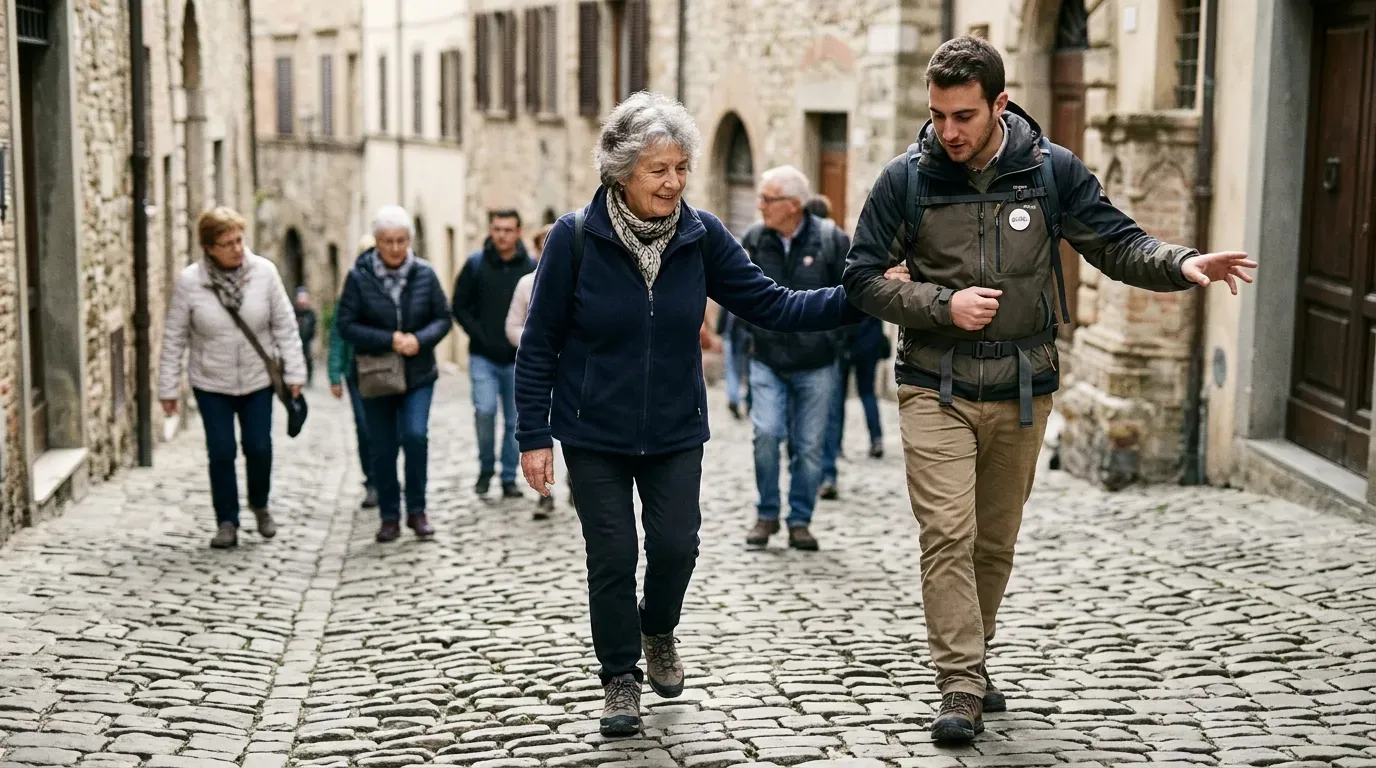
Uneven terrain is one of the biggest hidden risks on any walking tour, and guides know it long before the group does. By the halfway point, once a guide has noticed who hesitates on stairs or slows down on cobblestones, that offered arm stops being a courtesy and becomes a habit.
It’s rarely framed as help, either. Guides tend to phrase it casually, almost like they need the support themselves, so nobody feels singled out or fragile. Plenty of guides will privately admit this one small habit has quietly prevented more falls than any warning sign ever could.
#12 – The “Best” Seat That Was Never Actually Random
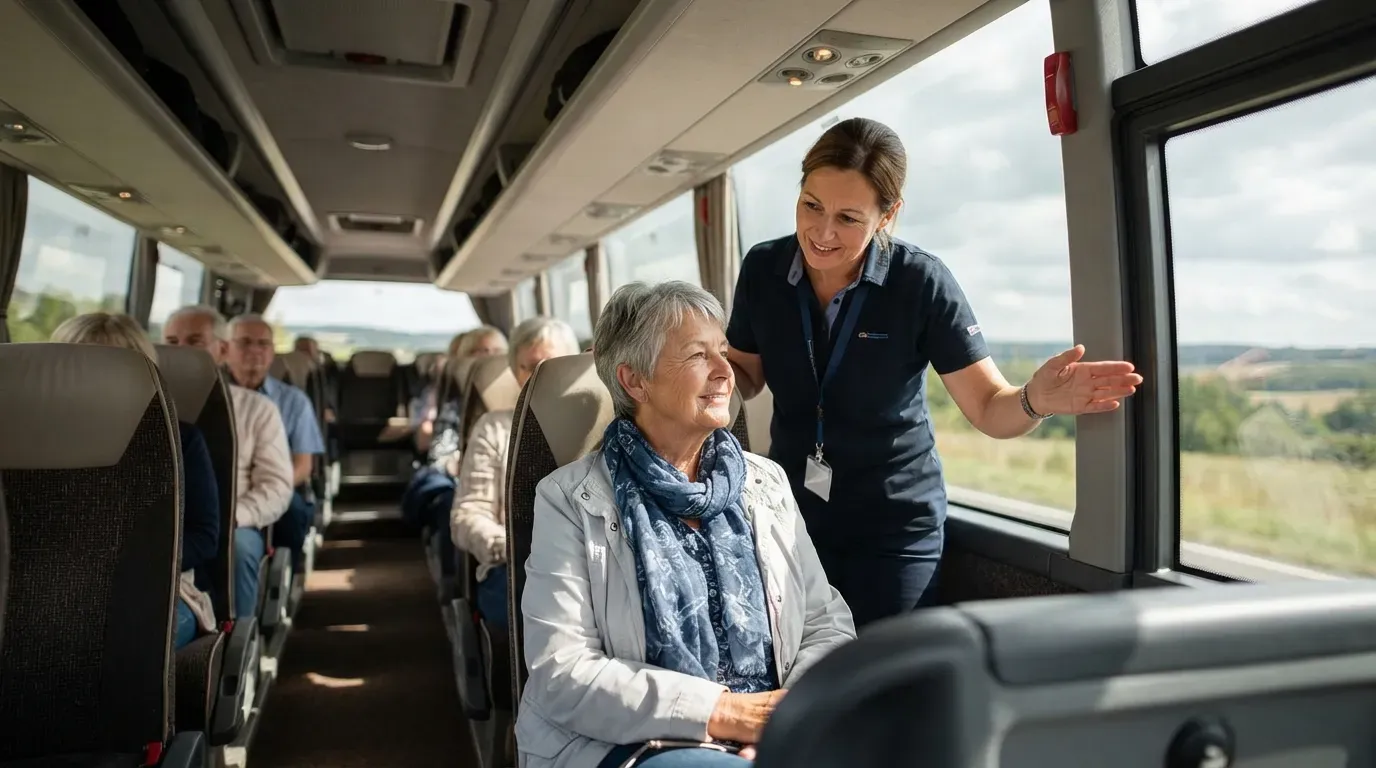
Bus seating, restaurant tables, theater rows, none of it is as random as it looks. Guides quietly steer older travelers toward the shaded side of the bus, the seat closest to the exit, or the table nearest the air conditioning, all without ever explaining why.
This starts small and grows once a guide learns who struggles with heat, glare, or a long walk to the bathroom. The seat has less to do with arrival order and more to do with a mental list the guide has been quietly keeping since day one of the trip.
#11 – The Rest Stop That Appeared Out of Nowhere
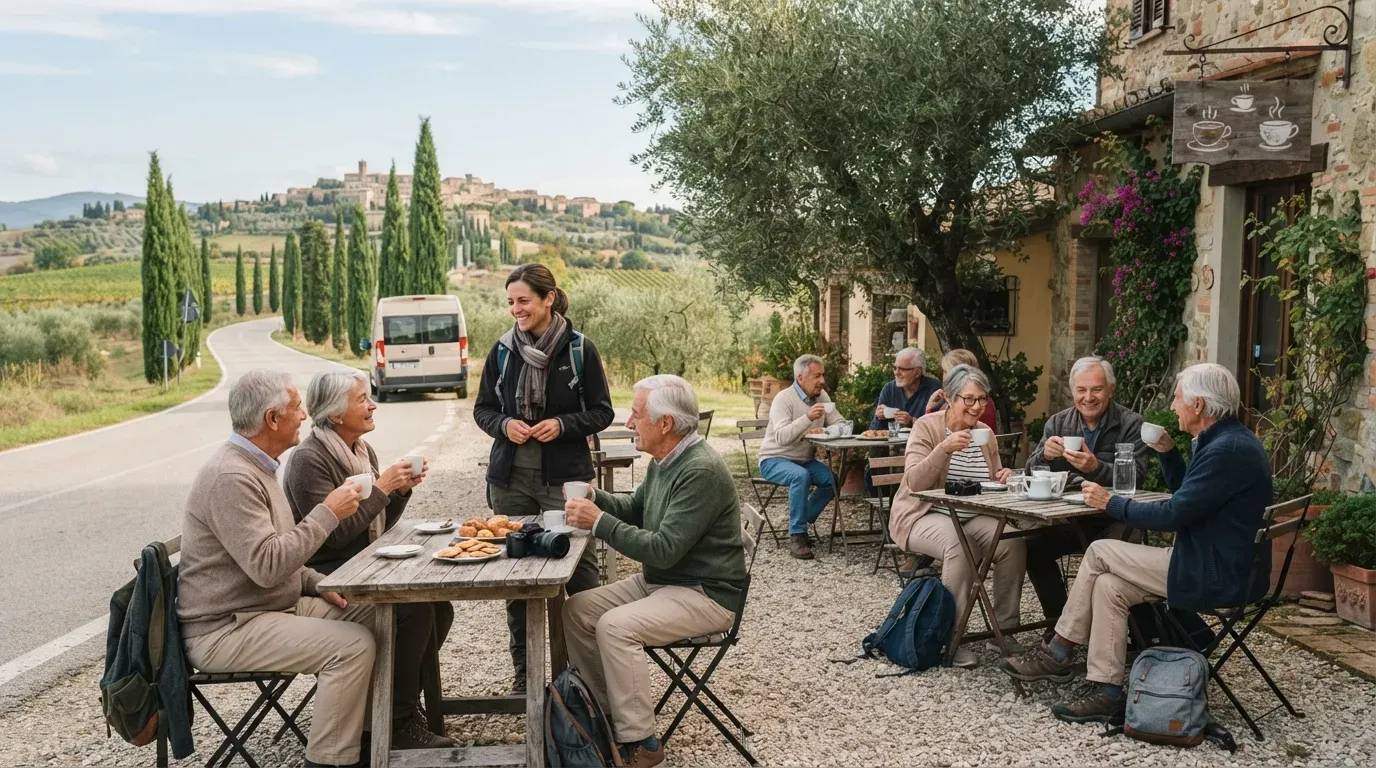
Group itineraries look fixed on paper, but guides have more flexibility built in than most travelers realize, and they use it constantly. An “unplanned” ten-minute coffee break often isn’t unplanned at all.
It gets inserted the moment a guide notices someone lagging or looking worn down, then framed as a treat for the whole group rather than a favor for one person. Guides frequently admit these stops are engineered specifically around their most tired travelers, even though the announcement sounds completely spontaneous.
#10 – The Awkward Tipping Moment That Gets Quietly Erased

Confusing currency, split bills, and unfamiliar tipping etiquette trip up plenty of travelers, but older guests often get discreetly steered around the hardest parts. A guide might collect group tips ahead of time or round out change so nobody has to fumble with unfamiliar bills in front of an impatient line.
This isn’t about assuming anyone can’t handle money. It’s about erasing a small, avoidable stress point that guides have watched cause real embarrassment before. Many say this one adjustment quietly prevents more mid-trip frustration than almost anything else on the itinerary.
#9 – The Dietary Note Nobody Knows Exists
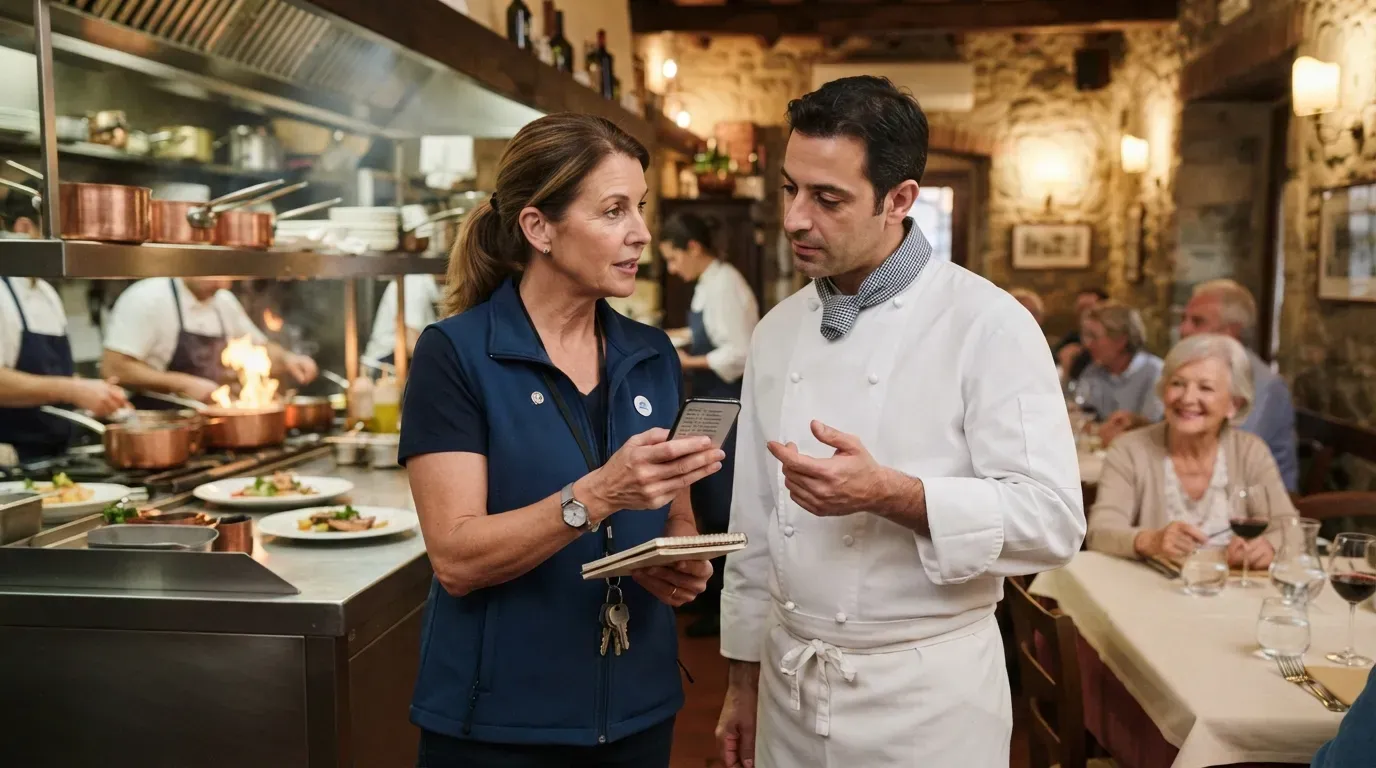
Instead of letting an older traveler awkwardly explain a restriction at every single meal, experienced guides relay dietary needs directly to kitchens ahead of time. It sounds minor, but it removes a repeated, uncomfortable moment that wears a traveler down over a multi-day trip.
This usually kicks in once a guide senses someone is tired of repeating themselves at every table. Some guides even keep a private note on their phone tracking each traveler’s needs by day two or three, long before anyone in the group realizes it exists.
Worth Knowing
- Repeating a dietary restriction at every meal is one of the small frustrations older travelers mention most often on group tours
- Common needs guides quietly flag ahead of time include low-sodium, diabetic-friendly, and gluten-free requests
- A private note shared with kitchens in advance can turn a stressful ordering moment into a non-issue
- Restaurants on set tour itineraries are typically contacted a day or more before the group ever arrives
#8 – The Instruction Repeated One-on-One, Never in Front of the Group
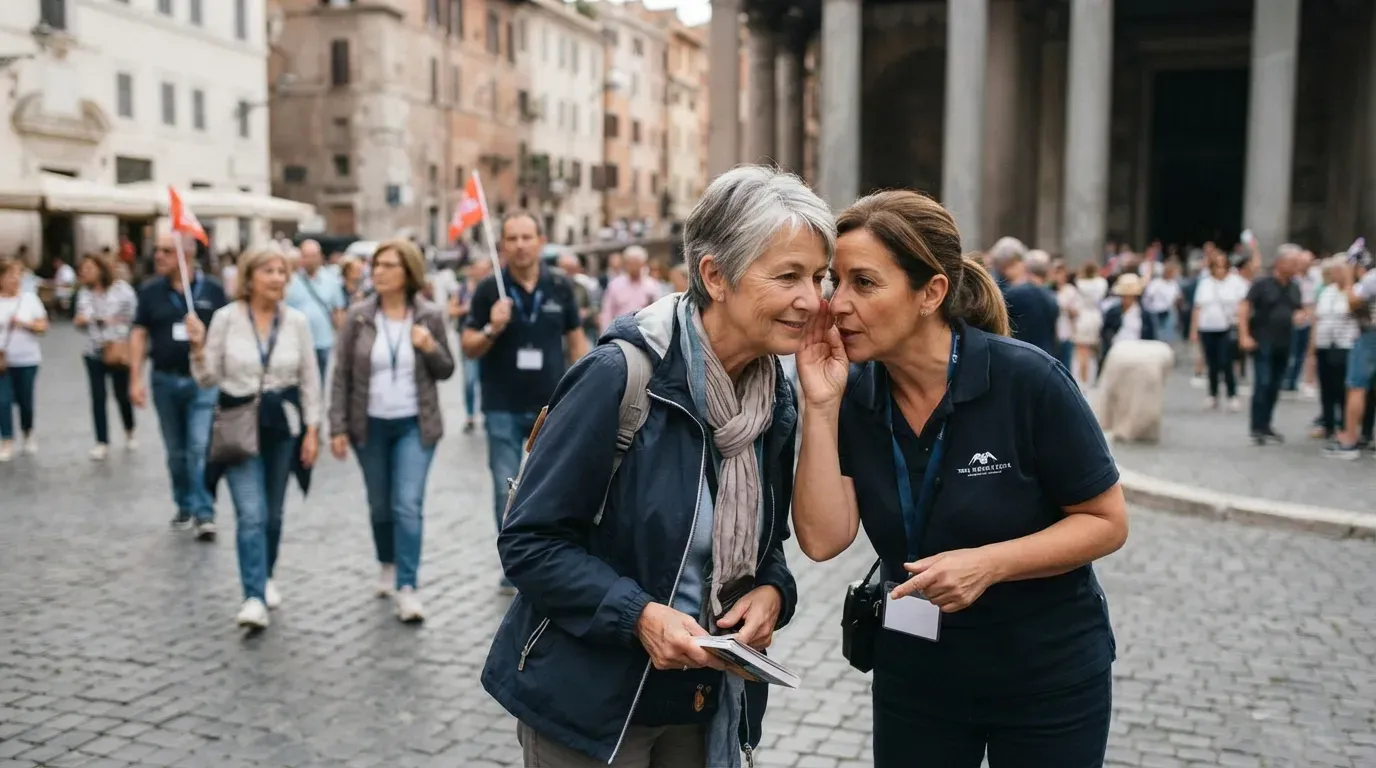
Group briefings are fast, loud, and easy to miss a detail in, especially in crowded plazas or busy train stations. Guides who’ve done this a long time learn to circle back privately with older travelers to repeat the one key point everyone else absorbed the first time.
It’s rarely framed as a repeat. It usually sounds like a casual aside, almost like the guide is thinking out loud. This small habit is one of the most common quiet accommodations guides use, precisely because it never draws attention to a hearing or comprehension gap.
#7 – The “Easy” Route That’s Never Once Called Easy
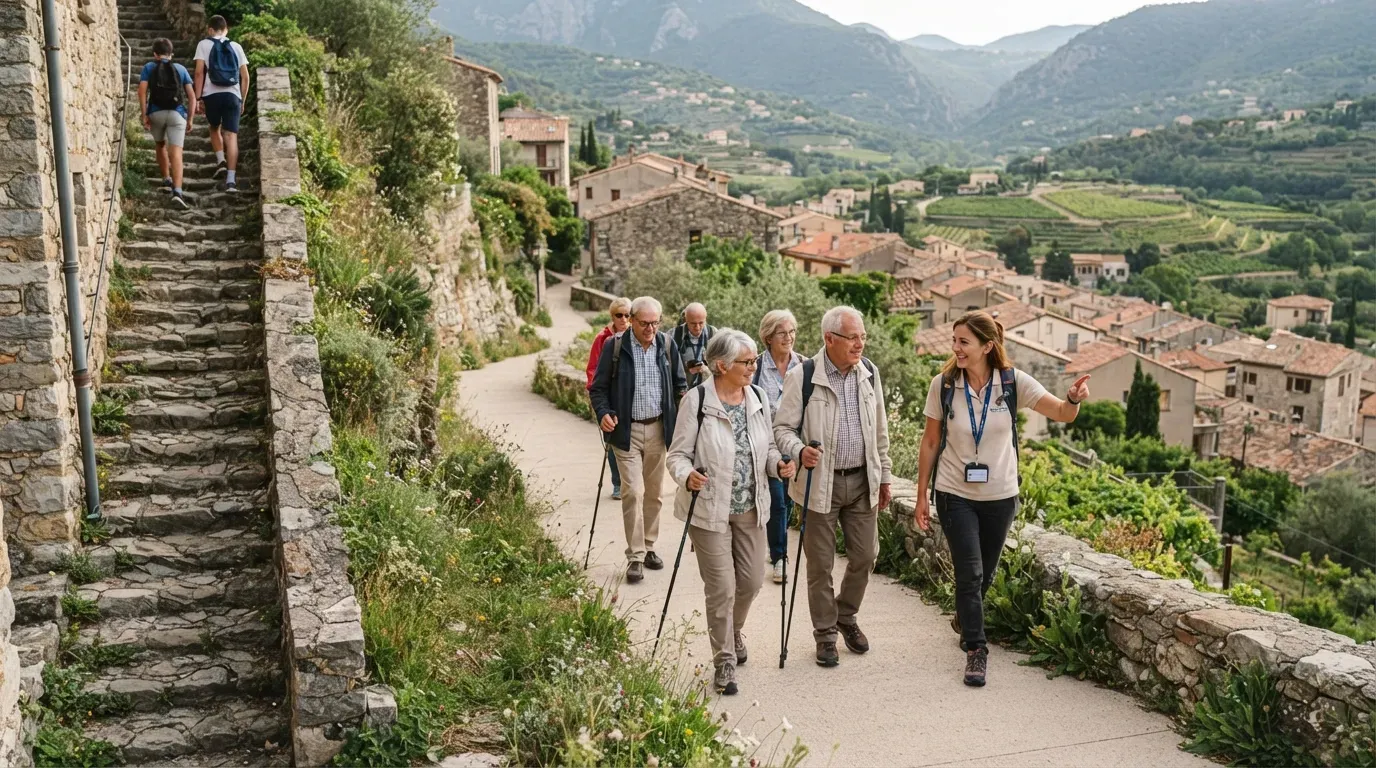
Most tours build in an alternate path for anyone who doesn’t want steep stairs or a long uphill stretch, but guides are careful never to label it that way. Calling it the “easy” or “shorter” route feels like a demotion to plenty of older travelers, so guides call it the scenic option or the local’s shortcut instead.
That reframe matters more than people think. Guides have learned that travelers over 60 are far more likely to actually take the accessible path when it isn’t marketed as a compromise. It’s a tiny linguistic trick with a very real effect on someone’s day.
Why It Stands Out
- Reframing a route as “scenic” rather than “easy” preserves dignity without limiting anyone’s participation
- Older travelers are more likely to opt into an accessible path when it isn’t labeled as a fallback
- The reframed route usually adds only a few extra minutes, not a fundamentally different experience
- It’s one of the simplest, least expensive accommodations a guide can offer, no budget or planning required
#6 – The Extra Water and Snacks That Appear Without Being Asked
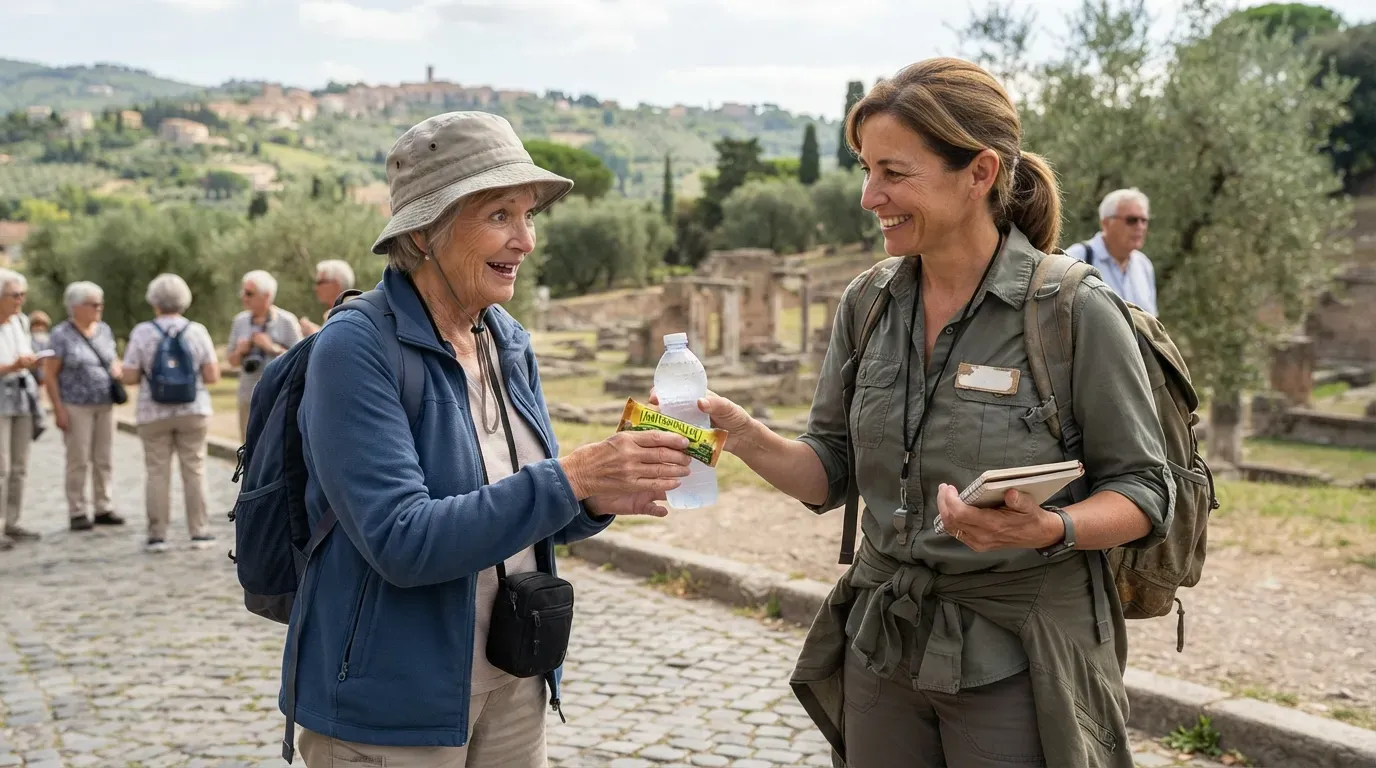
By the midpoint of a trip, many guides are quietly carrying more than the itinerary requires: an extra water bottle, a spare umbrella, a granola bar tucked away for the person who skipped breakfast. None of this comes from the tour company.
It’s something guides start doing once they notice who tends to run low on energy or forget supplies in the morning rush. This habit is almost always self-initiated rather than trained, built from experience rather than any official checklist.
#5 – The Small Detail They Remembered on Purpose
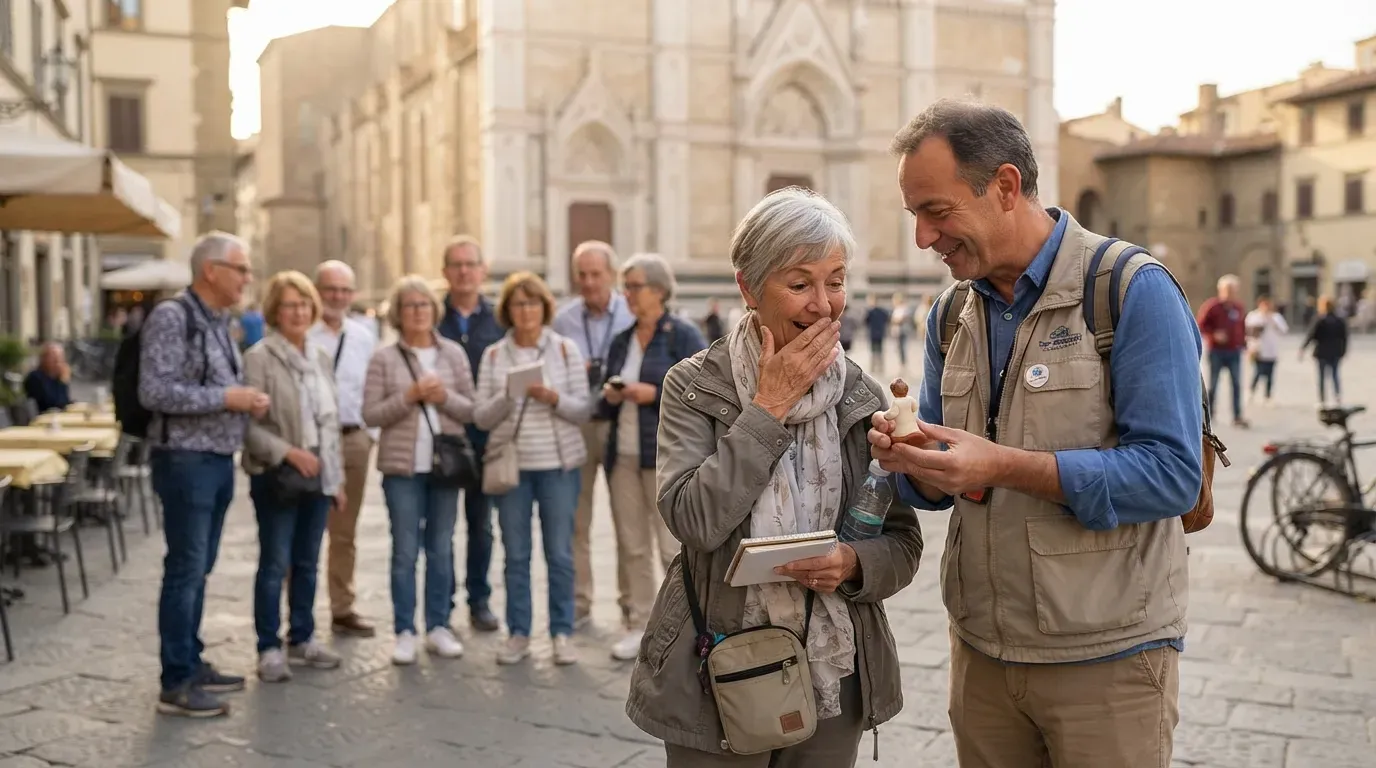
A good guide learns everyone’s name early. A great one remembers the small detail an older traveler mentioned once and never brought up again, a grandchild’s name, a hometown, an old health scare. Bringing it back up later isn’t small talk. It’s strategy.
Guides know that feeling remembered changes how safe and comfortable a traveler feels for the rest of the trip. Plenty of older travelers rate this kind of personal attentiveness as more meaningful than any single stop on the itinerary.
The goal of a good guide isn’t to show off a destination. It’s to make people feel taken care of while they see it.
Rick Steves
#4 – The Whole Group Gets Slowed Down Without Anyone Noticing
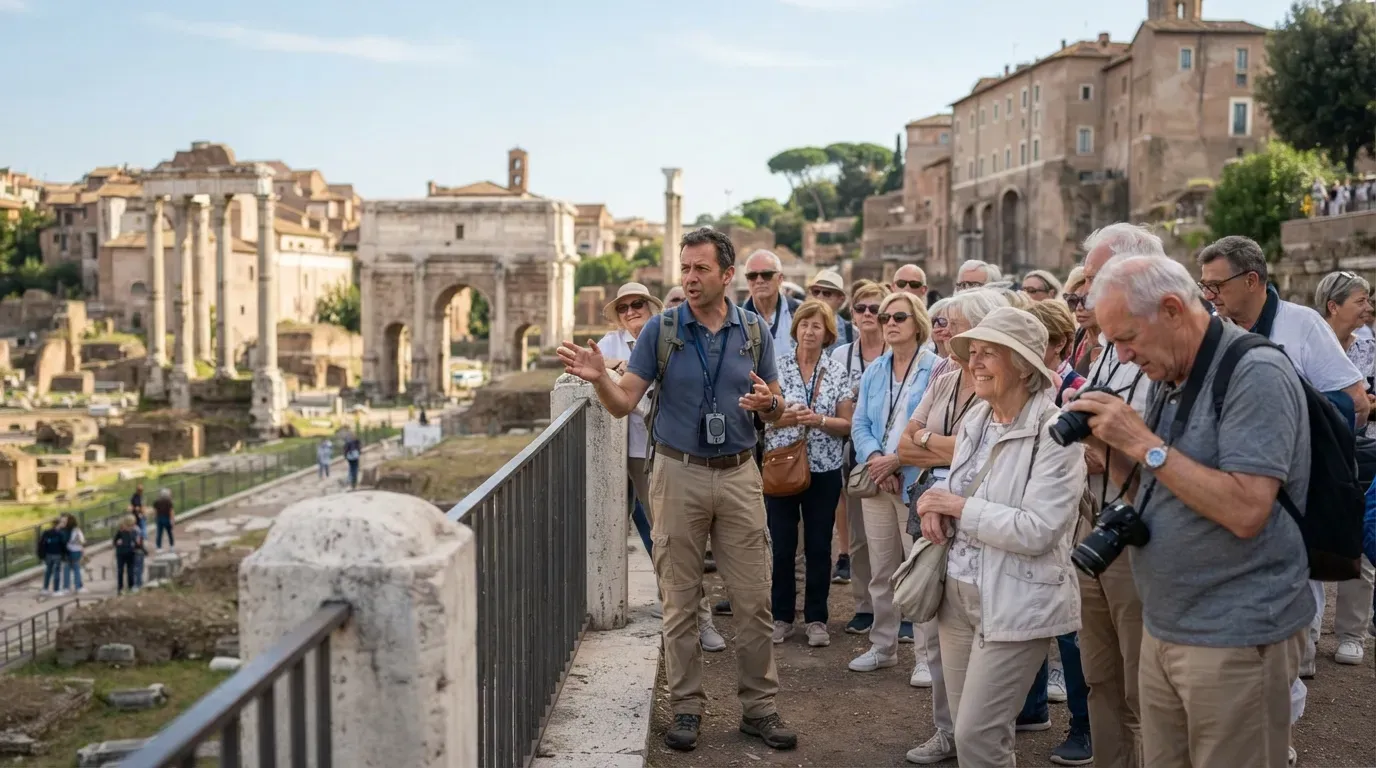
Halfway through a trip, guides sometimes make a call that has nothing to do with logistics and everything to do with pace. They’ll stretch out a stop, add extra narration, or linger near a viewpoint, all to buy a struggling traveler a few extra minutes without singling them out.
The rest of the group usually assumes the guide is just being thorough or passionate about the location. In reality, this stalling tactic is one of the most common tricks guides use to protect older travelers from ever feeling rushed.
#3 – The Private Check-In That Never Happens in Front of the Group
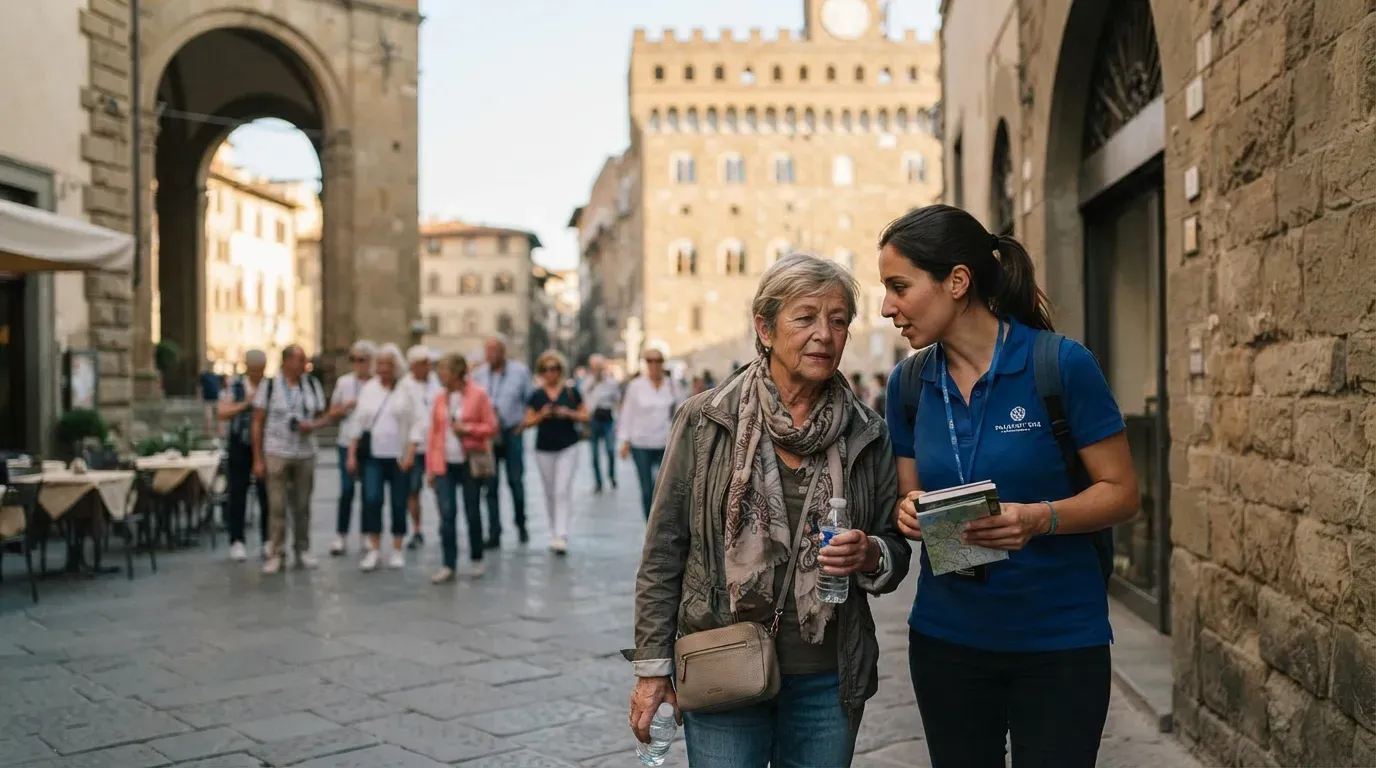
Nobody wants to admit they’re struggling in front of eight or ten strangers, and guides know this better than anyone. So instead of asking “how are you doing?” in front of the whole group, they’ll pull an older traveler aside briefly, almost like they need a quick word about something unrelated.
That private moment often reveals things a traveler would never volunteer publicly, sore knees, genuine exhaustion, a worry they didn’t want to bring up. Guides describe this as one of the most important habits they develop, precisely because it catches small problems before they become trip-ending ones.
#2 – The Moment the Entire Day’s Rhythm Quietly Shifts

Early in a trip, guides tend to stick closely to the official schedule because they don’t know the group yet. By the halfway point, that changes. Once a guide understands exactly who needs more time, more breaks, or more explanation, they start adjusting the entire day’s rhythm around that person, not just isolated moments.
This shift is rarely discussed openly with the group. Guides often describe it as the moment they stop managing a schedule and start managing people, which changes everything about how the rest of the trip unfolds.
Quick Compare: Early Trip vs. Halfway Point
- Early trip: the guide sticks tightly to the official schedule, treating every traveler the same way
- Early trip: adjustments, if they happen at all, are reactive and made in the moment
- Halfway point: the guide reshapes breaks, pacing, and explanations around specific travelers’ needs
- Halfway point: adjustments become proactive, quietly built into the plan before problems appear
#1 – Older Travelers Become the Group’s Emotional Anchor, Not the Slow Ones
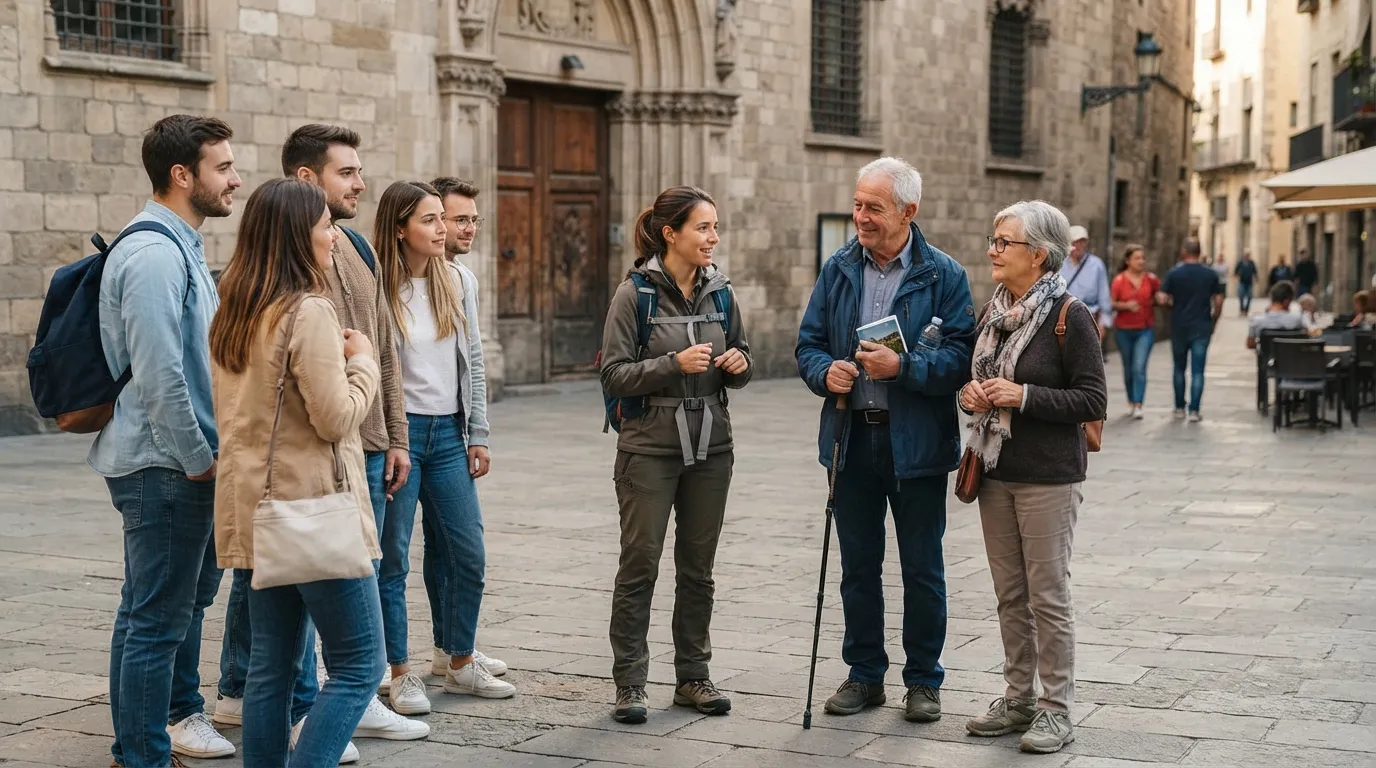
This is the shift almost nobody expects. Instead of viewing older travelers as the reason a schedule slows down, experienced guides start treating them as the steadying presence the whole group quietly relies on. Younger travelers take their emotional cues from how the older members react, and guides know it.
By the trip’s midpoint, guides often position themselves near older travelers specifically because their calm, their questions, and their reactions set the tone for everyone else. Many guides say this reframing is the single biggest shift in how they see age on a tour, not a limitation to manage, but a stabilizing force worth protecting.
None of these fourteen habits are written into a training manual, and most travelers over 60 never realize how much has quietly been adjusted on their behalf. That’s the point. The best guides don’t want credit for any of it; they just want the trip to feel effortless for the person who needed it to be.
What’s the kindest thing a tour guide has ever done for you or someone you were traveling with? Tell us in the comments, the stories are usually better than anything printed in the itinerary.