
Most people assume an airport shuttle is just a ride from point A to point B, nothing more, nothing less. But drivers who work these routes every day know something most passengers never figure out: the service quietly expands the moment an older traveler asks for a little more help. Nobody advertises this. There’s no checkbox on the booking app for it.
The strange part is how consistent this pattern is across companies, cities, and even countries. Ask the right way, and the “basic” ride turns into something closer to a personal travel concierge. Here’s what drivers, dispatchers, and senior travel advocates actually say happens once you speak up.
#12 – They’ll Carry Your Bags Further Than the Curb
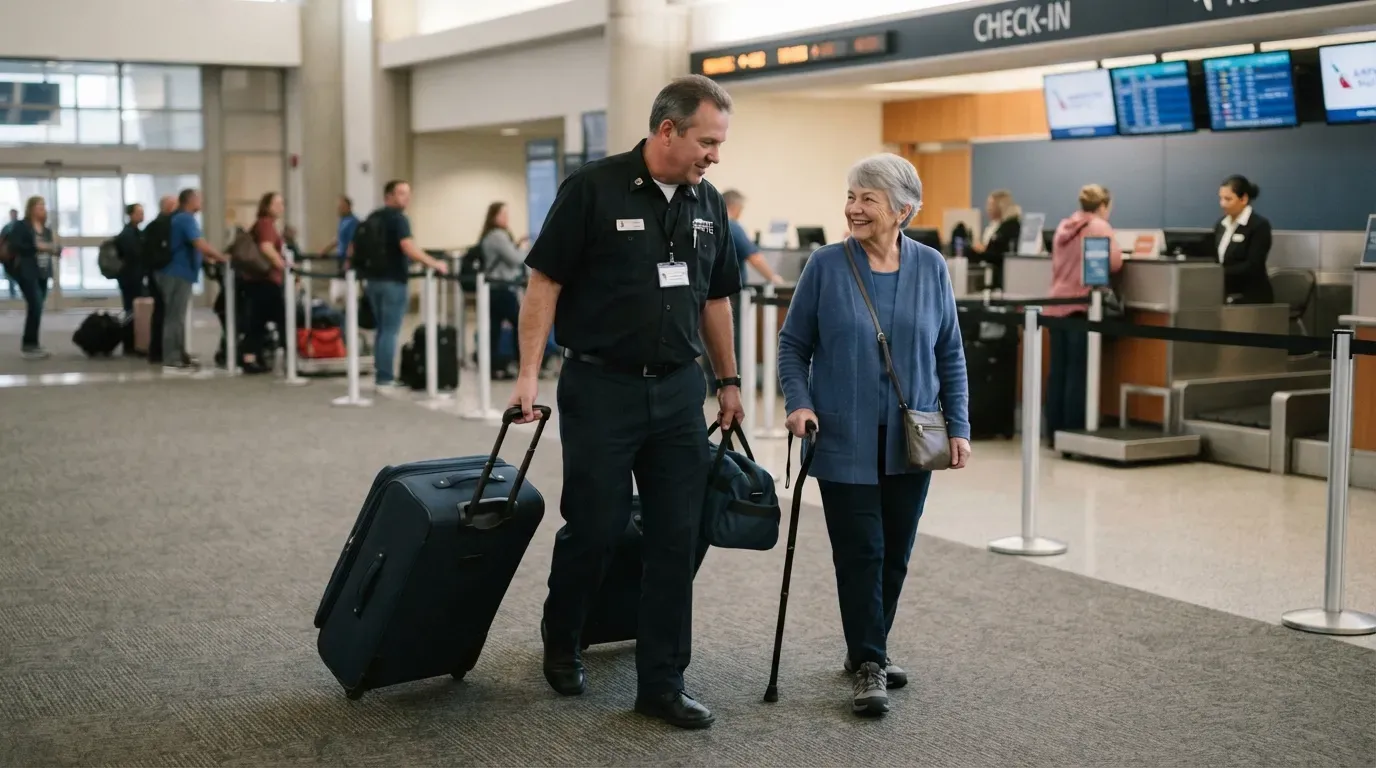
Officially, plenty of shuttle contracts only require a driver to get luggage out of the trunk and set it on the sidewalk. That’s the bare minimum, and most riders never question it. But drivers typically assist with luggage, removing physical strain for elderly passengers, going well past that curb line when it’s requested.
What’s rarely mentioned is that this often extends all the way to the check-in counter or the skycap station, not just the sidewalk. Drivers who are asked directly tend to walk bags in rather than leave them at the door. It’s a small gesture, but for someone with a bad hip or a recent surgery, it’s the difference between a smooth start to a trip and a painful one.
#11 – They’ll Stretch the Wait Time Without Charging Extra
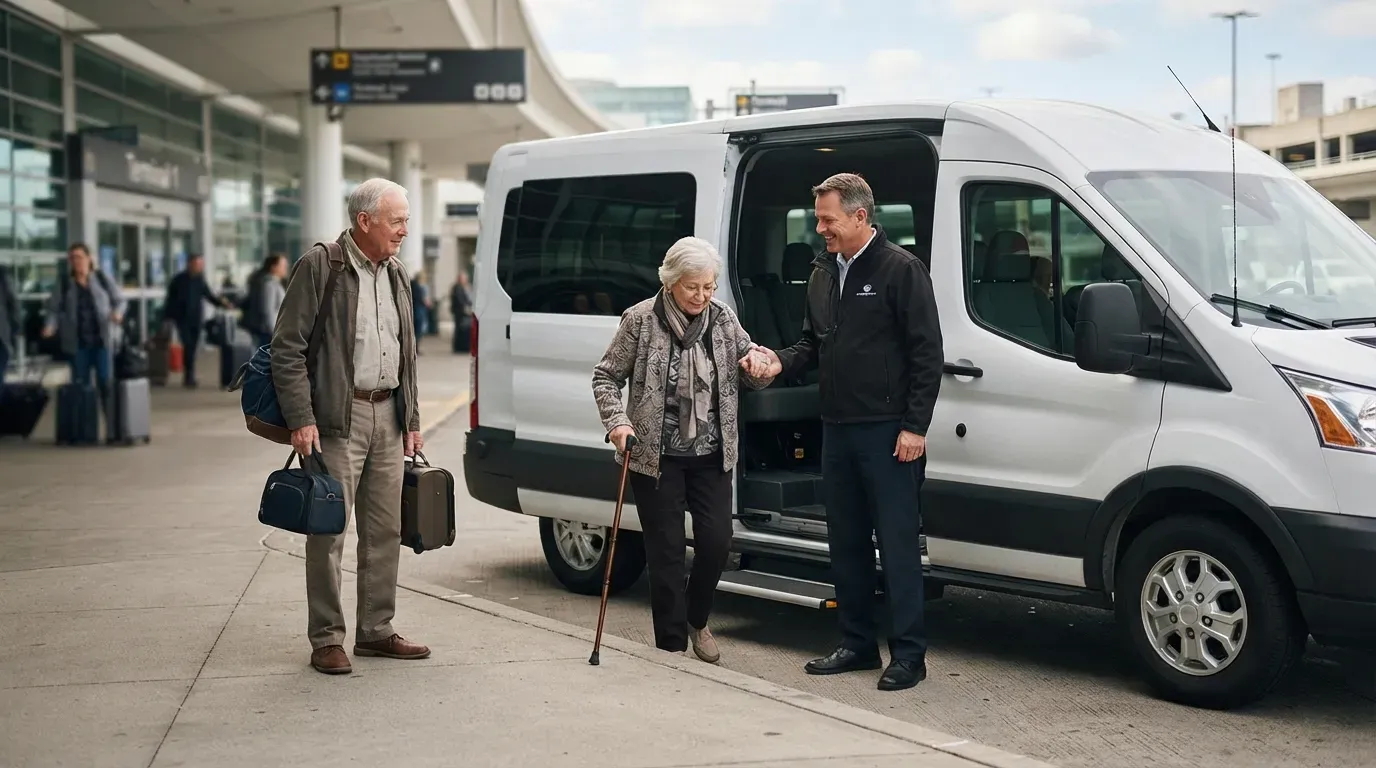
Rushing is one of the biggest hidden dangers for older travelers, and drivers know it. Requesting “extra wait time” when booking allows for unhurried entry and exit from vehicles, something the schedule rarely accounts for on its own.
Most riders never ask for this because they assume it costs more or feels like an imposition. In practice, drivers frequently build in that cushion quietly once a passenger mentions they move slower or use a cane. This isn’t written into most standard packages; it’s a courtesy that shows up almost entirely because someone requested it out loud, and the result is a pickup that feels calm instead of frantic.
#10 – They’ll Arrange a Wheelchair Before the Car Even Stops
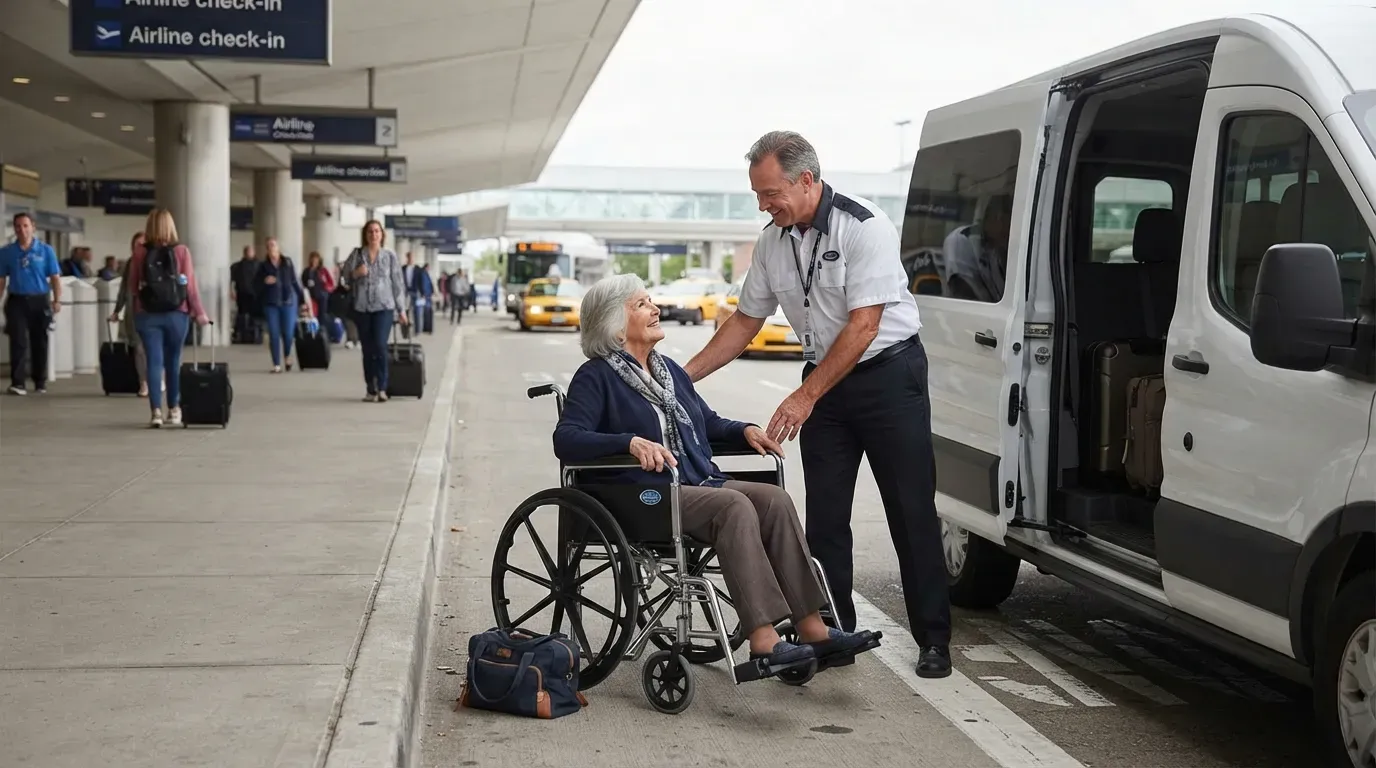
Here’s a detail almost nobody realizes: the shuttle driver isn’t the one who technically provides airport wheelchairs, but many will make that call anyway. Drivers offer curbside support, terminal entry assistance, and help locating airline wheelchair desks, then coordinate with airport staff so travelers get smooth, continuous help all the way to security and the gate.
This means a wheelchair can be waiting at the curb before a passenger has even unbuckled their seatbelt. Most people don’t realize this coordination is optional, not automatic. It only happens reliably when a rider or family member specifically asks in advance, and skip the request, and you’re stuck flagging someone down inside a crowded terminal instead.
Fast Facts
- Airport wheelchair service is provided by the airline, not TSA or the shuttle company itself.
- TSA Cares can send a Passenger Support Specialist to meet a traveler if you call at least 72 hours before departure.
- The TSA Cares line, (855) 787-2227, operates weekdays 8 a.m. to 11 p.m. ET and slightly shorter hours on weekends.
- A driver’s early heads-up call can get a wheelchair staged curbside before the vehicle has even parked.
#9 – They’ll Walk You Inside Instead of Just Pointing
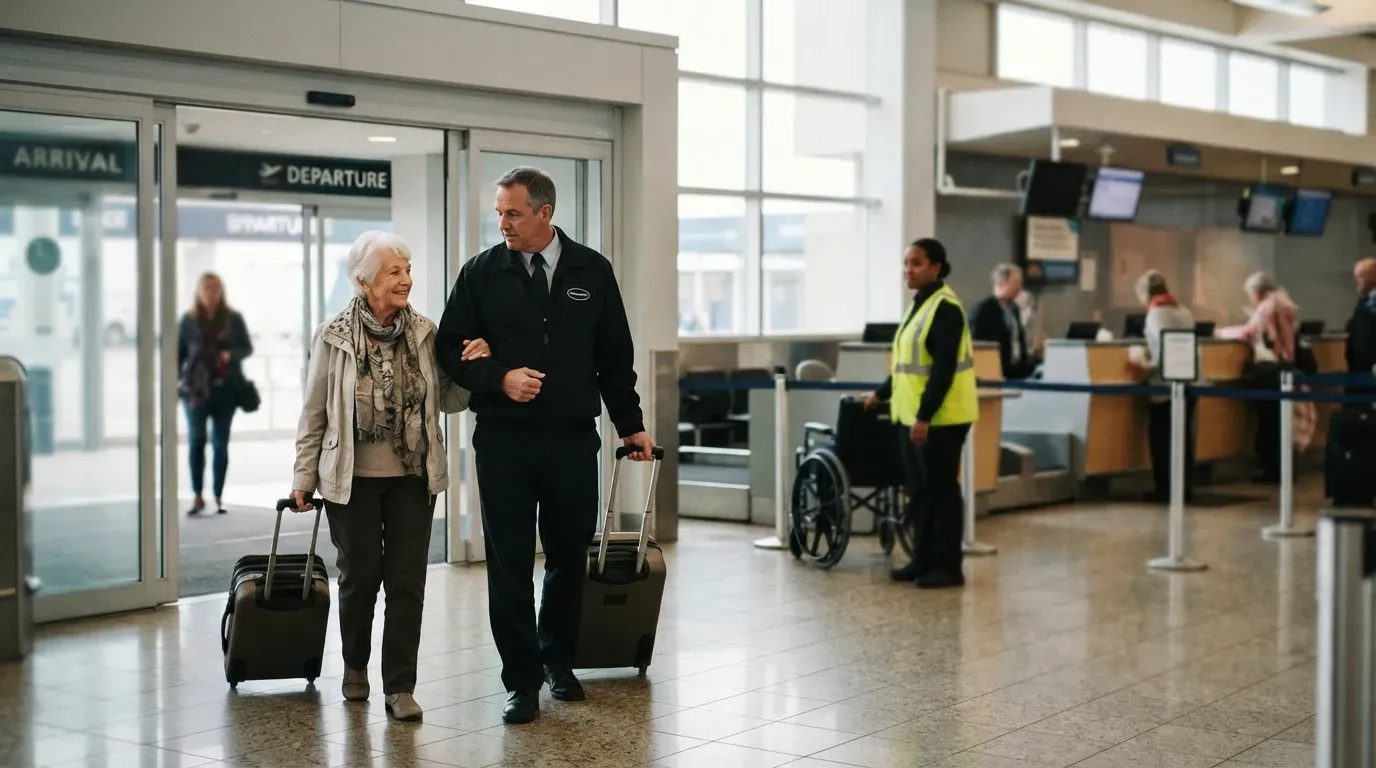
A shocking number of shuttle rides technically end the second the trunk is unloaded. But drivers who are asked directly will often walk a senior passenger through the doors and toward the counter rather than gesturing vaguely at the building.
This matters more than it sounds. Many airports have curbside programs that dispatch personnel to help passengers from their cars, through ticketing, security, and to their gate, sometimes transporting seniors in carts or wheelchairs. Drivers who know these programs exist will often personally hand a passenger off to the right staff member instead of leaving them to find it alone. The handoff, not the drop-off, is what actually prevents seniors from wandering a terminal confused and stressed.
#8 – They’ll Text Family Members a Live Location Update
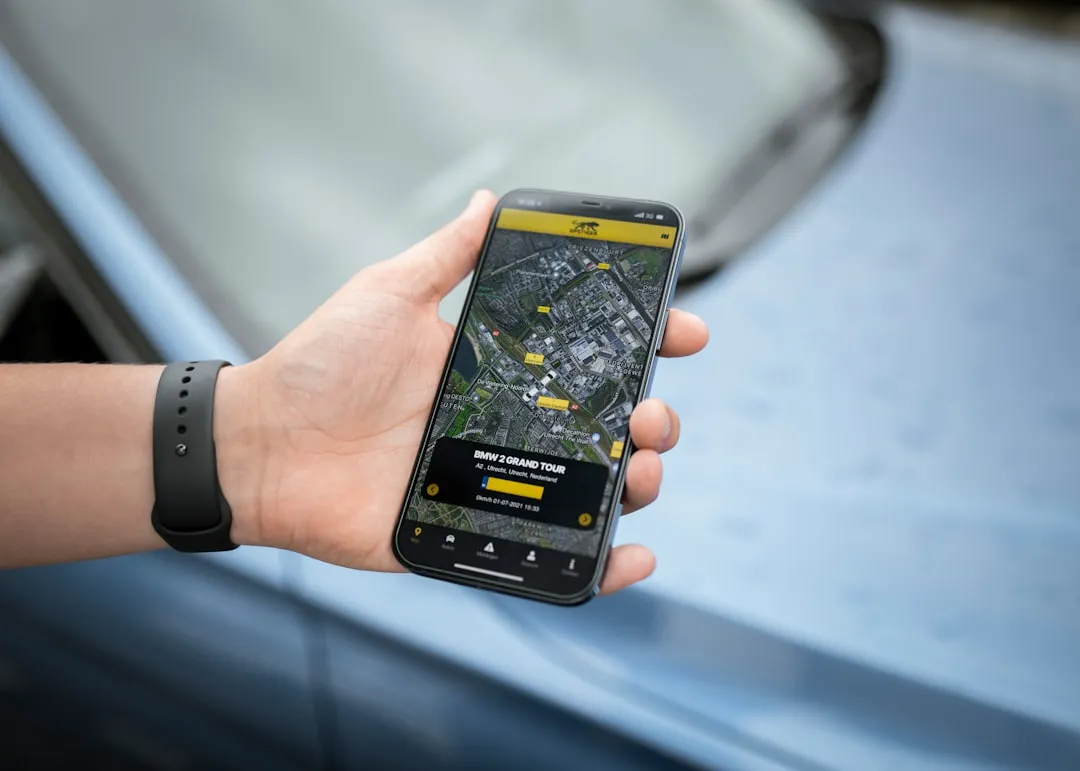
Families worry more about the airport leg of a trip than almost any other part of it, and drivers have quietly adapted. Many shuttle services now offer tracking features specifically so relatives can watch the ride happen in real time.
This isn’t limited to rideshare apps. The tracking feature lets family members monitor a loved one’s journey remotely, adding an extra layer of security. What surprises people is that drivers will often text an extra update themselves, on top of the automated tracker, once asked, and for an adult child managing a parent’s solo trip from three states away, that unofficial text means more than any app notification ever could.
#7 – They’ll Let a Companion Ride Along, No Ticket Needed
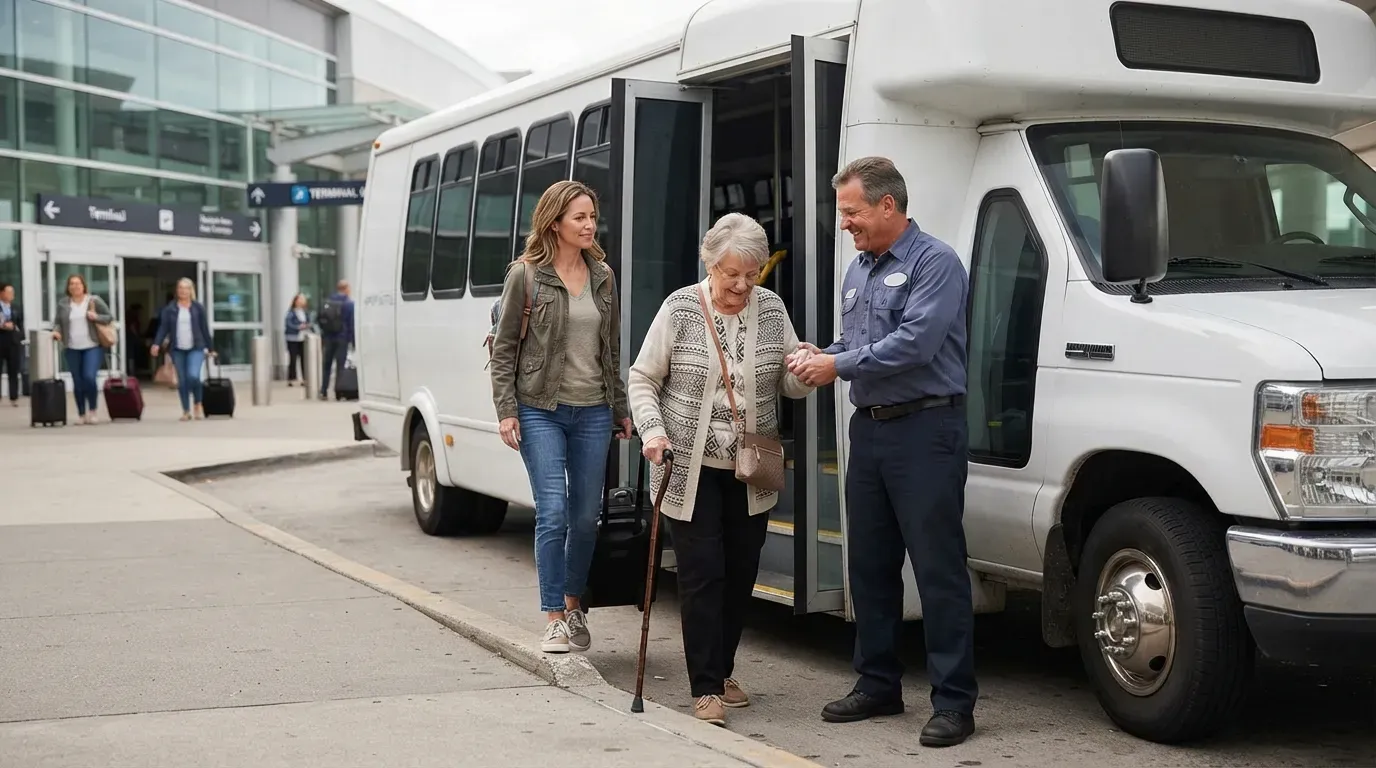
Most travelers assume only ticketed passengers can go past the drop-off point, and shuttle drivers rarely correct that assumption unless someone asks. But the rule is actually far more generous than people expect. An elderly traveler can be accompanied to their gate, or met at the gate of their destination, by an assistant, family member, or friend, even without a ticket, as long as they show a government-issued ID at the counter.
This is limited to one person, so families sometimes fight over who gets the honor, and drivers have seen the fallout firsthand. Drivers who are told about this in advance will often adjust timing, drop-off location, and even parking suggestions to make the send-off easier. Skip the request, and that companion may end up stuck at the curb instead.
Worth Knowing
- A gate pass typically covers just one companion per ticketed senior passenger, not the whole family.
- The escort needs a government-issued photo ID at the airline counter, not just a boarding-adjacent excuse.
- The same courtesy usually works in reverse, letting someone meet an arriving senior right at the gate.
- Mentioning this to the shuttle driver ahead of time, not at the curb, is what actually gets it arranged smoothly.
#6 – They’ll Skip the Standard Drop Point for a Closer One
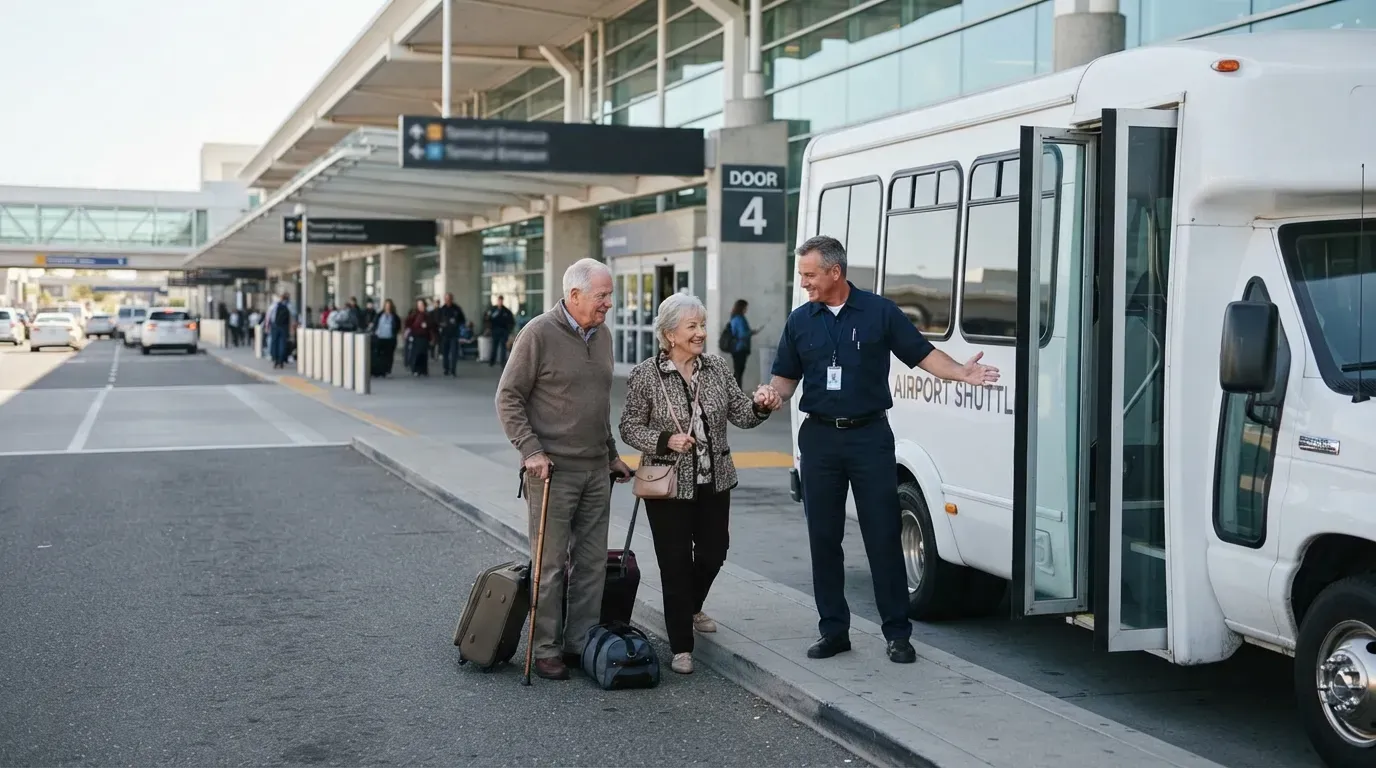
Not every terminal entrance is created equal, and drivers know exactly which doors save the longest walks. Left alone, most shuttles default to the nearest “official” stop, which can still mean hundreds of yards of walking.
Ask directly, and many drivers will reroute to the specific terminal door closest to check-in instead. Entering the exact terminal in the destination field helps, but drivers who know an older passenger struggles with distance will often go a step further and pick the single closest curb cut, not just the closest terminal. Few travelers realize this level of precision is even negotiable.
#5 – They’ll Quietly Flag Fare Discounts Nobody Advertises
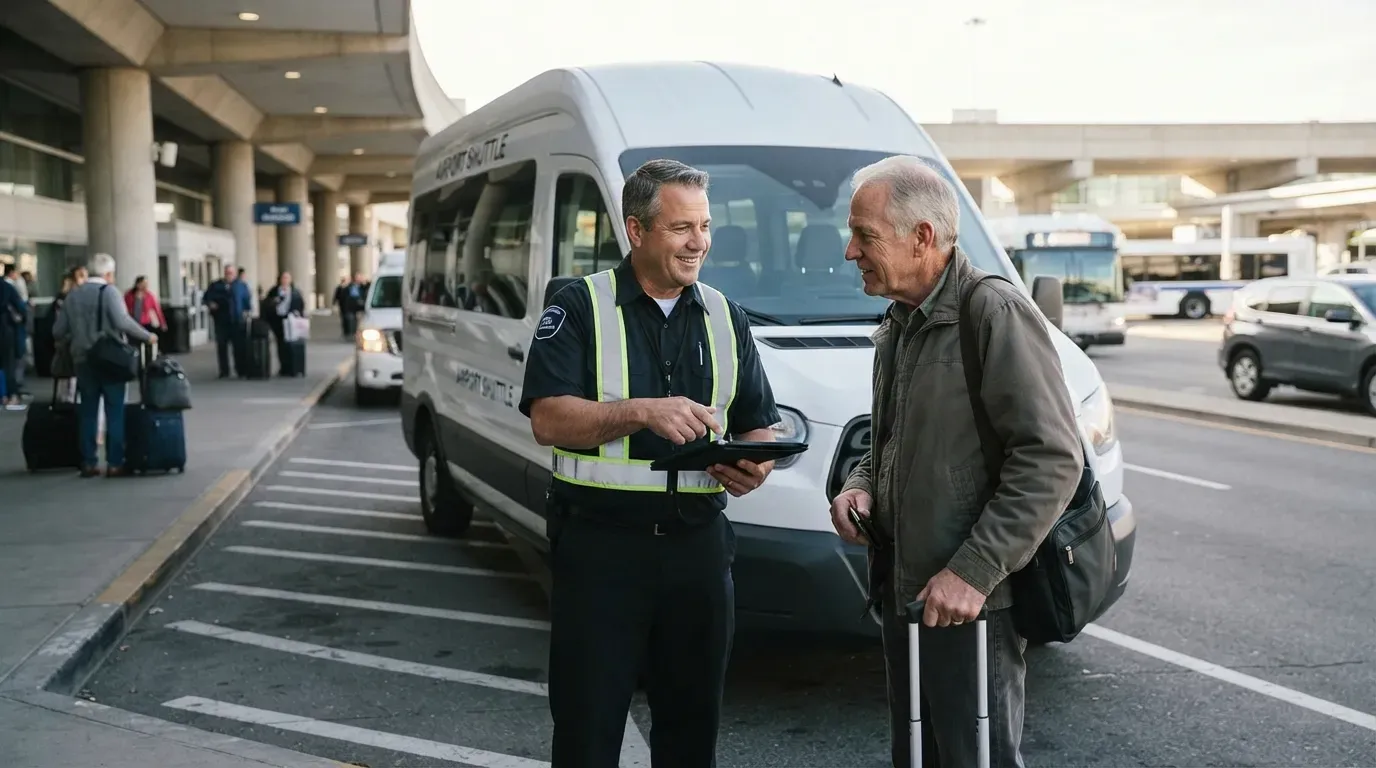
Senior discounts on shuttle services exist, but they’re rarely front and center on booking pages. Drivers and dispatchers, however, tend to know about them and will mention them once a passenger’s age comes up in conversation.
Advance booking is often the key that unlocks it. Booking well ahead, especially during peak travel seasons, tends to guarantee availability and access to those quiet senior discounts, while also giving passengers a chance to flag specific accessibility needs. The uncomfortable truth is that plenty of regular riders overpay simply because they never asked the one question that unlocks a lower fare.
Quick Compare
- Booking last minute: full published rate, limited vehicle choice, no guarantee accessibility needs get flagged in advance.
- Booking ahead and mentioning age: better shot at senior pricing, more flexible pickup windows, and time to request extras like wheelchair coordination.
- Booking ahead but staying silent: often the same price as last minute, since most discounts aren’t offered automatically.
#4 – They’ll Stop for a Bathroom Break Even If It’s Not “Their Job”
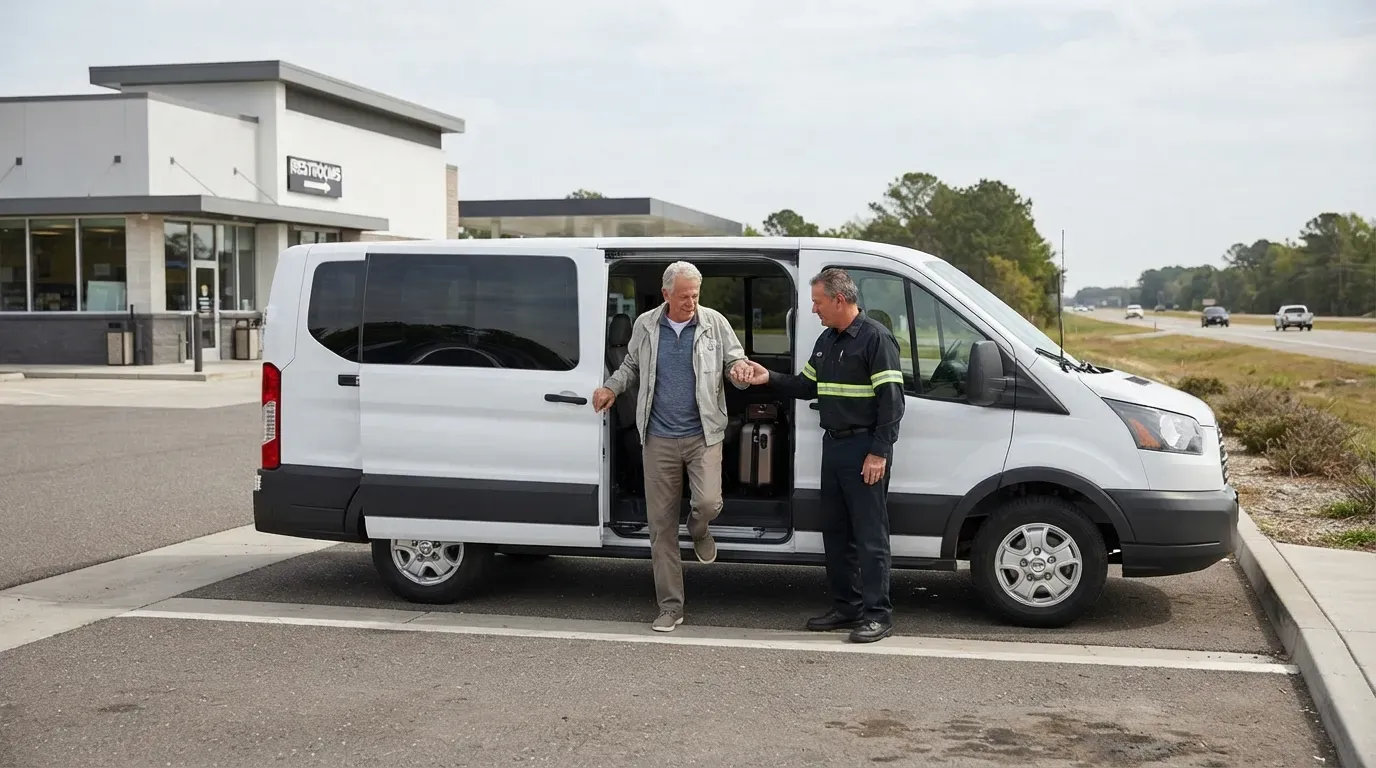
This one surprises people the most. A driver technically isn’t obligated to stop anywhere between pickup and the terminal, but many will make an exception without hesitation when asked by an older rider managing a medical condition or a long drive.
It mirrors a rule that already exists once you’re inside the terminal. Airline personnel assisting a passenger to a departing flight are required to stop at the entrance to a bathroom if it’s on the way and the stop can be made without unreasonable delay. Drivers who’ve absorbed that same mindset from the terminal side often apply it to the road trip portion too, purely because a passenger spoke up. Nobody enforces this, which is exactly why asking matters.
#3 – They’ll Hand Over a Direct Line for the Return Trip
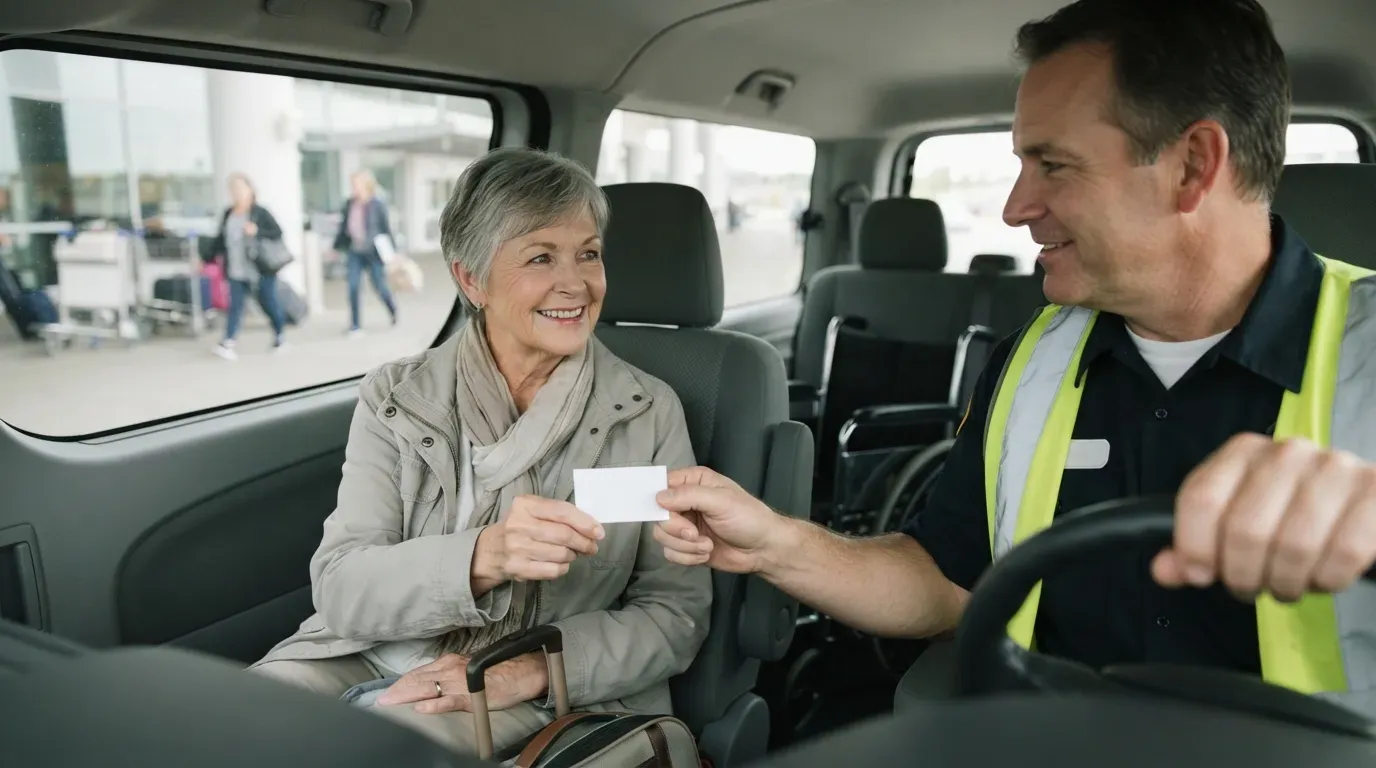
Booking apps and call centers work fine for most people, but they can be a nightmare for someone managing jet lag, a wheelchair, or simple nerves after a long flight. Some drivers quietly solve this by giving out a direct number instead.
It’s not standard practice, and companies don’t promote it, but it happens more than riders expect once trust is built on the outbound trip. Many seniors don’t realize this option even exists until they’ve already struggled through an automated booking system once. This small workaround can turn a stressful arrival into a five-minute phone call instead.
#2 – They’ll Coordinate Directly With Airport Staff Before You Land
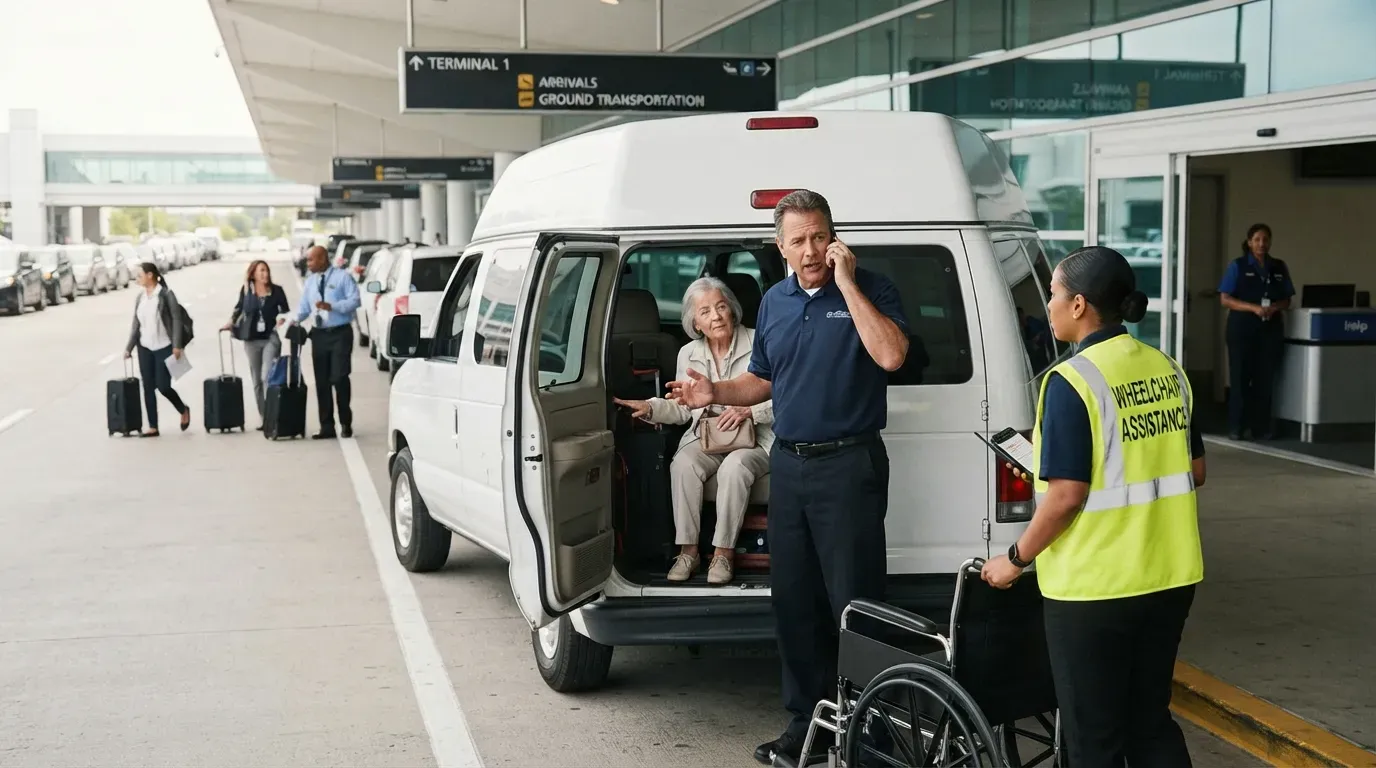
This is where the quiet system gets genuinely impressive. Some drivers, especially those working non-emergency or medical transport routes, will call ahead so wheelchair staff, skycaps, or gate agents are already expecting a specific passenger. Drivers help by coordinating wheelchair assistance with authorized airline staff, so a curbside arrival transitions smoothly into secure gate-level support, which matters most in large, complex airports.
Most travelers assume this kind of coordination only happens through the airline itself, not the shuttle driver. In reality, it frequently starts with a driver making one extra phone call because a passenger mentioned a health concern. This single request removes almost all the guesswork from arriving somewhere unfamiliar.
Why It Stands Out
- Staff are already expecting the passenger by name, not scrambling to find someone at the curb.
- The handoff from car to wheelchair to security happens with almost no waiting.
- It matters most in sprawling hub airports where distances and crowds are the biggest obstacle.
- It only exists because a driver chose to make one extra phone call, not because it’s a built-in service.
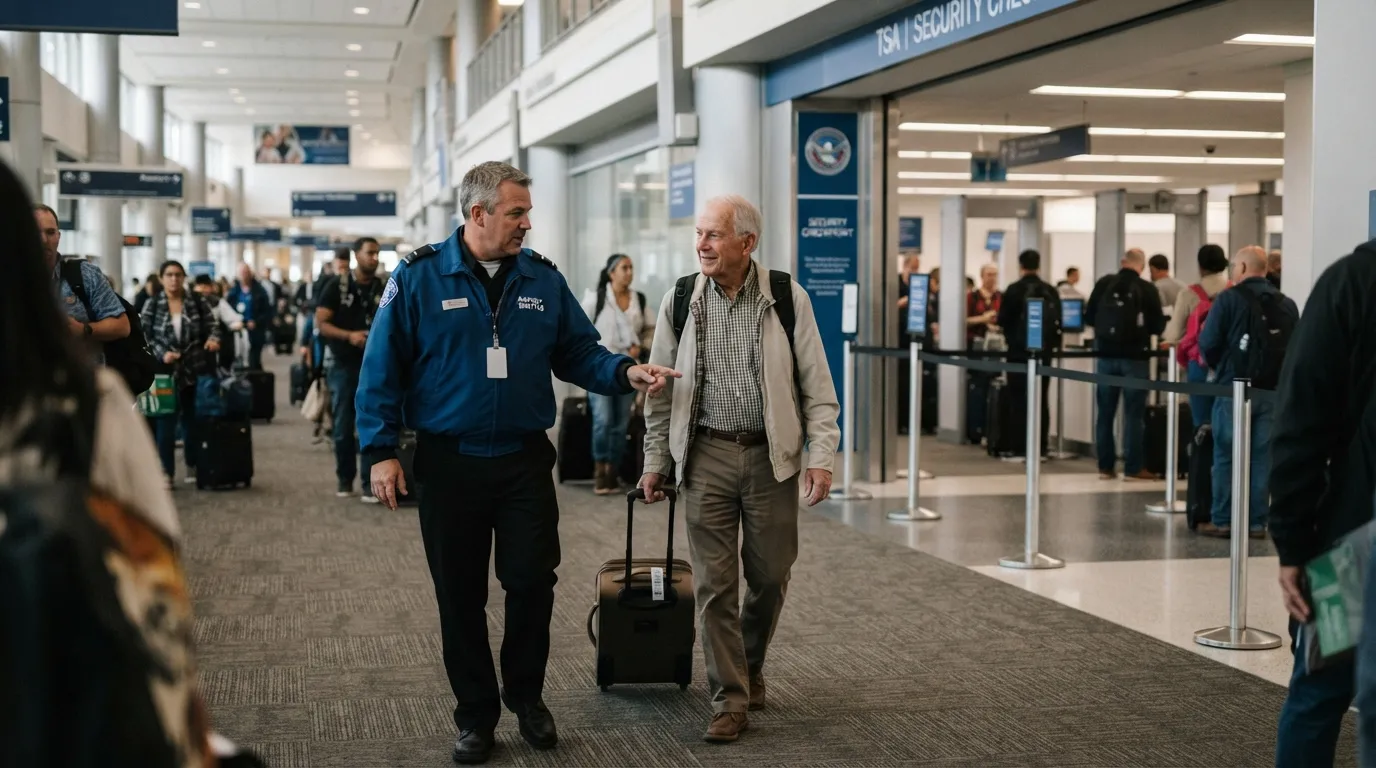
#1 – They’ll Escort You Straight to the Security Line, Not Just the Door
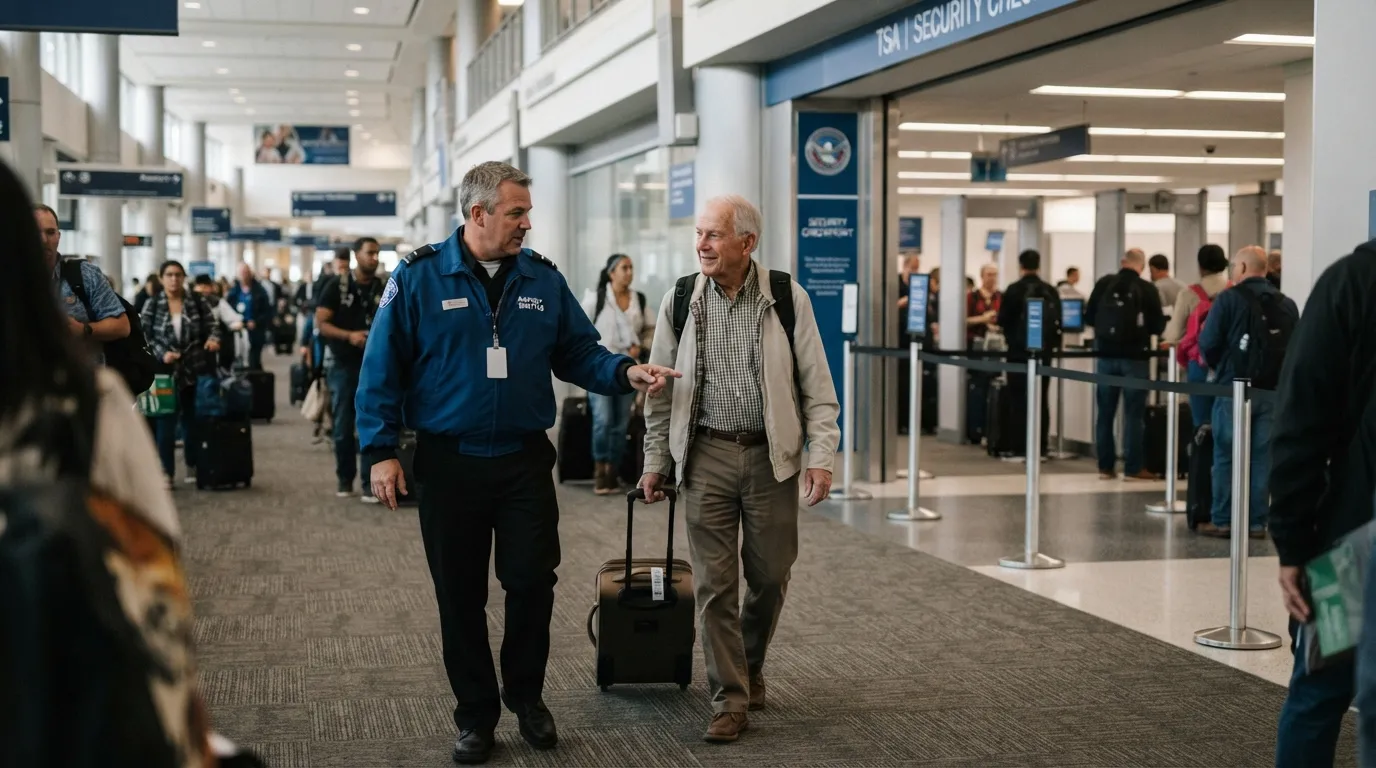
This is the request that changes everything, and almost nobody makes it. Dropping a passenger at the entrance is standard. Walking them all the way to the security checkpoint entrance is not, yet it’s exactly what many drivers will do without complaint once asked directly.
It matters because the built-in system past that point is more generous than most people realize. Within 72 hours of a flight, travelers can call TSA Cares, and TSA will provide an officer to meet the party after check-in and accompany the group through the screening process.
TSA Cares is here to make sure no traveler feels like they’re navigating security alone.
TSA Cares helpline description
The gap between the curb and that TSA officer is exactly where seniors get lost, delayed, or overwhelmed, and it’s the one stretch a driver can personally close if someone simply asks. For a passenger over 60 traveling alone, this single request often does more for their stress level than anything else on this list.
None of these twelve things show up in a shuttle company’s marketing materials, and most drivers won’t offer them unprompted. They exist almost entirely as a response to a direct, specific ask from a passenger or their family. The pattern is consistent enough that travel advocates increasingly treat it as common knowledge: the service you get depends far more on what you request than what’s printed on the booking page.
Seniors already make up a large and growing share of frequent flyers, and that number keeps climbing. As it does, the gap between “standard service” and “service for those who ask” is likely to matter more, not less. Have you or a family member unlocked one of these quiet extras? Tell us what happened in the comments.