
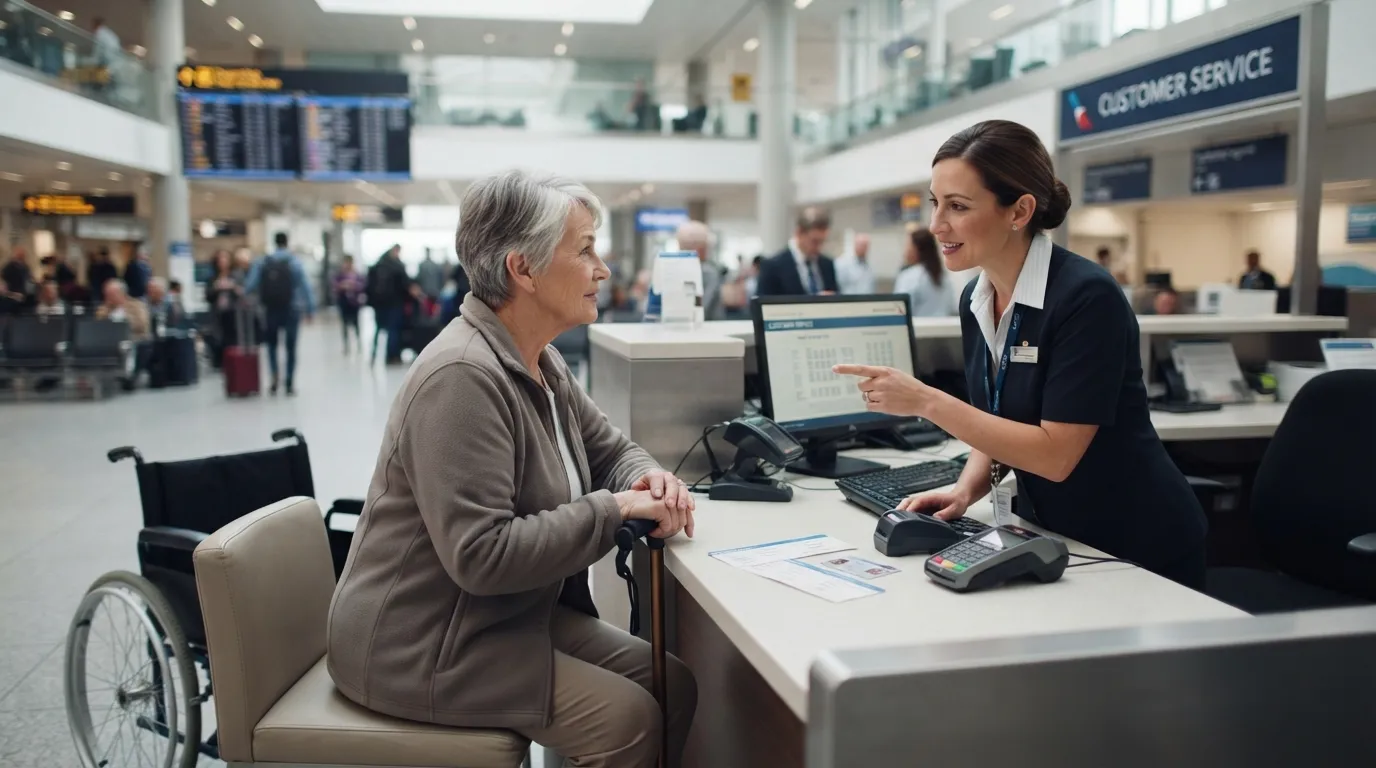
Most travelers assume a canceled flight means hours of shouting into a phone and hoping for the best. But airline agents have a whole set of quiet fixes reserved for passengers who know how to ask – and travelers over 60 qualify for more of them than almost anyone realizes. These aren’t secret handshakes. They’re federal rules and airline policies that most gate agents won’t volunteer unless you bring them up first.
The frustrating part? Most of these protections sit buried in customer-service plans and federal regulations that almost nobody reads until they’re standing at a counter, ticket in hand, watching their flight disappear from the board. Here’s what experienced agents and federal disability rules actually guarantee once things go wrong.
#13 – They Slide You Onto the Next Flight, Even on a Rival Airline
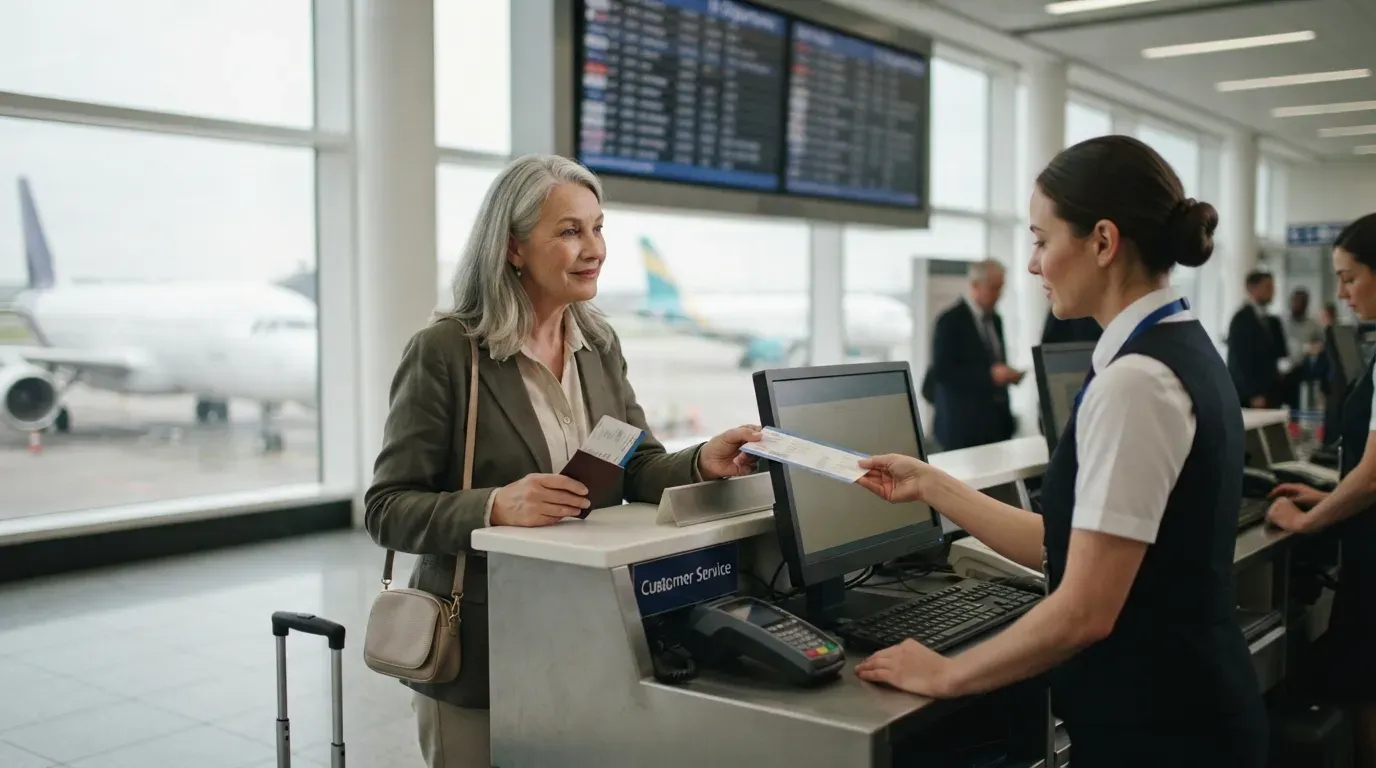
When your flight cancels, the desk’s first move isn’t apology – it’s rebooking, and the options run wider than most passengers assume. If your flight is canceled, most airlines will rebook you on their first flight to your destination on which space is available, at no additional charge. If that means a long wait, agents can look outside their own airline entirely.
American Airlines spells this out directly: if no American Airlines flights are available until the next day, they’ll rebook you on one of their partner airlines at no additional cost. Most travelers never ask about partner-airline seats – they just wait for the same carrier’s next slot, even when a competitor’s plane is boarding across the terminal. But that’s nothing compared to what we found about #12…
#12 – They Hand Back Your Money Instead of Arguing With You
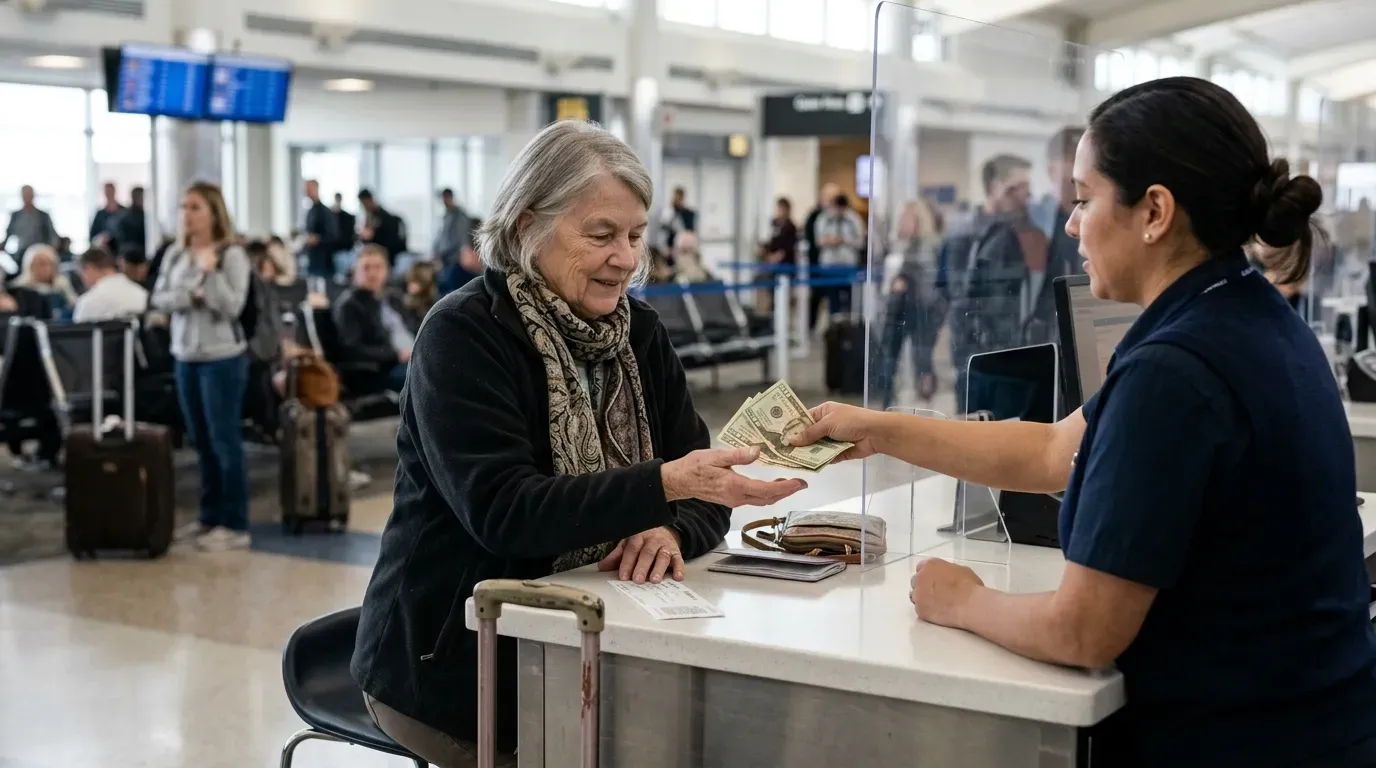
Here’s the part airlines don’t advertise loudly: you don’t have to accept the rebooking at all. If you reject rebooking options and accommodations and decide not to fly at all, that’s when you are entitled to a full refund, which will be automatically applied to you. This applies even if your original ticket was nonrefundable.
A cash refund applies when your flight is canceled or significantly changed – including departure or arrival times more than three hours off domestically, airport changes, added connections, or downgrades to a lower class of service. The catch most seniors miss: once you accept a rebooked seat, that refund right disappears. Agents rarely explain that trade-off unless you ask directly before saying yes. But #11 is where the real money conversation happens…
#11 – They Quietly Cover the Hotel Room When the Airline Caused the Mess

An overnight stranding doesn’t have to mean sleeping in a terminal chair. In cases where a delay or cancellation is caused by the airline, upon request they’ll give you a voucher for an approved hotel with available rooms if you’re delayed overnight away from home, transportation to and from that hotel, meal vouchers if the delay is three or more hours, and reimbursement if no hotel voucher can be issued.
Every airline except Frontier is committed to covering hotel accommodations, and transportation to that hotel, for any passenger affected by a controllable overnight cancellation. Weather-related delays are a different story – most carriers won’t cover a hotel if a storm, not the airline, caused the mess. Ask which category your delay falls under before assuming you’re stuck with the bill.
At a Glance
- Overnight hotel voucher: covered when the delay is the airline’s fault
- Transportation to and from the hotel: included with the voucher
- Meal vouchers: kick in once the delay hits three hours
- Frontier: the one major U.S. carrier that skips hotel coverage entirely
- Weather delays: typically excluded from hotel coverage across the industry
Next up is a desk most travelers over 60 have literally never heard of…
#10 – They Assign a Real Person to Rebuild Your Entire Trip

Buried inside most major airlines is a team built specifically for complicated itineraries. Most airlines have a “special needs desk” dedicated to answering questions posed by disabled passengers, and since those employees are specially trained, seniors who need assistance will usually receive better customer service by contacting that representative directly.
American Airlines calls theirs Special Assistance Coordinators, and they maintain a staff of these coordinators whose function is to make pre-travel arrangements for customers with disabilities, specifically trained to work with customers who self-identify as needing special assistance. The rebuild happens behind the scenes – new seats, connection timing, wheelchair coordination – all handled by one specialist instead of three different gate agents giving three different answers. But #9 solves a problem almost nobody realizes exists until they’re already rebooked…
#9 – They Re-Route Your Airport Escort to Match Your New Gate
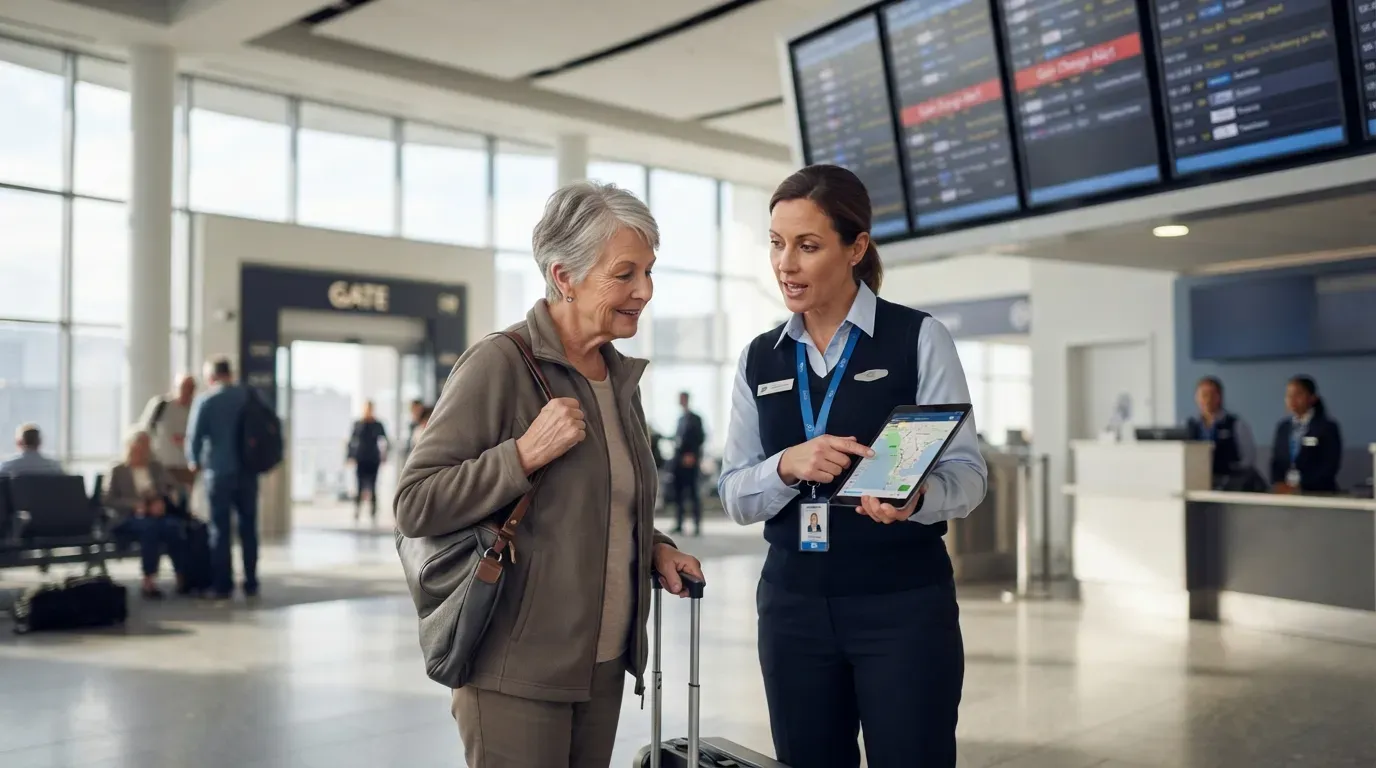
When your flight number changes, your support doesn’t have to start over. TSA runs a dedicated assistance line built for exactly this kind of scramble. TSA runs a dedicated helpline – TSA Cares, reachable at (855) 787-2227 – specifically for passengers with disabilities, medical conditions, or anyone who wants guidance before they ever reach the airport.
Requesting TSA Cares assigns a personal Passenger Support Specialist who guides you through the entire screening process, and the service is completely free, with the specialist staying with you from the security entrance all the way through. Almost no one realizes this can be reactivated on the spot after a gate change, not just pre-booked days ahead. But the next fix involves someone who isn’t even flying with you…
#8 – They Let a Family Member Walk You Through the Chaos for Free
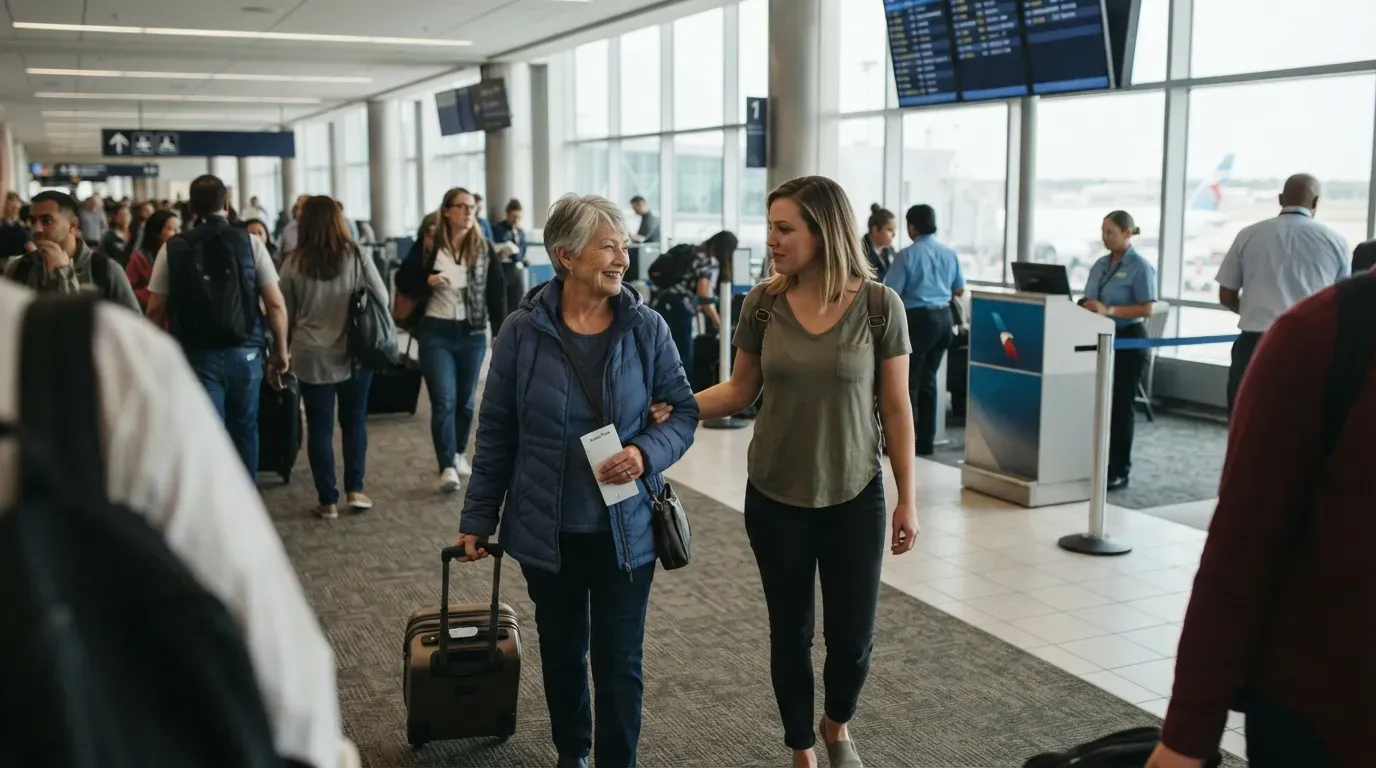
A canceled flight is exactly when you don’t want to navigate a terminal alone – and airlines quietly built a workaround for that. If you’re traveling alone but would like extra help from a family member or friend, you can obtain a free gate pass for someone to accompany you throughout the airport, and many major U.S. airlines – including Alaska, American, Delta, JetBlue, Spirit, Southwest, and United – offer these passes to nonpassengers assisting seniors.
United Airlines, for example, allows up to two people to obtain a security pass from the ticket counter, letting companions go through security with you, accompany you to the gate, and wait for you to board. Most travelers over 60 don’t know this exists because it’s issued only when requested at the counter – it’s never printed on the boarding pass or mentioned in the app. That’s a comfort most people leave on the table. Wait until you see what happens to your mobility equipment during a disruption…
#7 – They Protect Your Wheelchair Like It’s Sacred Cargo
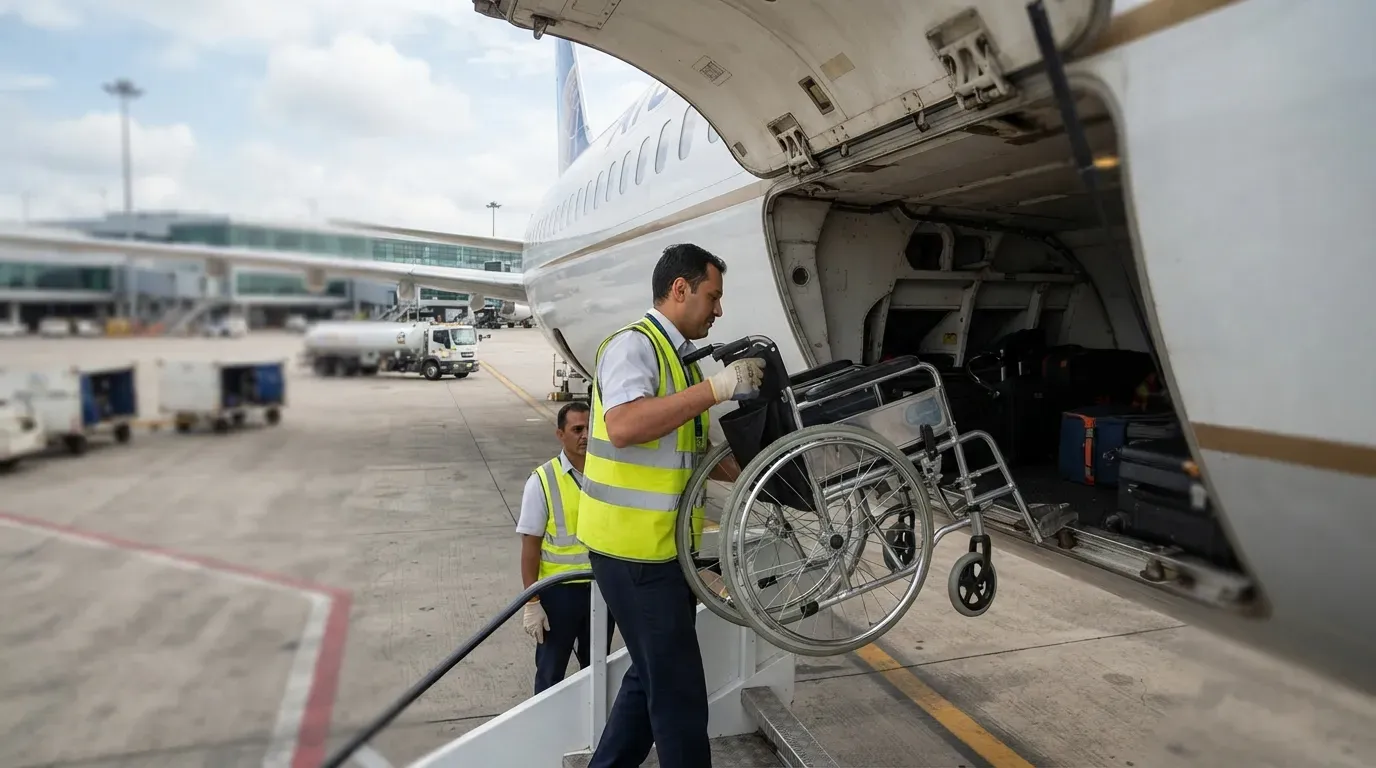
Rebooking chaos is exactly when mobility equipment gets damaged or lost – which is why federal rules single it out for special handling. Assistive devices do not count against any limit on carry-on baggage, collapsible wheelchairs have priority for in-cabin storage space over other passengers’ items when the traveler chooses to preboard, and wheelchairs have priority over other items for storage in the baggage compartment.
Under the Air Carrier Access Act, all U.S. airlines must permit passengers to check their wheelchairs, scooters, walkers, or other medical devices at the gate for free, and it does not count as one of your checked bags. That priority status doesn’t reset when your flight changes – it follows you to the new aircraft automatically. Most gate agents won’t mention it unless you specifically ask about your equipment during the rebooking conversation.
Fast Facts
- Wheelchairs and scooters fly free – they never count as a checked bag
- Collapsible wheelchairs get priority cabin storage for passengers who preboard
- Non-collapsible wheelchairs get priority placement in the cargo hold
- Airlines must provide a loaner wheelchair at no cost if yours is damaged or delayed
But #6 solves the single most exhausting part of a multi-leg disruption…
#6 – They Flag Your Whole Itinerary So You Stop Repeating Yourself
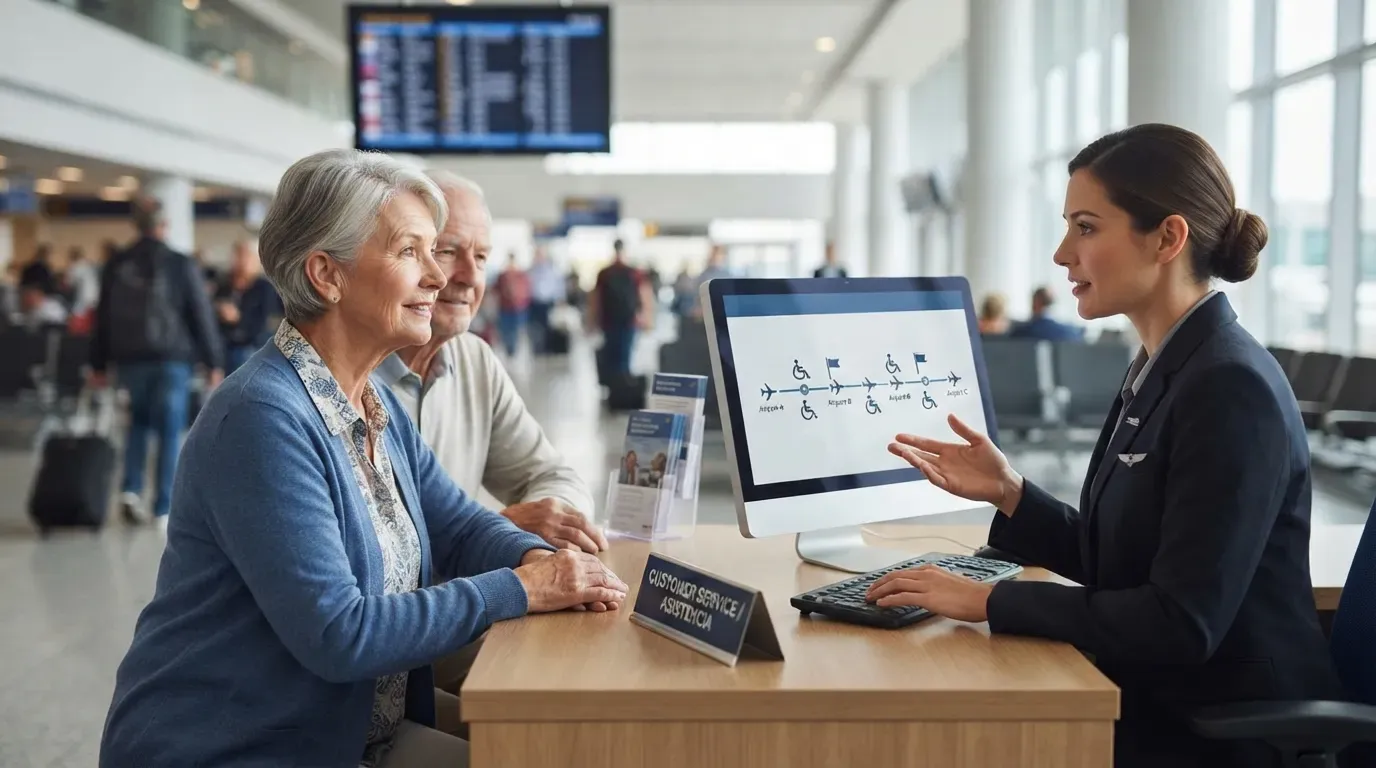
Nothing drains a traveler faster than explaining the same mobility need at every single gate. One request, made early, can end that entirely. When a passenger with a disability requests assistance, the airline is required to provide help from the terminal entrance to the gate, through security, onto the aircraft, and from the arrival gate to any connecting flight, and one conversation at check-in activates a chain of care across the entire itinerary.
Most senior travelers re-explain their situation at every gate and every connection – an exhausting, unnecessary process that a single flag eliminates entirely, because the system already knows you’re coming. This single request is quietly one of the most underused tools available – it survives cancellations, gate changes, and even airline switches during a rebooking. The next protection kicks in the moment you’re left waiting too long…
#5 – They Enforce the Rule: No One Waits Alone Past 30 Minutes
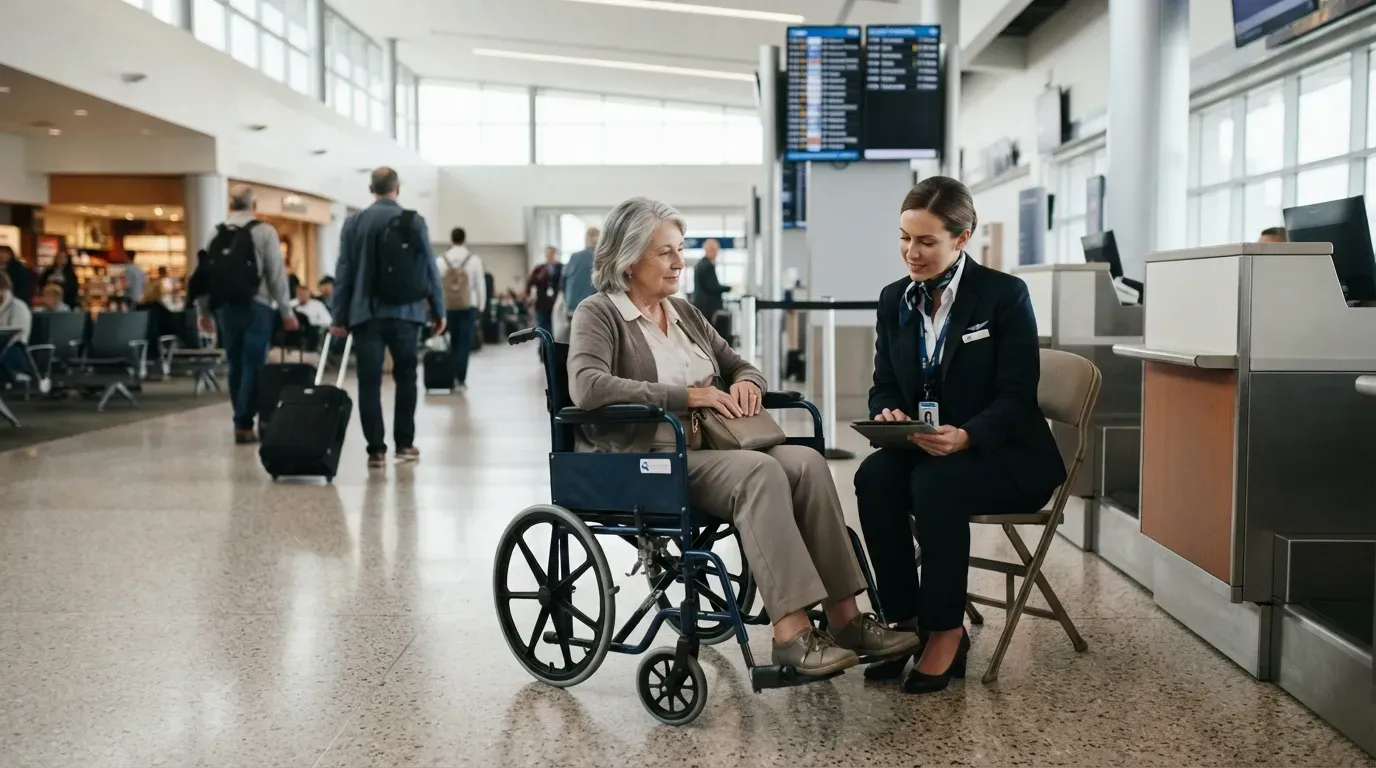
Long airport waits get riskier when mobility is limited – so regulators built in a hard stop. When an airline is providing assistance to a passenger who is not independently mobile because of a disability, it must not leave the passenger unattended for more than 30 minutes, and this requirement applies even if another person is accompanying the passenger, unless the passenger explicitly says it’s okay to leave.
This isn’t a courtesy – it’s enforceable. Federal regulations known as the Airline Passengers with Disabilities Bill of Rights require airlines to provide assistance promptly and prohibit leaving an immobile passenger unattended in a wheelchair for more than 30 minutes, and in 2013 U.S. Airways paid a substantial fine over exactly this kind of complaint. That fine is the reason this rule gets taken seriously today. If a wheelchair escort disappears mid-connection, the clock starts ticking against the airline, not you.
Worth Knowing
- 2013: US Airways paid $1.2 million after passengers were left unattended too long in Philadelphia and Charlotte
- 2024: American Airlines was hit with a $50 million penalty – the largest disability-related fine in DOT history – over mishandled wheelchairs and unsafe assistance
- The 30-minute unattended rule is one of the specific violations enforcement officers watch for
- Some settlements require direct compensation to affected passengers, not just a fine to the Treasury
But #4 changes how screening itself works after a disruption…
#4 – They Keep Your Shoes On Even When Your Flight Changes Gates
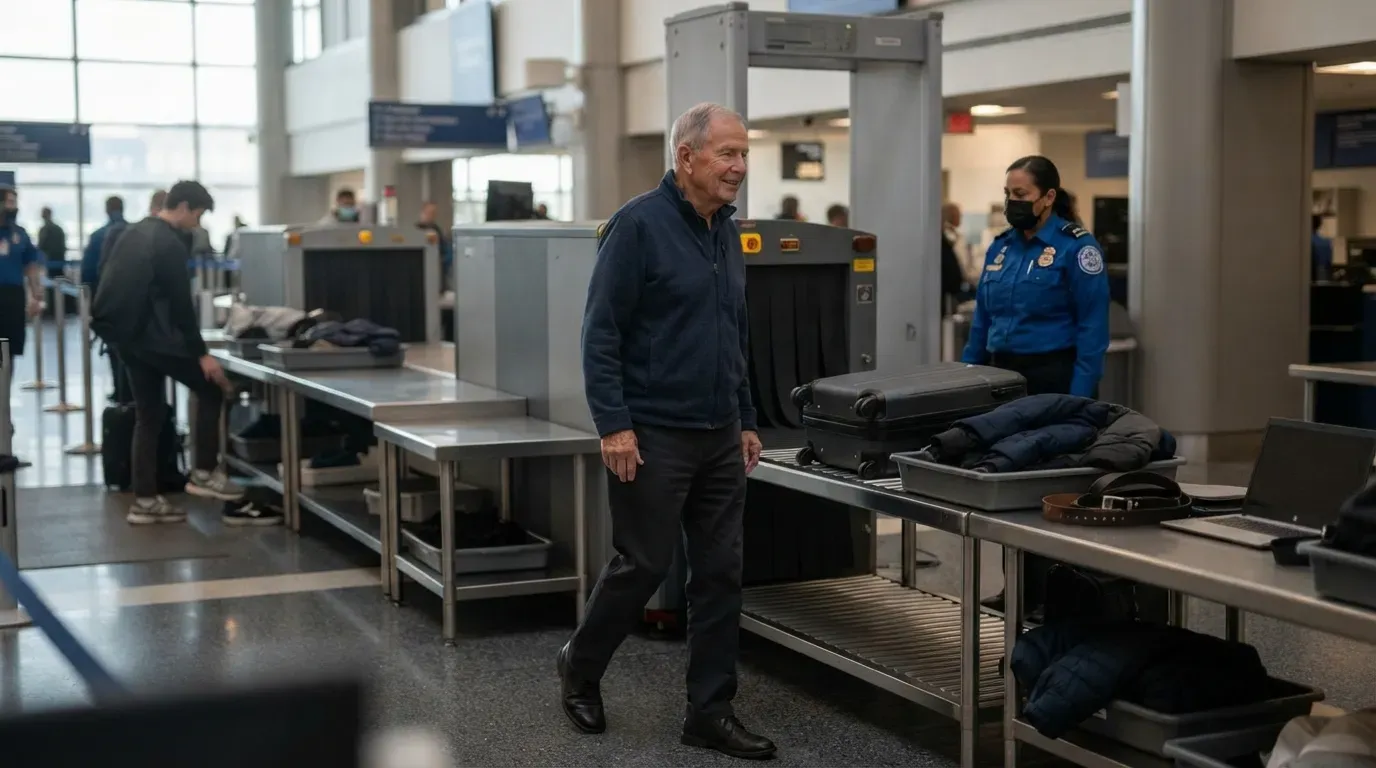
A gate change often means a different checkpoint – but the screening rules for older travelers travel with you. If you’re 75 or older and still removing your shoes, belt, and jacket at the TSA checkpoint, you’re doing extra work you’re not legally required to do, because federal policy automatically provides modified screening for travelers 75 and older, so shoes can stay on and the process is streamlined.
TSA PreCheck members 75+ also keep shoes, laptops, and light jackets in their bag. Most travelers in this age bracket keep undressing at the belt out of habit, unaware the rule follows them to any checkpoint they’re rerouted through – even a new terminal after a same-day rebooking. What happens when the disruption itself is the problem is even bigger…
#3 – They Put You in Touch With Someone Who Can Override the Front Desk
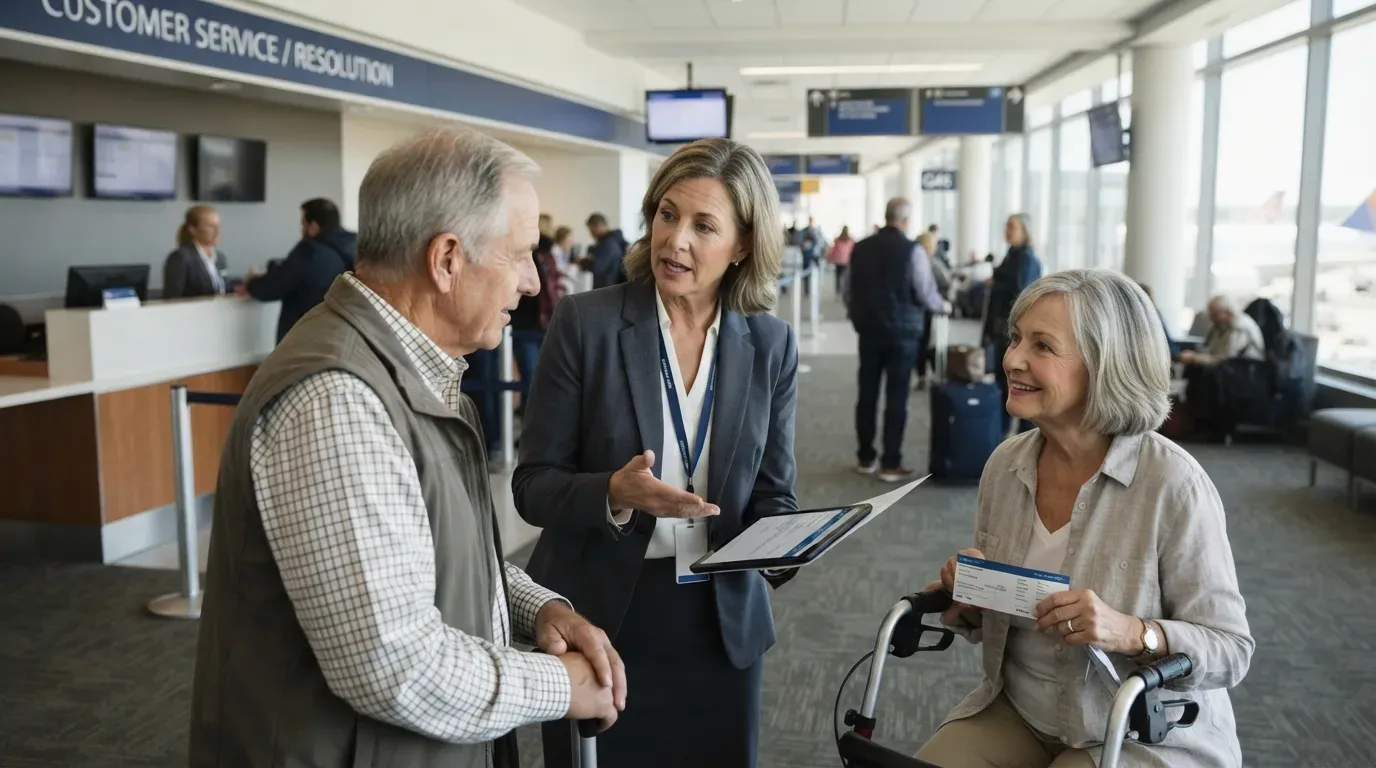
When a gate agent can’t – or won’t – fix a disability-related problem, there’s a specific person who can. Each air carrier must have at least one Complaints Resolution Official available at each airport during scheduled operations, and that official has authority to resolve complaints on behalf of the air carrier.
These officials must respond to a complaint in person or by phone within 15 minutes and are empowered to make decisions to resolve problems. Most passengers never ask for a CRO by name – they just accept whatever the first agent tells them. But this role can overturn a bad answer on the spot, which matters most exactly when a flight is falling apart. The next fix covers you literally on the plane, sitting on the tarmac…
#2 – They Feed You and Keep the Restrooms Running During Ground Holds
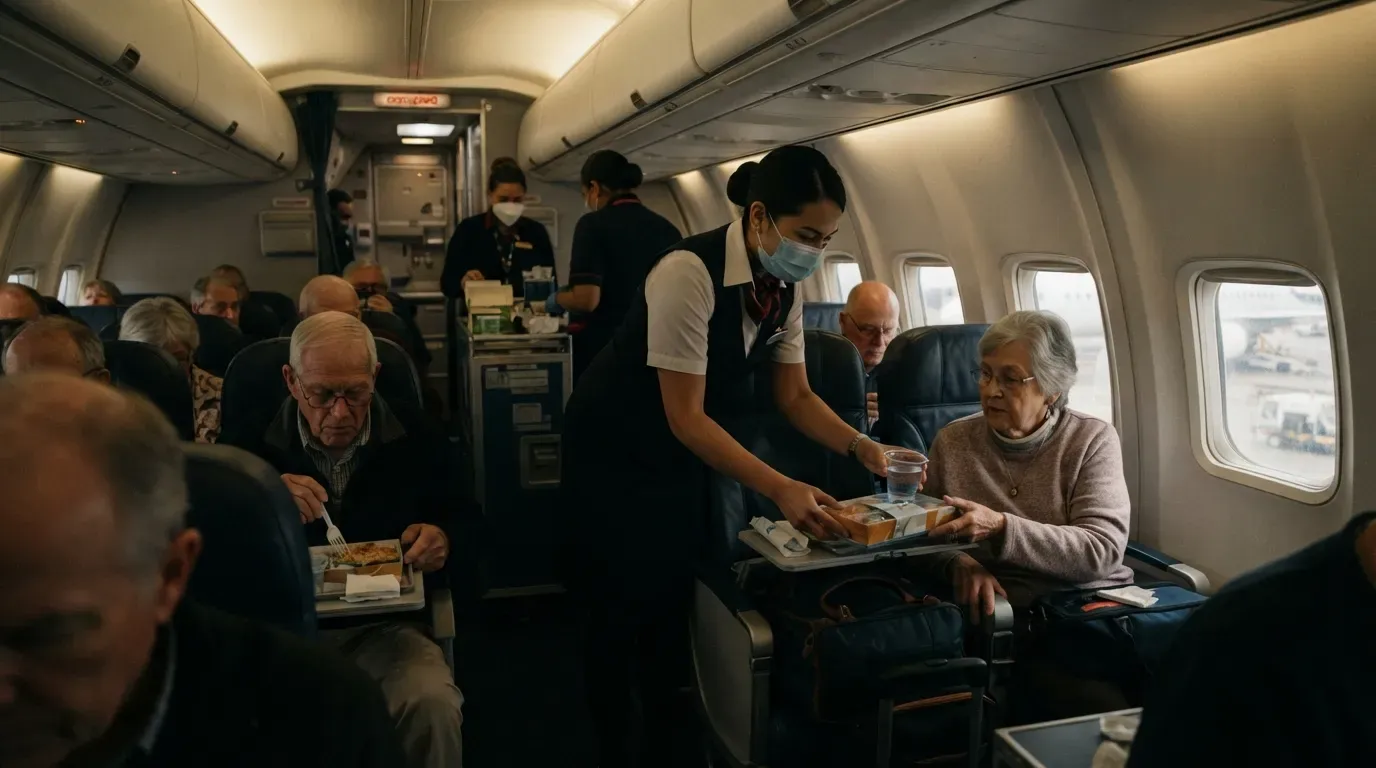
A delay doesn’t end once you’re in your seat – sometimes it just moves to the runway. Airlines have specific obligations once that happens. If a flight experiences an extended tarmac delay after boarding or after landing, airlines commit to providing timely information on the situation, along with essential needs including, as safety and security conditions allow, food, water, operable restroom facilities, and access to medical treatment.
This isn’t a goodwill gesture – it’s part of published customer-service commitments that airlines are required to adhere to, including commitments to care for customers during controllable delays, with the Department holding airlines accountable if they fail to do so. Most passengers assume they’re simply stuck once the doors close – they aren’t. Ask a flight attendant directly if the hold is approaching the extended-delay threshold. The final fix is the one that protects your actual seat and your place at the gate…
#1 – They Guarantee You Won’t Be Downgraded to a Worse Seat – Or Left Behind at the Gate
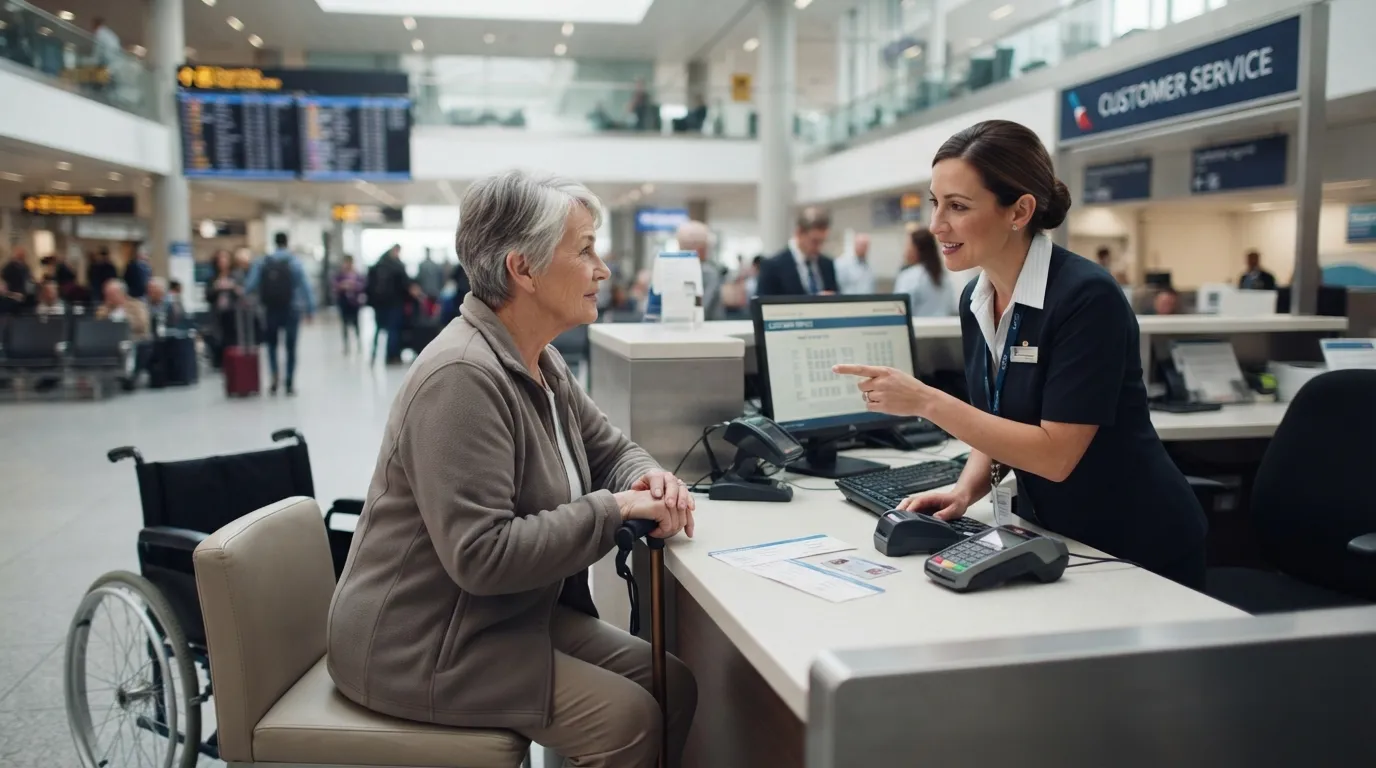
This is the protection that matters most when a rebooking goes sideways, because it touches both your seat and your body’s access to it. Aircraft changes that are less accessible or accommodating to a disabled person qualify as a significant change entitling you to a refund instead of forced acceptance of a worse seat.
On top of that, airlines are required to provide prompt assistance with boarding, deplaning, and making connections, along with assistance within the cabin, though not extensive personal services. Most travelers over 60 never connect these two rules together – the right to refuse a worse seat, and the right to guaranteed connection help – even though both activate the moment a disruption forces a new aircraft or a tight new gate. Together, they’re the quiet backstop behind everything else on this list.
Why It Stands Out
- Covers both your seat and your physical ability to reach it
- Triggers automatically, with no need to prove disability status in the moment
- Applies whether the disruption comes from weather, mechanical issues, or overbooking
- Works alongside every other protection on this list, not instead of them
None of these 13 fixes require a lawyer, a loud voice, or a lucky agent. They’re written into federal rules and airline customer-service plans that most people never open until a delay screen turns red. What separates a miserable rebooking from a manageable one is almost always the same thing: knowing which desk to ask for, and which question to ask first.
The travelers who move through disruptions calmly aren’t lucky – they simply know these protections exist before they need them. Which one of these thirteen did you not know about until now? Drop it in the comments – someone scrolling past needs to see it before their next flight.