
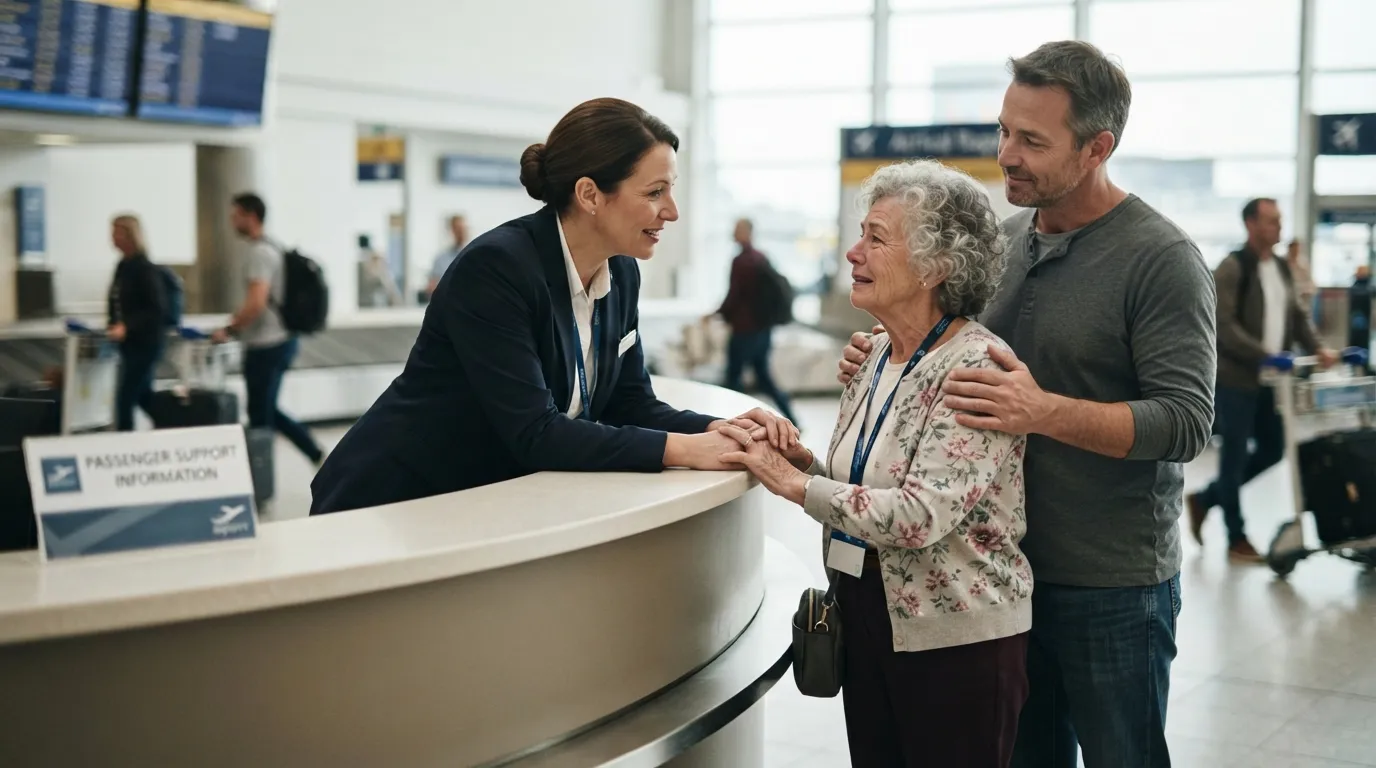
Most people walk past the airport information desk assuming it exists for one reason: pointing lost tourists toward Gate C14. Ask any frequent flyer over 60, though, and you’ll hear a completely different story – one full of quiet phone calls, discreet lanyards, and staff who somehow know what you need before you finish the sentence.
None of this shows up on a terminal sign. It lives in the muscle memory of the people working the counter, and most travelers only discover it by accident, usually mid-crisis. Here’s what’s actually happening behind that desk, and why so many older travelers say they wish someone had told them sooner.
13. They’ll Get You a Wheelchair Even Without a Reservation
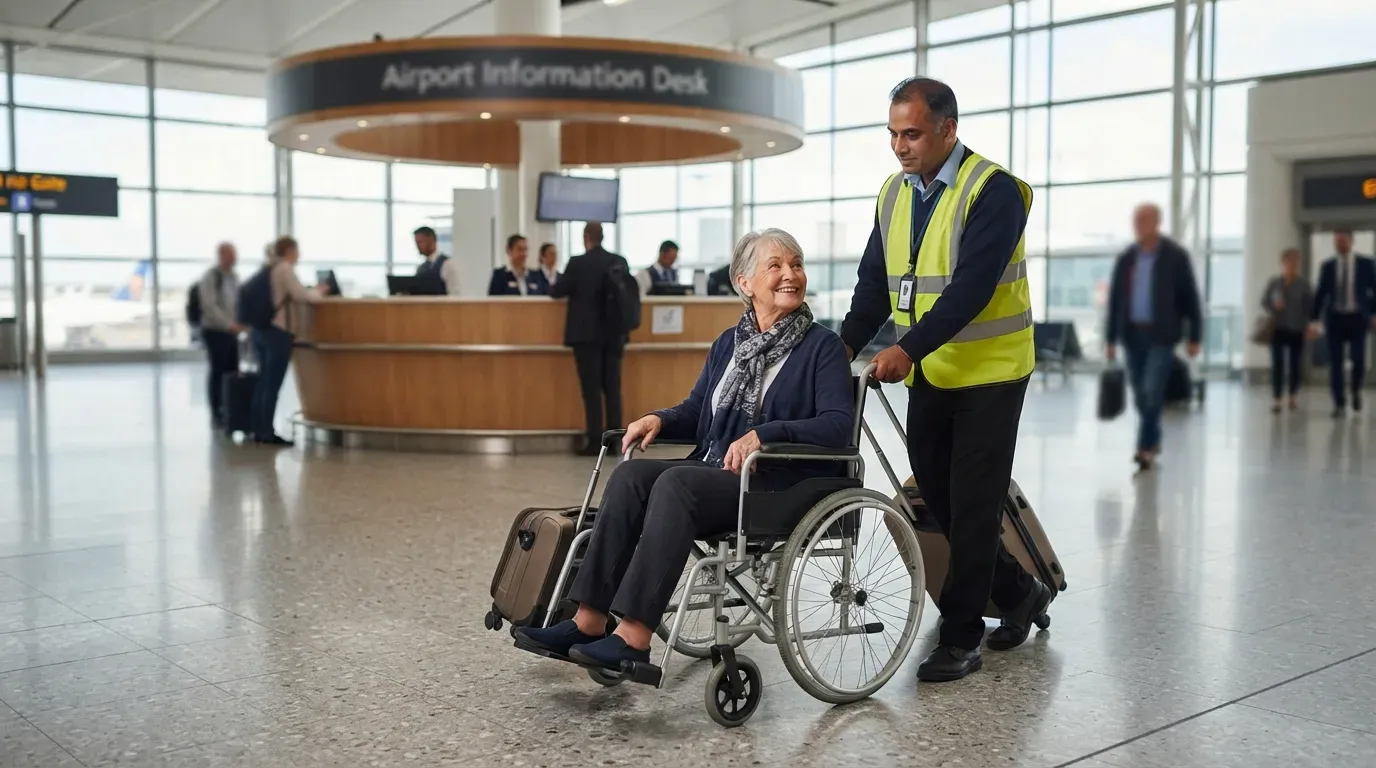
Most people assume wheelchair service only works if you’ve booked it 48 hours ahead through the airline. That’s the recommended route, but it’s not the only one. Show up at the information desk without a reservation, and staff will still get you assistance and walk you through what happens next.
This matters more than it sounds like it should. A 2022 Department of Transportation survey found more than 25% of air travelers 65 and older use some form of airport assistance, including wheelchairs – one in four older flyers leaning on a service most assume requires weeks of paperwork. Some airports even keep golf carts idling near baggage claim, dispatched free the moment someone simply asks.
Fast Facts
- Wheelchair service is arranged through the airline, not TSA, so requests can happen at check-in, curbside, or the information counter.
- More than one in four travelers 65 and older used some form of airport assistance service, according to a 2022 federal survey.
- Airlines encourage requesting help in advance, but same-day, no-reservation requests are still honored at most counters.
- Some terminals keep courtesy golf carts staged near baggage claim, ready to roll the moment someone asks.
12. Security Rules Quietly Bend Once You Turn 75
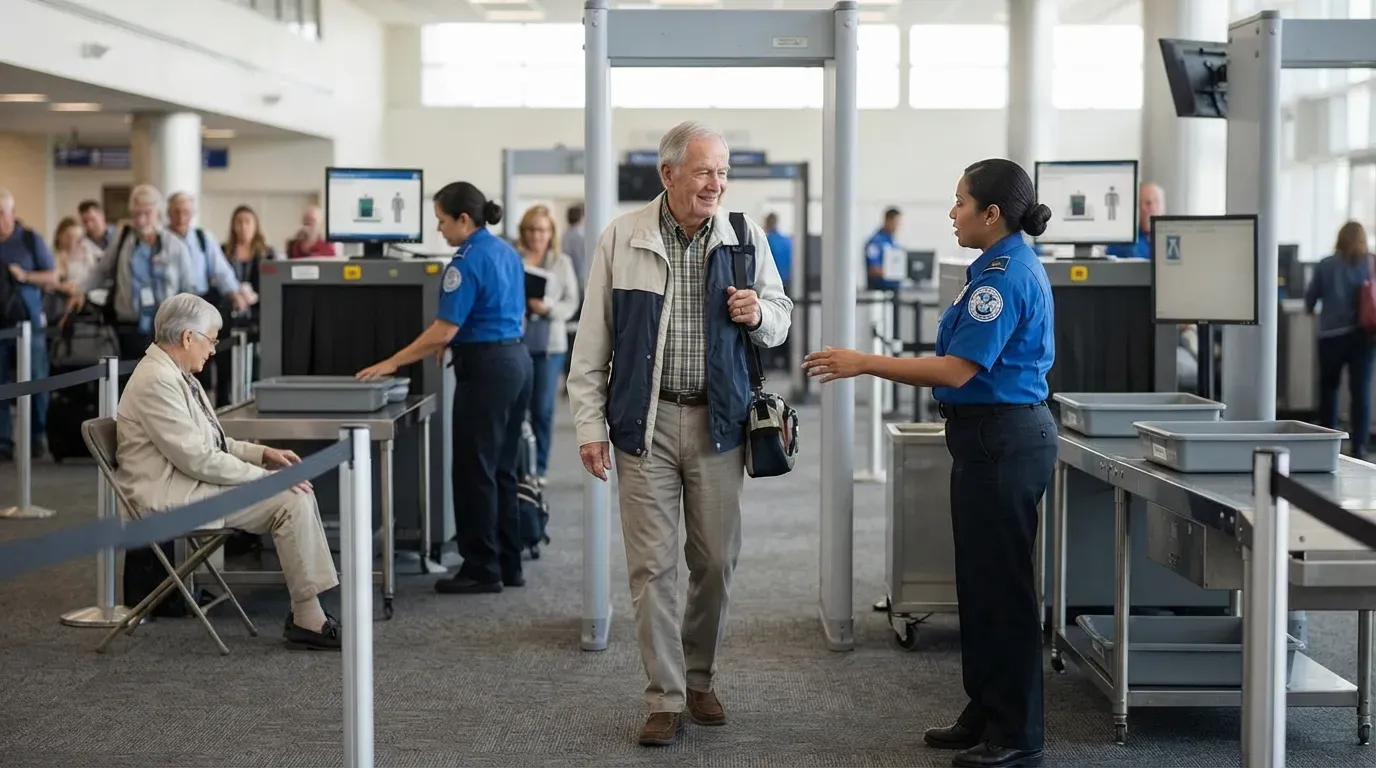
Here’s something almost nobody explains before your first post-75 flight: the entire screening process changes underneath you. Passengers 75 and older qualify for risk-based, intelligence-driven screening, which means shoes and a light jacket can often stay on instead of getting peeled off at the belt.
If standing that long is a problem, you can ask to sit down mid-screening, and travelers unable to stand are moved through alternative security methods instead. Staff at the info desk know this rule cold, even though it’s rarely posted anywhere near the checkpoint itself. Travelers with medical implants get similar quiet accommodations, since other screening procedures kick in automatically once a device is disclosed.
11. A Personal TSA Escort Exists, and It Costs Nothing
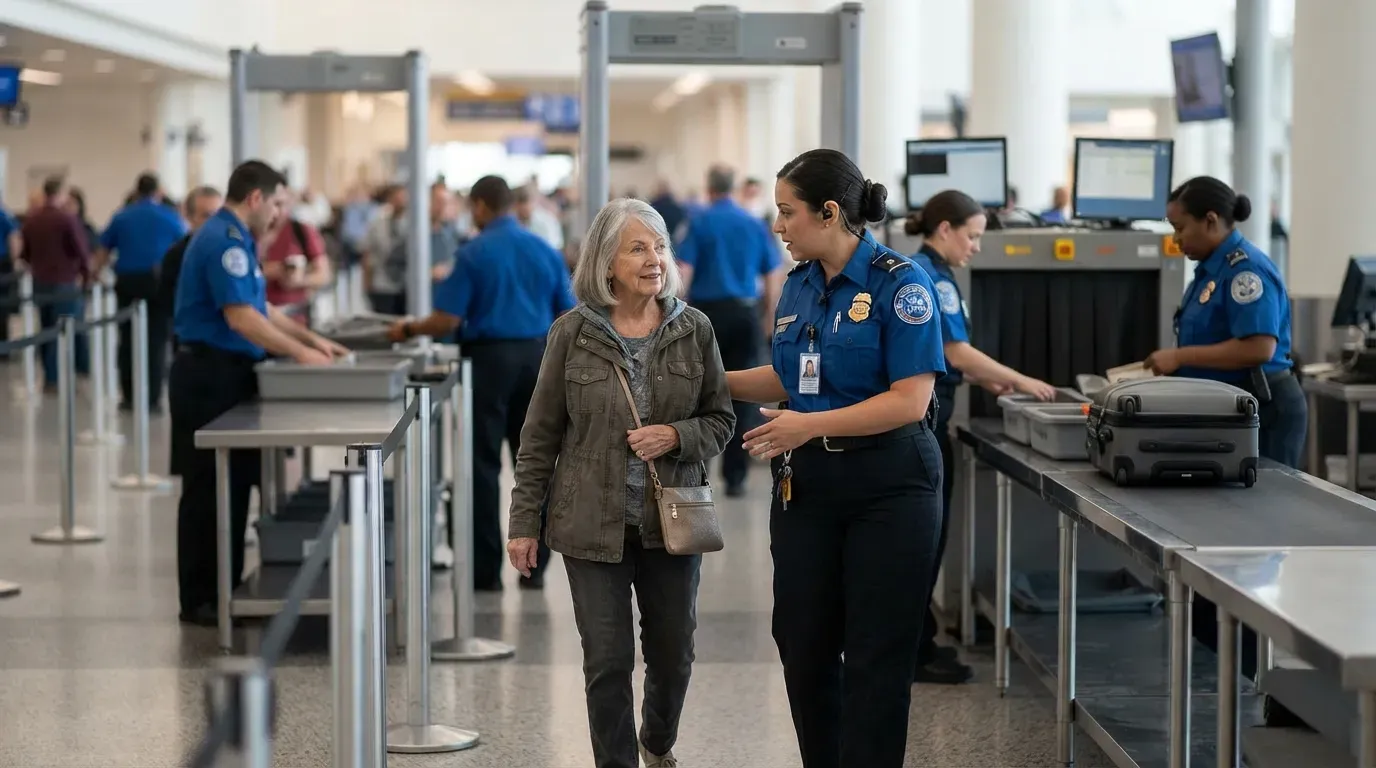
This one surprises even seasoned travelers: TSA employs officers whose entire job is walking anxious or vulnerable passengers through security personally. The program is called TSA Cares, and it exists specifically to make the checkpoint feel less like a maze and more like a hallway with someone holding the door.
These aren’t badge-holders reading a script – Passenger Support Specialists receive real training in communicating with people who have disabilities or medical conditions. Information desks quietly flag these requests for travelers who had no idea the service existed until the moment they needed it. There’s no sign-up, no membership, no paperwork trail – you simply ask, and someone appears.
Quick Compare
- Call ahead: TSA recommends requesting a Passenger Support Specialist at least 72 hours before departure by phone or online form.
- Same-day ask: Travelers who didn’t plan ahead can still request an escort at the checkpoint or through the information desk.
- Either way: The service is free, doesn’t skip screening, and simply moves it at a slower, more supported pace.
10. Curbside Teams Get Dispatched Before You Even Reach the Door
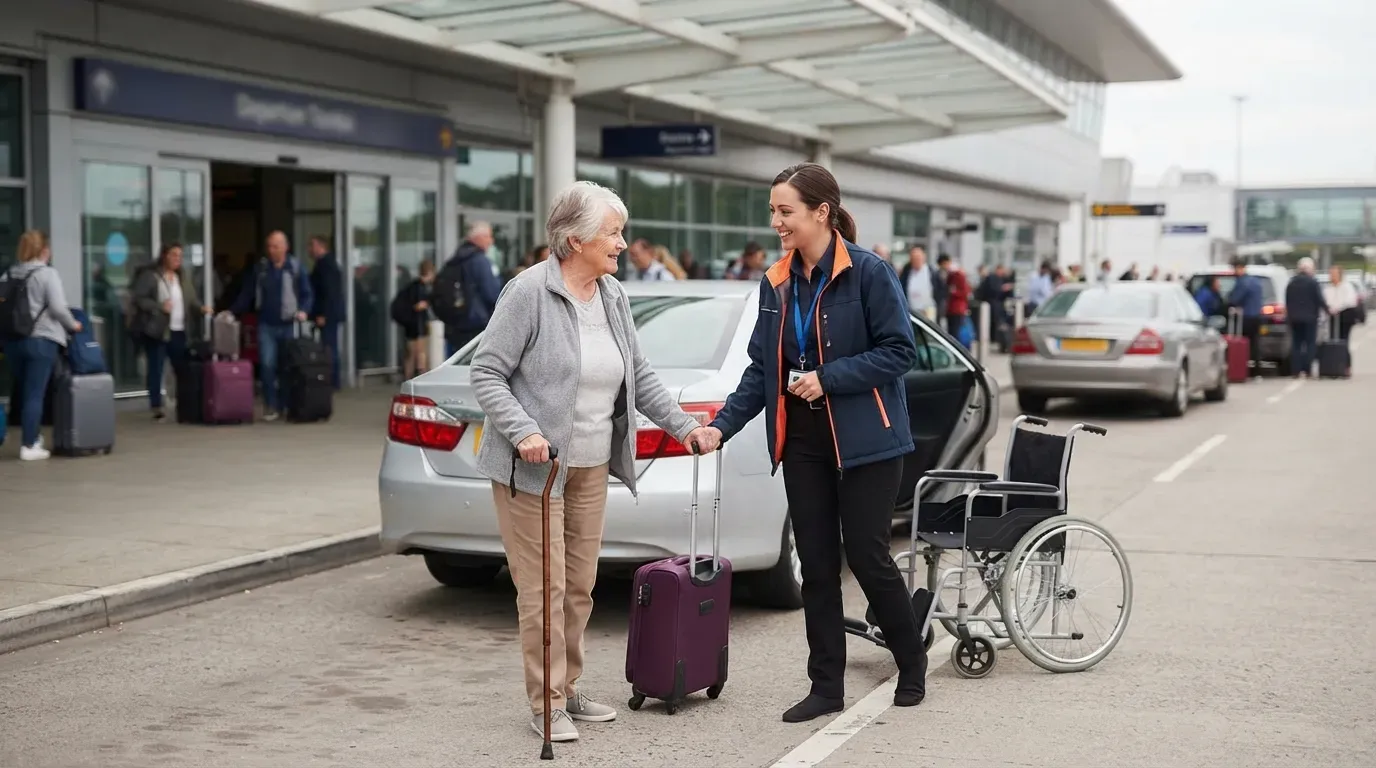
Some travelers never make it inside the terminal unassisted, and most don’t realize that’s even an option. Many airports run curbside programs that send staff straight to your car door, then walk with you through ticketing, security, and all the way to the gate.
These curbside crews do more than push a wheelchair – some will help return a rental car or track down ground transportation on your behalf. Coverage varies airport to airport, so it’s worth checking ahead if you’re connecting through somewhere unfamiliar. One small courtesy most people forget: those courtesy drivers work on tips, and a few dollars goes a long way for a service that never shows up on any directory board.
9. Missed Connections Get a Personal Guide, Not Just a Gate Number
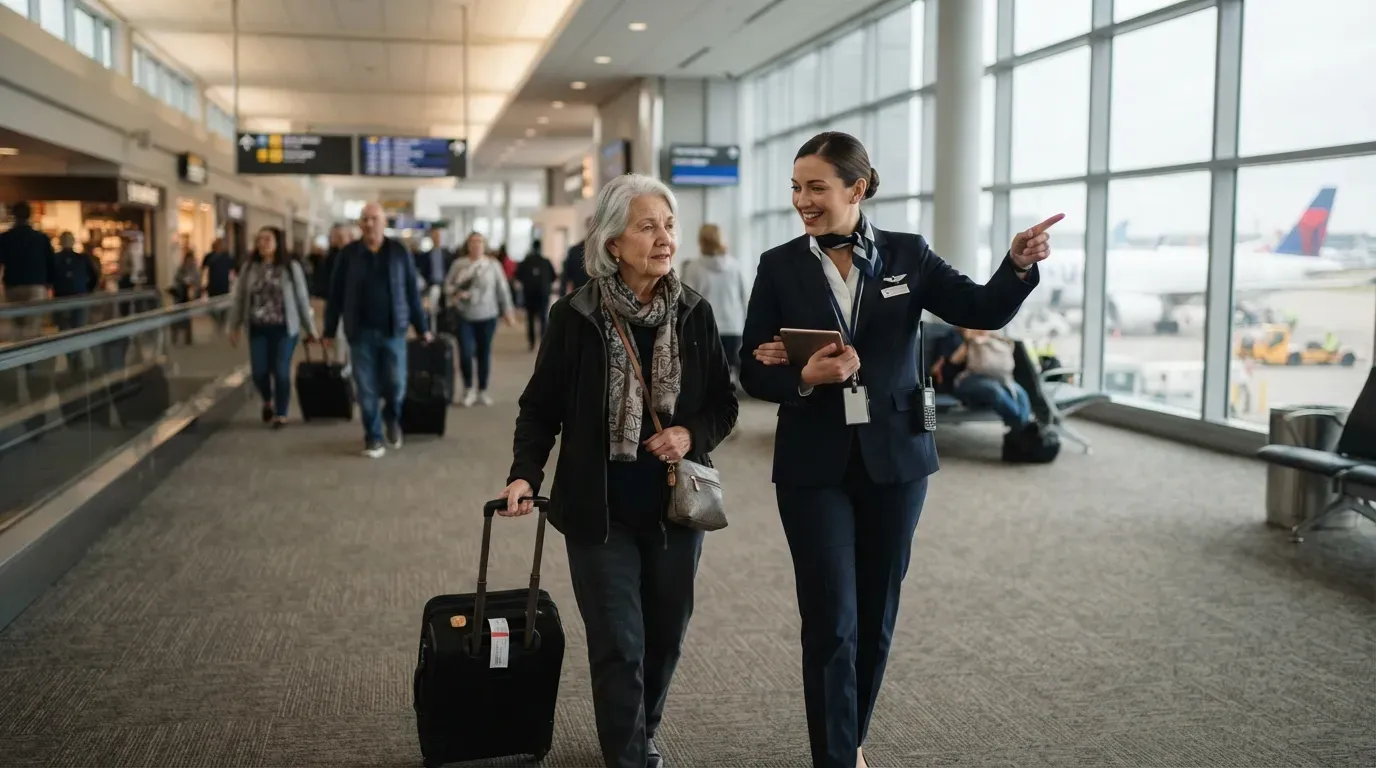
Nothing rattles an older traveler faster than a tight connection in an unfamiliar terminal. Behind the scenes, information desks quietly coordinate an escort that stays with you the entire route – airlines are actually required to help passengers get from their arriving seat all the way to a connecting gate when time is short.
This isn’t limited to wheelchair users. Many airlines will arrange gate-to-gate escorts for older travelers who simply feel overwhelmed navigating a sprawling terminal alone, especially during long layovers or holiday crowds. Right now this service lives almost entirely in word-of-mouth and quiet desk conversations – there’s a real argument it should be advertised far louder than it is.
8. A Small Lanyard Quietly Signals “I Need Extra Patience”
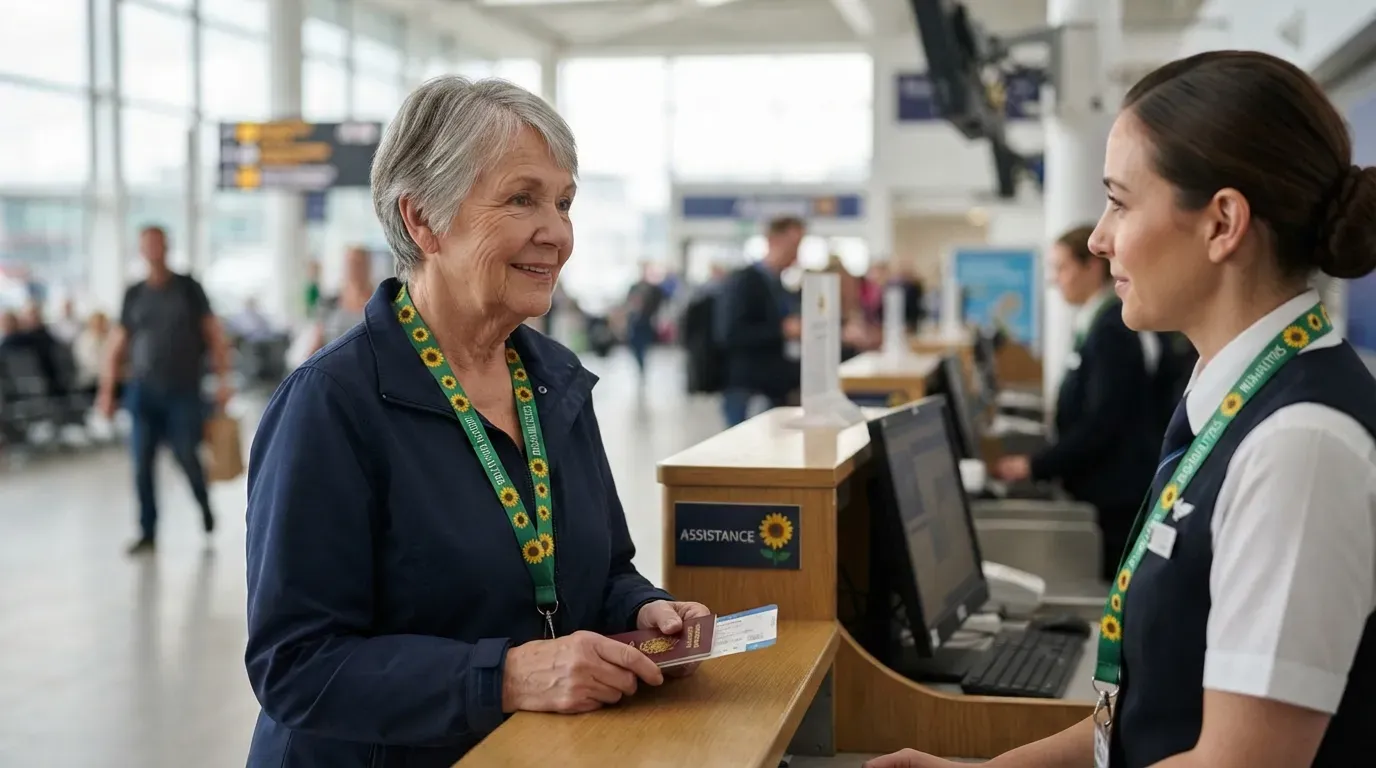
There’s a discreet system many older travelers have never heard of, and it costs absolutely nothing to use. Most airports support the sunflower lanyard program, a simple loop worn around the neck that tells every staff member you meet: this person may have a hidden disability.
No documentation, no appointment, no awkward conversation required – just ask at the assisted travel desk and one gets handed over. For travelers managing memory issues, chronic pain, or anxiety that isn’t visible to a stranger’s eye, that lanyard changes the whole texture of an interaction: slower explanations, more patience, fewer rushed instructions. It’s one of the quietest tools in the entire airport, and almost no sign anywhere mentions it exists.
7. Your Reservation Already Whispers Your Needs to Staff
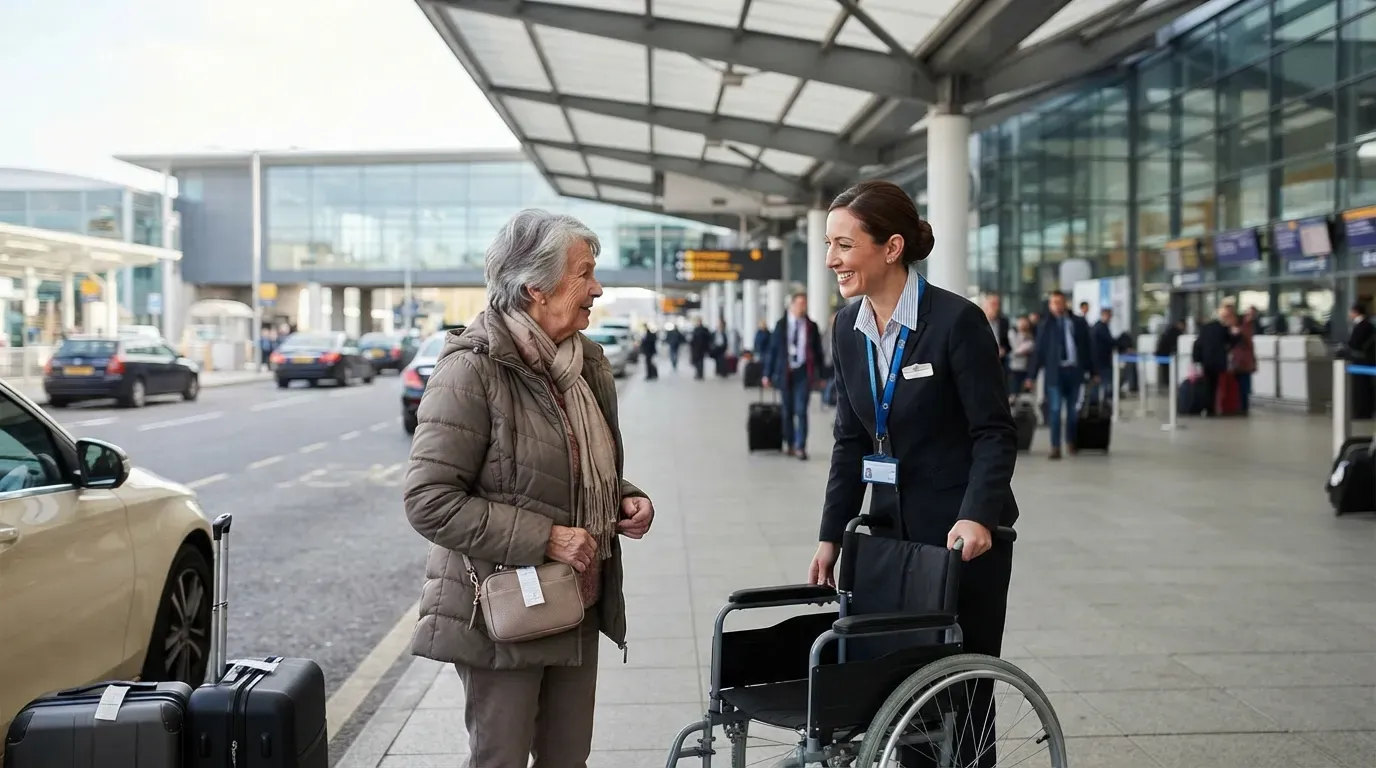
Long before you reach the counter, a note may already be attached to your booking. Once a senior or family member calls the airline at least 48 hours ahead, most reservations get flagged with a “special assistance requested” note, so staff know to meet the traveler at check-in or curbside without being asked.
This quiet flag is exactly why some travelers swear staff “just knew” what they needed – it’s not intuition, it’s a system working in the background. Arriving early gives the wheelchair or mobility team room to actually coordinate around that note. Skip the advance call, though, and you’re relying entirely on the info desk to improvise that same coordination on the spot, under time pressure.
Worth Knowing
- The advance call goes to the airline, not TSA, and generally needs to happen at least 48 hours before departure to reach the reservation in time.
- A flagged reservation can trigger wheelchair, mobility, or escort coordination automatically at check-in and curbside.
- Arriving early gives ground crews real time to act on that note instead of scrambling last minute.
- Skipping the call doesn’t mean no help – it just shifts the coordination onto the info desk in real time.
6. Medically Necessary Liquids Get Quiet Exceptions
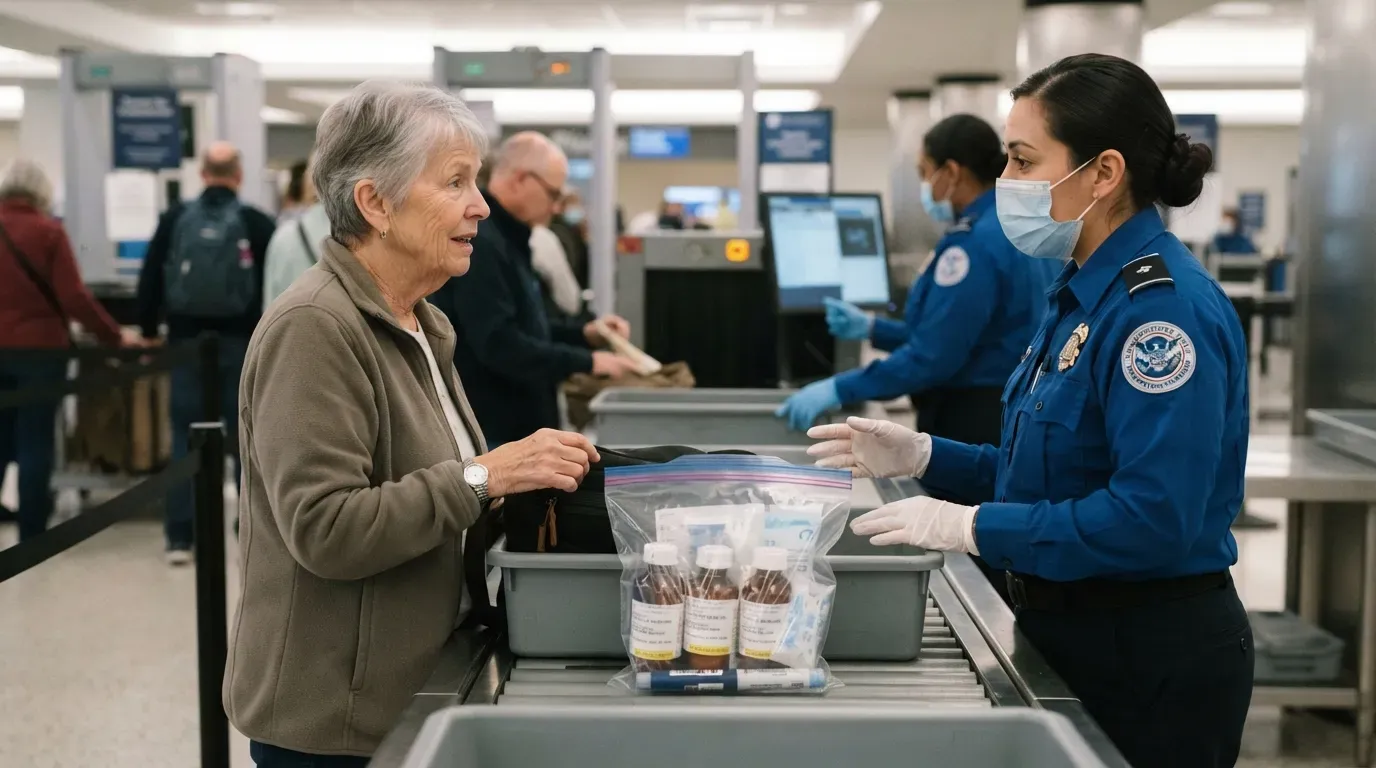
The 3.4-ounce liquid rule stresses out plenty of older travelers carrying medications, and most don’t realize there’s already a built-in exception waiting for them. Passenger Support Specialist assistance is available specifically for travelers carrying medically necessary liquids, gels, or aerosols over the limit.
This applies quietly, usually without anyone demanding a doctor’s note on the spot. Travelers managing insulin, saline, or liquid antibiotics can flag the need directly with staff, who are trained to route the items through properly instead of confiscating them at the belt. In one documented case, a traveler carrying a large supply of liquid antibiotics was anxious about the whole process until a specialist walked him through it personally, bag in hand.
5. Language Barriers Get Quiet, Personal Help
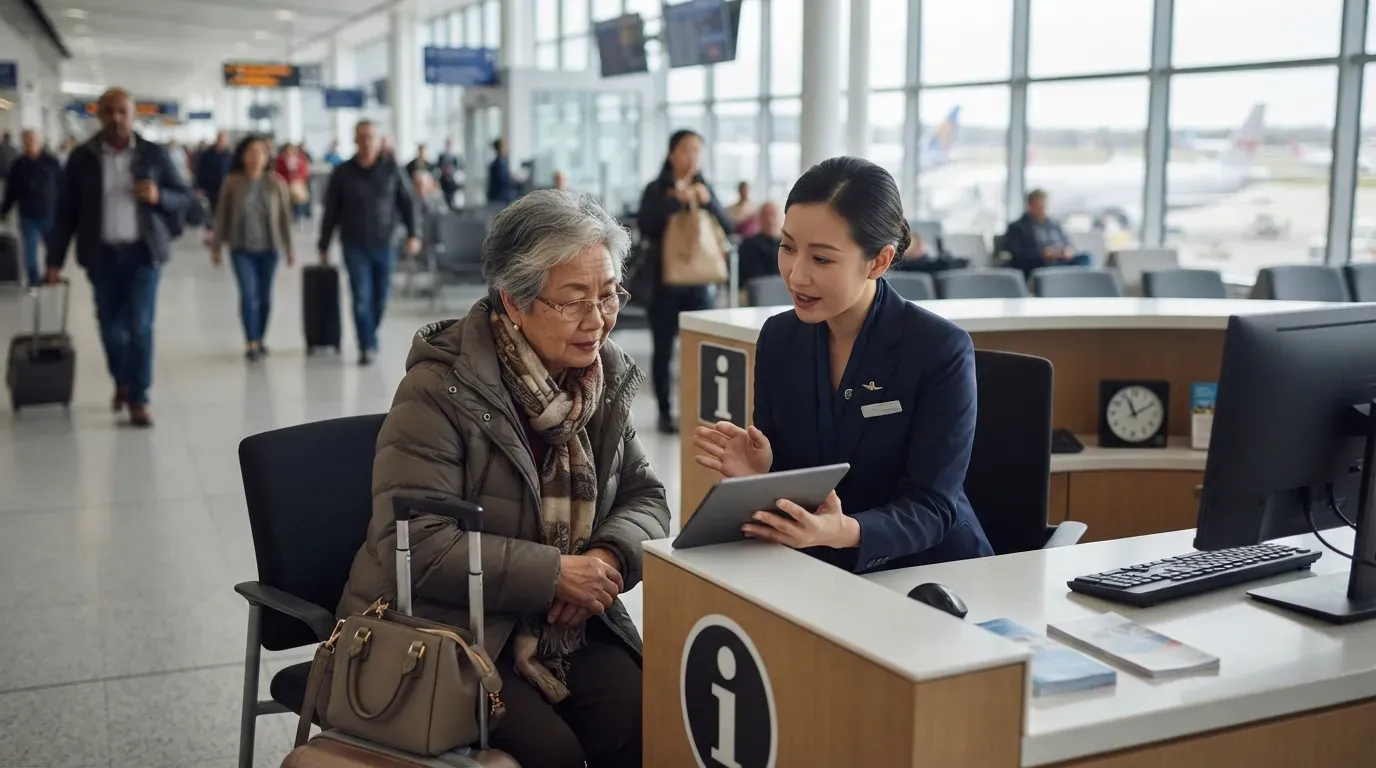
Not every travel struggle after 60 is physical. Plenty of older travelers – especially those who learned English later in life, or who are flying internationally to see family – freeze up completely at rapid-fire gate announcements they can’t quite catch.
This is a far more common request than most people assume, and it’s built directly into the Passenger Support Specialist program alongside age, medical conditions, and first-time-flying anxiety. Information desks quietly loop in staff who speak a traveler’s language whenever one is on shift, or simply slow the whole process down so nothing gets lost in translation. It’s rarely posted anywhere, but it gets used every single day.
4. Chaplains Show Up in Person, Any Hour of the Day
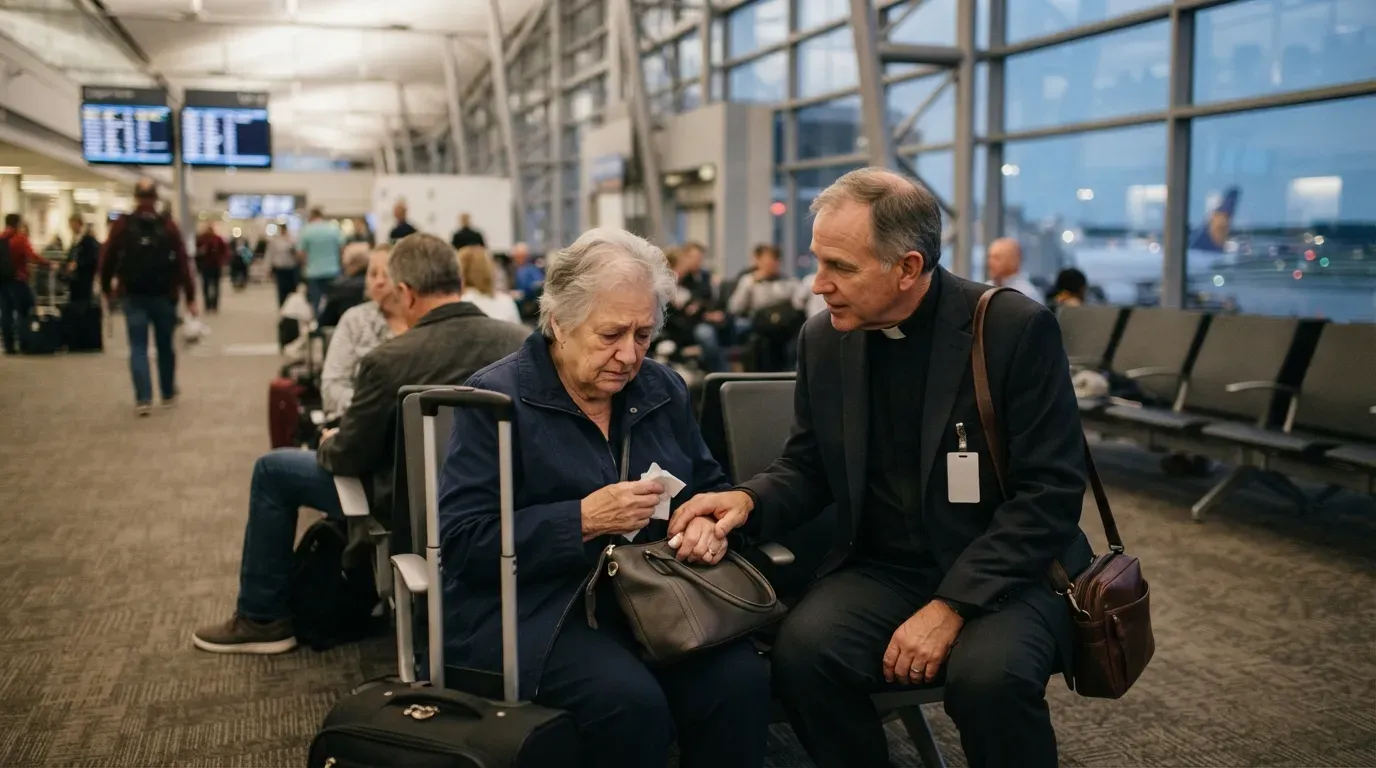
This is the one that catches almost everyone off guard: some airports run interfaith chaplain services around the clock, and chaplains will walk directly to a passenger anywhere in the terminal to offer a calm, comforting presence during a hard moment.
You don’t need to belong to any particular faith to request one – a call to the airport’s information line or a word to any airline employee is enough to set it in motion. For an older traveler flying alone after a loss, a diagnosis, or a sudden family emergency, this quiet service has talked more than a few people through the worst hour of their trip, completely off the radar of any terminal signage.
3. Quiet Lounges Exist Just for Waiting, Charging, and Breathing
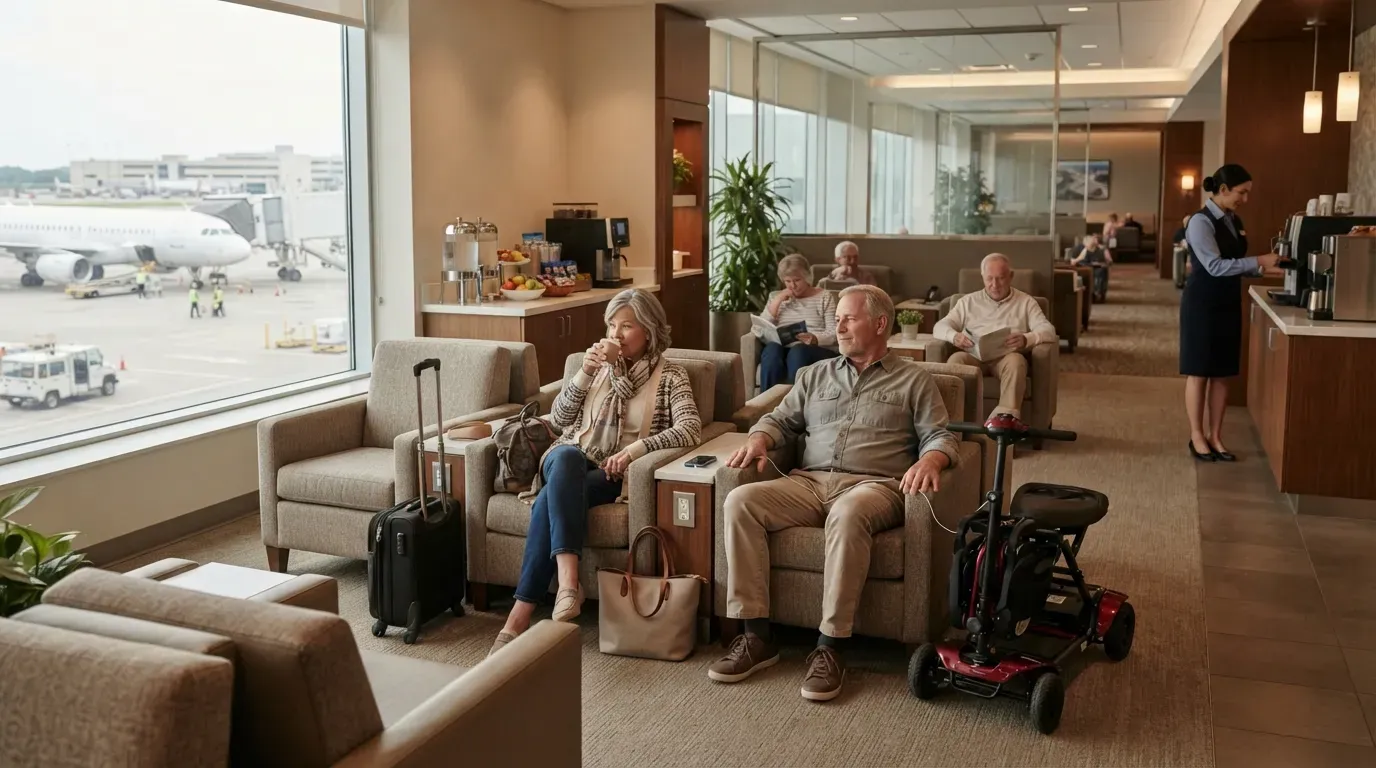
Long layovers hit differently after 60, and information desks know exactly which quiet corners of the terminal actually help. Certain lounges offer comfortable seating, snacks, and staff on hand for any need that comes up, with outlets available for charging mobility devices between flights.
Not every terminal advertises these rooms openly, and hours can shift depending on the flight schedule, so it’s worth checking with the airport ahead of a long connection. The value isn’t just comfort – it’s having a quiet space with knowledgeable staff nearby, ready for whatever a senior traveler might need, making the whole day noticeably less exhausting.
2. A Sensory “Calm Room” Exists for Overwhelmed Travelers

At Phoenix Sky Harbor and a growing number of airports nationwide, there’s a room built entirely around de-stressing, and it’s far more specific than a generic quiet corner. It’s called the Compassion Corner, stocked with puzzles, twinkle lights, and tables built for exactly one purpose: giving sensory overload somewhere to go.
Anyone struggling with overwhelm can use it, not just travelers with a diagnosed condition. TSA Cares officers sometimes personally walk passengers there, letting them sit in peace until it’s time to head to the gate. For an older traveler rattled by crowds, delays, or a confusing terminal layout, this room quietly does what no announcement ever could – it gives them somewhere to simply stop and breathe.
At a Glance
- Phoenix Sky Harbor’s Sensory Room sits inside the Compassion Corner in Terminal 4, pre-security near the B checkpoint.
- The room is stocked with tables, chairs, puzzles, and coloring books for a low-stimulation break.
- Hours typically run 8 a.m. to 8 p.m. Sunday through Friday, and 8 a.m. to 4 p.m. on Saturdays.
- A neon green Compassion Cacti lanyard – Phoenix’s answer to the UK’s sunflower lanyard – quietly flags travelers who need extra patience.
1. Staff Quietly Reunite Confused or Separated Travelers With Family
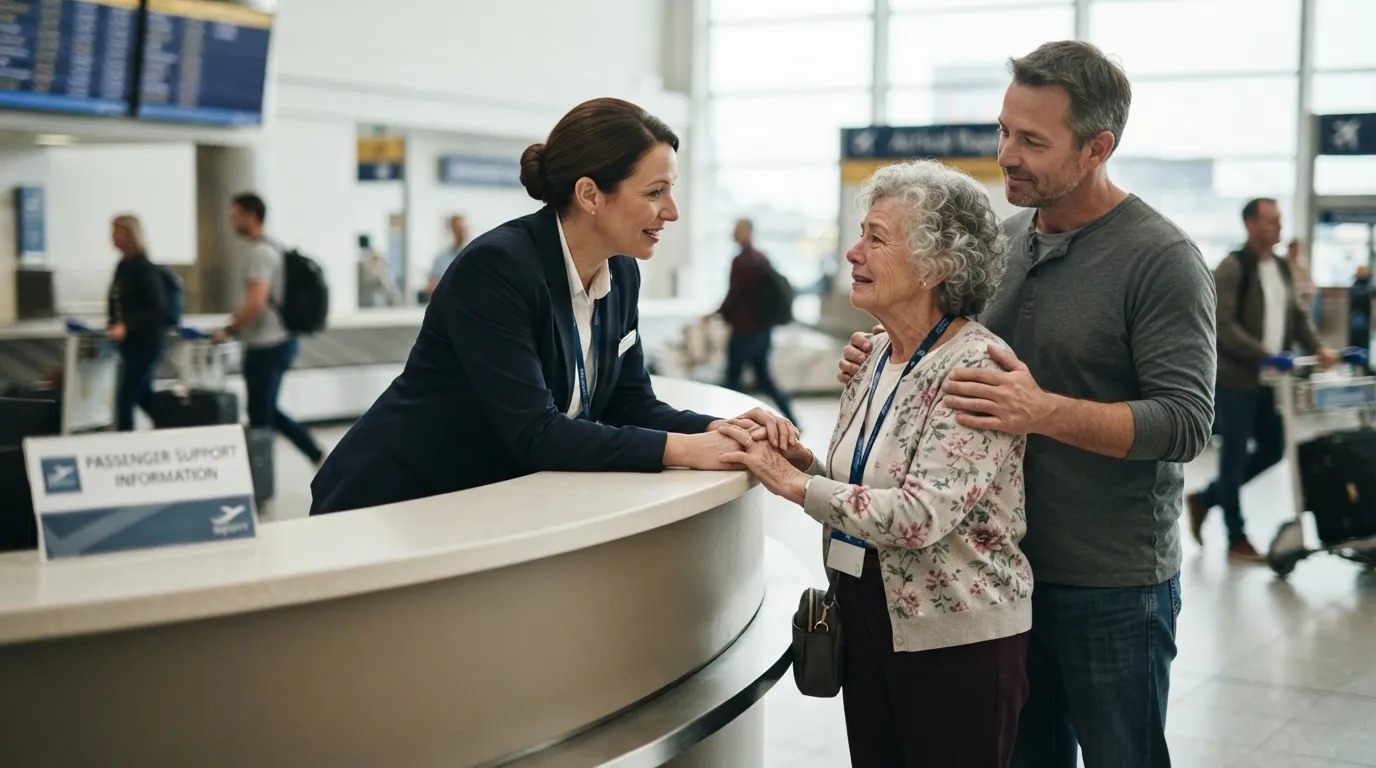
This is the service nobody wants to need, and the one that matters most when they do. Passenger Support Specialists regularly work with older travelers who become disoriented mid-journey – people with dementia unable to navigate the airport alone, or passengers flying to a funeral, so heavy with grief they need moral support more than directions.
The emotional weight of this work is real, and staff feel every bit of it.
We’ve had so many passengers literally go into tears because they are so happy with our team and how much we comfort them and really show them that we care.
TSA Supervisor
Behind the counter, staff make phone calls, track down family members waiting at baggage claim, and stay with a confused traveler until someone familiar walks up – a service that never once appears on a directional sign, yet quietly holds entire trips together.
Add it all up, and the information desk stops looking like a simple help counter and starts looking like a small, quiet safety net running underneath every terminal in the country. From bent security rules to sensory rooms to staff who track down a lost family member without being asked twice, most of this only becomes visible the moment someone over 60 actually needs it. The rest of us just walk past, assuming it’s only there for directions – until, one day, it isn’t.