

Most people over 60 walk up to a rental counter bracing for a fight – more paperwork, more questions, maybe even a quiet judgment about whether they should still be driving at all. That fear is almost entirely misplaced. In the U.S., older drivers are treated nearly identically to everyone else standing in line behind them.
But “nearly identical” is doing a lot of hiding, and that small gap is exactly where agents quietly make their money. What’s actually happening behind that counter is a mix of outdated myths, real loopholes, and perks most renters over 60 never think to ask about – and once you know them, the counter stops having any power over you at all.
#15 – The “Too Old to Rent” Myth That Refuses to Die

Here’s the truth: there is no nationwide maximum age to rent a car in the United States. Most 65- and 70-year-old renters walk up, hand over a license, and drive off exactly like a 40-year-old would. The fear of being turned away at the counter is almost entirely imported from overseas rental rules that don’t even apply here.
That confusion comes from age caps abroad, where limits between 70 and 80 are common. Canada matches the U.S. with no age limit at all, while Mexico generally caps rentals at 75. Puerto Rico is the odd one out – Advantage, Europcar and Sixt won’t rent to drivers over 75 there. Agents rarely mention that distinction unless you push them on it directly.
Quick Compare
- United States: no national age limit
- Canada: no age limit
- Mexico: generally capped around 75
- Puerto Rico: some brands cap at 75 (Advantage, Europcar, Sixt)
#14 – Hertz Has a Program Most Seniors Never Ask About

While AARP soaks up all the attention, Hertz quietly runs its own senior track most travelers never ask about. Hertz offers seniors discounts of up to 20% through its 50 Plus Program, open to anyone 50 and older. There’s no AARP card required and no membership fee – just proof of age.
The catch most desks won’t mention is that Hertz doesn’t offer a discount through AARP, so the two programs can’t be stacked together. Hertz and Thrifty run their own separate senior discounts, completely independent of AARP. That means renters have to actively pick one path over the other. Ask which program actually applies before you book, not after you’ve already paid.
#13 – The Hidden 5% Gap Buried in “Pay Now vs. Pay Later”

Two AARP renters can book the identical car for the identical week and walk away paying noticeably different amounts. Avis and Budget both offer two AARP discount tiers, and the gap between them is bigger than it looks. Pay Now saves 35%, while Pay Later at the counter only saves 30%.
That five-point gap equals roughly $20 on a $400 week-long rental, and almost nobody explains it at booking. Agents rarely flag it because Pay Later feels “safer” to nervous travelers worried about changing plans. If your trip is uncertain, Pay Later still lets you cancel without penalty at most locations. It’s a real tradeoff between peace of mind and cash saved, not a hidden scam.
#12 – The Free Second Driver Perk Nobody Mentions Unless You Ask

Traveling with a spouse or friend who shares the driving? There’s a fee waiver most desks stay completely silent about. At both Avis and Budget, the additional driver fee is waived for AARP members – a real perk since extra-driver fees typically run $10 to $15 per day.
Multiply that across a full trip and the number gets hard to ignore. On a 7-day vacation with a spouse sharing driving duties, that’s $70 to $105 in fee waivers sitting on the table. Agents almost never bring this up on their own – it only applies if you specifically request it and mention your AARP number at check-in. Forget to ask, and that money just quietly disappears into the bill.
#11 – Three Big Names Quietly Offer Nothing for Seniors

This is the one that causes real frustration at the counter. Enterprise, National, Dollar, and Alamo have no dedicated AARP or senior discount programs at all. Yet plenty of renters show up assuming their AARP card works everywhere, the same way it does at a hotel or restaurant.
Enterprise gets asked about this constantly, and the answer never changes. There’s no member code and no automatic price reduction at checkout just for holding an AARP card. If an agent hands you a “senior rate” at one of these four counters, it’s a general promotion open to everyone, not an age-based benefit.
#10 – AAA Members Can Actually Beat AARP Pricing

Loyalty to one membership card can quietly cost you real money. If you’re choosing between AAA and AARP, the math doesn’t always favor the one people assume. AAA offers up to 30% off at Hertz, which beats Hertz’s own 50 Plus program outright.
That gives AAA members a genuine alternative to the AARP-only companies, and almost nobody mentions it. Since AARP’s strongest deals live at Avis and Budget while AAA’s strength sits at Hertz, holding both memberships and comparing before booking is one of the smartest moves a senior traveler can make. Most counters won’t run this comparison for you – it’s entirely on the renter to check both first. Skip that step, and you might be leaving real savings on the table.
#9 – Debit Cards Trigger a Very Different Rental Experience

Plenty of retirees prefer debit cards to avoid interest charges, but rental counters treat that choice harshly. Many seniors lean on debit for exactly that reason, and it can quietly trigger extra fees or a much higher deposit requirement. That deposit can run as much as $500 held against a checking account.
That’s not a minor inconvenience – it’s a hold that can freeze hundreds of dollars for days at a time. Agents rarely warn travelers about this until they’re already standing at the counter, card in hand. Bringing a credit card, even one used only for the deposit hold, sidesteps the entire situation.
#8 – Your Credit Card May Already Cover What You’re About to Pay For

The insurance pitch at the counter is where rental companies quietly make their real margin. Most agents are trained to offer the collision damage waiver as a default, not to ask what you already have. Checking whether your credit card covers rental insurance first can change the entire conversation.
Declining the rental company’s waiver can save $15 to $30 per day if your card already provides primary coverage. That means the burden falls entirely on the renter to know their own card’s benefits before arriving at the counter. A five-minute call to your card issuer before the trip can quietly save more than any age-based discount combined.
Worth Knowing
- Many premium cards include secondary or primary rental coverage at no extra cost
- Declining the counter’s waiver can save $15 to $30 per day
- Some cards require you to decline the rental company’s own insurance to activate coverage
- A quick call to your card issuer confirms the exact terms before you travel
#7 – Skipping the Counter Entirely Is a Legitimate Option
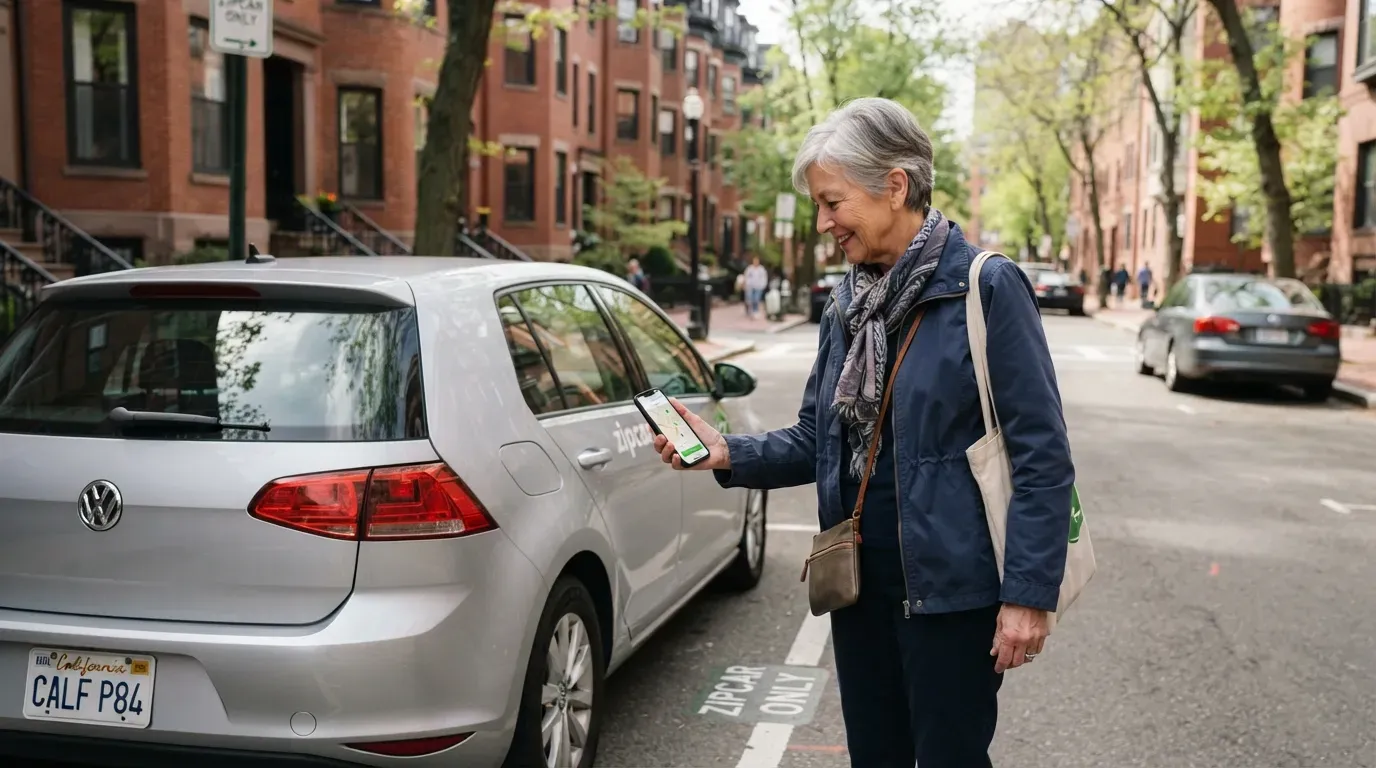
Not every rental has to involve a counter, a line, or an agent at all. With Zipcar, you simply book a car parked nearby and unlock it with an app – no attendant, no paperwork, no waiting in line. When you’re done, you just park it back in the same general area.
For seniors who genuinely dread counter lines, this is a legitimate workaround, not a gimmick. AARP members get $20 off an annual Zipcar membership, and first-time users get a $40 free driving credit. It won’t cover every trip, but for short errands or a city visit, it erases the entire counter experience completely.
#6 – The Doctor’s Note Requirement Is Real, But Narrow

Some renters panic the moment they hear “medical clearance,” assuming it applies to everyone over a certain age. It doesn’t – but it isn’t a myth either. At some companies, drivers over 75 are required to contact them in advance, provide a doctor’s letter, and purchase several additional insurance coverages.
This rule isn’t universal and isn’t tied to a specific U.S. law – it’s company-specific and often country-specific. Some rentals in Ireland or Eastern Europe won’t rent to drivers over 75 without a doctor’s note or proof of recent driving. The safest move is asking directly which policy applies to your exact route before assuming the worst.
#5 – Insurance Pricing Quietly Shifts With Age

Even when the base rental rate stays flat, what sits underneath it can quietly shift. Insurance costs can increase by 15 to 20% for seniors depending on the coverage selected. Agents rarely explain why – they simply hand over the quote and move on.
This is exactly where shopping the coverage matters more than shopping the car. Two renters booking the identical vehicle can end up paying very different total costs once optional protection gets added in. The difference usually traces straight back to how the underwriter models age-related risk behind the scenes. Asking for an itemized breakdown before signing is the only real defense against it.
#4 – A Tiny Parking Code Stacks on Top of Everything Else

Most renters focus entirely on the car rate and completely ignore where they park before the flight. AARP members save 12% on reservations at Park Ride Fly USA off-airport parking locations using the code aarp12. It’s a small detail almost nobody thinks to combine with their rental discount.
The savings compound because the base price is already lower off-site to begin with. Off-airport parking typically runs 30 to 50% cheaper than on-airport garages. For a 7-day spot at $15 a day, the 12% AARP discount adds roughly $12.60 in extra savings on top of that gap. Small line items like this are exactly what separates a good deal from a great one.
#3 – Older Drivers Are Statistically the Safer Bet, Not the Riskier One

The industry narrative doesn’t match the actual data, and this is where the “extra scrutiny” myth really falls apart. Drivers aged 70 and older account for only 7% of all crashes nationwide. Fatal crash rates for older drivers have also declined by 20% over the past decade.
Behavior backs this up too – older drivers are more likely to wear seat belts and follow traffic laws than younger demographics. The Insurance Institute for Highway Safety notes that drivers 70 and older are involved in fewer accidents than younger drivers, despite the lingering perception that older adults are less capable behind the wheel. Some travelers now argue the entire “senior risk” framing at rental counters is outdated, and the numbers genuinely back that argument up.
Fast Facts
- Drivers 70+ account for just 7% of all U.S. crashes
- Fatal crash rates for older drivers fell 20% over the past decade
- Older drivers show higher seat belt use than younger age groups
- IIHS data shows fewer accidents among 70+ drivers than younger drivers
#2 – Senior Renters Are a Bigger Share of the Business Than Agents Let On

Counters don’t advertise this, but the customer base has shifted dramatically over the past few years. Roughly 27% of travelers aged 65 and older reported renting a car for leisure travel in 2022. That figure has been steadily climbing, not holding flat.
That growth is quietly reshaping how companies compete for this exact demographic behind the scenes. The more seniors rent, the more leverage they collectively have to negotiate, compare programs, and walk away from a bad counter offer. Most travelers over 60 don’t realize they already hold that leverage every time they book.
#1 – Only Three Companies Actually Have a Real Senior Partnership

This is the single fact that saves the most time and money, and it’s the one most renters over 60 get wrong at the counter. The only three rental companies with official AARP partnerships are Avis, Budget, and Payless. Everyone else offering a “senior discount” is a workaround, not a real AARP-backed deal.
Knowing this before you walk up changes the entire conversation at the counter. If you want the deepest discount, booking directly through Avis or Budget is almost always the strongest move. Every minute spent comparing unrelated brands for a senior rate that doesn’t actually exist is a minute wasted – and it’s exactly why agents rarely bring it up first.
At a Glance
- Avis – official AARP partner, discounts up to 35%
- Budget – official AARP partner, matching discount tiers
- Payless – official AARP partner, smaller footprint but valid discount
- Everyone else – workaround pricing, not a true AARP-backed deal
None of this requires a medical exam, a hidden fee nobody mentioned, or a counter agent quietly judging your reflexes. It requires knowing which three companies actually reward AARP membership, which two memberships to compare before booking, and which small codes and card choices quietly shift the final price.
Renters over 60 aren’t facing more rules – they’re facing more fine print, and fine print rewards whoever reads it first. Which one of these surprised you the most? Drop it in the comments – chances are someone else renting next week needs to hear it too.