

Most people assume a sommelier’s job stops at reciting tasting notes and pointing at the priciest Cabernet on the list. That’s the myth. The reality, according to the people who actually work the floor, is a quiet, almost invisible layer of service that kicks in the moment they clock a certain kind of guest – usually someone older, calmer, and clearly not there to be impressed by theater.
What changes isn’t the wine list. It’s everything around it – the pacing, the pours, the bottles that never even make it onto the printed page. Here’s what sommeliers actually say happens at those tables.
#14 – The Bottle That Isn’t on the List at All
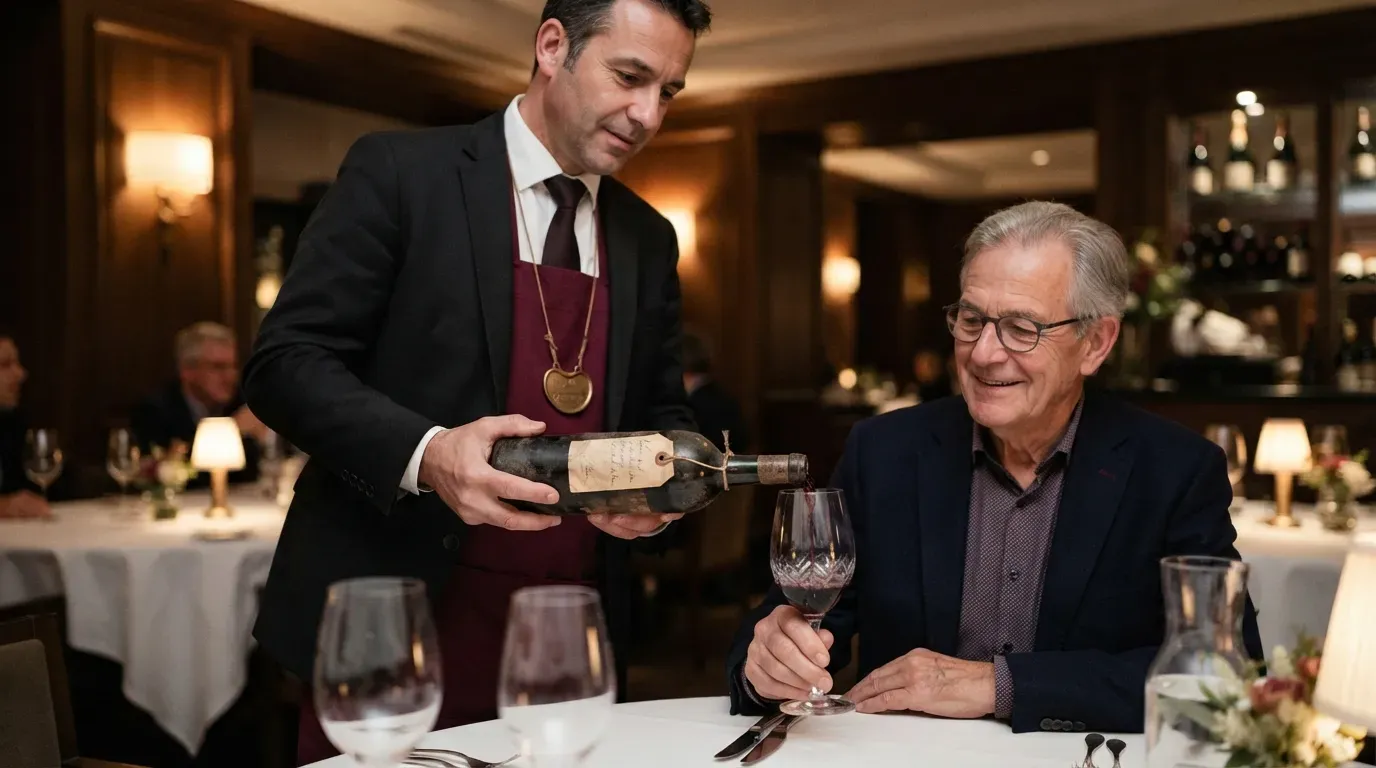
Every serious wine program keeps a shadow inventory. These are bottles too rare, too limited, or too inconsistent in supply to print, and they almost never get offered to a table that hasn’t earned trust yet. A good sommelier can steer regulars to “hidden gems” that may not appear on the wine list because only a few bottles are available. Older diners who’ve built a relationship with a restaurant over years tend to be first in line for this.
It’s not favoritism exactly – it’s inventory logic. Becoming a regular customer at a restaurant enables diners to develop relationships with the owner, the wait staff, and the sommelier. Those relationships are exactly what unlocks the bottles nobody else at the bar ever hears about. But that’s nothing compared to what we found about #13…
#13 – The Old-School Opener Comes Out Just for Their Cork
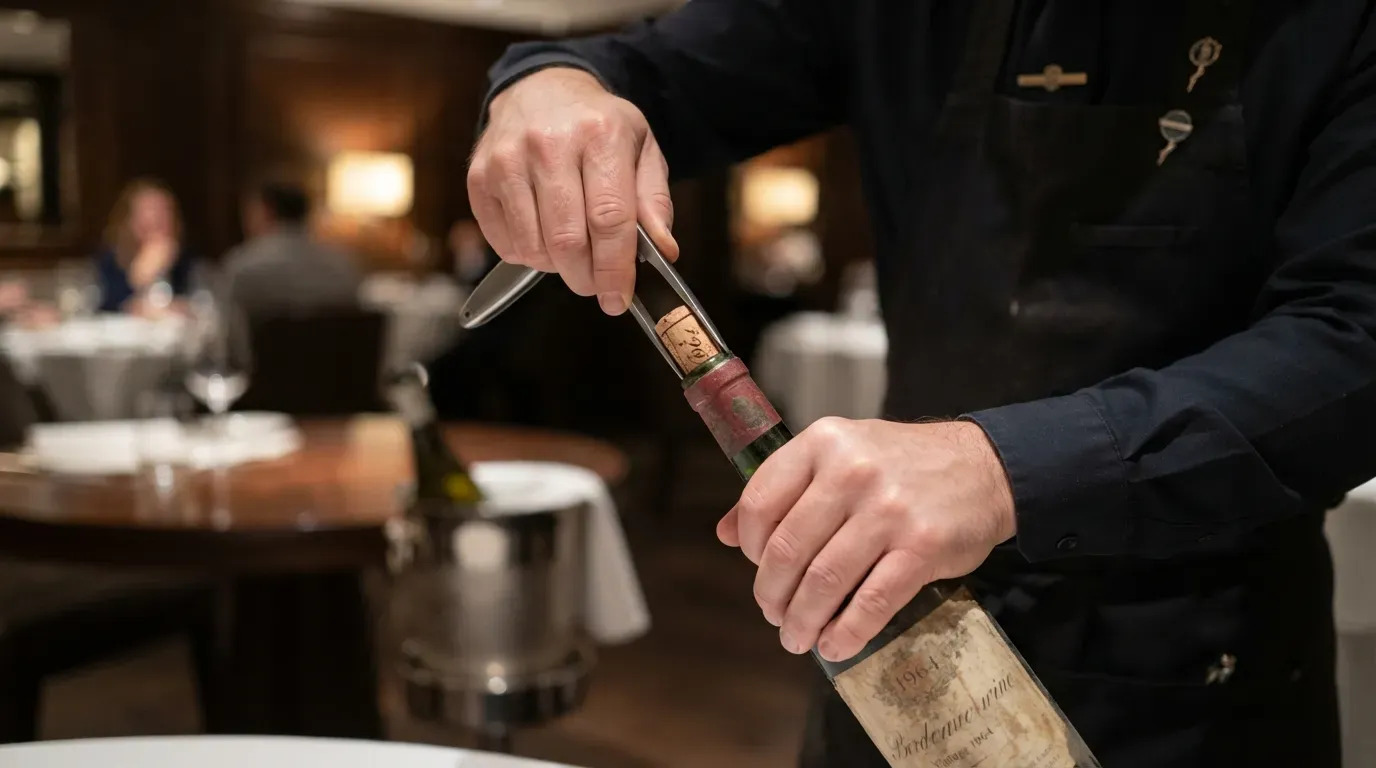
There’s a tool most diners have never noticed, and it only comes out for certain bottles. There’s a wine opener called the Butler’s Friend or Ah-So that helps with older bottles of wine where the cork might not be in the best condition. Somms reach for it almost reflexively when a guest orders something with real age on it.
The catch is that a standard corkscrew can shred a fragile, decades-old cork straight into the bottle. Diners who gravitate toward older vintages – a group that skews heavily toward guests over 60 – get this quiet safeguard without ever being told why the tool looks different. Most people never even clock that a second opener was used at all.
Fast Facts
- The Ah-So opener uses two thin prongs instead of a screw, sliding along the sides of the cork.
- It’s the go-to tool for corks that are dry, crumbling, or decades old.
- A standard corkscrew can push a fragile cork straight into the bottle, ruining the pour.
- Many sommeliers keep one specifically for vintage bottles, not everyday wine.
#12 – A Taste They Never Have to Ask For
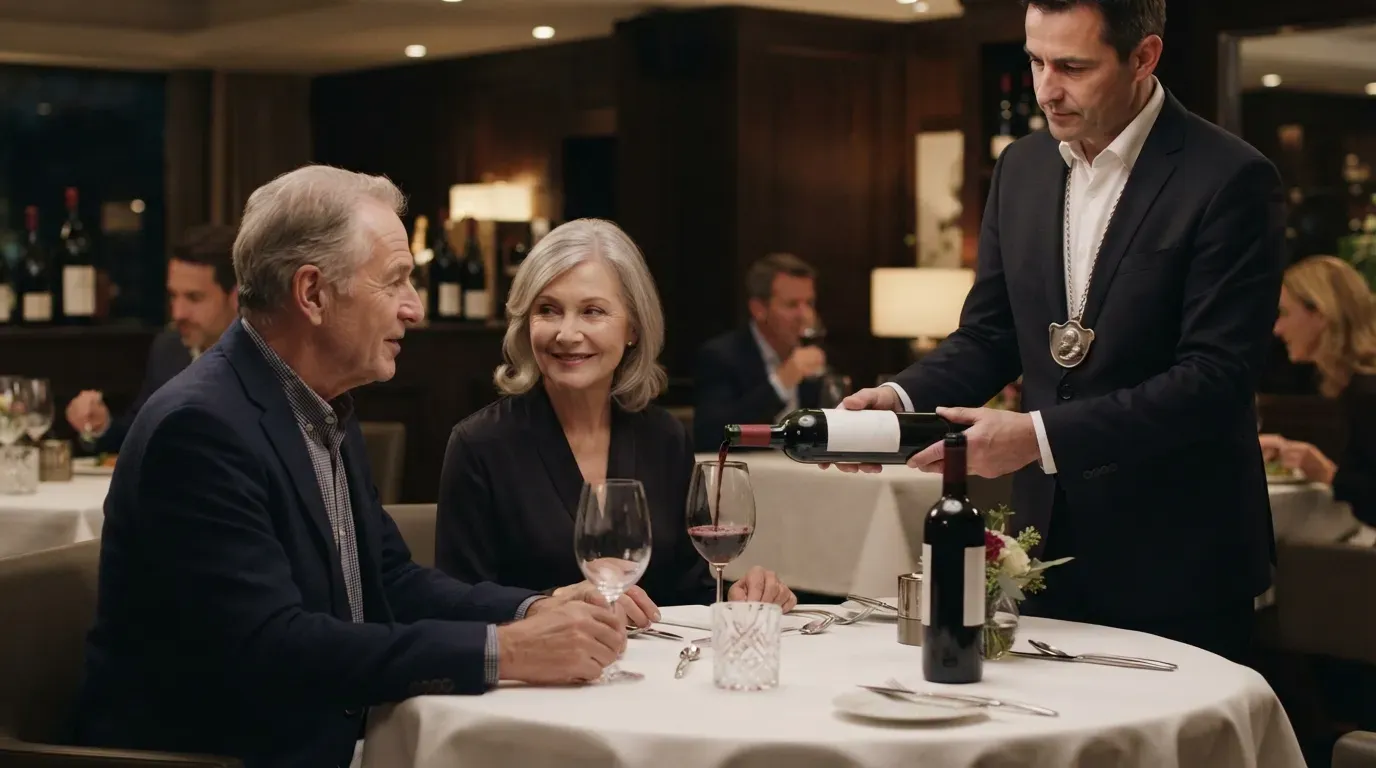
Tasting the wine before it’s poured for the table isn’t just ceremony – it’s a filter. Often the sommelier will open the wine away from the table and check the wine for the guest before it’s even presented. For diners who seem uneasy with the ritual, that pre-check quietly removes a step that can feel like a performance.
If the sommelier has already tasted the wine for the guest, the formal tasting pour becomes optional and is left to the guest’s discretion. Older diners who’ve been through this song and dance hundreds of times often wave it off entirely – and good sommeliers read that instantly. The whole “tasting ceremony” can vanish in under ten seconds when the somm senses it’s unwanted.
#11 – Extra Time in the Decanter, No Extra Charge
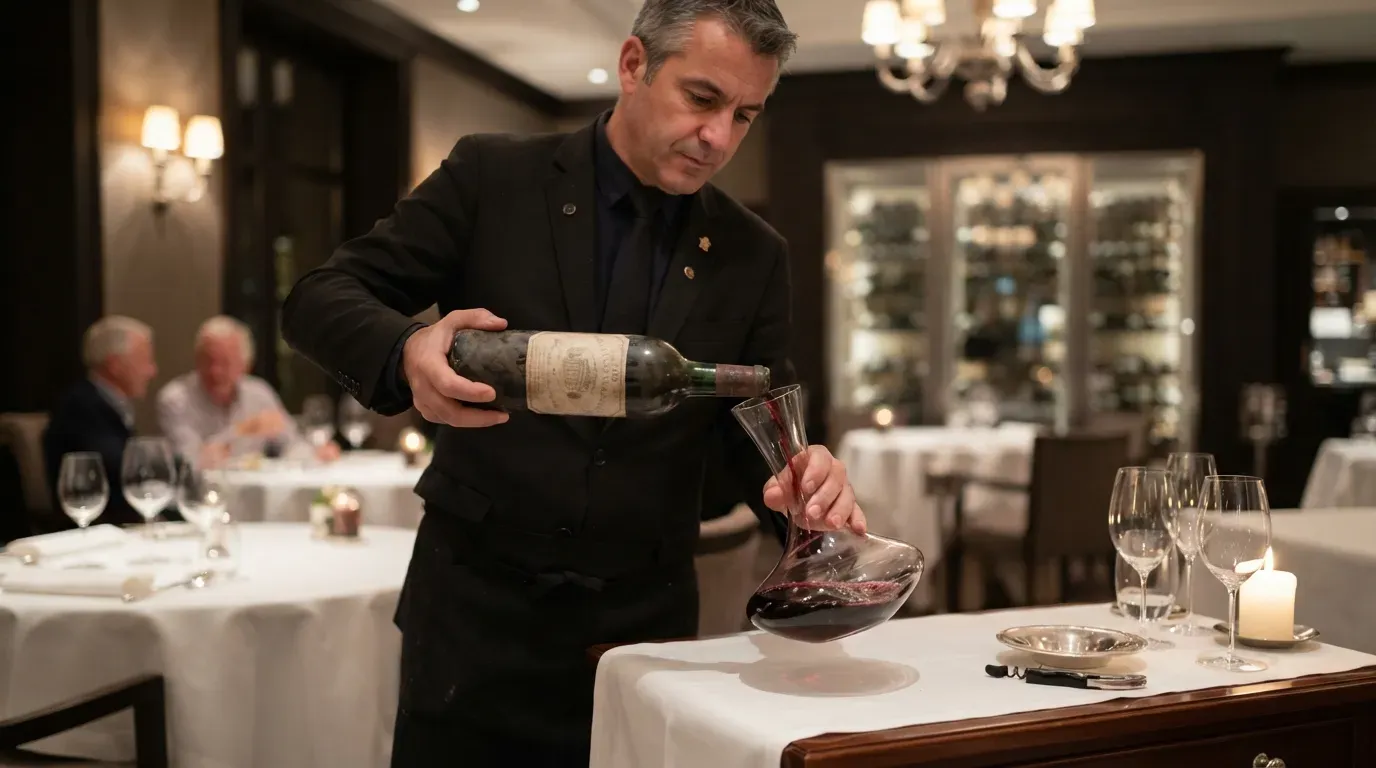
Decanting isn’t just for show – it’s damage control for a bottle that’s earned some years. Formal wine-service training specifically covers decanting older reds as its own skill, separate from simply opening a bottle. Sediment builds up in aged wine, and pouring it straight from the bottle risks a gritty, bitter glass.
For guests known to favor older, more delicate bottles, sommeliers will spend real time on this step. Handling a rare vintage often means verifying provenance, carefully decanting older wines, and monitoring the wine’s evolution throughout the meal. That extra attention rarely gets mentioned on the check, but it’s the difference between a wine that sings and one that falls flat. But #10 involves a move most diners never even notice is a choice.
#10 – Two Choices, Never One: The Familiar and the Splurge
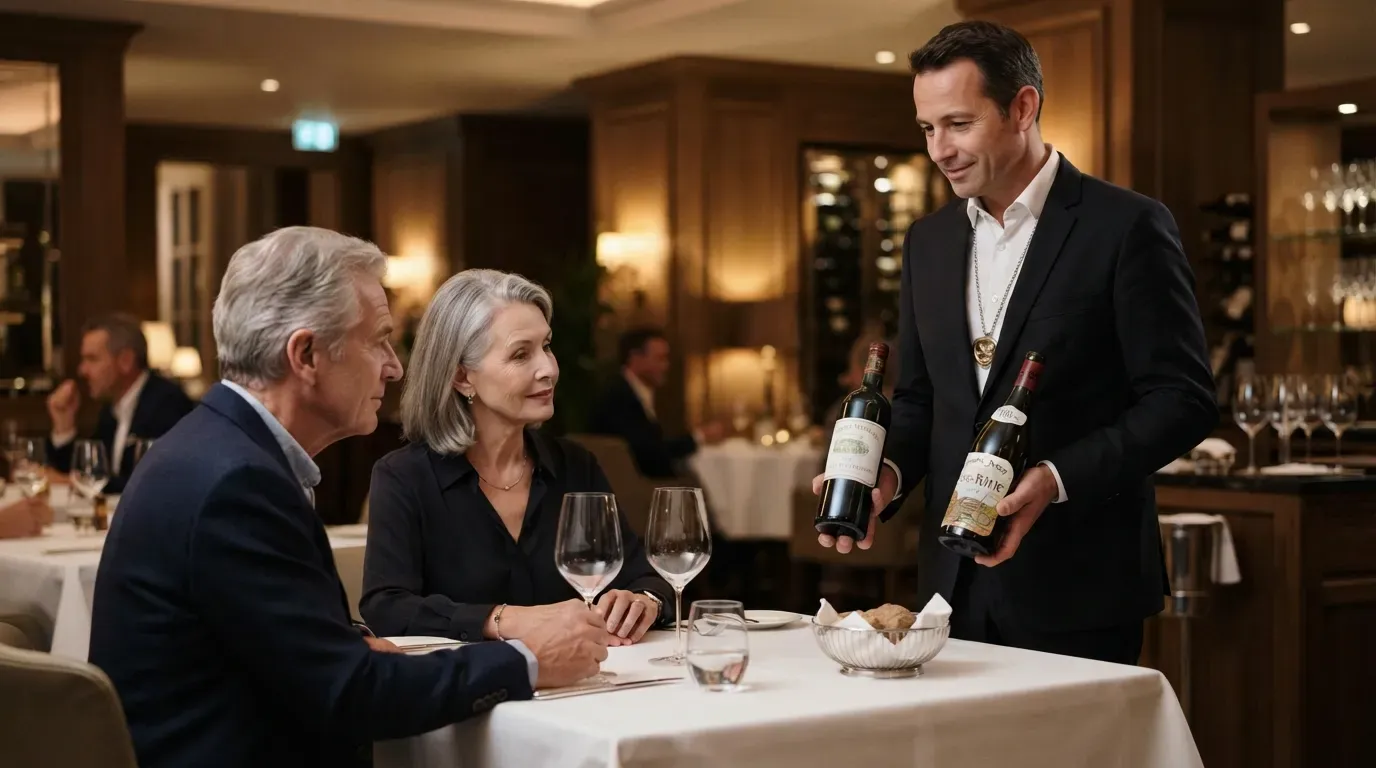
A well-trained sommelier almost never hands over a single suggestion. They keep posture composed and stay ready with two recommendations – one familiar, one adventurous – so guests can choose with confidence. For diners who already know exactly what they like, this isn’t a sales tactic. It’s a courtesy.
The “familiar” option usually mirrors what the table has ordered before, while the “adventurous” pour is a soft nudge toward something new without any pressure to take it. Regular guests, especially older ones with decades of established taste, tend to appreciate having the door left open rather than closed. It’s a two-second offer that quietly respects both loyalty and curiosity at the same time.
#9 – The Order They Never Repeat Because the Sommelier Already Remembers
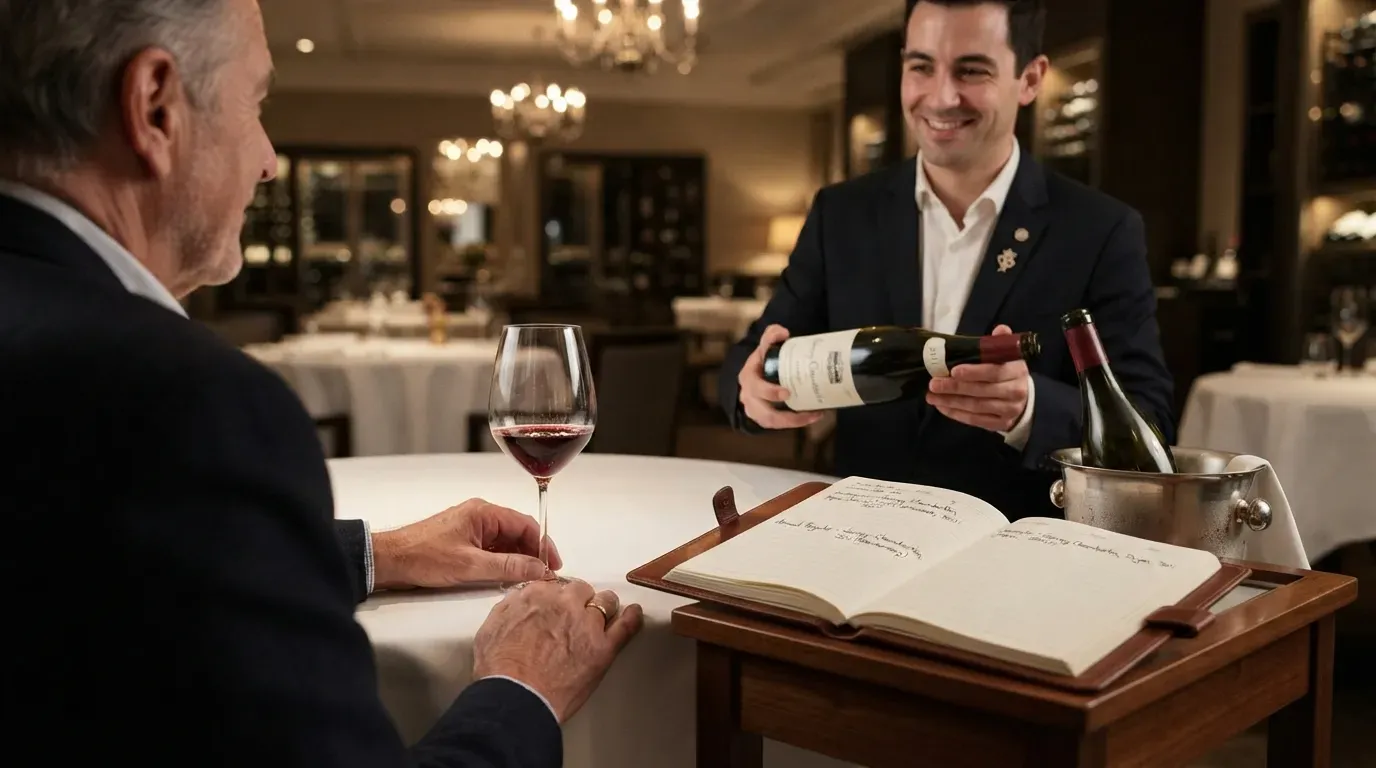
Somms treat memory like a professional skill, not a party trick. A sommelier needs to remember the regular guests and memorize their preferences, understand the palates of the frequent clientele, and ensure the right wines are available for them. That memory is often sharpest with longtime regulars who’ve been coming in for years.
Forming a bond and trust with key patrons results in better sales and great word of mouth, and a savvy sommelier listens carefully to the “regulars” and stocks the cellar with things they want. For a diner who’s ordered the same Burgundy every anniversary since 2011, that means never having to ask twice. It also means the bottle is often quietly pulled and ready before the wine list even hits the table.
#8 – The “Table Peacemaker” Bottle for Mismatched Entrées
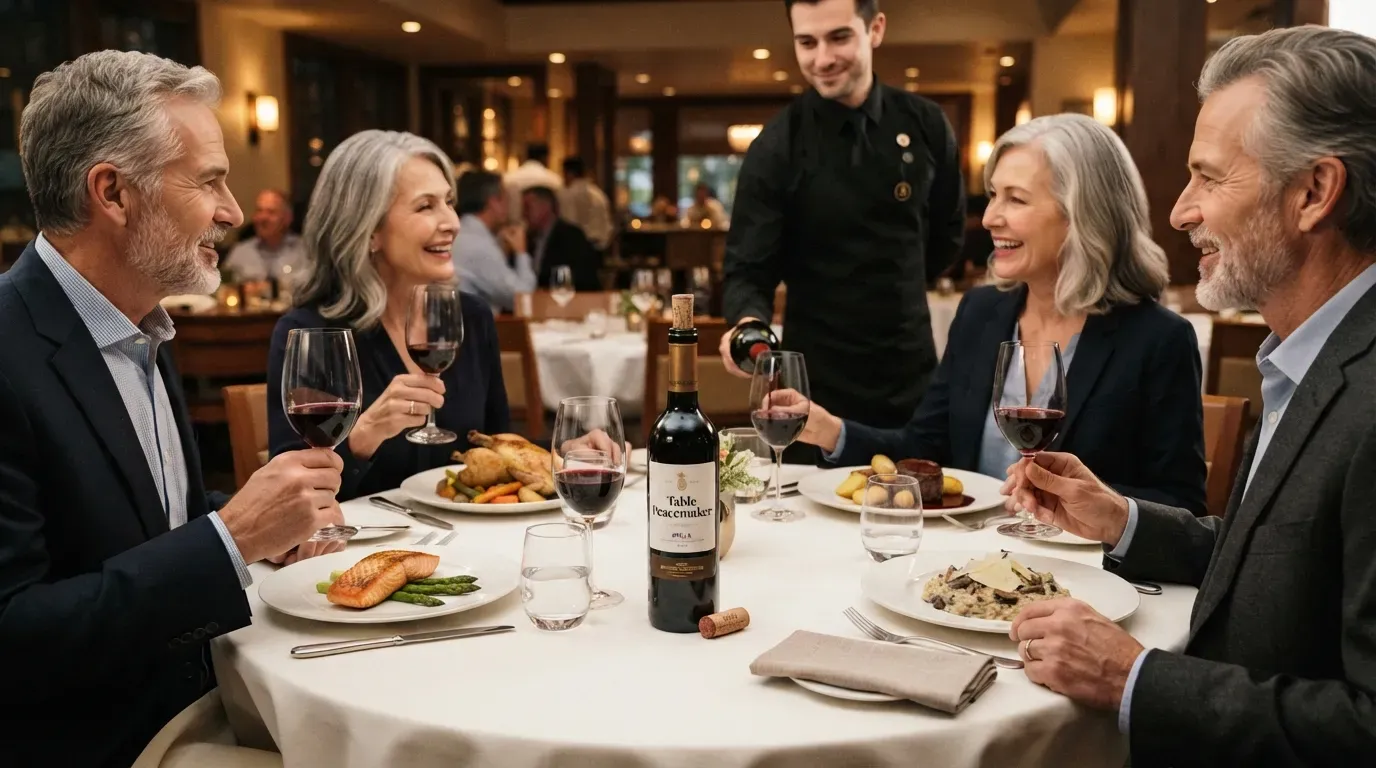
When four people order four completely different dishes, somms lean on a specific category of wine to hold the whole table together. When guests want to keep things simple, sommeliers reach for “safe wines” – Rioja, Côtes du Rhône, and, surprisingly, rosé – because they tend to play nicely with most things. It’s a fix most diners never realize is happening.
Older parties, who often dine as couples or small groups with varied orders rather than a single shared entrée, are exactly the tables this trick is built for. Rather than forcing a debate over red versus white, the sommelier simply picks the bottle that quietly works for everyone. Nobody at the table ever knows a compromise was even made.
Quick Compare
- Rioja – medium body, food-friendly with red meat or richer dishes.
- Côtes du Rhône – soft tannins, flexible across poultry and lighter fare.
- Rosé – light enough to bridge fish, salad, and grilled dishes at the same table.
#7 – The Quiet Price Warning Before the Embarrassing Bottle Arrives

Not every “recommendation” is really about taste – sometimes it’s a discreet financial rescue. One sommelier recalled a guest confidently ordering a bottle of Margaux for six people, clearly hoping to impress the table. The sommelier asked if he had a preference for “vintages,” since there were two options, then gently and silently pointed out on the wine list that one was £80 and the other £600.
This kind of soft intervention happens constantly and almost never gets mentioned out loud. Sommeliers say their job is to help the host make the evening special – quietly and without fuss. For diners who value discretion over drama, that quiet catch can save an entire evening from an awkward surprise on the bill.
#6 – Served Last, on Purpose
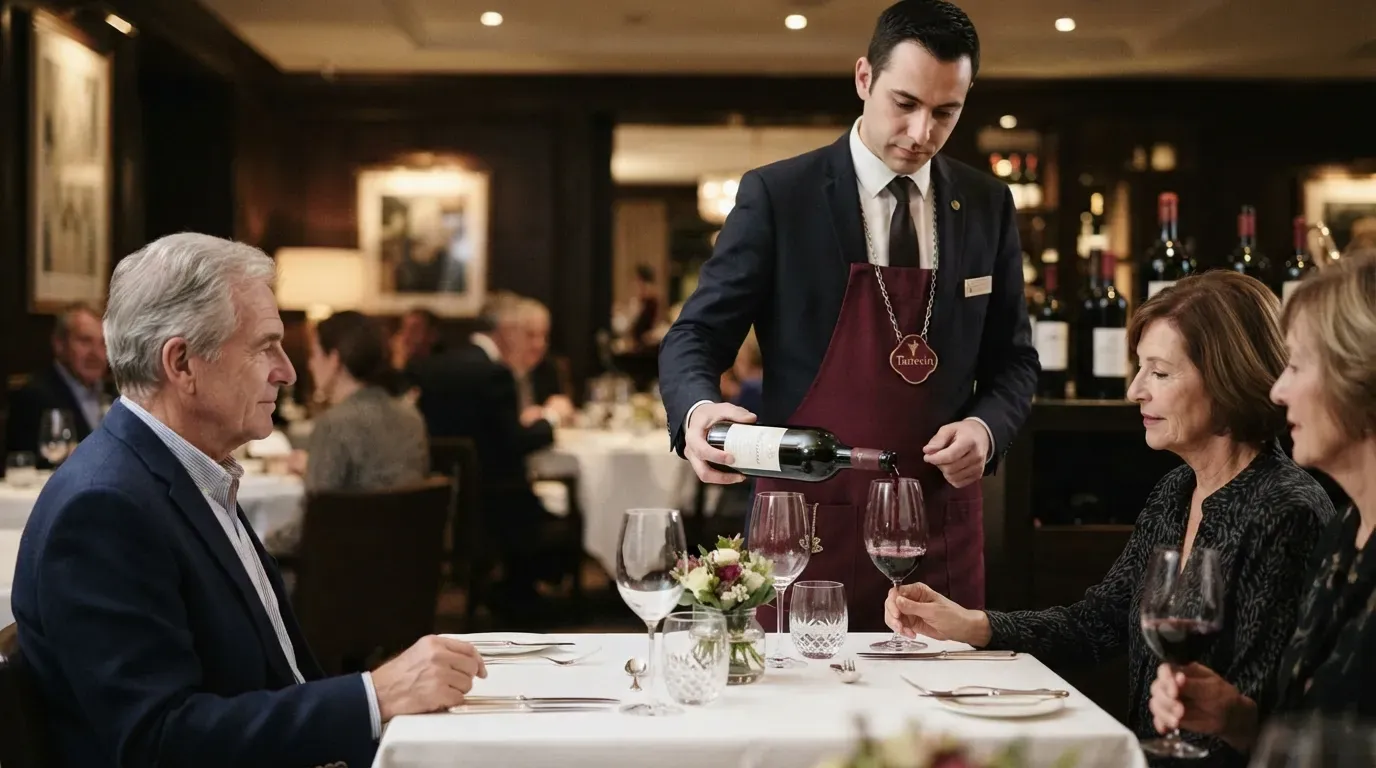
Pouring order isn’t random, and the host is almost never poured first. Once the bottle is ordered and tasted, sommeliers pour for the other guests first – because they’re the ones being looked after. The host, or the person who ordered, is served last as a matter of quiet tradition.
When the bottle is nearly finished, the sommelier makes sure the guests get the last of it, giving the host a chance to decide whether to order another while the rest of the table still has wine in their glasses. It’s a small sequencing trick that keeps the evening flowing without anyone ever feeling rushed or overlooked. Many longtime diners have clocked this pattern for years without ever asking why.
#5 – The Pin Comes Off the Jacket
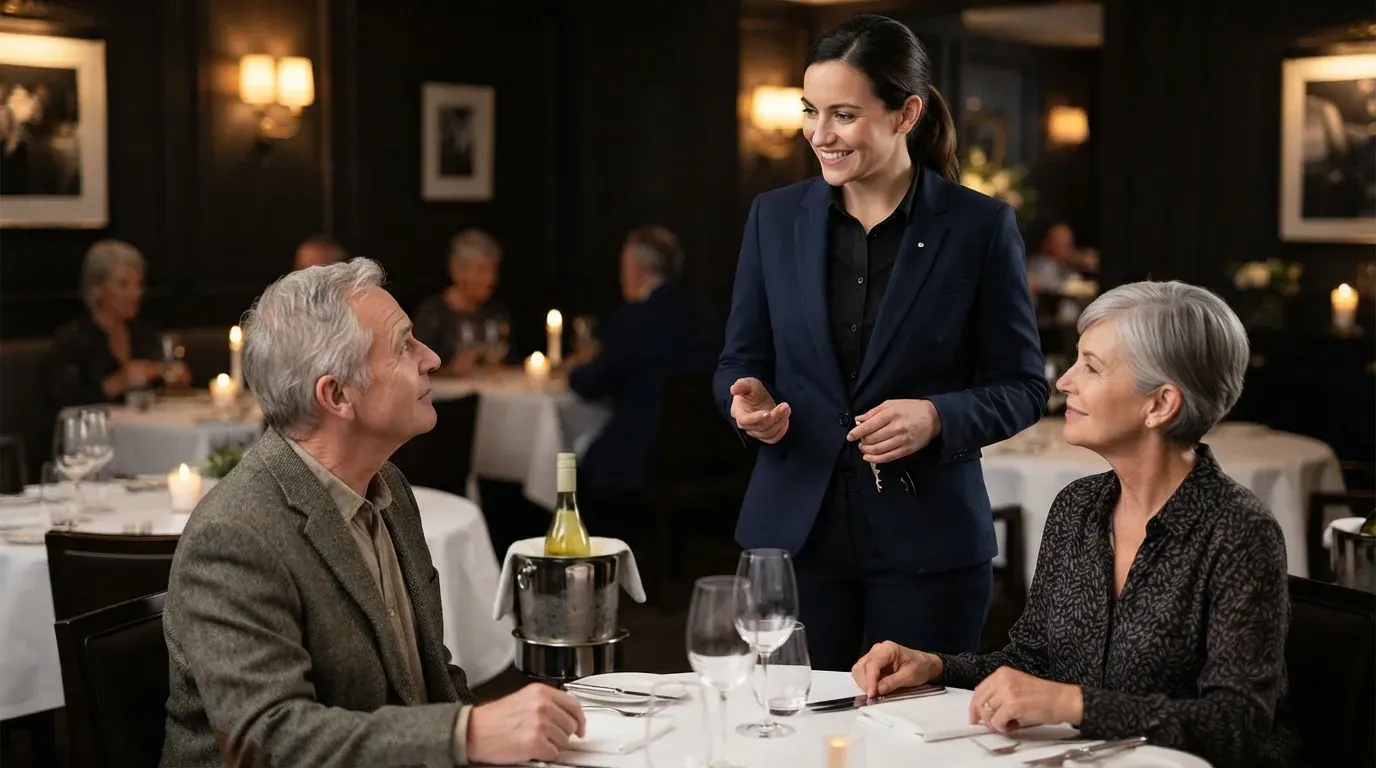
Certification pins are supposed to signal expertise, but plenty of sommeliers deliberately hide theirs. One sommelier forgoes the certification pin on her lapel specifically to avoid intimidating guests and encourage openness. It’s a small wardrobe choice with a big psychological effect.
For diners who already feel a little unsure about wine etiquette, a somm who looks less like a credentialed expert and more like a friendly host puts the whole table at ease. Sommeliers are trained to read a room within seconds. In the first ten seconds at a table, they gather the clues that shape the entire experience – a ritual most guests never notice is even happening.
Worth Knowing
- Posture, eye contact, and how quickly a guest opens the wine list are among the first signals a sommelier reads.
- A relaxed, unhurried tone from the table often shifts the pace of the whole visit.
- Small presentation choices, like skipping a pin, are often intentional icebreakers, not oversights.
#4 – The Pour That’s Held Back for Dessert
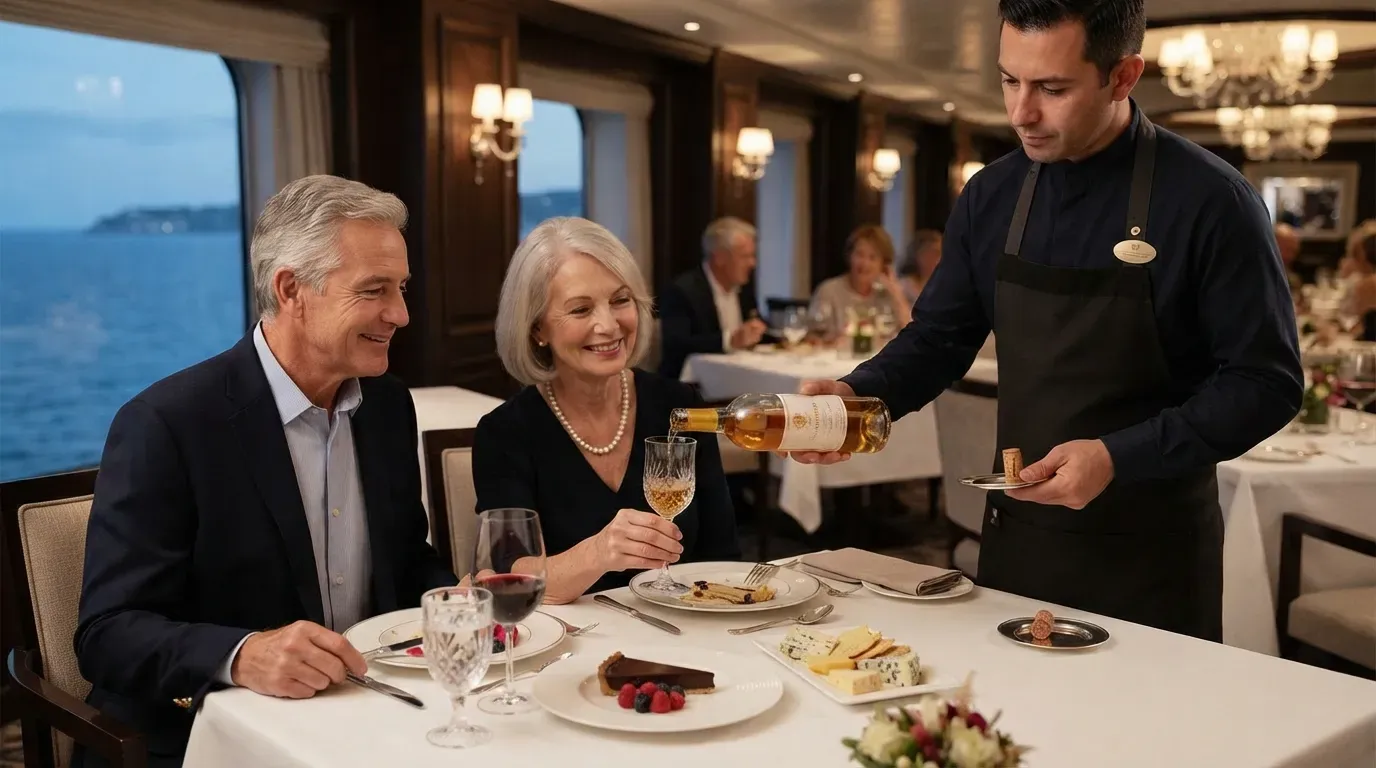
Sometimes the smartest pairing decision is patience, not selection. A sommelier might pour a crisp white for the table to start, move to a red by the glass for meat mains, or explain that a particular red can be enjoyed with beef and then rejoin the table when the cheese course arrives. That kind of sequencing takes real attention to timing.
Rather than draining a bottle early and leaving the back half of the meal dry, a sommelier will quietly time the final pours to land with dessert or cheese. It’s an unspoken extra that turns a single bottle into a full-meal experience instead of a first-course afterthought. Most diners never realize the pacing of their wine was engineered on purpose.
#3 – A Fresh Glass for the Second Bottle, No Questions Asked
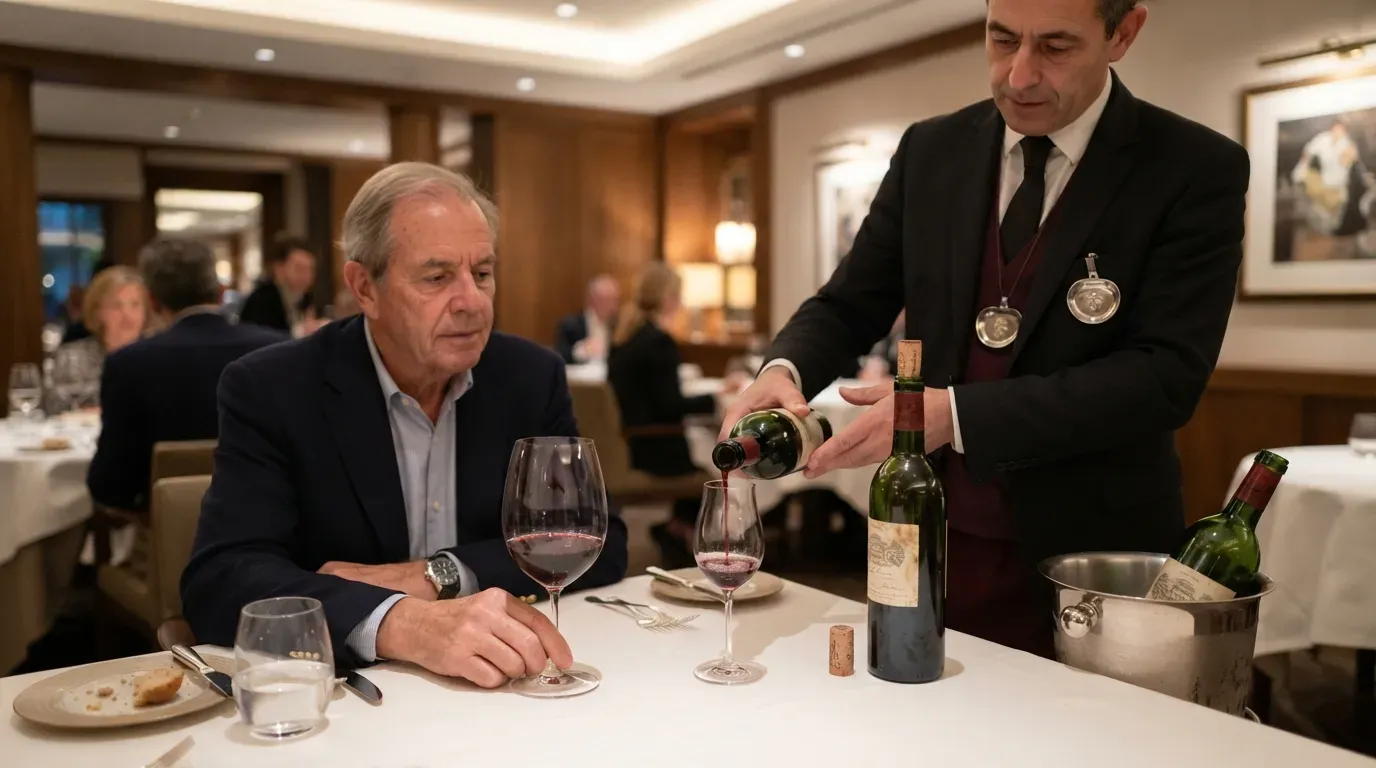
Ordering a second bottle of the exact same wine should be simple, but there’s a hidden courtesy built into it. When a second bottle of the same wine is ordered, a smaller taster glass is presented so the host can taste a portion of the new bottle. It’s a formality most people wave off, but the option is always there.
A sommelier is prepared to replace all the glasses if requested, and the tasting glass is placed to the right of the first glass before being cleared after service of the new bottle. For diners who care about consistency bottle to bottle – a habit far more common among experienced, older wine drinkers – this quiet check matters more than it looks.
#2 – The Sommelier Who Already Knows Every Dish on the Menu
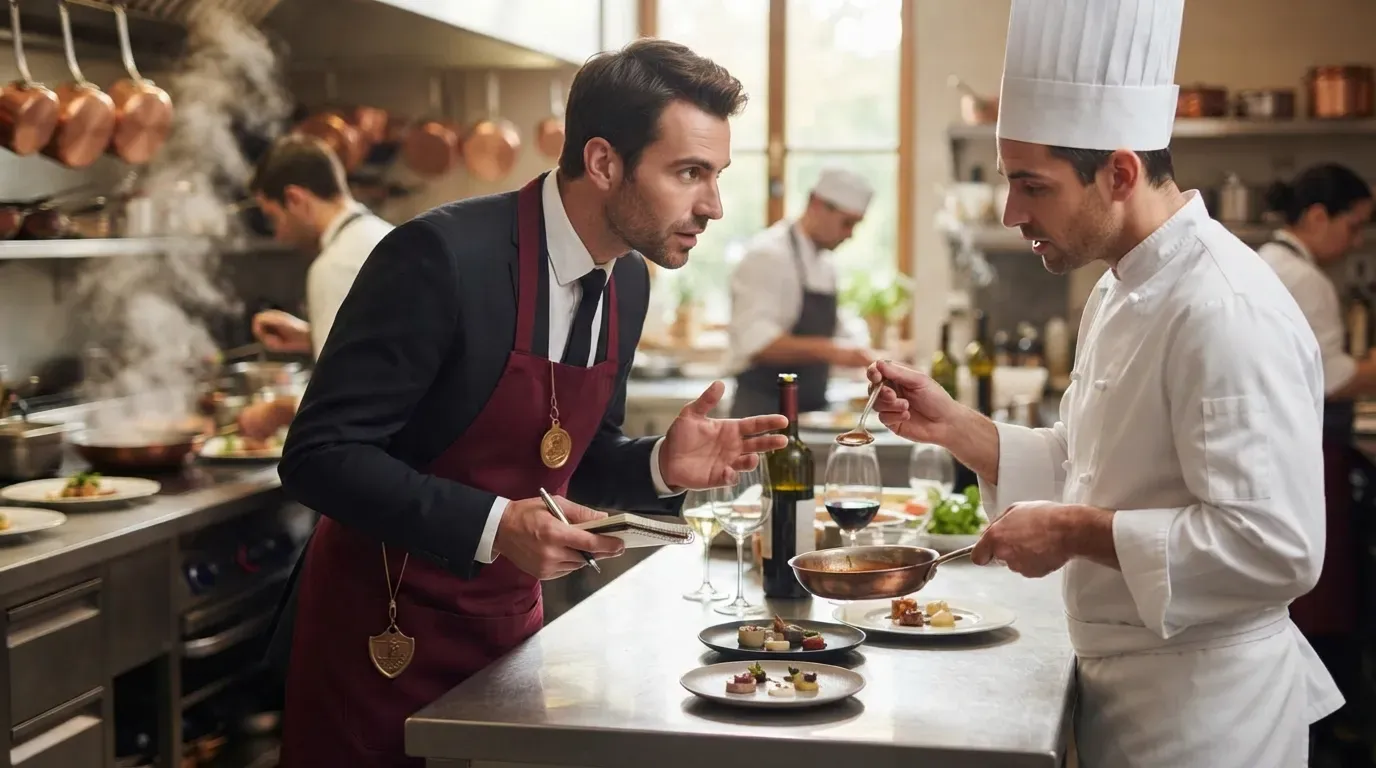
The best pairing advice doesn’t come from a wine book – it comes from the kitchen. One sommelier spent time speaking with chefs from every section, learning about every dish, until he probably knew more about the entire menu than most of the kitchen team itself. That knowledge becomes the real engine behind every “trust me on this one” recommendation.
It’s a level of homework most diners never think about, but it’s exactly why a good pairing suggestion can feel almost telepathic. A good sommelier doesn’t just pour wine – they pour experience. For guests who’ve spent decades dining out and can tell the difference between a real recommendation and a script, this is the extra that actually earns loyalty.
#1 – The Extra Minutes That Never Show Up on the Bill

The single biggest thing sommeliers quietly give older diners isn’t a bottle at all – it’s time. Reading a table takes real attention, and experienced sommeliers watch for subtle cues, from confident posture to a curious glance at the wine list to the guest who quietly defers. Slower, more attentive tables tend to get slower, more attentive service in return.
Sommeliers let each table find its own rhythm before offering a warm greeting that puts even the most anxious diners at ease. For guests who aren’t rushing through dinner between meetings, that extra patience turns into extra minutes of conversation, extra pours, and extra care – none of which ever appears as a line item. It’s the one true “off-list extra,” and it’s the hardest one to notice while it’s happening.
At a Glance
- Confident posture and a steady tone often signal a guest who wants minimal hand-holding.
- A lingering glance at the list can invite a gentle suggestion rather than a hard sell.
- Guests who defer to the sommelier tend to get slower-paced, more conversational service.
- None of these cues ever show up on the check – they simply shape the pace of the evening.
None of these fourteen extras cost a diner anything extra on paper. They’re built entirely on attention – reading a table’s pace, remembering a name, catching a price before it becomes an awkward moment, or simply slowing down when someone clearly isn’t in a hurry. What’s striking is how consistently these habits favor calmer, more established diners over flashy, first-time spenders.
The bottle on the printed list was never really the point. The real menu, the one that actually earns loyalty, is written in things a sommelier notices and never says out loud.