
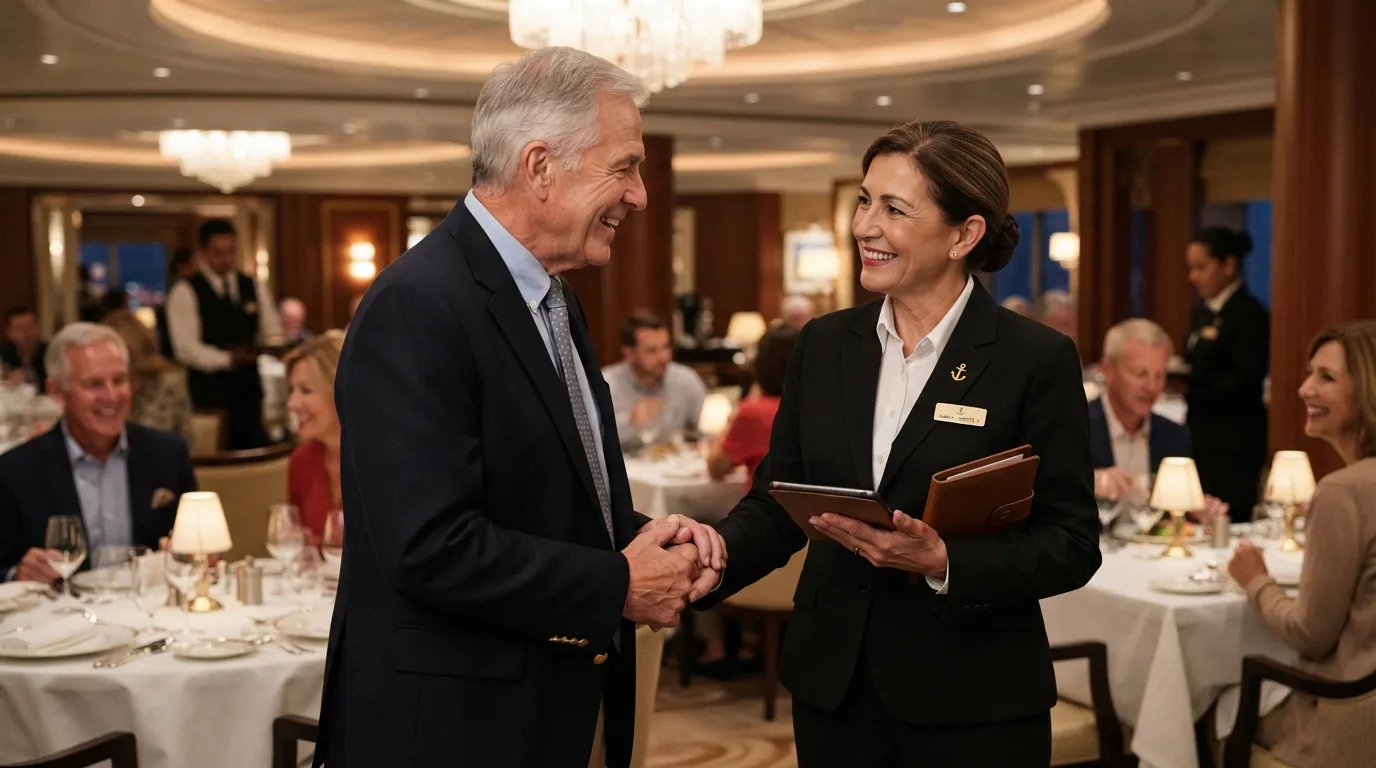
Walk into almost any cruise ship dining room and you’ll spot it within minutes: one table gets a little extra attention, a slightly warmer greeting, maybe a dish that never appeared on the printed menu. It’s not random, and it’s not about money. It’s about a first-name greeting on night one that most passengers never bother to give.
Maître d’s run some of the busiest, most scrutinized rooms on the ship, juggling hundreds of tables a night. Yet ask any veteran cruiser over 60 who’s sailed a dozen times, and they’ll tell you the same quiet secret: the moment you stop treating the maître d’ like furniture and start treating them like a person, the whole rhythm of your week changes. Here’s what longtime cruisers and crew members actually say happens next.
#10 – The Corner Table Nobody Requests But Everyone Wants
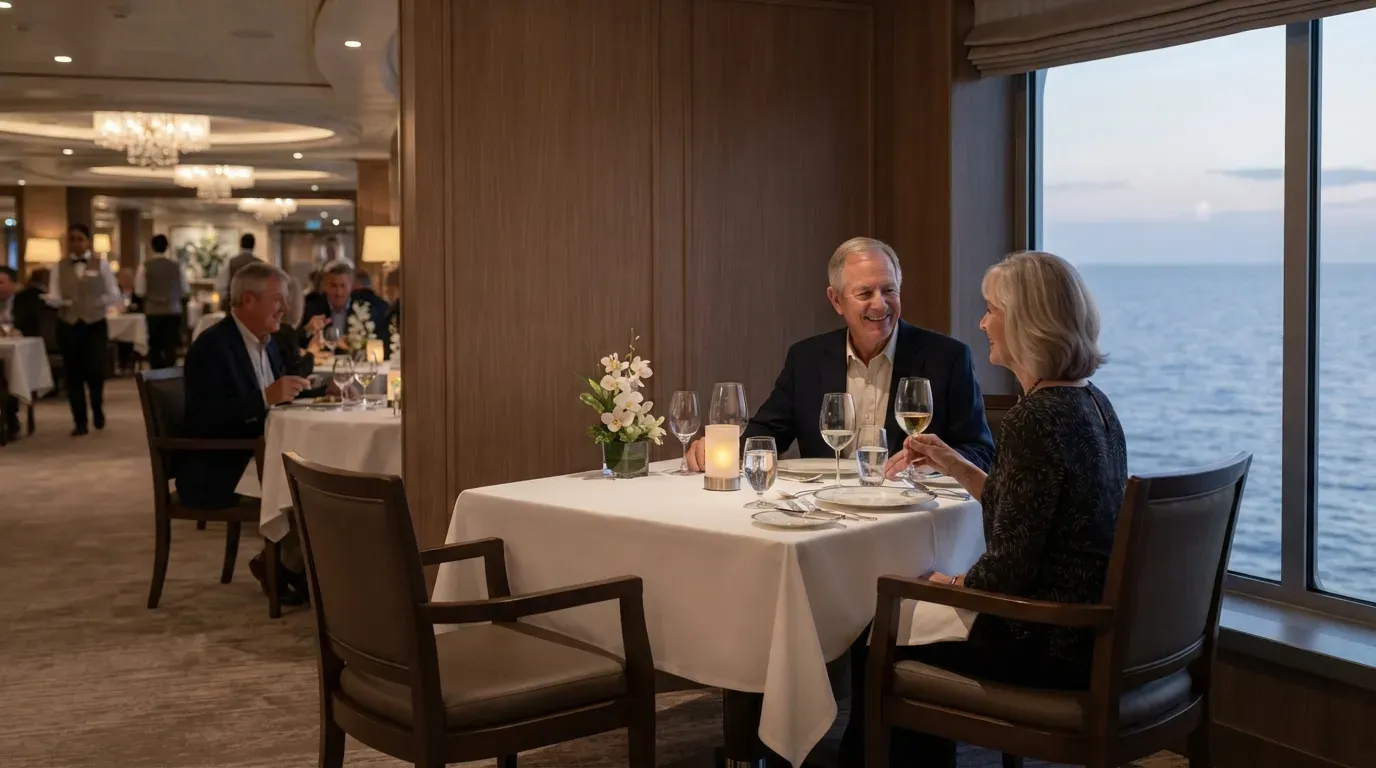
Most passengers never think to ask for a specific spot in the dining room, so they get whatever’s left after the ship fills up. Regulars know better. A quiet word to the maître d’ on embarkation day, paired with a friendly “good to see you,” often lands them a table away from the kitchen doors, the show lounge traffic, or the loudest section of the room.
The surprising part is how little it costs to ask. There’s no upcharge, no loyalty tier requirement – just a conversation. Cruisers who return night after night to the same maître d’ and greet them warmly tend to find themselves shuffled toward calmer, more comfortable real estate without ever filing a formal request. But that’s nothing compared to what we found about #9.
Fast Facts
- Table placement requests are typically handled in person, not through the cruise line’s app.
- No loyalty tier, suite booking, or extra fee is required to ask for a better spot.
- Embarkation afternoon, before the first dinner seating, is the window regulars use most.
- Frequent cruisers often re-introduce themselves on day one of every new sailing, even on lines where they’ve sailed before.
#9 – The Table for Two That “Isn’t Guaranteed” Somehow Appears
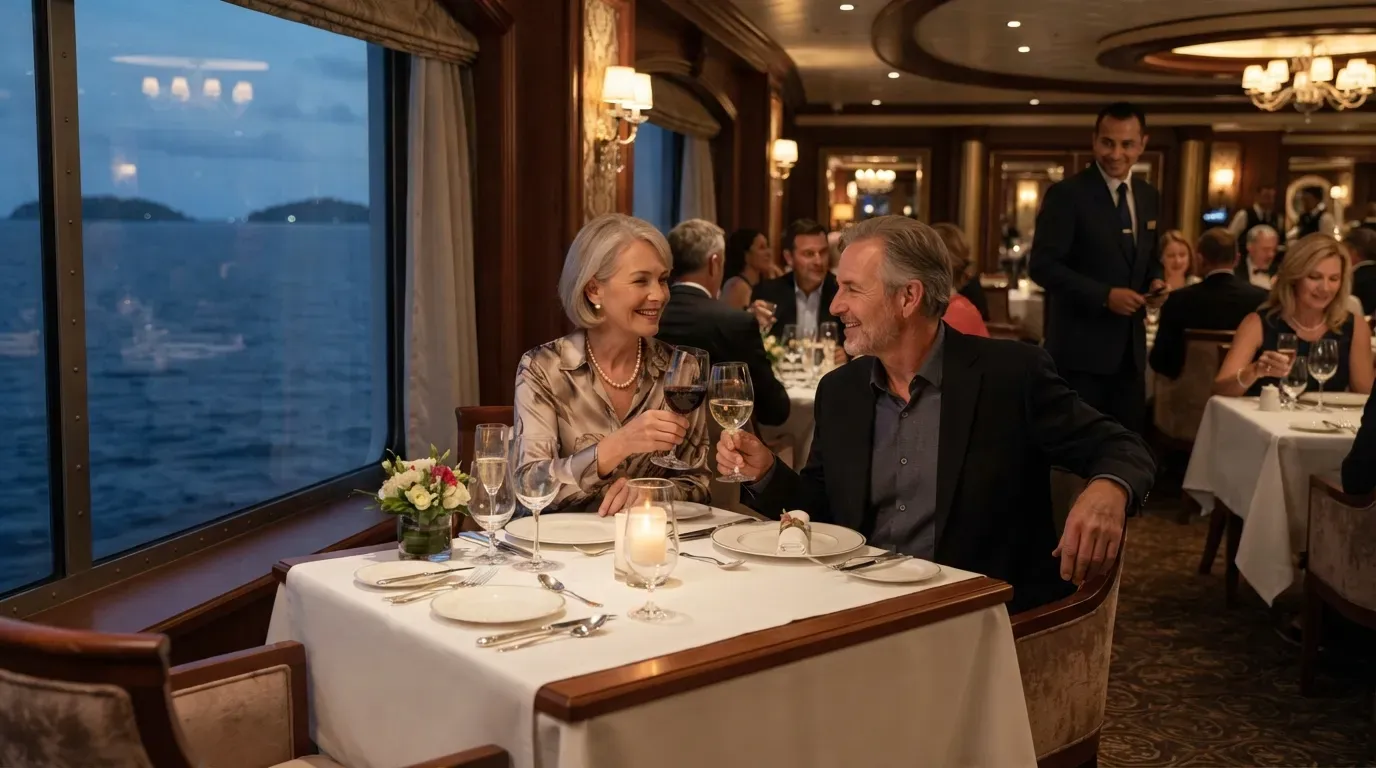
Cruise lines are famously careful not to promise a private table for two, since space is limited and demand is high. Passengers should request their preferred table for two when booking, but it’s not guaranteed and is up to the maître d’, so getting to them early on gives a better chance of landing one.
Here’s the part crews rarely spell out: familiarity moves you up the informal list. A maître d’ who recognizes a couple from a prior sailing, or who’s already had a warm exchange with them by name, is far more likely to squeeze out a two-top when one opens up. Younger, first-time cruisers rarely know to ask at all, which quietly stacks the odds in favor of the regulars. But the next arrangement is even less obvious, and it happens after dinner has already started.
#8 – The Same Waiter, Night After Night, Without You Asking
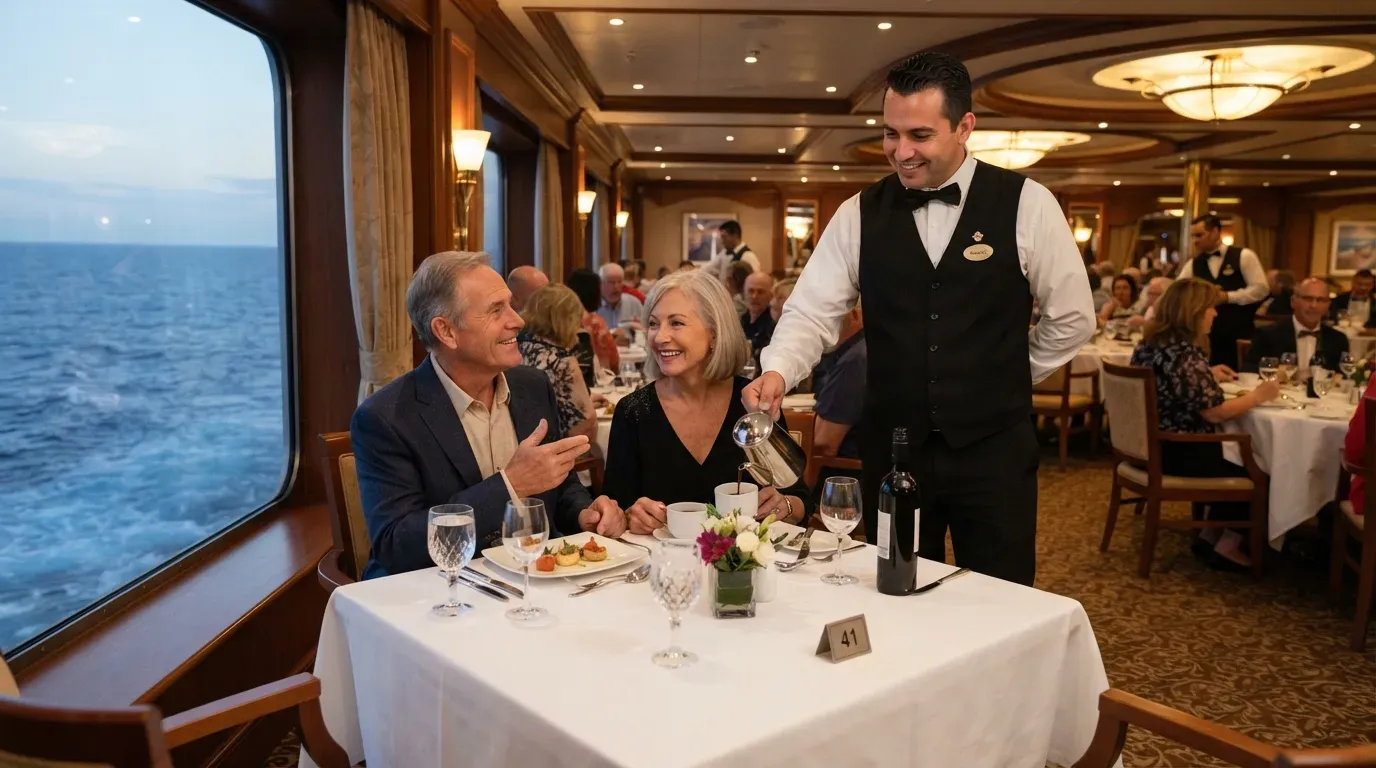
Traditional dining was built around one simple idea: passengers are given an assigned dining room, time and table, and they eat with the same people for every dinner. What gets less attention is what that consistency does for service quality over the course of a week.
One upside of assigned seating is that your server gets to know your tastes and preferences as the days go on. For diners who greet their waiter by name early in the cruise, that familiarity compounds fast – orders start arriving before they’re even placed, coffee gets poured the way you like it, and small preferences get remembered without a reminder. It’s a quiet perk that flexible, walk-up dining simply can’t replicate, and it sets up something even more personal for #7.
#7 – A Nudge Toward the Early Seating Slot
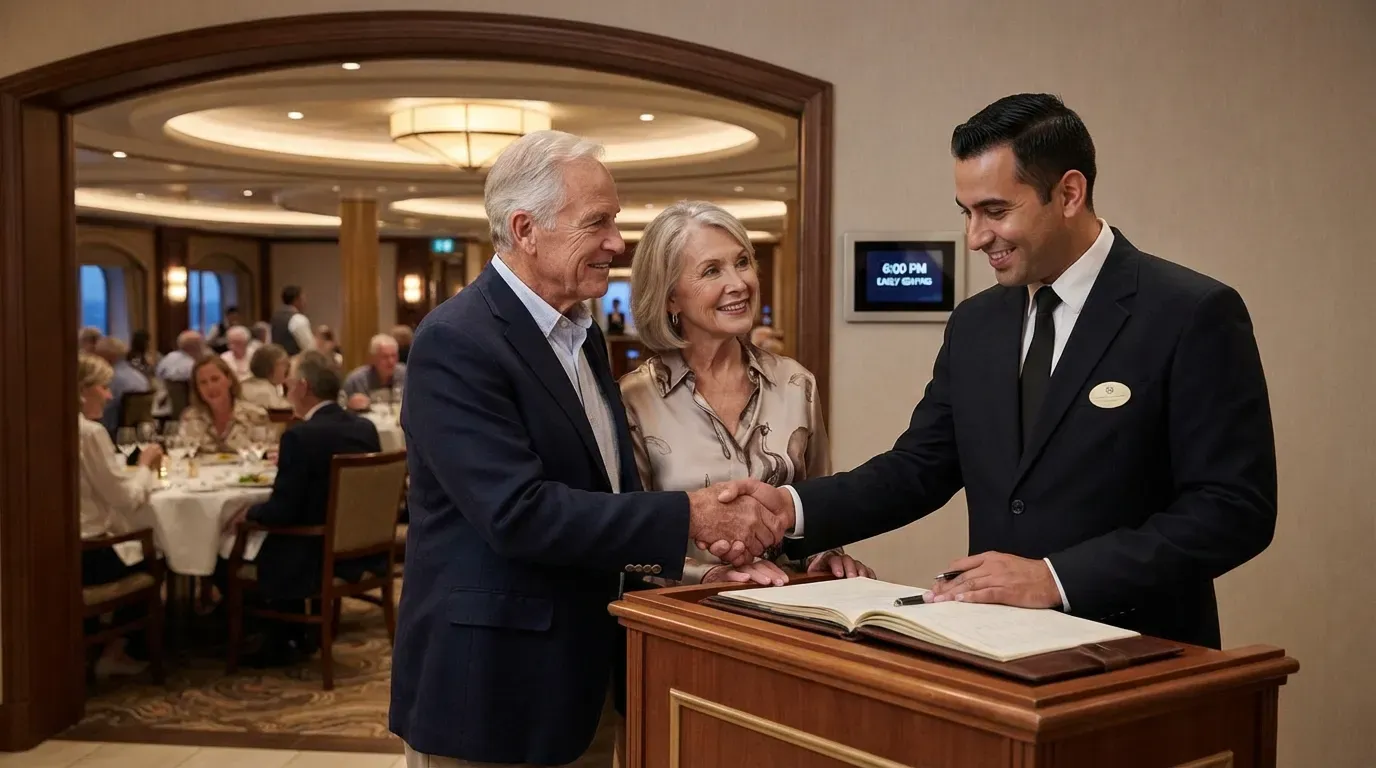
Dinner timing sounds like a minor detail until you’re the one waiting in line every night. Early seating is often favored by those cruising with kids and some seniors, since it lines up better with earlier bedtimes and calmer evenings.
When seating charts fill up fast, maître d’s have some flexibility in who gets bumped toward that earlier, more relaxed slot. A returning guest who’s built rapport over prior nights tends to get first consideration when a seat opens at 6 p.m. instead of 8:30. It’s rarely advertised, and it’s almost never guaranteed in writing, but it happens often enough that experienced cruisers specifically ask for it by name on day one. What happens if you skip a dinner entirely, though, is where things get surprisingly personal.
Quick Compare
- Early seating (around 6 p.m.): calmer room, popular with families and early risers, easier bedtime routines.
- Late seating (around 8:30 p.m.): more daytime flexibility for excursions and afternoon naps, livelier atmosphere.
- The real deciding factor: once a sailing is full, it’s the maître d’s discretion – not an algorithm – that decides who gets bumped up the list.
#6 – Someone Actually Notices If You Don’t Show Up
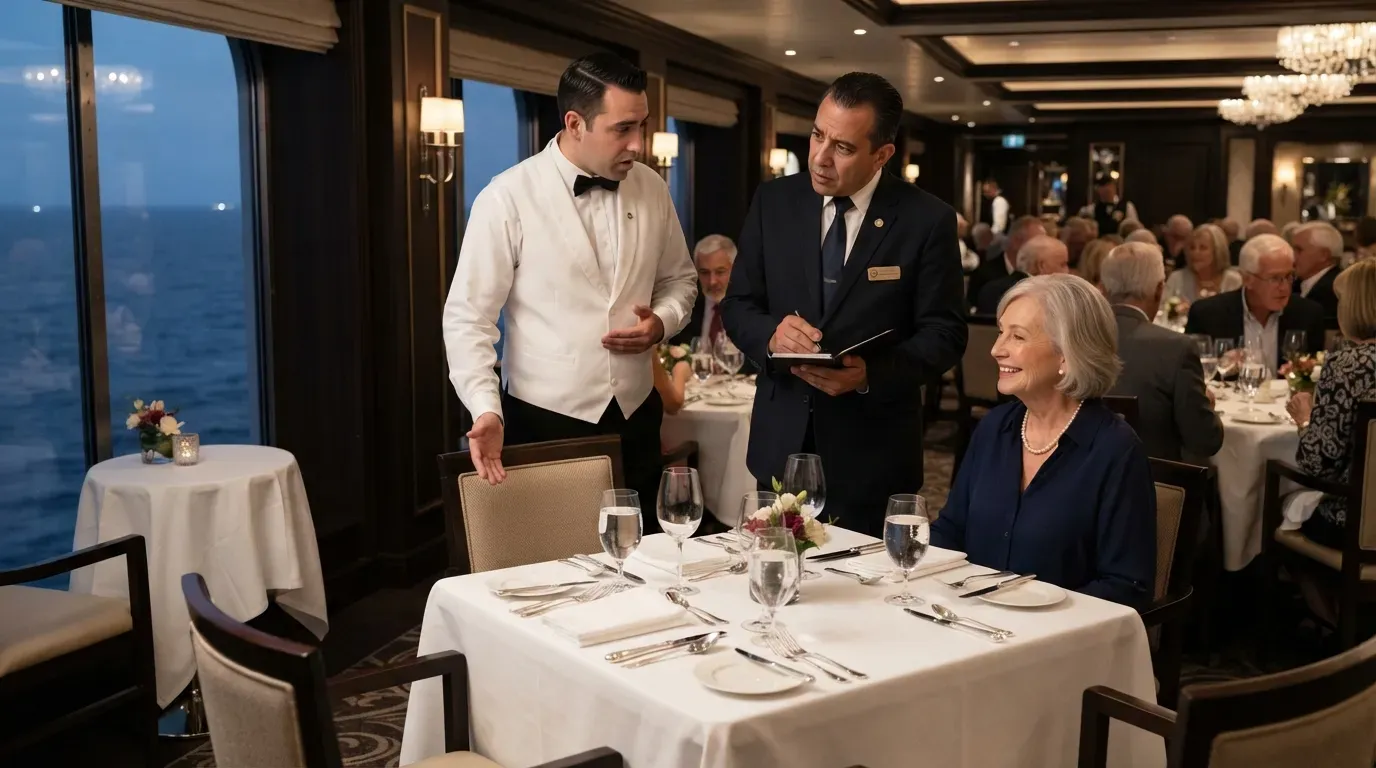
On a ship carrying thousands of guests, it would be easy to disappear into the crowd for one night. Yet regulars report the opposite experience entirely. Serving staff learn your name and preferences, and they check in with the maître d’ if you don’t show up for dinner.
That check-in is not a scripted courtesy – it’s a byproduct of genuine familiarity. Waiters who’ve served the same table for several nights start noticing patterns, and an empty chair stands out. For diners over 60 traveling solo or as couples, that small gesture of concern often ranks among the most meaningful moments of the whole cruise. It’s a far cry from what happens at tables where nobody bothered to learn a name, and it sets the stage for an even bigger favor, hiding in plain sight on the menu.
#5 – Steakhouse Cuts, Ordered Quietly Off the Record
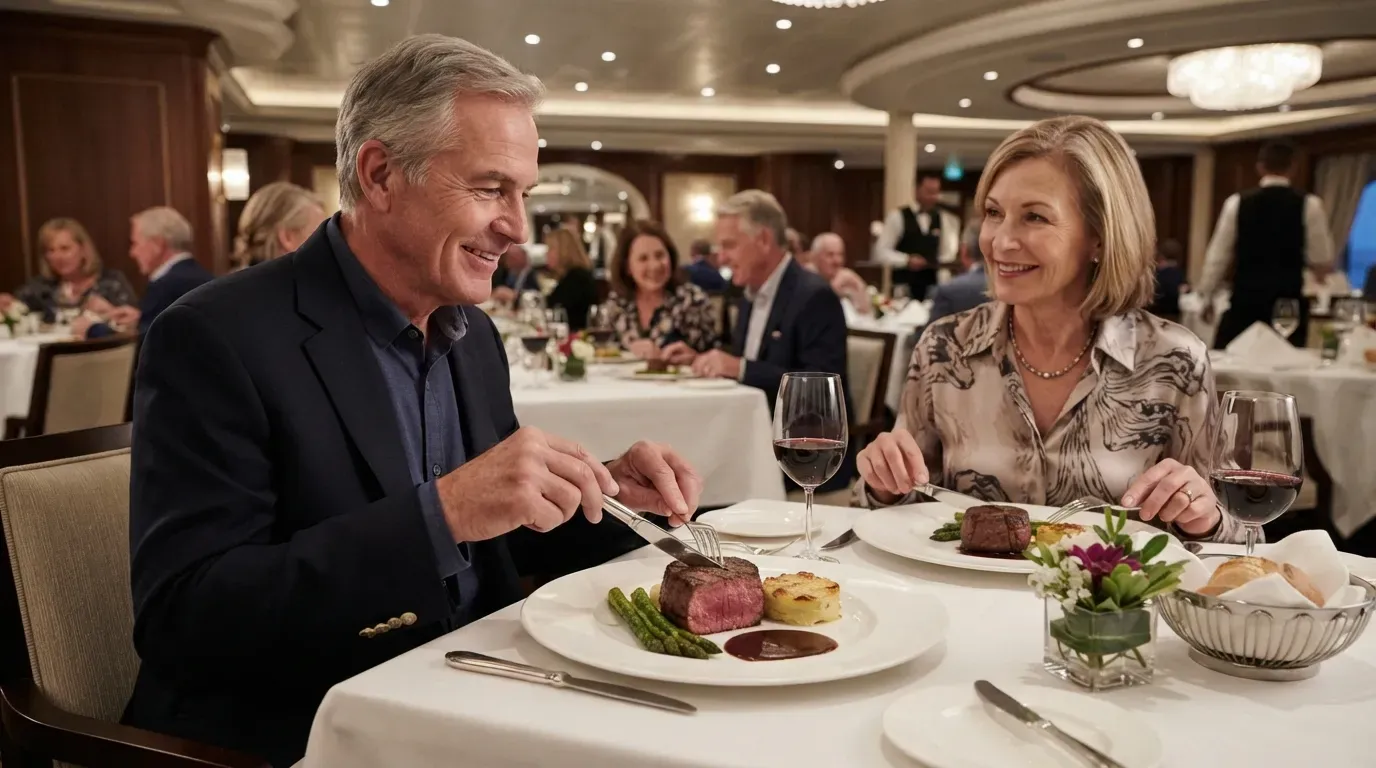
Specialty steakhouses charge a premium for a reason, but the same cuts sometimes exist one deck away. A filet mignon from the steakhouse might cost $50 or more at the specialty venue but could be available in the main dining room for a fraction of that price.
This isn’t a secret menu exactly – it’s a workaround that experienced waiters mention only when asked directly. Diners who’ve built a rapport with their server are simply more likely to get asked “would you like to try the steak instead?” in the first place. New guests who never engage beyond ordering rarely hear the offer at all. And speaking of ordering more than expected, #4 covers a habit that regulars lean on constantly.
At a Glance
- Specialty steakhouse cover charges commonly run $35 to $60 or more per person, depending on the cruise line.
- Main dining room dinners are already included in the cruise fare, with no extra charge.
- Similar cuts sometimes surface in the main dining room, but usually only for guests who ask their server directly.
#4 – Extra Courses, No Judgment, No Charge
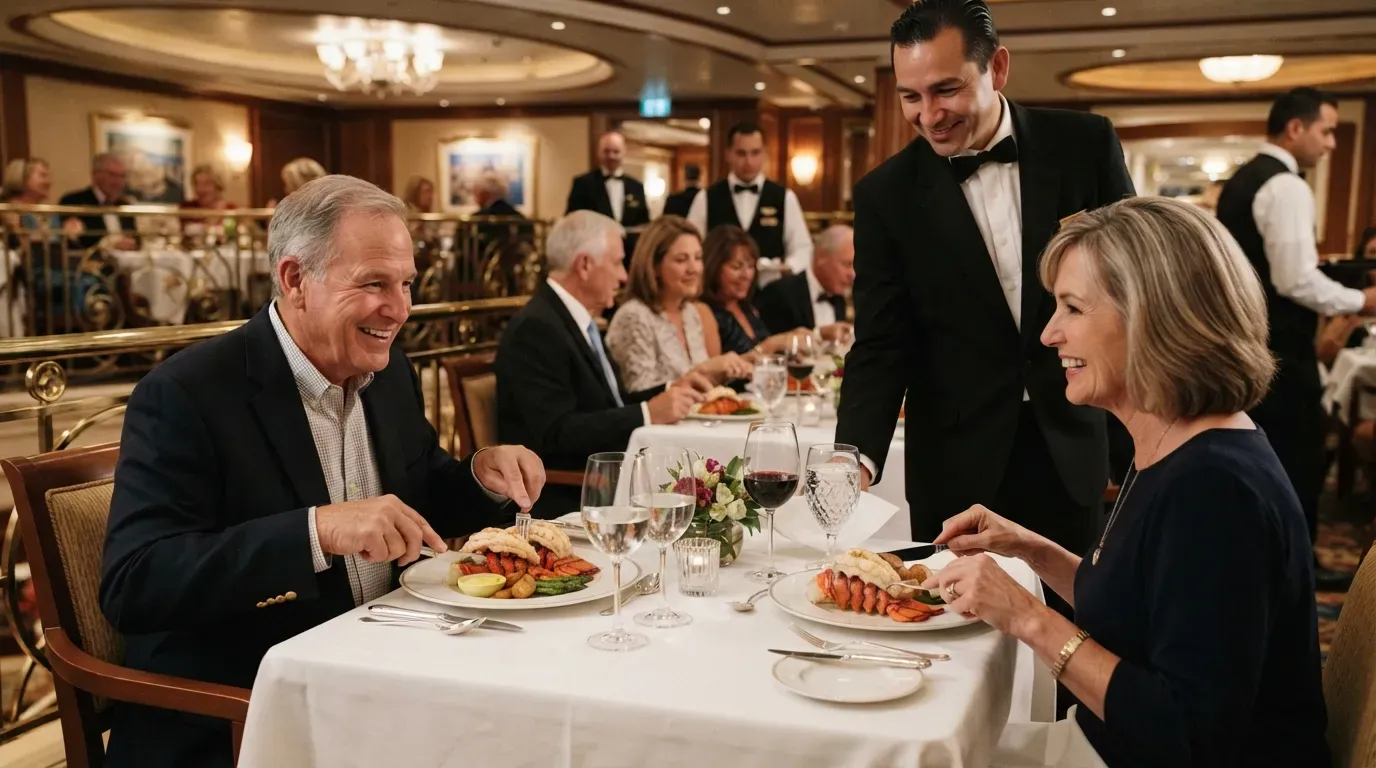
Most first-time cruisers stick rigidly to one appetizer and one entrée, unaware that the room runs on a very different unwritten rule. Not only can you order multiple starters and entrées in a cruise ship dining room, but there’s no fee for dishes, even extra ones.
Regulars take this further than most realize. Extra lobster tails on formal night, a dessert delivered to your cabin, or a heads-up about tomorrow’s best dish are all common rewards for being a kind and engaged guest. These extras aren’t official policy – they’re goodwill, plain and simple, and they flow almost exclusively toward diners who treat the crew like people rather than staff. It’s generous, but it pales next to the accommodation waiting at #3.
#3 – Dietary Needs Handled Personally, Not by a Form
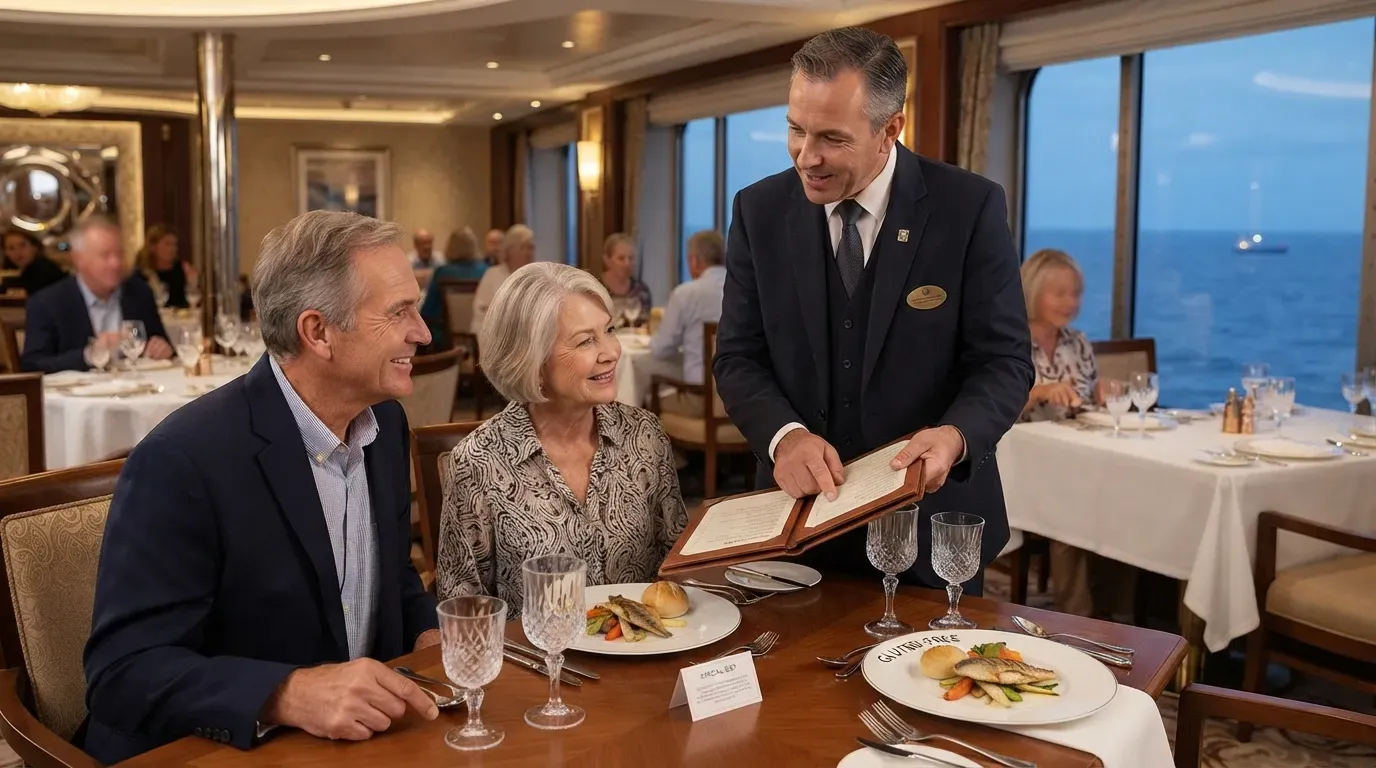
Special diets on a ship carrying thousands of meals a night sound like a logistical nightmare, yet the system is built around one-on-one attention. If you have food allergies or difficult dietary restrictions, it’s best to alert your cruise line’s special needs department in advance of your sailing and meet with the maître d’ onboard to discuss your needs.
What changes for familiar faces is the depth of that follow-through. For passengers with severe allergies, the head waiter can coordinate with the kitchen to prepare meals in a separate area with dedicated equipment. That level of care is standard on major lines, but most passengers never think to ask for it directly. Diners who’ve greeted the maître d’ by name tend to get checked on nightly without prompting, a level of oversight that quietly outclasses anything you’d get at a land-based restaurant. Still, nothing beats the fix that happens when a tablemate turns out to be a disaster.
#2 – A Table Swap, Handled Discreetly, No Questions Asked
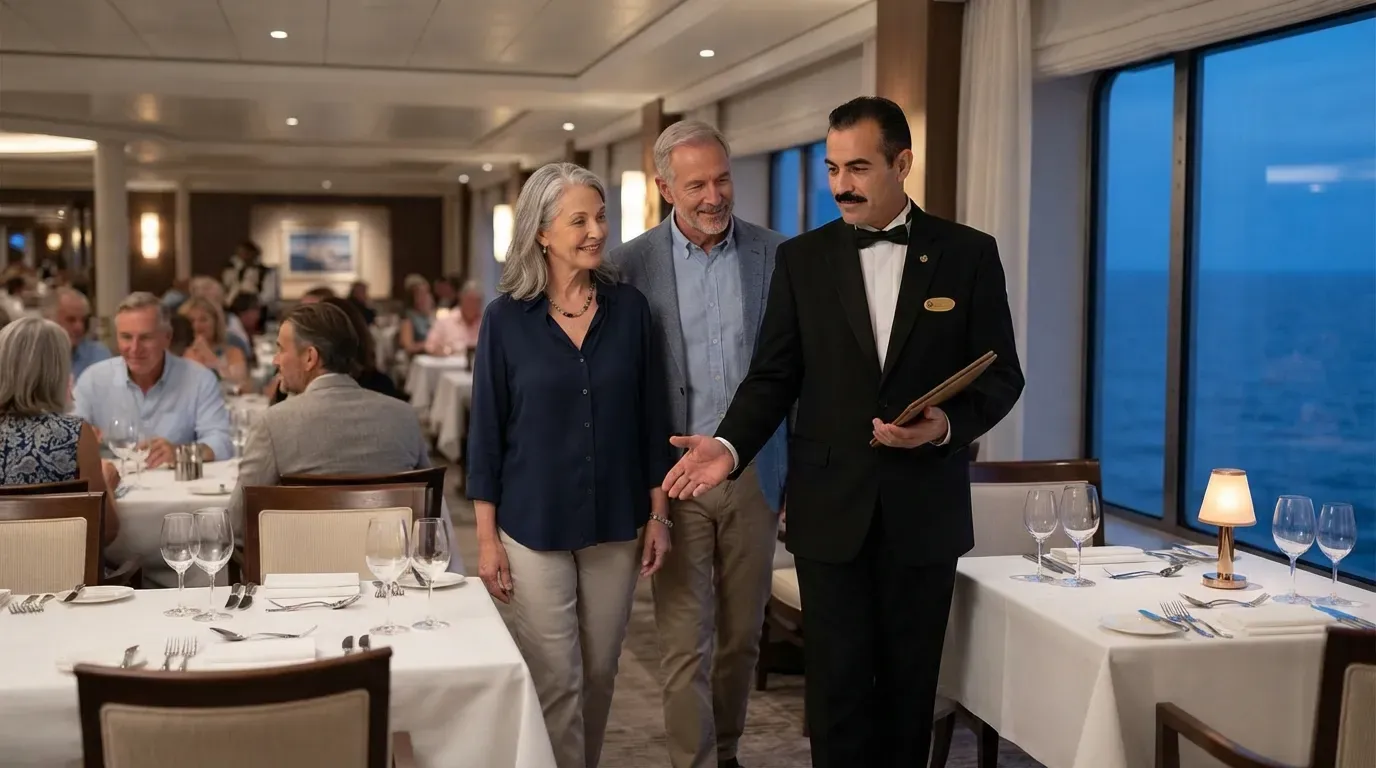
Every cruiser has heard a version of the same nightmare: seated with strangers for a week who turn dinner into a chore. If you discover the first night that you’ll be dining with difficult tablemates, you can still contact your maître d’ and propose a different seating arrangement.
The catch is that most passengers are too embarrassed to ask. You can ask the maître d’ to assign you to a different table if you’re not comfortable with your tablemates, though it’s considered a last resort by seasoned cruisers who’ve done it themselves after 20-plus sailings. Regulars who already have a relationship with the maître d’ get this handled fast and quietly, often within a single meal, while first-timers can spend an entire week stuck at an uncomfortable table simply because they never asked. But the very last arrangement isn’t really an arrangement at all. It’s something crew members say out loud, unprompted.
Worth Knowing
- The first night or two is the best window to request a swap, before new tablemates settle in as a group.
- Most cruise lines don’t publish a formal swap policy – it’s handled case by case at the maître d’s discretion.
- A calm, private request tends to get faster results than a complaint lodged after several rough dinners.
#1 – Being Remembered Is the Real Currency Onboard
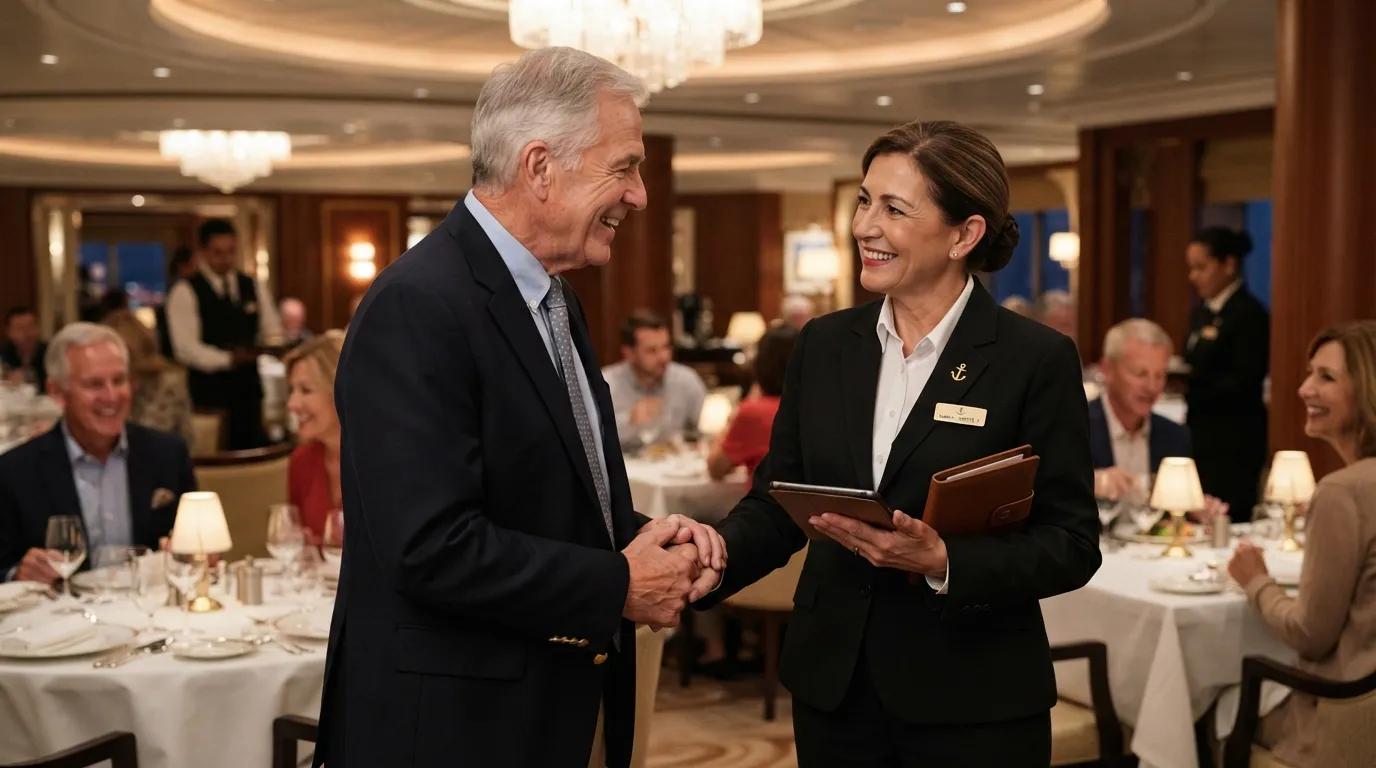
Strip away every perk on this list, and one truth remains underneath all of it: recognition is rare, and it matters more than most guests understand. Saying “thank you” is always appreciated, but saying it with someone’s name takes it to the next level. On a ship with thousands of crew members and thousands of guests, it’s rare for a staff member to be remembered by name, and that’s why it means so much.
A guest remembering us and calling us by our names makes us feel seen and appreciated. You have no idea how a simple thank you can make a crew’s day.
Cruise ship crew member
Every perk above – the table, the seating time, the extra course, the discreet swap – traces back to this single, unglamorous habit. It costs nothing, takes ten seconds, and it’s the one thing that separates a forgettable week from a maître d’ who genuinely looks forward to seeing you walk in.
None of this requires elite status, a suite upgrade, or a bigger tip envelope. It requires remembering that the person seating you every night is a human being having a very long week, and that a first-name greeting travels further on a cruise ship than almost anywhere else in travel. The diners who quietly get the better table, the faster fix, the extra course are rarely the loudest or the highest-paying. They’re just the ones who bothered to ask a name, and use it.