
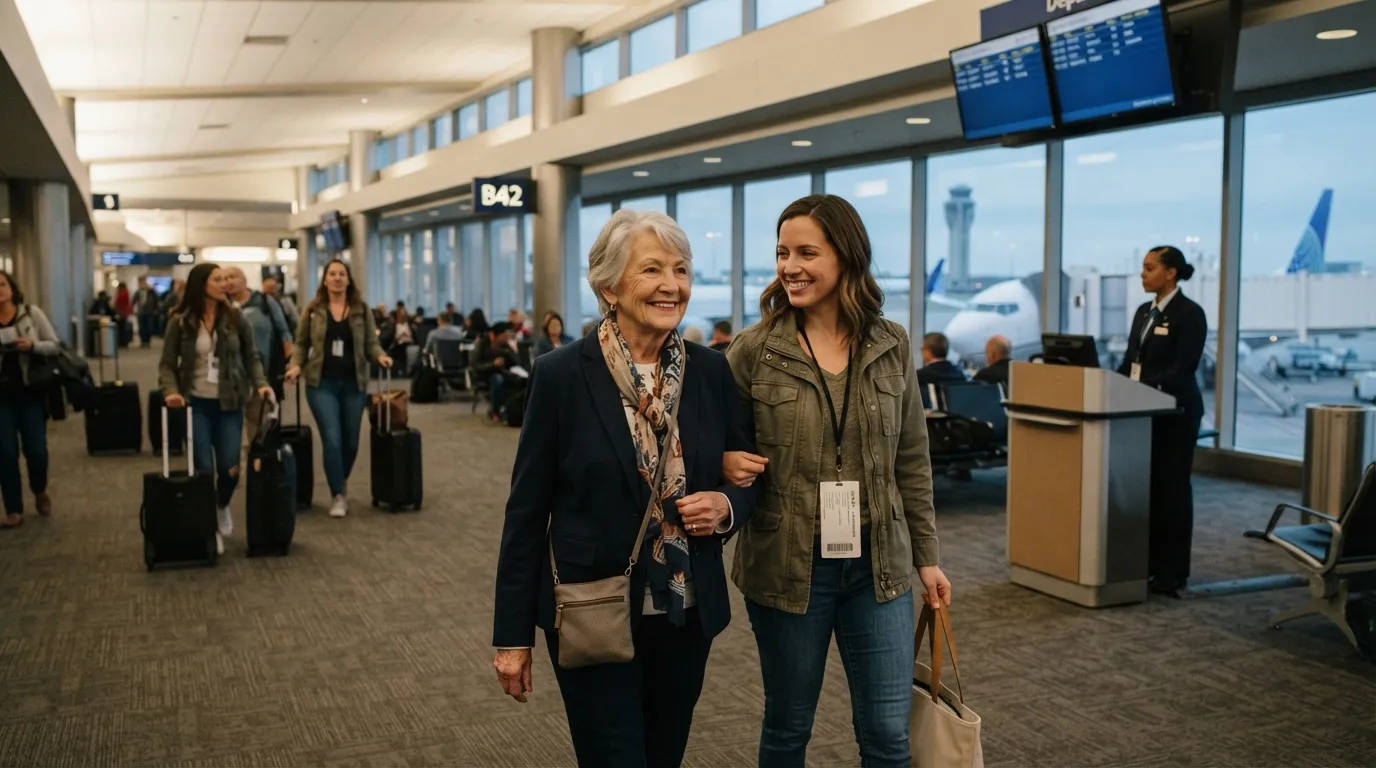
Most people assume airport lounges are a young business traveler’s game – laptops, loyalty status, and a $795 credit card fee guarding the door. But attendants at check-in desks will quietly tell you the opposite is true. Travelers over 60 who simply walk up and ask often get waved through doors that intimidate everyone else, and the confidence has nothing to do with arrogance. It’s knowledge most flyers never bother to learn.
So what’s actually stopping millions of older travelers from ever setting foot inside? Mostly outdated assumptions about who “qualifies” and what it costs. Here’s what lounge staff, gate agents, and frequent flyers actually say happens once someone finally stops assuming the answer is no.
#14 – The Dress Code Rule That Gets People Turned Away at the Door
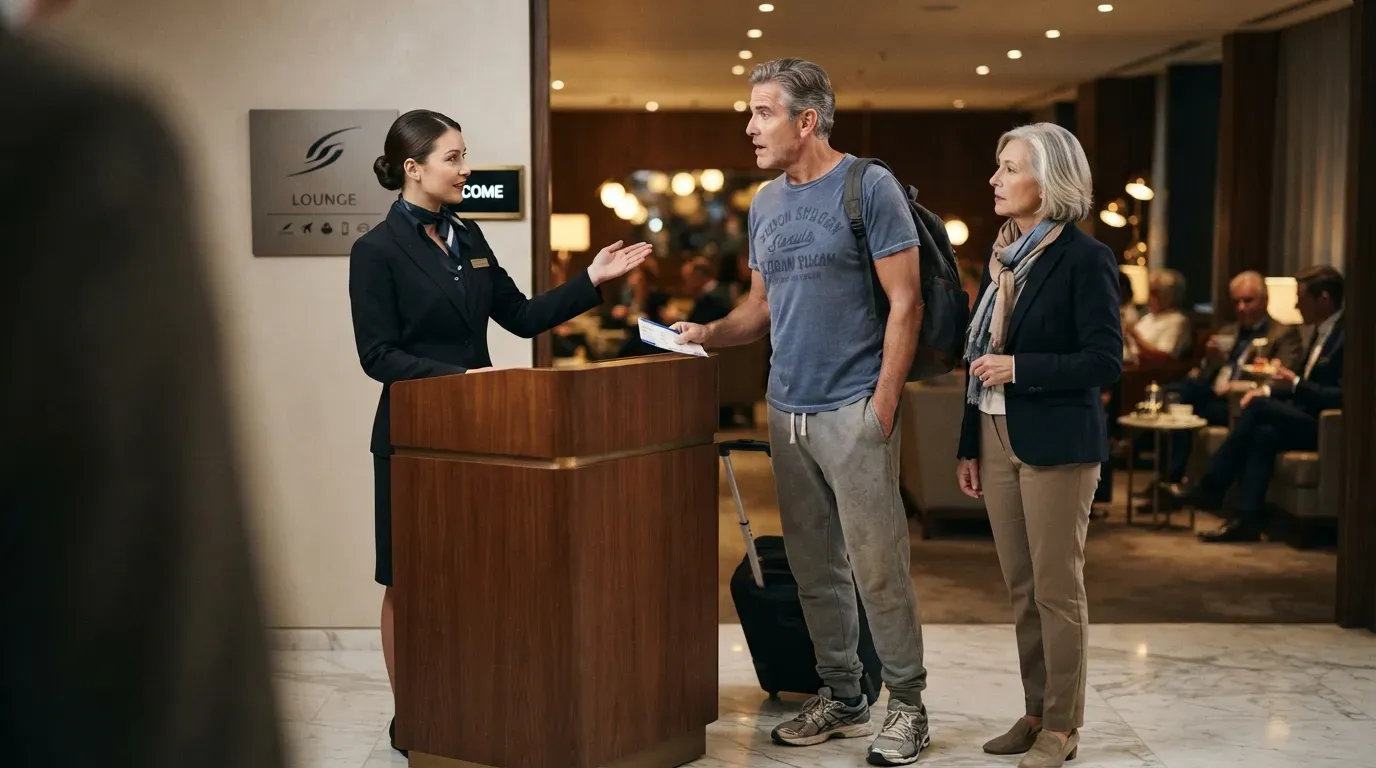
Lounge staff won’t always say it out loud, but the wrong outfit can end your visit before it starts. Most lounges enforce a smart-casual standard, and attendants are trained to politely redirect anyone who shows up looking like they just left the gym or the beach.
Beachwear, gym clothes, and slogan tees with anything crude are the usual culprits. It sounds like a small detail, but staff say it’s one of the most common reasons a confident-looking traveler gets quietly stopped at the podium. Walking in dressed like you already belong there really is half the battle.
Worth Knowing
- Swimwear and flip-flops are turned away at nearly every major lounge
- Gym clothes and athletic tanks are treated the same as beachwear
- Crude or offensive slogan shirts get flagged before anything else
- A collared shirt or simple layered outfit clears the bar almost anywhere
#13 – Toddlers Get In Free, and So Does the Perk That Comes With Them
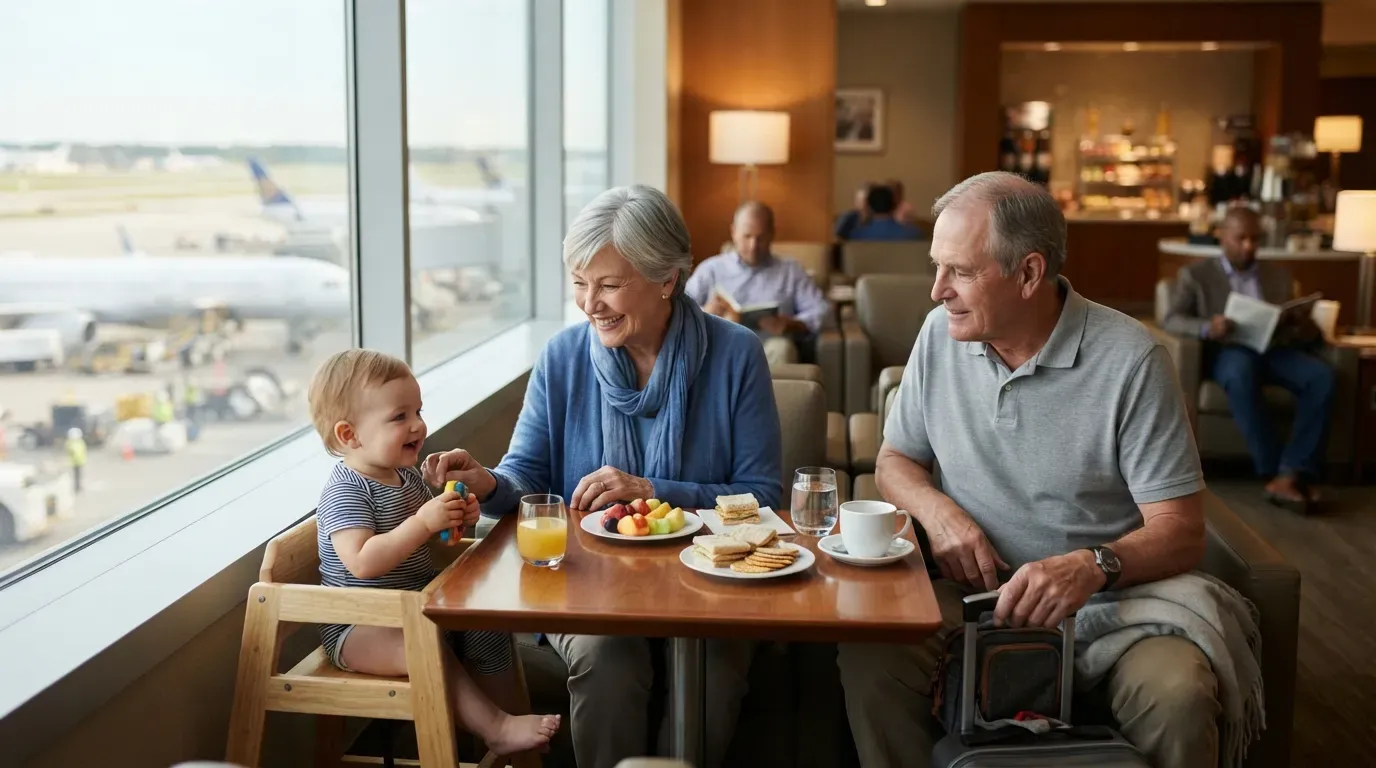
Here’s something grandparents traveling with little ones rarely expect: the youngest family members almost never cost a dime. Most lounges let children under 2 in completely free, with each network setting its own policy for kids older than that.
Attendants say this rule trips up even seasoned travelers, who assume every extra body in the group means an extra charge at the desk. For grandparents flying with grandkids, it can mean the difference between a stressful gate wait and a relaxed pre-flight stop with free snacks and a quiet corner to sit.
#12 – A Free Credit Card Nobody Mentions Still Buys You Four Lounge Visits a Year
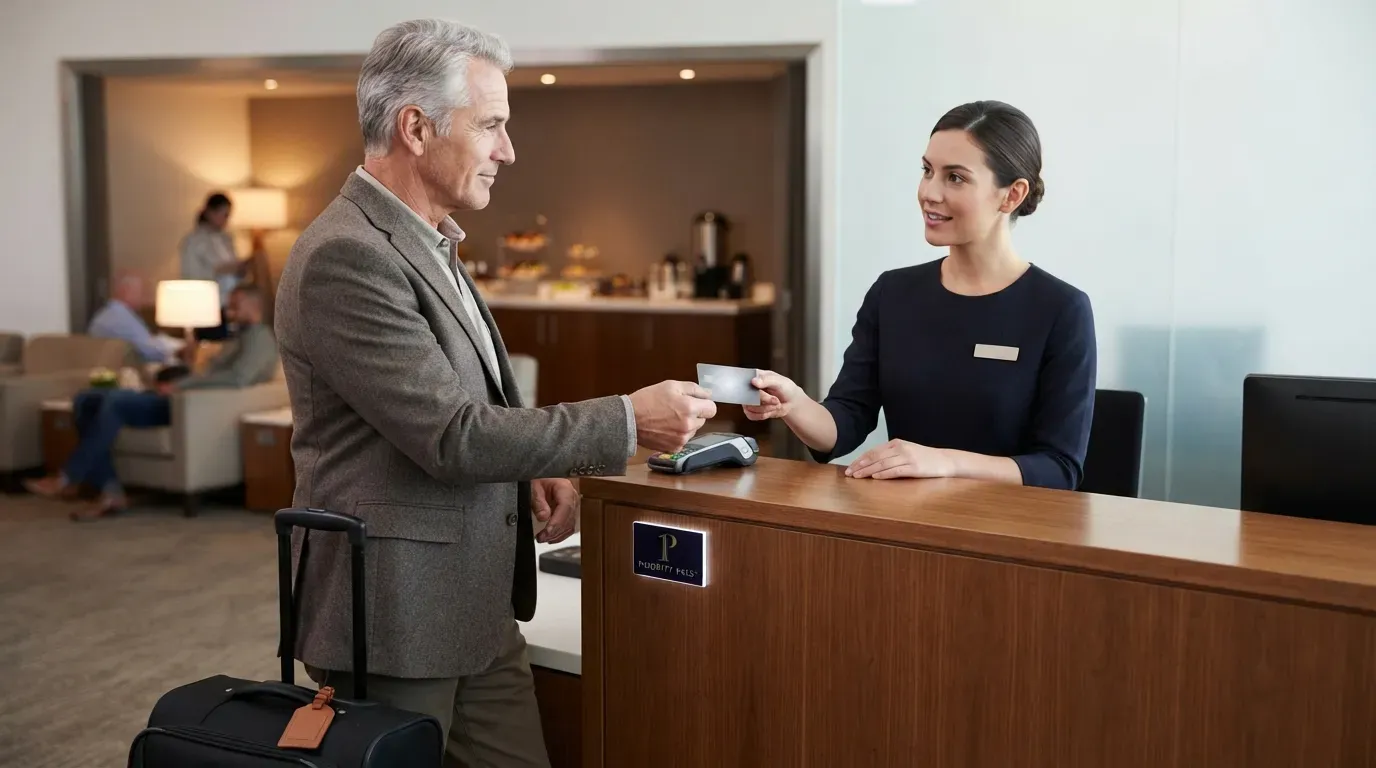
Most people assume lounge access requires a credit card with a fee north of $500. That simply isn’t true anymore, and it’s one of the most common surprises attendants hear at the counter.
The U.S. Bank Altitude Connect carries no annual fee and still includes four Priority Pass visits a year, making it one of the more financially sound choices for seniors who only travel a handful of times annually. Lounges tend to matter more for older travelers anyway – quieter seating than a crowded gate, free food and drinks, cleaner restrooms, and Wi-Fi without hunting for an open outlet.
#11 – You Don’t Need Any Credit Card at All to Get In
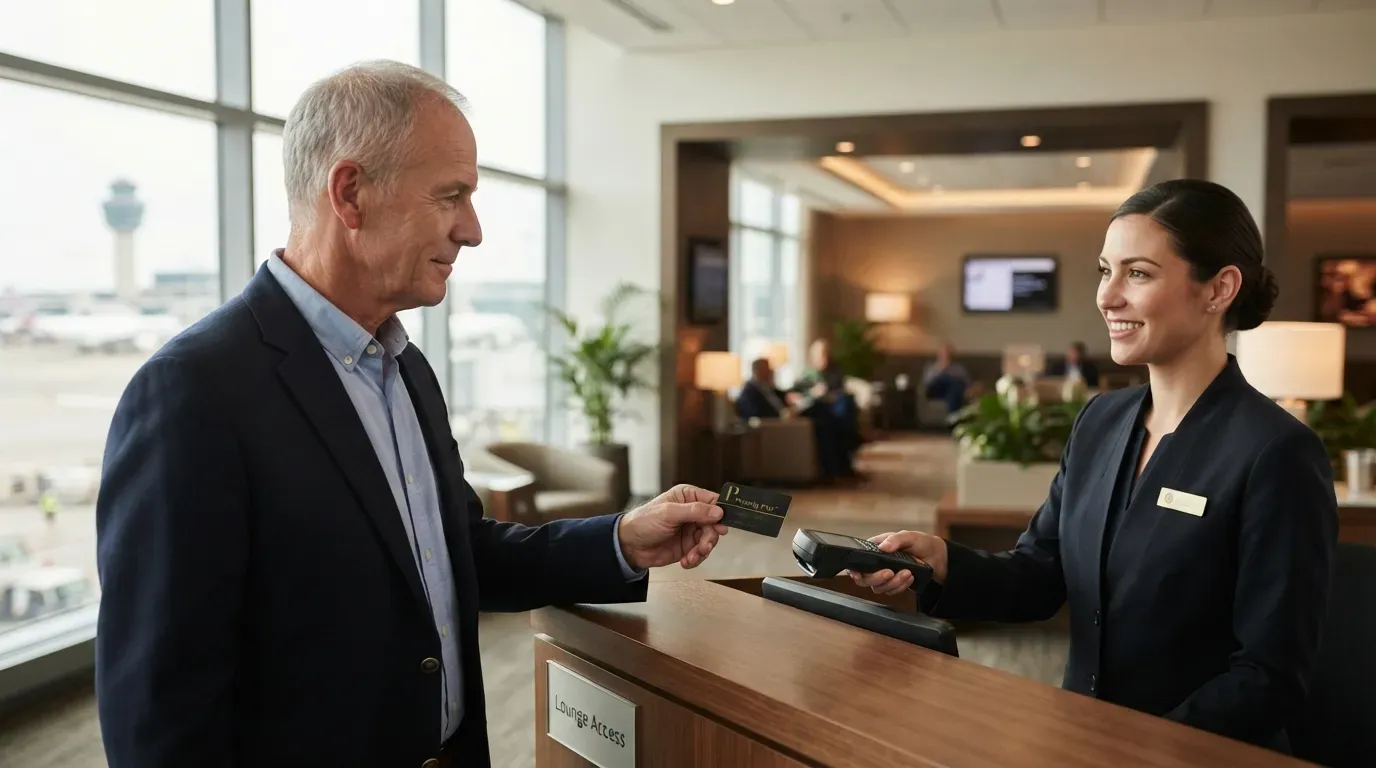
Here’s the part that surprises almost everyone: lounge access can simply be purchased outright, no bank relationship required. Priority Pass grants entry to lounges around the world through a straightforward membership.
If it’s not already bundled into a card, travelers can enroll on their own, with tiers running from $99 to $469 a year depending on how often they fly. Many people over 60 skip this entirely, assuming lounge access is locked behind loyalty programs or premium plastic. Attendants say a plain paid membership is often the simplest path for occasional flyers who just want comfort without the paperwork.
#10 – Some Lounges Quietly Charge Double for Your Guest
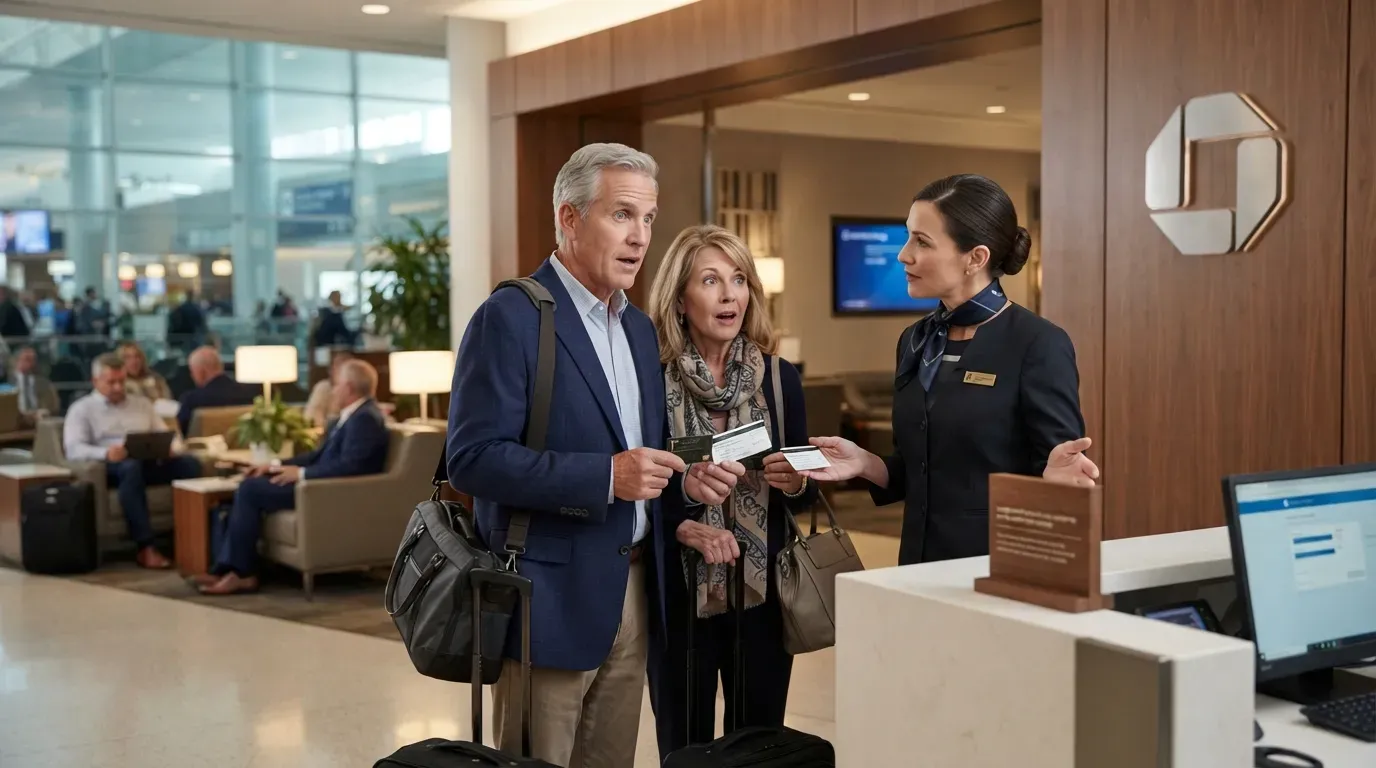
Not every guest fee is created equal, and the difference can catch a confident walk-in completely off guard. If a Priority Pass membership was purchased directly, guest passes typically run about $35 per person, per visit.
But Chase Sapphire Lounges that participate in the Priority Pass network charge a flat $75 per guest, more than double the standard rate. Attendants say travelers rarely check this before arriving with a spouse or friend in tow, turning a relaxing pre-flight stop into an unexpectedly pricey one.
#9 – The Free Guest Era at One Major Lounge Network Is Officially Over
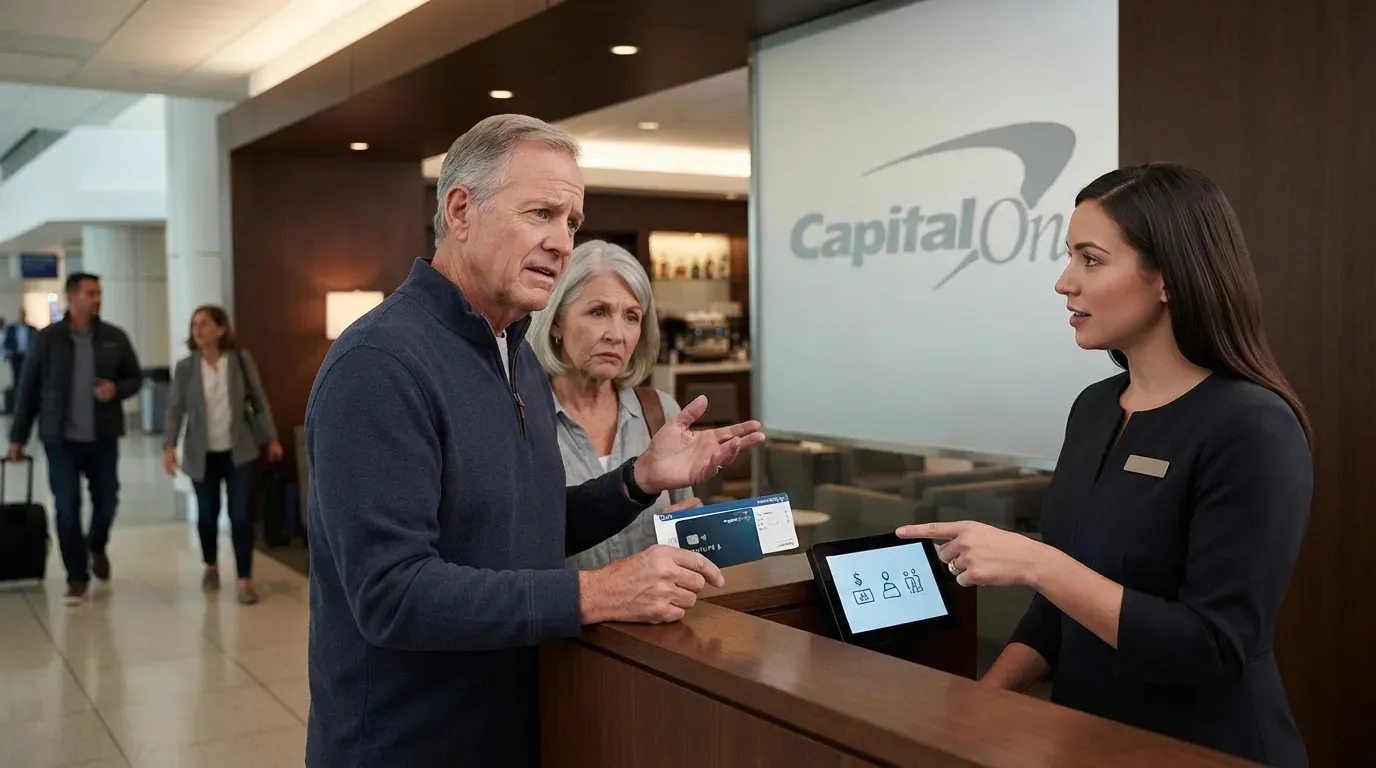
For years, one of the most generous perks in travel was bringing family along at no extra cost. That era has quietly ended, and plenty of loyal cardholders haven’t caught up yet.
Primary Venture X cardholders used to bring up to two guests into Capital One lounges and Priority Pass lounges for free, but as of February 1, 2026, that’s no longer the case. Travelers now pay $45 per adult guest and $25 per child at Capital One lounges, and $35 per guest at Priority Pass locations. Plenty of travelers still call it the best mid-tier card on the market, but the guest-fee shift is exactly the kind of change that sparks real frustration at the door.
Quick Compare
- Before Feb 1, 2026: Two guests free with every Venture X visit
- After Feb 1, 2026: $45 per adult guest at Capital One lounges
- After Feb 1, 2026: $25 per child guest at Capital One lounges
- After Feb 1, 2026: $35 per guest at Priority Pass locations
#8 – Flying Coach Doesn’t Mean You’re Locked Out of Premium Lounges
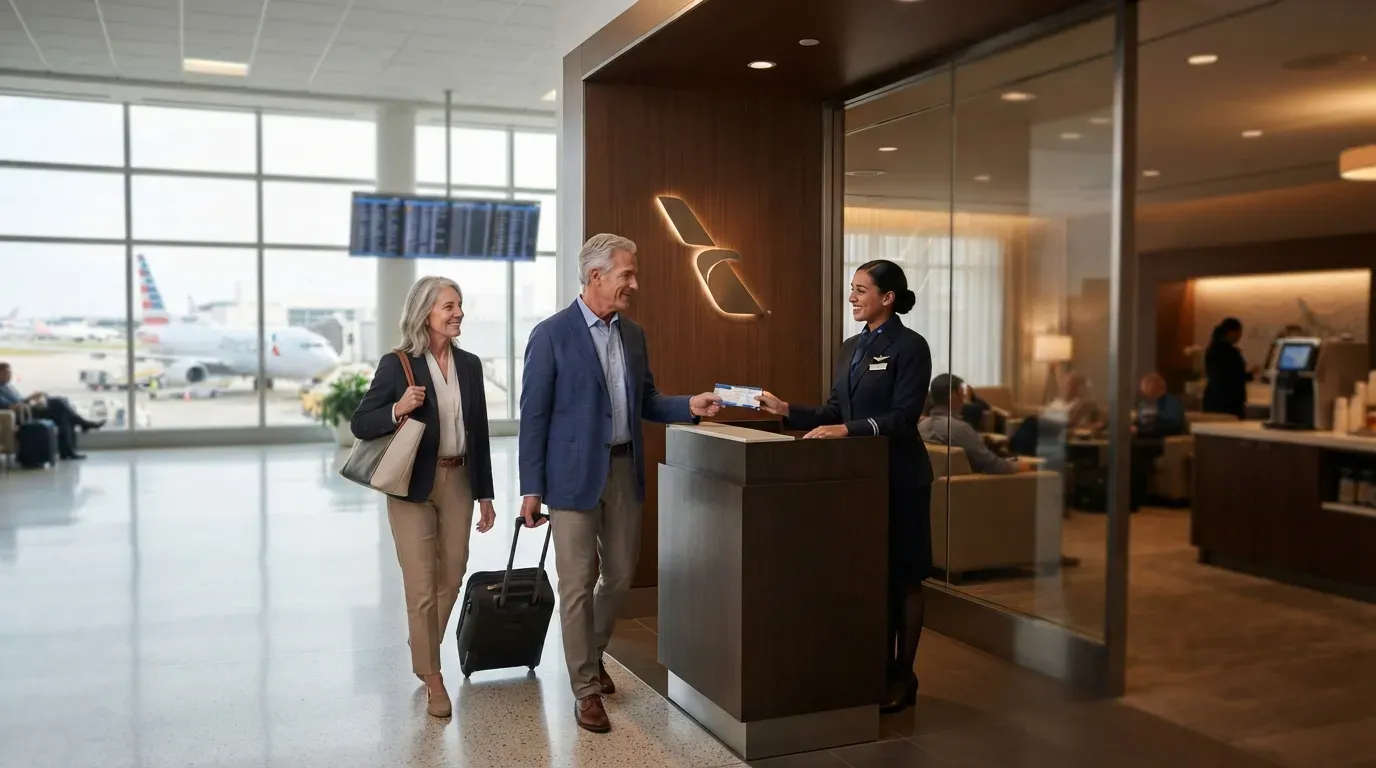
Here’s the myth attendants love debunking: economy seating and lounge access aren’t mutually exclusive once someone has built up airline status. It surprises even longtime flyers who assume the club is reserved strictly for those sitting up front.
Executive Platinum, Platinum Pro, and Platinum elite members of American’s AAdvantage program can enter an Admirals Club on qualifying international flights – even in economy – and bring one guest along. Older travelers who’ve quietly racked up status over decades of flying often have far more access than they realize.
#7 – Veterans and Active Military Get In Somewhere Almost Nobody Talks About
This one deserves more attention than it gets, especially among traveling veterans who assume lounges are entirely off-limits without status or a premium card. USO Lounges are free for active-duty service members and their families at airports worldwide.
United Clubs offer complimentary access for U.S. military personnel, and Admirals Clubs waive the fee for uniformed military flying American. USO lounges often go a step further, with snacks, entertainment, and genuine hospitality from volunteers who mean it. Attendants say this benefit goes unused constantly, simply because travelers never think to ask.
Fast Facts
- USO Lounges: free for active-duty members and their families
- United Clubs: complimentary entry for U.S. military personnel
- Admirals Club: fee waived for uniformed military flying American
- Most of these perks require nothing more than showing military ID
#6 – The Day Pass You Assumed Was a Rip-Off Might Actually Save You Money

Plenty of travelers write off day passes as an unnecessary splurge. Attendants say that math is often backwards, especially for anyone who was already planning to buy food, a drink, or Wi-Fi before the flight.
Most lounges sell single-day access for somewhere between $35 and $80, covering all the amenities inside. For a traveler who would’ve bought an airport meal, a bottled water, and a paid internet session anyway, the pass often breaks even or comes out ahead. It’s a detail attendants wish more walk-in travelers understood before waving it off.
#5 – Your Boarding Pass Has to Match the Airline in the Lounge Name
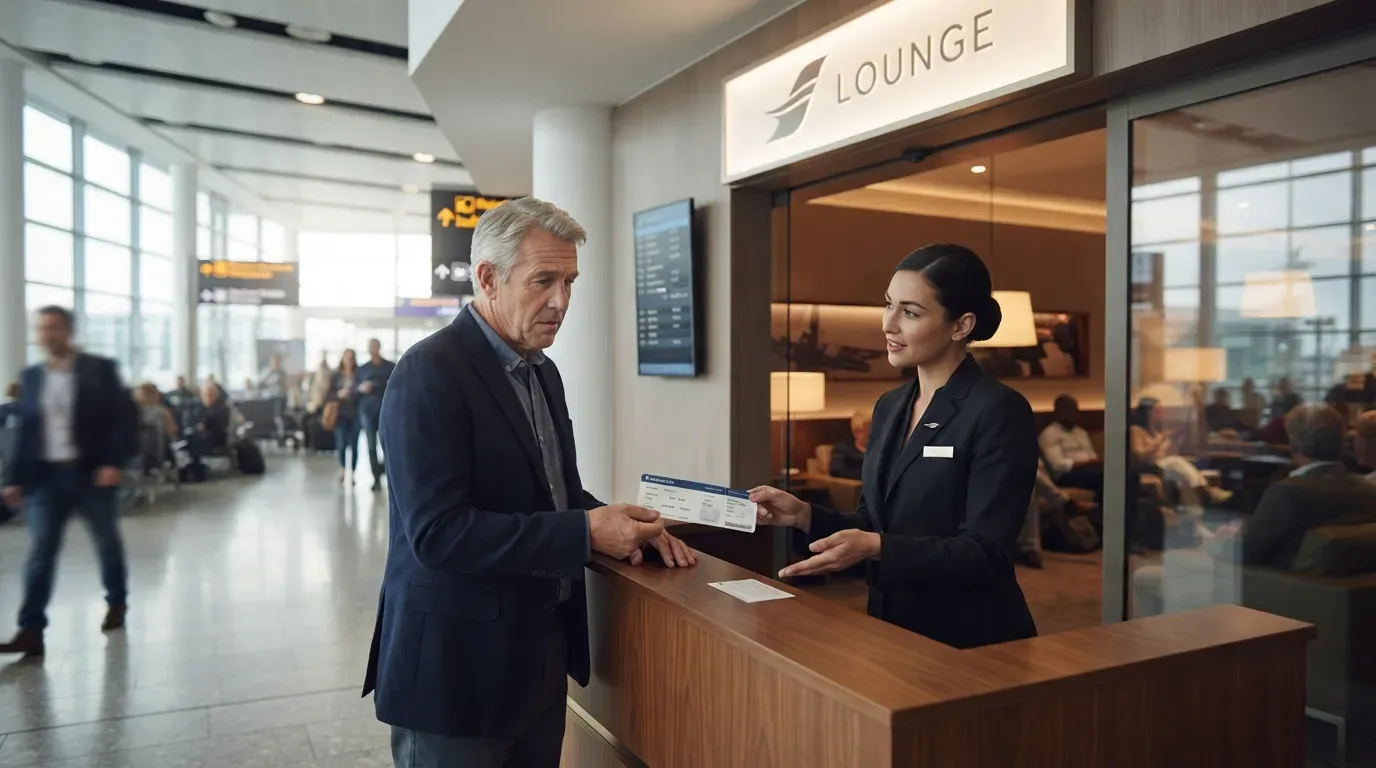
This is the rule that quietly turns away confident travelers who assumed any lounge with a familiar name would let them walk in. Most airline lounges require flying that specific airline, or one of its partners, on that same day.
An Alaska membership won’t get you through the door if you’re flying Frontier that afternoon. Attendants say this catches connecting travelers off guard constantly, especially those who assume loyalty status simply travels with them regardless of carrier. Checking the lounge’s airline partnerships ahead of time avoids an awkward moment at the desk.
#4 – You Can Board Early Without Ever Producing a Doctor’s Note
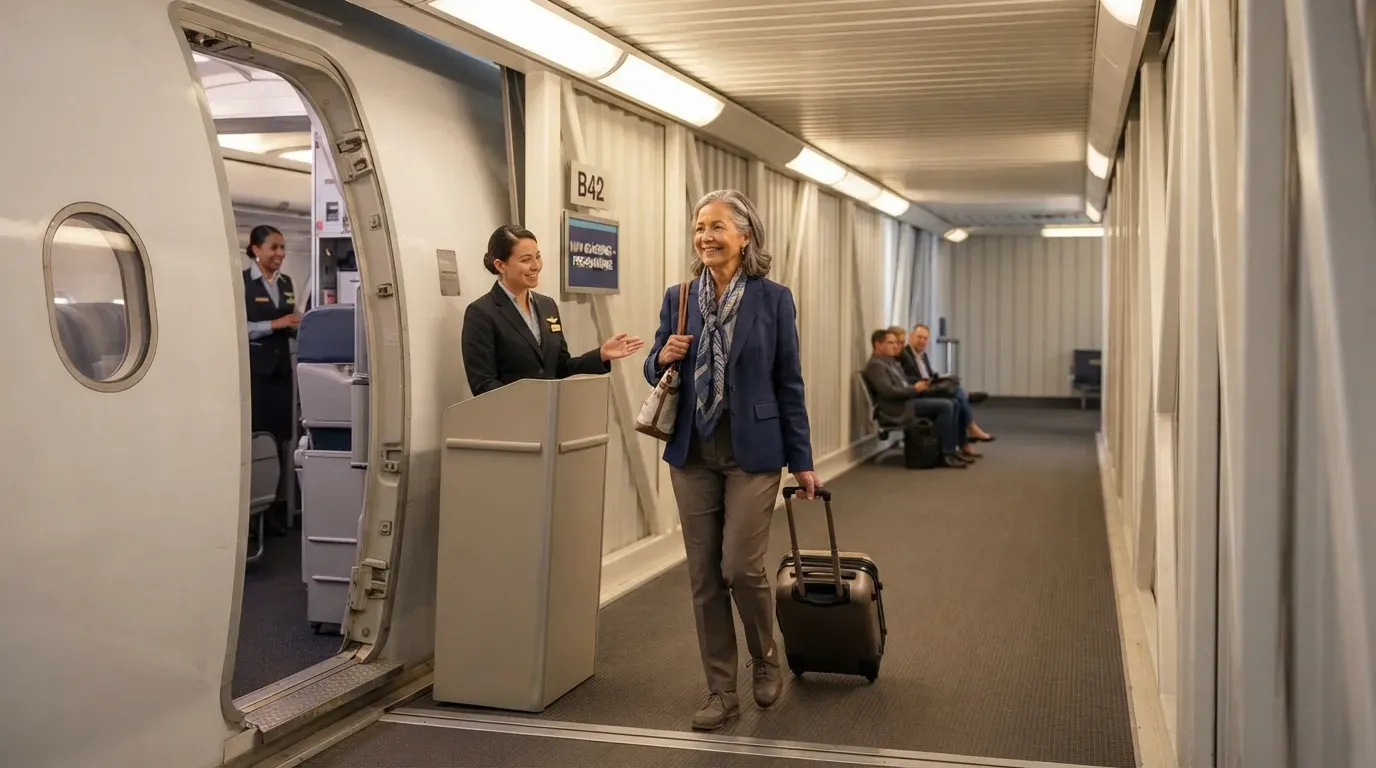
Here’s a detail that shocks a lot of travelers over 60: preboarding isn’t reserved for wheelchair users only, and no paperwork is required to use it. Airlines actually encourage it, since it keeps the aisles less congested during the boarding crunch.
Seniors who need extra time or a little help getting to their seat can preboard simply by self-identifying to a gate agent before boarding begins. Attendants say most eligible travelers never ask, assuming they’ll be denied or judged for not “needing” it enough. The reality is airlines want that extra time used, not avoided.
Ask the question you assume the answer to. That’s where most of this benefit gets left on the table.
Common advice from frequent-flyer forums on senior travel perks
#3 – Senior Discounts Exist, But Airlines Deliberately Bury Them
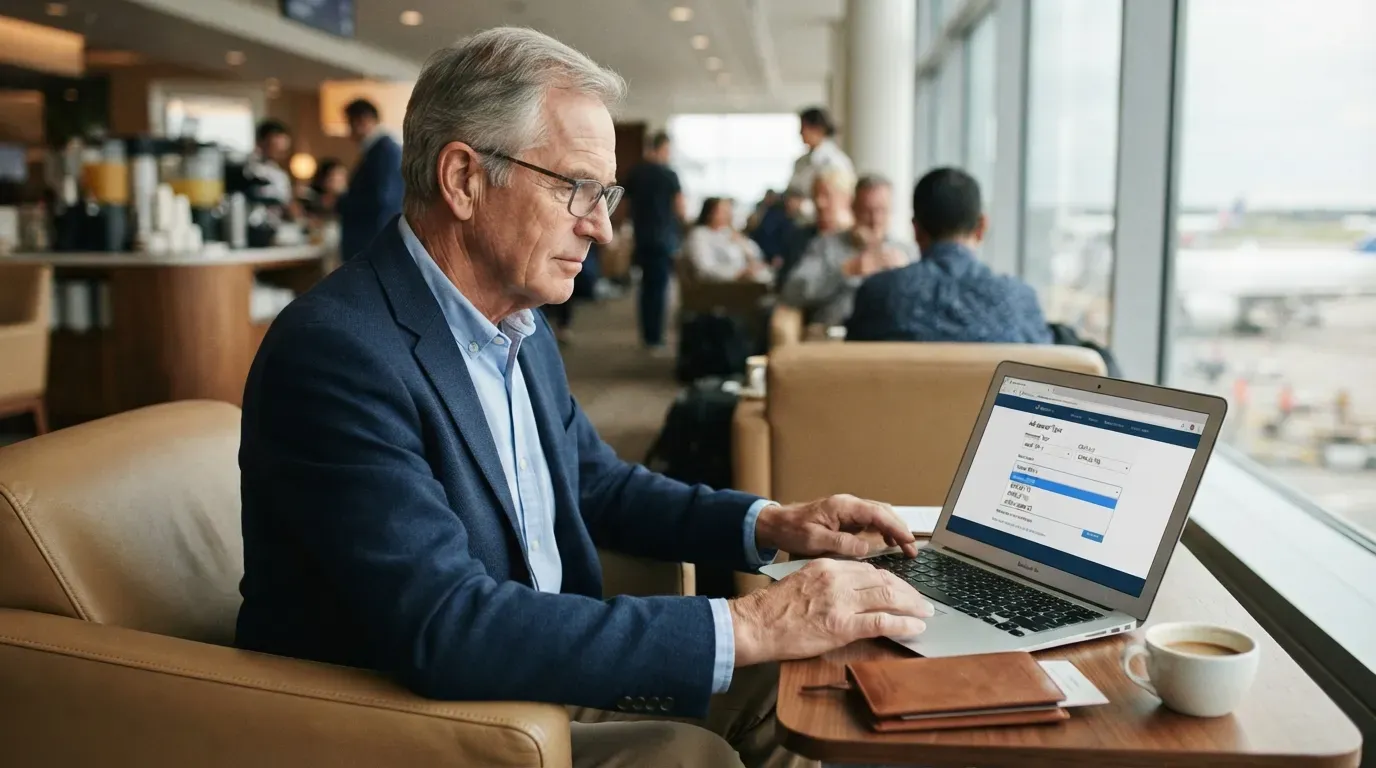
This is the one that generates the most frustration once travelers realize what they’ve been missing for years. Some airlines offer real discounts for passengers over 60 or 65, and almost none of them advertise it on the homepage.
On American’s website, selecting “Senior (65+)” under Advanced Search passengers can surface discounted fares on certain routes. Delta, United, and JetBlue offer similar deals, typically 5% to 15% off, but travelers usually have to call and book directly since the rates never show up online. Many longtime flyers call it borderline unfair, given how quietly it’s kept off the booking page entirely.
At a Glance
- American: “Senior (65+)” filter under Advanced Search on select routes
- Delta: senior discounts around 5% to 15%, phone booking required
- United: similar discount range, not listed in online fare search
- JetBlue: comparable senior savings, also booked by phone only
#2 – There’s a Concierge Service Built Specifically for Travelers Who Want to Feel Like VIPs
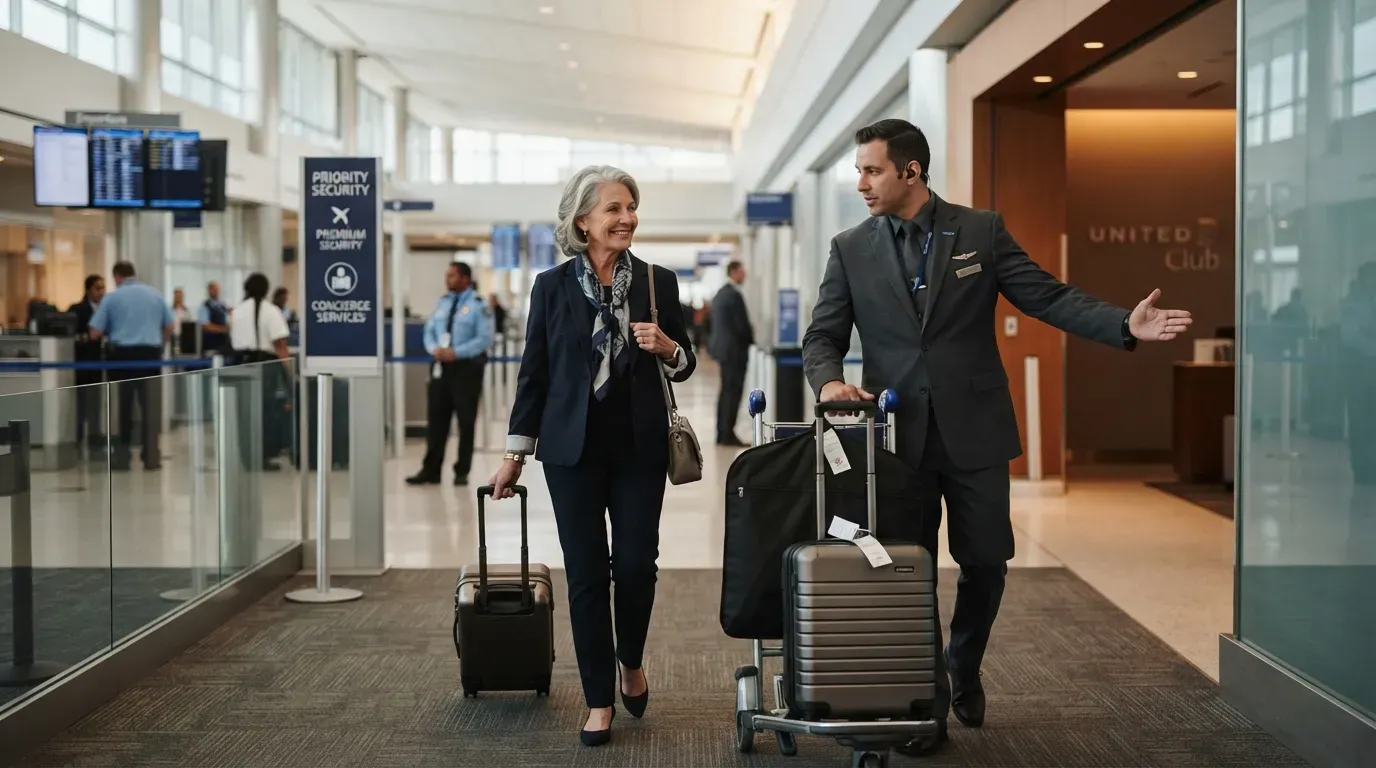
This is where “walking in confidently” stops being a mindset and starts being an actual service you can book. A concierge – often used by seniors or those traveling with young kids – can streamline the entire airport experience, from baggage to lounge access to priority security.
United’s Signature Service, available at several major U.S. airports, bundles a personal concierge with United Club access and Group 2 boarding, and it can be booked online up to 24 hours before departure. Attendants say travelers who try it once rarely go back to navigating security alone again.
#1 – A Free Companion Pass Lets Someone Walk You All the Way to the Gate
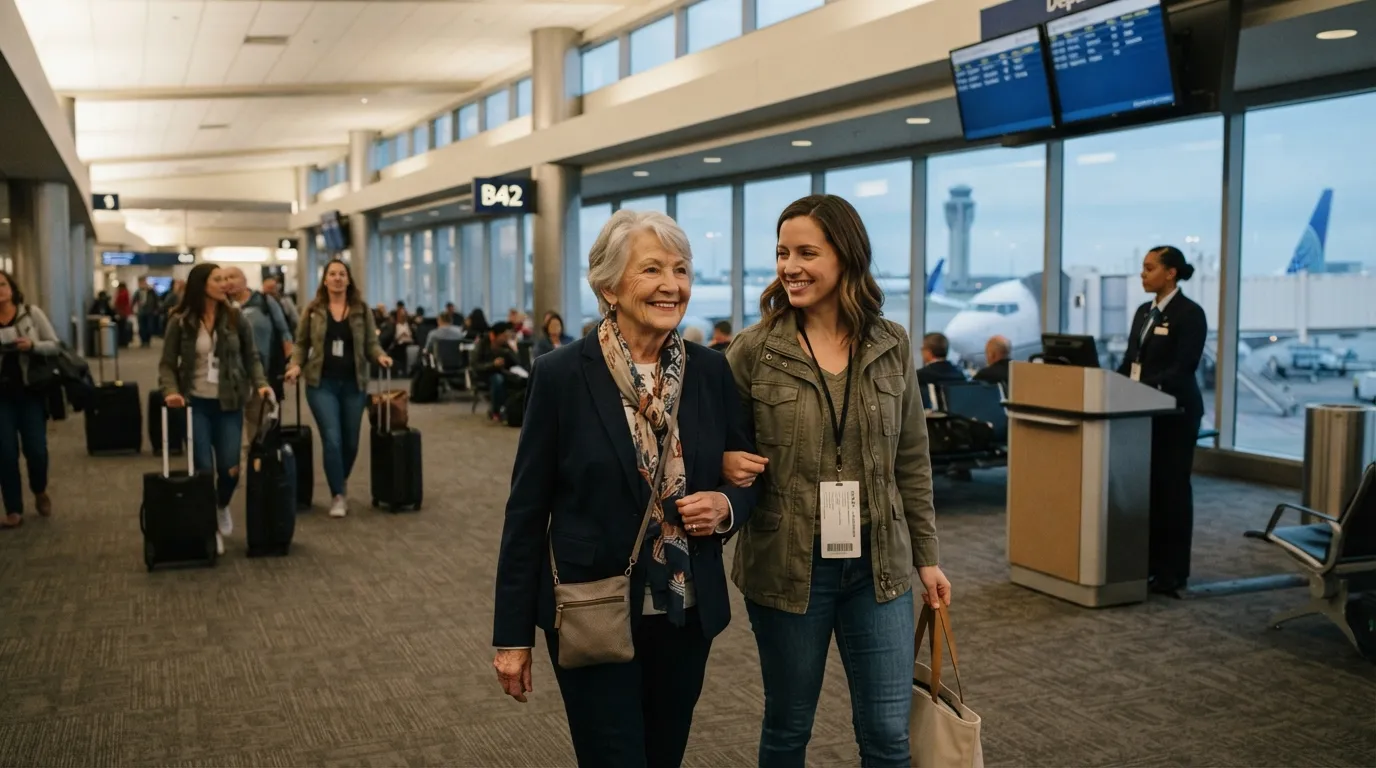
Save the biggest one for last, because it’s the secret attendants say changes everything for travelers flying solo. Anyone who wants a family member or friend along for extra support can request a free gate pass for a nonpassenger.
Major U.S. carriers – including Alaska, American, Delta, JetBlue, Spirit, Southwest, and United – offer these passes to help seniors through the airport. United, for example, allows up to two companions to get a security pass at the ticket counter, letting them clear security, walk to the gate, and wait until boarding. It’s the kind of benefit that turns a nerve-wracking solo trip into a supported one, and attendants say almost nobody asks for it until they hear about it from someone else.
None of these secrets require insider connections or luxury spending. They require asking the question most travelers are too embarrassed, or too unaware, to raise at the counter. The gap between the traveler who quietly settles for an uncomfortable gate seat and the one relaxing in a lounge usually comes down to a single confident question asked out loud.