
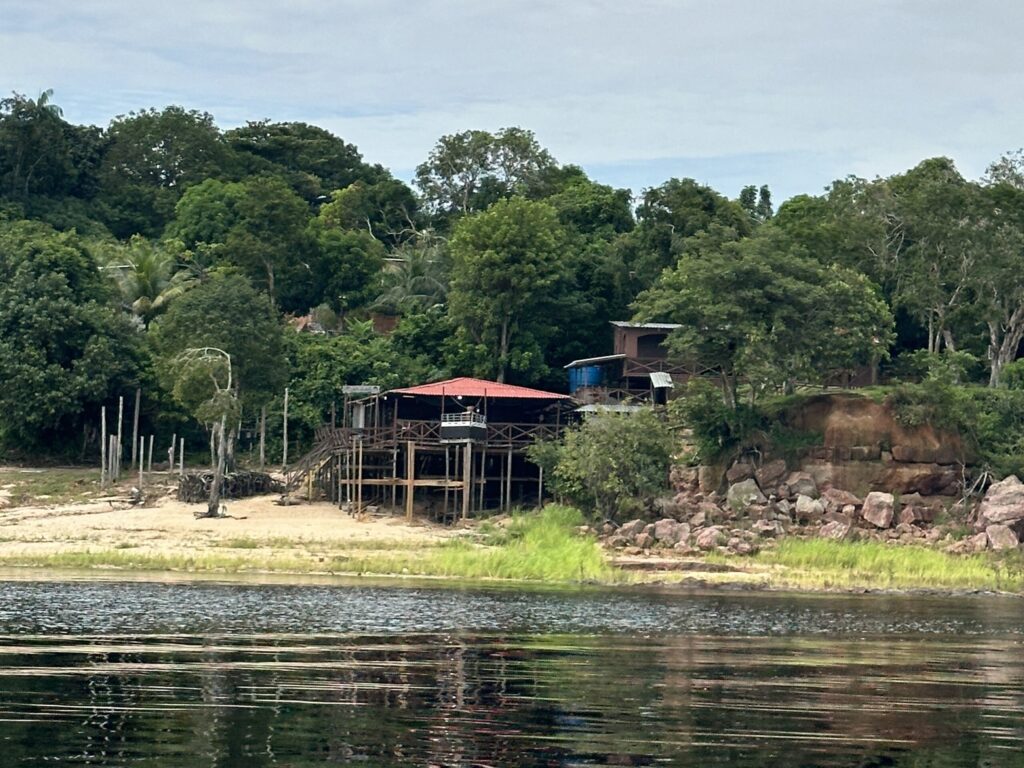
Bouncing along the river, the murky waters of the Amazon River tributary extended in each direction. In the distance, a line of vibrant green trees looked out over the waters, teeming with wildlife, plants, and critters that make this rainforest the most biodiverse place on Earth. Staying in Manaus, a city of over 2 million people at the heart of the Amazon rainforest in Brazil, I began my journey towards the river in a speedboat blasting modern tunes, scanning the horizon only to realize how vast the waters were. We weren’t, however, on the Amazon River yet. Instead, the metropolis sits on the Rio Negro, which, as the name suggests, appears a deeper, darker black, unlike the brown, murky Amazon that meets it slightly downstream.
Before arriving in Manaus, I had never thought such a large city existed in the heart of the rainforest that I imagined so pristine and impenetrable. Manaus is only connected to the world by air or boat, especially when reaching other villages along the river that rely on its fish, floods, and transportation for survival.
Gliding through the water, the large apartment buildings, oil refineries, and roads disappeared, opening up the way to the wilderness of the forest and water, where we were about to meet our first animal of the day – the pink dolphins.
The Pink Dolphins
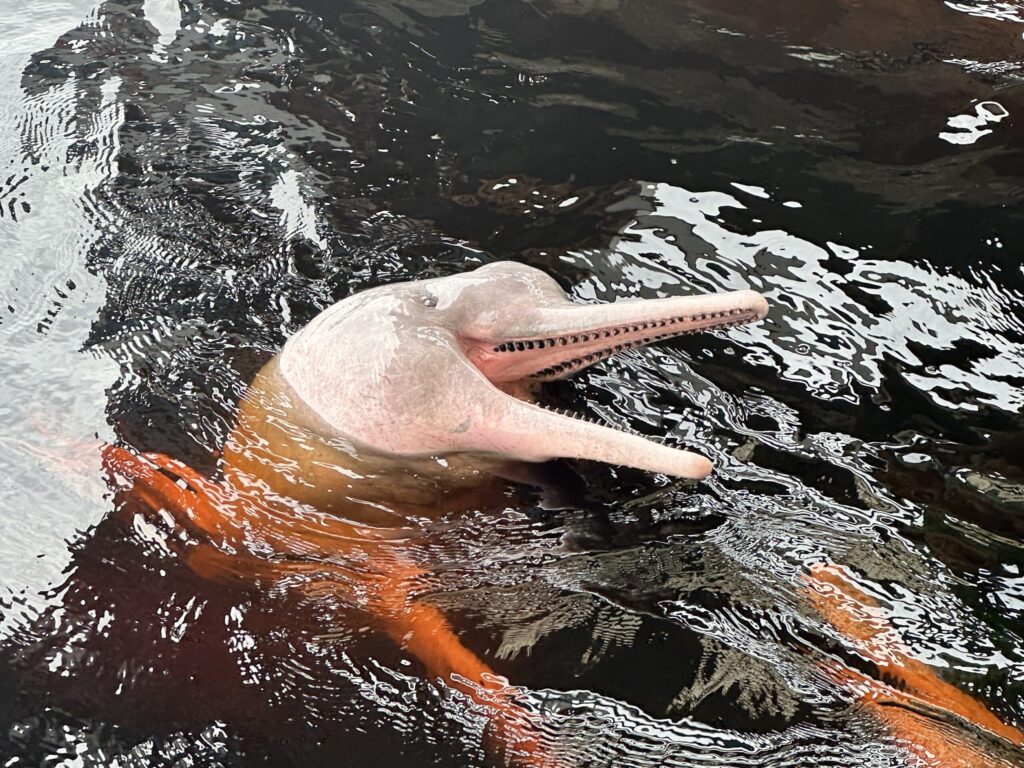
Docking at a floating barge, we stepped out of the boat to look over a submerged platform about 3-4 feet below the waterline. Slowly creeping into the water, we floated as a local man started to shake a fish just above the surface. Within seconds, large, looming shapes began weaving through the dark waters of the Rio Negro, appearing almost orange-tinted. Then, out of what seemed to be thin air, a bright pink and grey dolphin poked its head out of the water to grab the fish, its long snout full of teeth that were damaged or broken. Its tiny little grey eyes looked out at us, as the rest of its powerful body swayed back and forth, hitting us as we swam. 1 more appeared. 2 more came to grab lunch. Swimming in and out around us, there was such an incredible sensation of being in the water with these rare and beautiful animals.
The Indigenous Village
Our next stop was a visit to one of the local tribes, which today offers cultural activities and experiences in exchange for a small donation or the purchase of their crafts. While these experiences often cause moral conflict for me, I was reassured by our guide that they were happy to do these activities and appreciated tourism support as a means of developing the village’s infrastructure. And while I remained aware of the controversy surrounding such activities, I had to hope this was true.
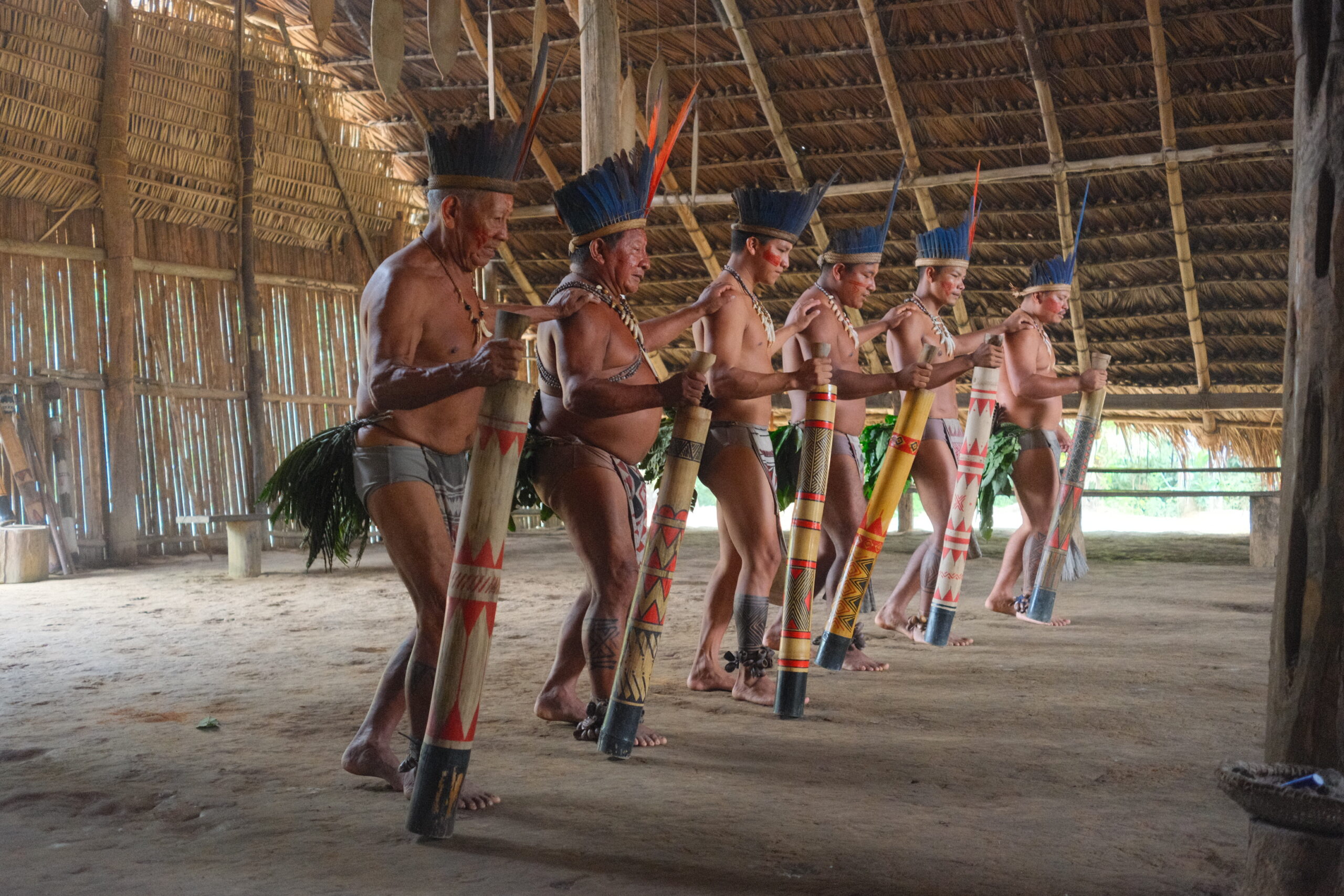
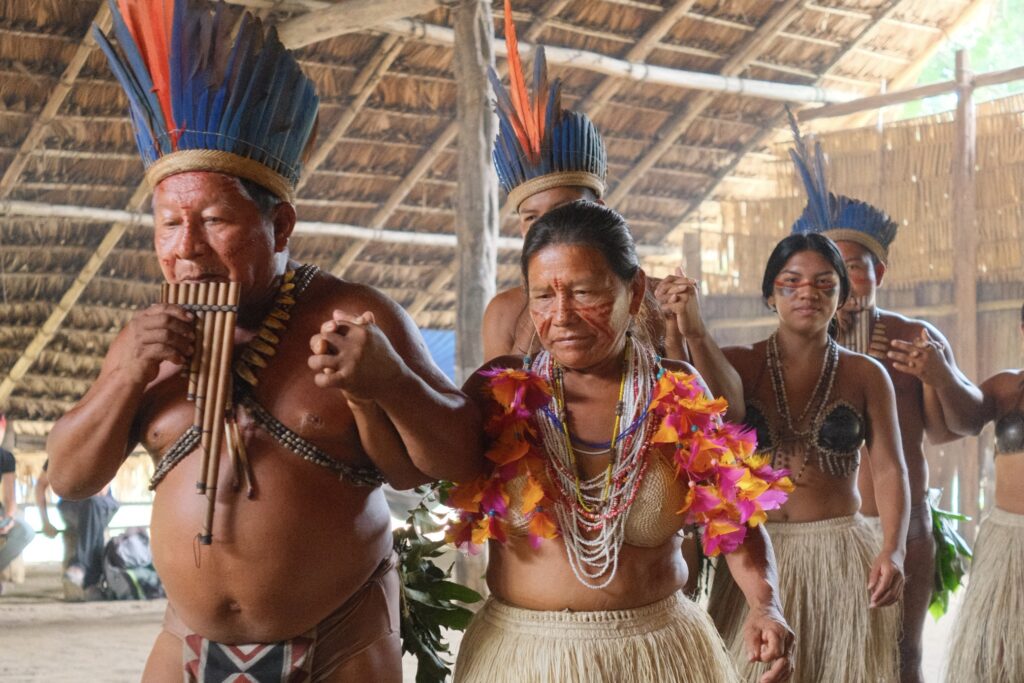
Sitting along the sides of the large wooden entrance structure, we were shown ritual dances performed when visitors come to the village, with men and women dancing in circles to the beat of drums. They were dressed in traditional headgear that consisted of colorful feathers, the chief’s being the most elaborate. At their hips, they had branches and leaves, their feet tied with an “instrument” that shook when they stepped, made of empty nutshells. After hearing a detailed welcome speech and descriptions of their rituals and culture, we toured their kitchen and learned which foods are sourced from the rainforest and rivers. While there was still a lingering sense of cultural exploitation in my gut, marked by the constant snapping of photos by tourists, I was happy to see that many bought the crafts and art, contributing directly to the community.
Fishing For the Largest Freshwater Fish in the World
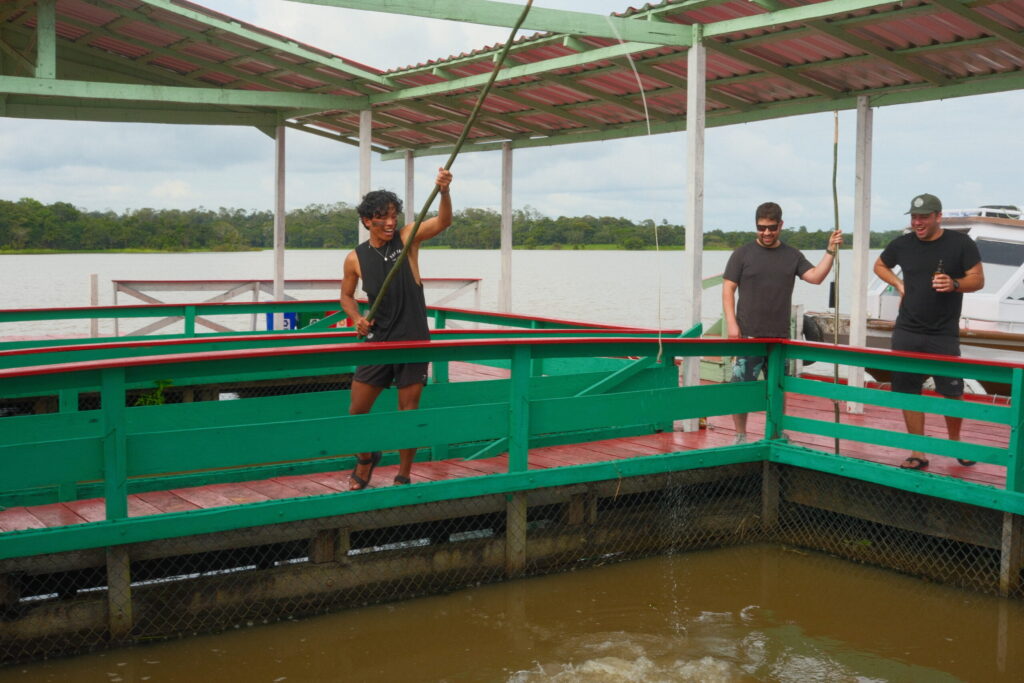
Onward to see the pirarucu fish, which we had just tried for our delicious lunch along the river. Arriving at another floating barge, the pirarucu fish here were bred in captivity, as a livelihood for the fisherman in the villages that dot the shores. Looking in, the massive fins popped out, their scales reflecting the glimmering sun. They were huge. It felt like a scene from Jurassic Park and made me rethink the moments of swimming in these waters just before.
Grabbing large sticks that served as fishing poles, we tried to see how long we could hold on, essentially a tug-of-war with one of the strongest fish in existence. Every single time, they would jump and pull with all their strength, the 3-meter fish living up to its name as the largest freshwater fish in the world.
The Meeting of the Waters
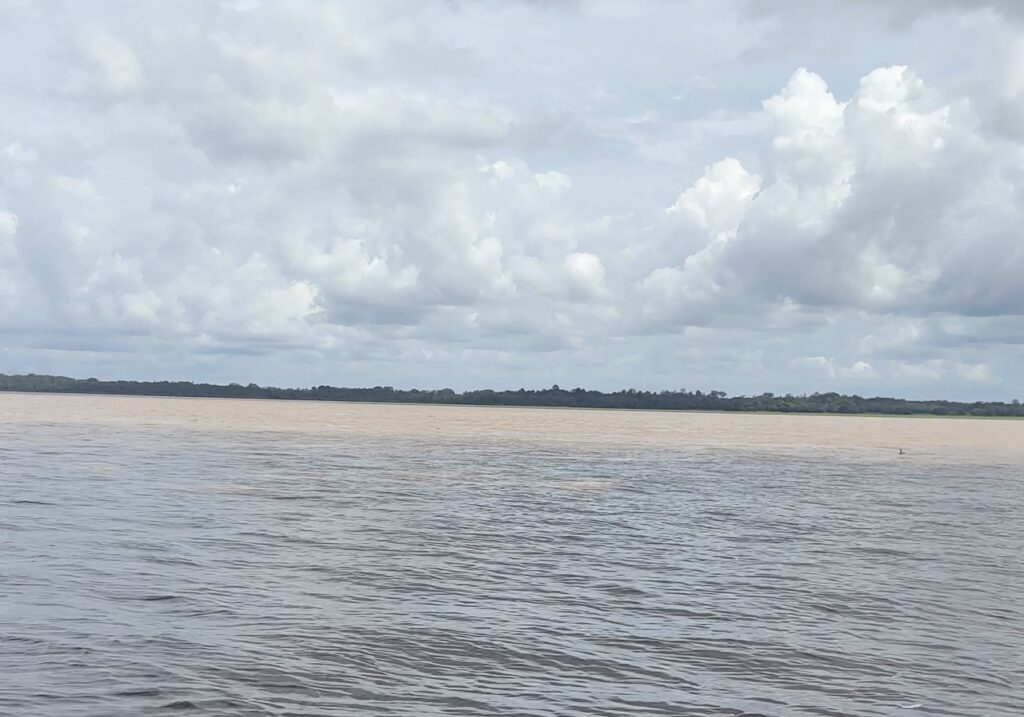
Lastly, on our excursion was the Meeting of the Waters, where the Rio Grande and the Amazon River meet. If you want to get technical, this is where the Amazon River begins: where two powerful tributaries converge to form the main river that flows to the ocean.
As we approached the meeting point, the murky brown water of the Amazon River swirled in the darkness of the Rio Negro. And while the two danced up against each other, they did not mix or blend. This is what makes this point so famous – the waters retain their original colors regardless of how strong the currents hitting one another are.
Where City Meets Jungle
After years of dreaming of exploring the Amazon River, I can confidently say that Manaus is an excellent place for any first-time explorer to the rainforest. If you are seeking the balance of city comforts with daytime excursions and adventure, this is the place to do it.