
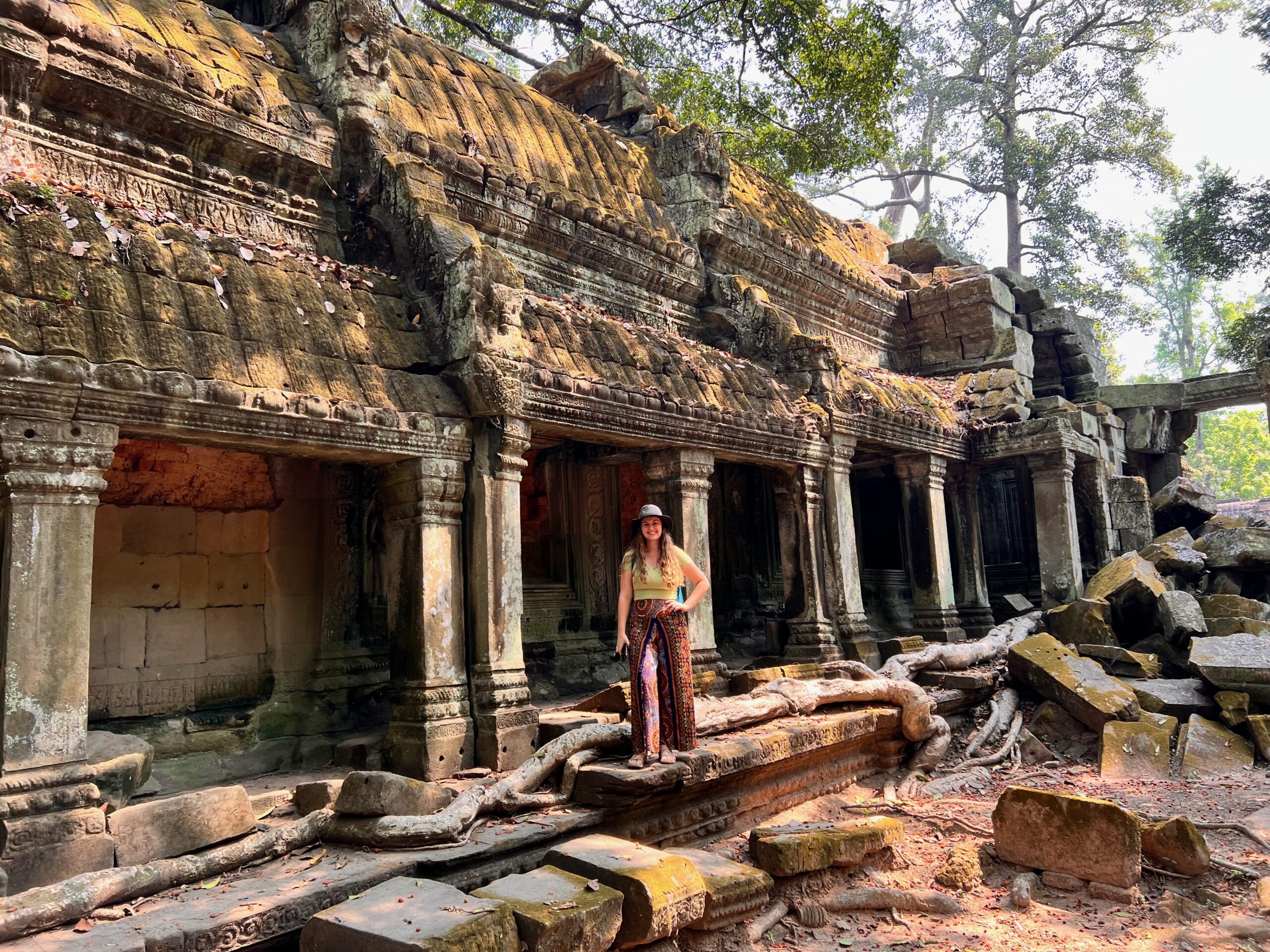
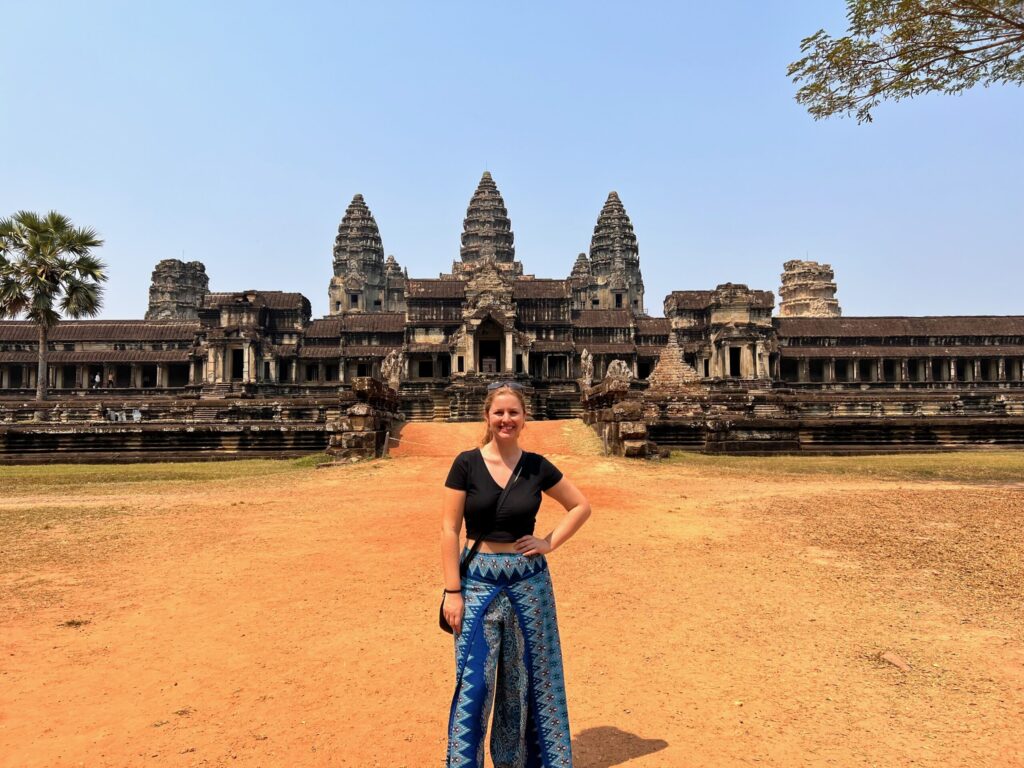
Most visitors arrive at Angkor Wat in Cambodia before sunrise, searching for the perfect image of the sun rising over the reflection pools and main temple. But Angkor Wat can be so much more than a photographed silhouette; it is a giant temple complex that was once the capital of the Khmer empire, with thousands of years of stories, history, and architectural wonders.
Located near the modern town of Siem Reap, Cambodia, Angkor thrived between the 9th and 15th centuries, creating one of the largest pre-industrial urban centers in the world in the jungles of Southeast Asia. With advanced hydraulic canals, reservoirs, and multi-level temples, this archaeological site was designed to mimic Mount Meru, a mythological cosmic mountain that is featured in numerous Hindu and Buddhist texts.
While the main temple of Angkor Wat is impressive in its size and architecture, there are hundreds of smaller temples scattered throughout the jungle that were once part of this vast interconnected city. To get the full experience of feeling like an explorer in this wild and ancient place, I recommend taking the time to visit for multiple days, exploring a few new temples with each visit. This will bring out a quieter and more reflective side of this tourist destination, far beyond the commotion of crowds.
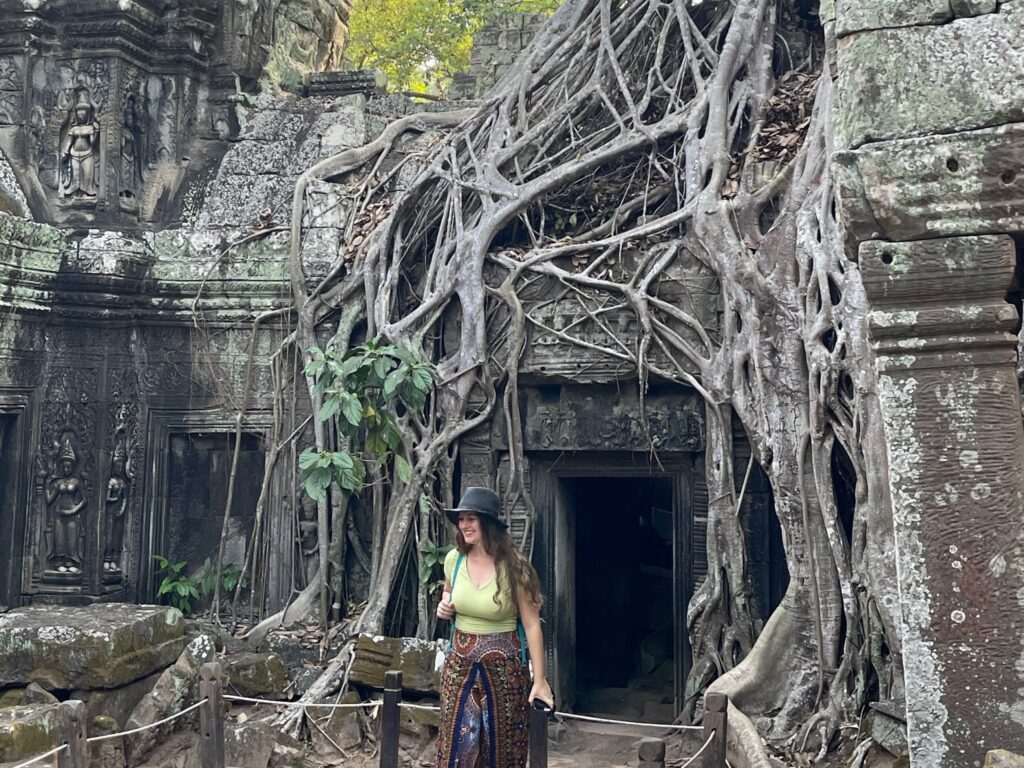
1. Ta Prohm – The Tomb Raider Temple
While this temple wouldn’t be categorized as hidden or off the beaten path, it offers a much more immersive experience into the ancient history of this complex. Arriving at the temple, I’ll never forget the first moment I saw the trees woven in between crumbling carvings and stones, their roots cascading from above and finding new paths towards the sun. With a large tree towering through the ruins, casting shadows upon the grey and brown stones, I looked around to realize why this temple was chosen as the set for the Tomb Raider movie, as it evokes that feeling of adventure and exploration.
Rather than being completely restored, I noticed it was left largely untouched, except for necessary reinforcements, giving it an even more adventurous feel for visitors exploring its many winding halls and broken-down courtyards. Walking through the labyrinth of ruins, I looked up at the section of the roof that had collapsed and at the darker corner of the towers, where bat sounds echoed. Each corner of the temples hid carvings, art, or perfectly cut architectural feats.
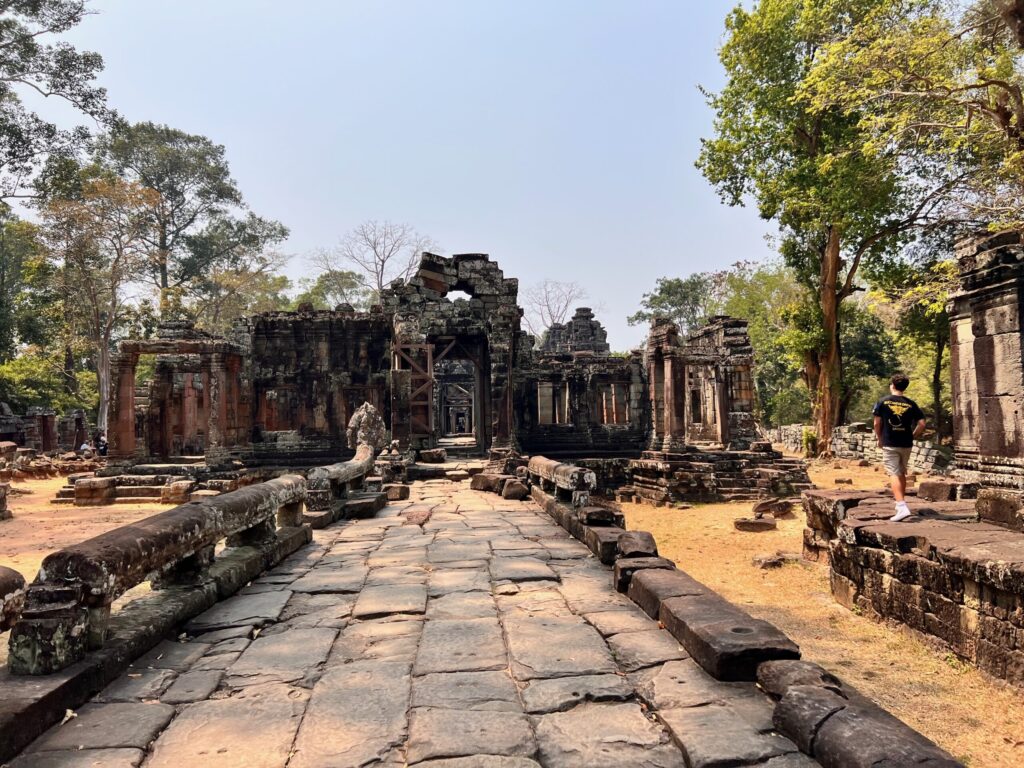
2. Banteay Kdei
Even though this temple is at the heart of the complex, near the most popular temples, during my visit, we were the only ones there for almost the entire time. While it is not as tall as a temple, it is an equally astounding maze of crumbling hallways, barely held up by wooden poles, with statues of the Buddha at its center.
One of the most fascinating parts of this temple is the carvings on the pillars, about a meter off the ground, depicting women dancing and adorned with jewelry, headpieces, and clothing. These carvings are like a snapshot of another time, when thousands of people lived in the complex and treated this jungly world as home.
3. Baphoun Temple
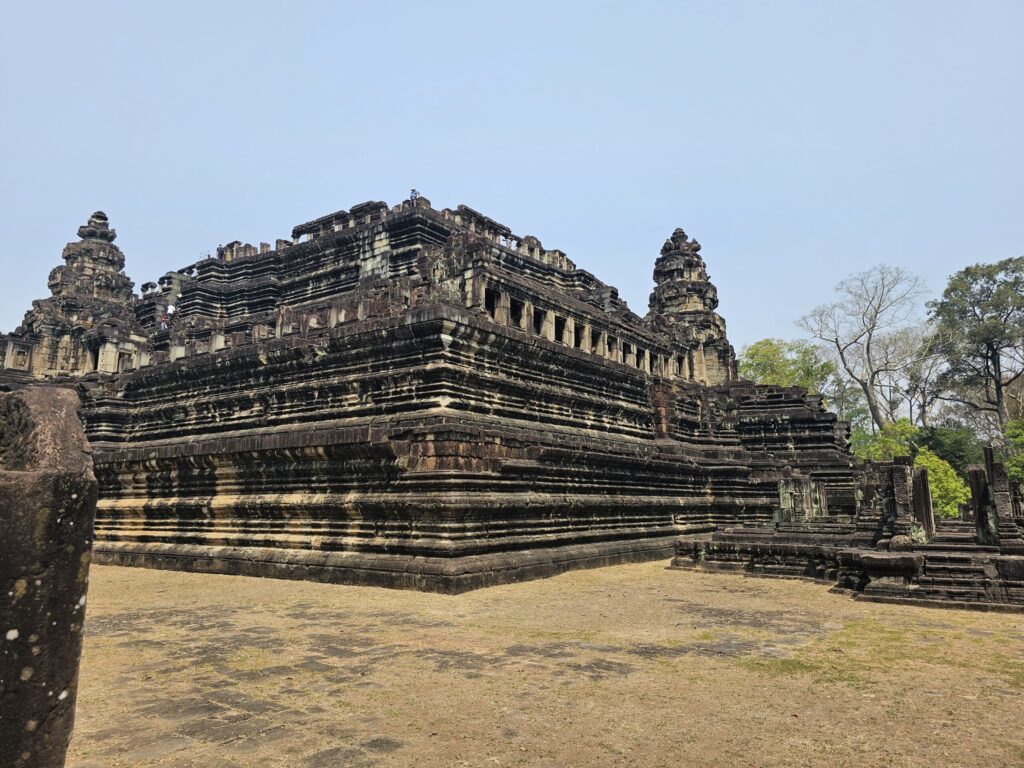
This multi-tiered steep pyramid can feel daunting to climb, especially in the Cambodian heat, but it is absolutely worth the view. This massive temple, constructed in the 11th century, looks out over the trees, with views of the surrounding temples and archaeological ruins peeking out over the canopy of green. Climbing the temple is not simple, as there is a steep inclined staircase to go up and down.
After slowly making my way down the steps, I came around the back of the temple to find something extraordinary: the entire back was carved into the shape of a reclining Buddha. Made from thousands of individual stone blocks, the Buddha’s silhouette and face came through once again in the perfect smooth carving techniques displayed in the other temples. There was something so unique about seeing a statue and religious figure molded into the temple, rather than being a standalone stone statue against sharp, angled architecture.
4. Bayon Temple
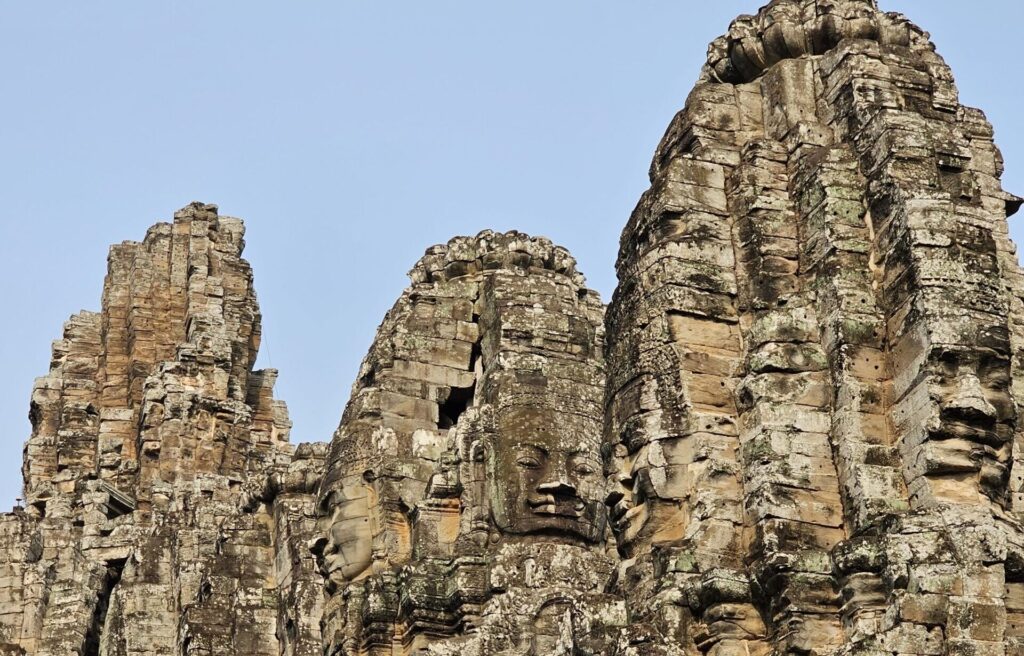
At the center of the Angkor Thom complex stands the Bayon, a temple that feels different from all the others. Unlike the other temples, which are composed of one or two levels and feature symmetrical layouts, the Bayon is a cluster of towers and stone carvings. What stood out to me the second I approached in the blistering sun was the carved faces, large enough to look out over the area for kilometers, gazing down at the visitors with serene faces. Rather than being carved into a single stone block and then added to the upper levels of the temples, these faces were carved into multiple rocks already in place, making them appear like a jigsaw puzzle of smoothly carved blocks.
The temple has numerous winding, tight corridors, with many layers going inwards with each corner you turn. Walking through them, scenes of fishermen, daily life, and markets were etched perfectly into the walls, making the hallways feel like a record of the life the people who constructed this temple lived.
If you’ve always wanted to experience Angkor Wat, these temples are sure to give you a perfect introduction to the adventure and magic of this ancient place.
The more time you spend in each, the better, so don’t rush your visit and extend your time in the park to a few days. So, are you ready to explore the biggest religious complex in the world?