
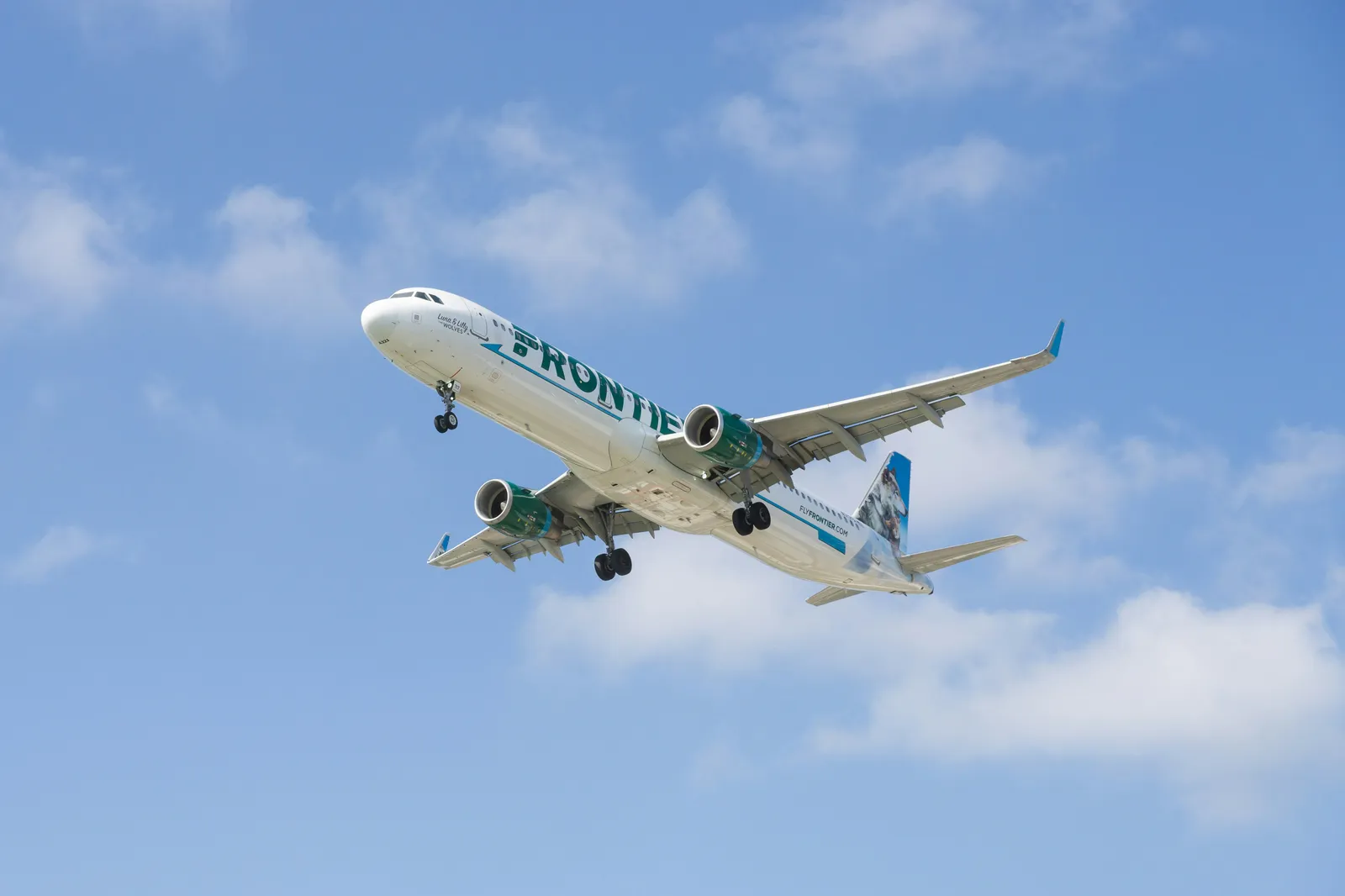
Frontier Airlines has announced four new routes that directly address service gaps created by the recent collapse of Spirit Airlines. The Denver-based carrier unveiled the additions this week, targeting several airports where Spirit once held a strong position. Travelers in those markets now face fewer ultra-low-cost options unless Frontier or other carriers step in.
The Four New Routes
The expansion includes service from Denver to Fort Lauderdale, Detroit to Los Angeles, Houston to San Juan, and Kansas City to Orlando. Three of the routes mirror operations that Spirit maintained until its financial troubles forced cutbacks and eventual shutdown. Frontier previously operated the Denver-Fort Lauderdale flight in 2020 and the Kansas City-Orlando route as recently as 2022. Service on most routes begins November 20 with daily flights on the Denver-Fort Lauderdale and Detroit-Los Angeles segments. The Houston-San Juan route starts December 17 on a daily basis. Kansas City-Orlando flights will operate four times per week. These additions restore connectivity that many passengers relied on for affordable travel to leisure destinations and major hubs.
Spirit’s Exit Creates Openings
Spirit Airlines ceased operations after months of route reductions and mounting financial pressure. The carrier had competed directly with Frontier as one of the two largest ultra-low-cost airlines in the United States until May. Frontier executives indicated they would approach any vacated routes with discipline rather than rapid expansion. The overlap between the two carriers covered roughly one-third of Frontier’s network before Spirit’s closure. By moving into select markets, Frontier aims to capture demand without overextending its resources. Airports in Detroit, Houston, and Kansas City stand to regain some of the low-fare competition that Spirit once provided against larger carriers like Delta.
Broader Changes at Frontier
The route announcement coincided with Frontier’s decision to equip its fleet with Starlink Wi-Fi. The airline had not offered onboard internet service on its aircraft prior to this plan. Implementation details and rollout timeline remain under development. Travelers affected by Spirit’s disappearance now have a clearer picture of restored options in specific corridors. Frontier’s measured approach suggests the carrier will monitor performance on these routes before committing to further growth. Major airports that lost Spirit service continue to adjust schedules as remaining carriers respond to the changed competitive landscape.
Impact on Travelers
Passengers who depended on Spirit for budget travel to Florida, the Caribbean, and Midwest connections now have renewed choices through Frontier. Fares on these routes will likely remain competitive given the ultra-low-cost model both airlines employed. Booking windows and frequency levels will determine how quickly the new service fills the previous void. Airports such as Detroit and Houston regain daily options that support both leisure and business travel. The changes underscore how quickly capacity can shift when one carrier exits and another steps forward. Frontier’s moves provide a partial but tangible response to the reduced competition in several key markets.