

Most travelers assume the person in the airport blazer only shows up once a flight is fully canceled and the terminal turns into chaos. In reality, insiders say the busiest, most important work of an airport duty manager happens quietly – often before an older passenger even realizes anything went wrong.
Behind the scenes, there’s a whole set of unwritten habits duty managers use specifically for travelers over 60, and almost none of it gets announced over the intercom. Here’s what airport operations staff actually admit to doing when a senior passenger hits a snag.
#13 – They Pull You Into a Back Office Instead of Arguing at the Counter

When an older passenger is upset at a crowded gate counter, a good duty manager doesn’t let the confrontation happen in public. One operations veteran described inviting a frustrated passenger into a private office rather than addressing him in the crowded terminal, then simply listening without interrupting before offering solutions. That single move – privacy first, solutions second – turns a heated gate scene into a calm conversation just by moving it out of view.
It sounds small, but it changes everything about how the interaction ends. Most people don’t realize this is a deliberate de-escalation tactic, not just a courtesy someone happened to extend.
#12 – They Personally Call Ahead So You Never Wait in a Second Line
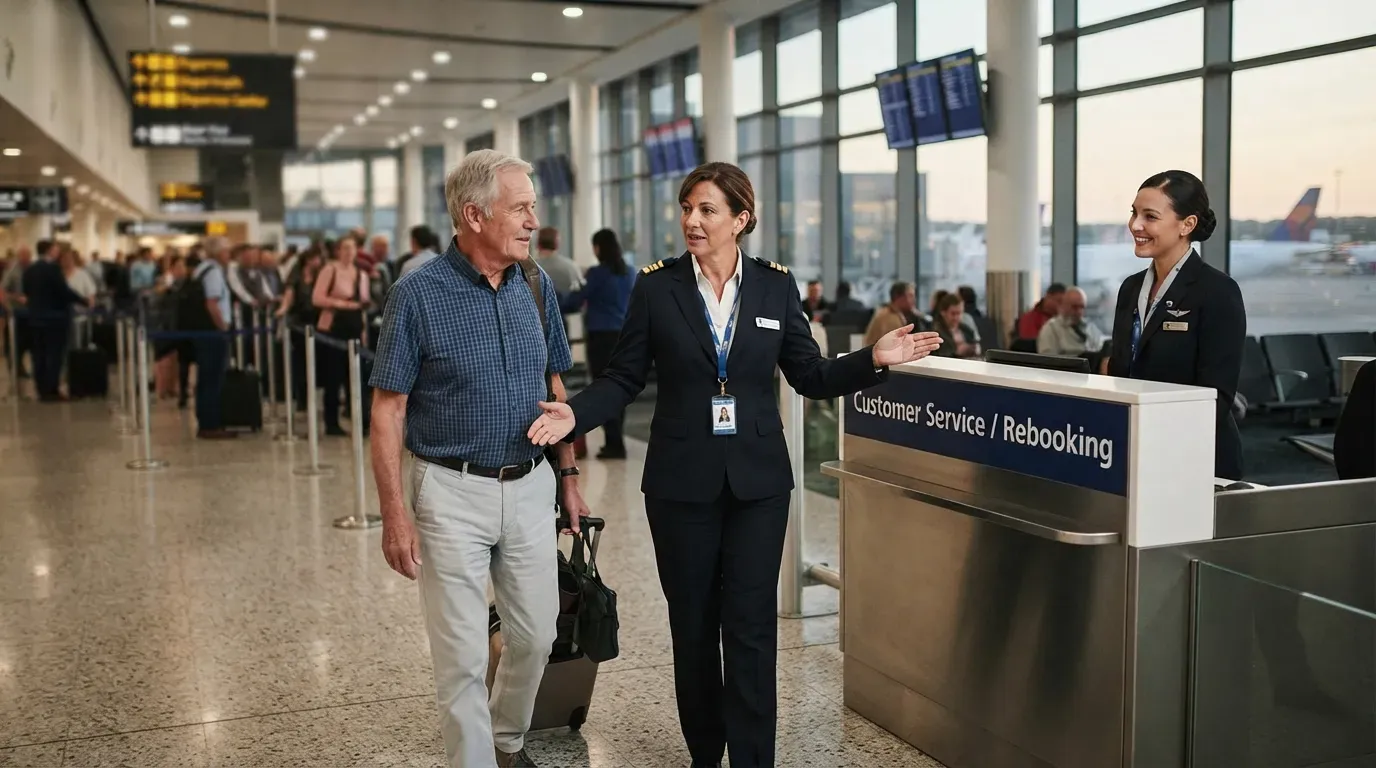
Once a solution is found, the manager doesn’t just point you toward another desk and walk away. In one documented case, staff personally walked a stranded passenger to the airline service desk and introduced him to a supervisor who had already been called ahead, so the rebooking moved fast instead of getting stuck behind a dozen other frustrated travelers.
That’s a very different experience than being handed a printed itinerary and left to fend for yourself. For an older traveler juggling connections and medication schedules, that one phone call ahead can be the difference between catching a flight and missing it entirely.
#11 – They Quietly Flag You as “Priority” the Moment a Storm Hits
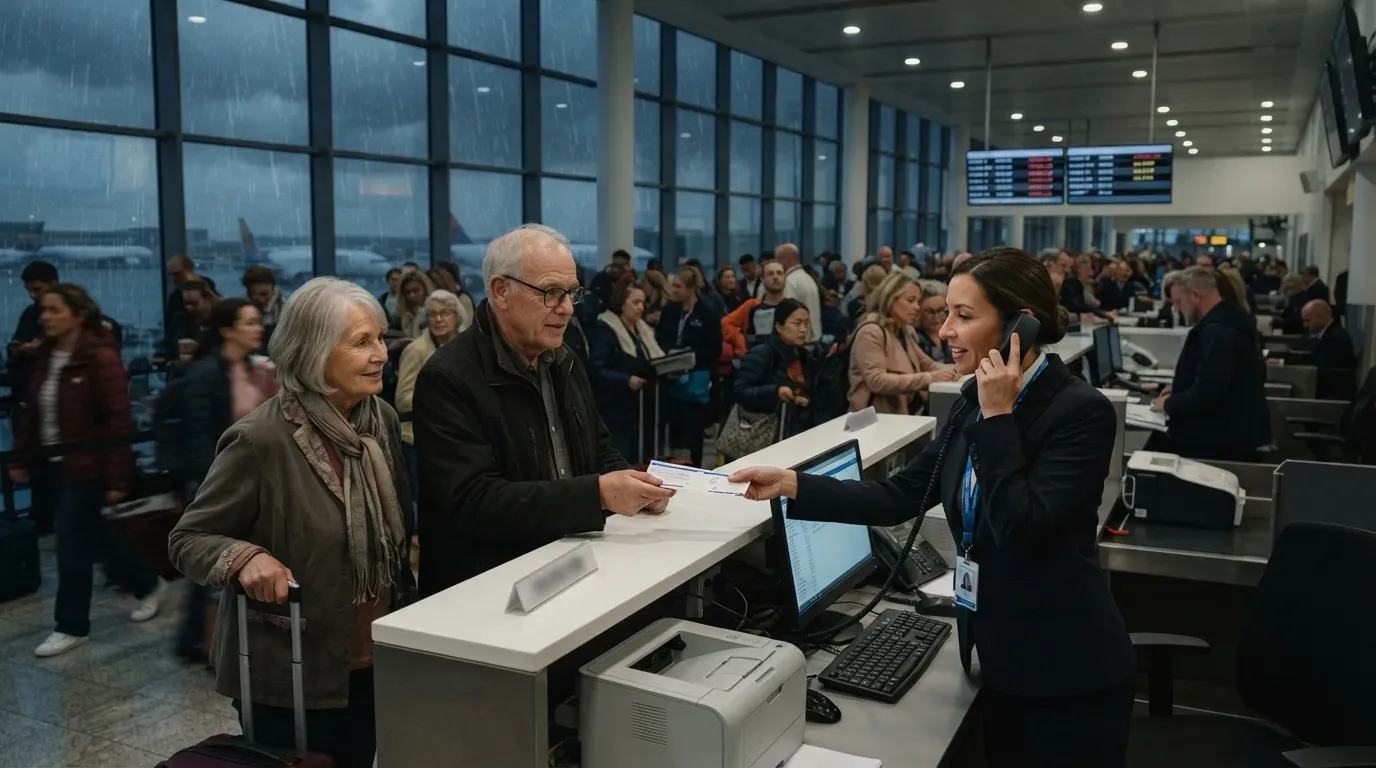
Turns out, during mass cancellations and weather disruptions, there’s an unofficial triage system running in the background. Industry guidance is explicit that during disruptions, prioritizing assistance for vulnerable passengers such as unaccompanied minors, elderly individuals, and passengers with disabilities should always be facilitated, with airlines expected to help those travelers with rebooking and accommodation before anyone else.
Most passengers never see this list exist. Being over 60 can quietly move you up the recovery queue during a mass disruption, even though no one announces it. Plenty of travelers assume everyone gets treated the same during a meltdown – staff on the ground say that’s simply not true.
Fast Facts
- Priority groups during disruptions typically include unaccompanied minors, elderly travelers, and passengers with disabilities.
- These passengers are usually rebooked and offered accommodation help before the general line moves.
- The triage system runs quietly in the background, with no formal announcement to passengers.
- Simply being over 60 can be enough to move a traveler up the list.
#10 – They Walk the Terminal Themselves Looking for Stranded Seniors

During a major weather event, a duty manager’s job isn’t to sit in an office watching monitors. Staff have described how they immediately implement adverse weather protocols, reallocate staff to high-traffic areas, activate passenger assistance teams, and personally walk the terminal to assess passenger needs and morale.
That personal walk-through is often how an anxious older traveler sitting alone near a dead gate gets noticed at all. Nobody has to flag down security or make a scene – someone is already circulating, looking for exactly that kind of quiet distress.
#9 – They Get You a Hotel Room Before You Even Ask
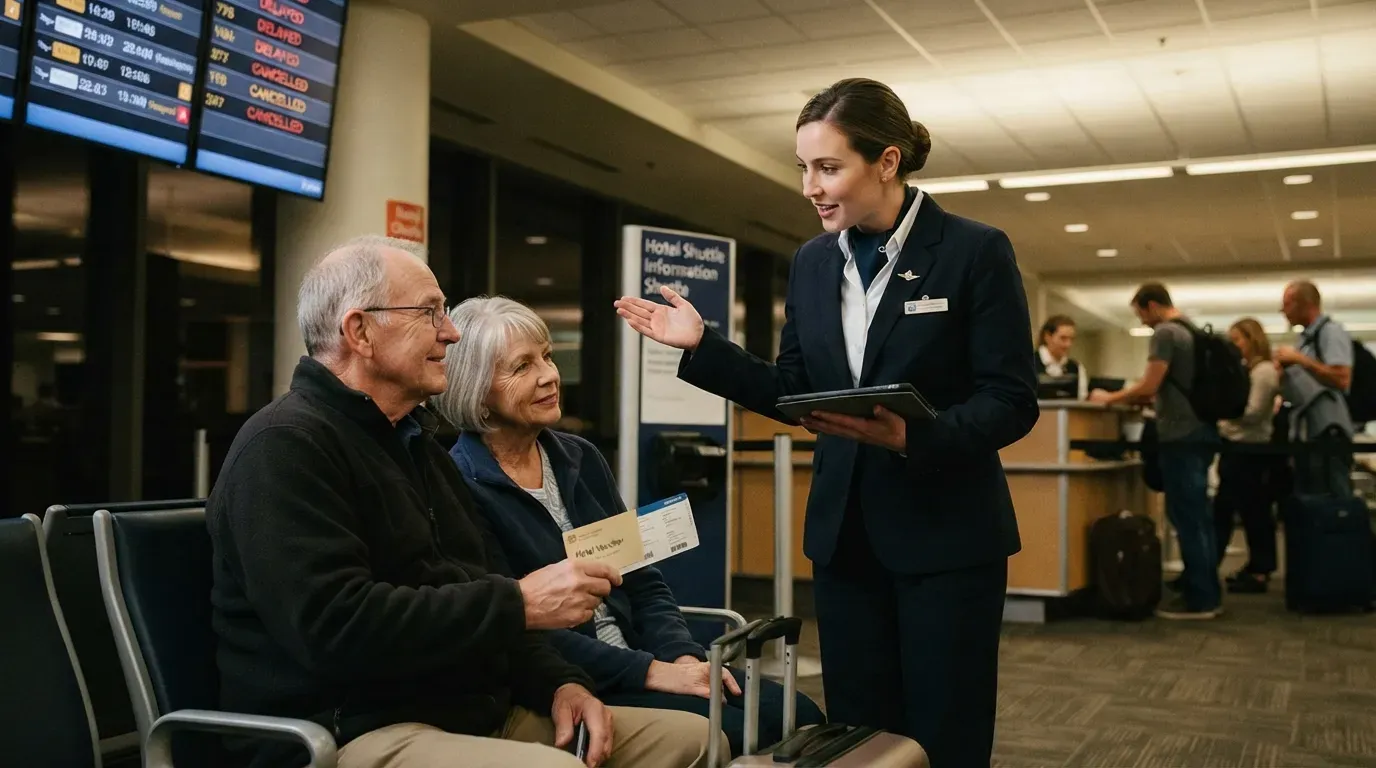
When delays stretch into hours, the expectation gap is real: most travelers think they have to demand a hotel voucher. Yet duty managers are already coordinating passenger rebooking, arranging ground transportation, and managing accommodations behind the scenes as part of standard delay protocol, including catering for passengers stuck waiting in the terminal.
For a senior traveler unfamiliar with the process, this can happen without a single argument at the counter. The arrangements are often already being made before the announcement about the delay is even final.
#8 – They Keep the Food Court Open Late Just for Stranded Passengers
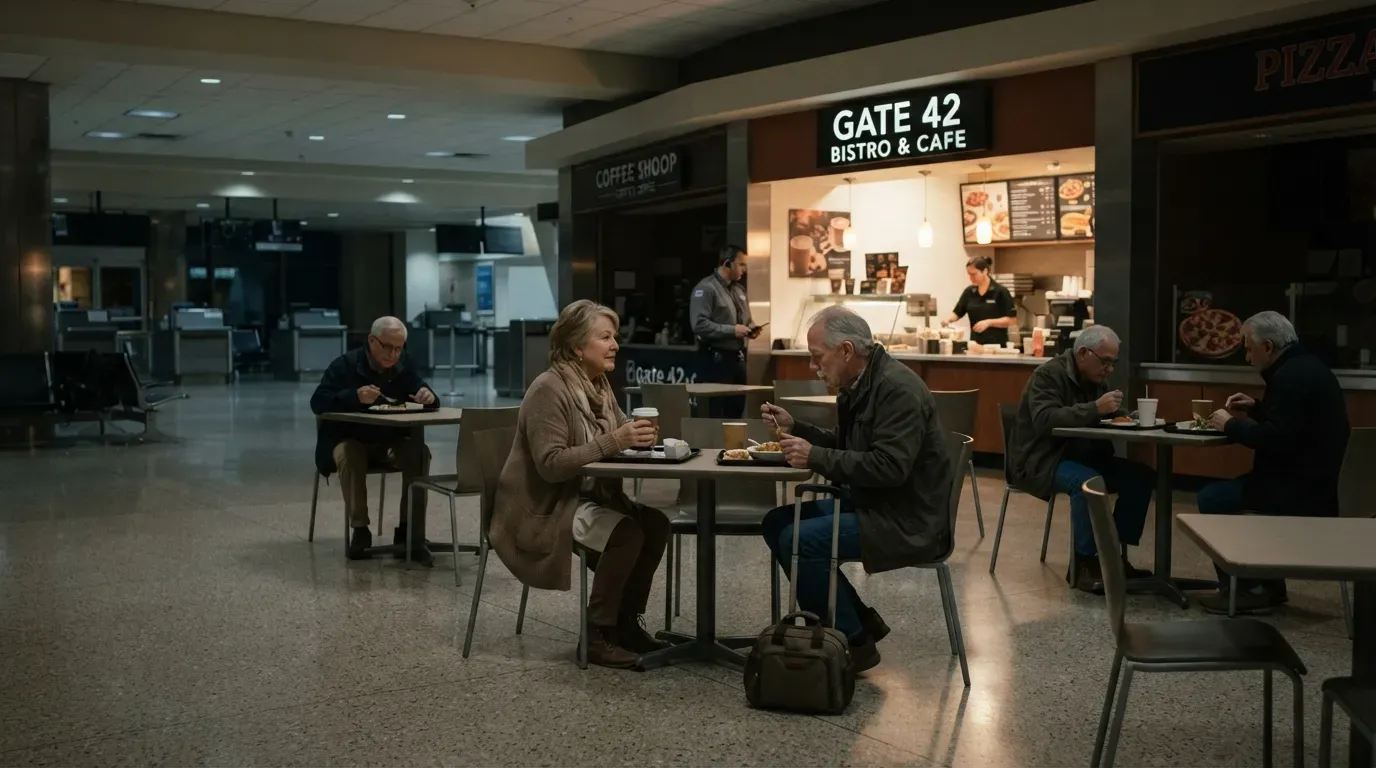
It’s a detail almost nobody thinks about, but extended delays trigger a quiet negotiation with restaurants and shops. Operations managers describe it as standard practice: for long delays, coordination with concessionaires to extend hours and keep food and beverage options available is simply part of the job.
For an older traveler managing blood sugar, medication timing, or just basic comfort during a five-hour delay, having a working food option nearby matters more than most people realize. It’s not glamorous work, but it’s the kind of quiet logistics that keeps a bad night from turning into a genuine health issue.
At a Glance
- Extended delays trigger direct coordination between the airport and food vendors.
- Concessionaires may be asked to stay open past their normal closing hours.
- Catering is sometimes arranged for passengers stuck waiting near the gate.
- For travelers managing medication schedules, steady food access can matter as much as the eventual flight.
#7 – They Loop In a TSA Specialist So You’re Never Alone at the Checkpoint
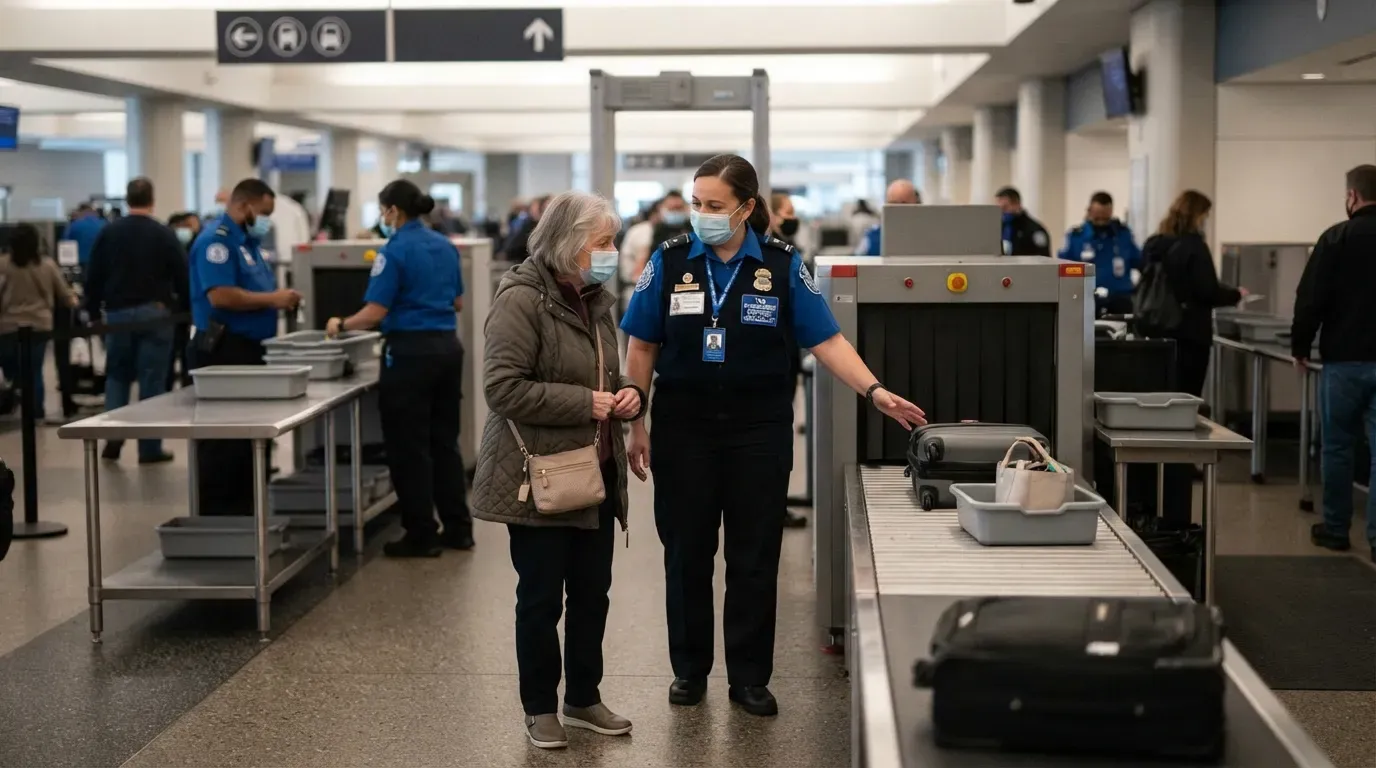
Most people picture TSA as rigid and impersonal, but there’s a program built specifically for this moment. Passengers can request a passenger support specialist – a specially trained TSA agent devoted to travelers with special needs – who will personally accompany them through security after a request made at least 72 hours in advance.
Duty managers and gate staff routinely point anxious older travelers toward this option, especially after a missed connection forces a last-minute walk through an unfamiliar checkpoint. The specialist stays with you the entire time, not just for a few minutes.
#6 – They Bend the Screening Rules Further for Anyone 75 and Older
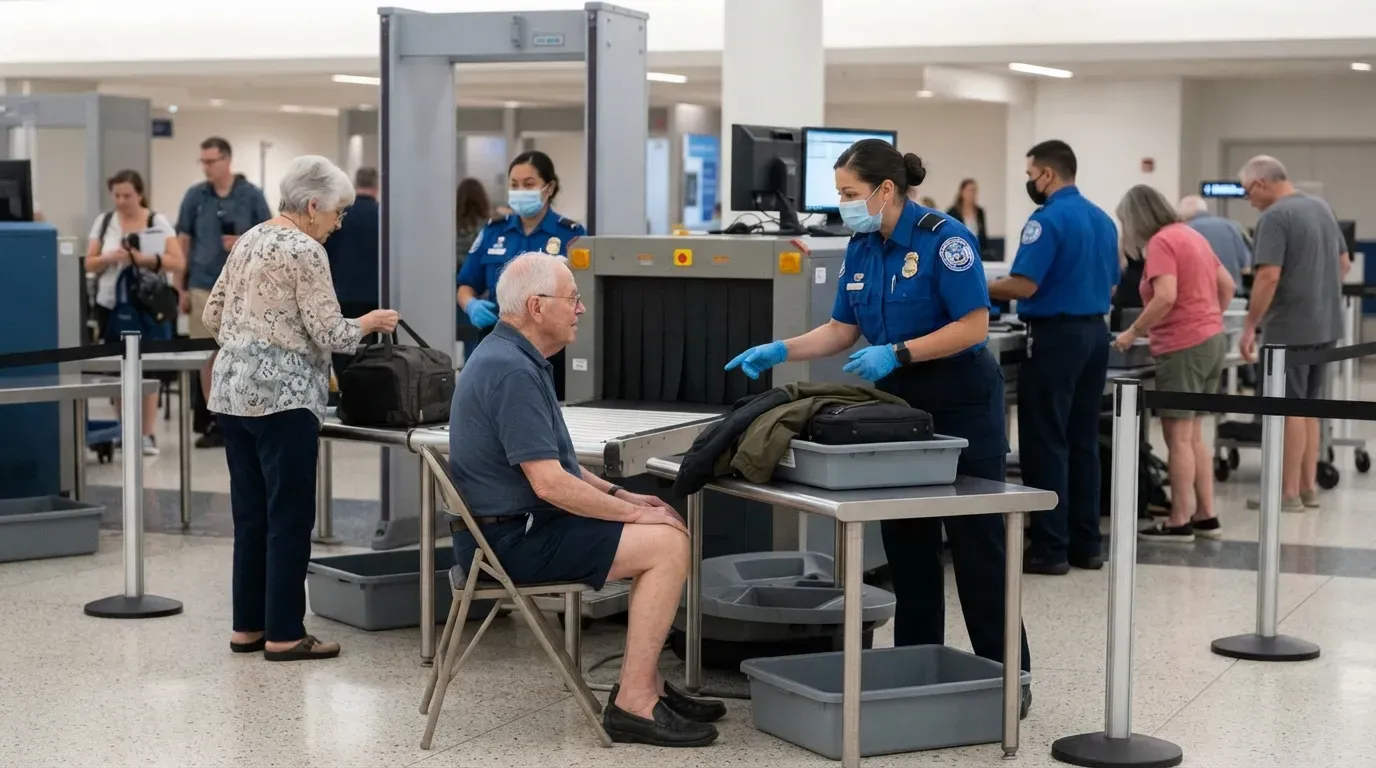
Here’s something most flyers never learn until it happens to them: passengers 75 and older already get modified treatment at security. Federal guidance confirms that travelers in this age group can receive expedited screening, may leave their shoes on, and can request to be seated during parts of the screening process.
When something goes sideways – a missed flight, a gate change, a sudden rebooking – staff quietly remind older travelers of these accommodations rather than making them ask. Many airport employees say this rule alone eliminates a huge chunk of the stress seniors feel at checkpoints.
Quick Compare
- Standard screening: Shoes off, no seated accommodation, standard pace through the checkpoint.
- Travelers 75 and older: May keep shoes on, can request a seat during screening, and often move through an expedited lane.
- The difference: These accommodations apply automatically – passengers don’t have to prove eligibility beyond their age.
#5 – They Call in Extra Wheelchair Staff Before the Shift Even Starts
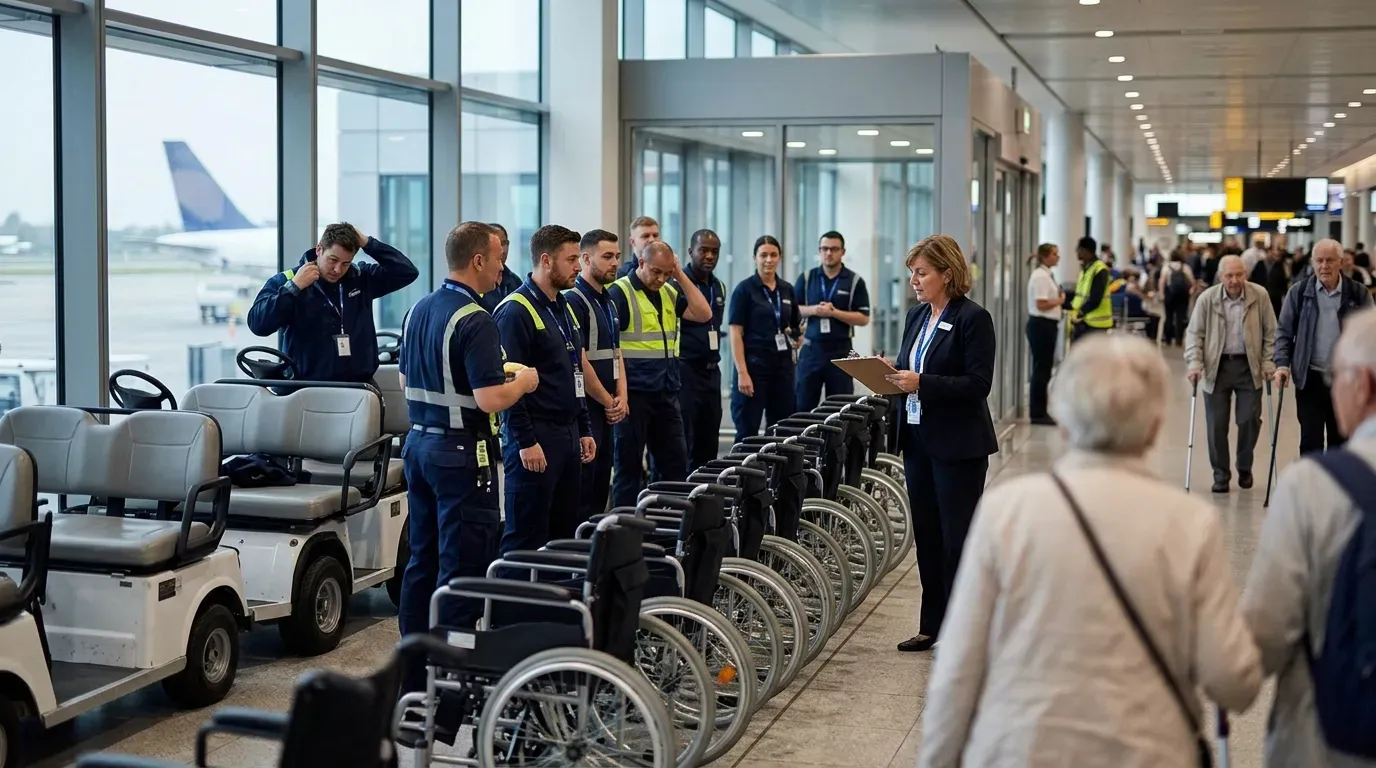
Wheelchair coverage is one of the most fragile parts of airport operations, and duty managers know it better than anyone. Specialists have noted that labor shortages in some markets mean fewer wheelchair attendants are available, so proactive managers overstaff this position ahead of predictable rush periods rather than scrambling once a passenger is already stranded at a gate.
It’s a controversial opinion among frequent flyers, but many now argue that wheelchair staffing shortages – not flight delays – are the single biggest hidden failure point for older travelers. Quietly padding that schedule before a storm or holiday rush is one of the least visible but most consequential things a duty manager does.
#4 – They Refuse to Leave You Waiting More Than 30 Minutes, By Law
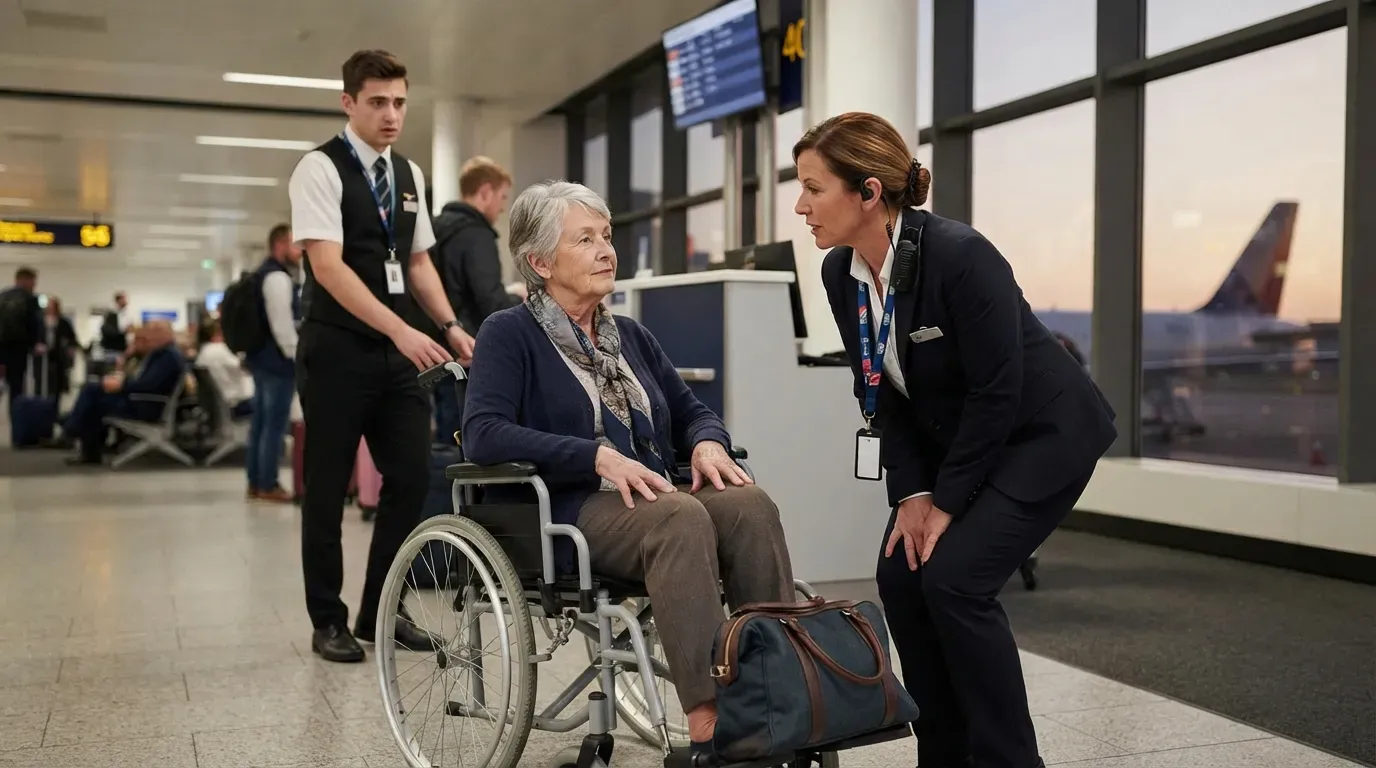
This one genuinely surprises people: there’s a federal clock running the moment a wheelchair passenger is left alone. Regulations state that when an airline provides mobility assistance, it cannot leave that passenger unattended for more than 30 minutes – even with a companion nearby – unless the passenger explicitly says it’s fine.
Duty managers treat violations of this rule as a serious operational failure, not a minor inconvenience, and will personally intervene if a gate agent loses track of the clock. Most older travelers have no idea this 30-minute limit even exists as a legal requirement.
Worth Knowing
- Federal rules cap unattended wait time for wheelchair passengers at 30 minutes.
- The clock applies even if a companion is nearby, unless the passenger says otherwise.
- Duty managers treat a violation as a real operational failure, not a scheduling hiccup.
- Most travelers over 60 have never heard this rule exists until the moment they need it.
#3 – They Send a Courtesy Cart Even When You Never Requested a Wheelchair
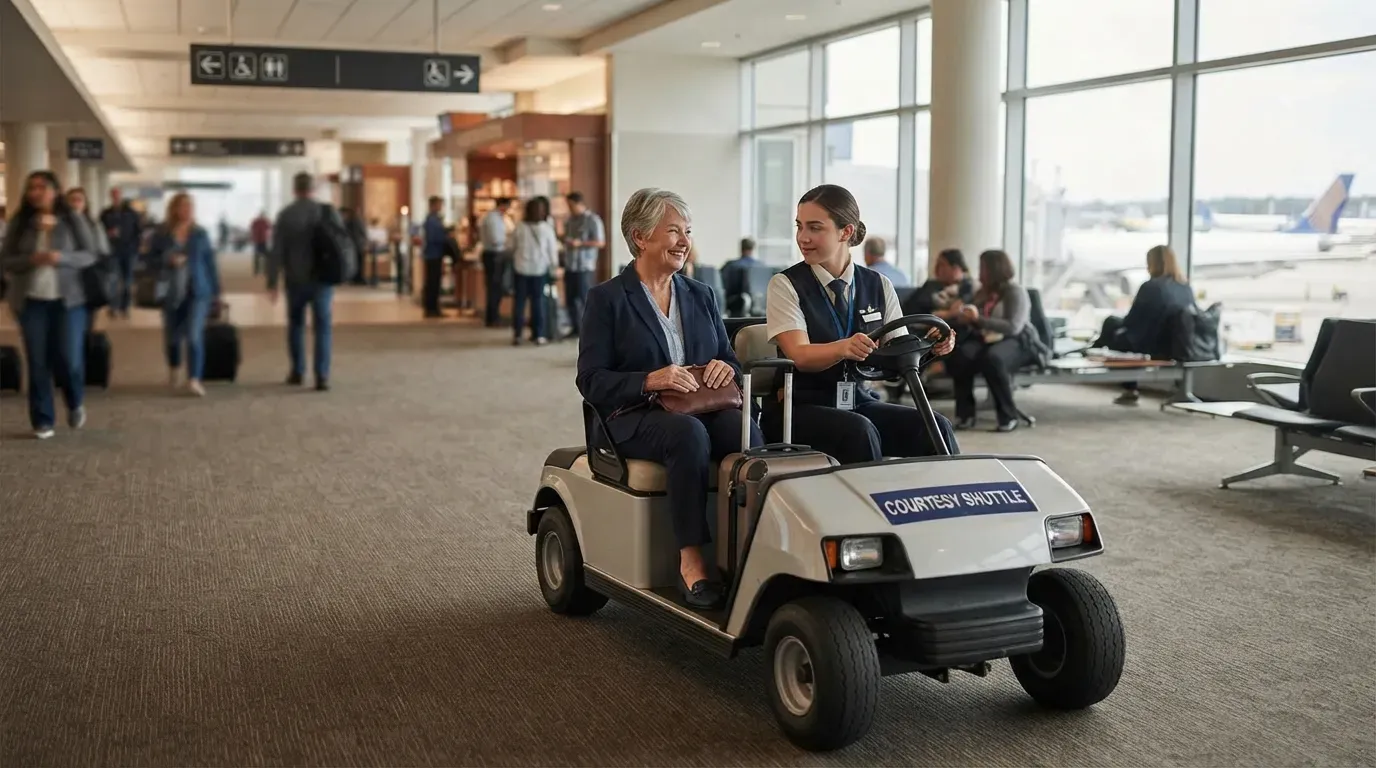
Not every senior traveler wants to be pushed in a wheelchair, but long terminal walks are still a real problem. Staff can quietly arrange help another way: a passenger who doesn’t need a wheelchair to deplane but needs help making a connection or reaching baggage claim can ask a gate agent to call a cart, though availability varies by airport.
Experienced duty managers often suggest this option unprompted after noticing an older traveler struggling with a tight connection, rather than waiting to be asked. It preserves independence while still solving the real problem – distance, not disability.
#2 – They Quietly Remind You to Tip the Wheelchair Attendant
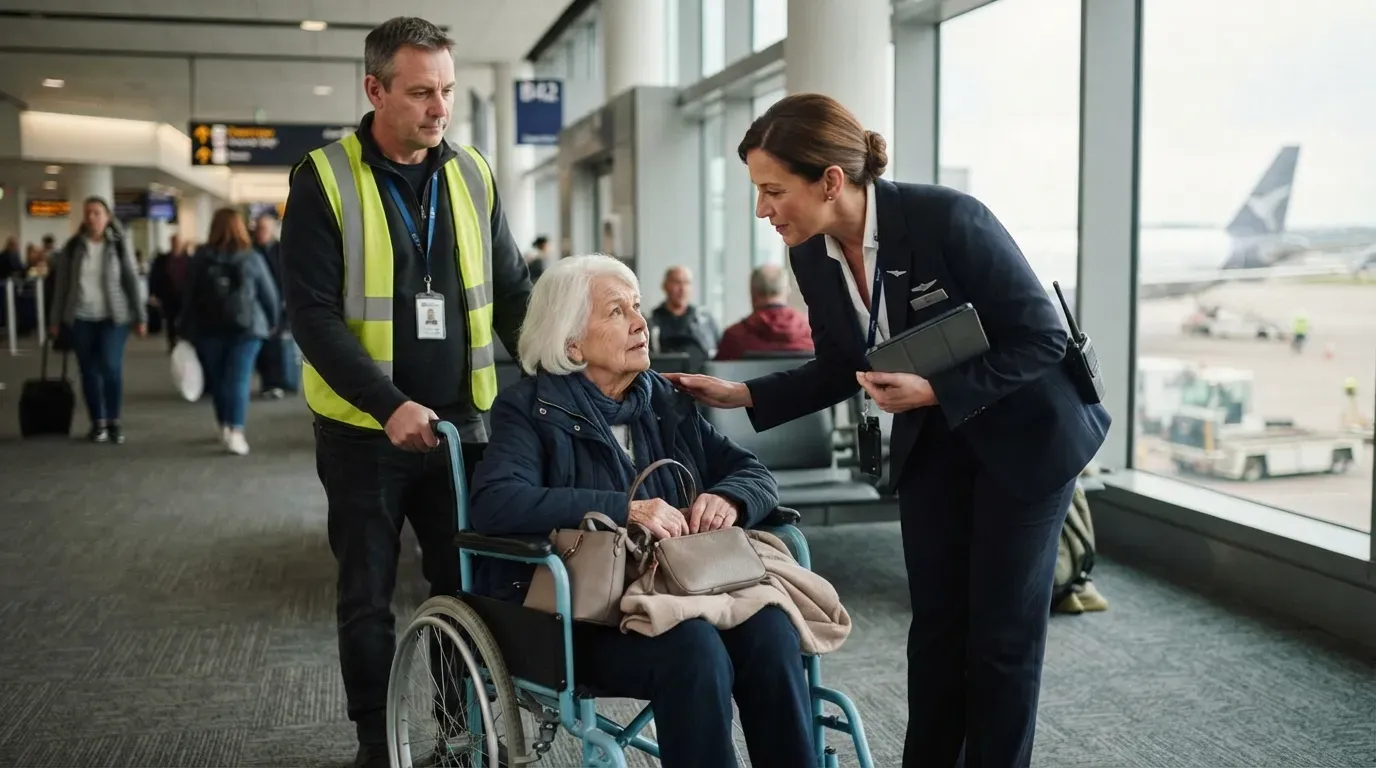
Here’s a detail that trips up almost every first-time senior flyer: wheelchair attendants usually aren’t airline employees at all. Accessibility experts confirm that tipping these workers – who are typically contractors rather than airline staff – is discretionary but commonly practiced and recommended.
Duty managers who notice confusion at the gate will sometimes mention this quietly, since it can affect how attentive future service is for the same traveler on a return trip. It’s a small piece of insider knowledge that changes how smoothly the rest of the journey goes.
#1 – They Personally Follow Up After Your New Flight Takes Off

The single most surprising habit uncovered wasn’t about the disruption itself – it was what happened after. In one documented case, a manager gave a shaken passenger direct contact information for further help and then followed up with a courtesy call once the rebooked flight departed, just to confirm everything had gone smoothly.
That kind of follow-through almost never gets publicized, because no regulation requires it – it’s simply how the best duty managers choose to close the loop with an older traveler who had a rough travel day. It’s the difference between a passenger who never flies that airline again and one who tells everyone how well they were treated.
Across all 13 of these habits, the pattern is the same: the biggest help rarely comes with an announcement. From the legally mandated 30-minute wheelchair rule to the unofficial priority queue during weather disruptions, most of what protects older travelers happens through quiet judgment calls, not posted policy.
The Department of Transportation’s own numbers explain why this matters so much – a quarter of U.S. adults live with a disability, and 14 percent have trouble walking or climbing stairs, meaning the “quiet fixes” duty managers rely on affect a huge share of the flying public, not some rare exception. Next time a trip goes sideways, the person actually holding it together might already be working the problem before you’ve even noticed there is one.