
Most first-time cruisers think the secret to a great sailing is booking the right cabin or picking the right itinerary. It isn’t. Ask anyone who has been cruising for twenty or thirty years and they’ll tell you the real difference lives in tiny, unglamorous routines nobody ever puts in the brochure.
These aren’t loyalty-program tricks or expensive upgrades. They’re small, almost invisible habits that seasoned travelers over 60 have quietly perfected, the kind that turn a chaotic week at sea into something that feels effortless. Here’s what veteran cruisers actually do differently once the gangway lifts, starting with the one habit newcomers roll their eyes at on day one.
14. Sitting Through the “Boring” Muster Drill Without Complaint
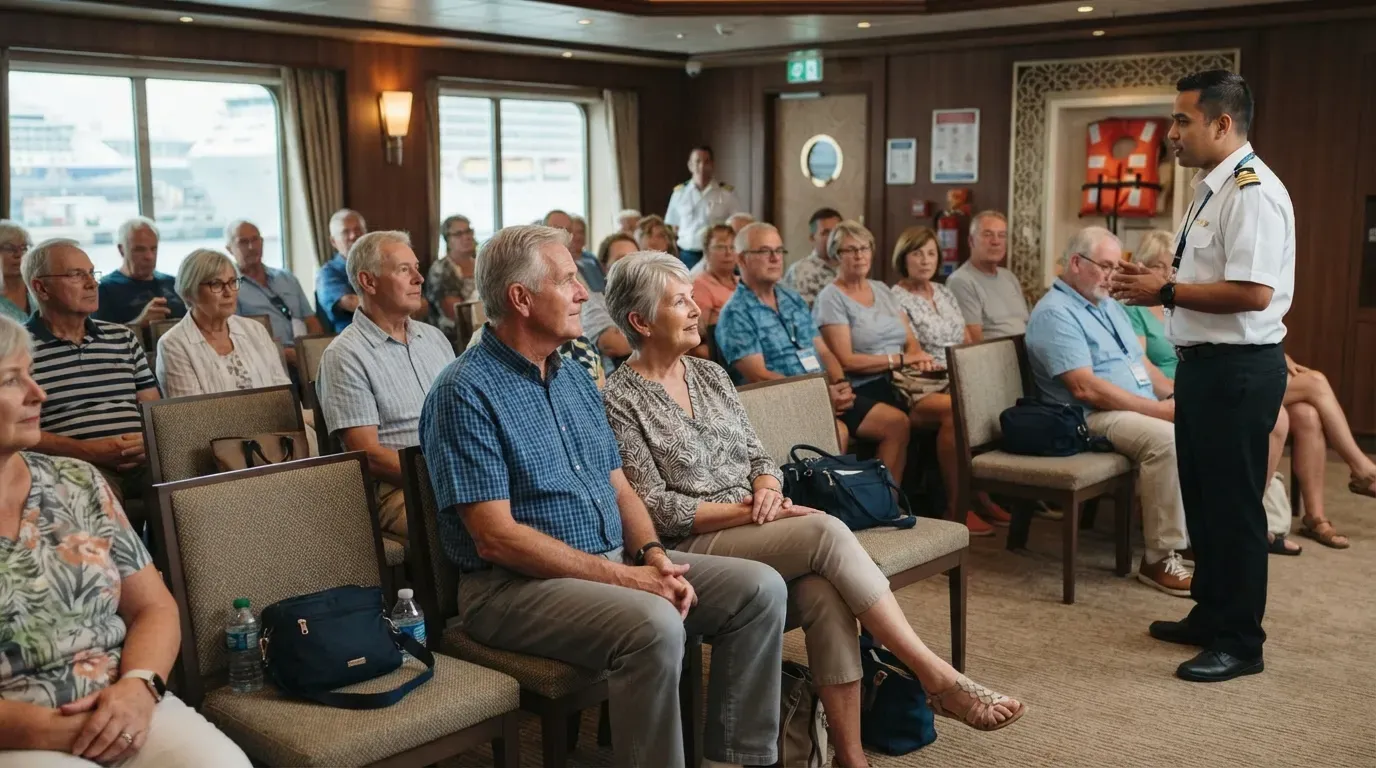
Newcomers groan through the safety briefing like it’s an inconvenience standing between them and the pool. Veterans treat it like the most important ten minutes of the whole cruise. The muster drill is a legal requirement under maritime law, and every passenger gathers in an assigned area to walk through emergency procedures before the ship ever leaves port.
Experienced sailors know skipping isn’t an option. If you don’t show up, your name and cabin number get announced over the ship’s speakers until you do. Seasoned cruisers don’t see this as red tape or wasted vacation time. They see it as the price of genuine peace of mind for the rest of the week.
Fast Facts
- International maritime safety rules require the drill to happen before or shortly after departure, with attendance mandatory for every passenger.
- Crew check off names and cabin numbers, so skipping isn’t quietly possible even on a packed ship.
- The briefing covers life jacket use, muster station locations, and what the emergency signal sounds like.
- Veterans treat the ten minutes as insurance, not inconvenience, since it’s the one routine that matters most if it’s ever actually needed.
13. Packing a Tiny Bag Every Single Night

Every evening, before bed, seasoned cruisers quietly assemble a small bag by the cabin door. It looks almost ceremonial, and in a way, it is. Sunscreen, a paperback, a phone charger, a light sweater for the freezing dining room, and cash for tips all go in, ready before the lights go out.
The contents shift slightly depending on whether it’s a port day or a sea day, but the habit itself never changes. Planning the night before means waking up with intention instead of scrambling through drawers half-asleep. It sounds almost too simple to matter, yet it quietly eliminates the single biggest source of morning stress on a ship.
12. Claiming the Ship Before Sunrise

While everyone else is still asleep, veteran cruisers are already on deck with coffee in hand, watching a ship that looks nothing like it will three hours later. No crowds fighting over pool chairs, no announcements echoing through the corridors, just water sounds and maybe a jogger or two making their rounds.
Experienced cruisers claim this hour like territory. Coffee stations are freshly stocked, the crew is still setting up for the day, and most passengers will never see the ship this way at all. Frankly, it’s the closest thing to owning a private cruise ship for sixty peaceful minutes.
11. Unpacking Every Bag Within the First Hour Onboard
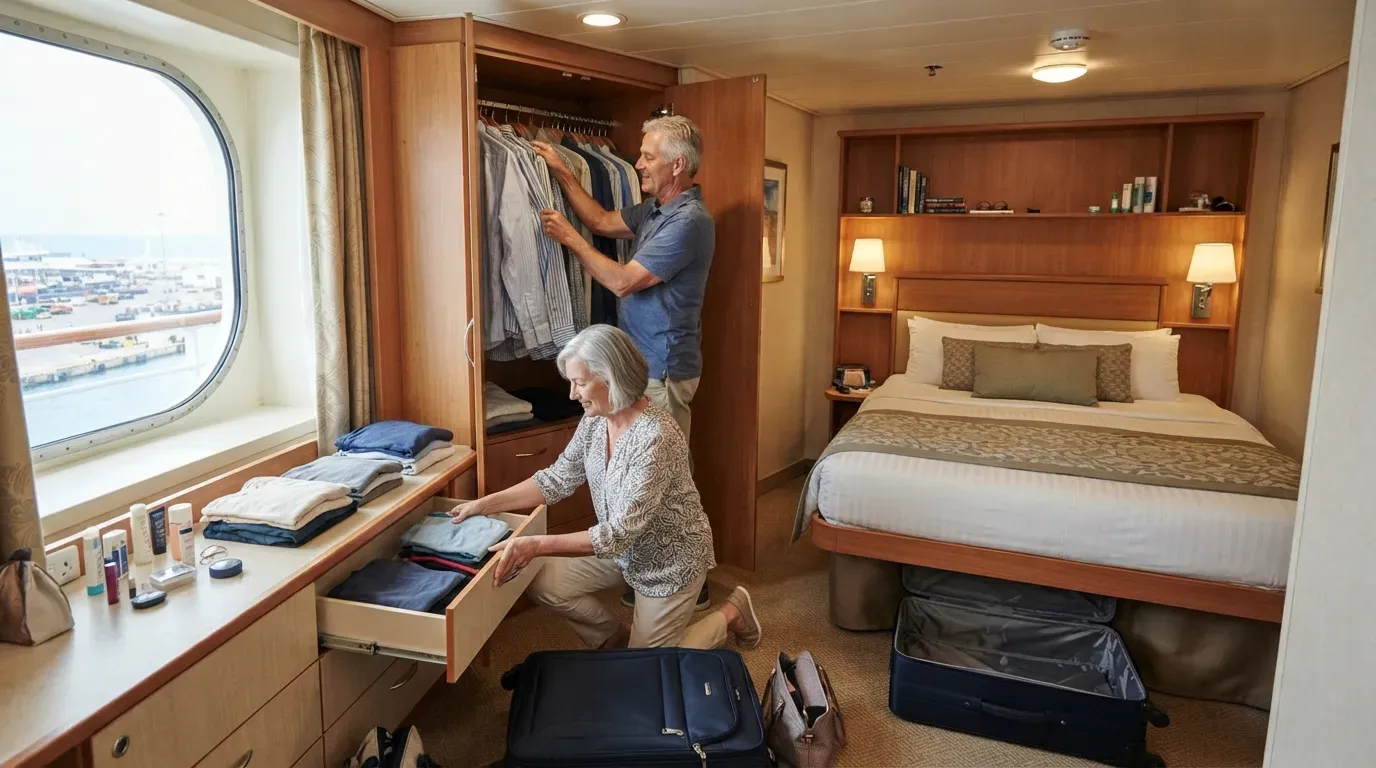
Newcomers leave suitcases half-zipped on the floor for days. Veterans have everything hung, folded, and stored before the ship even pulls away from the dock. They use every drawer, shelf, and closet space the stateroom offers, then slide the empty luggage under the bed to reclaim the floor.
It’s a small ritual, but it instantly makes a cramped cabin feel like an actual home base for the week instead of a hotel room you’re just passing through. Some veterans joke it’s the exact moment a cruise “officially starts” for them, well before the ship even sounds its horn.
10. Booking Specialty Dining for Embarkation Night
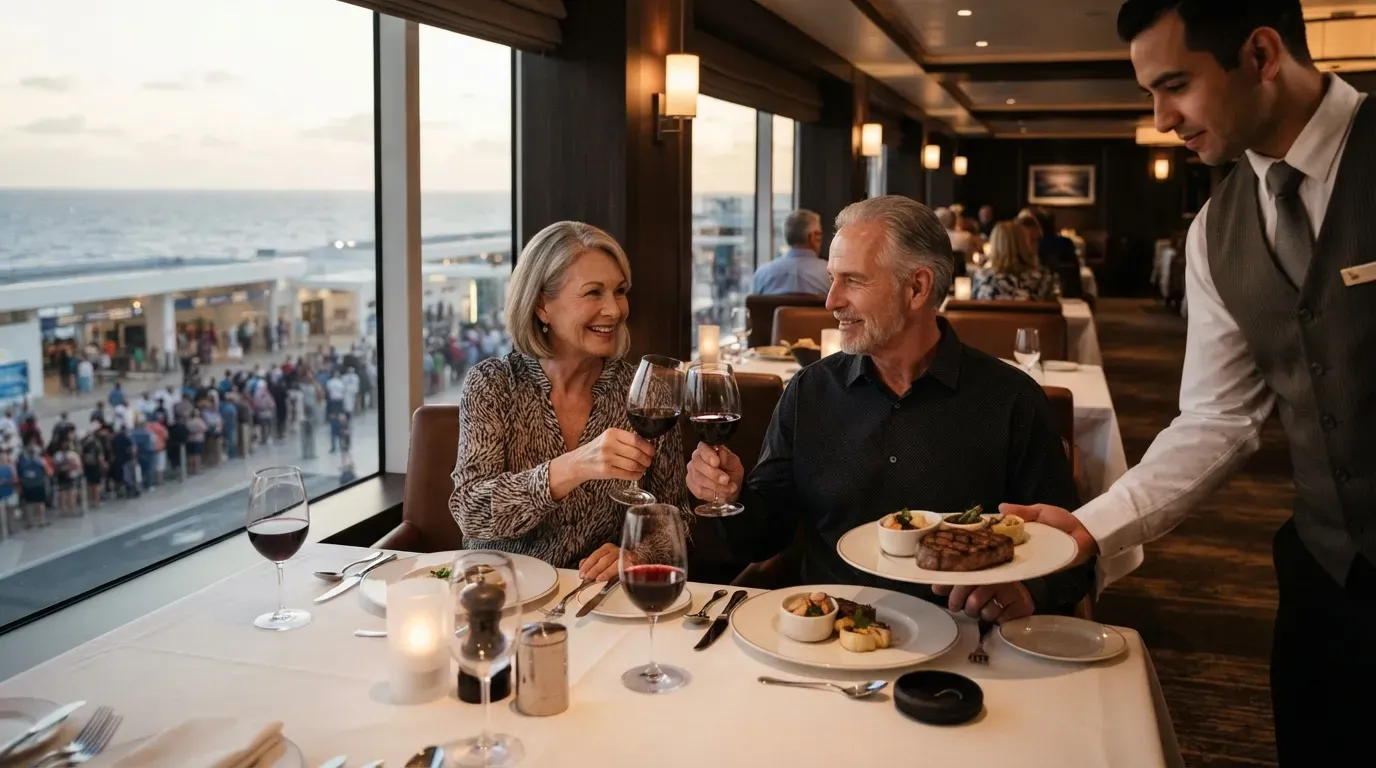
While first-timers stand in long lines waiting for their assigned dining room seating, seasoned cruisers are already seated somewhere better. First-night specialty dining often comes with steep discounts, sometimes as much as 50% off, simply because most passengers default straight to the main dining room out of habit.
Some veterans book a specialty dinner specifically for embarkation night. Others go a step further and grab a specialty lunch on boarding day, while everyone else is still fighting the buffet crowds. It’s one of the few genuine bargains left on a modern cruise ship, and hardly anyone thinks to look for it.
9. Shifting Buffet Time by One Hour
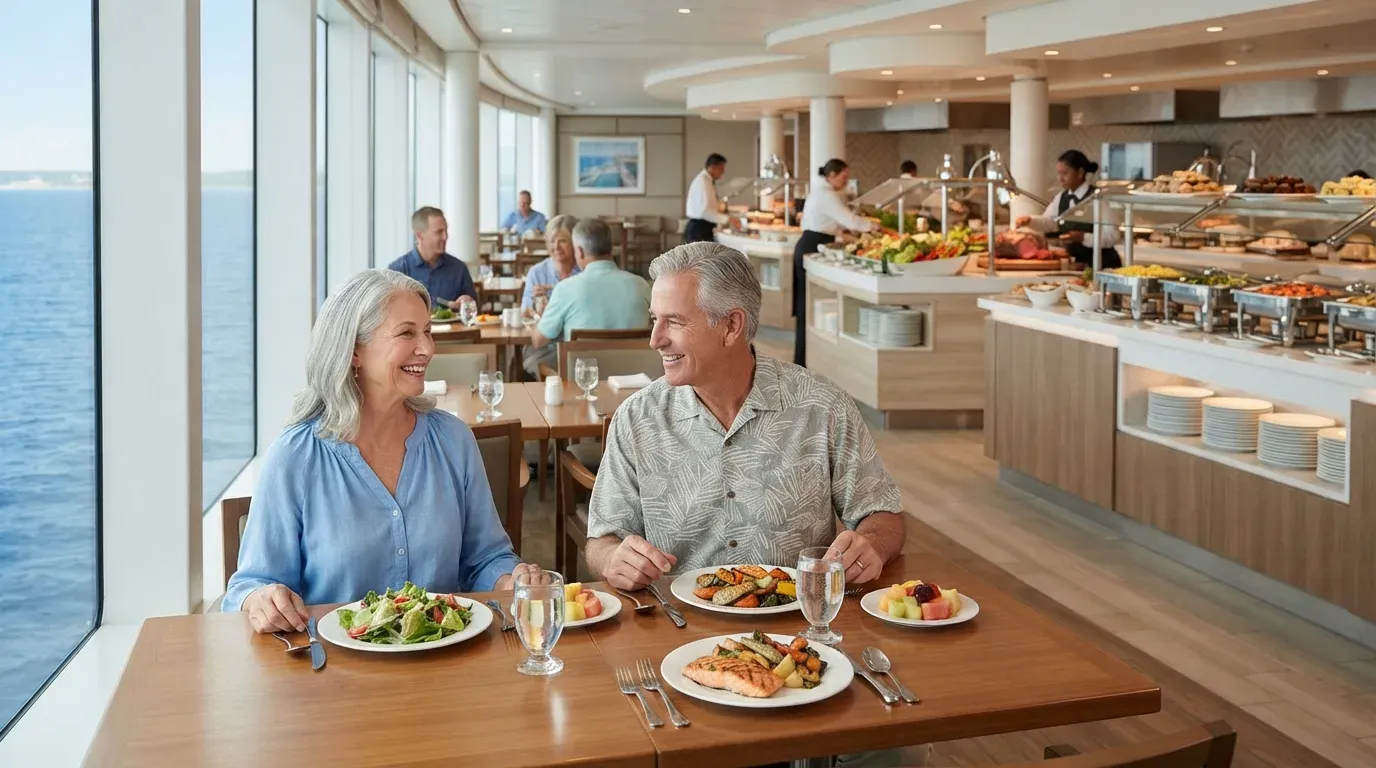
Everyone accepts buffet chaos as inevitable. Veterans simply refuse to show up when everyone else does. The food genuinely tastes better around 11 AM or 2 PM, since the heat lamps haven’t been running nonstop and staff still have time to refill trays properly.
When most passengers eat all at once, the whole experience turns hurried and packed, elbow to elbow at the omelet station. Seasoned cruisers choose an earlier or later window instead, and the difference is immediate: calm seating, quieter conversation, and food that isn’t sitting under a lamp for an hour.
Quick Compare
- Peak hour (noon-1 PM): long lines, packed seating, trays running low between refills.
- Shifted hour (11 AM or 2 PM): short or no lines, open tables, freshly refilled trays.
- Peak hour: food sitting under heat lamps longer between staff rotations.
- Shifted hour: quicker turnover, so dishes taste closer to fresh-made.
8. Guarding the Afternoon Nap Like It’s Sacred
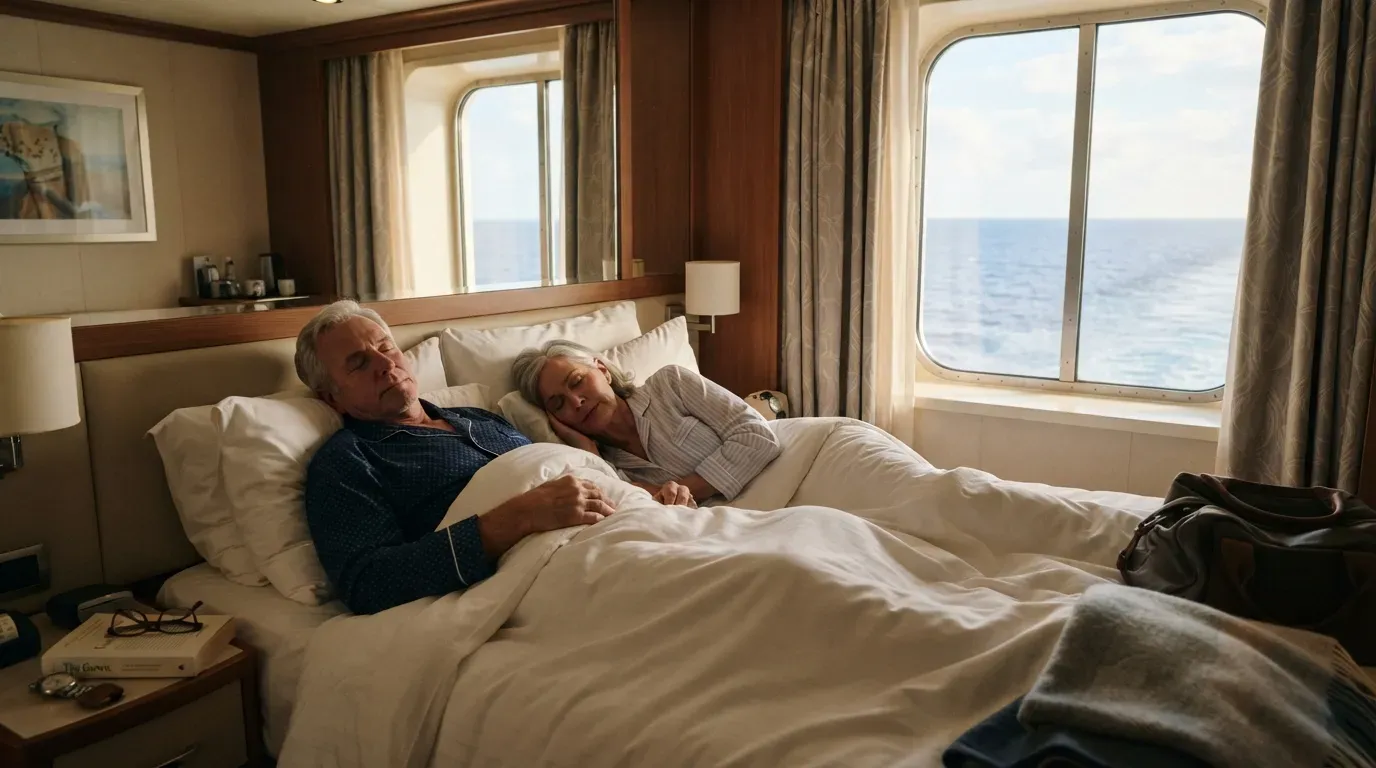
To newcomers, a midday nap on vacation feels like wasted time they paid for. To veterans over 60, it’s non-negotiable. Cruise ships run active schedules from early morning until late at night, which sounds appealing until it becomes genuinely exhausting by day three.
Smart cruisers build rest into their days like professionals, using the lull between lunch and dinner as a prime napping window. Many say the nap is exactly what makes the late-night show or formal dinner enjoyable instead of something they’re too tired to appreciate.
7. Memorizing the Ship’s Empty Corners
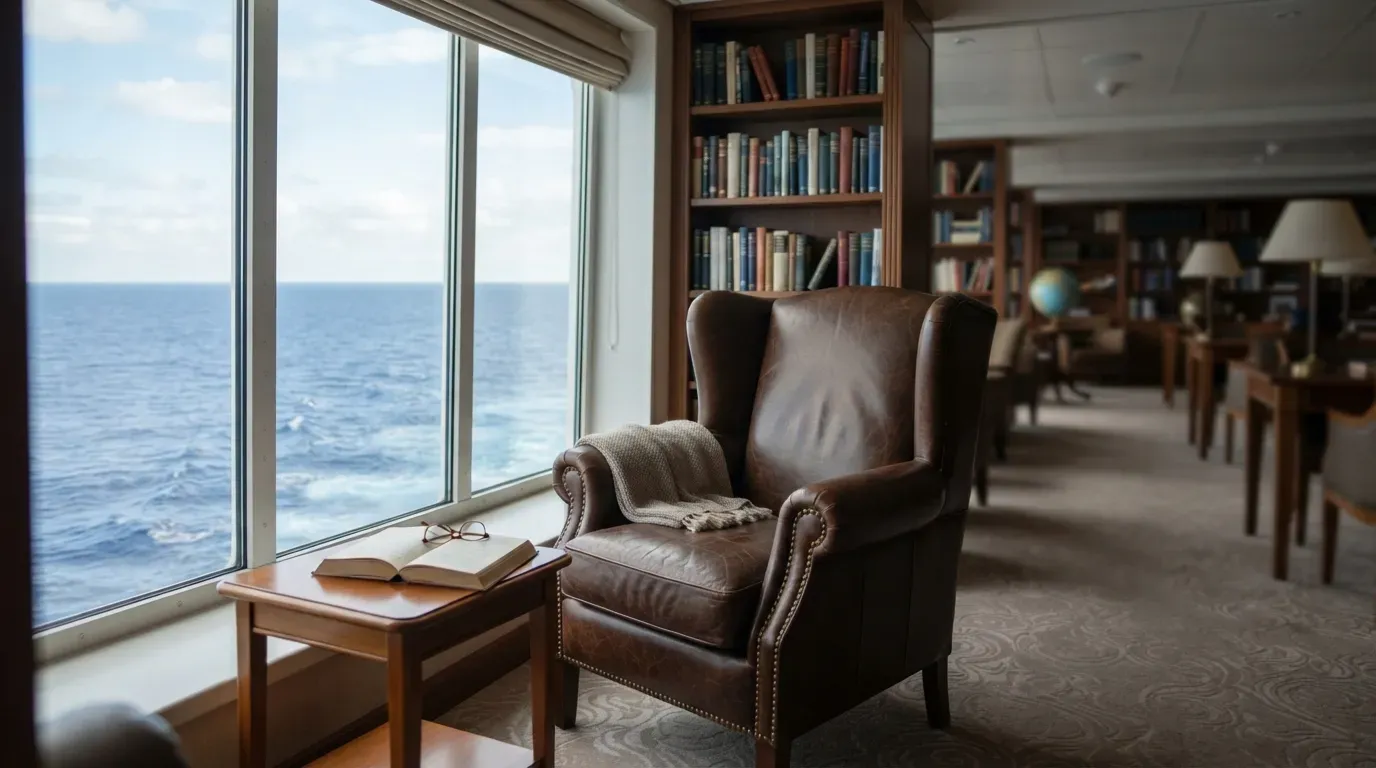
Newcomers fight for pool chairs. Veterans quietly disappear to spots most passengers never even notice exist. A library that empties out after 11 AM, an observation lounge that turns into a ghost town once people realize there’s no bar service, or those strange leather chairs in the back of the casino nobody touches during the day.
Smart cruisers rotate through these hideouts, never staying long enough to look territorial but always having somewhere to vanish when the ship starts feeling crowded. It’s a quiet map that takes years to build, and newcomers rarely think to look for it at all.
Worth Knowing
- Ship libraries tend to clear out mid-morning once activities start, leaving quiet armchairs behind.
- Observation lounges without bar service often stay half-empty even during busy sea days.
- Casino seating areas away from the machines double as forgotten reading nooks in daylight hours.
- The forward or aft outdoor decks, away from the main pool, rarely fill up even at peak times.
6. Taking the Stairs on Purpose

It sounds mundane, but this one habit quietly separates relaxed cruisers from exhausted ones by the end of the week. Longtime cruisers take the stairs instead of the elevator, turning a simple walk into a mini cardio workout a few times a day.
It also doubles as a way to actually get to know the ship, since stairwells often display a different piece of artwork on every landing that elevator riders never see. For cruisers over 60 especially, it’s less about fitness bragging rights and more about staying steady and mobile after a week of buffet meals and long sea days.
5. Locking In Every Reservation Before the Ship Leaves Port

While newcomers wander the ship on day one figuring things out as they go, veterans have already booked the entire week. The best dinners and shows don’t magically stay available, so seasoned cruisers reserve them before the ship even leaves the dock, sometimes weeks before they even pack a bag.
Booking is far easier now that it can all be done online in advance, though veterans know not to overschedule every hour. The key dining times and headline shows get locked in early, freeing up the rest of the week for spontaneity instead of last-minute scrambling.
4. Showing Up to the Art Auction for the Champagne, Not the Art

This is the one habit that sounds a little cheeky, and honestly, it kind of is. Veteran cruisers never intend to buy cruise ship art, but they rarely miss the auctions either, since these events come with complimentary champagne, entertaining art stories, and air-conditioned comfort when a break from the sun is needed.
The trick is enjoying the freebies without feeling pressured to raise a paddle. It’s a small, slightly rebellious routine that newcomers almost never think to try, mostly because they assume the auction is only for serious buyers. Veterans know it’s really just a free happy hour with a show attached.
3. Switching Dinner Tables Halfway Through the Cruise
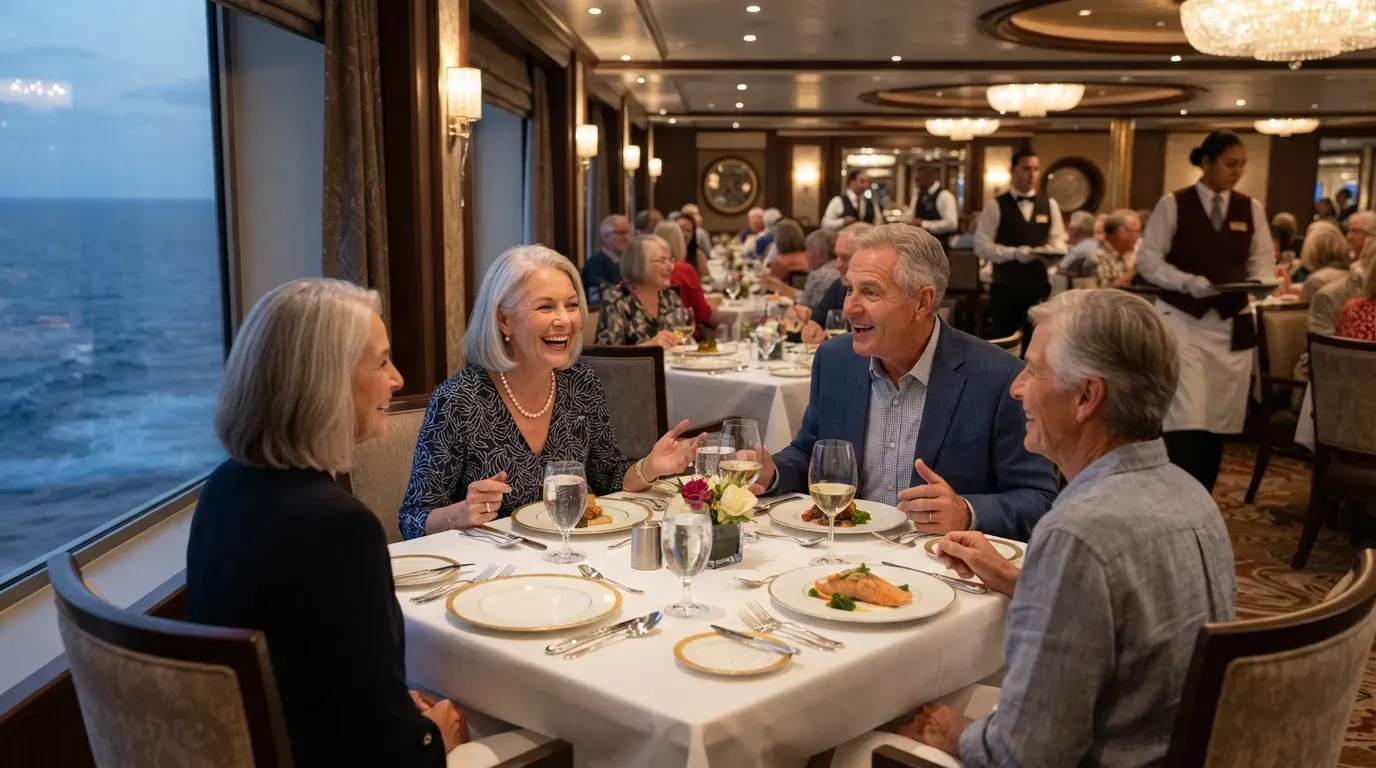
Here’s a genuinely controversial one: some of the most experienced cruisers don’t stick with the same dinner seating the entire trip, and plenty of traditionalists find that borderline scandalous. A repeat cruiser will book the early seating for the first few nights to secure a favorite waiter, then switch to later seatings once they’ve met more people.
It’s a deliberate move, not indecision, and it gives seasoned travelers the best of both worlds: a familiar server early on, and fresh conversation later in the week. Some longtime cruisers swear this single habit is the real reason they keep making new friends on every sailing.
2. Requesting the Same Small Favors From Their Cabin Steward Every Trip
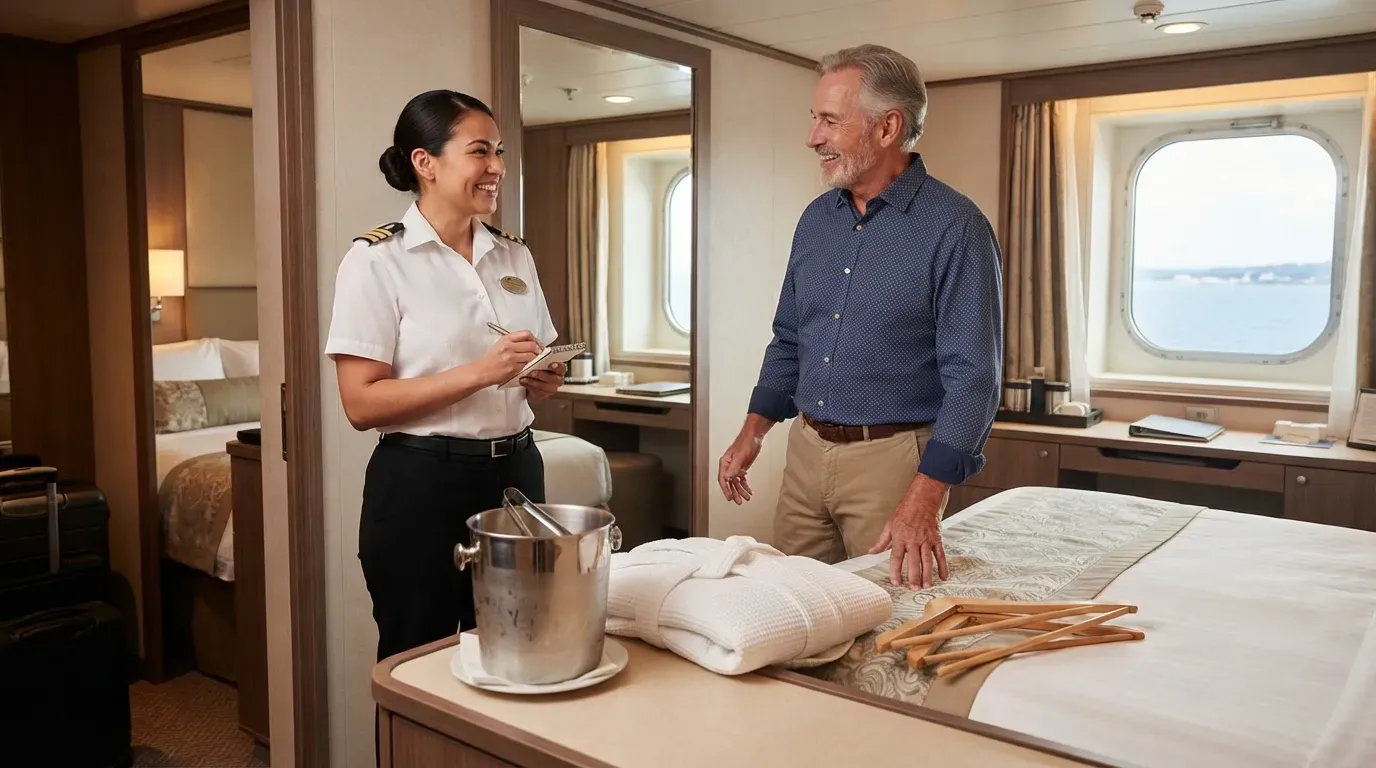
Newcomers rarely realize how much of their cabin experience is actually negotiable. Veterans over 60 have this down to a science. They meet their steward early, and if they need extra hangers, a bucket of ice, or a bathrobe, they simply ask, no hesitation and no guilt about it.
If the bed isn’t set up the way they expected, they ask for it to be changed on the spot. If they requested twin beds and got a double instead, they call their stateroom attendant and get it fixed within the hour. Most newcomers never realize almost everything in the cabin is just a polite request away from being solved.
Why It Stands Out
- A quick introduction on embarkation day sets the tone for the whole week’s service.
- Extra hangers, pillows, ice, or a second bathrobe are almost always available just by asking.
- Bed configuration mix-ups get fixed fast when flagged early instead of endured all week.
- A small tip or a genuine thank-you note tends to make every later request even smoother.
1. Learning One Crew Member’s Name and Home Country
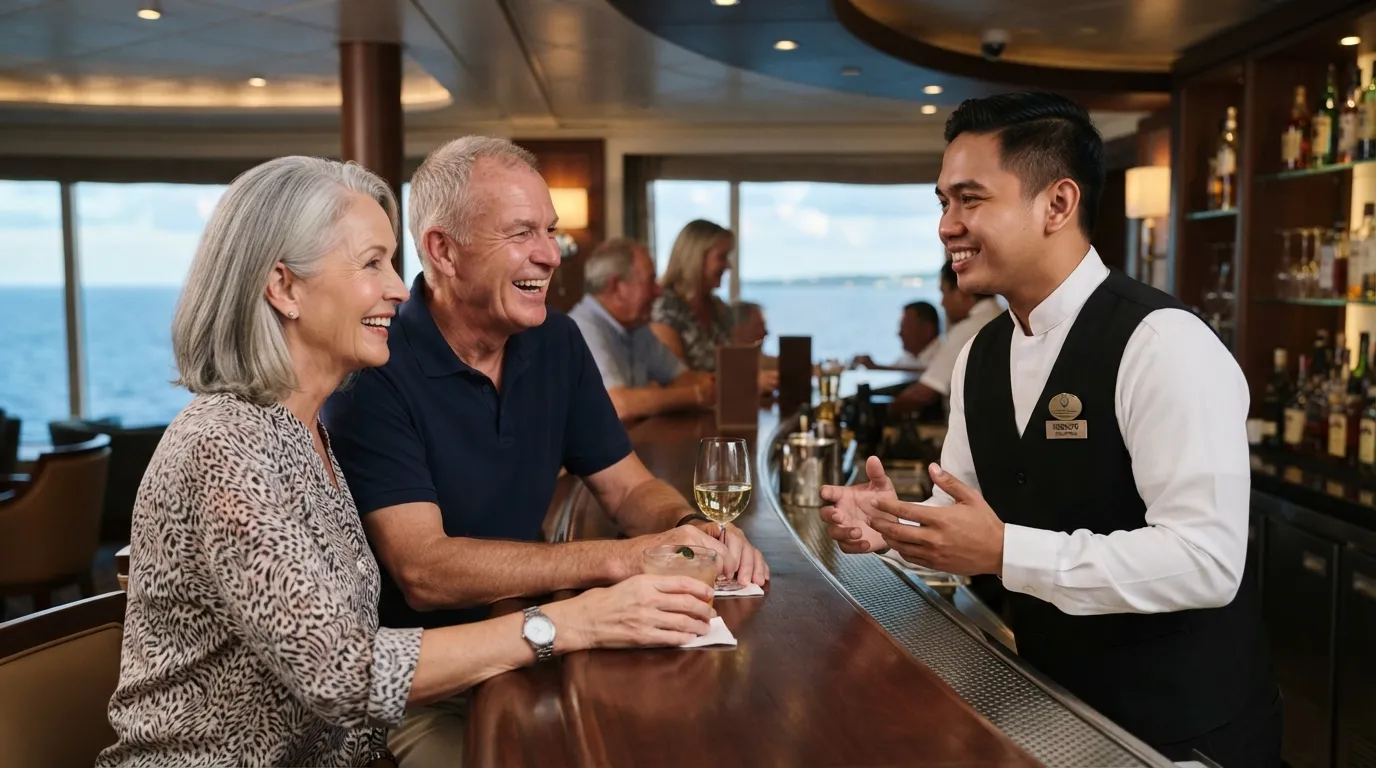
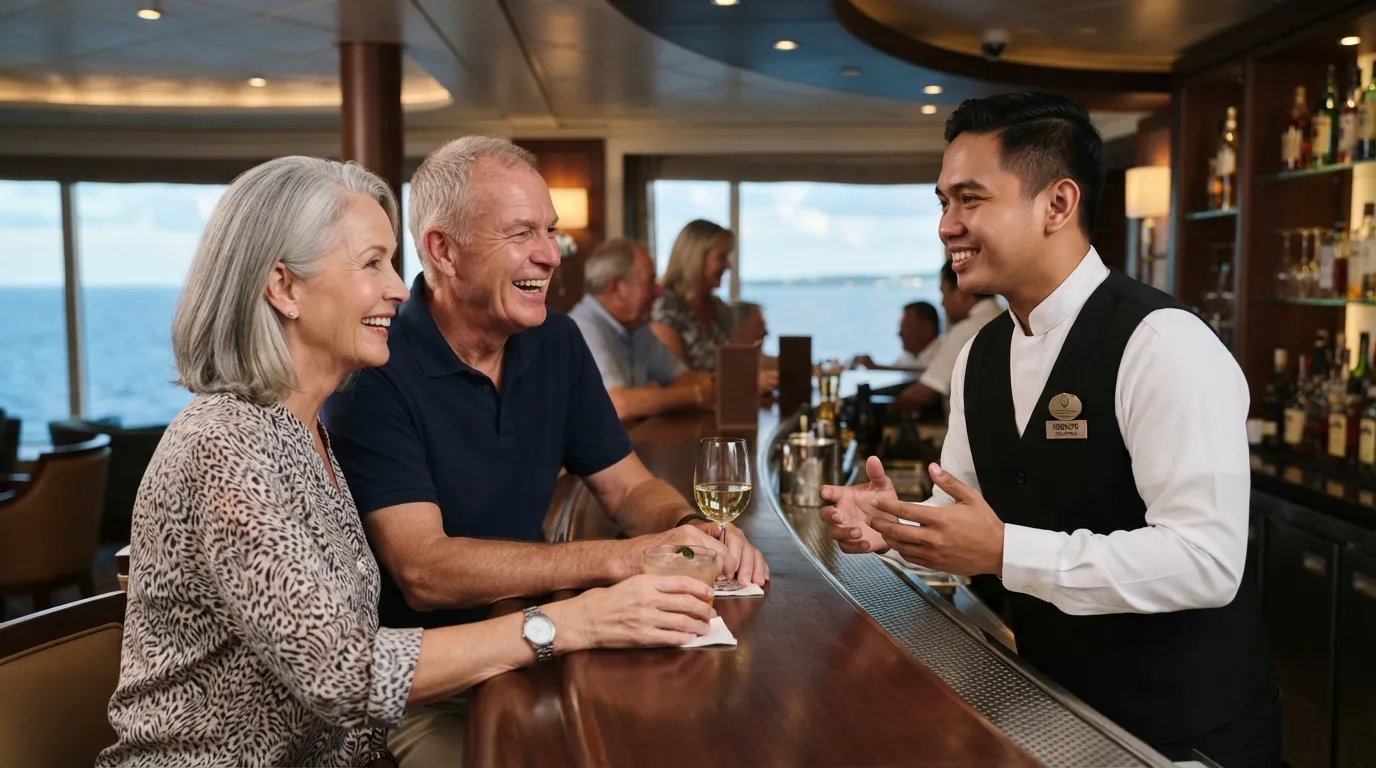
The single most powerful habit seasoned cruisers over 60 rely on isn’t a hack at all. It’s a relationship. Veterans make a habit of learning crew members’ names, asking about their home countries, and showing genuine appreciation for work that rarely gets acknowledged.
That small kindness often pays off in ways no app or upgrade can match. One cruiser’s bartender friend from the Philippines pointed them toward a secret deck area perfect for sunset viewing. Another compliment to a pastry chef ended with a handwritten chocolate souffle recipe tucked under the cabin door. It’s the one routine that turns a transaction into a memory, and it’s exactly what most newcomers walk right past.
None of these fourteen routines require money, status, or a fancy loyalty tier. They’re built on patience, timing, and a willingness to slow down instead of racing to squeeze everything in. That’s really the biggest secret seasoned cruisers over 60 have figured out: the best parts of a cruise were never about doing more. They were about noticing more.