
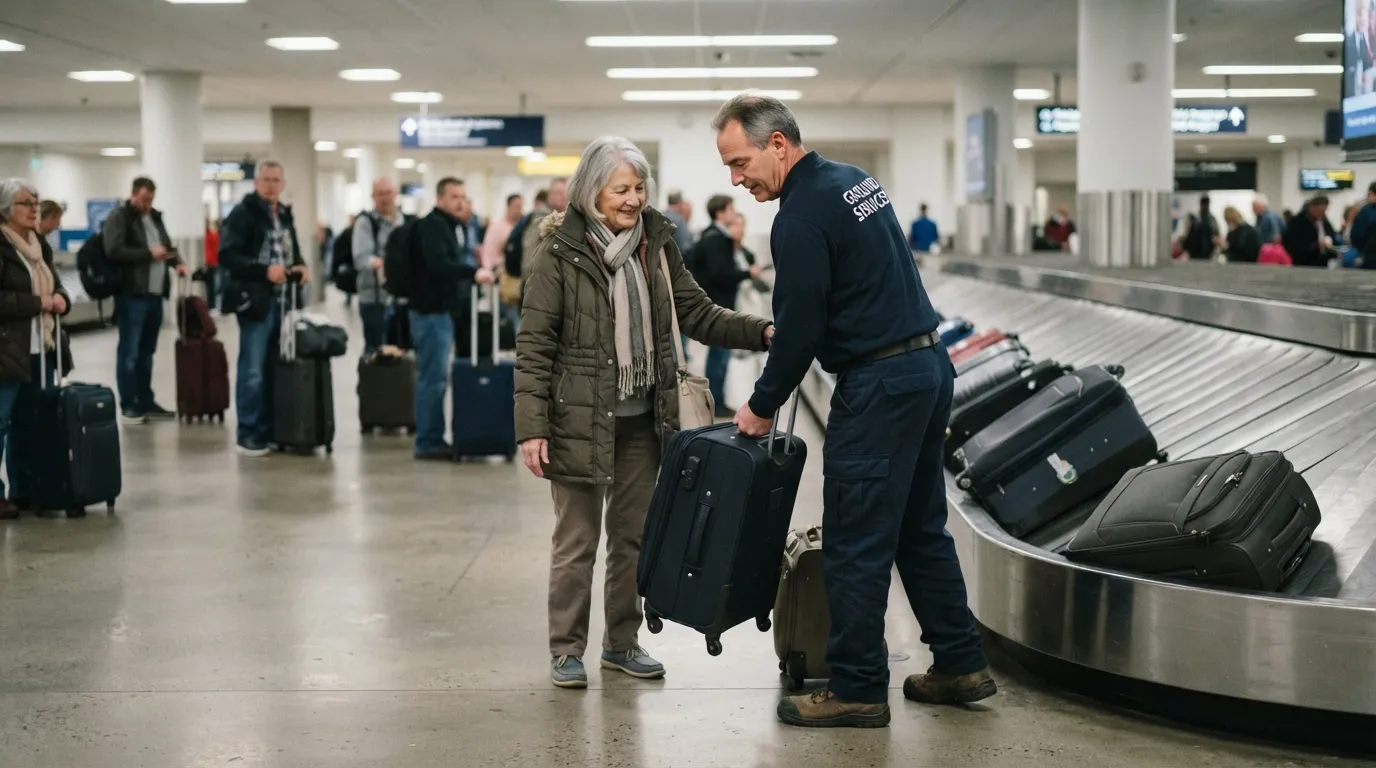
Most people assume baggage claim is the same chaotic free-for-all for every traveler, young or old, first class or economy. Airport insiders tell a different story. For passengers over 60, a surprising amount of quiet, unofficial help happens in the minutes before that carousel even starts turning, and almost none of it is announced over a loudspeaker.
It’s not charity, either. It’s a tangled mix of federal rules, airline training, and old-fashioned habit that most travelers never notice – and once you see it, you can’t unsee it the next time you’re standing at the belt. Here’s what actually happens behind the scenes once an older traveler steps off the jet bridge and heads toward the bags.
#13 – A Hidden Code Follows Senior Luggage Through the Entire System
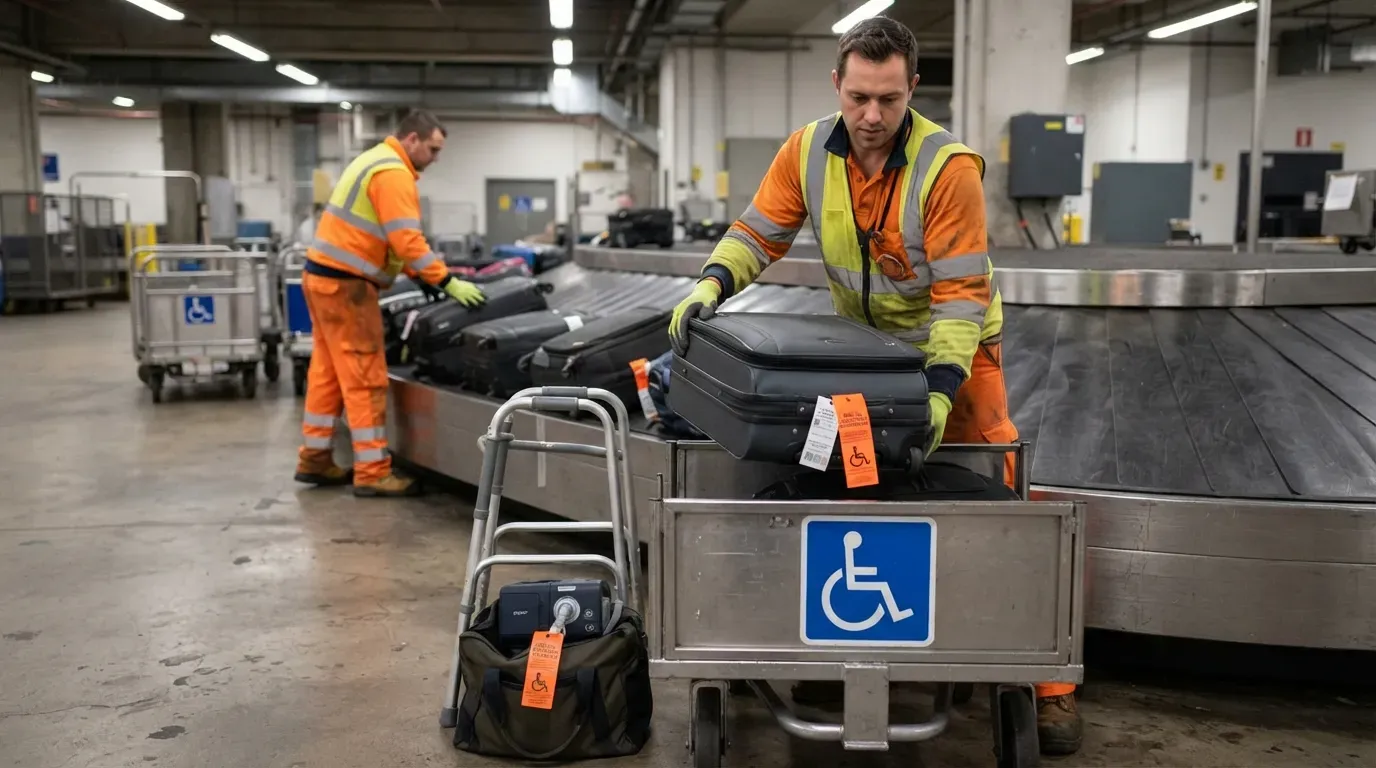
Long before a bag ever hits the carousel, it’s already been flagged. Airlines attach special service codes to reservations for passengers who request wheelchair or mobility assistance, and that flag travels with the bag through every step of the process. One quiet note in a reservation system changes how ground crews treat that luggage from the moment it’s checked.
It sounds like a small bureaucratic detail, but it’s actually a head start. Ground crews are watching for canes, walkers, CPAP machines, and other assistive devices before the plane has even landed. That paperwork trail is the invisible advantage most travelers over 60 never realize they’ve been given.
#12 – Wheelchairs and Walkers Get Loaded Before Anyone Else’s Suitcase
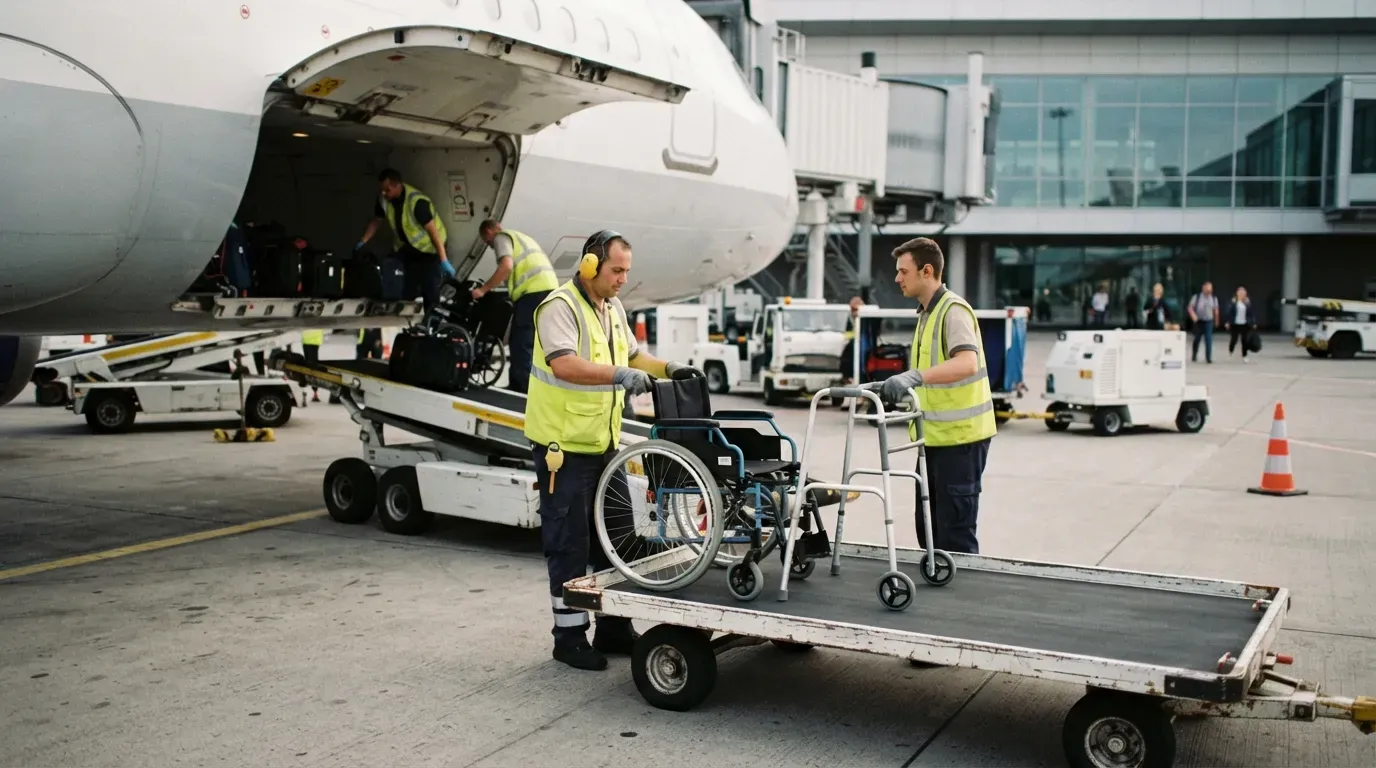
Here’s the part that surprises people most: a senior’s mobility device doesn’t wait in line with the rest of the luggage. Collapsible wheelchairs and other assistive devices get priority storage in the cabin, and priority placement in the cargo hold as well. It isn’t a courtesy handlers dream up on the spot – it’s written into how the plane gets loaded.
Handlers load these items last onto the plane so they can pull them off first, which is why a walker or folding wheelchair sometimes appears at the gate before the rest of the checked bags even reach the carousel. Wheelchairs and mobility devices take priority over carry-on baggage belonging to other passengers on the same flight. Most people standing nearby have no idea why one bag seemed to “cut the line.”
Fast Facts
- Wheelchairs and scooters are typically the last items loaded and the first items unloaded from the cargo hold.
- Airlines must transport a passenger’s own mobility device at no extra charge, regardless of size or weight.
- Battery-powered chairs follow special handling rules meant to protect the battery during transport.
- Ground crews often tag these devices with bright labels so they’re impossible to miss on the ramp.
#11 – Staff Won’t Walk Away Until Your Hands Are Actually on the Bag
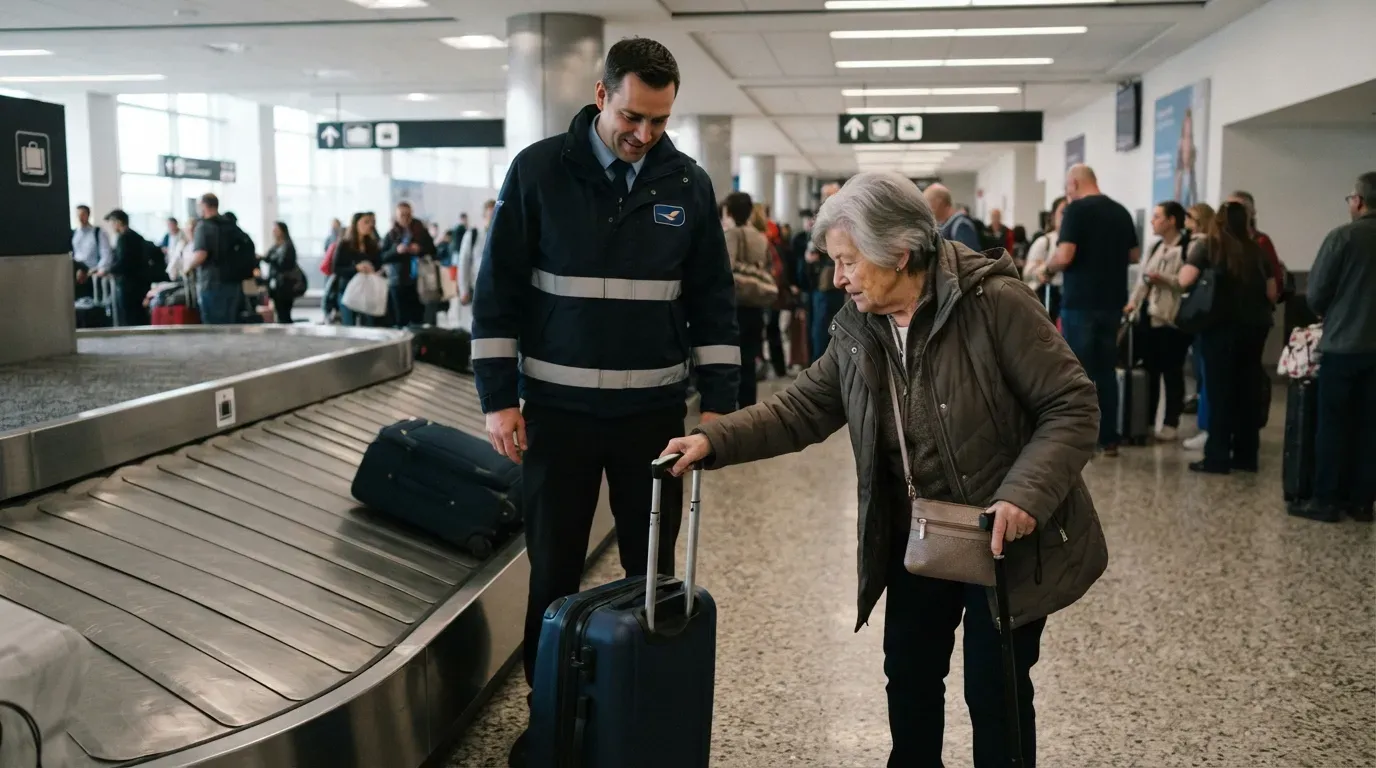
If a senior has requested assistance, the employee escorting them isn’t allowed to just point and disappear. Federal rules require that a passenger who isn’t independently mobile because of a disability can’t be left unattended for more than 30 minutes – even if someone else is traveling with them.
That rule turns into a habit most staff keep long after the 30-minute clock would technically run out. Handlers frequently linger by the carousel, watching for the exact bag, instead of assuming a traveler will spot it in the crowd. It’s one of the least talked-about protections in modern air travel, and almost nobody over 60 realizes they’re covered by it.
#10 – One Missed Sentence at Check-In Can Change Your Entire Trip
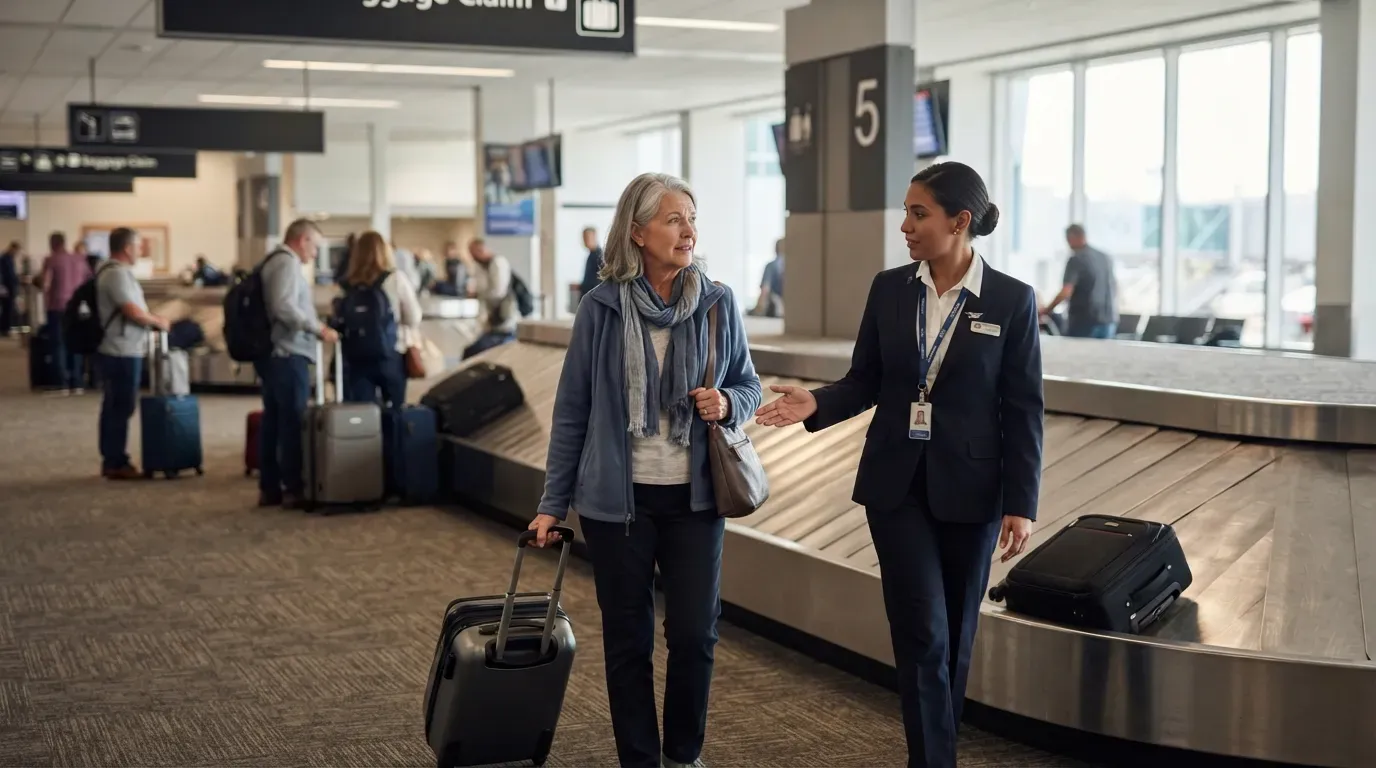
Assistance doesn’t start at baggage claim – it starts weeks earlier, buried in a reservation. Airlines may notate that a traveler requested help, but staff won’t know who to look for at the airport unless that person speaks up and self-identifies in person.
That single step is why the same senior traveler can fly the exact same route twice and get wildly different treatment. One trip, nobody’s told; the next trip, ground staff are already watching the arrivals board. Frequent flyers over 60 who learn to say something every single time report a noticeably smoother experience – but almost nobody explains this system to first-time senior travelers.
#9 – A Radio Call Goes Out the Moment You Step Off the Jet Bridge
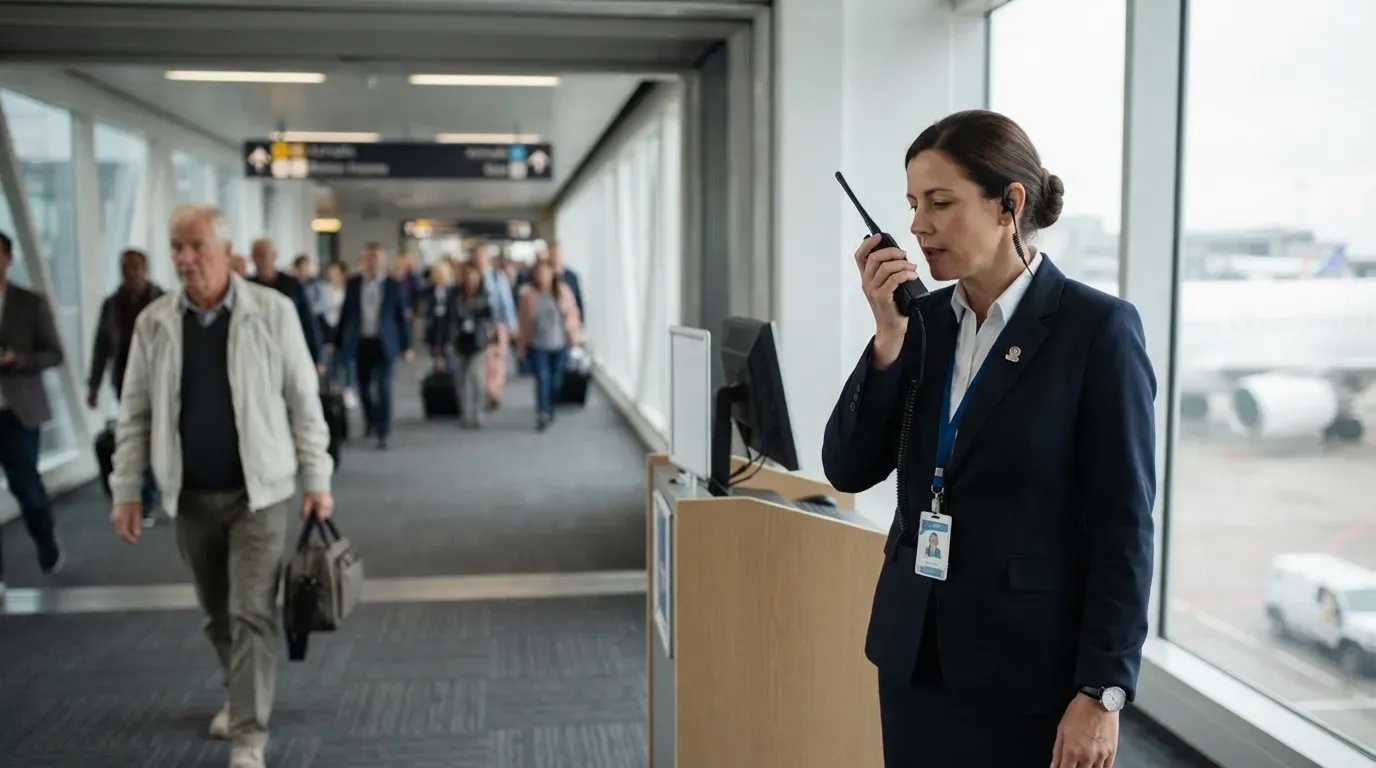
Before an older passenger even reaches the terminal, a message has often already traveled ahead of them. Meet-and-greet coordination exists specifically so a staff member is physically waiting, not paged after the fact. A trained representative meets the traveler at the arrival gate and escorts them through immigration, baggage claim, and customs.
That handoff between gate agents and baggage-area staff is almost entirely invisible to everyone else in the terminal. Travelers usually assume the person greeting them just happened to be nearby. In reality, someone radioed ahead the second the wheels touched down.
#8 – The Cart Ride Isn’t Just for You – Your Companion Gets a Seat Too
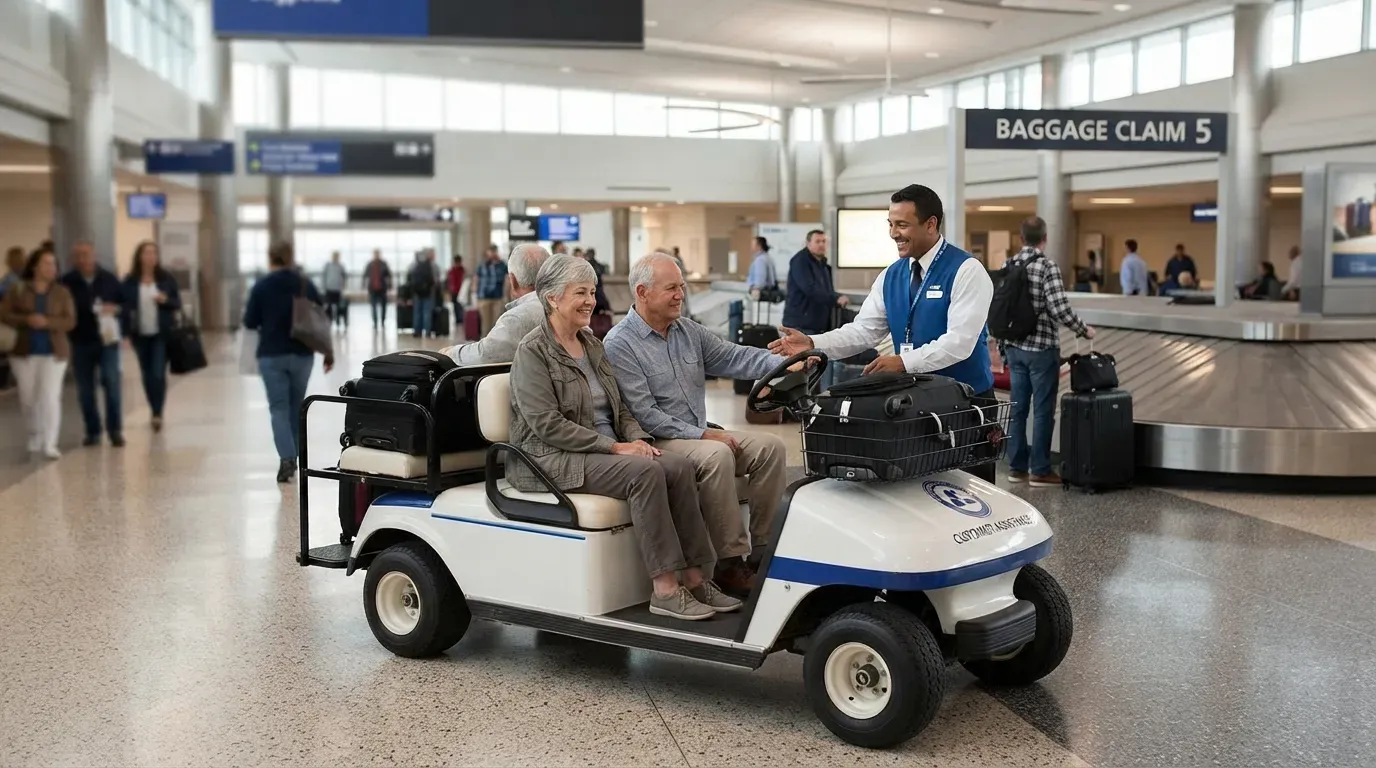
Electric carts ferrying older travelers through the terminal are common knowledge. What’s less known is that the person walking alongside doesn’t get left behind. A traveling companion can ride along on the electric cart too, even if they aren’t disabled themselves.
That detail matters more than it sounds. Families splitting up at the gate – one person in the cart, one power-walking through a mile of terminal – is one of the most common and avoidable stress points in senior travel. Staff who quietly wave a spouse or adult child onto the cart are solving a problem most passengers didn’t even know they were allowed to ask about.
Quick Compare
- Solo senior traveler: Rides the cart alone while a companion walks separately.
- Senior with a companion: Both can usually ride together if there’s room on the cart.
- Larger groups or families: May need to request an extra cart or a slightly longer pickup window.
#7 – They’ll Carry Your Bag to the Curb, Not Just Point at the Belt
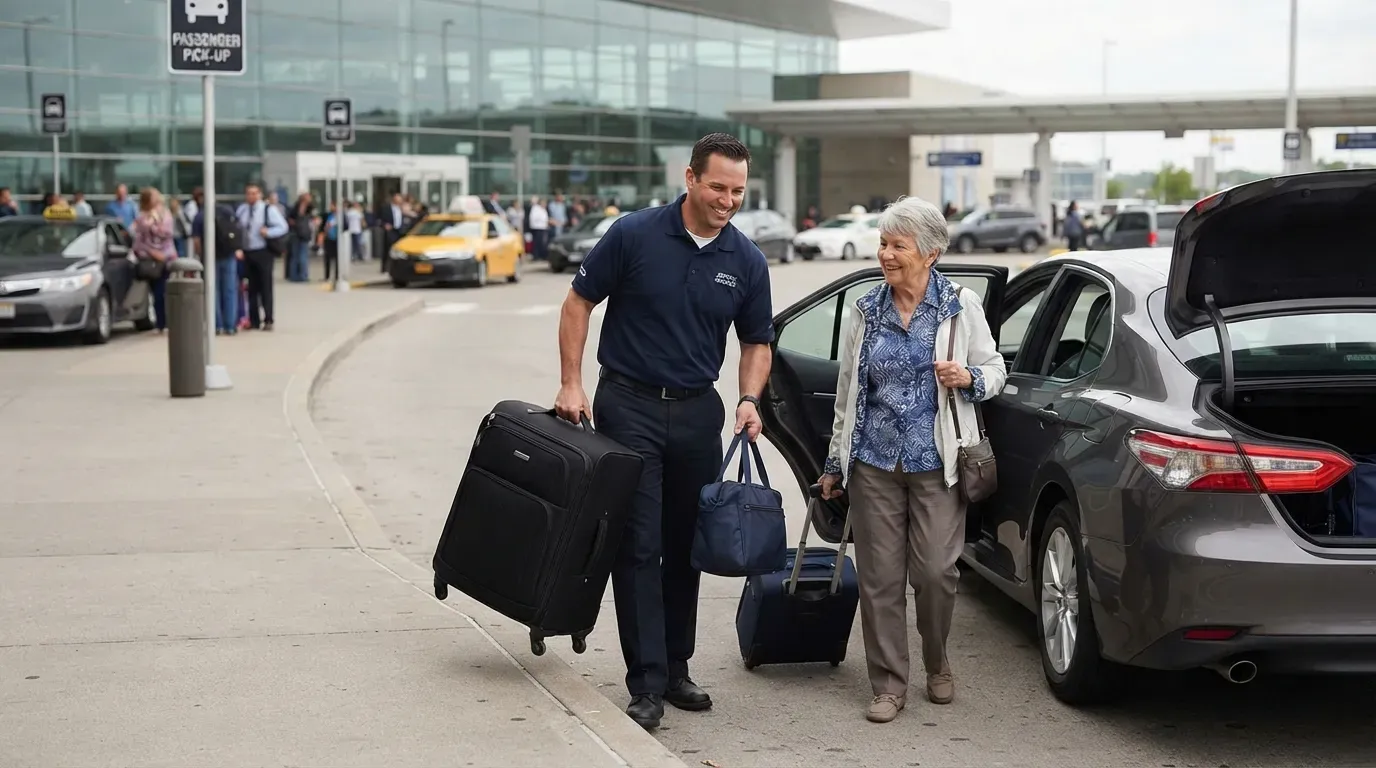
Assistance for older travelers frequently doesn’t stop once the suitcase hits the carousel. From the moment they step out of the car, a trained porter can take over – carrying luggage from vehicle to check-in, or from baggage claim back to the curb after landing.
This is the part most travelers over 60 never request because they don’t realize it’s on the table. Airlines are required to help carry gate-checked or carry-on luggage when a passenger can’t manage it because of a disability. A surprising number of seniors still haul their own bags across the parking garage simply because nobody ever told them they didn’t have to.
#6 – No Doctor’s Note Required, But Almost Nobody Asks
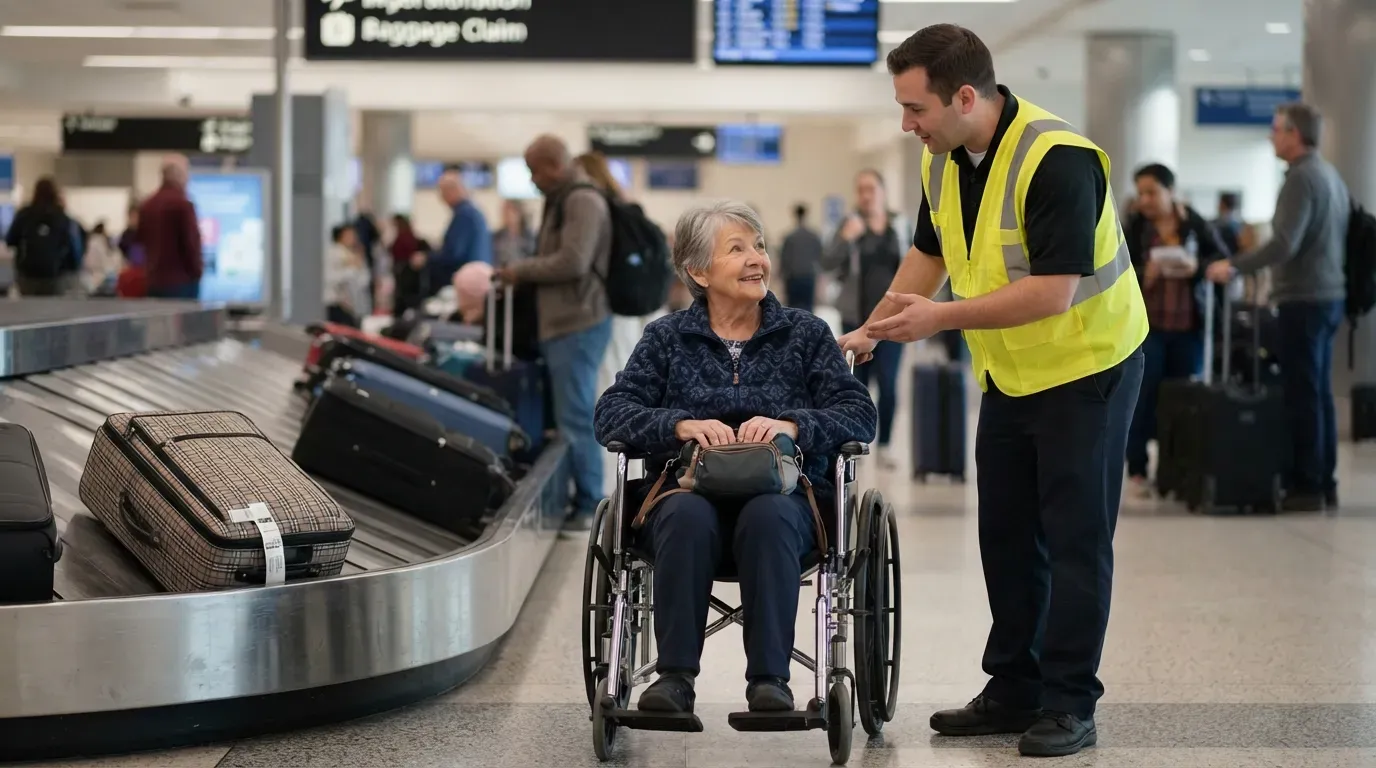
This is the detail that genuinely frustrates travel agents and disability advocates: the help is free, and it requires nothing on paper. Under the Air Carrier Access Act, no documentation is needed to request wheelchair or mobility assistance at U.S. airports – no doctor’s note, no disability designation, no paperwork at all.
Plenty of older travelers quietly assume they’d be “faking it” or taking a service meant for someone else, so they never ask. Handlers say that’s the biggest missed opportunity in senior travel today – a free, legally guaranteed benefit that goes unused purely out of politeness. They wish more people over 60 would simply speak up at the counter.
#5 – Medical Gear Rides Free and Almost Untouchable by Fees
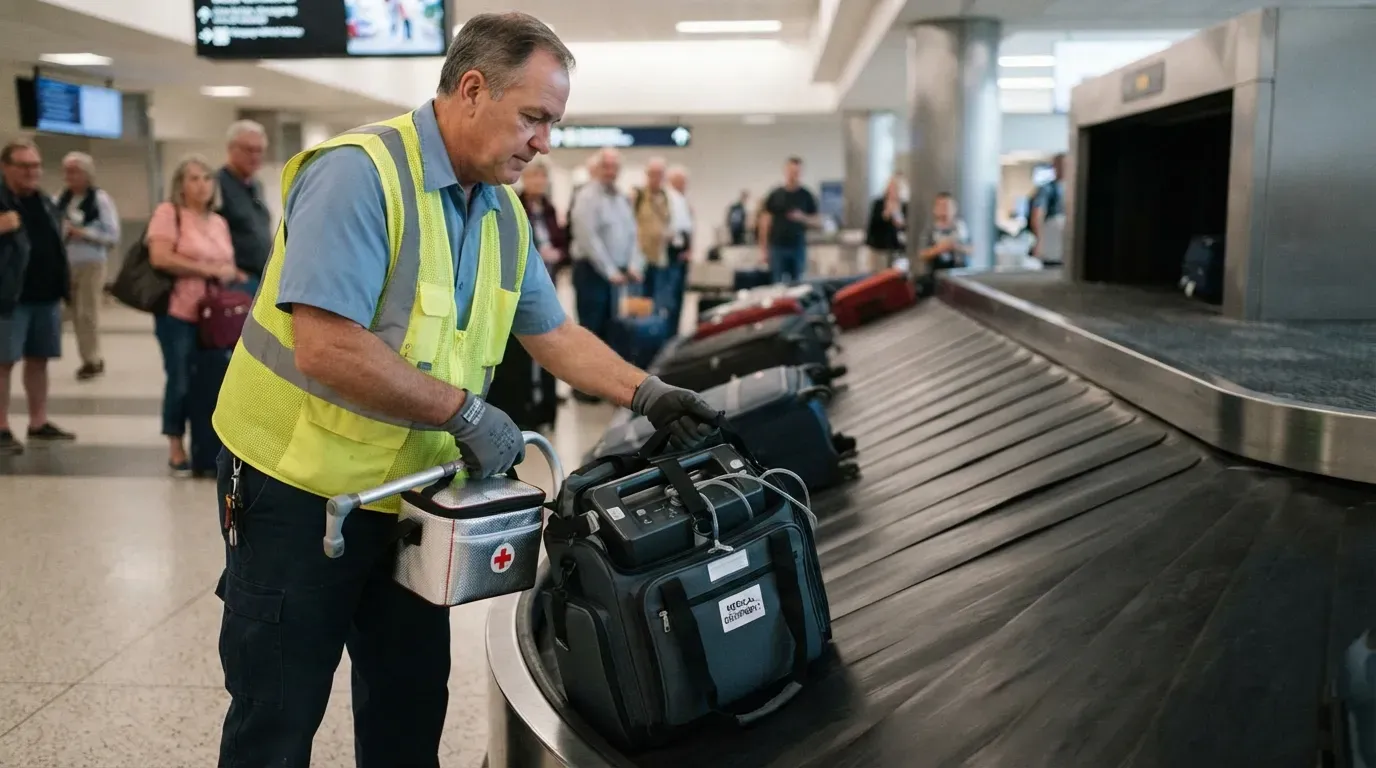
It isn’t just wheelchairs that get special handling. Canes, walkers, and oxygen equipment get bumped ahead of standard baggage in the loading order, and none of it counts against a traveler’s baggage allowance.
Airlines are required to let medically necessary equipment fly free of charge, including CPAP machines, portable oxygen concentrators, medication coolers, and mobility aids. Handlers know these items are essentially untouchable in terms of fees – a fact plenty of frequent senior travelers still don’t know to ask about.
At a Glance
- Wheelchairs and scooters: no fee, and no weight limit tied to standard baggage allowance.
- CPAP machines and portable oxygen concentrators: fly free as medical equipment.
- Canes and walkers: loaded and unloaded ahead of standard checked bags.
- Medication coolers: generally allowed as an extra item beyond normal carry-on limits.
#4 – They Photograph Damage Before You Even Notice It’s There
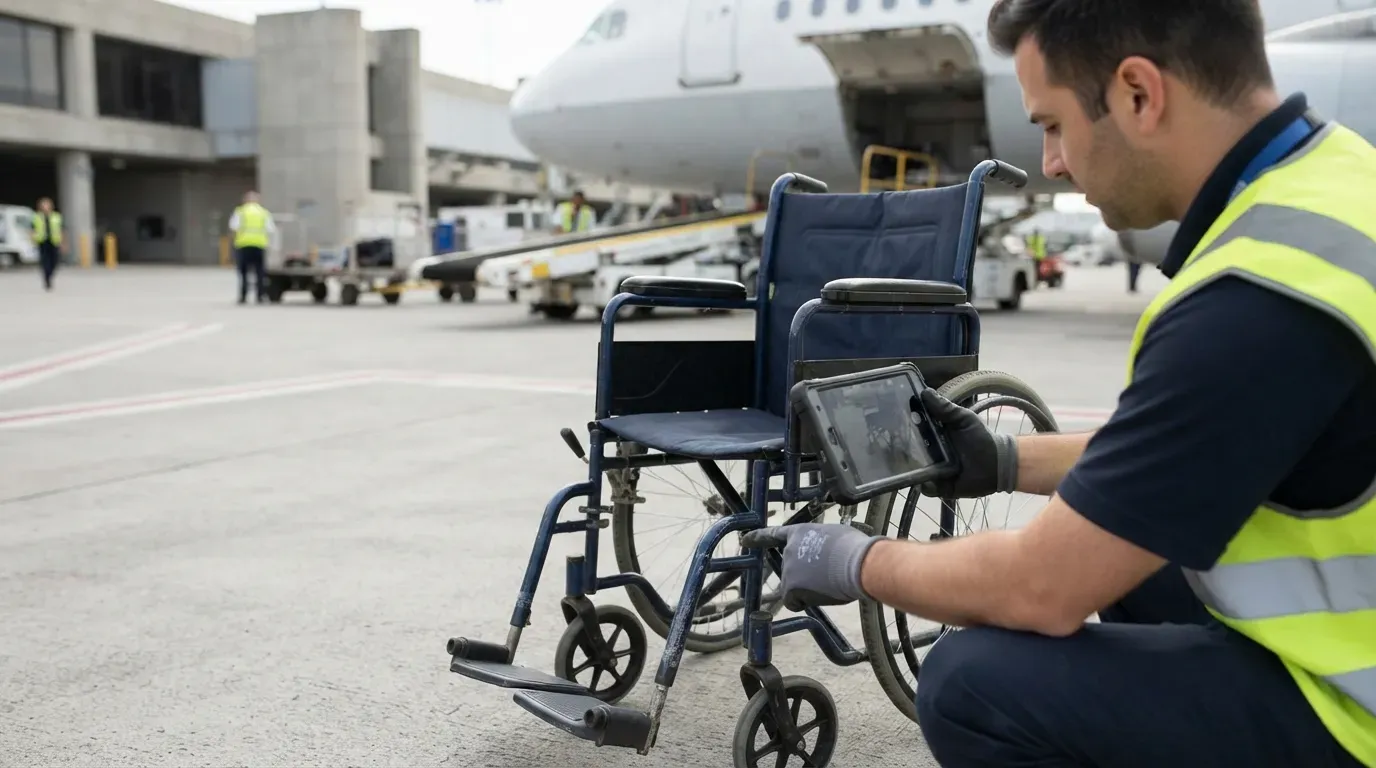
When a wheelchair or mobility device travels in the hold, ground staff do something most passengers never see happen to a regular suitcase. At check-in, staff inspect the device and document any pre-existing scuffs, dents, or wear before it ever leaves their hands.
That quiet paper trail protects both sides, but it especially protects older travelers who might not notice a scratch or a bent frame until they’re already home. Handlers who take the extra thirty seconds to log damage before boarding are often the reason a claim gets approved instead of denied weeks later.
#3 – Staff Escort You Straight Through Immigration and Customs
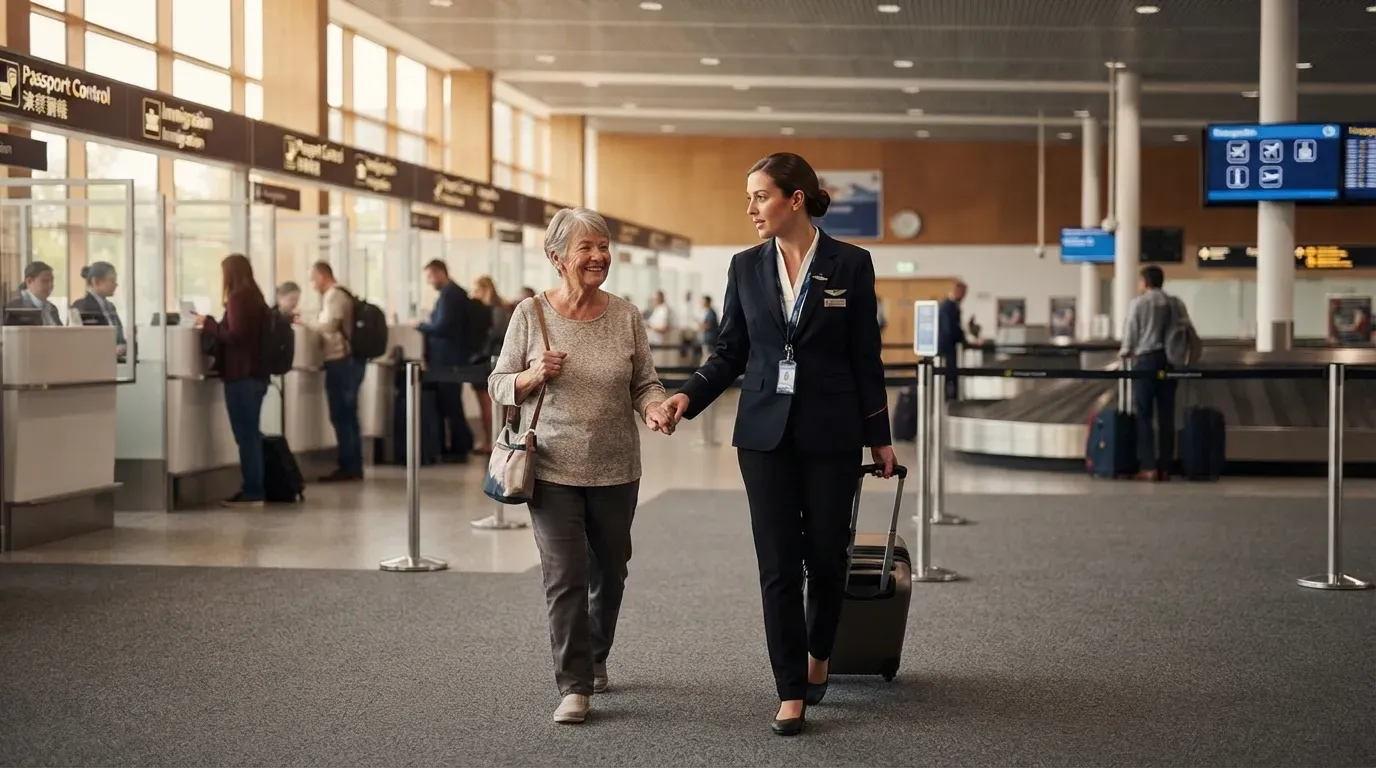
For seniors flying internationally, the help doesn’t end at the domestic terminal door. After landing, airport staff guide older travelers through immigration and baggage claim, cutting through what can otherwise be a maze of unfamiliar signage and lines.
What’s less obvious is how far that escort actually extends. Airlines are required to assist passengers from their aircraft seat all the way through the airport to baggage claim, the terminal entrance, or vehicle pickup. That continuous chain – plane seat to parking curb – is designed so an older traveler never has to navigate an unfamiliar terminal completely alone.
Worth Knowing
- The escort chain can start at the aircraft seat and end at the curb, rental counter, or connecting gate.
- On international arrivals, staff assistance typically covers immigration, customs, and baggage claim in one continuous handoff.
- Travelers can request this help on arrival even if they didn’t arrange it before departure.
#2 – They’ll Chase Down Ground Transportation So Nobody’s Left Standing Alone
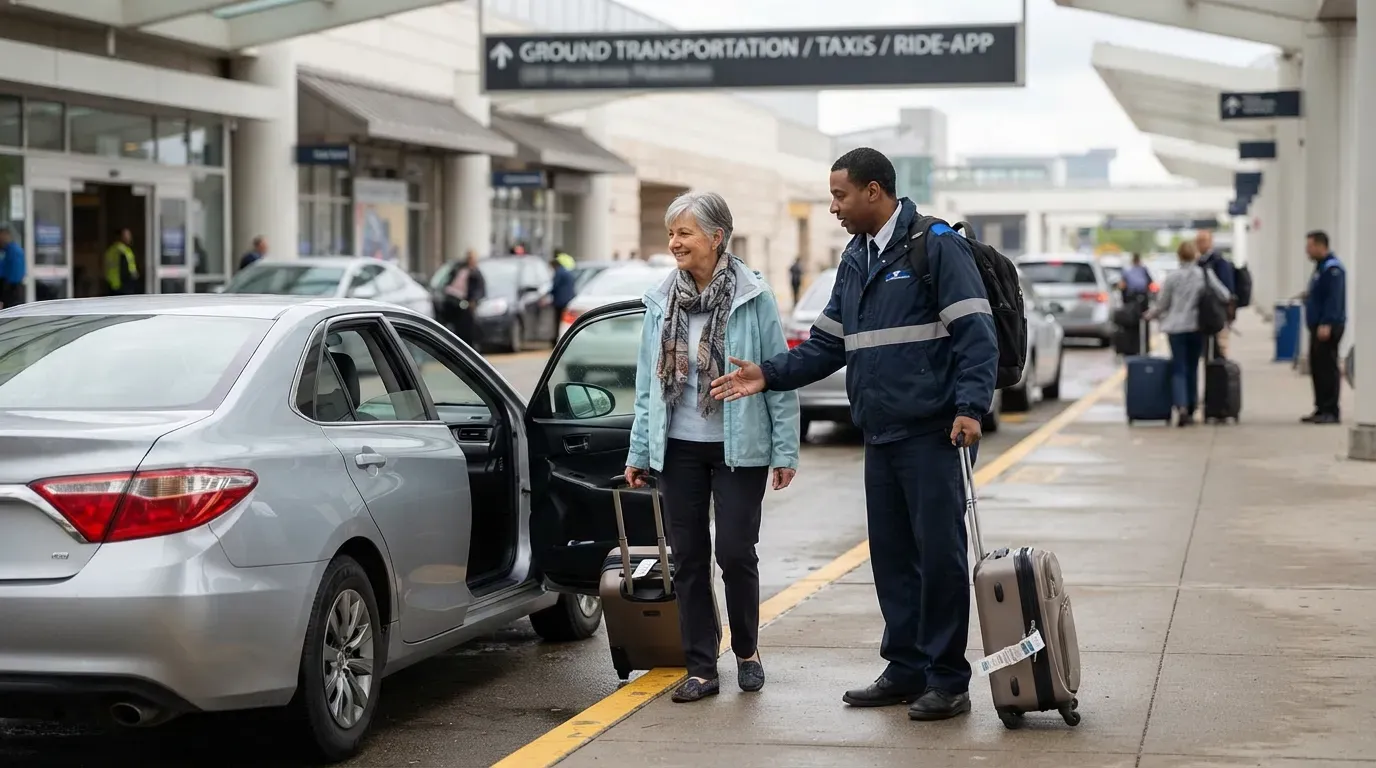
The help doesn’t always stop once the bags are in hand. Meet-and-greet staff can smooth the entire handoff to ground transportation, making sure an older traveler isn’t left stranded curbside wondering where to go next.
Curbside teams often go further than most people expect, helping travelers return rental cars or track down a ride. For a traveler over 60 flying alone, that quiet coordination between baggage claim and the curb is often the single most stressful gap in the whole trip – and the one most consistently smoothed over without anyone asking for credit.
#1 – Many Do It Without Being Asked, Because It’s Become an Unwritten Rule
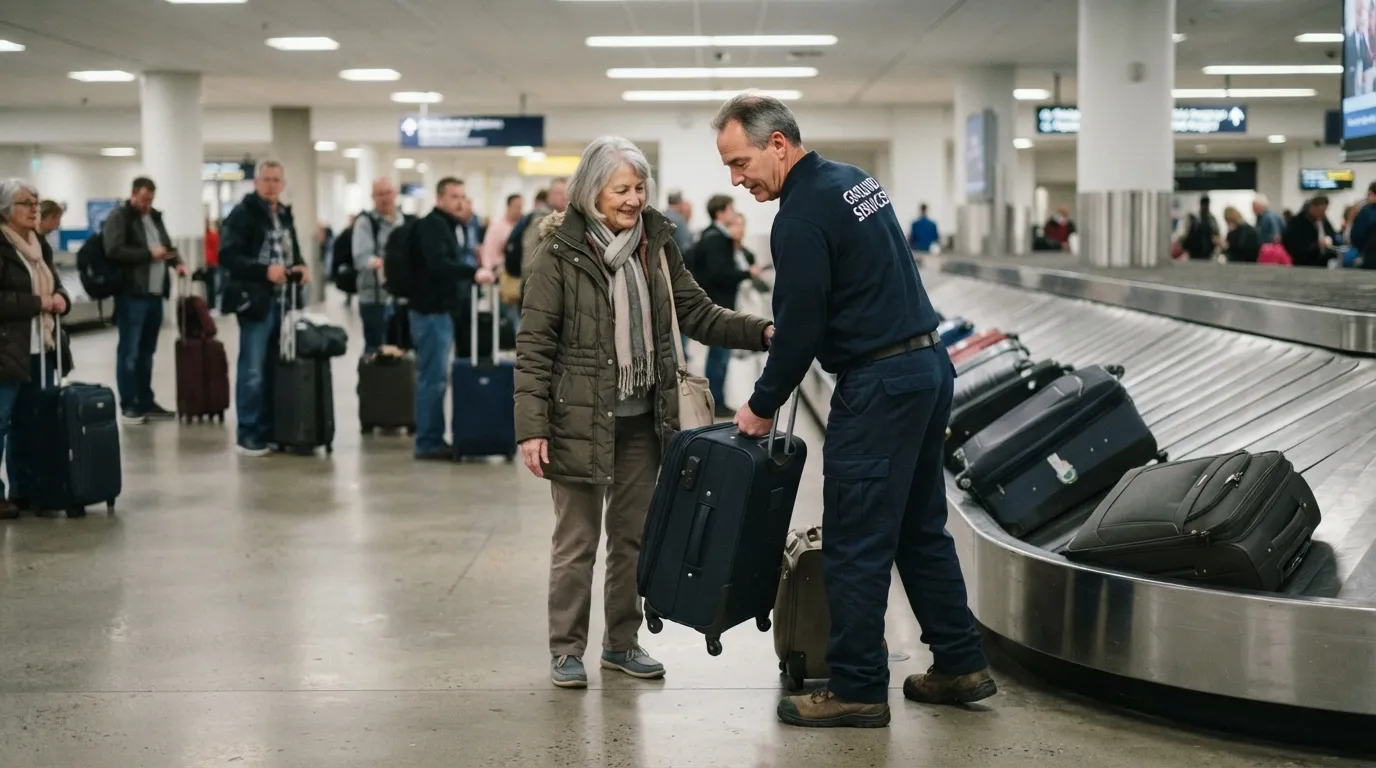
After everything else – the priority tags, the escort teams, the cart rides, the loading order – the most striking thing insiders describe isn’t a rule at all. It’s culture. Veteran ground staff regularly say they watch for older travelers standing alone at a carousel even when no request was ever filed, simply because it’s become second nature after years on the job.
That instinct isn’t written into any federal regulation. Staff help with safe passage through crowded areas, guide travelers to escalators or elevators, and offer the kind of quiet reassurance no policy manual actually requires. The paperwork explains why the system exists. The people running the floor are why it actually feels human.
Add it all up, and baggage claim starts to look less like a chaotic conveyor belt and more like a quiet, coordinated relay – one most travelers over 60 benefit from without ever seeing the handoffs happen. The rules guarantee the minimum. The habits of the people working the floor are what turn that minimum into something that actually feels like care.