

Most people remember the 1970s as a golden era of childhood – long summer days, total freedom, and parents who actually let kids be kids. And sure, there’s real nostalgia in that. But here’s the part nobody likes to say out loud: a shocking number of things that counted as a perfectly normal Tuesday afternoon back then would get a parent reported to Child Protective Services today. Not frowned upon. Not side-eyed. Reported.
The gap between 1970s childhood and modern childhood isn’t just cultural – it’s legal, medical, and backed by decades of hard evidence about what actually hurts kids. Some of the changes were long overdue. Some are genuinely debatable. But before you pick a side, you need to see the full list. A few of these will make you laugh. A few will make you wince. And at least one will make you wonder, with complete sincerity, how any of us survived.
#1 – Being Left in a Hot Car While Parents Ran a “Quick Errand”

This one leads the list because it was so universal, so casually practiced, and so genuinely dangerous that it’s hard to overstate the gap between then and now. In the 1970s, leaving kids in the car while you ducked into a store for 20 minutes – windows cracked, engine off – was something essentially every American parent did. It wasn’t neglect. It was Tuesday afternoon grocery shopping. Nobody gave it a second thought.
Today, we know that a child’s core body temperature rises three to five times faster than an adult’s, and that car interiors can reach over 115°F even when outside temperatures are relatively mild. On average, about 37 children under age 15 die from heatstroke in vehicles every year in the U.S. – and that grim number has stayed stubbornly steady for decades. Leaving a child unattended in a vehicle is now illegal in many states, and a parent who runs into a pharmacy for four minutes on a warm afternoon can return to a smashed window, a crying child surrounded by first responders, and criminal charges waiting. Of all the shifts between 1970s parenting and today, this one moved the furthest – from invisible to unthinkable, in a single generation.
Fast Facts
- An average of 37 children die from vehicular heatstroke in the U.S. every year, per the National Safety Council.
- A child’s body temperature rises 3 to 5 times faster than an adult’s inside a hot vehicle.
- Even on a 61°F day, a closed car interior can exceed 105°F within one hour.
- More than 1,000 children have died in hot cars in the U.S. since 1998.
- 26 states have specific “hot car death prevention” laws on the books.
#2 – Riding in a Car With a Drunk-ish Driver

In the 1970s, the legal blood alcohol content limit for driving was 0.10% or even 0.15% in many states – and plenty of people thought nothing of having a few drinks before getting behind the wheel. Kids piled into cars after family cookouts where the adults had clearly been celebrating, and nobody viewed it as a crisis. It was just how the night ended.
Mothers Against Drunk Driving was founded in 1980 and fundamentally changed America’s legal and cultural relationship with impaired driving. By 1988, all states had adopted 0.10% BAC limits, and the current federal standard of 0.08% was set in 2000. Today, knowingly placing a child in a vehicle with an impaired driver can result in child endangerment charges. In 1975, it was called carpooling home from the cookout.
#3 – Riding in the Back Window of the Station Wagon
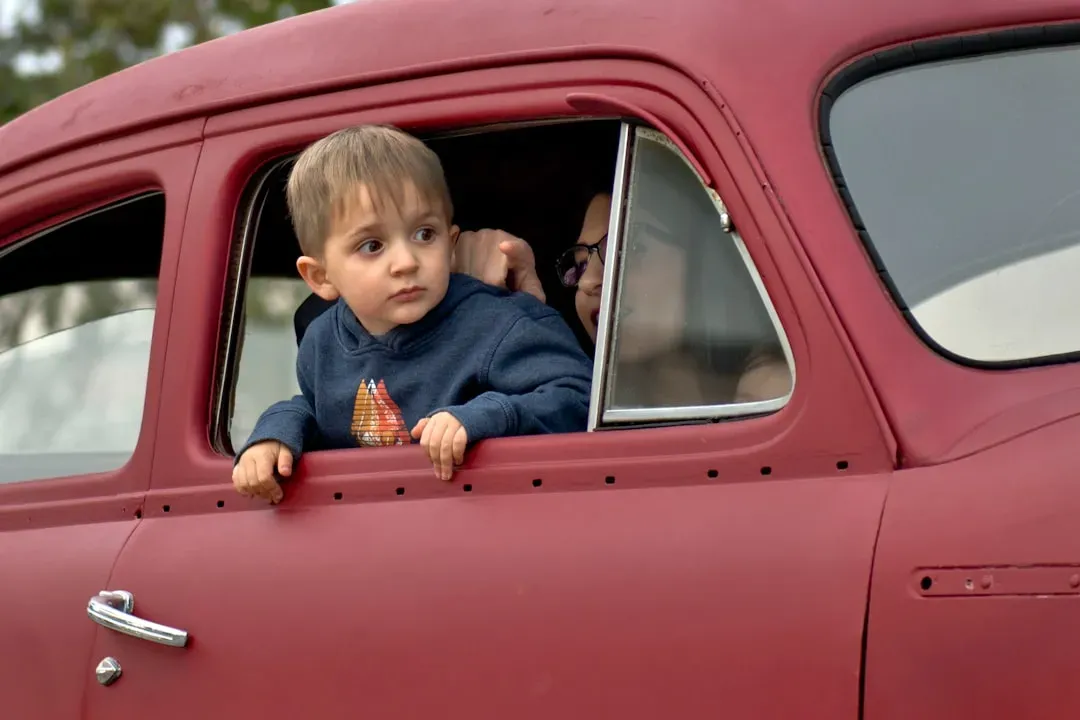
There was nothing quite like the rear window shelf of a 1970s station wagon. Kids would curl up back there like cats, watching the highway roll by from a few inches behind single-pane glass. In the early 1970s, only about 14% of Americans regularly used seat belts, and the family car functioned more like a rolling living room than a safety-regulated vehicle. Babies rode home from the hospital in their mother’s arms. Nobody thought twice about it.
Tennessee passed America’s first child seat usage law in 1977, but laws requiring child restraints weren’t adopted by all 50 states until 1986 – even though evidence supporting their protective effect had existed for years. Today, leaving a child unrestrained in any moving vehicle is not just dangerous – it’s a criminal offense in every state. The station wagon shelf is now a felony waiting to happen.
#4 – Playing Lawn Darts (Jarts) With No Adults Around

Lawn darts – sold under the brand name Jarts – were a backyard staple at every cookout throughout the 1970s. Each one was about 12 inches long with a heavy metal tip and decorative plastic fins, weighted enough to stick firmly into the ground when thrown at speed. Kids grabbed them freely while adults manned the grill, and the combination worked exactly as badly as it sounds.
Over an eight-year stretch, lawn darts sent an estimated 6,100 people to hospital emergency rooms – with 81% of those cases involving children 15 or younger, and half of those under age 10. The majority of injuries were to the head, face, eyes, or ears. The death of a seven-year-old girl in California in 1987, when a dart penetrated her skull, became the defining catalyst for federal action. The Consumer Product Safety Commission officially banned lawn darts in December 1988 – then had to issue another urgent warning in 1997 because too many old sets were still sitting in garages, getting pulled out for summer parties.
At a Glance: The Jarts Story
- Each dart: ~12 inches long, heavy metal tip, enough force to stick in packed earth – or a skull.
- 6,100+ ER visits over 8 years; 81% of victims were children under 15.
- At least 3 children were killed by lawn dart injuries before the ban.
- CPSC banned them December 1988 – but the ban didn’t include a recall of sets already in homes.
- CPSC reissued its destruction warning in 1997 because sets were still surfacing at parties.
#5 – Riding Bikes Everywhere, Helmet-Free

In the 1970s, the idea of a child wearing a helmet to ride a bicycle was almost laughably foreign. A bike helmet was what professional racers wore – not kids bombing down hills in their neighborhoods. Scraped knees and split chins were considered character-building, not emergencies requiring documentation. The blood was proof you’d had a real afternoon.
Bicycle helmets for children didn’t become widely available as a consumer product until the late 1970s, and mandatory helmet laws for minors didn’t appear in U.S. states until the early 1990s. Today, most states and many cities legally require helmets for children under a certain age. A kid spotted riding without one in a residential neighborhood will earn their parents a very uncomfortable conversation – or worse.
#6 – Playing With Clackers (The Toy Designed to Shatter Near Your Face)

Clackers – also sold as Klick-Klacks, Ker-Knockers, and Whackers – were one of the defining toys of the early 1970s. Two heavy balls on a string, swung up and down until they smashed together at speed. Black eyes and bloody noses were common for both the user and any bystander who got too close. Teachers hated them. Faces absorbed the consequences. Kids loved them anyway.
Originally made of tempered glass, later versions used acrylic plastic – which could also shatter under repeated impact. The 1976 federal case United States v. Article Consisting of 50,000 Cardboard Boxes More or Less, Each Containing One Pair of Clacker Balls saw the government seize an entire shipment on the grounds that the toys were dangerous to children. The Consumer Product Safety Commission specifically warned of fragmentation risks – a polite way of saying the toy could turn into shrapnel mid-swing, aimed directly at the face of the kid holding it.
#7 – Running Through the Neighborhood All Day With Zero Check-Ins

“Be home when the streetlights come on” was the only GPS system parents needed in the 1970s. Kids would leave after school and vanish into the neighborhood ecosystem – riding bikes to the creek, building forts in the woods, playing pickup games in vacant lots. No cell phones. No GPS. No checking in. Parents had no idea where their kids were for four to five hours, and this was completely, unremarkably normal.
The 1979 disappearance of six-year-old Etan Patz in New York City permanently altered America’s relationship with childhood freedom and launched the “stranger danger” era that reshaped how parents supervised their kids. Today, leaving a seven-year-old alone for three minutes at a gas station can trigger a CPS call, and most states have established minimum-age guidelines for unsupervised time. The neighborhood ecosystem still exists. The trust that powered it largely doesn’t.
#8 – Buying Cigarettes at the Corner Store for Mom or Dad

This one genuinely sounds fictional today, but it was completely routine. Parents would send their children to the corner store with a note and a few dollars to buy cigarettes. Store clerks sold tobacco products to minors who were obviously buying on behalf of their parents. Nobody considered the transaction unusual. The handwritten note was essentially a hall pass for nicotine procurement.
The U.S. didn’t establish a federal minimum age of 21 for tobacco purchases until 2019, but even the earlier 18-year-old minimums that appeared in most states during the 1990s would have made this errand flatly illegal long before anyone stopped doing it. Today, a clerk who sold tobacco to a minor would face fines, license revocation, and potential criminal charges. The image of a ten-year-old walking up to a register with a crumpled note and a dollar bill is almost incomprehensible now.
#9 – Riding in the Open Bed of a Pickup Truck

If you grew up in rural or suburban America in the 1970s, there’s a solid chance you spent at least one summer afternoon bouncing around in the open bed of a pickup truck. No seatbelts, no enclosure, just wind and road vibration and the occasional sharp corner. Kids hung their legs over the tailgate and genuinely believed it was the best seat in the house.
Today, riding unrestrained in an open truck bed is illegal in most U.S. states, and several states specifically prohibit children from riding in truck beds under any circumstances. The generation that survived rolling loose in pickup beds now gets reported for letting 11-year-olds sit in the front seat. The irony lands differently when you consider the physics of what happens to a child ejected from a truck bed at 40 mph – and nostalgia doesn’t win that argument.
#10 – Playing on Old-School Metal Playground Equipment

The 1970s playground was essentially a tetanus farm with swings. Metal slides became searing surfaces in summer heat. Merry-go-rounds reached genuinely alarming speeds. Jungle gyms towered three stories above concrete or packed dirt. Kids fell, bled, got back up, and kept going. The school nurse’s office did brisk business every single week.
Giant Strides – maypoles where kids held ropes and ran circles until someone got clotheslined – were so dangerous the Consumer Product Safety Commission banned them outright. The towering metal monkey bars that defined every elementary school? Banned for causing serious falls. Steel seesaws with exposed pinch points? Gone. In 1981, the CPSC published its first formal Handbook for Public Playground Safety, beginning the long regulatory process of systematically removing the exact equipment an entire generation grew up on. Today’s playgrounds, with their rubber mulch surfaces and rounded plastic edges, would look like padded cells to a 1970s kid.
Quick Compare: 1970s Playground vs. Today
- Surface: Packed dirt or concrete ➜ Rubber mulch or poured rubber
- Slides: Tall metal (scorching hot) ➜ Plastic, height-regulated
- Merry-go-rounds: Full-speed metal spin platforms ➜ Largely removed or redesigned
- Jungle gyms: Steel, 10+ feet high, over hard ground ➜ Banned; replaced with lower plastic climbers
- Giant Strides: Rope-swinging centrifuge ➜ Banned entirely by CPSC
#11 – Going to School in Buildings Full of Lead Paint and Asbestos

Here’s one that wasn’t a choice kids made – it was just the environment they existed in. Homes, schools, and public buildings in the 1970s were filled with materials we now classify as hazardous. Lead-based paint was commonly used on walls, furniture, and children’s toys. Kids sat in classrooms surrounded by it every single day, for years, and nobody pulled them out.
The CPSC banned dangerous levels of lead in children’s products in 1976, and lead paint in homes was banned in 1978 – but the damage from decades of prior exposure was already done. Lead exposure in children is linked to learning disabilities, behavioral problems, and permanently reduced IQ – harm that cannot be reversed. Asbestos, widely used for insulation and fireproofing, was later linked to lung disease and cancer. Today, discovering either material in a school triggers mandatory professional remediation and, in many cases, a full building closure.
#12 – Using a Mercury Thermometer Without a Second Thought

When a 1970s kid got a fever, a parent pulled out a glass thermometer filled with liquid mercury, stuck it under the child’s tongue, and waited three minutes. The problem – beyond the obvious – was that those thermometers broke easily. Kids dropped them constantly. The gleaming silver beads that rolled across the bathroom floor were genuinely fascinating to any curious child, which made the situation considerably worse.
A single broken mercury thermometer released enough of the substance to require hazmat-level cleanup protocols – protocols nobody followed at the time, because nobody knew they were necessary. Mercury exposure can cause respiratory damage, vomiting, and neurological effects. Today, a mercury thermometer found in a school would trigger an evacuation and a hazmat response. In 1974, it triggered a paper towel and a stern look.
#13 – Being Paddled at School

The paddle was a real object that hung on real walls in real schools across America, and its presence was not considered controversial. It was considered management. Teachers and principals used paddles and rulers to discipline students, and the practice was viewed as an entirely acceptable way to maintain order. Kids who misbehaved got hit by the adults paid to educate them – sometimes in front of the class.
In 1977, the Supreme Court ruled that school paddling did not constitute cruel and unusual punishment. But changing attitudes drove 30 states to ban corporal punishment between 1974 and the mid-1990s. Today, corporal punishment is banned in public schools in most U.S. states, and a teacher who struck a student in those states would face immediate termination and likely criminal assault charges. A handful of states still technically permit it – a fact that surprises most people when they hear it.
#14 – Playing With Realistic-Looking Toy Guns in Public

In the 1970s, kids ran through neighborhoods staging elaborate fake shootouts with toy weapons that looked completely convincing – metal frames, realistic sizing, sometimes realistic weight. Nobody called the police. Nobody panicked. Adults recognized them as toys because that was the cultural context, and kids waved them around freely on public streets and in parks without a second thought.
Several tragic cases where police mistook realistic toy guns for real firearms led to strict manufacturing regulations, including the federally mandated bright orange tip now required on all toy guns sold in the U.S. Today, a child carrying a realistic-looking toy firearm in a public space can trigger a full armed police response – and such incidents have ended in tragedy. The 1970s standard of “it’s obviously a toy” is no longer a viable safety framework in any jurisdiction.
#15 – Spending All Day in the Sun Without Sunscreen

A summer tan was a status symbol in the 1970s – proof you’d been outside doing something worthwhile. A bad sunburn was just part of July. Parents handed kids a bottle of baby oil and sent them out. Kids would burn, peel, go back out, and burn again. Protective clothing and SPF were barely a consideration for most American families.
The science linking UV exposure to skin cancer existed in the 1970s, but it hadn’t penetrated everyday parenting culture. Research now shows that five or more blistering sunburns before age 20 increases melanoma risk by 80%. Today, pediatricians recommend SPF 30 or higher for any outdoor activity, and many schools require sunscreen for outdoor recess and field trips. The bronze-baked childhood of the 1970s was quietly building a melanoma epidemic that wouldn’t show up in cancer data for decades.
#16 – Hitchhiking as a Kid or Teen

Hitchhiking wasn’t just for adults in the 1970s – it was sometimes how teenagers, and even younger kids, got from one place to another. In smaller towns especially, sticking out a thumb on a highway and accepting a ride from a complete stranger was considered resourceful, not reckless. Movies glamorized it. The culture normalized it. Parents in some areas didn’t even object.
Today, hitchhiking is illegal on many U.S. highways and actively discouraged everywhere else. A parent who knowingly allowed a child to hitchhike would almost certainly face a child endangerment investigation. The image of a teenager with a backpack and a raised thumb – once completely unremarkable – now reads as an emergency in progress. The culture didn’t just shift on this one; it reversed entirely.
#17 – Being a Latchkey Kid From Age Seven

The house key on a string around your neck wasn’t just functional in the 1970s – it was a rite of passage. Seven-year-olds came home to empty houses, made snacks involving the stove, and settled in for hours of complete solitude. The latchkey generation didn’t just survive it; they wore the independence like a badge. It was the norm across millions of households.
Today, leaving a child under 10 or 11 home alone for several hours puts parents in legal jeopardy in most states. Specific laws vary, but social judgment often cuts even deeper than legal standards – a neighbor who spots a young child home alone is likely to call authorities immediately. The same independence that defined an entire generation is now classified, depending on the child’s age and state of residence, as neglect.
#18 – Playing With the Creepy Crawlers Thingmaker
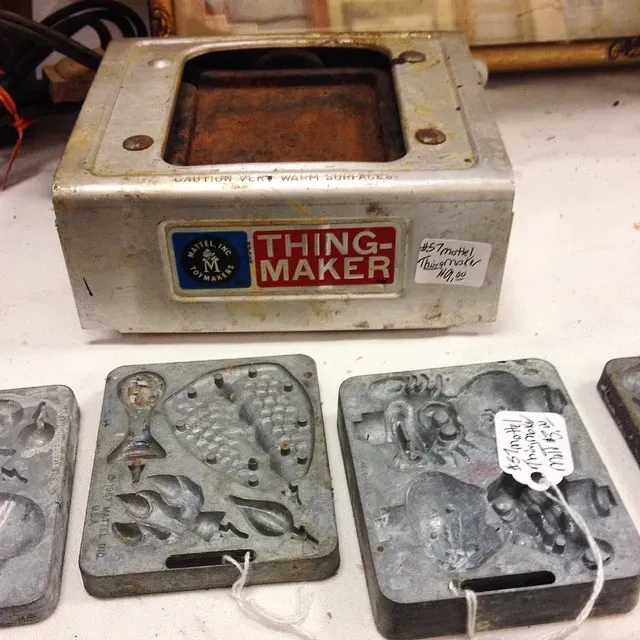
The Creepy Crawlers Thingmaker was a kid’s dream: you poured liquid “Plastigoop” into metal molds, slid them into a heating element, and manufactured your own rubber bugs and monsters. It was creative, hands-on, and genuinely engaging. It was also, by any modern standard, an injury machine marketed directly to children with no apology whatsoever.
The original Thingmaker required kids to handle a metal plate heated to 300 degrees Fahrenheit – with their bare hands. No automatic shutoff. No insulated grip. No meaningful safety warning beyond small-print text on the box. After heat-based toys came under regulatory scrutiny in 1973, the Thingmaker had to be recalled and redesigned. Any toy sold with those original specs today would be pulled before the first shipment cleared the warehouse.
#19 – Wearing No Safety Gear While Skateboarding

Skateboarding exploded in the 1970s, and it did so entirely without the helmet, knee pad, and elbow pad culture that defines the sport today. Kids launched off concrete curbs, ground metal rails, and bombed steep hills in nothing but a T-shirt and sneakers. Wrist fractures, concussions, and serious road rash were so common they were treated as skateboarding’s unofficial entry fee. Parents knew. Nobody stopped anyone.
The first voluntary safety guidelines for skateboarding equipment didn’t arrive until the late 1970s, and mandatory helmet laws for skaters under 18 began appearing in states like California only in the 1990s. Today, skate parks – which dot nearly every American suburb – legally require helmets and pads for all minors. The 1970s version of the sport, played on public streets with zero gear, simply could not exist as a sanctioned activity in the modern regulatory environment.
Worth Knowing
- California was among the first states to mandate helmets for skaters under 18 – but not until the 1990s.
- Most public skate parks today legally require helmets, knee pads, and elbow pads for minors.
- The 1970s skate boom happened on streets and driveways with zero gear and zero oversight.
- The same era produced the half-pipe, the ollie, and a generation of kids with permanently scarred kneecaps.
#20 – Unsupervised Access to Fireworks

A box of Black Cat firecrackers and a lighter were a perfectly normal gift for a ten-year-old boy in 1975. Bottle rockets, sparklers, and M-80s were handed out at Fourth of July gatherings while adults watched from lawn chairs, nursing beers, and watching kids wave burning things in the air. The philosophy was simple: learning to respect fire meant getting close enough to it to understand why you should.
The U.S. Consumer Product Safety Commission estimates that fireworks cause approximately 10,000 injuries annually, and regulatory pressure has steadily tightened the rules around what can be sold to consumers – let alone children. Most states now prohibit certain categories of consumer fireworks entirely. Handing unsupervised bottle rockets to an eight-year-old today would result in a very uncomfortable conversation with a first responder, and possibly with a judge.
#21 – Breathing Secondhand Smoke Absolutely Everywhere

In the 1970s, lighting a cigarette indoors was as ordinary as checking your phone is today. Restaurants, offices, waiting rooms, and airplanes were filled with smoke, with ashtrays placed conveniently on every table and armrest. Kids sat in smoke-filled cars on hours-long road trips with the windows cracked exactly one inch. That was ventilation. Nobody questioned it.
By the 1970s, the Surgeon General had already linked secondhand smoke to serious health risks in children – increased respiratory illness, chronic ear infections, and elevated rates of sudden infant death syndrome – but the cultural shift was glacially slow. Cigarette commercials were still a regular sight on television in the early 1970s until the 1971 broadcast ban took effect. Today, smoking in a car with a child is illegal in several states, and a parent lighting up in an enclosed vehicle with kids present draws not just stares, but potential legal consequences.
#22 – Candy Cigarettes as a Standard Childhood Treat

Candy cigarettes – made of sugar, bubble gum, or chalky confection – were sold in corner stores and penny candy shops throughout the 1970s. Kids held them between their fingers, took fake drags, and mimicked exactly what they saw adults doing. The packaging faithfully replicated real cigarette brands. It was a product whose entire marketing premise was teaching children that smoking looked cool.
Studies found that children who regularly used candy cigarettes were more likely to go on to try real cigarettes. The concern wasn’t the sugar – it was the behavioral conditioning. Canada and most of the EU have since banned candy cigarettes outright. In the U.S., they technically still exist but have nearly vanished from mainstream retail. A candy deliberately shaped like a cigarette and aimed at children is now treated as a public health issue – not a nostalgic treat.
#23 – Playing on a Slip ‘N Slide as an Older Kid

Slip ‘N Slide, introduced by Wham-O in 1961 and enormously popular throughout the 1970s, was a bright yellow plastic strip attached to a garden hose. Kids of all ages – toddlers, teenagers, and the occasional dad who’d had a few beers – launched themselves down it at full speed, landing in whatever was at the end: a muddy puddle, a garden border, someone’s shins.
Wham-O eventually issued a public warning advising that the Slip ‘N Slide should only be used by children under 12, after a string of serious injuries to teenagers and adults who suffered spinal cord damage hitting the end of the slide. Older users with more body mass were landing entirely differently than small children – with catastrophic results in some cases. The toy isn’t banned outright, but the age restriction is medically justified, and no parent in the 1970s was reading any warning carefully before handing the hose to a 15-year-old and cheering them on.
#24 – Roaming the Neighborhood Without Any ID or Contact Information

In the 1970s, kids left the house in the morning and returned at dinner with no way for parents to contact them and no way for anyone to identify them if something went wrong. Grade-schoolers wandered miles from home without cell phones, without any form of identification, and without a way to call for help. The community was the safety net – neighbors knew whose kid was whose and kept an informal collective eye out.
Today, parents who let young children roam without any contact method face not just social judgment but, in some states, legal consequences. Multiple “free-range parenting” cases in the 2010s made national headlines when parents were investigated after their children were seen walking home from school alone. Utah became the first state to formally legalize free-range parenting in 2018 – which tells you exactly how far the pendulum had swung since the decade of the latchkey kid.
#25 – Working Real Jobs on Farms as Young Kids

In rural America during the 1970s, it was perfectly normal for children as young as seven or eight to work alongside adults in physically demanding environments. Farms, fishing operations, and family businesses routinely relied on child labor that would trigger immediate regulatory intervention today. Children operated heavy machinery, handled sharp tools, worked in extreme heat, and logged hours that would be flatly illegal under modern child labor law.
The Fair Labor Standards Act has protected children from hazardous labor since 1938, but agricultural exemptions remained – and still remain – strikingly broad. Children on family farms had far fewer legal protections than kids working in any other industry. Today, those agricultural exemptions are under serious legislative scrutiny, and the image of a nine-year-old operating farm equipment unsupervised is no longer treated anywhere as a wholesome rite of rural passage.
#26 – Swimming Without Lifeguards or Any Real Supervision

Swimming holes, rivers, quarry lakes, and backyard above-ground pools were the 1970s summer headquarters. Kids swam for hours in places with no lifeguards, no lane ropes, no depth markings, and no adults watching from anywhere nearby. They swam in murky water without knowing how deep it got or what was on the bottom. Drowning was – and remains – one of the leading causes of accidental death in children under 14, yet the casualness of water supervision in the 1970s was breathtaking by any modern standard.
Today, public pools in the U.S. are required by law to maintain specific lifeguard-to-swimmer ratios, and many municipalities require swimming lessons for children enrolled in summer programs. Homeowners with pools face strict fencing requirements designed specifically to prevent unsupervised child access. The idea of dropping a group of eight-year-olds at a river bend and telling them to be home by dinner would put a parent on the wrong side of a neglect investigation in most modern counties.
Fast Facts: Water Safety Then vs. Now
- In the 1970s, unsupervised swimming in rivers, quarries, and ponds was routine and largely unregulated.
- Drowning remains a leading cause of unintentional injury death in children ages 1 to 14.
- U.S. law now requires specific lifeguard-to-swimmer ratios at public pools.
- Most states mandate pool fencing for residential pools to prevent unsupervised child access.
- Many summer programs today require proof of swim competency before children can enter open water.
#27 – Getting Paddled by Parents in Ways Now Classified as Abuse

The line between discipline and abuse was drawn very differently in the 1970s – and in many households, it wasn’t drawn at all. Belts, wooden spoons, and switches were standard household disciplinary instruments, used without question or apology. What some families practiced went well beyond a quick swat on the back end. It happened at the dinner table, in the living room, and sometimes in public, and nobody called anyone.
According to the American Academy of Pediatrics, less than 35% of present-day parents report having spanked a child – a steep drop from previous generations. Today, 63 countries worldwide have banned all forms of corporal punishment of children, including by parents. In the U.S., the legal line between discipline and abuse has shifted significantly, and what was routine parenting in 1974 would land some families in family court today. The AAP now officially recommends against spanking in any form.
#28 – Playing With Toys Containing Actual Toxins
Beyond Clackers, the 1970s toy market was loaded with products containing materials now classified as hazardous. Mercury showed up in certain Fisher-Price toys, including Little People figures and play sets that kids chewed on, handed to younger siblings, and left on floors for toddlers to find. Lead was present in paint finishes on toys, cribs, and furniture throughout the decade. Nobody in the toy aisle was testing for neurotoxins.
The Consumer Product Safety Improvement Act of 2008 finally set strict limits on lead and other toxic substances in children’s products, requiring mandatory third-party testing before items could be sold. Before that legislation, the regulatory framework was thin and largely reactive – a toy had to hurt someone before it got pulled. In the 1970s, children’s products routinely contained levels of lead and mercury that would trigger immediate recalls today. Chemically speaking, the 1970s toy aisle was a different planet.
#29 – Watching TV Alone, Including Cigarette Ads Before Cartoons

With no parental controls on televisions and no content ratings system worth mentioning, 1970s kids had essentially unrestricted access to whatever was on. That included programming that would require content warnings today – and, for the very early part of the decade, cigarette advertisements running during general broadcast hours that reached millions of children as part of their regular viewing audience.
Cigarette commercials were glamorous, catchy, and omnipresent on American television until the 1971 broadcast ban removed them from TV and radio. But before that ban, a child watching Saturday morning programming might sit through multiple cigarette commercials before the cartoons resumed. Today, children’s programming is regulated under the Children’s Television Act, advertising to children faces specific federal restrictions, and the idea of a cigarette ad running before a cartoon sounds less like history and more like a fever dream.
“The freedom was real. So were the consequences that took decades to show up in the data.”
The hard lesson of 1970s childhood
It’s tempting to read a list like this and call it a story about overprotection. Some of it probably is. But most of it is just evidence – hard-won, sometimes body-count-backed evidence – that a lot of what passed for “normal” in the 1970s was quietly hurting kids in ways nobody had measured yet. The freedom was real. So were the injuries, the lead levels, and the long-term consequences that didn’t show up in the data for decades. What do you remember from this list? Drop it in the comments – and be honest about whether you’d let your own kids do it today.