

Most families assume their home staircase is perfectly fine – until someone ends up in the emergency room. Here’s a sobering reality check: each year more than 1 million Americans injure themselves on stairs – that’s an average of about 3,000 injuries per day, or one every 30 seconds – and the risk increases dramatically with age. The scariest part? The majority of those hazards were completely fixable. Retirees who’ve already navigated close calls or watched a neighbor go through the ordeal know this firsthand. They’ve quietly made changes that most families simply haven’t thought about yet.
The fixes on this list aren’t expensive contractors or dramatic renovations. They’re the kind of specific, low-profile upgrades that only make sense once you understand exactly why stairs turn dangerous as we age. Some of them will surprise you. A few of them might make you look at your own staircase very differently by the time you reach the end.
#15 – Installing a Second Handrail on the Other Side
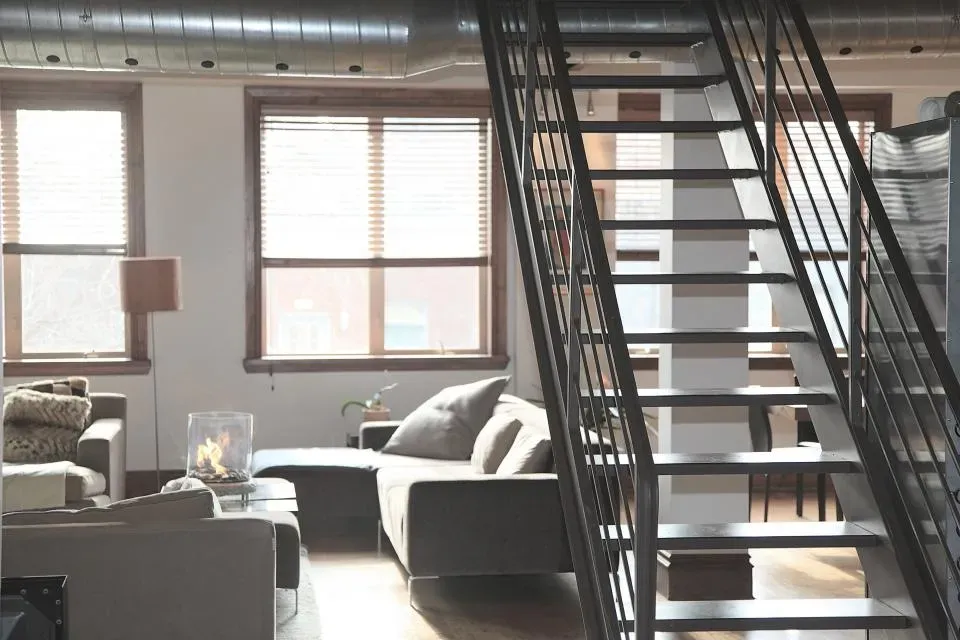
Most staircases in American homes have only one handrail, and most homeowners never question it. But here’s the thing retirees figured out: a handrail is pivotal for stair safety, providing a sense of security and stability, and handrails help manage balance problems that progressively worsen with ageing. The issue is that one rail isn’t enough. If your stronger hand or your better knee is on the wrong side that day – after surgery, after a bad night of sleep – a single rail leaves you exposed.
Only one in the participants of a recent fall prevention study already had two handrails on their home staircase, but most acknowledged that they would feel safer using stairs if they had an extra handrail. Installing rails on both sides helps if you develop balance issues or if you ever feel more comfortable using the handrail on one side than the other – say, after knee surgery. Space can be a concern in narrow stairwells, but the peace of mind on every single trip is worth the trade-off. This is fix number one that experienced retirees recommend to every family member who visits.
#14 – Swapping Decorative Handrails for Grippable Ones
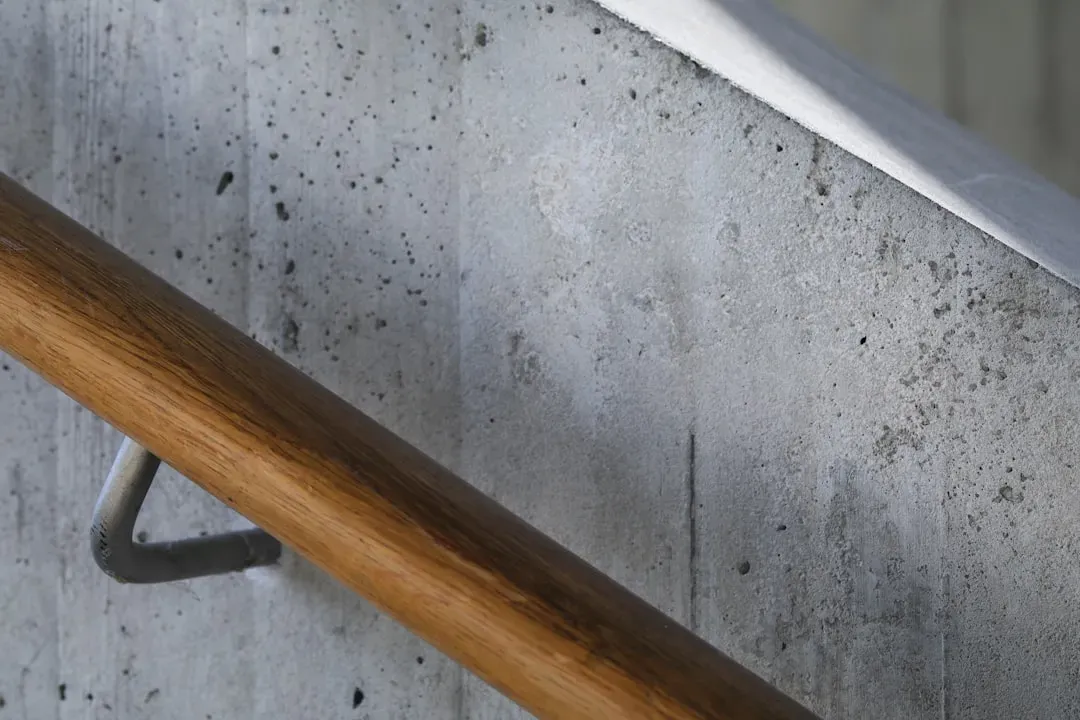
Here’s something most homeowners never consider: not all handrails are actually designed to be gripped in an emergency. The handrail is an often-overlooked safety component that studies consistently show can help with balance and prevent a fall – but unfortunately, handrails in many homes are more decorative than functional. If they are large, bulky, rectangular, or ornately shaped, they can be hard to grip. That beautiful wrought-iron Victorian railing? It might look stunning and provide almost no real security when someone’s balance suddenly gives.
The safest rails are rounded, and your hand should be able to completely encircle the rail when you grasp it. Rails should run the entire length of a staircase, be installed 30 to 36 inches from the floor, and be securely attached to studs in the wall so they don’t rip out if you put a lot of weight on them. Retirees who’ve replaced decorative spindle-top rails with simple round pipe rails say the difference in confidence walking the stairs is immediate and dramatic. Your handrail’s looks are irrelevant if it can’t catch a fall.
#13 – Adding Motion-Sensor Lights at the Top and Bottom of Stairs
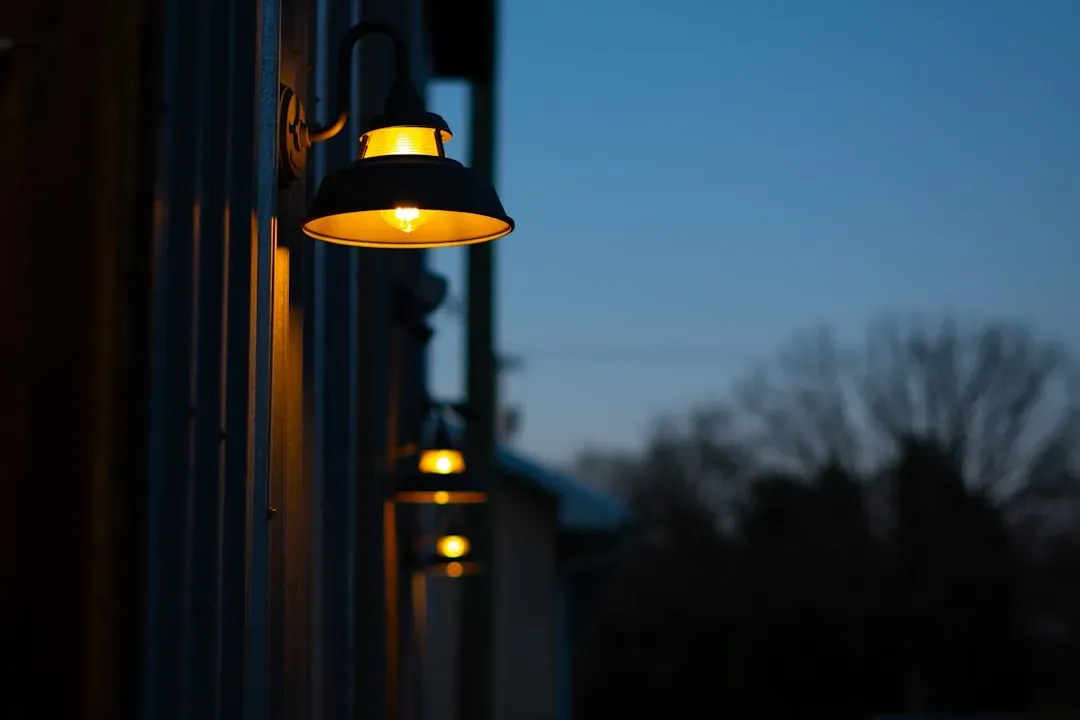
Most people flip a light switch at the top before descending – when they remember. But the midnight trip, the 5 a.m. bathroom run, the groggy morning coffee stumble – those are the moments when nobody’s reaching for a switch. Consider using motion-activated lights that plug into electrical outlets and automatically turn on when you walk by them to help illuminate stairwells and pathways. It sounds simple. Retirees call it one of the single most important changes they’ve made in their entire home.
Motion detector lights at the top and the bottom of a staircase mean that when you need the light to see what’s there, it’s already on. Motion-activated lights in hallways prevent the dangerous navigation that happens when someone wakes at night and doesn’t want to fumble for switches. **The combination of darkness and stair misjudgment is responsible for a huge share of nighttime falls in the home.** Plug-in motion sensors cost less than $20 each at most hardware stores. There is almost no excuse not to have them.
#12 – Eliminating Loose Rugs Near the Top and Bottom Landings
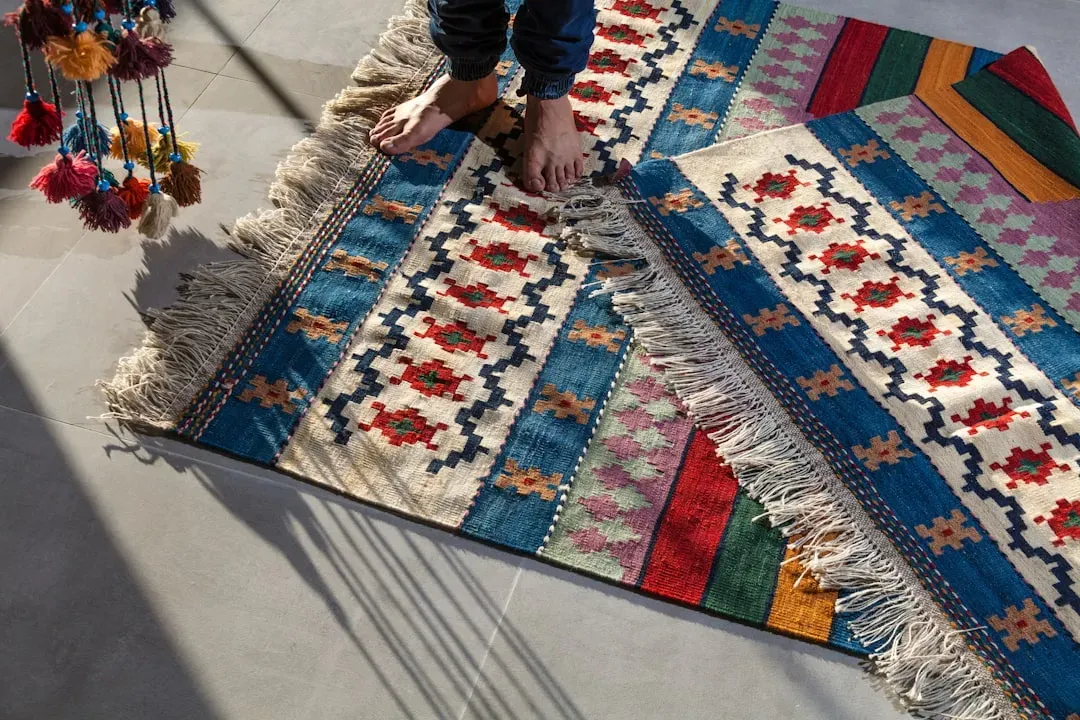
That small accent rug at the base of the stairs looks charming and functions like a trap. Removing any tripping hazards, including rugs at the top or bottom of the staircase and other clutter, is one of the most consistently recommended stair safety steps from professional caregivers. The transition between stair and flat ground is already a disorienting moment for anyone with reduced depth perception or tired legs – adding a rug that can shift underfoot is genuinely dangerous.
A loose rug on or near a staircase is a major trip hazard. If your loved one has rugs near the stairwell, remove them or secure them with anti-slip pads. Loose carpets, cords, and other items that create a tripping hazard should be removed from all walking paths. Retirees who’ve made this fix often say it felt unnecessary right up until the moment they noticed their toe catch the edge one morning. **That near-miss is usually the moment the rug disappears for good.** Families tend to put it back. Retirees know better.
#11 – Replacing Worn or Slippery Stair Treads
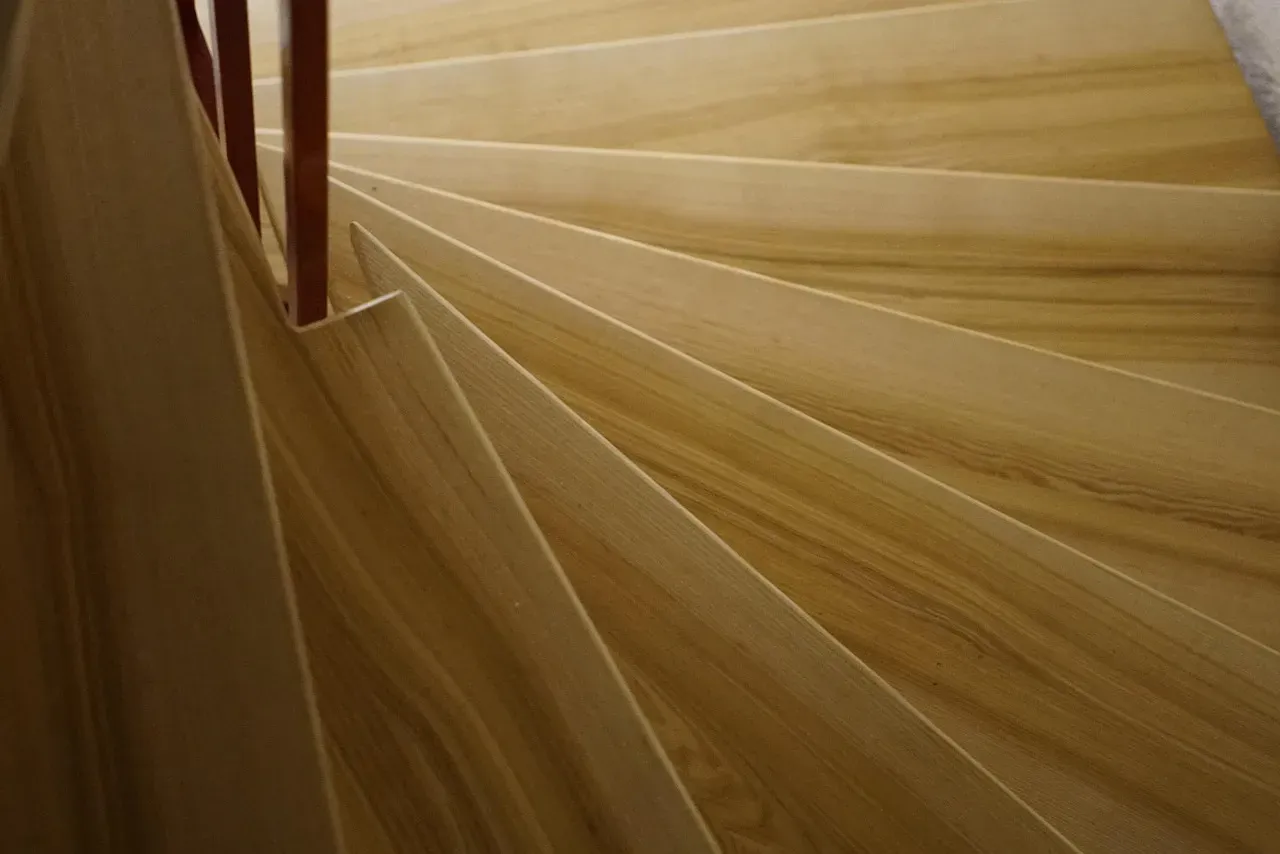
Wood stairs look elegant. They are also notoriously slippery, especially in socks or soft-soled slippers. Bare wooden stairs can be very slippery. Removing old, worn-out carpeting and replacing it with a new, non-slip tread – or installing rubber or vinyl matting – is a practical solution for older adults. The friction is the entire point. A step that gives you grip on the way down is a step that might save a hip.
Home modifications such as installing anti-slip surfaces and removing tripping hazards are vital for enhancing safety and reducing the risk of falls. Self-adhesive non-slip stair treads are inexpensive, come in neutral colors, and can be cut to fit. **Retirees with hardwood staircases who’ve installed rubber or textured treads consistently report feeling significantly more confident, especially on the way down.** Descending is statistically more dangerous than ascending – your center of gravity is shifting forward the entire time, and a slick surface gives nothing to push back against.
#10 – Highlighting Stair Edges with Contrasting Color or Tape
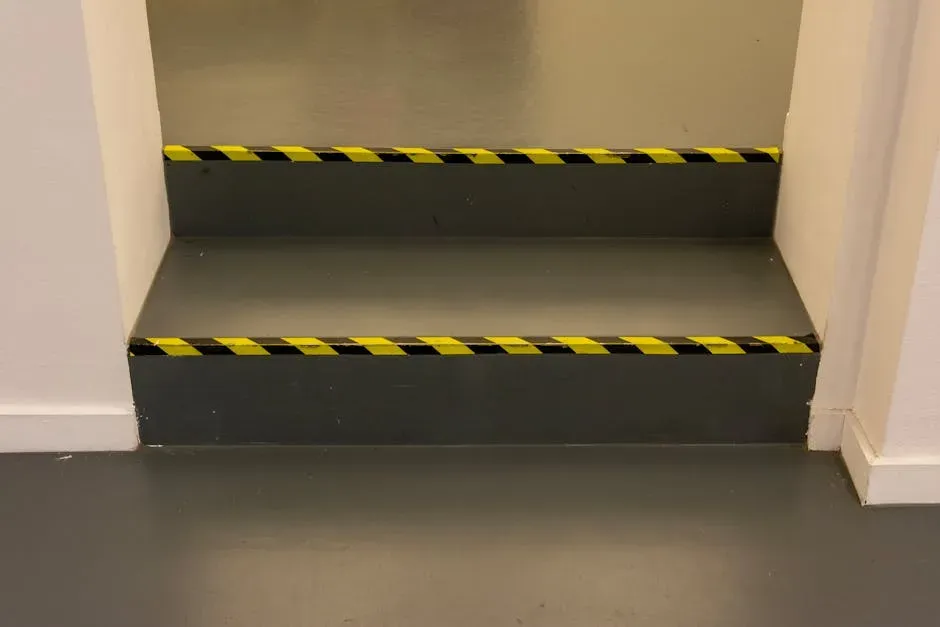
This one sounds almost too simple, and yet it’s one of the most evidence-backed fixes on this list. Depth perception can change with age, making it difficult to see where one step ends and the next begins. Using contrasting colors at the edge of each step – whether with paint, tape, or a tread strip – can make each step clearer and more defined. On a staircase where every step is the same dark hardwood or beige carpet, your brain is doing a lot of guesswork. That guesswork gets worse as we age.
Highlighting the edge of the stairs with bright paint or tape helps a person know exactly where to step. Bright yellow tape, light-colored nosing strips, or even a painted contrasting strip along the lip of each step costs almost nothing and works immediately. This simple visual cue can reduce missteps that lead to falls. Retirees who’ve added edge strips to otherwise uniform-looking stairs say it particularly helps early in the morning before their eyes have fully adjusted. Most families don’t think about visual contrast on stairs at all – they just assume everyone can clearly see where each step ends.
#9 – Installing a Grab Bar at the Bottom Stair Landing
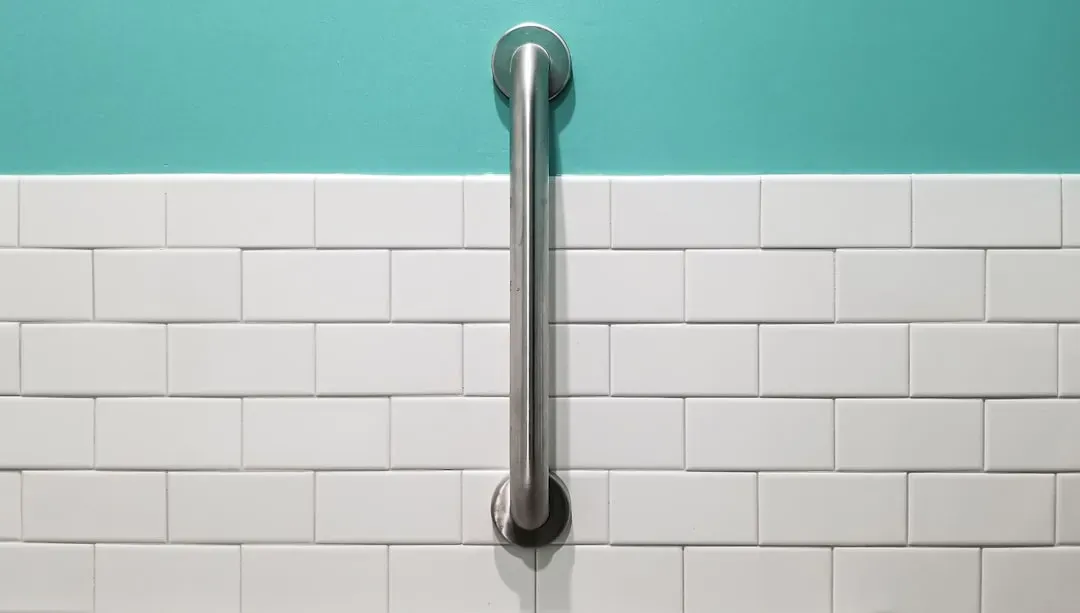
Handrails handle the staircase itself, but the moment someone steps off the last stair onto the landing is its own danger zone – and most homes leave it completely unsupported. Installing a grab bar at the bottom of the stairs or along a mid-landing gives that extra bit of support when it matters most. That transition point is where bodies shift from a stair-climbing gait back to walking, and it’s where misjudged last steps frequently happen.
Staircase rails should run the full length of stairs and extend beyond the top and bottom steps – those transition points where people often lose their grip or misjudge distance. A wall-mounted grab bar at the landing, positioned right where someone would naturally reach after descending, fills the gap that standard handrails leave behind. Just make sure they’re installed into studs or with proper anchors for safety. **Retirees who’ve added landing grab bars say it’s the fix that gets the most comments from visitors who immediately understand why it’s there.** Families almost never think about the landing as a hazard – it’s just the floor. Until it isn’t.
#8 – Keeping Stairs Completely Clear of Stored Items
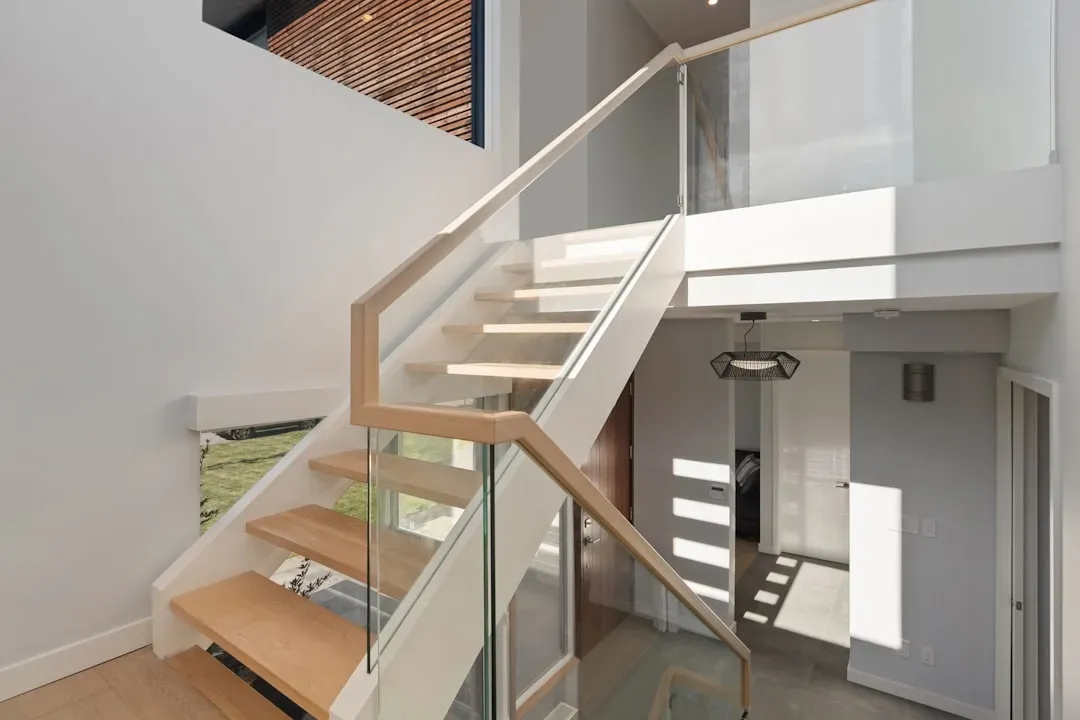
It starts with one pair of shoes. Then a library book that needs to go upstairs. Then a box of donations waiting for pickup. Before long, the staircase has become a informal storage system – and a minefield. Keeping stairs free of clutter is one of the simplest yet most effective fall prevention strategies. Make sure stairs are clear from items like shoes, books, or decorative objects that could cause tripping. The danger is compounded because people carrying items tend to let those items block their view of the steps.
You should hold the handrails when going up or down stairs even when carrying something – and never let anything you’re carrying block your view of the steps. The real fix here is behavioral and environmental together: no items stored on stairs, period, as a household rule. **Retirees who live alone are often better at this than families with children, because there’s nobody else generating the daily drift of shoes and bags onto the steps.** Consider a small basket or shelf at the base and top of the stairs to catch items that need to travel between floors – so they don’t travel on the stairs themselves.
#7 – Wearing Proper Footwear Every Time on the Stairs
Socks on hardwood stairs. Worn-out slippers with smooth soles. Bare feet on polished wood. Retirees will tell you flat out: the footwear choice going up or down is not a small thing. Because many older people wear suboptimal shoes, maximizing safe shoe use may offer an effective fall prevention strategy. Older people should wear shoes with low heels and firm slip-resistant soles both inside and outside the home. This isn’t about formality – it’s pure physics.
Suitable shoes can help reduce trips and falls significantly. Encourage older loved ones to wear shoes or slippers that have a strong grip and avoid using socks or older, worn-out footwear. Stair surfaces and choice of footwear work together to either increase or decrease stair-related fall risk. **The most dangerous combination is socks on bare wooden stairs** – it’s essentially frictionless. Retirees who’ve made a strict house rule about wearing grip-sole slippers or light sneakers every single time they use the stairs say it felt fussy at first and now feels like second nature. Families often let this one slide – sometimes literally.
#6 – Fixing or Flagging Uneven Step Heights
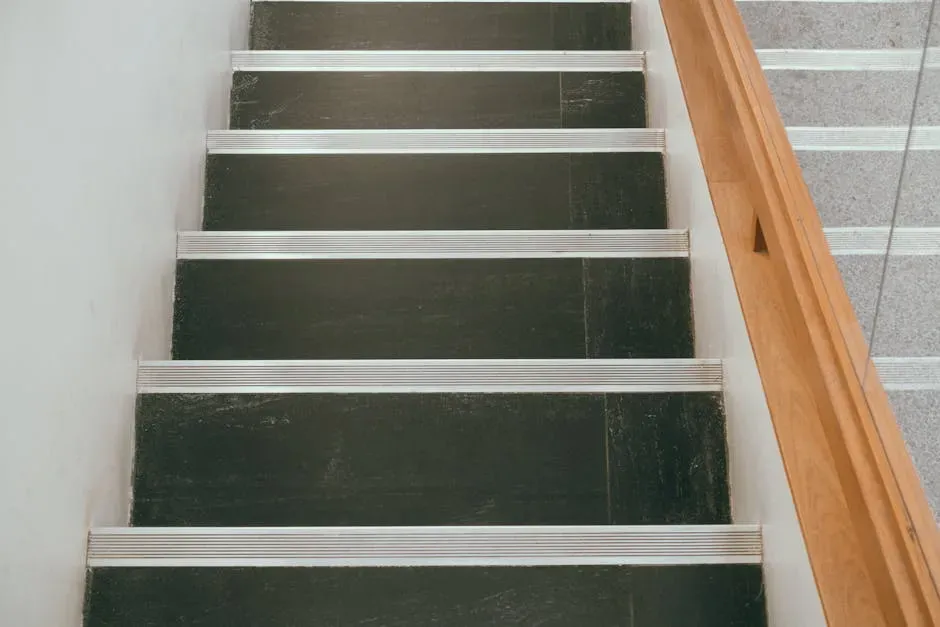
Here’s a hidden hazard that almost nobody talks about until after a fall: inconsistent step heights. To prevent tripping, the horizontal and vertical surfaces of stairs should be uniform, not different widths and heights. A common problem in many older homes is a top step that is wider than the rest, because some builders don’t put a nosing – the section of the tread that overhangs a stair – on the top landing. Your body builds a rhythm when climbing or descending, and even a quarter-inch of unexpected variation can break that rhythm disastrously.
Uniform step height and generous tread depth can reduce the effort it takes to walk up or down stairs. Irregular steps are a hidden danger, especially for older people whose mobility or balance may be compromised. If you have a wider top step, consider hiring a handyman or carpenter to add a nosing to the landing. It’s a simple fix that can significantly increase safety. Retirees who’ve had a professional assess their staircase often discover that their “normal” stairs have subtle inconsistencies they’d never noticed. Once your body knows what to expect, it compensates automatically. When it gets surprised, it stumbles.
#5 – Watching Out for the “Bottom-of-Flight Illusion”
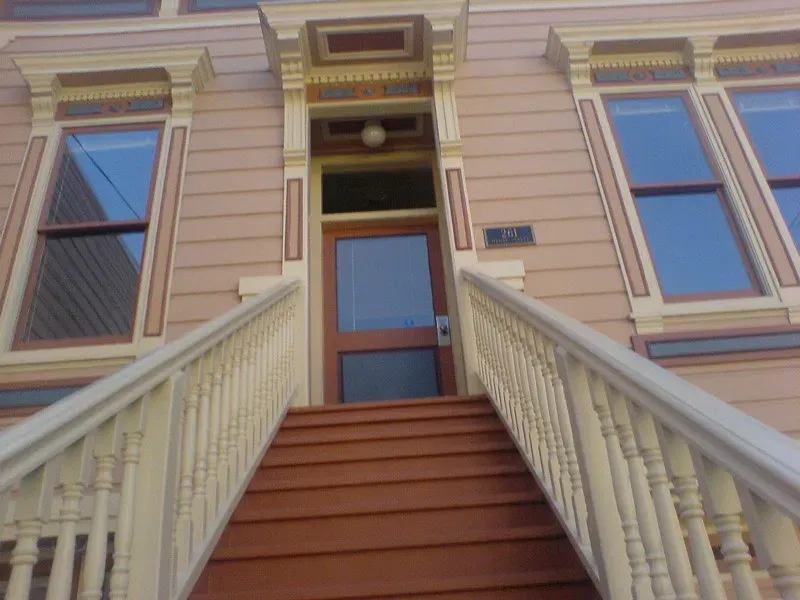
This one has an actual name – which tells you it’s real enough that experts felt it deserved one. Some older homes have a bottom step that blends in with the landing rather than the rest of the staircase, creating a danger for those who mistakenly believe they are stepping onto a flat landing. This design defect is so common that experts have a name for it: the bottom-of-flight illusion. In other words, someone thinks they’re done with the stairs a step early, shifts their weight to walking posture, and then drops onto an unexpected final step.
The fix is visual contrast – same principle as edge-marking every step, but with extra attention to the last one. Make the bottom step visually distinct from both the staircase above it and the landing below it. Bright nosing tape, a contrasting colored tread, or a different material on that final step gives the eye a clear signal that says “last step, then floor.” **Retirees who’ve learned about this illusion say they immediately go home and look at their bottom step in a whole new way.** Most families have never heard of the bottom-of-flight illusion, which is exactly why it keeps causing falls.
#4 – Adding Step-Edge Lighting Inside the Stairwell
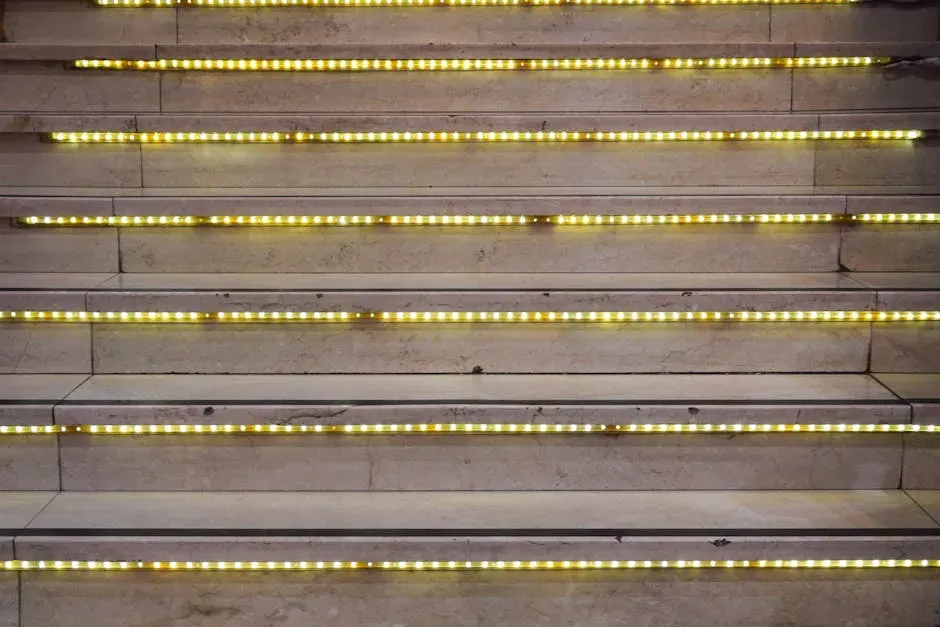
Overhead lights illuminate a staircase from above, which sounds helpful – until you realize that overhead lighting often casts the exact shadow you don’t want: right at the edge of each tread where you need to see most clearly. Stair lighting that illuminates each step edge helps people with depth perception challenges navigate elevation changes safely. The difference between lighting that comes from above and lighting that highlights each edge from the side or below is the difference between visual clarity and guesswork in shadows.
Consider investing in motion sensor lights or LED strip lighting that can be installed along staircases to improve visibility. Effective placement means positioning lights to illuminate each stair tread, minimizing shadows that might hide potential hazards. LED strip lights installed along the base of each riser – the vertical face of each step – cost relatively little and can transform a shadowy staircase into a well-mapped descent. Ensure there is good lighting with light switches at the top and bottom of stairs. **Retirees who’ve added riser-level LED lighting say nighttime stair trips went from feeling risky to feeling routine.** Most families only think about the overhead bulb. That’s rarely where the problem is.
#3 – Checking Handrail Anchoring Into Wall Studs (Not Just Drywall)
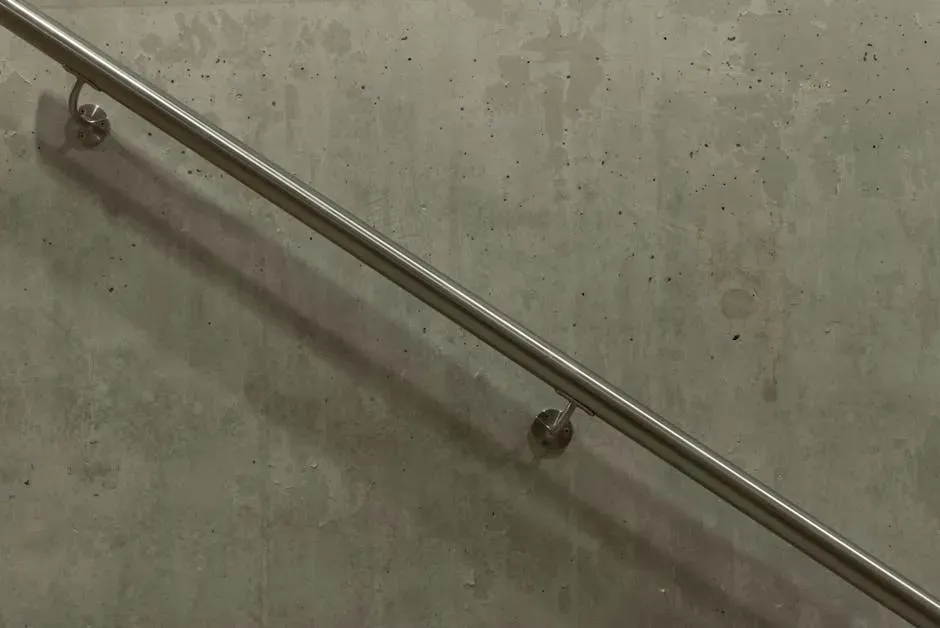
This is the fix that surprises families the most when they finally look into it – and it’s one that retirees who’ve done a home safety walkthrough with an occupational therapist almost always discover. A handrail that’s bolted only into drywall can pull free under sudden pressure. That’s exactly the moment – a slip, a stumble, a hard grab – when you need it to hold fast. The integrity and construction of walls are real concerns for fitting handrails, because oftentimes the wall is not fit for a handrail.
Rails should be securely attached to studs in the wall so they don’t rip out if you put a lot of weight on them. This is not a detail – it’s the whole point of having a handrail at all. A handrail that rips from the wall during a fall doesn’t prevent a fall; it just adds a wall-damage cleanup to the emergency. Inspect the railings for any signs of wear, loose screws, or damage, and repair them immediately to maintain safety. **Retirees who’ve had a safety professional check their handrail anchoring are frequently stunned to discover the rail wobbles noticeably when tested with real body weight.** Do this test today. Grab your handrail and pull hard. If anything moves, it needs to be fixed.
#2 – Doing a Formal Home Safety Walkthrough with an Occupational Therapist
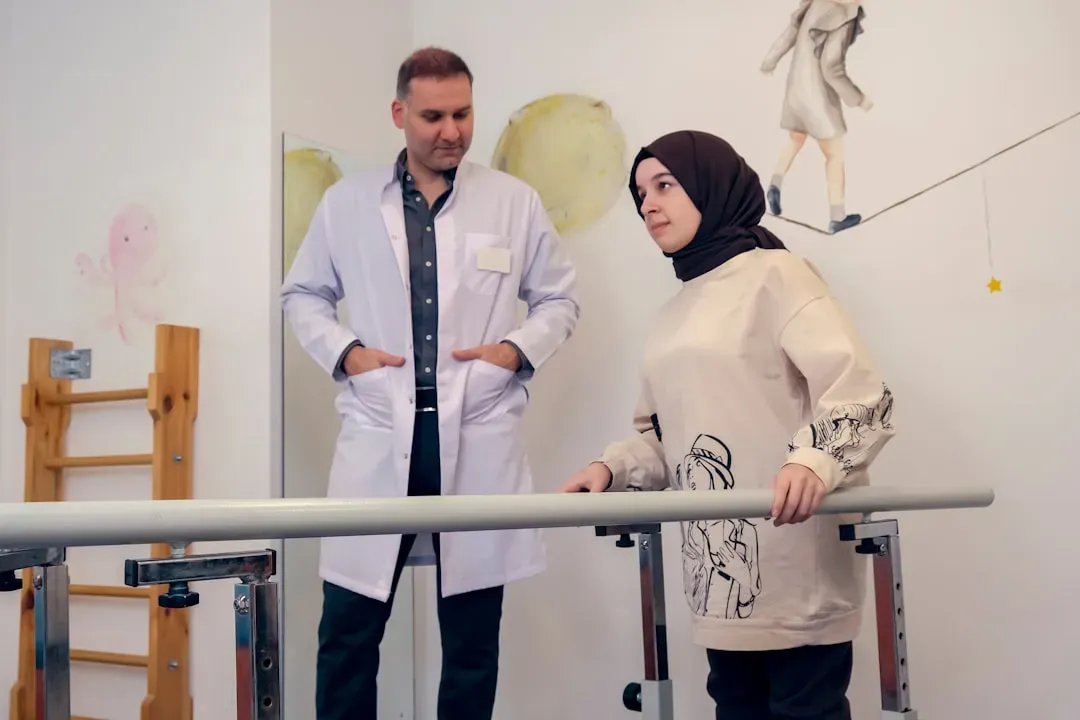
Most families DIY their safety assessments – they walk through the house, note the obvious stuff, and assume they’ve caught everything. Retirees who’ve actually had a professional home safety assessment done describe the experience as eye-opening in ways they never expected. If you have fallen, your doctor might suggest that an occupational therapist, physical therapist, or nurse visit your home. These health care providers can assess your home’s safety and advise you about making changes to lower your risk of falls.
The difference between a family looking around and an occupational therapist doing an assessment is the difference between a casual glance and a structured protocol. CAPS specialists and occupational therapists can tailor safety plans and help with funding for stair safety improvements. The key insight many families miss: grab bars and other supports work best when positioned for the specific movements someone struggles with most, not just in standard locations. **Most OT home visits uncover between 5 and 10 hazards the family had never considered.** The staircase almost always produces multiple surprises. Booking one of these visits is the single highest-leverage thing a family can do before something goes wrong.
#1 – Treating the “Fear of Falling” Cycle as a Safety Issue Itself
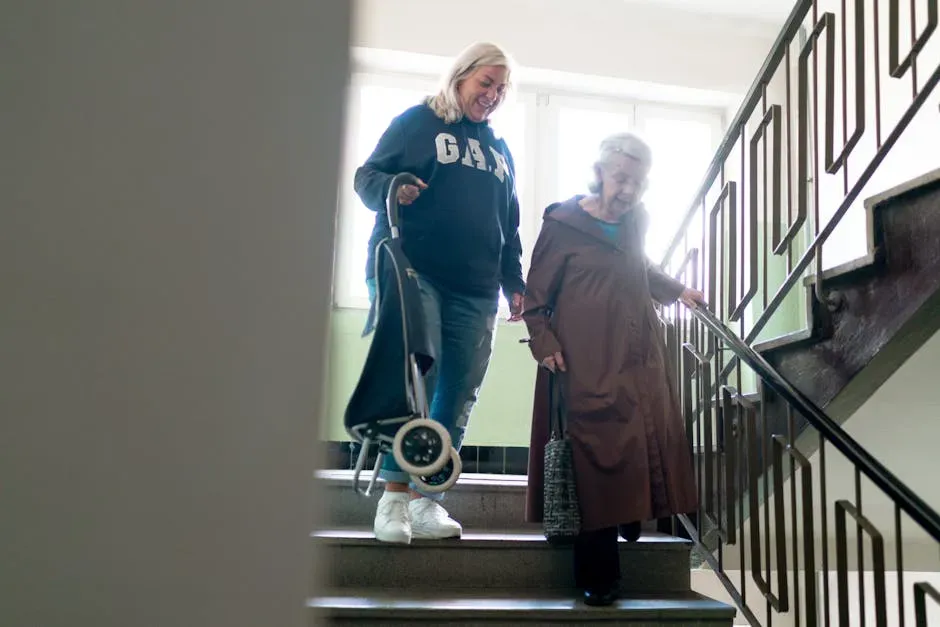
This is the fix retirees talk about most urgently – and the one families least expect to hear. After a close call or a fall on the stairs, something shifts psychologically. Falling down stairs often triggers a cycle of fear that can severely limit a senior’s independence. This fear frequently leads to decreased physical activity, which ironically increases the risk of falling even further. The emotional toll can be just as damaging as the physical one, often resulting in social withdrawal and isolation.
The cruel irony is that avoiding the stairs – or tensing up in fear every time you use them – actually makes a person weaker and more likely to fall in the future. Sarcopenia, the age-related decline in muscle mass and strength, has been connected to difficulty standing, walking, and climbing stairs, and may contribute to a risk of falls, fractures, and other serious injuries. **The physical fixes mean nothing if fear has already made the staircase feel like an enemy.** Retirees who’ve worked through this – through targeted exercise, better stair modifications, and honest conversations with their doctors – describe reclaiming their confidence as more important than any single hardware upgrade. Fix the stairs. Then fix the fear. Both matter.
The common thread running through every single fix on this list is that retirees learned about them through experience, research, or a close call – not from a passing thought. Families almost never dig into stair safety until someone is already hurt. If even two or three items on this list made you think about your own staircase differently, that’s exactly the point. The staircase in your home is used dozens of times a day. It deserves more than a quick glance. Share this with someone who has aging parents at home – it might be the most useful thing they read all year.