


Something shifted in the way Europeans talk about summer. It used to be the season of terraces, long dinners outside, and gentle complaints about a “warm spell.” Now the conversation is different, filled with heat alerts, closed schools, and a scramble to find a working fan before the shops run out.
The numbers behind that shift are stark, and so is the gap between how hot the continent has become and how few homes are actually equipped to deal with it. Understanding both halves of that story, the heat and the missing cooling, says a lot about where Europe is headed.
A continent warming faster than almost anywhere else
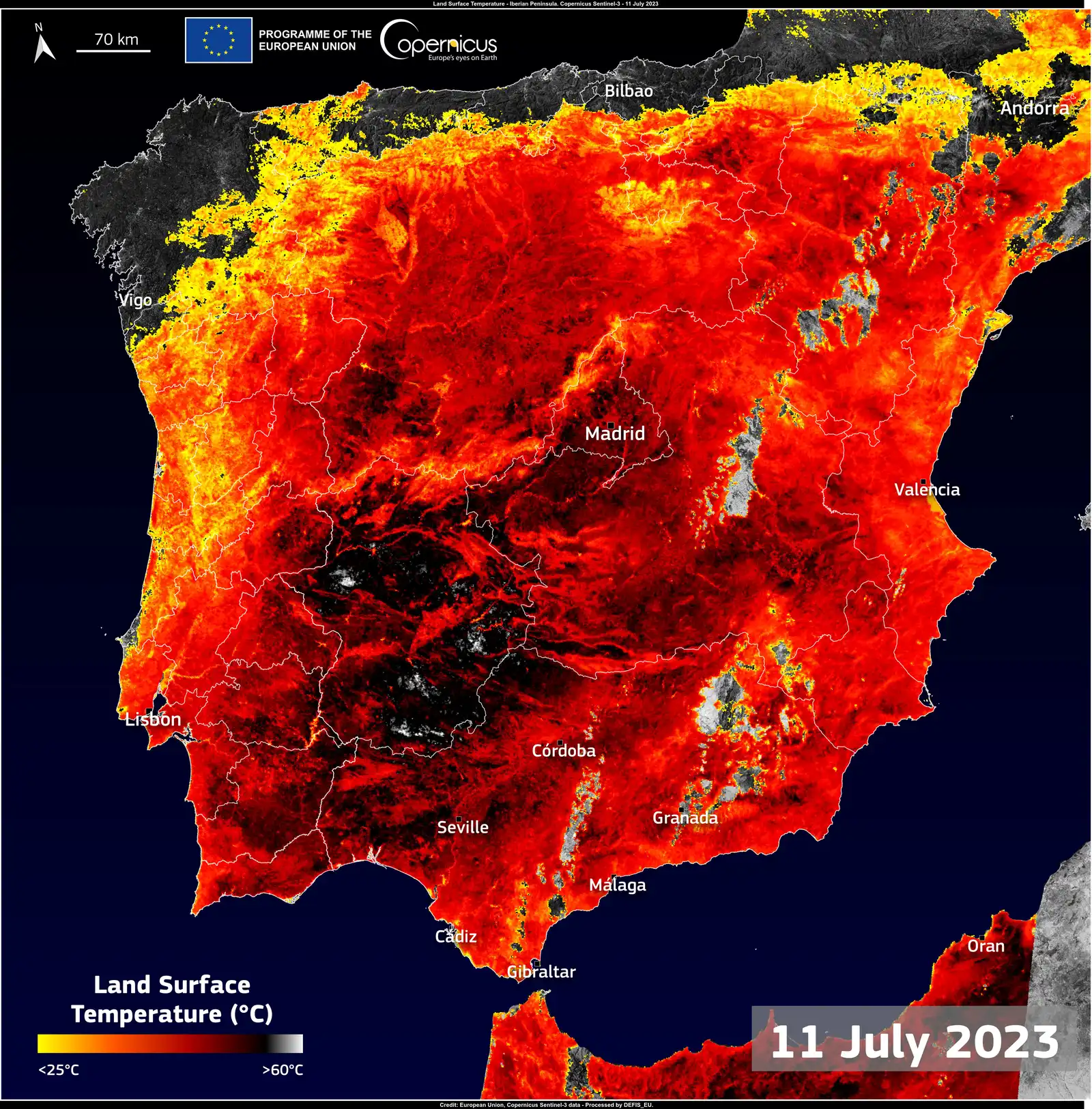
Europe is not just experiencing hotter summers by coincidence. Europe is the world’s most rapidly warming continent, and the World Health Organization has pointed out that it is heating at roughly twice the pace of the rest of the planet. A senior WMO climate scientist framed the shift bluntly, noting that “In the 50 years since the historic heatwave in 1976, Europe as a whole has warmed by around two degrees.”
That two degree shift sounds modest until you see what it does to extremes. Western Europe experienced its warmest June on record in 2026, with an average temperature of 20.74°C, 3.05°C above the 1991–2020 average for June, surpassing the previous record set in June 2025. Records are not just being broken, they are being broken repeatedly, in consecutive years, which is exactly the pattern climate scientists warned about.
The 2026 heatwaves rewrote the record books

The scale of what happened across Europe in the late spring and summer of 2026 was extraordinary even by recent standards. Temperature records were broken in Austria, Belgium, Czechia, Denmark, France, Germany, Hungary, Italy, the Netherlands, Poland, Romania, Spain, and the United Kingdom. A researcher summary described it starkly: a heat dome parked over Europe drove what researchers are calling the worst heatwave ever recorded on the continent, with Germany breaking its all-time record, Spain hitting 45.1°C, and the UK beating its June record three days running.
France experienced its hottest day in nearly eight decades of measurement. Météo-France declared 23 June the country’s hottest day since measurements began in 1947, with temperatures reaching 44.3 °C (111.7 °F) in Pissos. By early July, a second heat dome had reloaded over the region, with daytime highs running 10 to 15°C above normal and the Iberian Peninsula and southern France pushing back into the low to mid 40s°C, while major wildfires burned from Portugal through Spain into southern France.
What’s driving these relentless heat domes
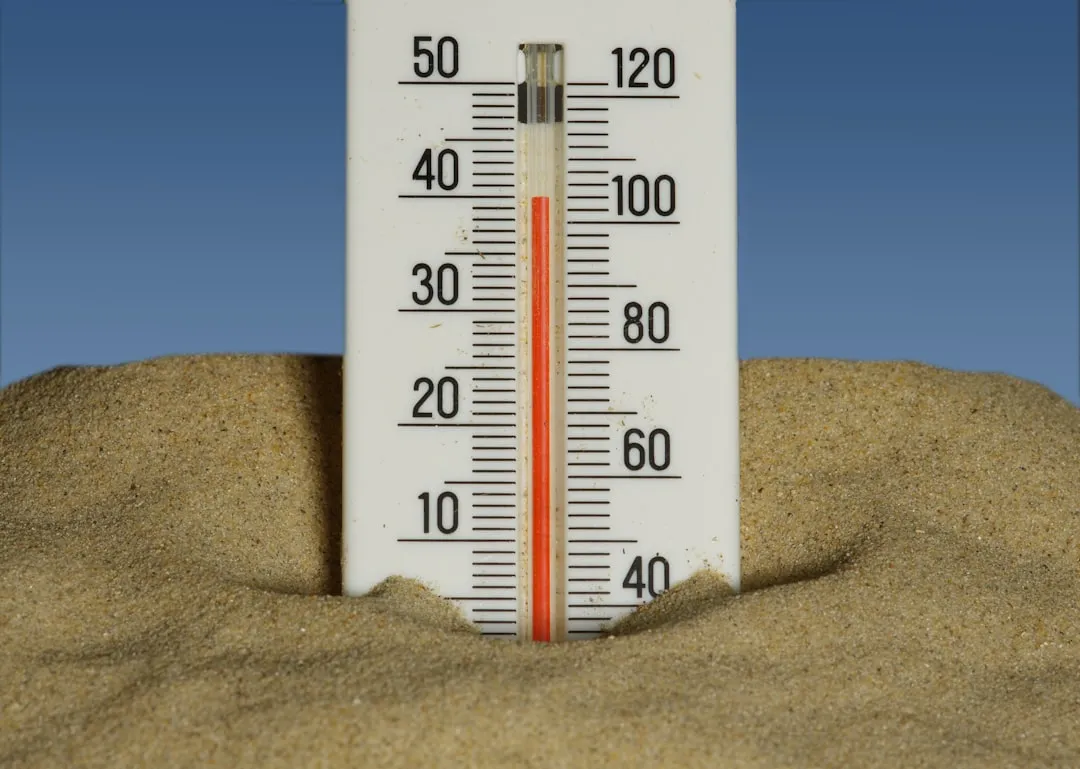
Meteorologists have a specific explanation for why the heat has been so persistent rather than a quick, sharp spike. The heatwave has been sustained by what meteorologists call an omega block, a weather pattern named for the Greek letter because of the shape it creates in the atmosphere, trapping hot, dry air from North Africa over a region as low pressure systems on either side prevent it from moving away. The result has been genuinely abnormal, with temperatures pushed up to 18°C above their seasonal average in some places.
Scientists who study the link between individual weather events and long-term warming have been unusually direct about this one. The World Weather Attribution group of scientists has said the heatwave would have been “virtually impossible” this early in summer without climate change. That is not a vague warning about the future. It is a statement about an event that already happened, measured against a climate that no longer resembles the one earlier generations grew up in.
Nights that never really cool down

Daytime highs get the headlines, but the more dangerous trend may be happening after dark. A “tropical night” is a term widely adopted in some regions such as Europe and parts of Asia, defined as a night where the temperature does not drop below 20°C. During the 2026 heatwaves, these nights became common rather than exceptional, and some readings went far beyond that threshold.
The physiological stakes of warm nights are significant. As one WHO-WMO climate and health advisor put it, night time is when the body is supposed to recover, since core temperature drops and the cardiovascular system rests, but when nights stay warm that recovery does not happen, which is why minimum temperatures can be more telling than the peak afternoon high when assessing a heatwave’s health impact. One eastern German weather station recorded an overnight low that barely qualifies as “cool” by any historical standard, with the mercury in the eastern town of Kubschuetz not dropping below 29.4°C, the warmest night since records began almost 150 years ago.
Counting the human cost

The mortality figures from recent European summers are sobering. The 2025 heatwaves were associated with an estimated 16,500 excess deaths, while the 2026 heatwaves were associated with an estimated 20,390 excess deaths. The WHO’s director general offered a real-time snapshot during the height of the crisis, reporting that more than 1,300 excess deaths have been recorded in Europe since 21 June, including children who died in locked cars and young people who drowned seeking relief in unsupervised swimming spots.
Spain’s official mortality tracking system illustrates how quickly the toll compounds. The number of heat-related deaths in Spain between May 16 and September 30 last year hit 3,832, an 87.6 percent increase from the same period in 2024. The pattern of who dies has stayed consistent across decades, and it tends to be older adults living alone, often in the very homes least equipped to cool down.
Just one in five homes has air conditioning
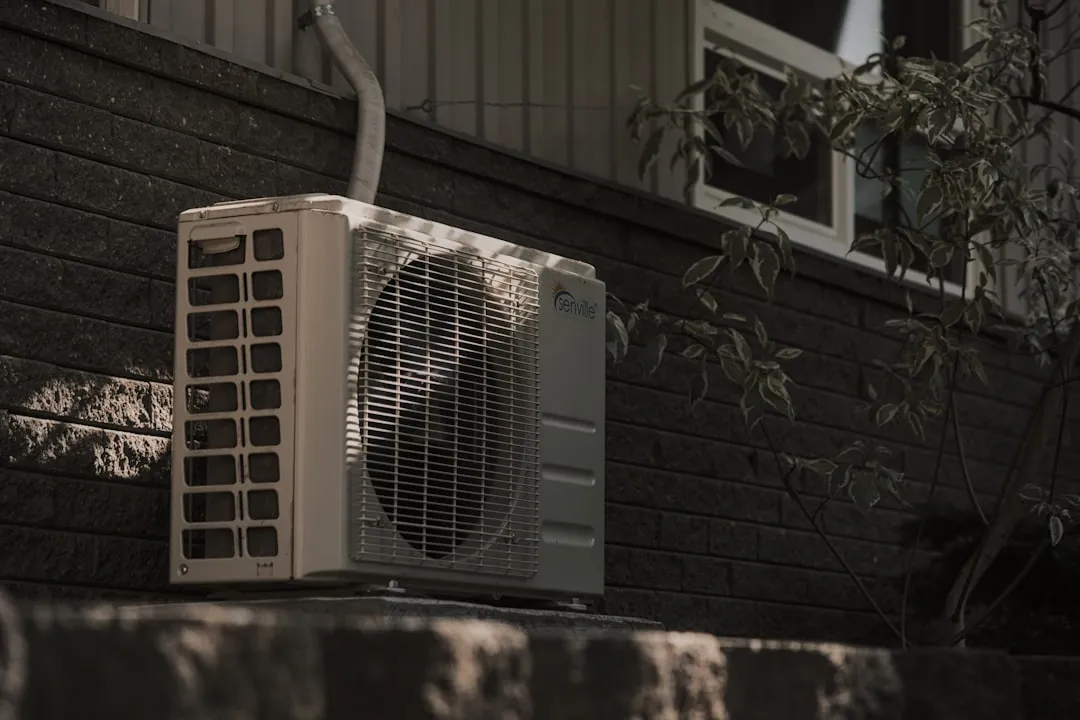
Here is the number that explains most of the suffering described above. Only about 20% of European homes have air conditioning, and much of the continent’s housing stock was built to retain heat rather than shed it. The comparison with the United States is jarring, since approximately 90 percent of American households have air conditioning, according to the US Energy Information Administration, while around 20 percent of European households have it, according to the International Energy Agency.
Regional breakdowns show just how uneven that 20 percent really is. A WRI analysis of household data found that the share of households with air conditioning units by region in 2022 revealed that Europe, at 19 percent, lagged behind North America at 76 percent and the Asia-Pacific at 47 percent, falling well below the world average of 37 percent. In the United Kingdom specifically, one industry estimate put adoption at less than 5% until quite recently, though that figure has since moved.
Buildings designed for a different climate

Part of the explanation is architectural rather than cultural. Southern European homes were often built with a completely different climate strategy in mind, since many homes were built with thick, white-painted walls, small windows and shutters to keep the sun out and cool air in. That system worked reasonably well for centuries, right up until it stopped being enough.
Northern Europe faces the mirror image of that problem. Houses across places like Germany, the Netherlands, and the UK were engineered to trap heat through long, cold winters, and now houses designed to retain heat during the winter have become furnaces in sweltering summers. Retrofitting that much housing stock is neither quick nor cheap, which is one reason the gap between the need for cooling and the supply of it has been so slow to close.
Old habits, old superstitions
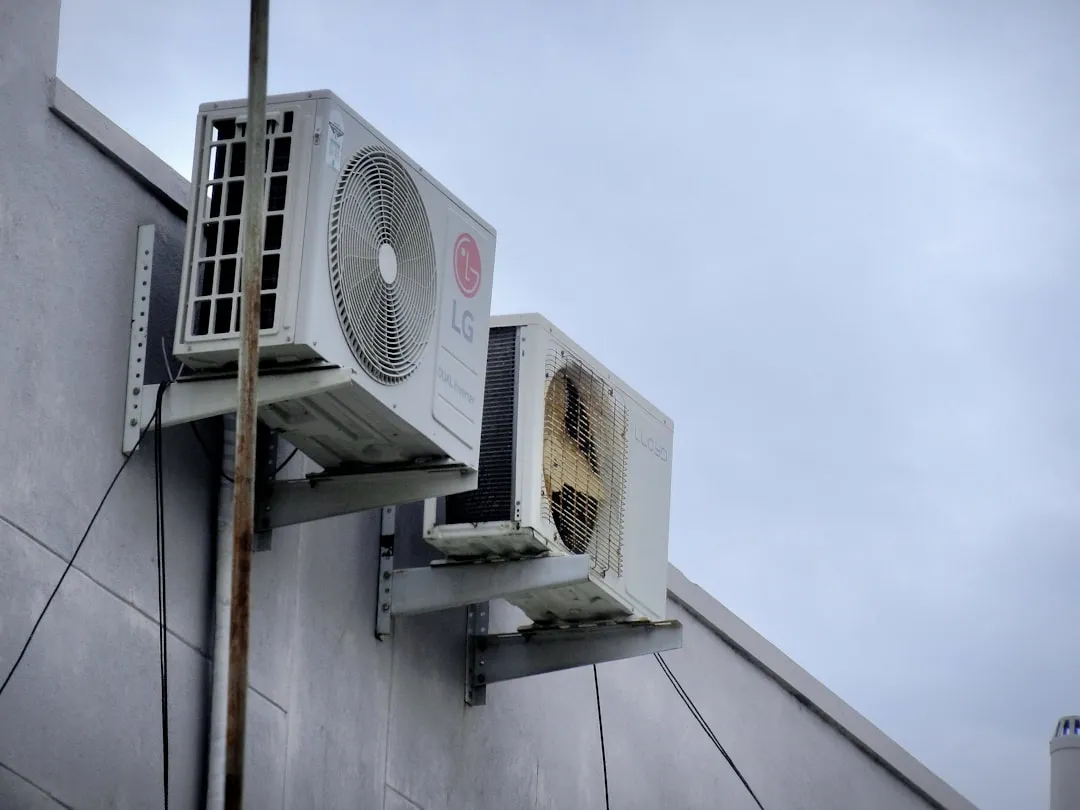
Beyond bricks and mortar, there is a cultural layer to Europe’s AC hesitancy that is harder to measure but very real. In France specifically, air conditioning is widely viewed as a maladaptation to climate change, though the 2026 heatwave engendered more public discussion of the role of air conditioning in the country. Part of that resistance traces back to a specific folk belief about temperature shock, since French resistance toward air conditioning may be influenced by a superstition of choc thermique, the supposed tendency for air conditioning to cause fainting, nausea, or viral illness by virtue of the temperature differential moving from outdoors to indoors.
That belief is not confined to France, and it is not medically accurate. A superstition persists in Europe more widely that cold air causes illness, when in reality illnesses such as influenza and colds are caused by viruses. There is also a simpler, more stoic strand of thinking at play, a sense that previous generations survived without cooling, so perhaps this one should too, even as the climate they are surviving in has fundamentally changed.
The environmental trade-off nobody loves

Even Europeans who want air conditioning often feel conflicted about installing it, and the guilt is not irrational. Air conditioning accounts for 4% of global greenhouse gases, according to a 2022 study, double that of the aviation industry. Scale that forward and the numbers get harder to ignore, since the continent is expected to have doubled its stock of air conditioners by 2050, according to the International Energy Agency.
The paradox is genuinely circular. Wider adoption of conventional cooling in response to heat then adds to the emissions driving that same heat, creating a feedback loop that experts openly acknowledge. Some analysts argue the path forward is not more air conditioning of the same kind, but a shift toward solar-powered, energy-efficient units rather than the grid-straining adoption of conventional AC, though uptake of that model has been slow.
Where the numbers are already changing

Italy offers the clearest case study of how fast adoption can move once a country decides it has had enough. In the summer of 2003, an estimated 10 to 15 percent of Italian households had AC units, but by 2024 that number had soared to 56 percent, according to the National Institute of Statistics. That single shift has made Italy the country to watch, and it now accounts for one third of electricity use on air conditioning in the European Union, according to EU data.
Britain, historically one of the least air-conditioned countries in Europe, is moving in the same direction, if more slowly. Roughly four million homes now have AC, twice as many as three years ago, according to price comparison and utility switching service USwitch. Installers on the ground are seeing the demand firsthand, with one company executive describing a 25-30% annual increase in installations since the residential lockdowns of the COVID-19 pandemic. Even so, Germany’s adoption rate remains comparatively modest, sitting close to the continental average rather than surging ahead.
Final thoughts

Europe’s heat problem and its cooling problem are really the same story told from two angles. The continent is warming faster than almost anywhere else on Earth, its summers are producing records that used to be rare and are now routine, and the infrastructure built for a milder climate has simply not caught up.
What happens next will likely be uneven, country by country, shaped as much by memory and habit as by temperature charts. Italy’s rapid shift after 2003 suggests that behavior can change quickly once a heatwave becomes personal rather than statistical. Whether the rest of the continent follows that path, or finds another way to cope with summers that show no sign of cooling off, remains an open question with real consequences attached.