
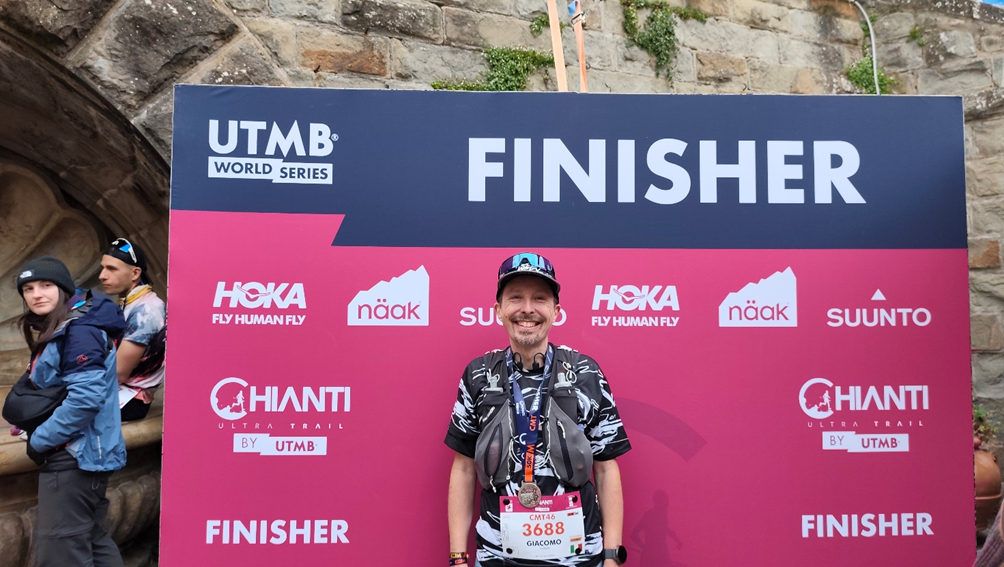
There’s an excellent way to explore new places and appreciate them through a very special lens: trail and ultra trail running. Beyond the obvious appeal—moving freely across countryside, mountains, coastlines, and forests, often in near solitude—this approach leads you somewhere unexpected. Races become gateways to lesser-known destinations, places chosen not for mass tourism but for their terrain, character, and authenticity. If running isn’t your thing, borrow someone else’s passion in the family. That’s what I did.
Last weekend revolved around the Chianti Ultra Trail, part of the UTMB World Series—one of the most prestigious global circuits in trail and ultra trail running. UTMB stands for Ultra-Trail du Mont-Blanc, the legendary race around Mont Blanc that evolved into an international network of events sharing the same standards: demanding courses, exceptional landscapes, and a strong sense of community. Being part of this circuit means attracting runners from across the world, all chasing qualification points, performance, or simply experience. In Chianti, that translated into a village (and its vicinity) entirely reshaped by the rhythm of the race.
Radda in Chianti: A Village in Motion
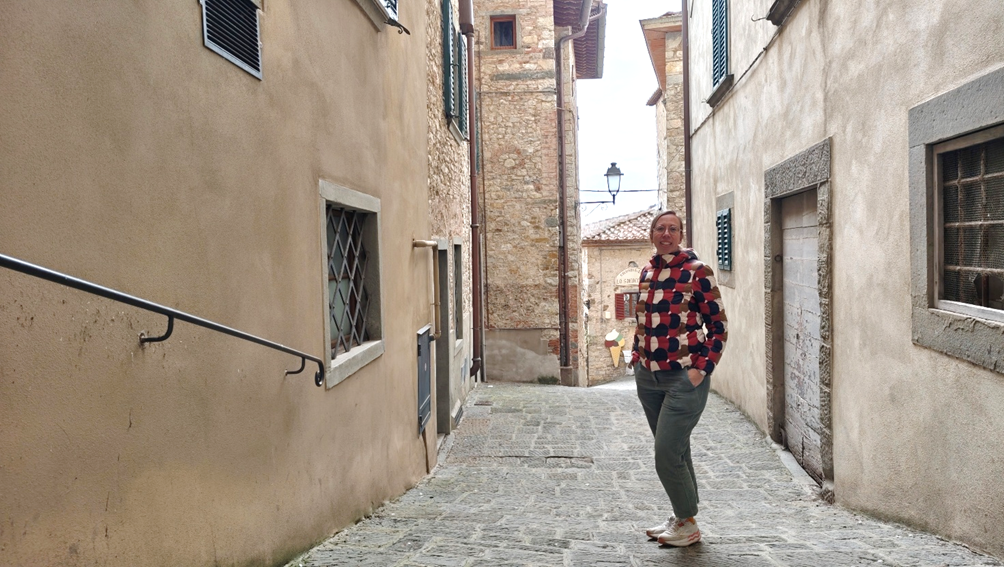
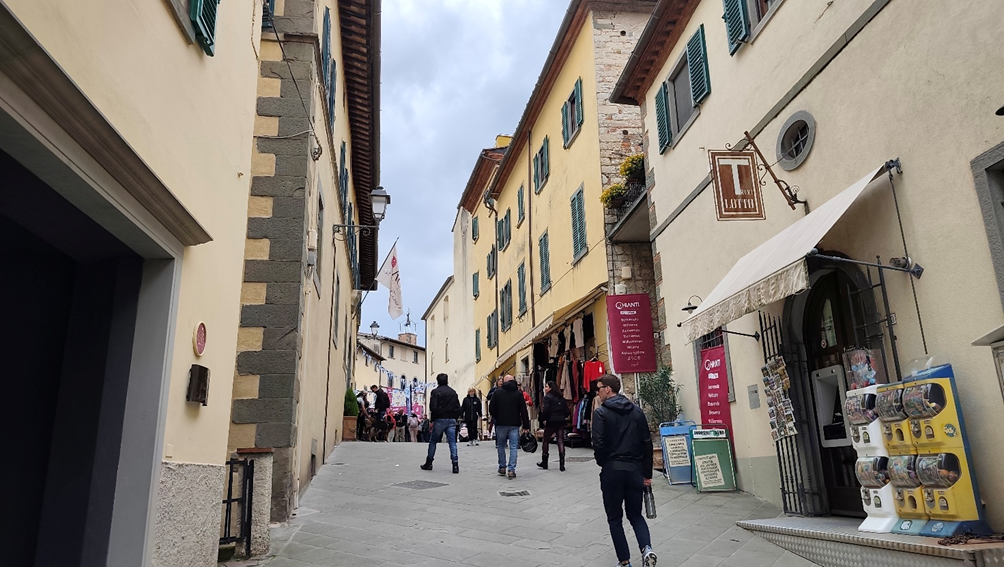
Radda in Chianti sits at about 1,700 feet above sea level, wrapped in vineyards and oak woods, its stone walls still tracing the contours of its medieval past. Once the capital of the Lega del Chianti, a political alliance formed in the 14th century under Florence, Radda retains a quietly strategic elegance. Curved narrow streets, opening onto terraces that frame the rolling hills like carefully composed landscapes.
During race week, those same streets become arteries of movement. Runners pass beneath ancient arches. Locals lean out of windows to cheer, cafés extend their hours, and the main square becomes a fluid meeting point of anticipation and celebration. Banners stretch across stone alleys, hydration stations appear, and conversations slip easily between Italian, French, and English.
The Routes: Through Vineyards, Forests, and Stone
My husband pinned his bib (he actually uses magnetic pins now) for the 47 km race—about 29.2 miles. But the Chianti Ultra Trail offers multiple race distances, shorter and longer, each tracing a different narrative through the region. The longest distances push deep into the Tuscan countryside, crossing territories that include Castellina in Chianti, Gaiole in Chianti, and Castelnuovo Berardenga. Elevation shifts quickly, with climbs that reward runners with expansive views and descents that thread through shaded woodland.
My husband’s 47 km course carved a demanding but elegant loop through vineyards, dirt roads, and forest trails. At times the path narrowed to a single track, flanked by wild herbs and low stone walls. At others, it opened onto ridgelines where the light stretched across miles of undulating hills. Aid stations appeared like small festivals—tables of local food, volunteers offering encouragement, a fleeting but powerful sense of shared effort. For spectators, following sections of the race becomes an exploration in itself. Driving from one vantage point to another reveals how varied the terrain is within relatively short distances. A 10-mile drive can shift from dense woods to sunlit vineyards, from quiet hamlets to lively checkpoints. Check out the UTMB official website for more.
Chianti and the Black Rooster
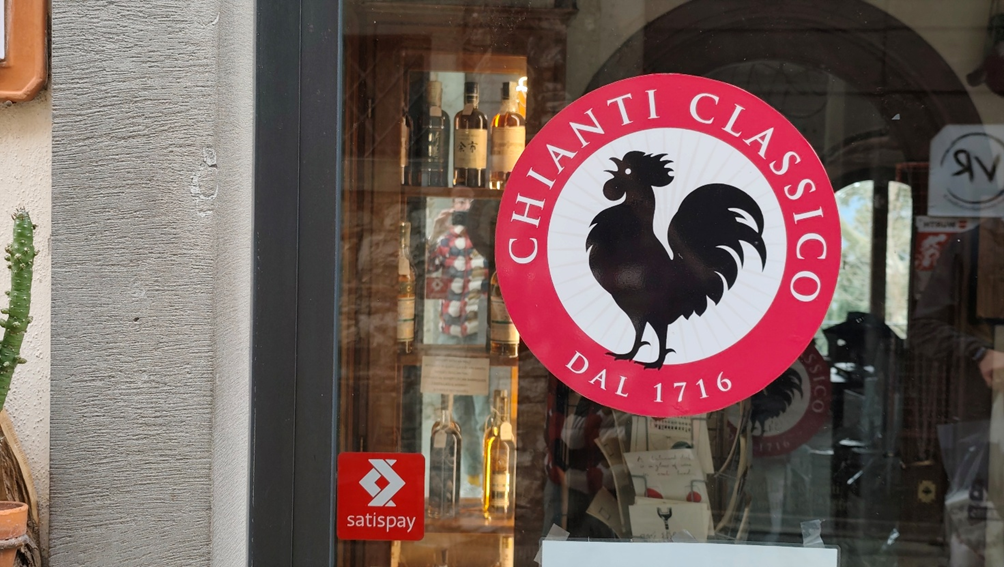
The wider Chianti region stretches between Florence and Siena, a patchwork of vineyards, cypress-lined roads, and hilltop villages that seem designed with a painter’s discipline. The symbol of the Gallo Nero—the Black Rooster—marks wines produced under the Chianti Classico designation, a guarantee tied to both geography and tradition. That emblem appears everywhere during the event, subtly reminding visitors that endurance here isn’t limited to sport; it’s embedded in agricultural cycles and cultural continuity.
Wine tastings and trail routes share the same terrain. One moment you’re watching runners climb a gravel path through Sangiovese vines, the next you’re seated with a glass that captures the same hillside in liquid form: two ways of reading the same landscape.
A Model of Travel That Gives Back
Following a race circuit like UTMB offers a rare vantage point on a destination. It turns travel into participation, even for those not running, and it’s a way to actively contribute to local economies. Restaurants fill for miles around, agriturismi book out weeks in advance, and the energy spills far beyond the starting line. Visitors linger, explore, and return. It’s a model of tourism that feels grounded, active, and generous to locals. If you don’t run, bring someone who does—or let yourself be persuaded. The reward goes well beyond the finish line.
Also, trail running encourages a slower, more attentive form of travel. Participants and companions spend days rather than hours in a destination, often returning year after year. Smaller towns like Radda benefit enormously from this sustained interest. It shifts attention away from overcrowded cities and redistributes it toward areas rich in culture but less frequented.
Looking for the Next UTMB Destination
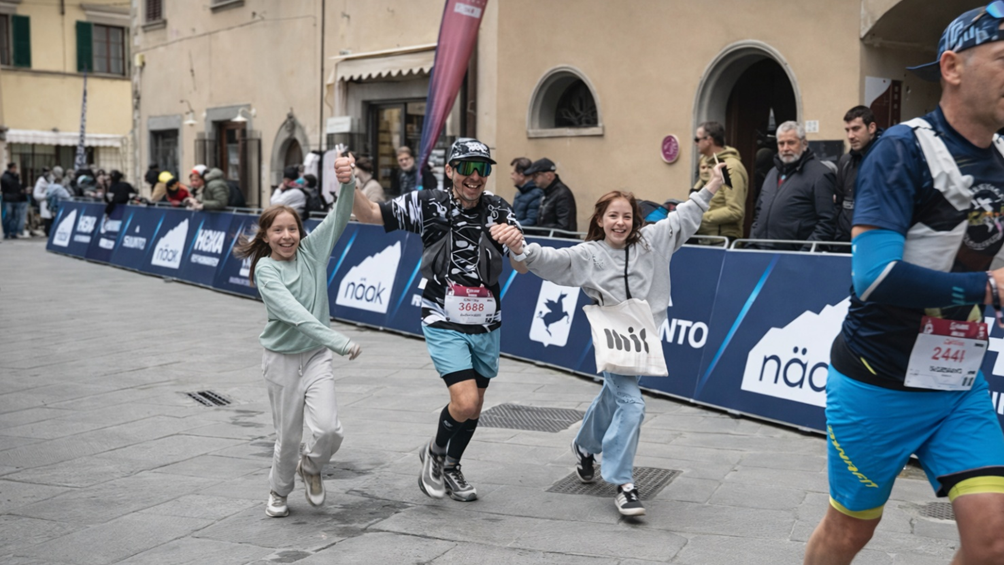
My husband placed 399th in his race and was immensely proud to reach the finish line of his longest distance ever, with his two beloved daughters crossing it by his side. A brief release of tears and emotion, then straight into the ritual photos. The 47 km race was won by ultra trail legend Francesco Puppi, a reminder that while elite performance leads the field, the essence of the UTMB circuit lies in personal stories, which undoubtably add to the travel experience. Following the races in places like Radda in Chianti then becomes a more meaningful way to travel, creating a deep connection with landscapes, people, and a version of one’s story that feels both authentic and alive.