
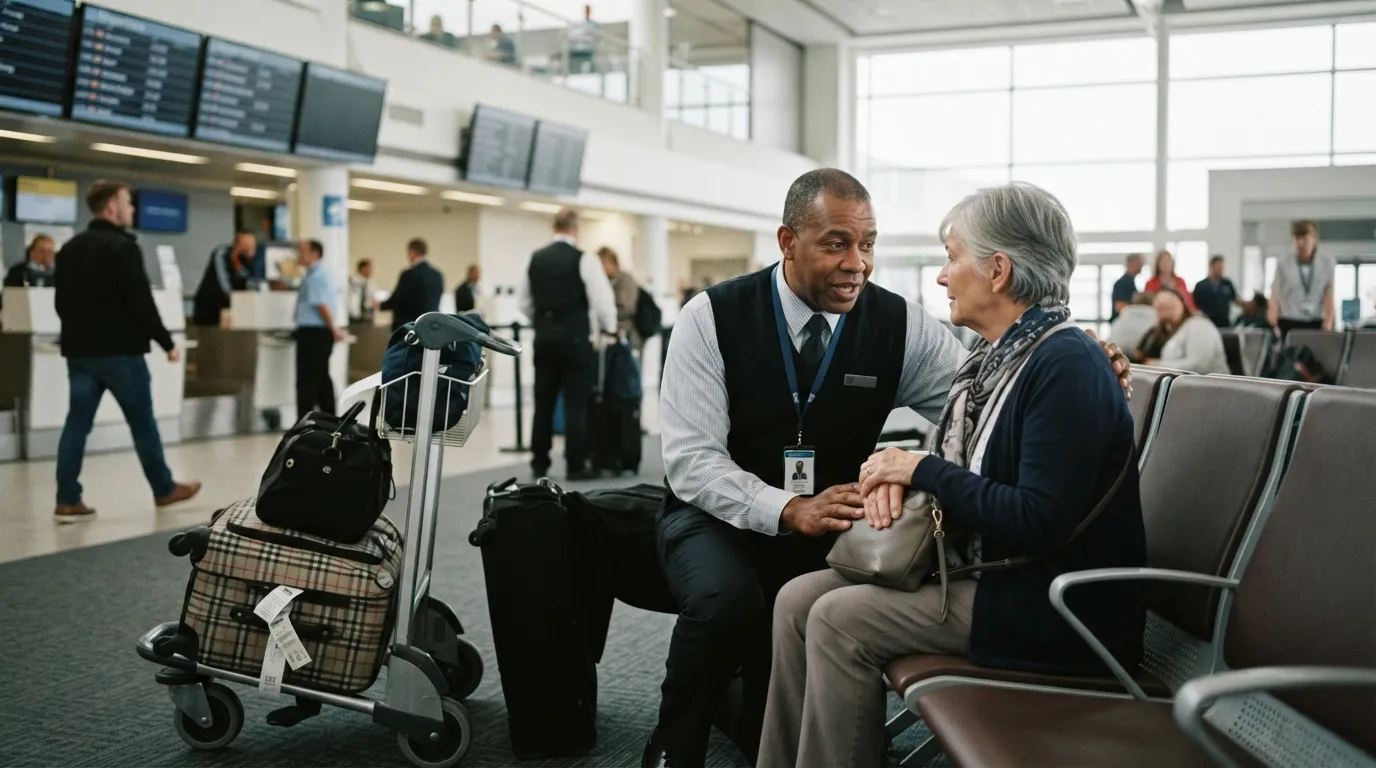
Everyone assumes the guy grabbing bags curbside is just working for tips and small talk. That assumption is almost completely wrong. For a lot of travelers over 60, that porter is quietly doing the job of a case manager, a translator, and a calming presence, often before the traveler even realizes they needed help.
What’s actually happening at curbside is stranger and more useful than most people realize, and almost none of it shows up in any airline brochure. Here’s what’s really going on before you even reach security.
#13 – They Catch the Slow Walker Before the Gate Agent Ever Sees Them
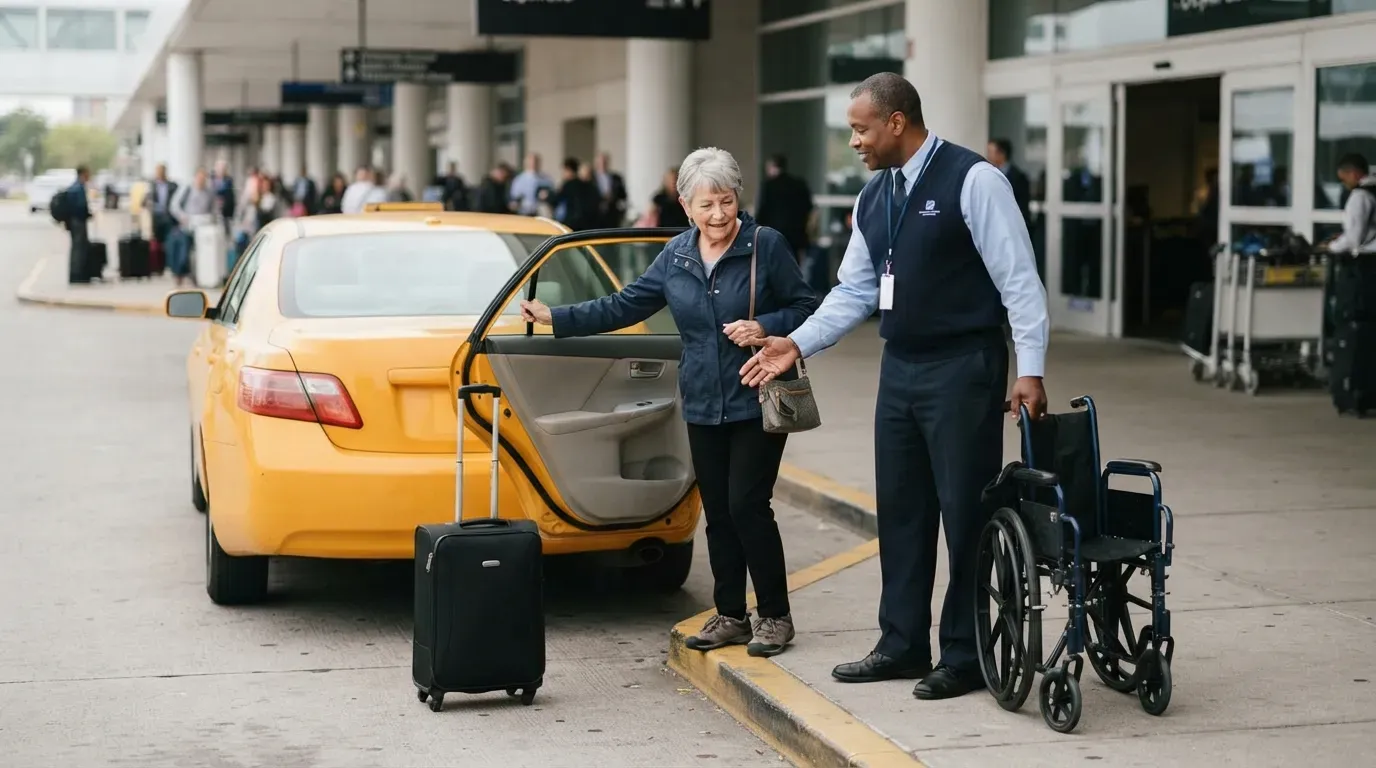
Porters spend all day watching people get out of cars, which means they’ve trained their eyes on tiny signals a rushed gate agent will completely miss. A hesitation stepping onto the curb, a hand gripping the door frame a beat too long, a slower shuffle toward the terminal doors – these are the tells porters clock instantly.
Most travelers over 60 won’t ask for help out loud, even when they clearly need it, simply because they don’t want to feel like a burden. Porters know this reluctance is common, so they frame wheelchair service as a casual offer instead of a formal question. That small shift in wording is often the only reason someone accepts help they actually needed all along.
#12 – They Already Know Which Airlines Quietly Require Advance Requests
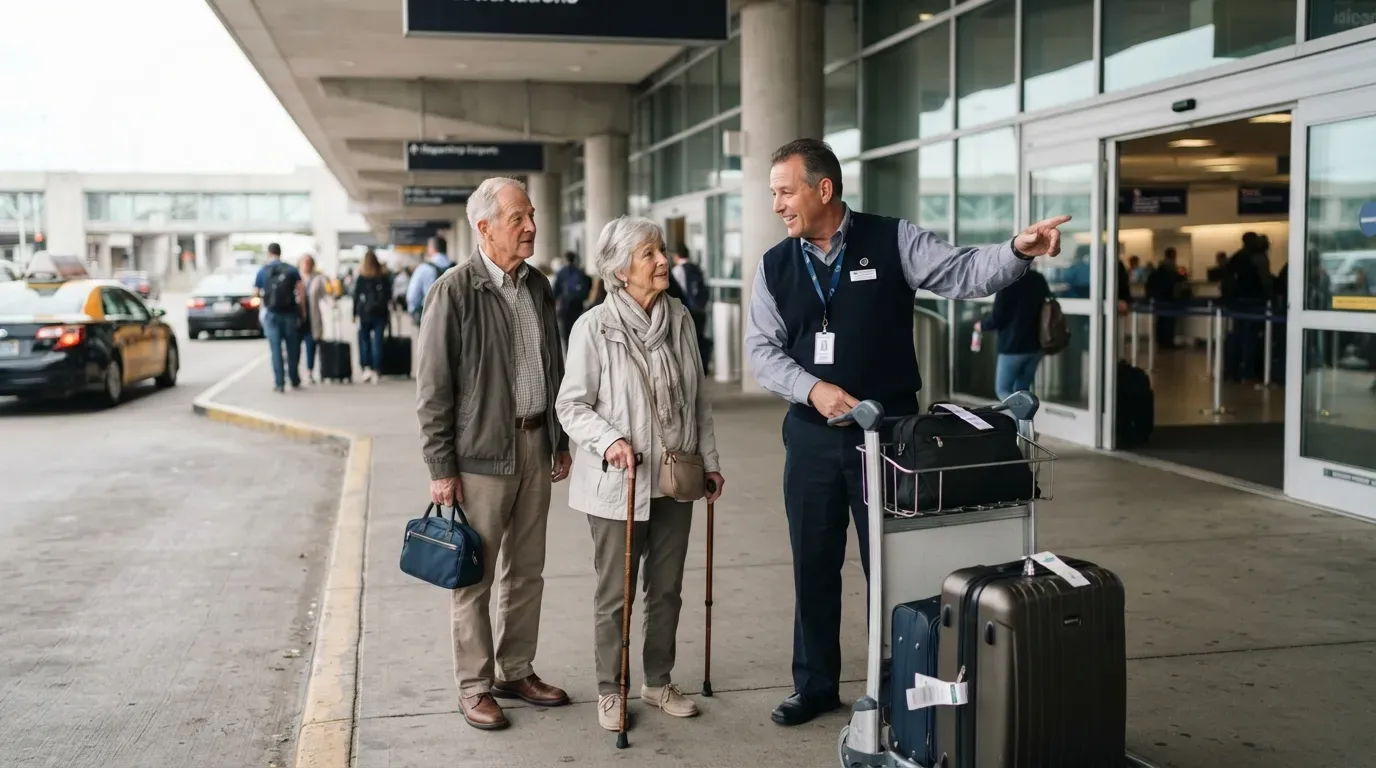
Every airline handles mobility assistance a little differently, and porters have memorized the quirks without anyone ever training them to. Airlines are required to provide assistance to passengers with a disability as they move through the airport, but the passenger has to self-identify to staff first. That single requirement trips up more older travelers than almost anything else in the building.
Porters see this gap play out constantly, so many will gently nudge someone who looks like they could use help to formally request it right there at the curb. Waiting until the ticket counter often means losing precious minutes. A five-second conversation at drop-off can quietly prevent a stressful scramble twenty minutes later.
Fast Facts
- Airlines generally can’t demand advance notice just because a passenger has a disability.
- Certain accommodations are the exception – carriers may require up to 48 hours’ notice for things that need real prep time, like an electric wheelchair on a smaller plane.
- Every step of the assistance process is legally required to happen “in a safe and dignified manner,” not just a rushed formality.
- Requesting help at curbside almost always beats waiting until the ticket counter to speak up.
#11 – They Steer People Away From the Wrong Wheelchair Line Entirely
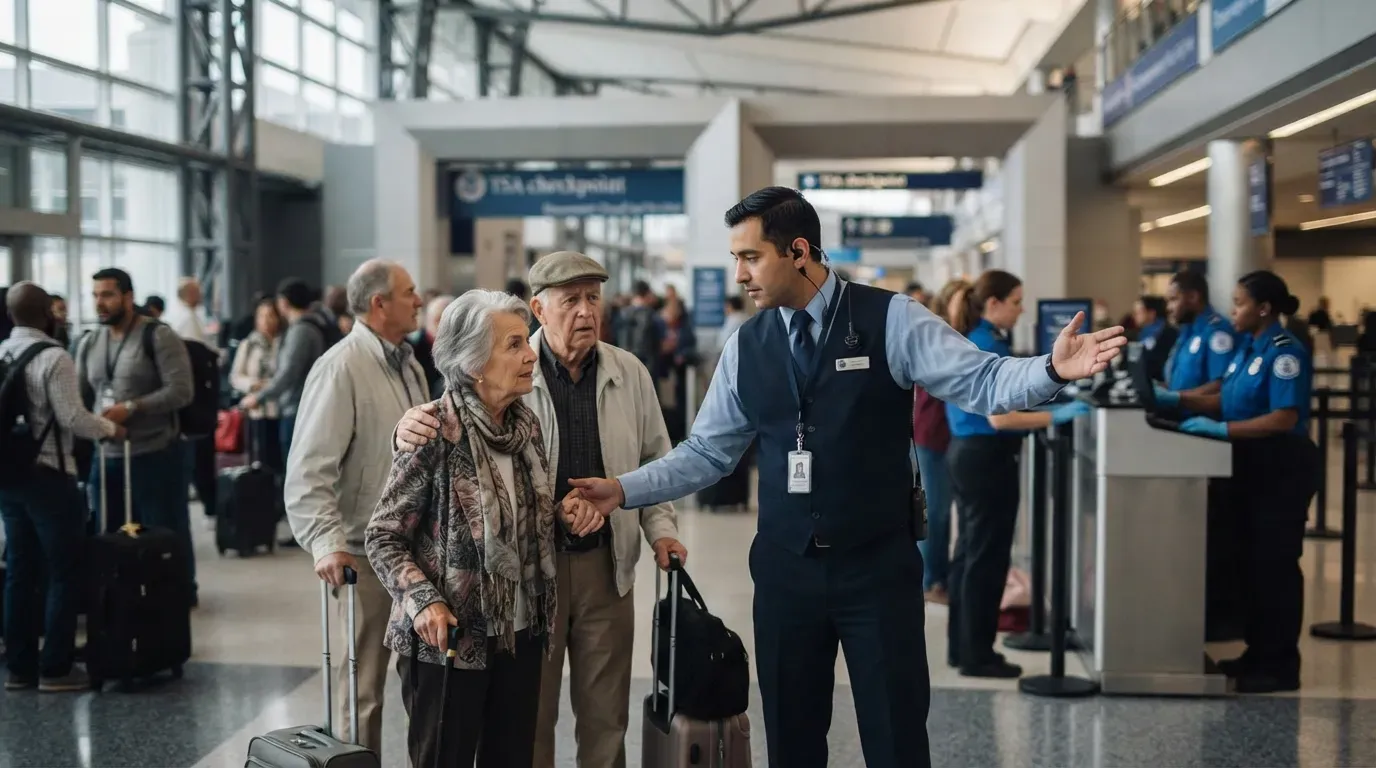
Here’s something almost nobody realizes until it’s too late: wheelchair service and TSA screening assistance are two completely separate systems, run by two completely different agencies. Airport wheelchair service comes from the airline, not from TSA, and porters watch families confuse the two nearly every single day.
That mix-up causes more curbside meltdowns than almost any other single misunderstanding in modern air travel. A porter who catches it early can redirect a traveler to call the airline directly instead of arguing with a TSA officer who genuinely has no ability to help with that part of the process. It’s a quiet correction that saves real time and real frustration.
#10 – They Quietly Flag the Sunflower Lanyard for Conditions Nobody Can See
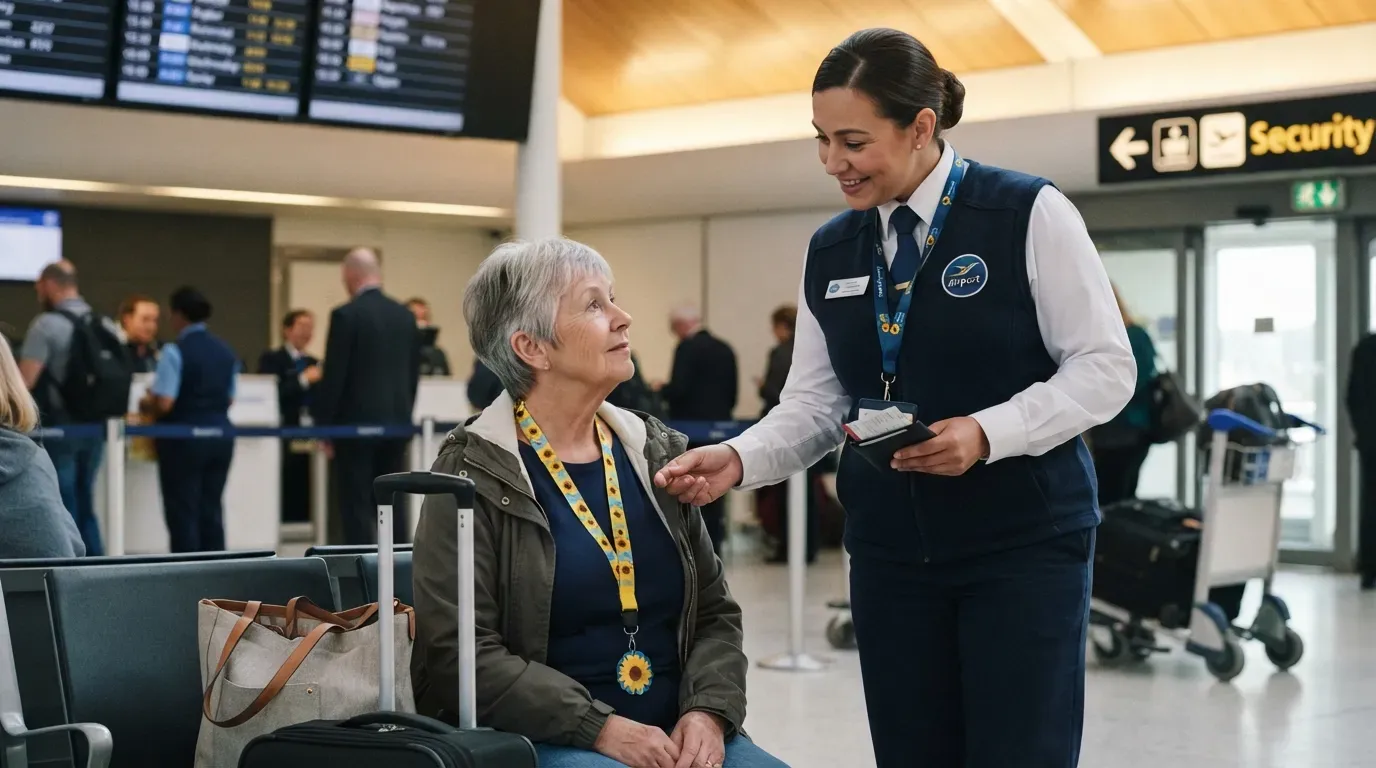
Not every condition that slows someone down at 68 or 74 is visible. Arthritis, chronic pain, early memory trouble – none of it shows up as an obvious limp, but it absolutely changes how someone experiences a chaotic terminal. Porters have quietly become experts at spotting the invisible version of struggle, not just the obvious one.
The Hidden Disabilities Sunflower Lanyard is an awareness tool that discreetly signals to staff that someone may need more time or patience, no explanation required. It’s recognized at more than 230 airports worldwide, which makes it one of the more genuinely useful secrets in modern travel. Porters who notice someone struggling quietly will sometimes mention it, giving a traveler a wordless way to say “go easy on me.”
#9 – They Time Curbside Drop-Off Around Security Surges Nobody Else Tracks
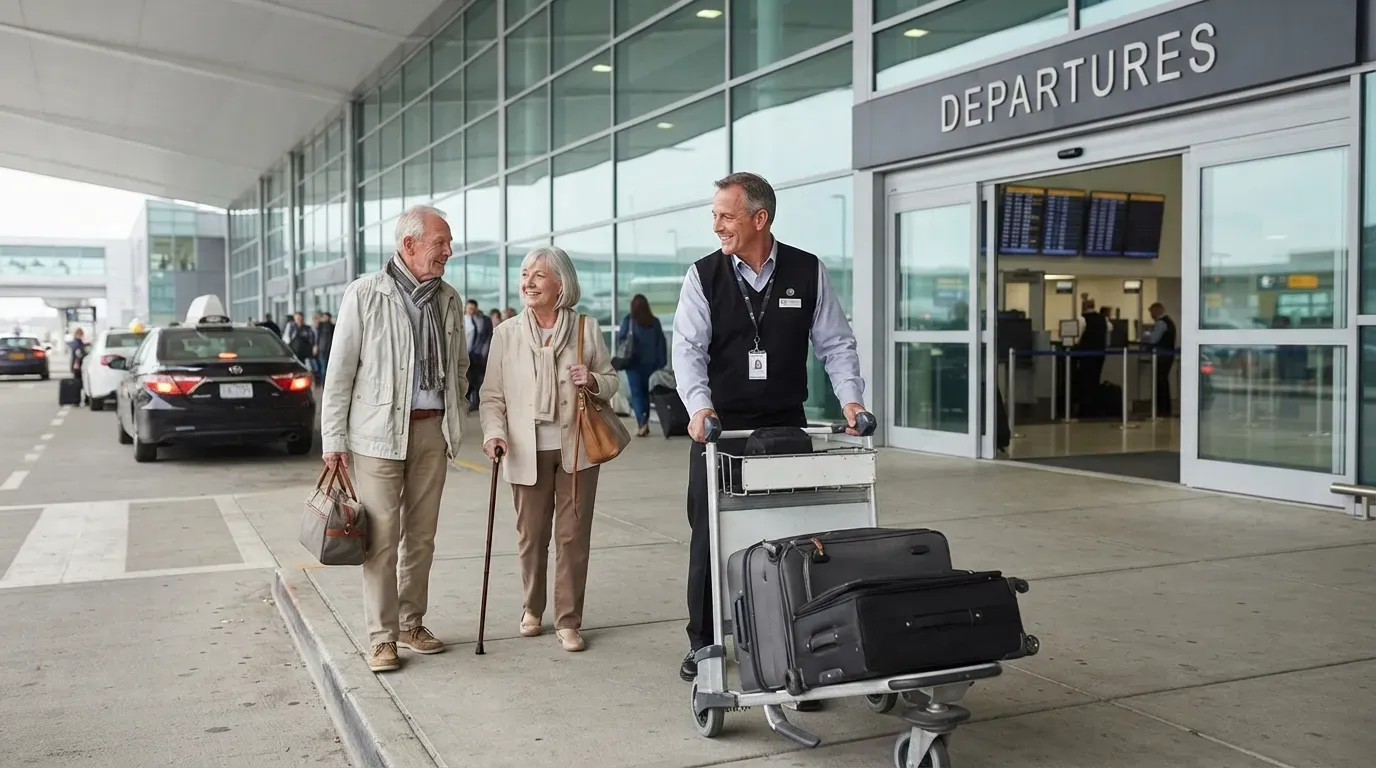
Porters watch security wait times shift hour by hour, and that knowledge becomes surprisingly valuable for anyone who moves a little slower through a checkpoint. Someone who’s been on shift since dawn knows exactly when the 7 a.m. business rush hits and exactly when the lines quietly thin back out.
For older travelers, that timing insight can mean the difference between a relaxed walk to the gate and a stressful sprint. Federal guidance backs up why it matters: arrive as early as possible to allow time for bag check, screening, and boarding. Porters who nudge someone toward an earlier drop-off are essentially building that safety buffer in for them, quietly, without ever calling it a favor.
#8 – They Know Exactly Which Terminals Hide Brutal, Unmarked Walks
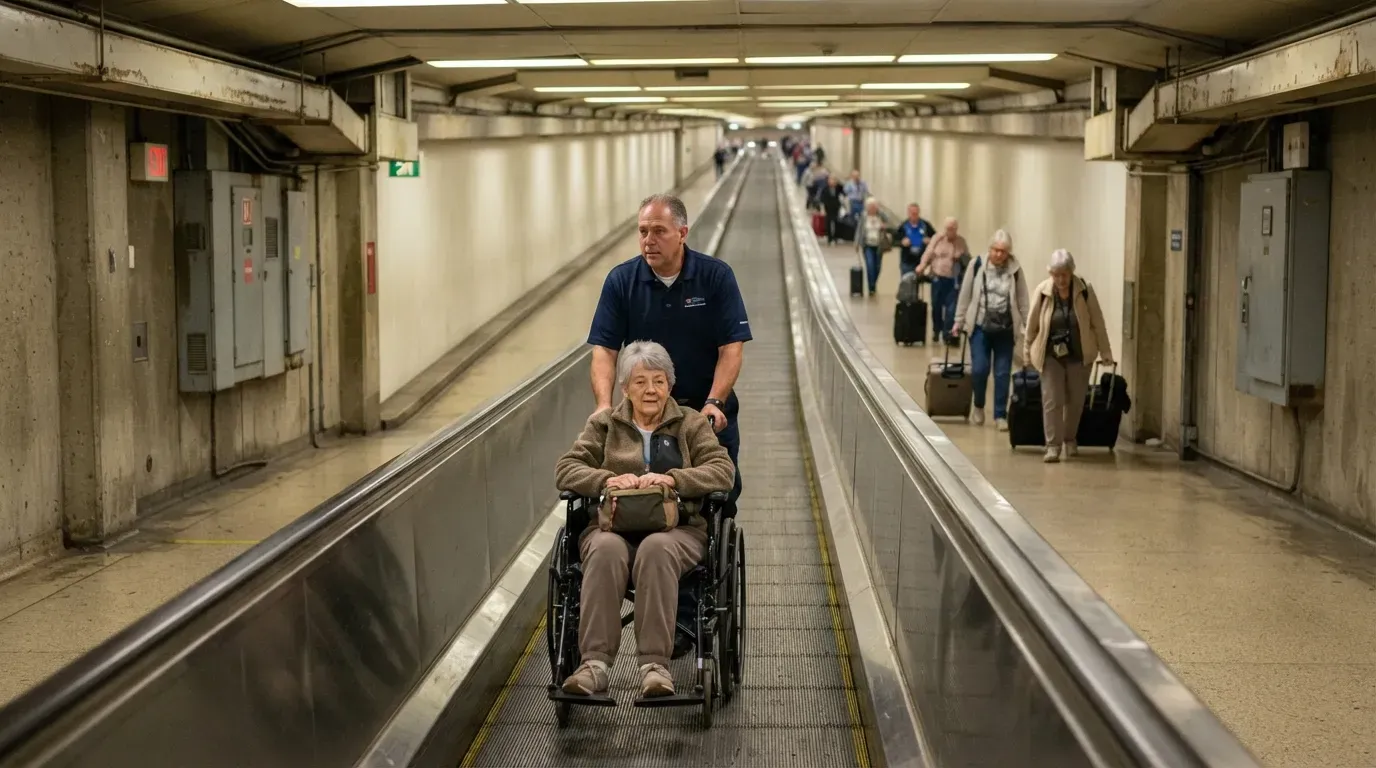
Not every terminal was built with aging knees in mind, and porters are often the only people who’ll tell you the truth about it. Some stretch nearly a mile between check-in and the gate, with escalators as the only option through certain older sections travel guides never mention.
Porters deal with the fallout of that design every single day, so they’ll often suggest a wheelchair simply because they know what’s ahead, not because the traveler looks fragile. It’s a judgment call built on repetition, not assumption. It quietly spares people from discovering the hard way that a “quick connection” actually means ten minutes of uphill walking with a rolling bag.
#7 – They Catch Battery-Wheelchair Mistakes Before They Become Missed Flights
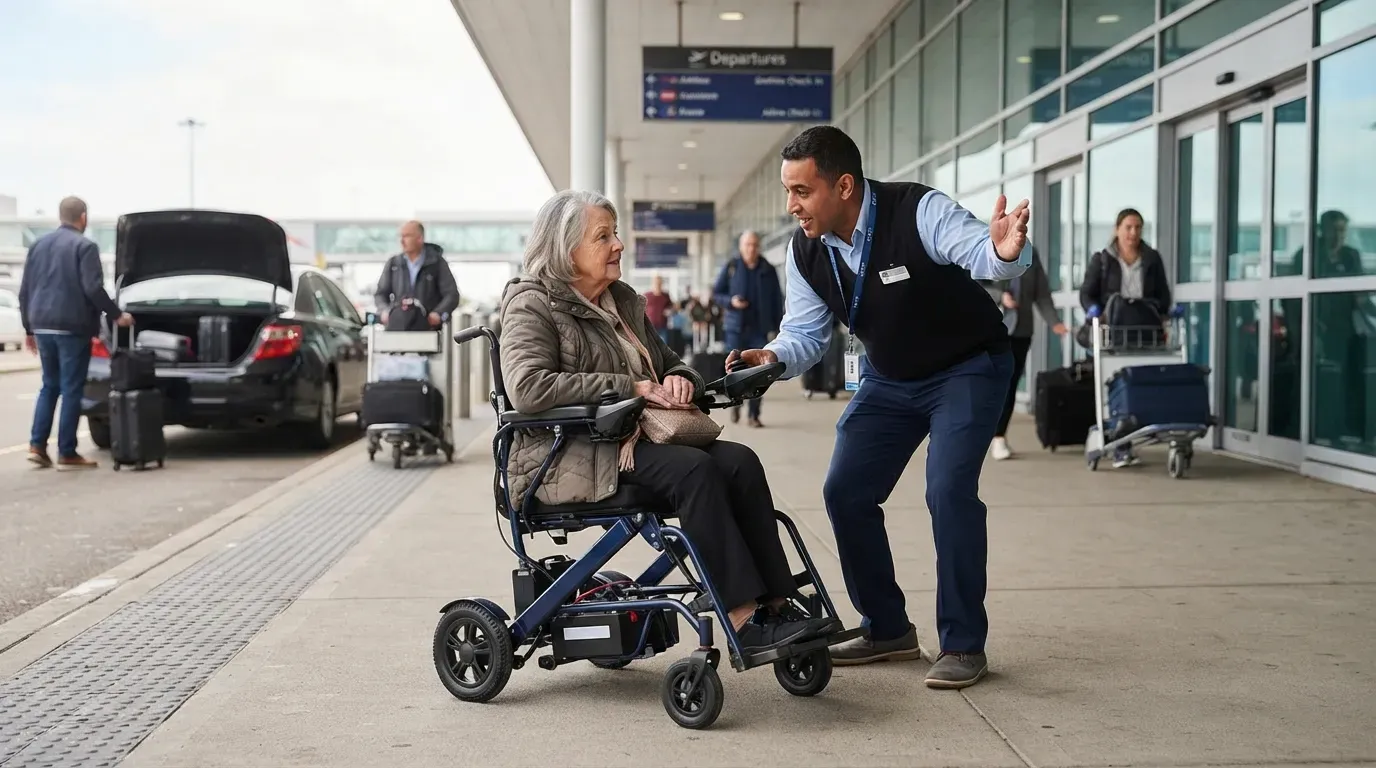
Traveling with a power wheelchair or scooter involves rules almost nobody learns until it’s nearly too late. If you travel with a battery-powered wheelchair, you’re required to arrive at the airport a full hour before the normal check-in window, a rule that blindsides an enormous number of older travelers.
Porters who see someone rolling up with a scooter will often mention that timing requirement immediately, along with reminders about battery documentation, well before a ticket agent even gets involved. It’s a small heads-up, delivered casually at the curb, that can quietly save an entire trip from unraveling before it starts.
Quick Compare
- Everyday traveler: normal check-in window, no special notice required.
- Power wheelchair on a smaller aircraft: airlines may require up to 48 hours’ advance notice and check-in one hour before the general public.
- Battery packaging: the airline has to supply hazardous-materials packaging for the battery, and they can’t charge for it.
#6 – They Personally Walk Connecting Passengers Instead of Just Pointing
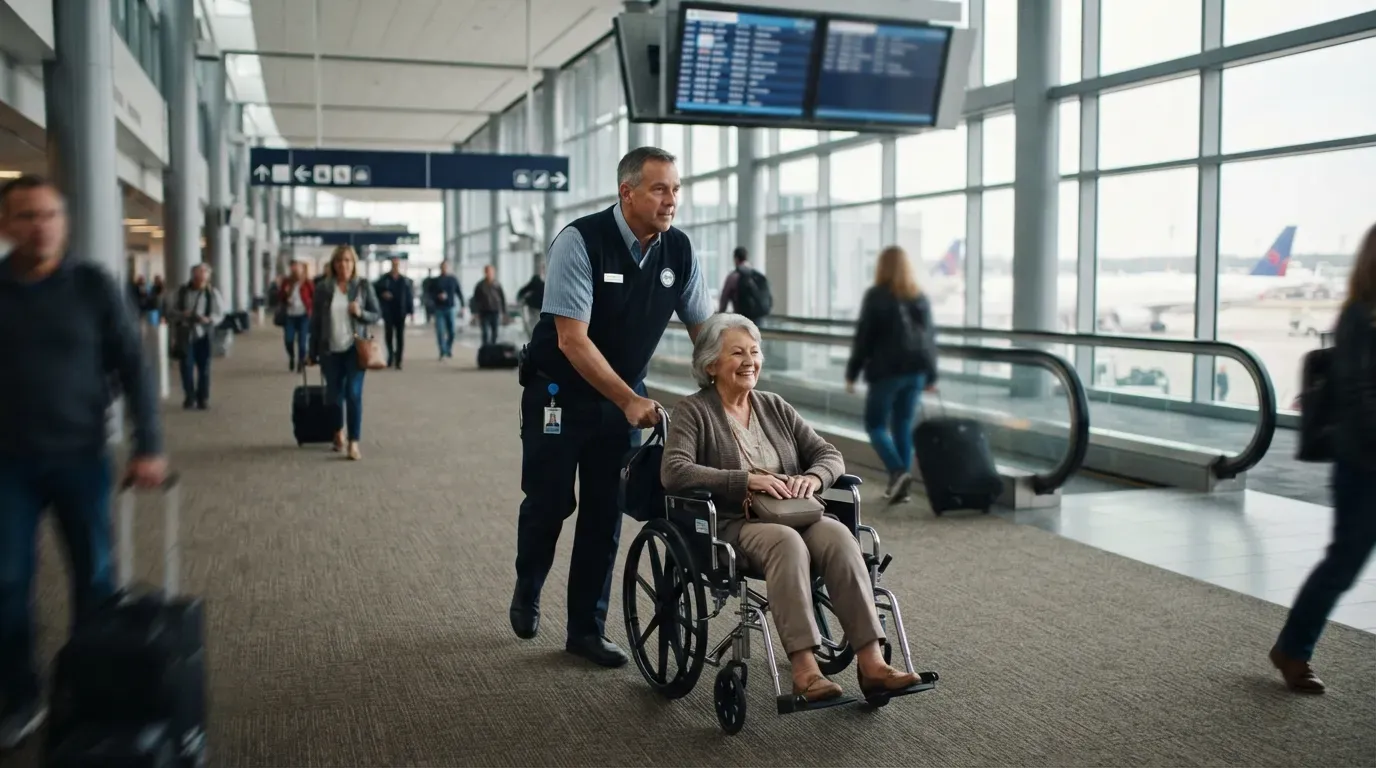
Missing a tight connection is one of the biggest fears older travelers carry onto a plane, and porters have quietly built an informal system around preventing it. Federal rules actually guarantee this help exists: airlines must assist passengers from their arriving seat all the way to the connecting gate.
Airlines must assist passengers from their aircraft seat on an arriving flight through the airport to the gate location of a connecting flight.
U.S. Department of Transportation
Porters who work busy connecting hubs know exactly which gates sit farthest apart, and they’ll often personally wheel someone the entire distance rather than gesturing down a hallway. It’s one of the most underappreciated services in the entire airport, and it almost never makes it into travel advice columns.
#5 – They Quietly Point Anxious Travelers Toward TSA’s Hidden Support Program
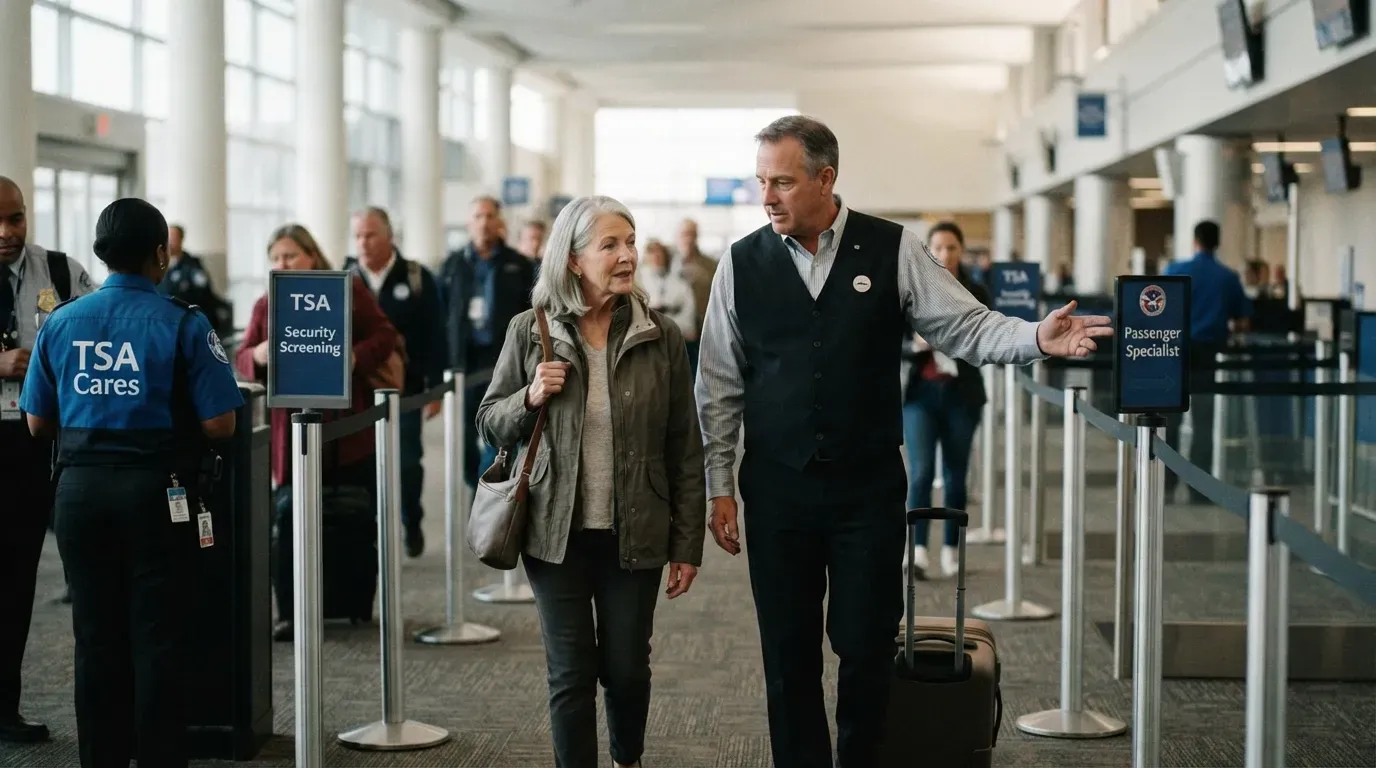
Few travelers realize a completely free, separate program exists just to make security screening less intimidating, and porters often serve as the informal bridge into it. TSA Cares offers free assistance to travelers with disabilities, medical conditions, and other special circumstances, including expedited screening for passengers 75 and older.
A Passenger Support Specialist can meet a traveler at the checkpoint and walk them through every step before it happens. Porters who notice someone overwhelmed at the curb will sometimes suggest requesting this right then and there. The program has existed since 2012, yet a surprising number of frequent flyers over 60 have simply never heard of it.
At a Glance
- Contact TSA Cares at least 72 hours before departure by phone or online form, or simply ask at the checkpoint itself.
- A Passenger Support Specialist walks travelers through screening but doesn’t skip the process entirely.
- The service is available at every U.S. airport, though staffing and wait times vary by location.
- Phone support runs weekdays from 8 a.m. to 11 p.m. ET, with shorter weekend hours.
#4 – They Whisper the Shoes-On, Sit-Down Screening Trick to the Right Person
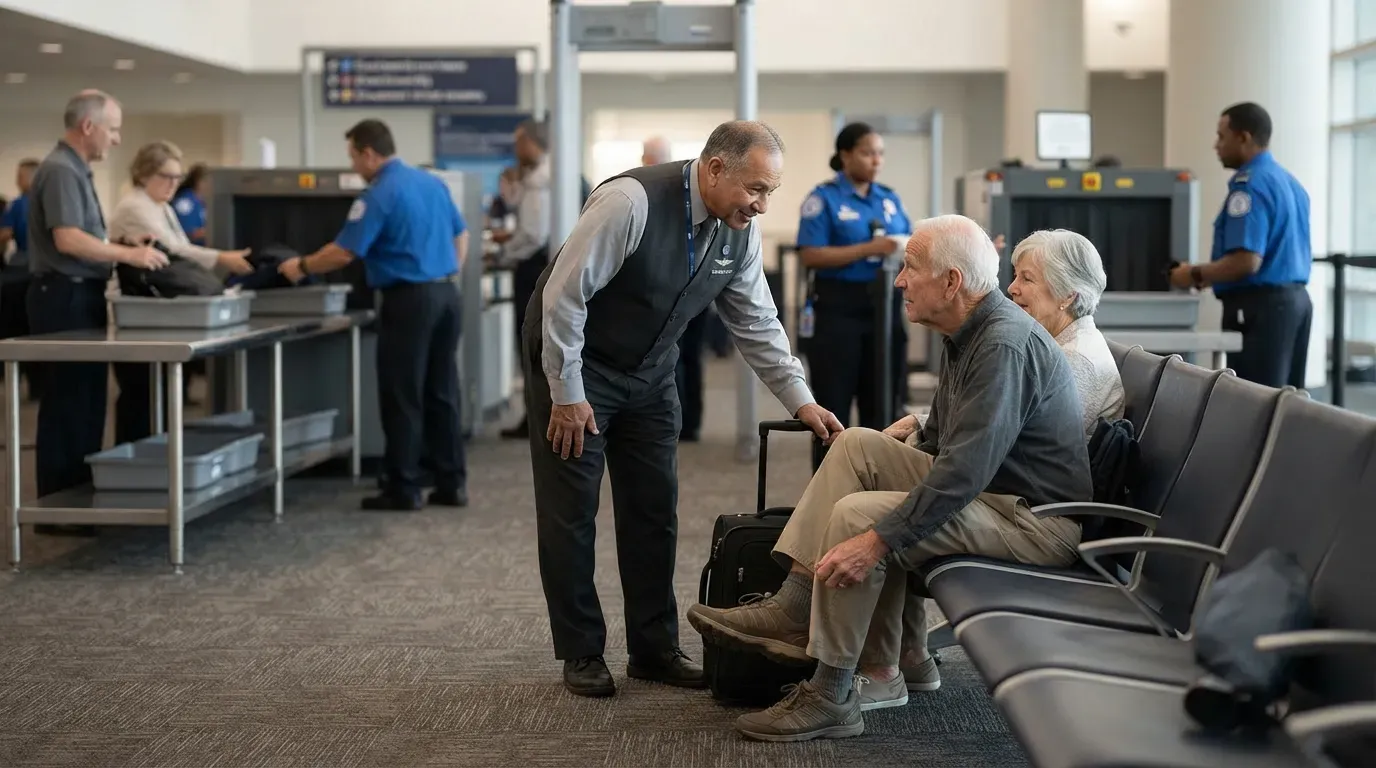
Airport security can feel especially undignified for someone dealing with balance issues, swollen feet, or joint pain, and porters have quietly become messengers for one of TSA’s lesser-known accommodations. Passengers 75 and older can receive expedited screening, may leave their shoes on, and can request to sit during parts of the process.
Almost nobody under 75 knows this rule exists, which means eligible travelers regularly go through the harder standard process for absolutely no reason. A porter who overhears someone worrying about standing through security will often mention this option directly, sparing them an uncomfortable ordeal that was entirely avoidable.
#3 – They Gently Coach Travelers When a Wheelchair Request Gets Questioned
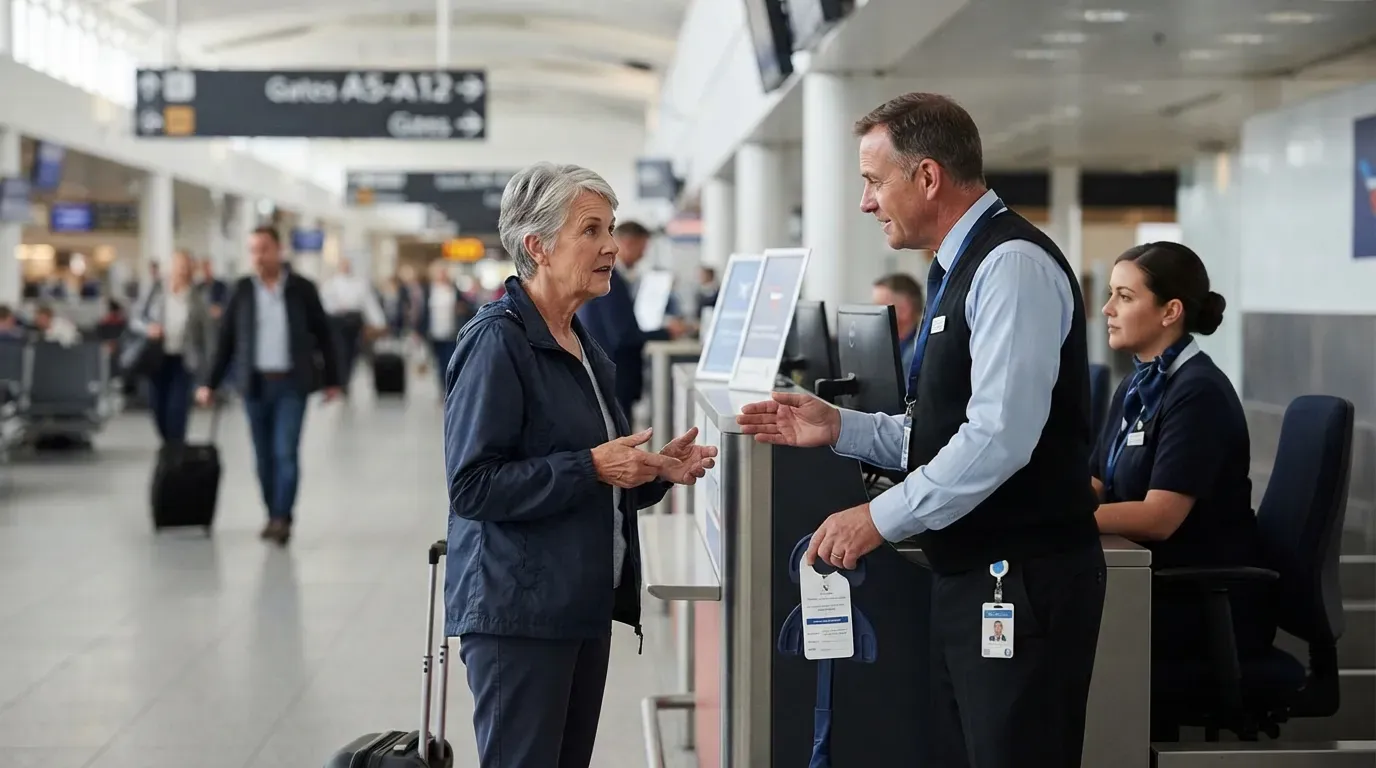
Occasionally an airline employee hesitates before approving a wheelchair, unsure whether the request is legitimate, and this is exactly the moment a porter’s quiet advocacy matters most. The Air Carrier Access Act prohibits airlines from discriminating against a qualified individual with a physical or mental impairment, though a carrier may ask for credible verbal assurance in uncertain cases.
Porters who’ve watched this scenario unfold dozens of times know how to coach someone on what to say so the request moves forward instead of stalling into an awkward back-and-forth. This kind of behind-the-scenes advocacy almost never gets mentioned in official airline literature, yet it resolves more curbside tension than nearly anything else.
#2 – They Catch the One-Bag Rule Before It Turns Into a Curbside Scramble
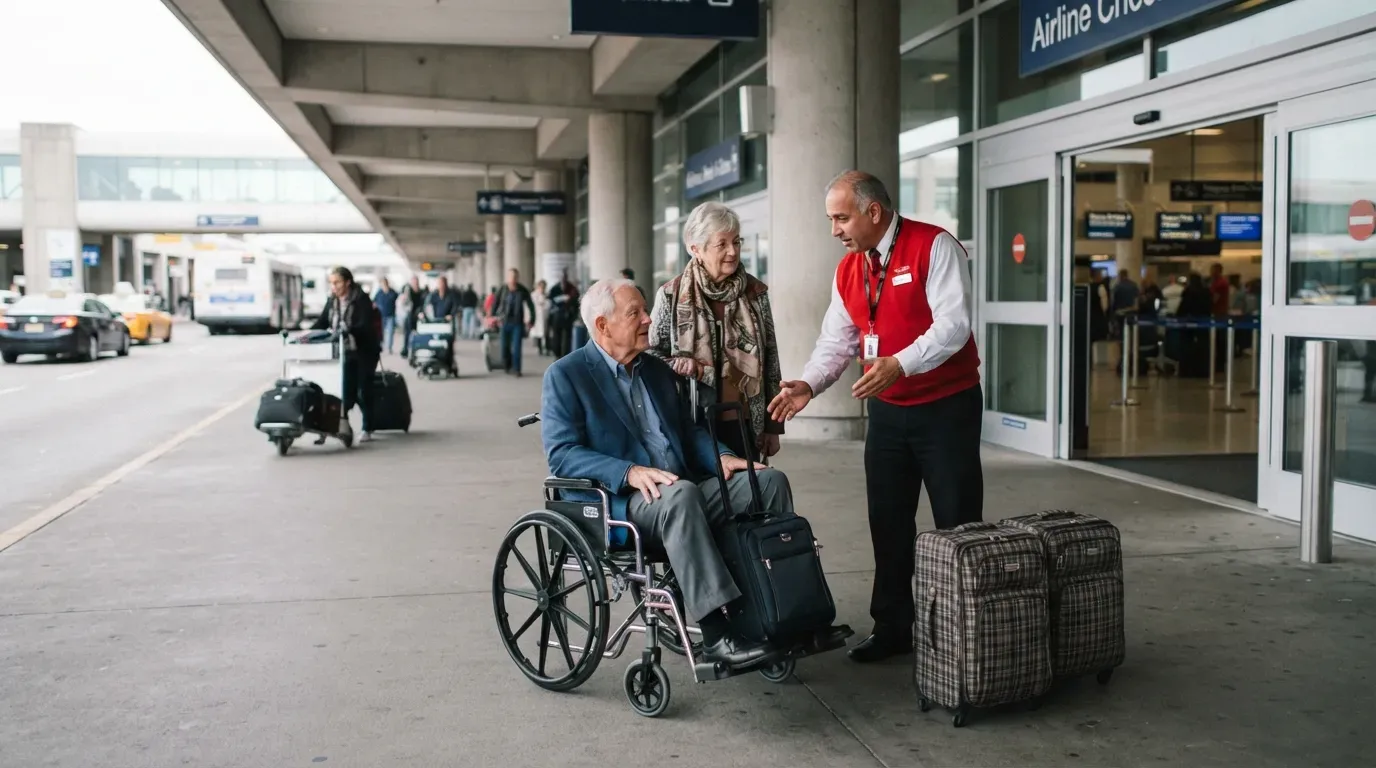
Here’s a detail that catches even seasoned travelers off guard: wheelchair service typically covers exactly one carry-on bag, and anything beyond that requires a separate arrangement entirely. Families traveling with an older relative usually pack for the trip, not for this rule, and end up scrambling when the math doesn’t work.
Experienced porters flag the limitation the moment they spot extra bags, quietly arranging supplemental help before it becomes a stressful standoff at the departure doors. It’s a small logistical fix, but it’s the difference between a calm goodbye and a panicked one.
Worth Knowing
- Standard wheelchair service usually covers one carry-on bag per passenger, not the whole family’s luggage pile.
- A rollator, a second suitcase, or an oversized bag typically needs its own arrangement with the airline.
- Asking about baggage limits when booking assistance avoids a scramble at drop-off.
- Porters flag this early, often before the family even reaches the ticket counter.
#1 – They Quietly Absorb the Fear Nobody Else Notices
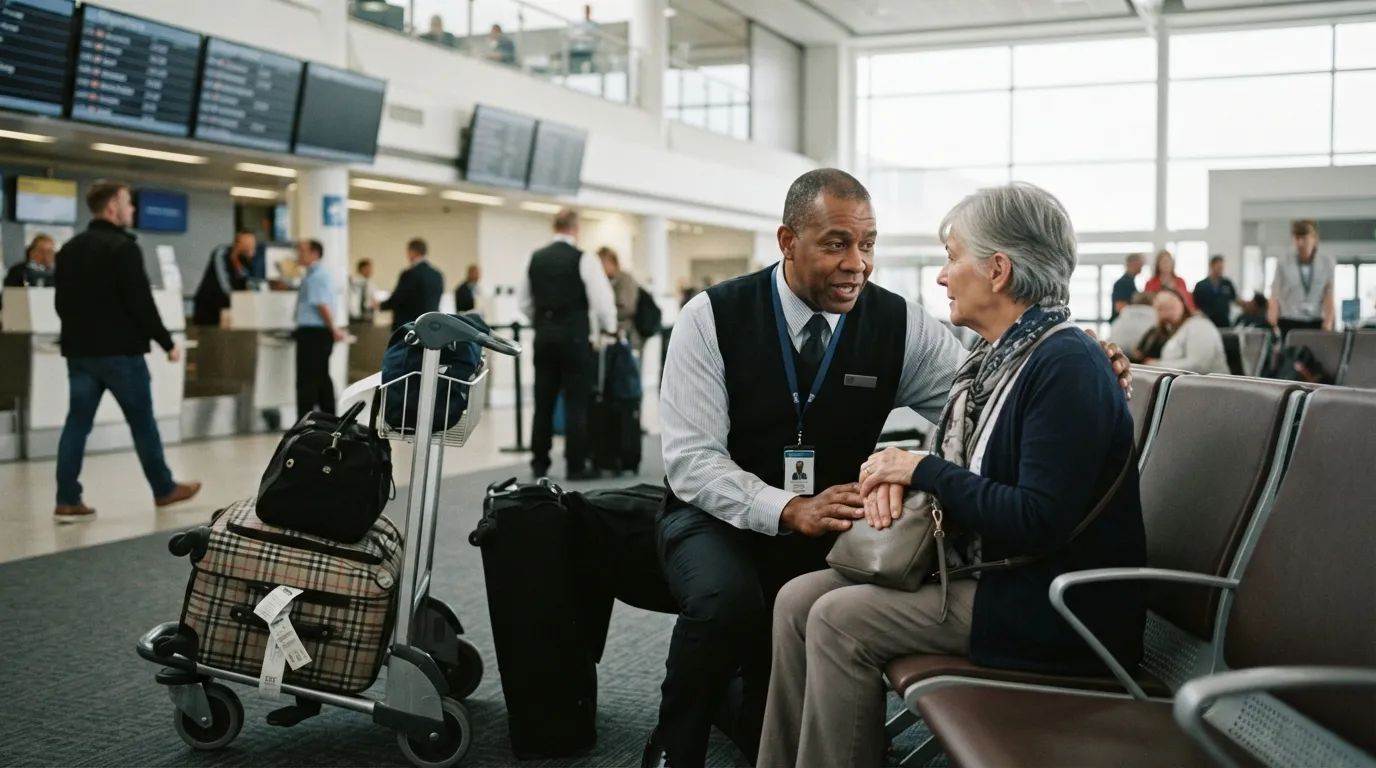
This is the one nobody talks about, and it might be the biggest thing porters actually do for older travelers: they calm people down before anyone else even realizes there’s something to calm. Flying alone for the first time in years, navigating a system that’s changed completely since someone last flew regularly, or simply feeling physically vulnerable in a chaotic terminal – these fears rarely get said out loud.
Porters have quietly become the first responders to travel anxiety in older adults, long before a flight attendant or gate agent ever steps in. A steady voice, a knowing nod, a “don’t worry, we’ve got you” said at exactly the right moment often does more than any official accommodation on paper. It was never written into any policy manual, and it’s arguably the most important thing happening at curbside every single day.
None of this is written on a sign anywhere, which is exactly why so few people know it exists. From the one-bag rule to the sunflower lanyard to a porter simply timing your drop-off around the morning rush, the real safety net at most airports isn’t a program at all. It’s a person paying quiet, undramatic attention, doing the job long before anyone thinks to ask for help.