
Ask ten Americans to name the country’s single greatest street food and you’ll get eleven different answers – and every one of them will swear they’re right. That’s the part nobody tells you before you land: there is no “national” street food in America, only fierce regional loyalty, immigrant ingenuity, and decades-old arguments over what belongs on top of a bun.
Some of these dishes were born from boredom, some from survival, and at least one from a cab driver who got tired of eating hot dogs for lunch. Order the wrong version in the wrong city and you won’t just get a funny look – you might start a genuine argument. Here’s what actually separates the tourist trap from the real thing.
#11 – Frito Pie: The Snack That Started a Two-State Feud
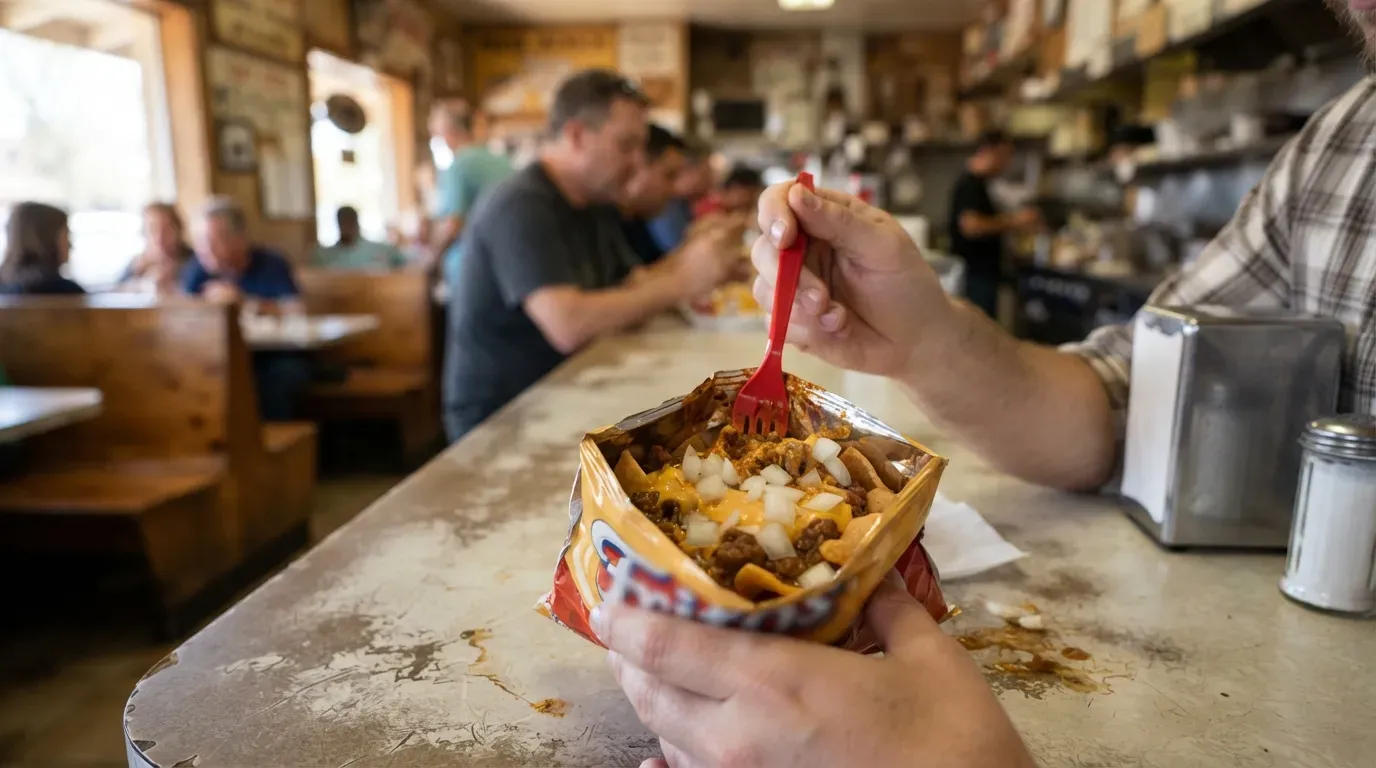
Frito Pie sounds like a joke until you realize entire states will argue over who invented it. At its core, it’s just corn chips buried under chili, cheese, and onions – but the presentation is where the real fight begins. In New Mexico, tradition says it should be served directly in the torn-open Fritos bag, eaten with a plastic fork right at the counter.
Texans insist the “real” version belongs on a plate, chili ladled generously over a bed of corn chips like a casserole. The bag-based serving style turned it into one of the earliest grab-and-go street snacks in the Southwest, decades before food trucks made “eating out of a container” trendy. Locals in Santa Fe still treat it as a five-and-dime lunch counter classic, no plate required.
Quick Compare
- New Mexico style: served straight in the Fritos bag, a tradition “another story says that true Frito pie originated only in the 1960s with Teresa Hernández, who worked at the Woolworth’s lunch counter in Santa Fe, New Mexico”-worthy claim locals still defend fiercely.
- Texas style: served on a plate like a casserole, with backers pointing to company records showing the dish, or something very close to it, served years earlier.
- Where it shows up today: state fairs, high school football concession stands, and church fundraisers across the Southwest and Midwest.
- The real divide: it’s less about the ingredients and more about whether a bag counts as a serving dish.
#10 – Walking Tacos: The Genius Snack Hiding at Every Midwest Fair
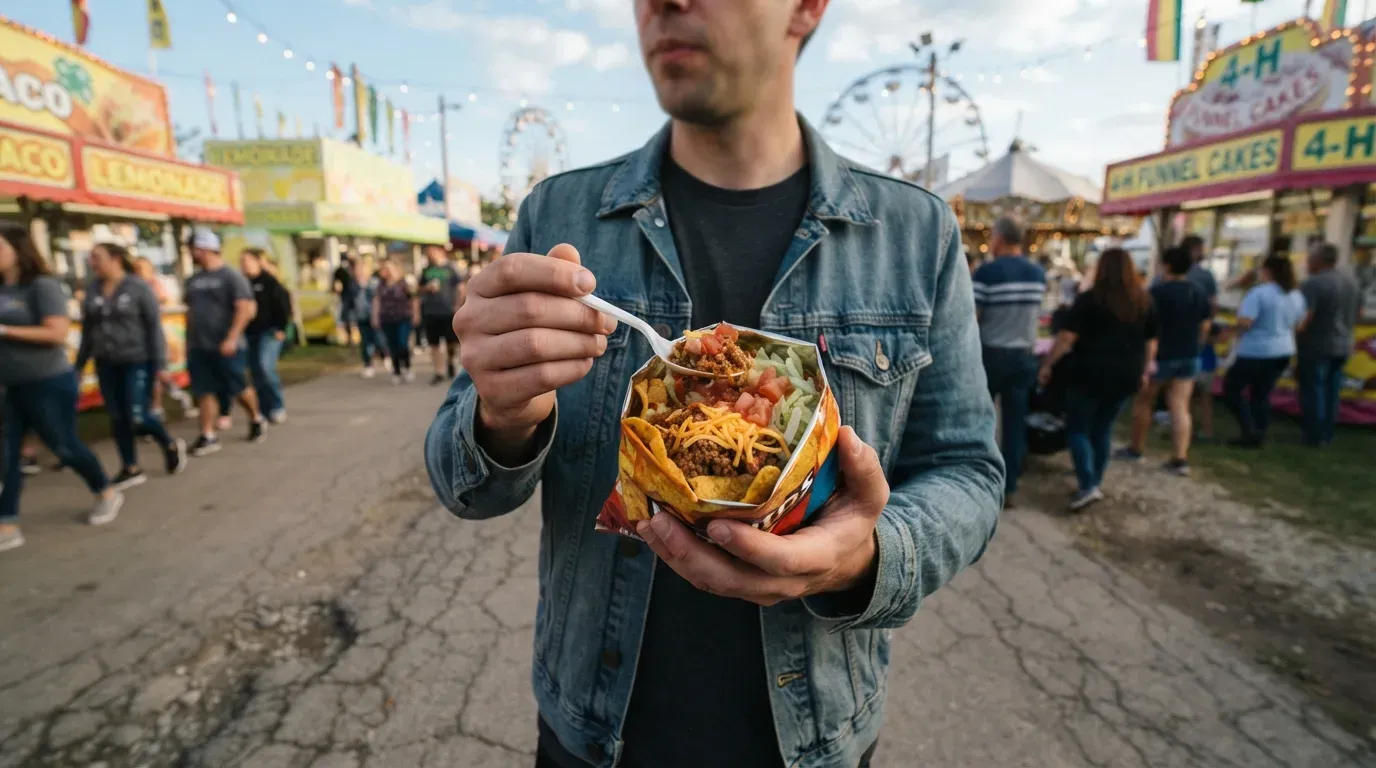
Most people outside the Midwest have never heard of a walking taco, and that’s exactly the point – it was never designed to be a restaurant dish. It’s taco salad served inside a single-serving bag of corn chips, eaten straight out of the bag while you keep moving through a fairground or football tailgate.
The entire appeal is the built-in bowl: no plate, no fork required, no seat needed. You just slit the bag, layer in seasoned beef, cheese, lettuce, and salsa, and eat with a spoon while walking. It’s become a staple at church fundraisers, 4-H fairs, and Friday night football concessions across Iowa, Minnesota, and the Dakotas, and many Midwesterners rank it as the single most practical American street food ever invented.
#9 – Cincinnati Chili: The Chili That Refuses to Act Like Chili
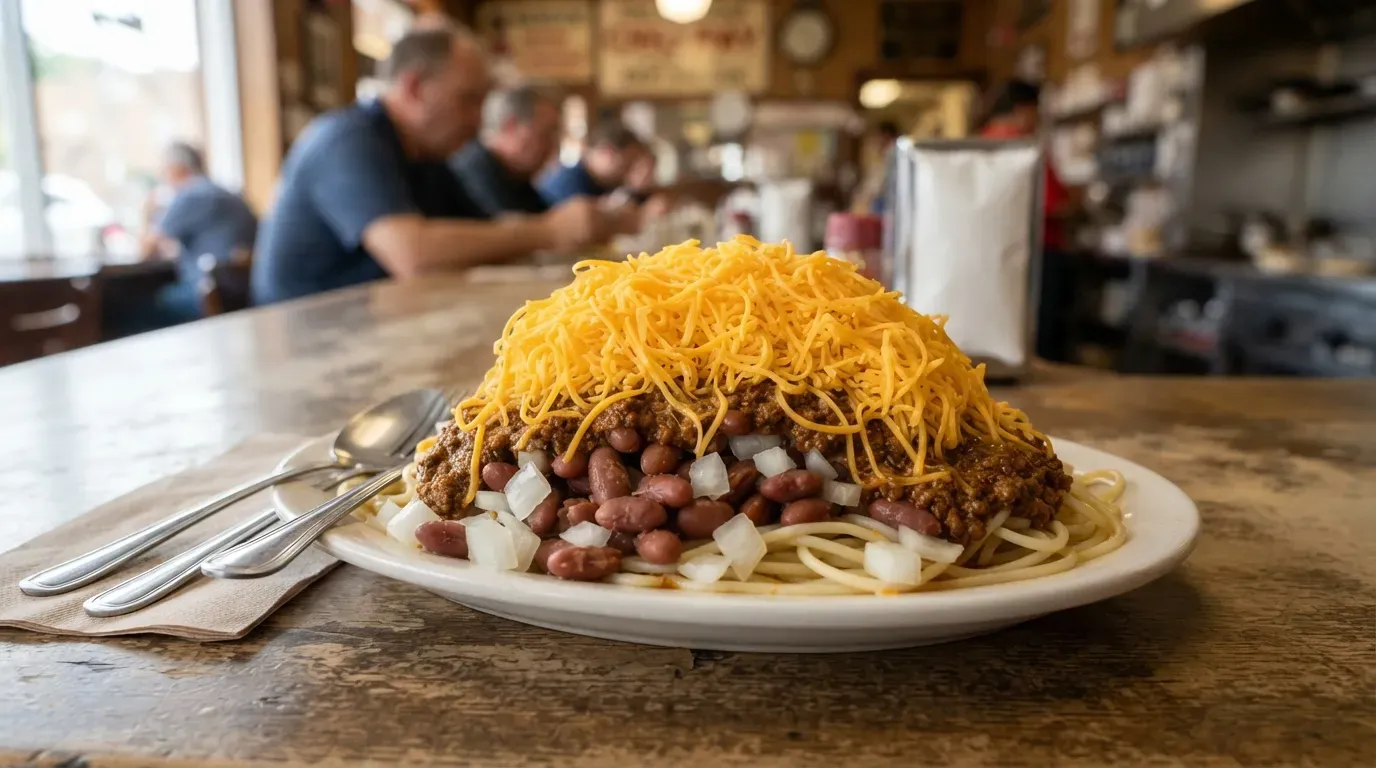
Order chili in Cincinnati and you won’t get a bowl – you’ll get a plate of spaghetti, and that alone tells you this dish plays by different rules. Cincinnati chili is thin, almost sauce-like, and secretly spiced with cinnamon, chocolate, and allspice instead of the smoky heat most Americans expect.
The dish is traditionally ordered by number – a “3-way” means chili, spaghetti, and cheese, while a “5-way” piles on beans and onions too. It’s served fast and cheap at walk-up chili parlor windows across the city, making it one of the closest things the Midwest has to a genuine street-food institution. Purists from Texas often insist it isn’t “real” chili at all, which only makes Cincinnatians defend it harder.
#8 – Elote: The Corn on the Cob That Secretly Runs Every Summer Festival
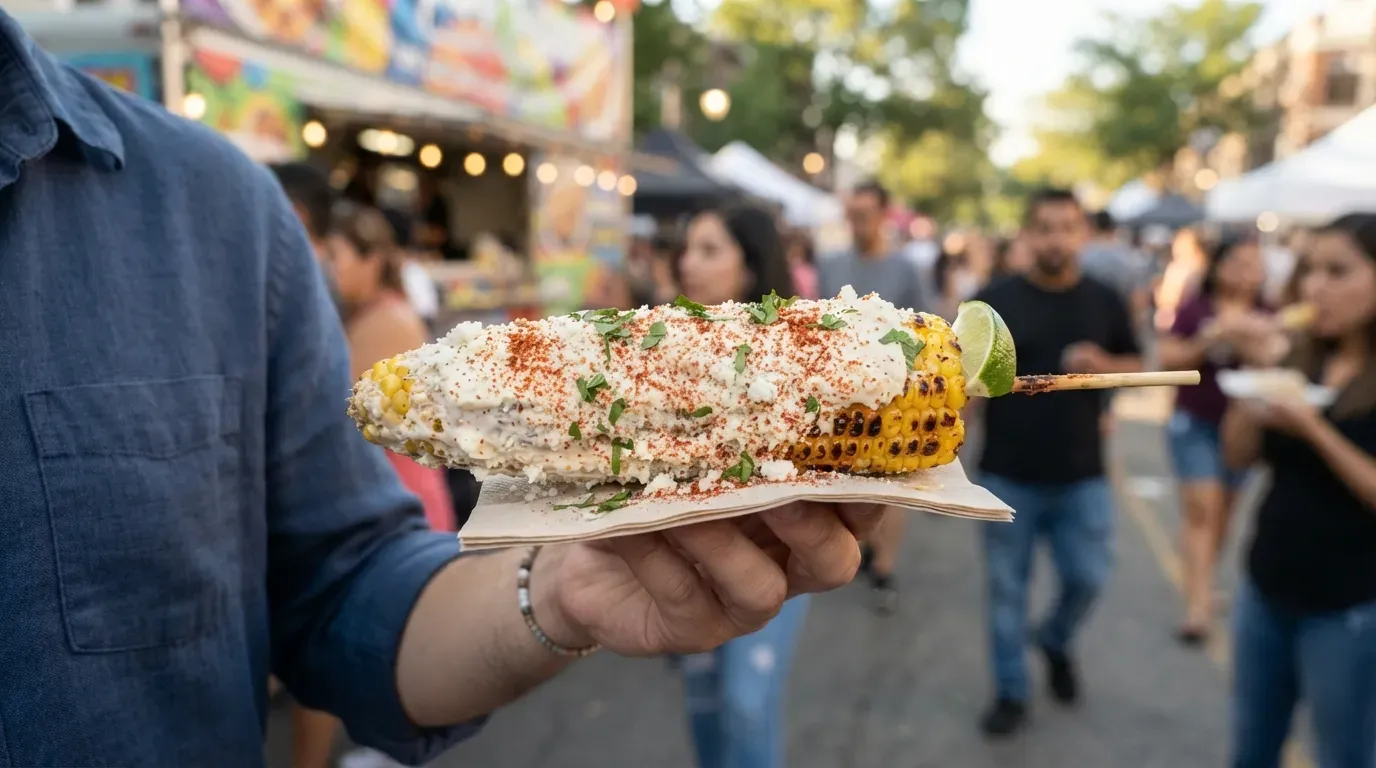
Elote looks simple – corn on a stick – until the toppings start stacking up and it becomes something closer to a flavor bomb than a vegetable. Traditional Mexican street corn is grilled, then coated in mayonnaise, rolled in crumbly cotija cheese, dusted with chili powder, and finished with a squeeze of lime.
The cup version, esquites, strips the corn off the cob entirely so vendors can serve it faster during peak festival crowds. What started as a staple at Mexican and Central American street carts has become a fixture at food truck rallies, farmers markets, and summer fairs from Los Angeles to Chicago. Some purists complain that Americanized versions drown out the char of the grilled corn with too much mayo, sparking genuine debate over which vendor gets the balance right.
Fast Facts
- “Elote” simply means “corn” in Spanish – the toppings are what turn it into a dish worth lining up for.
- Cotija cheese, the classic crumbly topping, takes its name from the Mexican town where it was first made.
- Esquites lets vendors serve a crowd in seconds flat, no cob, no mess, just a cup and a spoon.
- Toppings shift by region and vendor: some swap mayo for Mexican crema, others finish with Tajín instead of plain chili powder.
#7 – Shave Ice: The Dessert Mainlanders Keep Getting Wrong
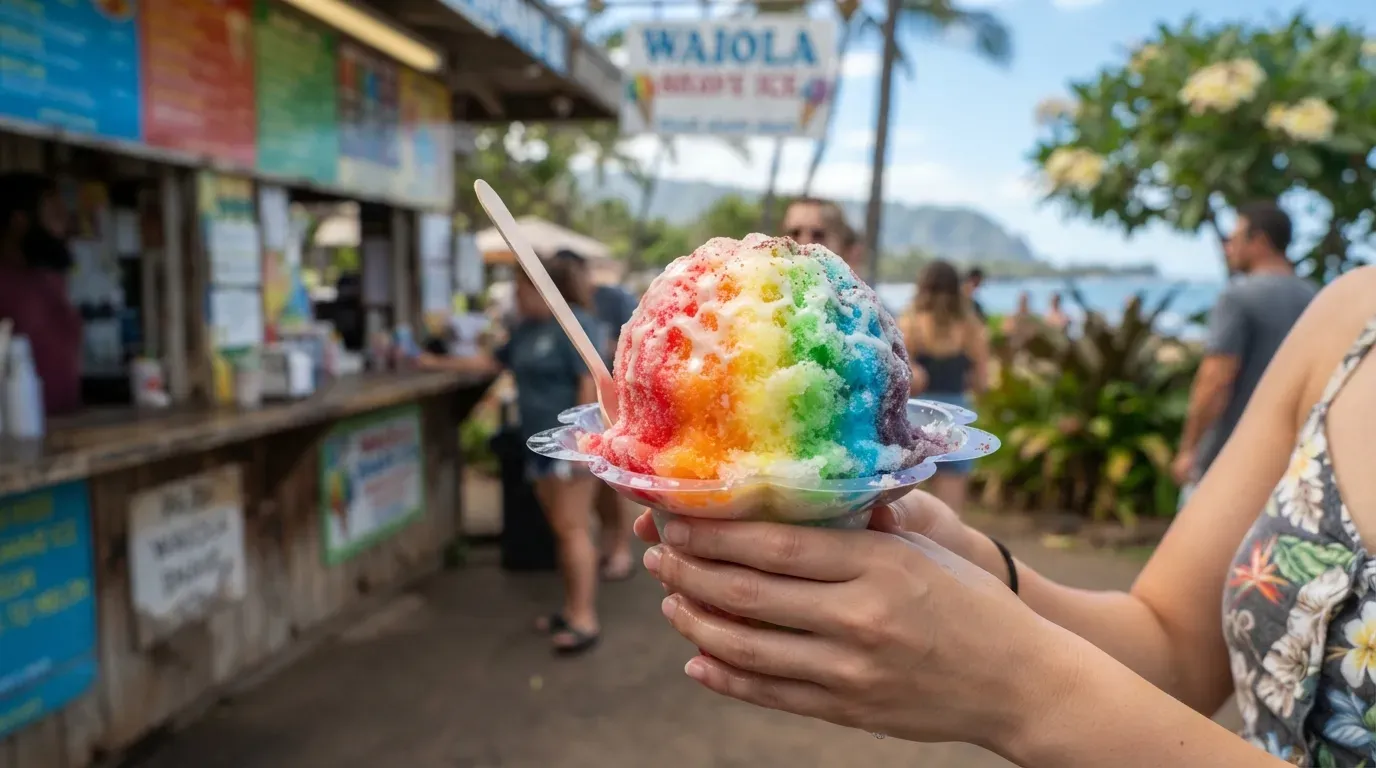
Calling Hawaiian shave ice a “snow cone” is the fastest way to offend a local, and there’s a real reason why. Snow cones use crushed, gravelly ice; shave ice is shaved so fine it comes out powder-soft, letting syrup soak all the way through instead of just coating the surface.
Many stands hide a scoop of vanilla ice cream or sweet azuki beans at the very bottom, turning the last few bites into a completely different dessert than the first. Longtime island vendors layer multiple syrup flavors in rainbow stripes, a presentation now widely copied on the mainland but rarely matched. Tourists often assume it’s interchangeable with mainland snow cones, and that assumption is exactly what locals love to correct.
#6 – Fry Bread: The Street Food Born From Forced Survival
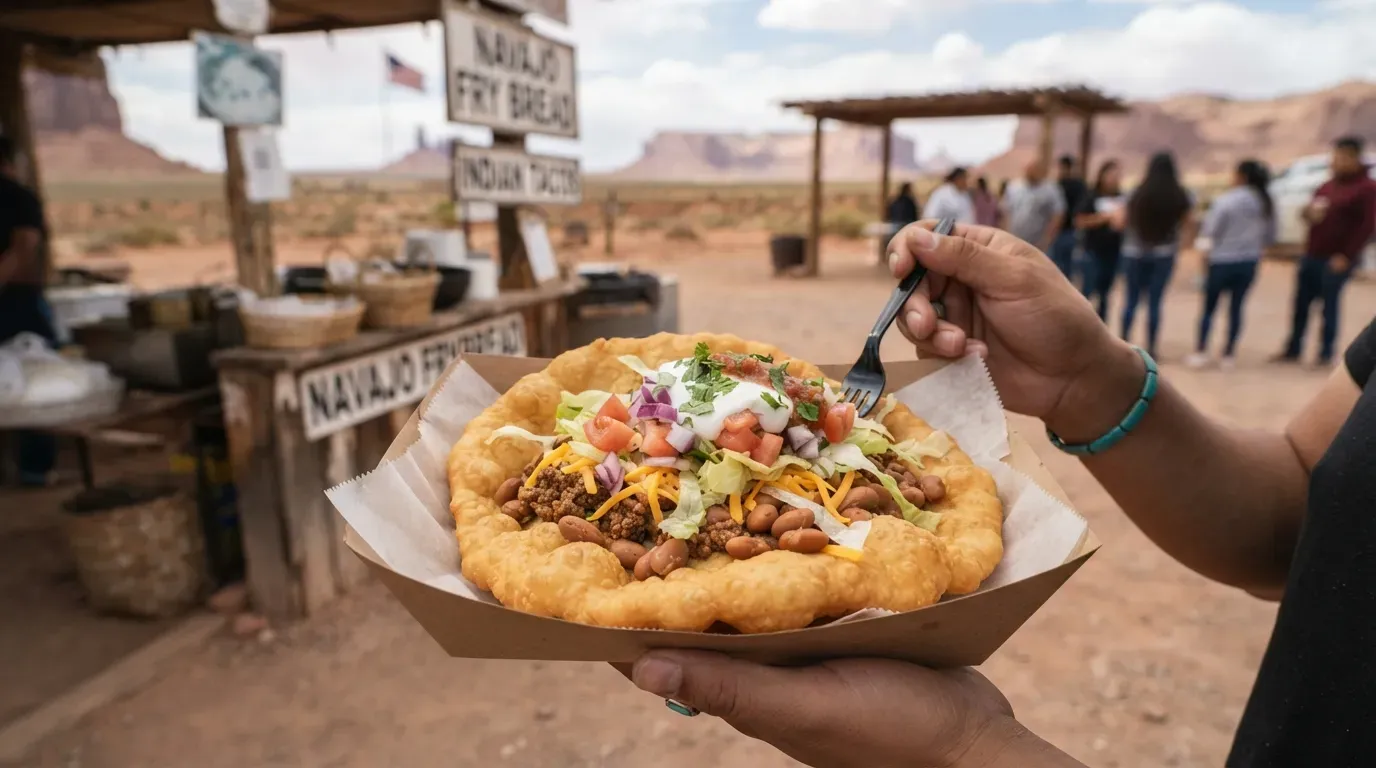
Fry bread looks like a simple fried dough puff, but its origin story is one of the heaviest in this entire list. Navajo frybread traces back to when the U.S. government forced Indigenous people in Arizona onto the 300-mile “Long Walk” to New Mexico, relocating them to land that couldn’t support their traditional staples of vegetables and beans. In their place, the government supplied rations of flour, lard, and sugar – ingredients unfamiliar to many Native diets.
What began as a survival food made from government rations is now the base of the beloved “Indian taco,” found everywhere from reservation road stands to state fair midways. The food plays a central role in powwows, where you’ll typically find long lines at frybread stands. The dish remains genuinely controversial inside Native communities, with some viewing it as cultural resilience and others pushing to retire it for health reasons – a tension that adds real weight behind every bite.
Fry bread is the story of our survival.
Sherman Alexie
#5 – Beignets: The Breakfast That Doubles as a Sugar Bomb
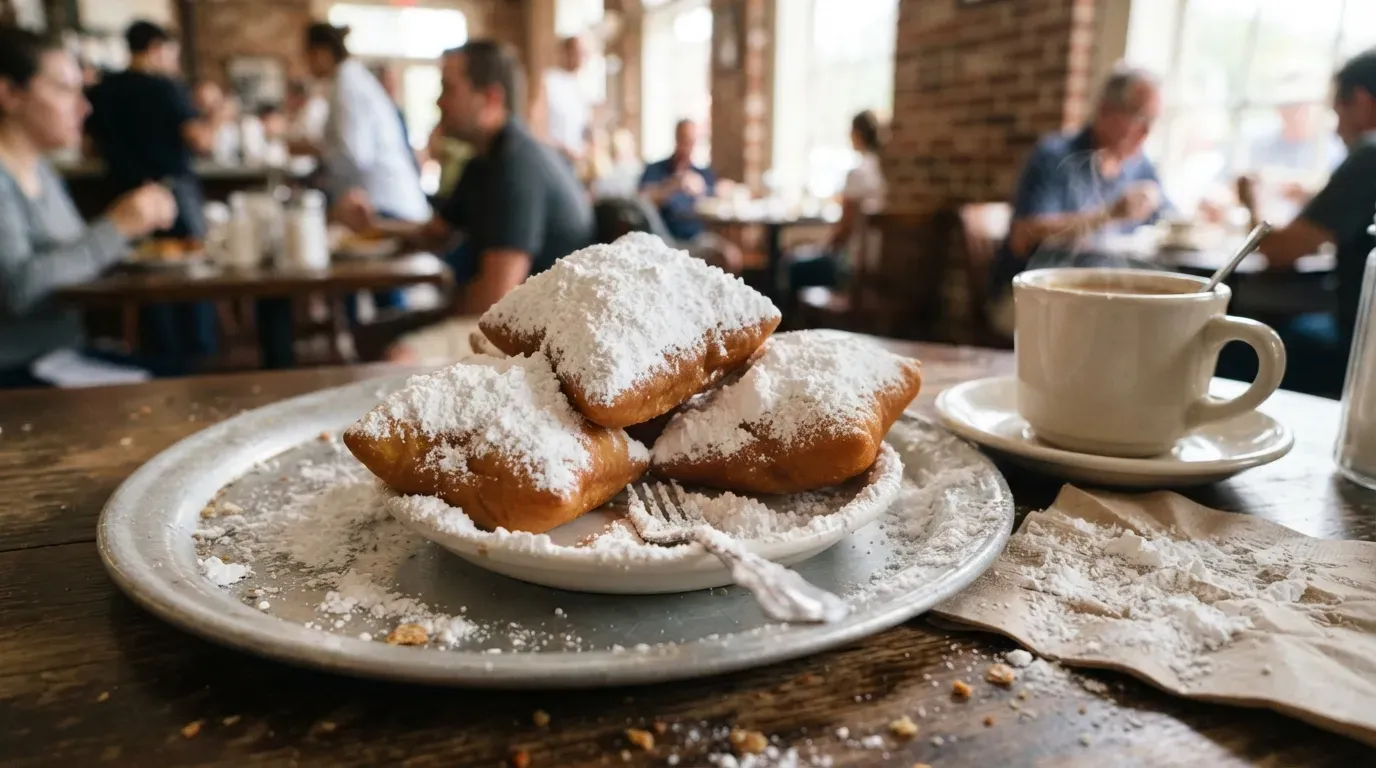
Beignets aren’t technically donuts, and locals in New Orleans will make sure you know the difference. They’re square, yeast-based French-style fried dough, served piping hot and buried under a snowdrift of powdered sugar that lands on your shirt whether you like it or not.
The powdered sugar isn’t optional garnish – it’s practically part of the recipe, applied in a thick enough layer that the first bite is more sugar than dough. Traditionally paired with chicory coffee, beignets became a French Quarter breakfast ritual that locals still eat late into the night, not just in the morning. The mess is part of the charm, and any vendor trying to serve a “neat” beignet is missing the point entirely.
#4 – Lobster Roll: The Sandwich That Splits an Entire Region
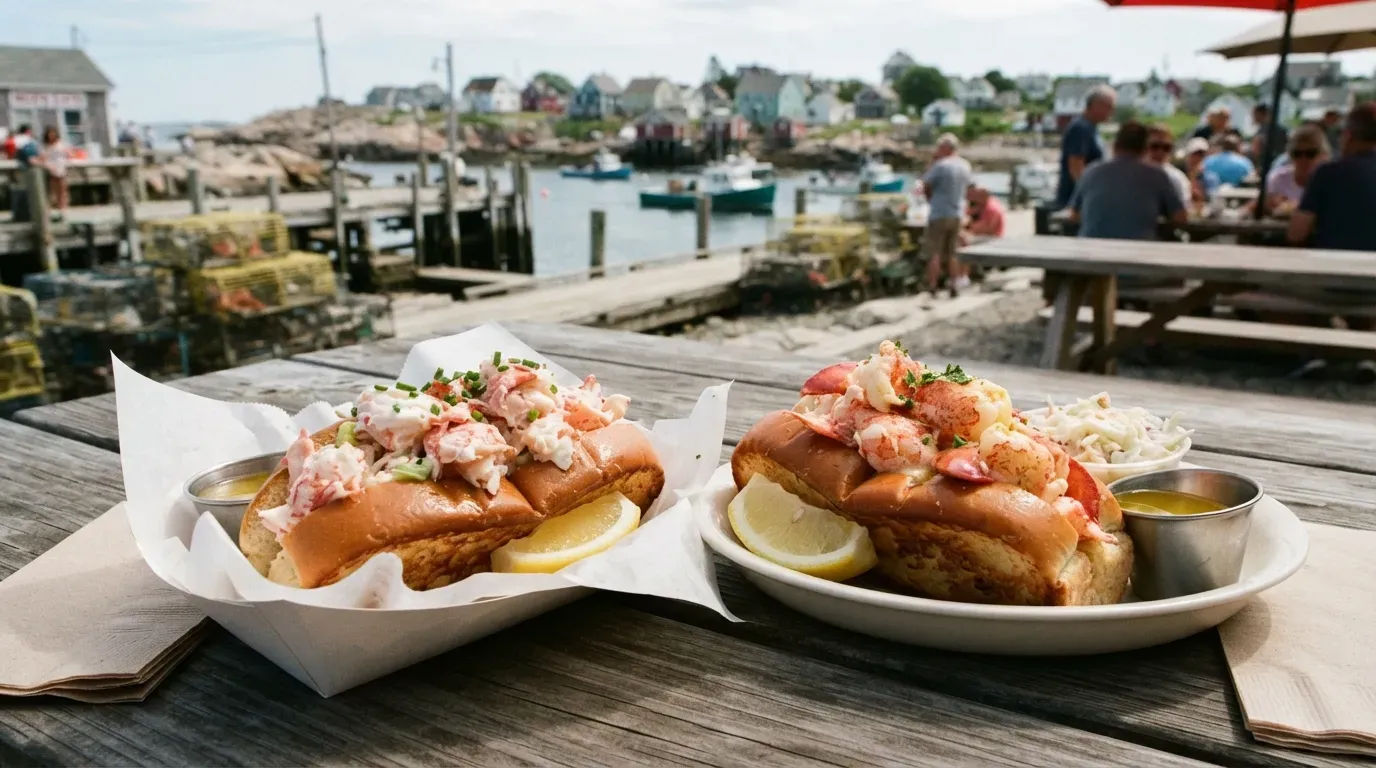
Order a lobster roll in Maine and you’re stepping into a decades-old feud that has nothing to do with the lobster itself. The real argument is about the dressing: cold lobster meat tossed lightly in mayonnaise, known as “Maine style,” versus lobster served warm in melted butter, the “Connecticut style.”
Purists insist the meat should barely be dressed at all, letting the lobster’s natural sweetness carry the sandwich instead of hiding it under sauce. The bun matters just as much – a split-top, griddled roll toasted on both flat sides is considered non-negotiable by most coastal shacks. Order it any other way at a roadside stand in Maine and don’t be surprised if the vendor raises an eyebrow.
#3 – Halal Cart Chicken and Rice: The Meal That Started With a Hot Dog
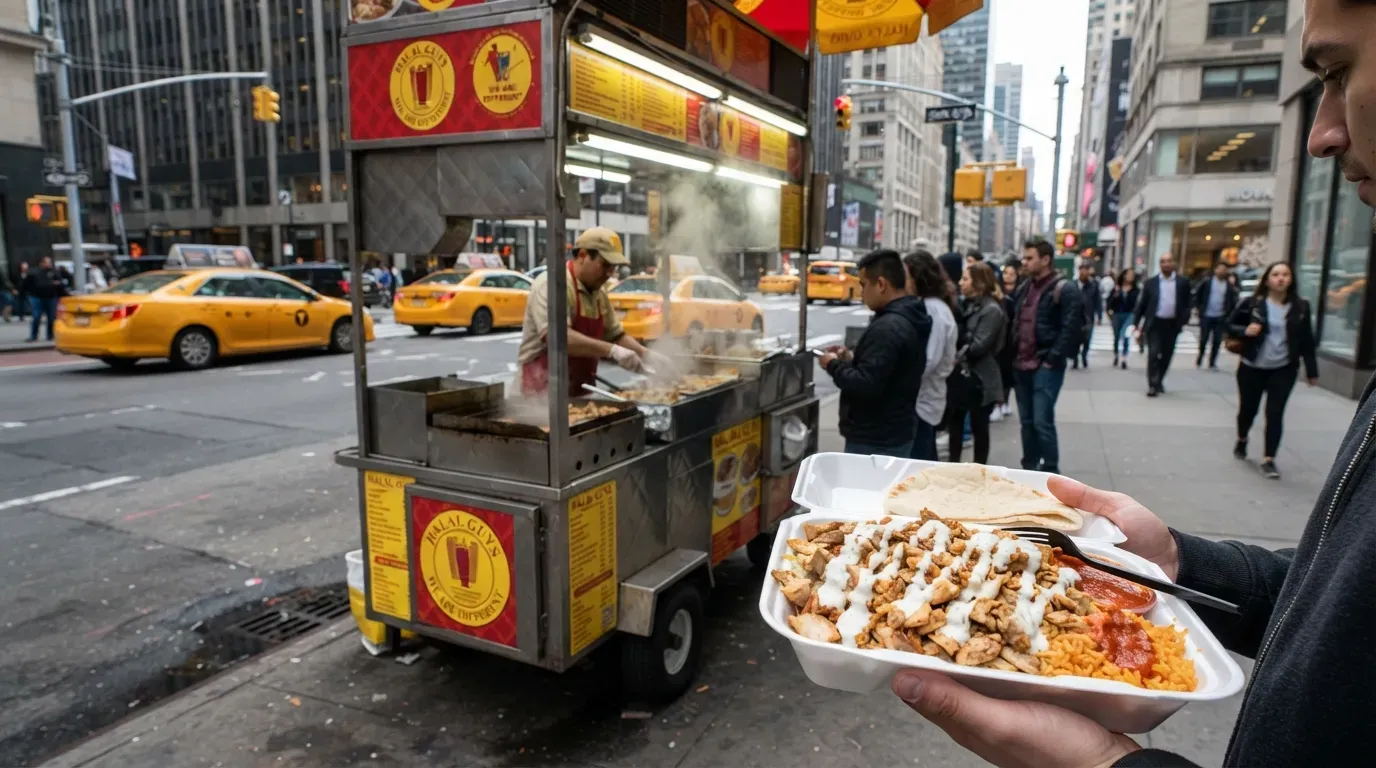
The most iconic street meal in New York City almost didn’t happen. The Halal Guys started as one of many hot dog carts in Midtown Manhattan back in 1990, but Mohamed Aboulenein believed hot dogs weren’t quite satiating enough for their clientele and began selling halal chicken, gyros, and pita instead. By 1992 the cart had settled on its now-famous menu of chicken, gyro meat, rice, and pita, and New York’s Muslim cab drivers started flocking there for a quick, affordable halal meal between fares.
Word spread almost entirely through taxi drivers passing the intersection during meal breaks, turning one Midtown cart into a citywide phenomenon years before social media existed. The cart’s rise sparked fierce competition among street meat vendors nearby, with lines commonly stretching past an hour. The mysterious white sauce that comes standard on every platter is still a closely guarded recipe nobody outside the business has fully cracked.
At a Glance
- “The Halal Guys was founded in 1990… as a hot dog cart located at the southeast corner of 53rd Street and Sixth Avenue” before switching menus two years later.
- “Abouelenein, however, believed that a hot dog was not a satisfying meal, and switched to the current menu of chicken, gyro meat, rice, and pita in 1992.”
- The original cart’s lines have “often stretching more than a block”, making it a landmark stop for tourists as much as cab drivers.
- The brand didn’t open its first sit-down restaurant until 2014, and has since expanded to well over 100 locations domestically and abroad.
#2 – Chicago-Style Hot Dog: The One Sandwich You Cannot Ask for Ketchup On
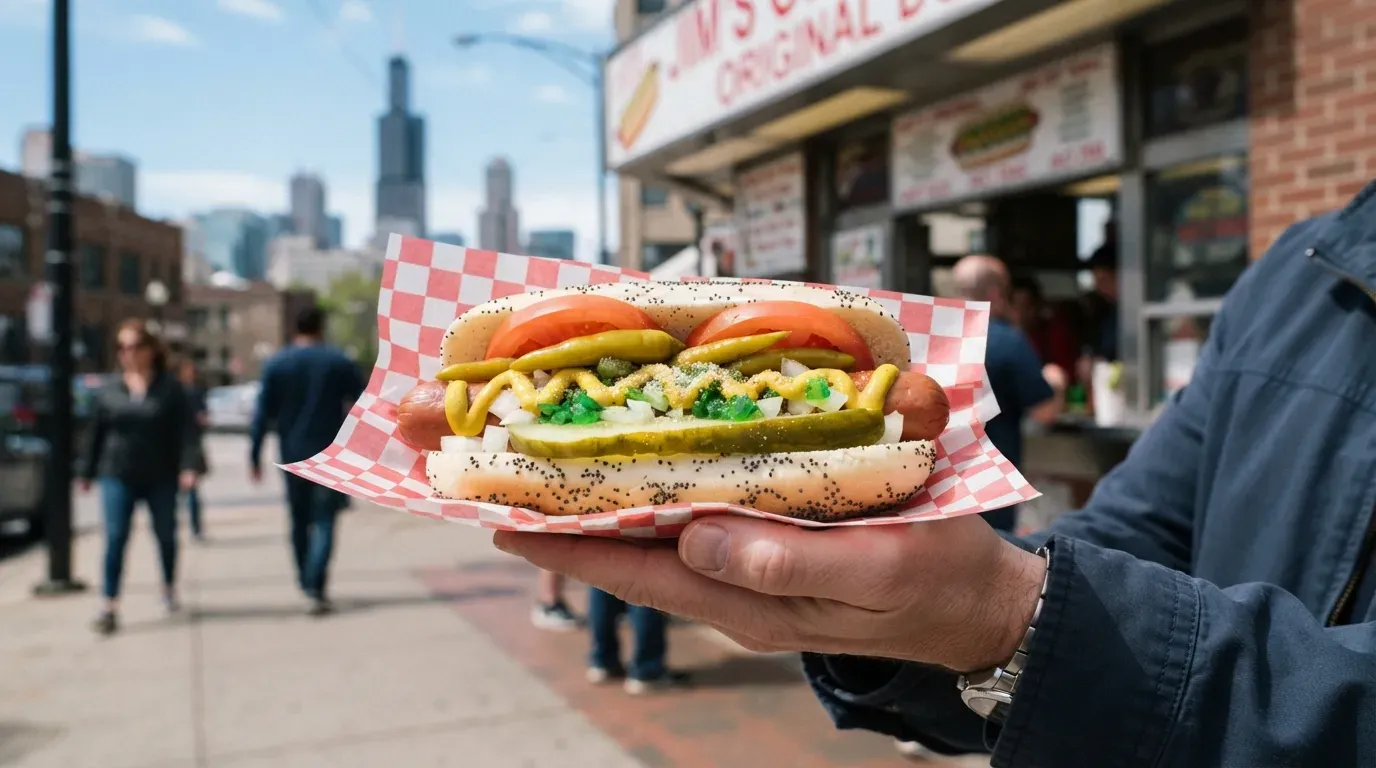
Order a hot dog in Chicago and add ketchup, and you’ll quickly learn this city treats condiments like a moral issue. A Chicago-style hot dog is an all-beef frankfurter on a poppy seed bun, topped with yellow mustard, chopped white onions, bright green sweet pickle relish, a dill pickle spear, tomato wedges, pickled sport peppers, and a dash of celery salt. Ketchup is nowhere on that list, and plenty of Chicagoans will tell you exactly why that’s non-negotiable.
The no-ketchup rule isn’t just snobbery – it traces back to the idea that ketchup was used to mask the taste of lower-quality meat, so vendors selling premium beef never needed it. The complete assembly is said to be “dragged through the garden” thanks to the sheer number of toppings piled on top. The tradition took hold during hard economic times, when a fully loaded hot dog became an affordable, filling meal for working-class families.
#1 – Philly Cheesesteak: The Sandwich Invented Out of Pure Boredom
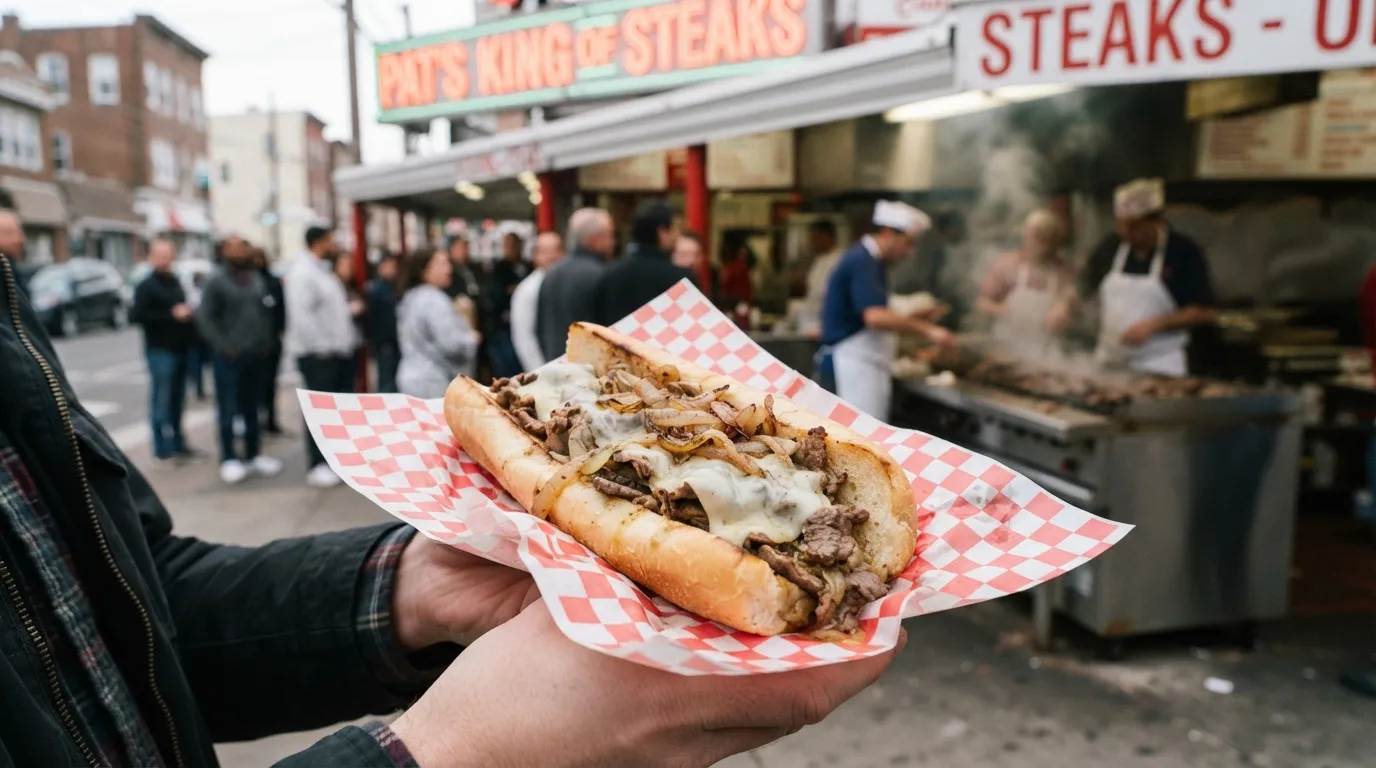
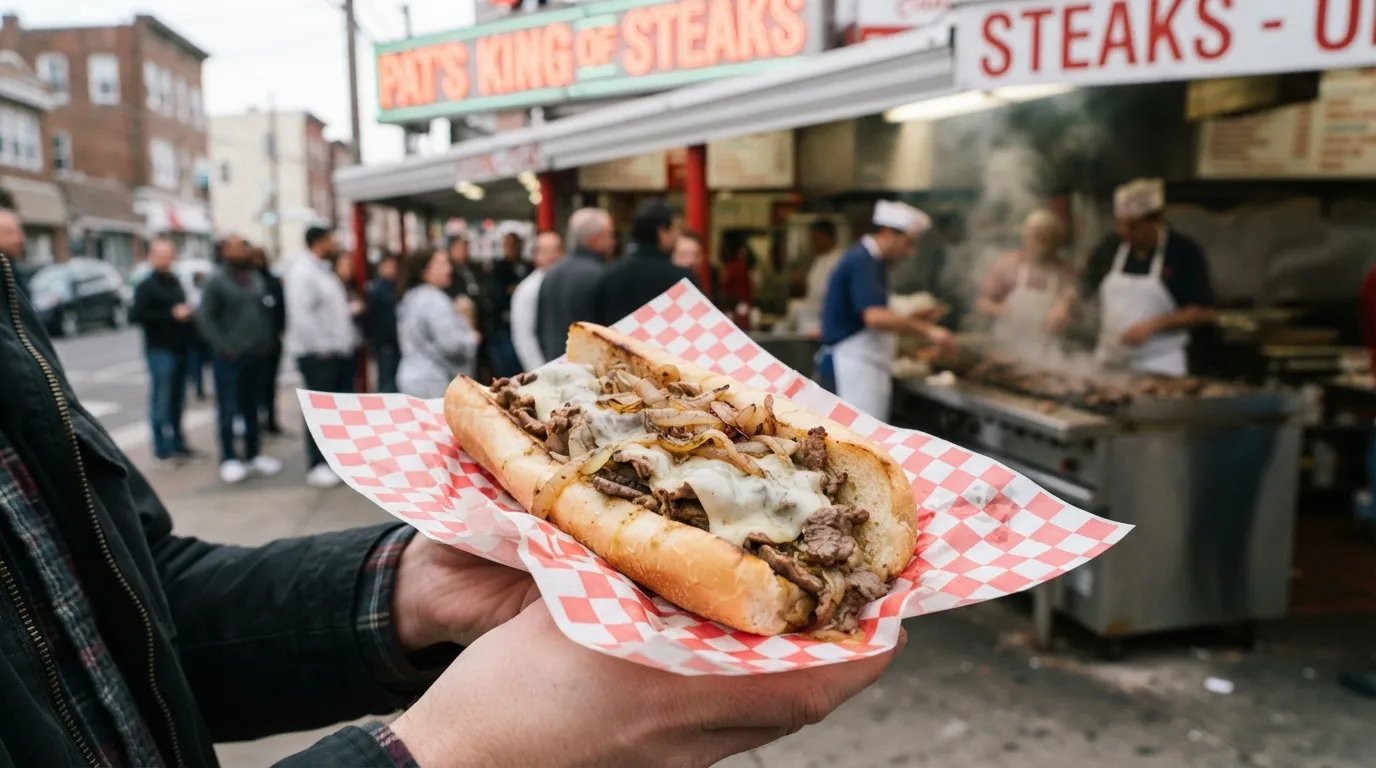
The most famous sandwich in American street food history exists purely because one man got sick of his own lunch. Weary of eating hot dogs day after day, Pat and Harry Olivieri grilled some sliced beef with onions instead – and before either brother could take a bite, a passing cab driver offered a nickel for the sandwich and declared it better than any hot dog. The sandwich was originally served without cheese at all; American cheese wasn’t added until 1951, more than two decades after the sandwich itself was invented.
For nearly twenty years, Philadelphians ate a cheeseless steak sandwich and had no idea what they were missing. Cheez Whiz became the dominant topping only after Kraft introduced it in 1952, when Pat Olivieri realized he could melt the whole can right on the grill without violating kosher customers’ rules against mixing meat and dairy. Today the rivalry between the two shops sitting directly across the street from each other in South Philadelphia is as much a tourist attraction as the sandwich itself, and locals still argue endlessly over provolone versus Whiz.
Why It Stands Out
- Pat’s King of Steaks opened its doors in 1930, and “Pat Olivieri, who is credited as being the man who created the cheesesteak”, still owns the corner today.
- Geno’s Steaks opened directly across the street in 1966, turning a single sandwich into a decades-long neighborhood rivalry.
- Ordering wrong at either counter – skipping the shorthand for cheese and onions – can genuinely slow down your line.
- The rivalry exploded nationally after “Rocky” hit theaters in 1976, turning a South Philly street corner into a pilgrimage site.
What’s most striking about this list isn’t the flavors – it’s how much regret, rivalry, and raw survival is baked into every single one of these foods. A sandwich born from a bored hot dog vendor became a national icon. A bread made from government survival rations became a source of cultural pride and painful debate at the same time. Even something as simple as ketchup on a hot dog turned into a decades-long moral stance in one American city.
None of these dishes are neutral, and that’s exactly why they’re worth tracking down in person instead of just reading about them. Somewhere right now, someone’s getting yelled at for ordering ketchup on a hot dog – and honestly, that’s half the fun.