
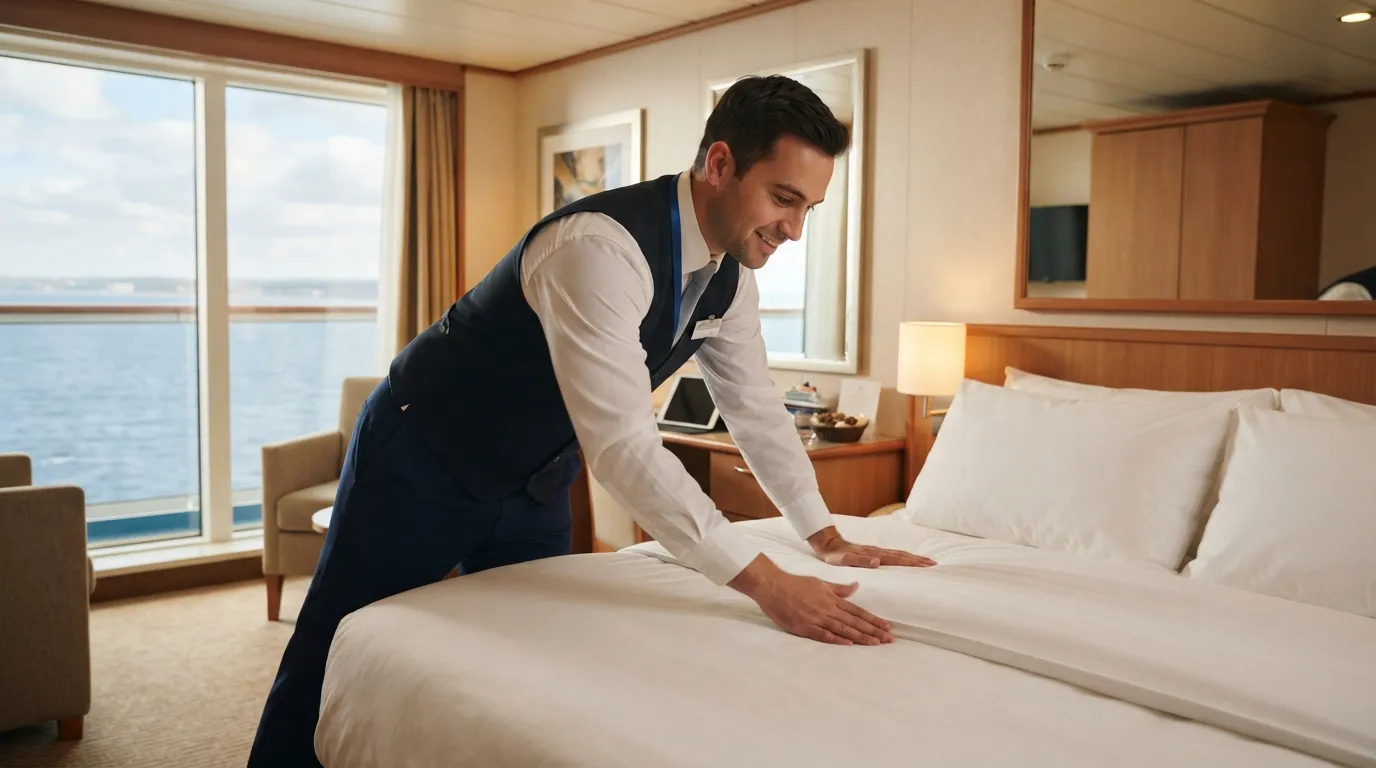
Ask any cabin steward what really happens behind a closed stateroom door, and the honest answer will surprise you: the guests getting the best treatment on any ship almost never demanded it. It has nothing to do with tipping extra or complaining louder, and almost everything to do with small, unspoken habits older guests carry without even realizing it.
Cruisers over 60, especially the ones who’ve sailed for decades, quietly trigger a different kind of attention than they know. Here’s what veteran cabin stewards actually do behind the scenes – and almost never say out loud.
#14 – They Quietly Build Their Entire Shift Around Your Nap Schedule
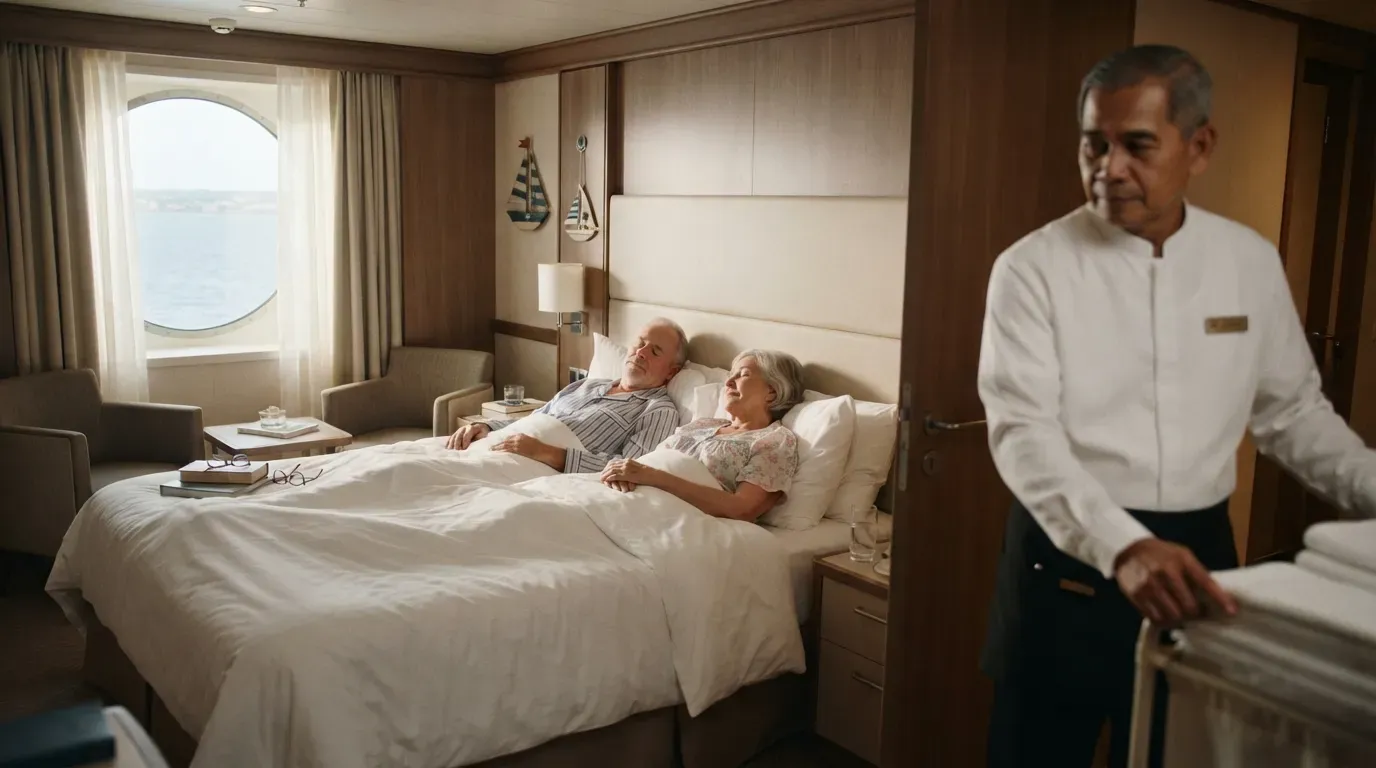
A steward covering twenty or more staterooms lives and dies by predictability, and older guests hand it to them without even trying. Guests over 60 tend to lock into an almost identical routine from day one – same wake-up time, same nap window, same dinner slot. Stewards genuinely love this, because it turns an impossible daily puzzle into something they can actually plan around.
Younger passengers bounce unpredictably between the pool, the casino, and late-night shows, which makes scheduling a nightmare. A guest who naps at 2 p.m. every single day, by contrast, becomes the easiest cabin on the whole hallway to manage. It’s a small courtesy that quietly buys faster service, better timing, and fewer interruptions all week long.
#13 – They Quietly Steer You Toward the Ship’s Hidden Calm Spaces

Not every perk on a cruise ship shows up in the app, and stewards often decide who hears about the rest. Cruisers over 60 frequently mention discovering “secret spots” only because a crew member pointed them there – hidden libraries, near-empty adults-only sundecks, tucked-away bars that don’t get busy until later. Stewards notice who’s chasing calm instead of chaos, and they reward that instinct.
The catch is that none of this gets announced publicly. If you’re tidy, polite, and don’t make wild demands, you’re the guest who gets whispered the good stuff. It has nothing to do with loyalty tier and everything to do with how you treat the person who cleans your room.
#12 – They Bring Mobility Aids Before You Have to Ask Twice
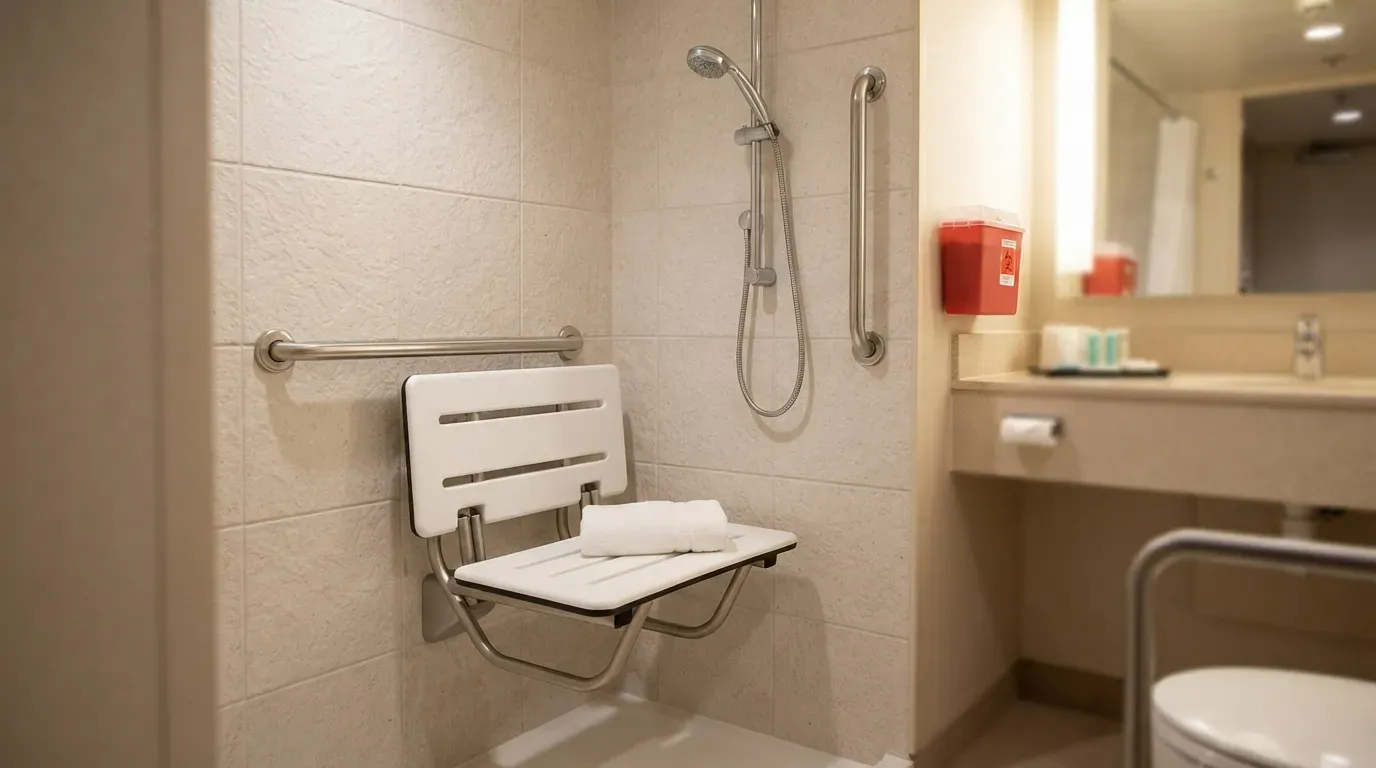
Stewards field far more accessibility requests than most guests ever guess, and they rarely make anyone feel awkward for asking. Plenty of passengers have simply asked for a shower seat and had one appear within the hour. Sharps containers, repositioned furniture, even mobility-friendly bed heights get handled the exact same quiet way.
For guests with real medical needs, the smoothest results come from giving advance notice instead of a same-day ask. Letting the cruise line know ahead of time means the cabin gets prepped before a guest even unpacks. That one extra step avoids an awkward mid-cruise scramble – and it’s the difference between a good week and a stressful one.
Fast Facts
- Shower seats and grab bars are among the most common accessibility requests stewards handle
- Sharps containers for insulin or other injections can often be stocked within the hour
- Bed risers or repositioned furniture are usually arranged with just a day’s notice
- Guests who notify the cruise line before sailing typically get accommodations pre-installed before boarding
#11 – They Swap in a Mattress Topper Before Your Back Even Complains
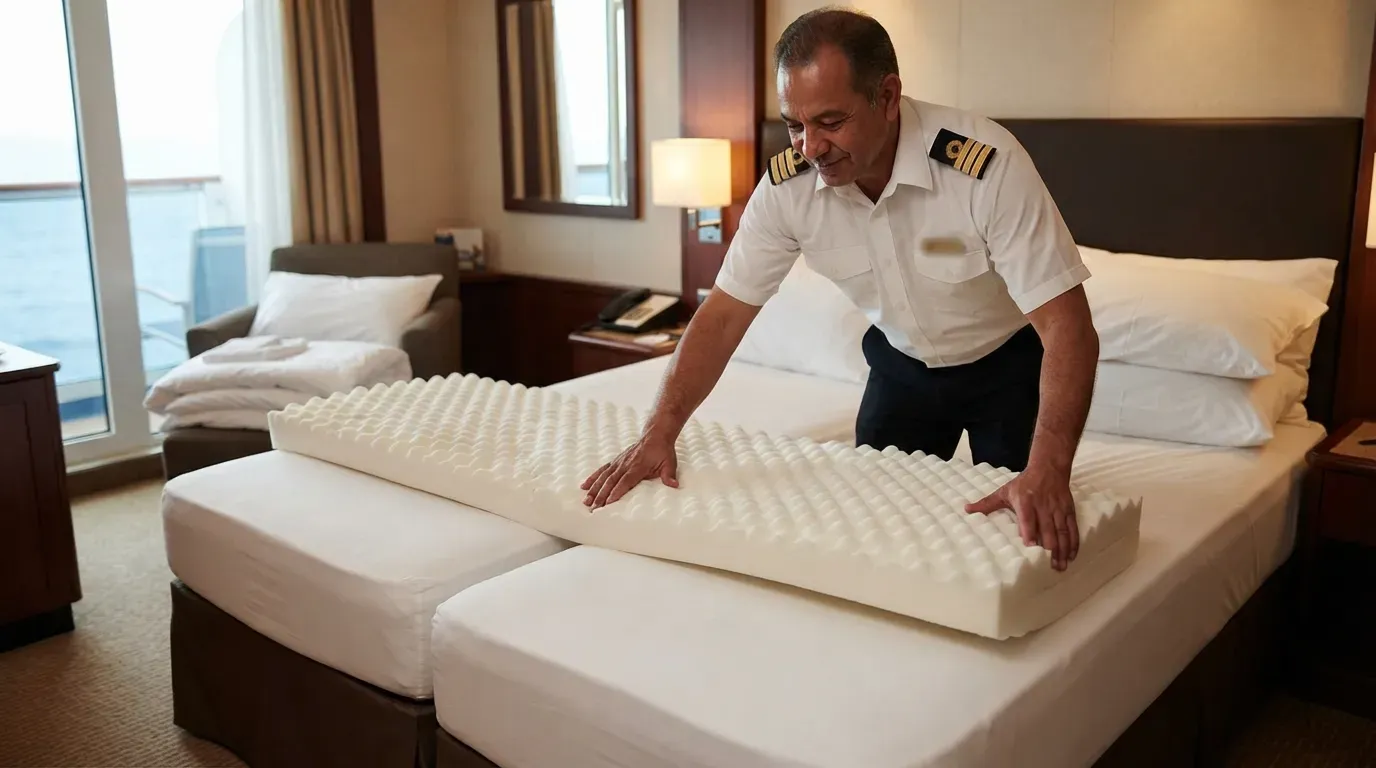
Cruise ship beds have a reputation problem, and stewards know it better than anyone on board. Guests who find the mattress too firm can ask for a topper, and it’s a wildly common request – especially to hide the annoying seam where two twin beds get pushed together into a king. Guests over 60 ask for this more consistently than any other age group, and stewards keep a mental list of who’s likely to need one before embarkation day even ends.
What most people don’t realize is that toppers are limited, so early requesters quietly jump the line. A sharp steward who notices stiff movement or a wince while sitting down will sometimes offer one before it’s even asked for. It’s a small fix, but it can turn a mediocre night’s sleep into an actual vacation.
#10 – They Still Hand-Deliver a Paper Daily Planner in an App-Only World
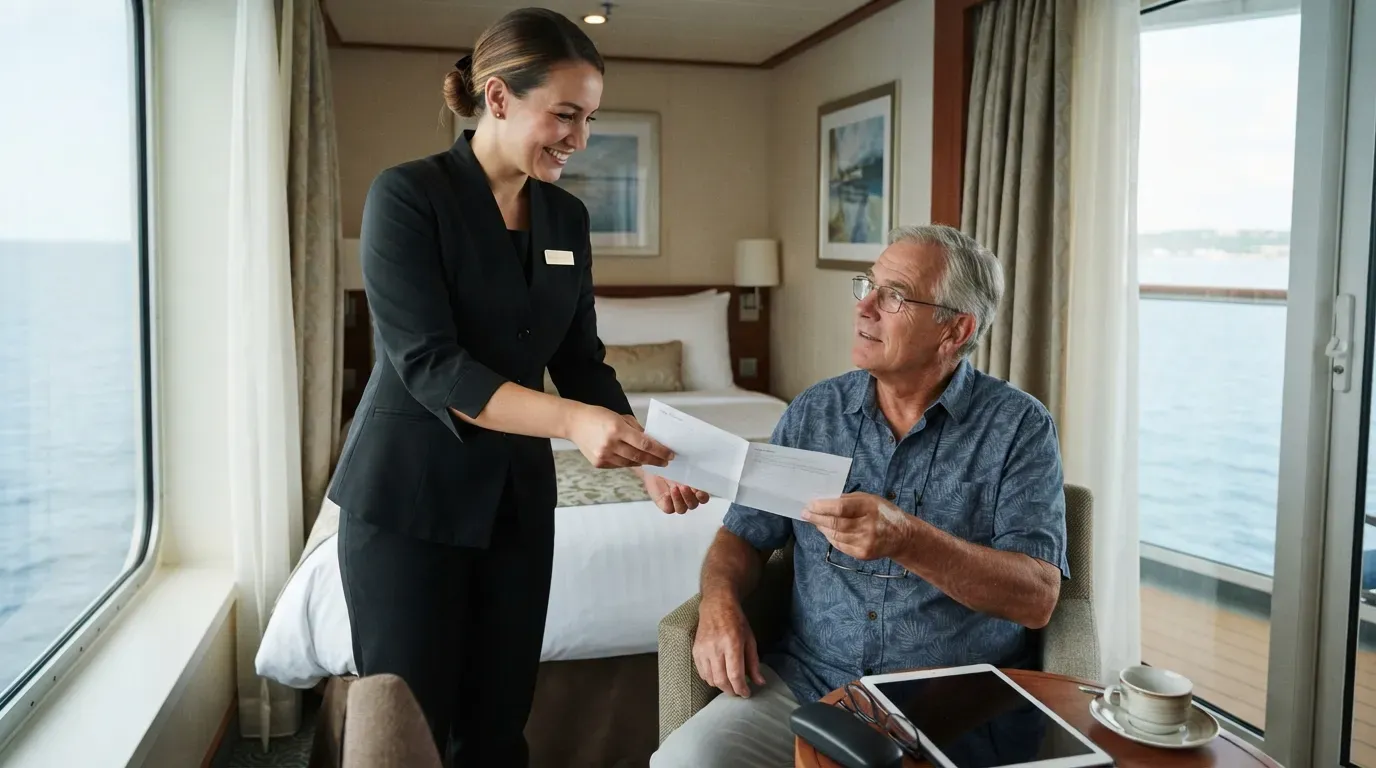
Cruise lines have quietly phased out printed schedules in favor of apps, but stewards keep the old system alive for guests who still want it. Most passengers just check the daily agenda on their phone, but older guests are far more likely to ask for an actual paper copy – and stewards usually clock that preference within the first evening.
It sounds like a tiny accommodation, but it tells the steward something bigger: this guest trusts paper and routine more than screens. That detail quietly reshapes how the steward communicates with them for the rest of the week – fewer app notifications, more face-to-face updates, more of the personal touch that used to be standard on every ship.
#9 – They Quietly Warn You Which Ports Aren’t Safe to Wander Alone
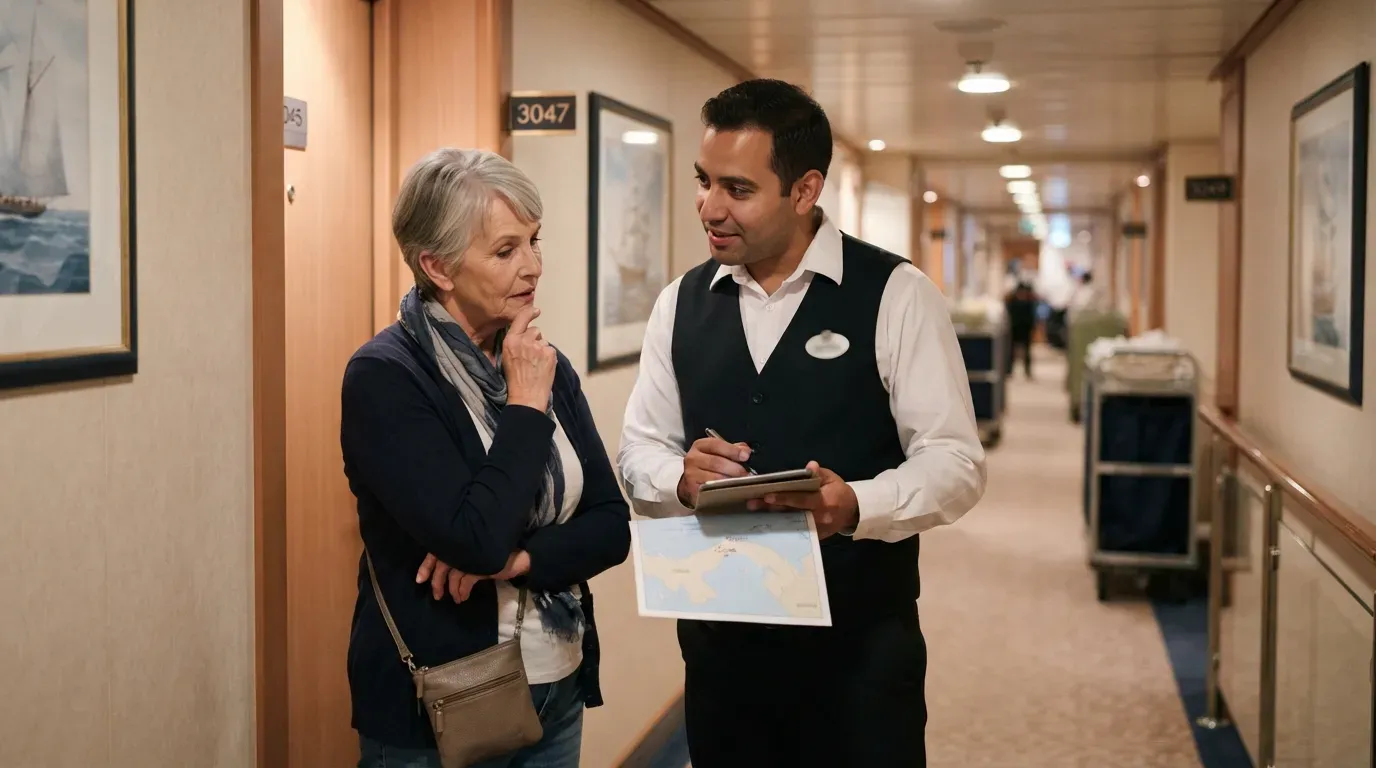
Stewards technically aren’t tour guides, but plenty of guests treat them like trusted locals – and for good reason. A cabin steward is often the best person on the ship to ask about the itinerary, since crew hear real feedback from passengers in every port, every week. One cruiser said her steward flatly told her which ports were fine to explore alone and which ones weren’t, based on what he and other crew members had actually seen.
This kind of insider guidance rarely gets offered unprompted, but stewards volunteer it more readily for older guests traveling solo or in pairs. It’s advice you won’t find printed in any shore excursion brochure, because it comes from crew members comparing notes across hundreds of sailings, not from a marketing department.
#8 – They Rush Pressing So You Can Still Dress the Old-Fashioned Way
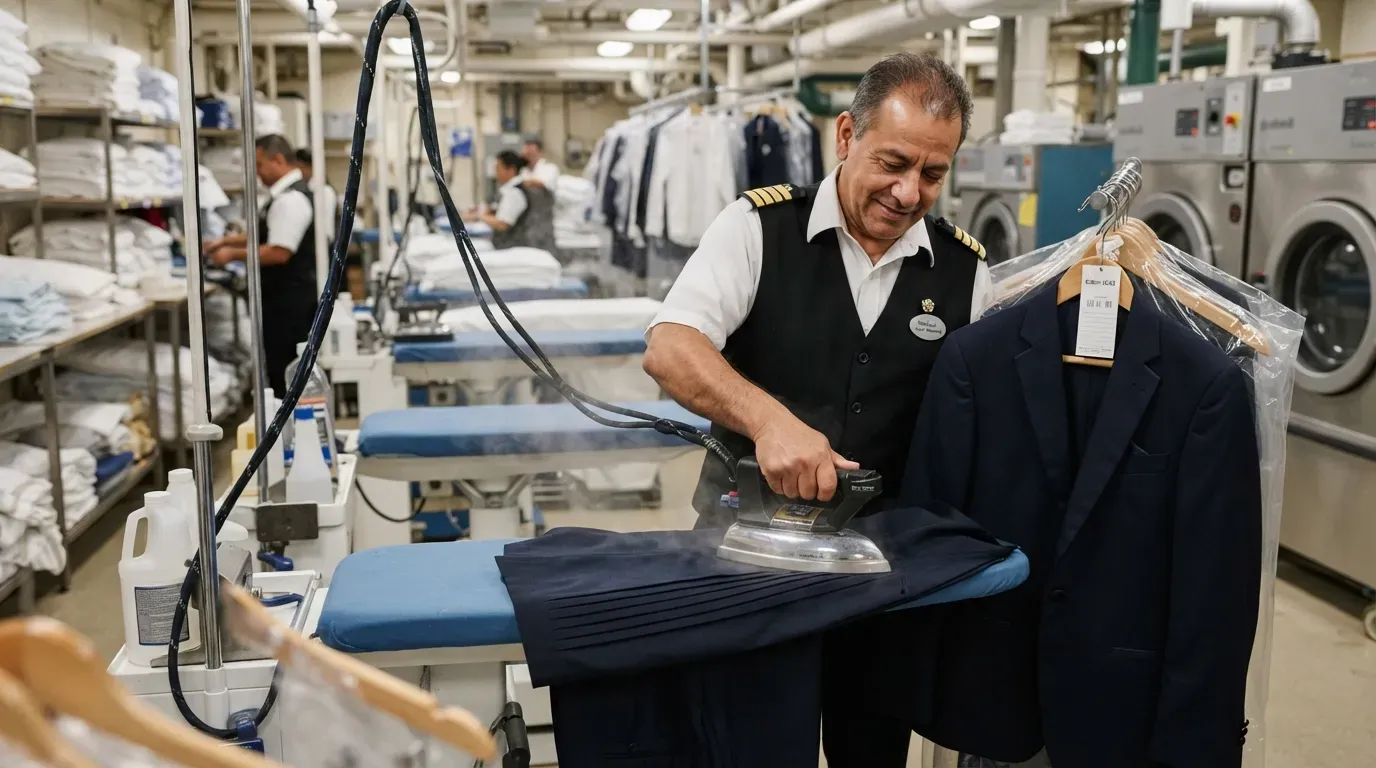
Formal night has quietly turned optional on most ships, but plenty of guests over 60 never got that memo – and stewards notice exactly who still cares. On ships that keep a classic dining room or a formal night tradition, older passengers are noticeably more likely to actually dress the part, sending out garment bags for pressing and requesting extra hangers just for suits and gowns.
Some in the industry argue this generational split says more about cruise lines than passengers – the push toward “resort casual” dining was aimed squarely at younger travelers, and plenty of older guests experience it as a real loss. On ships that skew older, the difference between dress code as suggestion and dress code as rule becomes obvious by the second night, and it’s one of the sharpest contrasts stewards see cabin to cabin.
Quick Compare
- Formal Night, Then: Suits, gowns, and a strict dining room dress code every cruise
- Formal Night, Now: Many mainstream lines have shifted toward “elegant casual” or optional dress-up nights
- Older guests: Still request pressing, garment bags, and extra hangers for formalwear
- Younger guests: Often skip formal night entirely or dress far more casually
#7 – They Check Your Loyalty Tier Before They Even Touch Your Suitcase
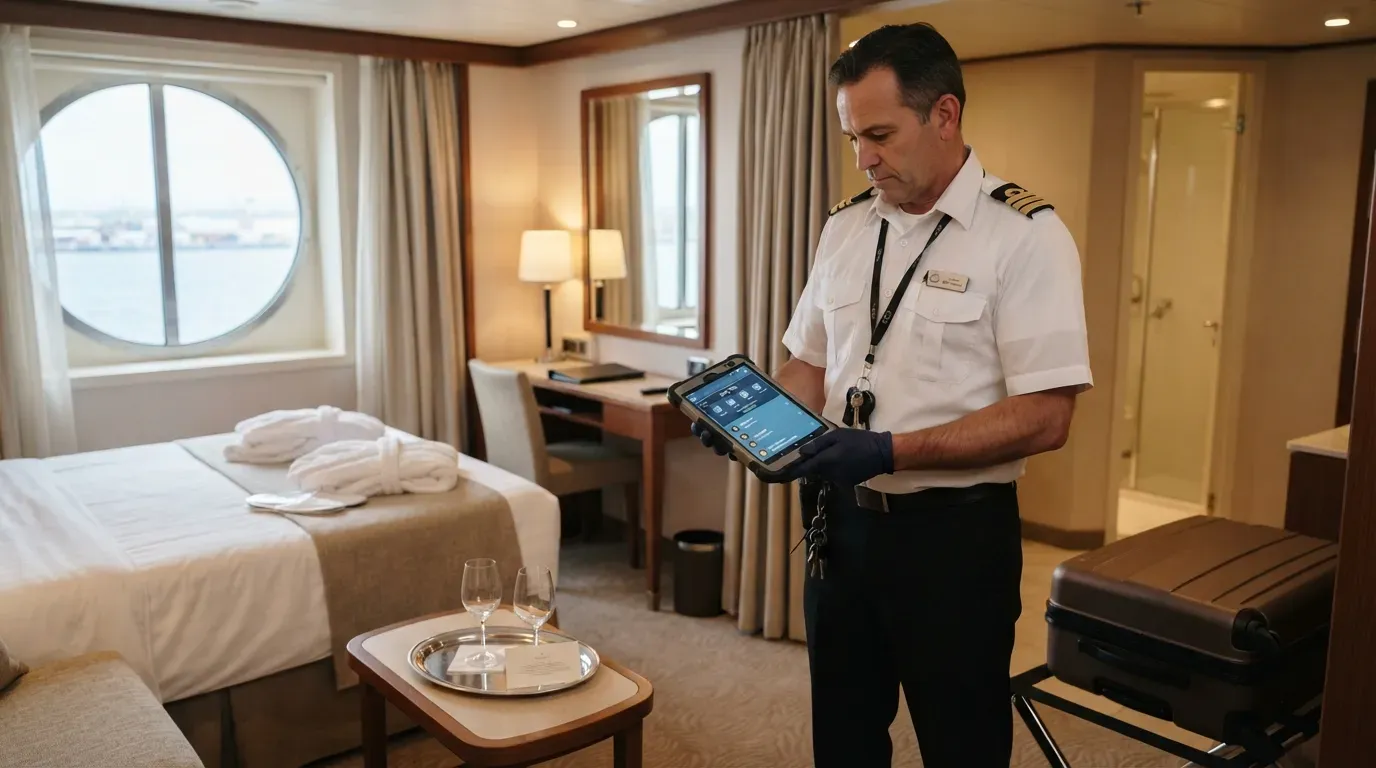
Decades of repeat cruising quietly reshape how a steward treats a cabin before a single bag gets unpacked. Many older passengers arrive with serious loyalty tier status built up over years, and stewards check that status almost immediately – changing what gets offered without a word ever being asked.
This isn’t favoritism so much as operational habit. Bathrobes, wine glasses, bed configuration, priority embarkation – all of it gets shaped by loyalty tier before a guest even says hello. With ocean cruising hitting roughly 34.6 million passengers in 2024, nearly double the number sailing just a decade earlier, repeat sailors have become common enough that tier status now quietly drives service from the very first minute.
At a Glance
- Ocean cruising reached roughly 34.6 million passengers in 2024
- That’s nearly double the passenger volume from just a decade earlier
- Loyalty status can quietly influence bathrobes, wine glasses, bed setup, and boarding priority
- None of it requires asking – stewards check tier status before a bag is even unpacked
#6 – They Discreetly Tuck Away Your Valuables to Protect You Both

Trust can accidentally turn into a liability, and stewards are trained to fix that quietly rather than make it awkward. Older passengers, more used to old-school hotel housekeeping norms, are more likely to leave cash, watches, or jewelry sitting right out on the desk as a sign of trust. Most guests have no idea how much stress this actually creates on the other side of the door.
Stewards will often say cleaning a room with cash on the nightstand feels genuinely stressful, since cruise lines enforce strict theft policies that can end a career over a single false accusation. A good steward quietly nudges valuables into a drawer or the in-room safe during cleaning rather than saying anything directly – protecting the guest and their own job in the same quiet move.
#5 – They Quietly Put Your Name Forward for a Free Cabin Upgrade

Nobody advertises this, but cabin upgrades happen more often than most travelers assume – and calm, low-maintenance older guests tend to benefit the most. One longtime cruising couple got a surprise move at check-in, jumping from a basic inside cabin to a midship balcony room with zero obstructions and no extra fees.
We got upgraded from Deck 12 front to Deck 10 mid-aft. We’re 77 and didn’t expect it.
A cruiser, sharing the surprise online
The pattern shows up again and again in cruise forums, especially among older travelers who book early, don’t tinker with their reservation, and stay calm at check-in. Turns out patience, not persistence, is often the real upgrade strategy.
#4 – They Fix Small Emergencies Before You Even Have to Ask
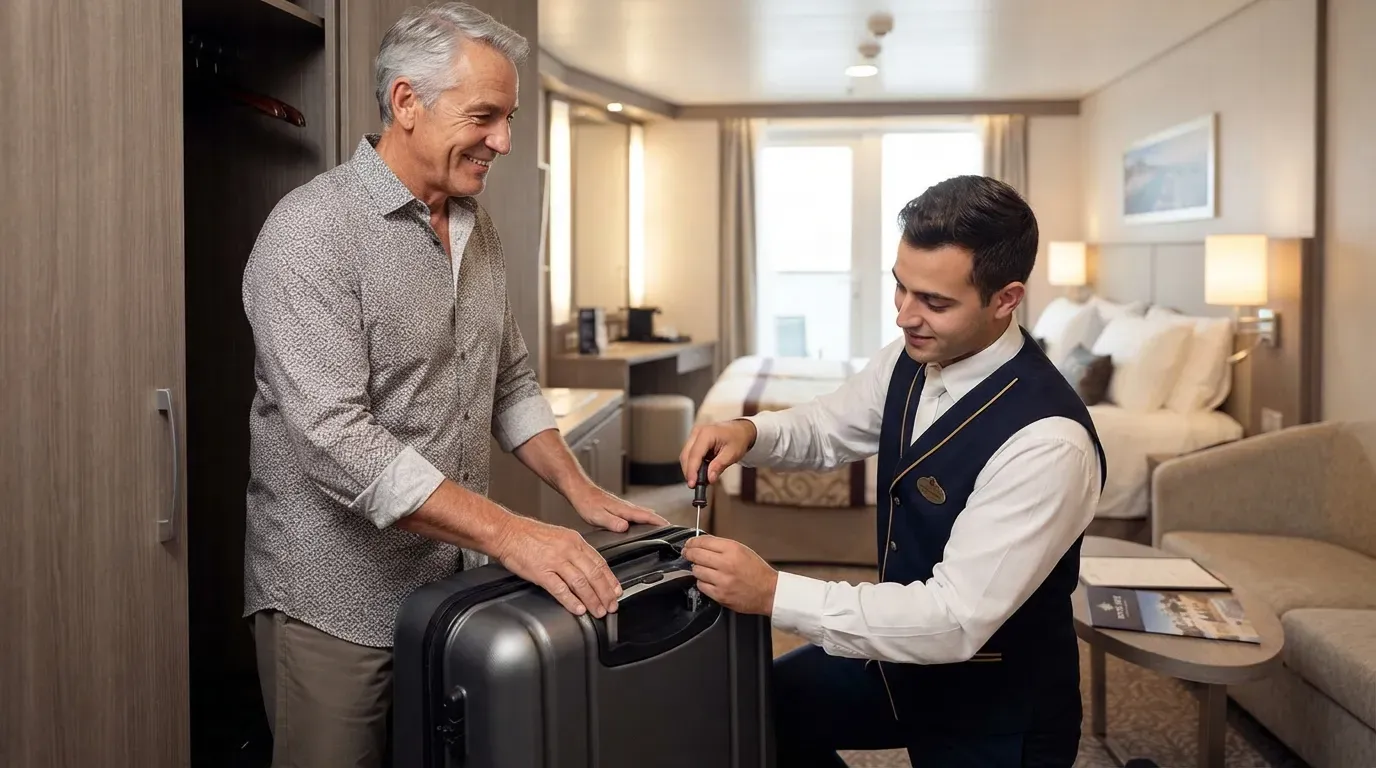
A broken suitcase handle or a stuck zipper feels like a minor disaster mid-cruise, but stewards quietly solve these more often than guests realize. On one MSC Virtuosa sailing, a passenger’s suitcase handle snapped, and their cabin steward simply connected them with the ship’s handyman, who fixed it for a small tip.
Stewards act as the ship’s unofficial fixers because they know exactly who to call – the plumber, the laundry team, the handyman nobody else knows exists. Most guests never think to ask, assuming it’s outside a steward’s job. In reality, quietly connecting guests to the right crew member, without any formal complaint, is one of the most valued things a steward does all week.
#3 – They Remember Your Name on Day One – and It Changes Your Whole Week
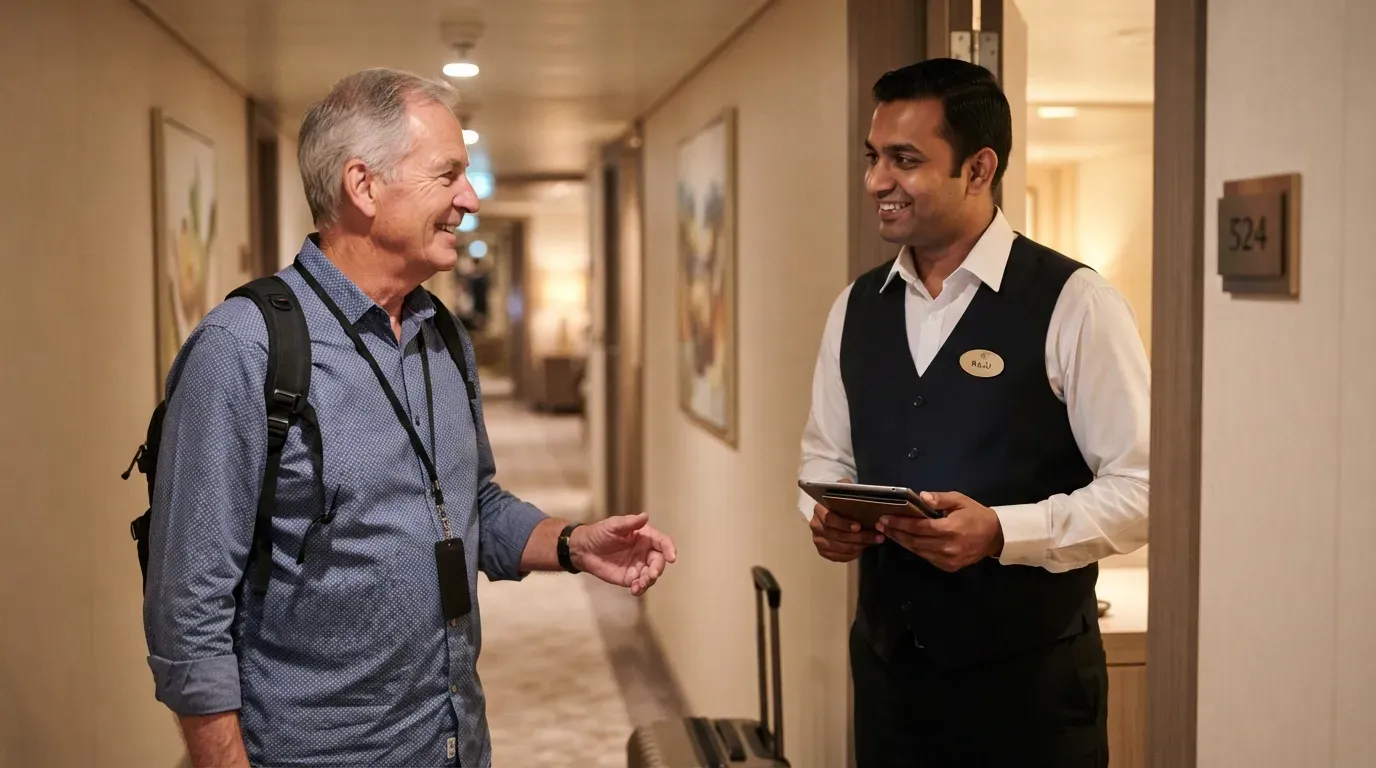
It sounds too simple to matter, but stewards consistently say this is the fastest route to better service. A name, quick eye contact, a genuine “Morning, James” on embarkation day – plenty of cruisers say that one habit changed the entire tone of their week, without ever asking for anything extra.
This works both ways. Guests over 60 are far more likely to actually use a steward’s name instead of treating them as invisible, and stewards notice the difference instantly on a ship where most passengers barely make eye contact. Old-fashioned courtesy, it turns out, still outperforms every hack in the book.
#2 – They Slow Down and Go the Extra Mile for Guests Who Still Tip in Cash
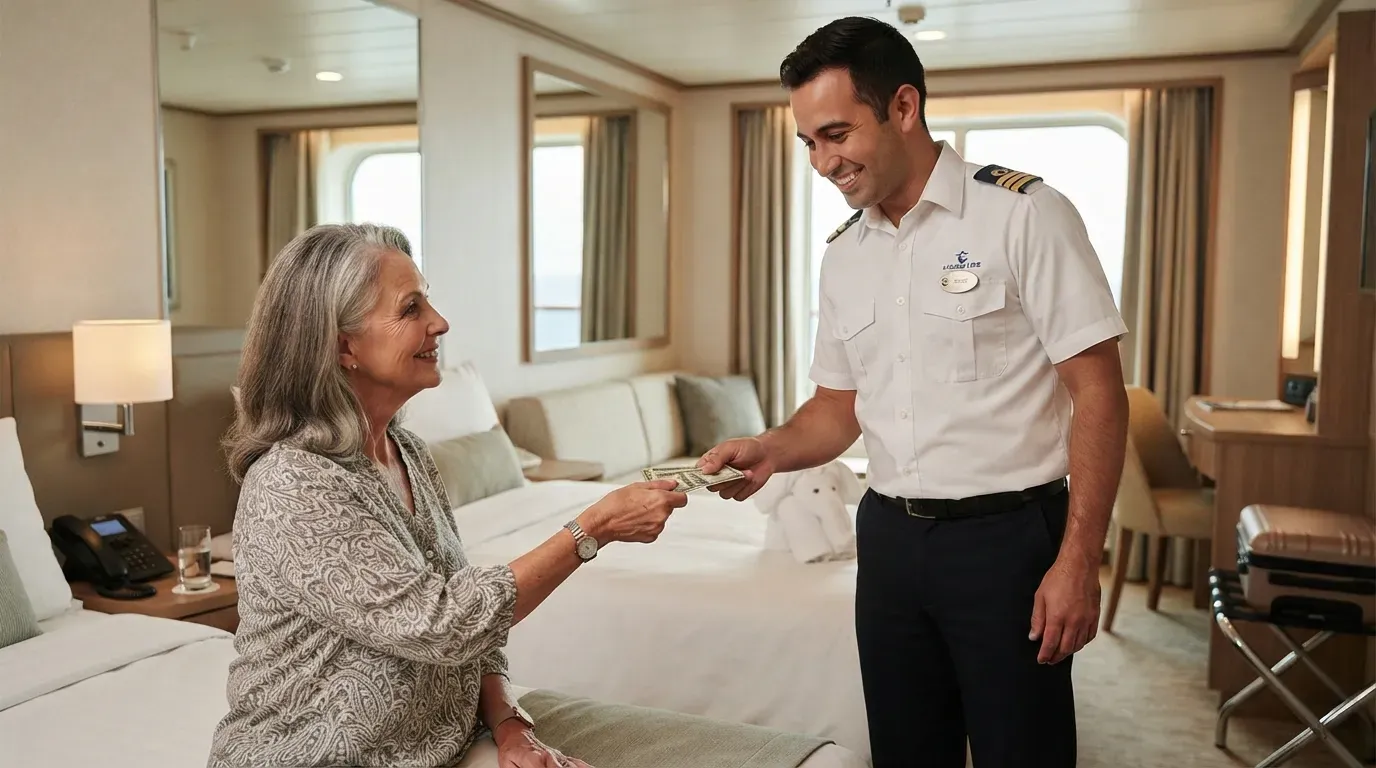
Most passengers today let the automatic daily gratuity handle everything and never think twice about cash. Older passengers, especially decades-long cruisers, often still carry cash specifically for tipping – and plenty hand it over on day one, before a single towel animal ever appears. Stewards notice instantly, because it’s genuinely rare now.
Not every steward loves the timing, though, and that’s where the real friction lives. Some crew members admit they’d almost rather guests skip the day-one cash, since it can feel like an upfront bribe, and most staff actually prefer a lump sum mid-cruise instead. But for passengers over 60, it isn’t strategy – it’s simply how they were raised to handle service, and stewards notice the intention even when the timing is a little off.
Worth Knowing
- Automatic daily gratuities are now the default tipping method on most mainstream cruise lines
- Cash tips on day one are increasingly rare, which is exactly why stewards notice them
- Many crew members privately prefer a lump sum mid-cruise over a day-one handoff
- For older guests, cash tipping is often lifelong habit rather than a calculated strategy
#1 – They Quietly Go to Bat for You on the Post-Cruise Survey – and It Can Change Their Whole Career
This is the one payoff most guests never see, and it might be the most important thing a steward does behind the scenes. Crew members earn real recognition through the post-cruise survey – extra time off, special shore excursions, even bonuses and promotions can hinge on being mentioned by name. Older guests tend to fill out these surveys far more thoroughly than younger cruisers, quietly holding more power over a steward’s career than they realize.
In return, stewards often quietly prioritize the guests most likely to mention them by name later – remembering their photo on the name badge, or the little card left in the cabin, becomes something worth paying attention to. It’s a quiet, mutual arrangement most passengers never realize exists, and arguably the single biggest reason older guests get treated so well without ever asking for it.
None of this shows up in any cruise line handbook, and stewards will almost never say it out loud. But the pattern is unmistakable once you notice it: routine, patience, a remembered name, and old-fashioned courtesy quietly outperform every complaint letter or upgrade request combined.
The guests who get the best treatment at sea usually aren’t the ones demanding it. They’re the ones who never had to ask.