
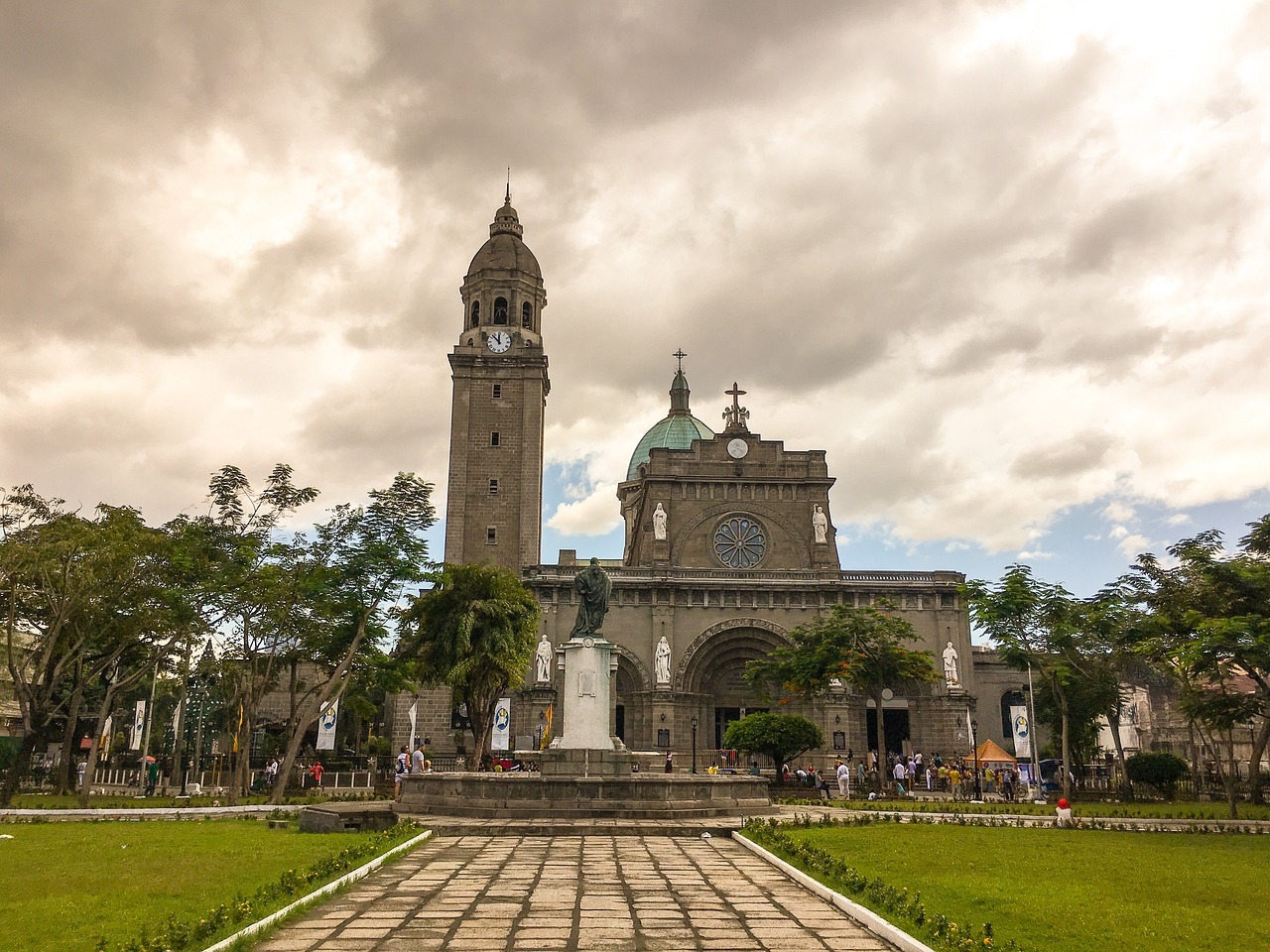
A Legacy Forged in Stone and Time (Image Credits: Pixabay)
Manila – Within the fortified embrace of Intramuros, the historic walled city, stands San Agustin Church, a steadfast sentinel of Philippine colonial history. Completed in the early 17th century, this structure has witnessed centuries of triumphs and trials, emerging as the oldest surviving stone church in the country.[1][2]) Its unpretentious facade belies a treasure trove of architectural splendor and cultural significance, drawing visitors eager to connect with the nation’s past.
A Legacy Forged in Stone and Time
Augustinian priests first established a church on the site in the 1570s using bamboo, coconut leaves, and mud, but fires and other calamities prompted repeated reconstructions.[1] Workers laid the foundations for the current stone edifice in the 1580s, finishing the main structure by 1607 after enduring further setbacks.[1] This resilience defined its journey, as it withstood earthquakes, wars, and invasions that razed much of surrounding Intramuros.
Philippine authorities declared it a National Historical Landmark in 1976, and UNESCO recognized it as a World Heritage Site in 1993 alongside three other Baroque churches.[1][2]) Today, it remains a poignant reminder of Spanish colonial influence, housing tombs of luminaries like painter Juan Luna and early conquerors such as Miguel López de Legazpi.
Baroque Splendor Unveiled
The church’s facade draws from Mexican inspirations but adopts a simpler profile, featuring a quaint courtyard guarded by Chinese-style lion statues and ornate wooden doors carved in Baroque motifs.[1] Step inside, and the interior erupts in opulent detail: towering ceilings painted by Italian masters Giovanni Dibella and Cesare Alberoni, complemented by 19th-century chandeliers that cast a warm glow.
The main altar boasts intricate retablos and pulpits, while 14 side chapels offer quiet nooks for reflection. A grand pipe organ overlooks the nave from the choir loft, where 17th-century Molave wood seats endure. The adjacent museum, once a monastery, displays relics and artworks that deepen the visitor’s appreciation of its layered past.[1]
Highlights Not to Miss
Begin at the entrance doors, where elaborate carvings set the tone for the Baroque immersion. The ceiling frescoes demand a neck-craning gaze, revealing trompe-l’oeil techniques that create illusory depth. Don’t overlook the antechoir’s 16th-century crucifix or the tombs in the floor, marking graves of governors-general and archbishops.
The museum merits its own exploration, with exhibits on religious artifacts and the church’s survival stories. For history buffs, the final resting places of Spanish pioneers and Filipino icons provide a tangible link to pivotal events. Allow time to absorb the acoustics during a quiet moment, perhaps echoing the masses held here for over four centuries.
Plan Your Visit: Hours, Fees, and Essentials
Access remains straightforward, with the church open daily and free entry for worshippers and sightseers alike. The museum operates from 8:00 a.m. to 12:00 p.m. and 1:00 p.m. to 5:00 p.m., though capacity limits to 100 visitors may require waiting during peak times.[1] Parking is available directly in front, easing logistics in bustling Intramuros.
| Aspect | Details |
|---|---|
| Church Entry | Free |
| Museum Fee | P200 adults; P160 students/seniors/PWDs/frontliners |
| Mass Times (Sample) | Sun: 7am, 10am, 6pm; Weekdays vary |
| Contact | +63 (2) 8527-2746; sanagustinchurch1571@gmail.com |
Respect ongoing services by avoiding tours during masses or weddings. Verify schedules via the church’s Facebook page, as changes occur without notice.[1]
Exploring Beyond: Tips and Neighbors
Pair your visit with Intramuros’ other gems for a full historical circuit. Walk to Fort Santiago for Rizal’s story or the Manila Cathedral’s neoclassical grandeur. Bahay Tsinoy illuminates Chinese-Filipino heritage nearby.
- Fort Santiago: Iconic fortress with dungeons and gardens.
- Manila Cathedral: Rebuilt post-WWII centerpiece.
- Casa Manila: Replica of a colonial home.
- Baluarte de San Diego: Restored bastion with museum.
- Rizal Park: Green expanse just outside walls.
Travel light, wear modest attire, and visit early to beat crowds. Combine with a bamboo bike tour for eco-friendly navigation. For deeper insights, consult guides like The Poor Traveler.
- San Agustin’s stone build from 1607 marks it as the Philippines’ oldest, a UNESCO gem.[1]
- Free church access pairs with affordable museum entry for rich experiences.
- Its survival through disasters underscores Intramuros’ resilient spirit.
San Agustin Church invites all to ponder the threads of faith, art, and endurance woven into Manila’s core. As one of the few structures to defy time’s ravages, it challenges visitors to reflect on preservation amid change. What draws you to this historic haven? Share your thoughts in the comments.