
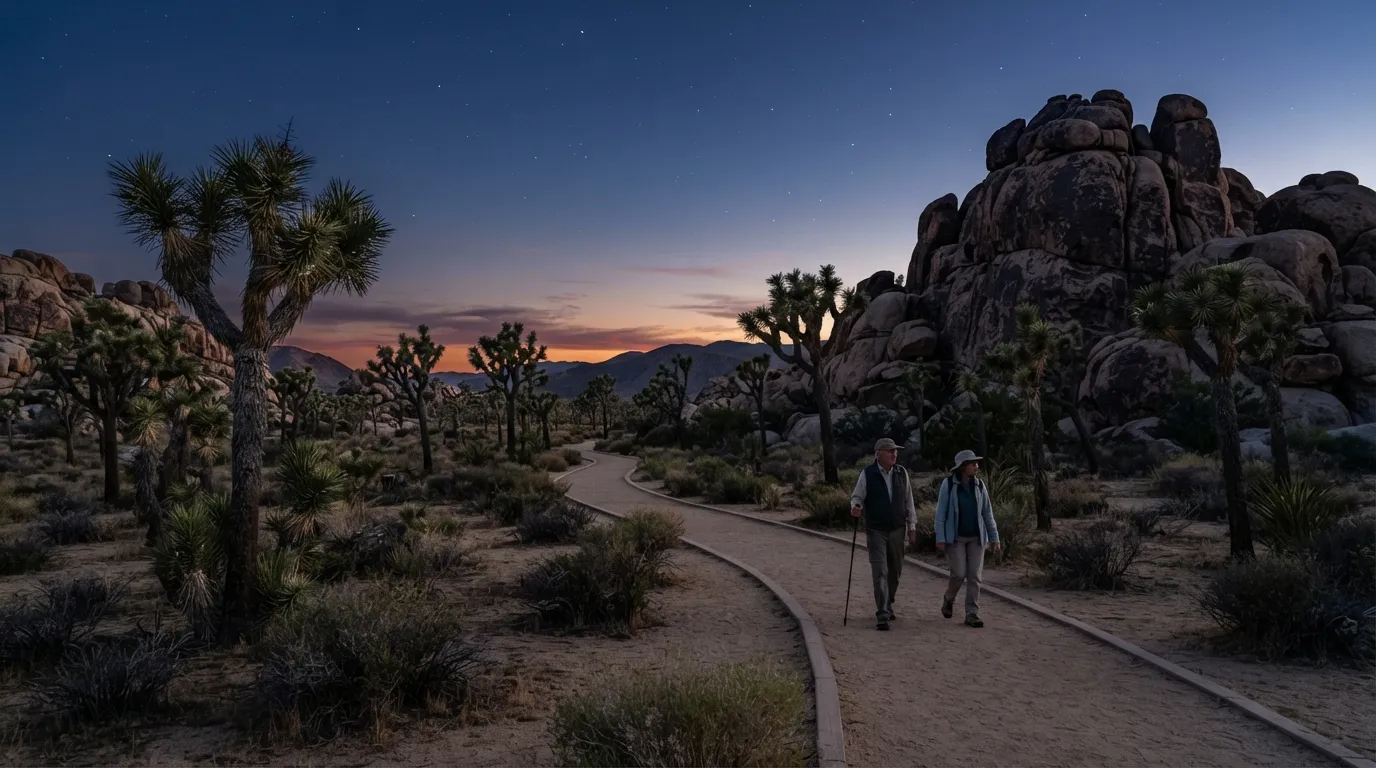
Every glossy brochure at every visitor center pushes the same handful of postcard hikes, the ones with the four-mile climbs and the “moderate to strenuous” warnings stamped in bold. Most travelers over 60 assume that means the good stuff is off-limits unless they’re ready to suffer for it. That’s simply not true, and the rangers working the information desks know it better than anyone.
Ask the right ranger a quiet question at the right counter, and you’ll get a very different answer than what’s printed on the free map. These are the boardwalks, pull-offs, and short paved loops that deliver the same jaw-drop views as the famous trails, minus the knees, the altitude sickness, and the three-hour slog. Here’s what park insiders actually tell people once they mention they’re traveling with a bad hip or a pacemaker.
#15 – The Alaska Glacier View Almost Nobody Budgets Time For
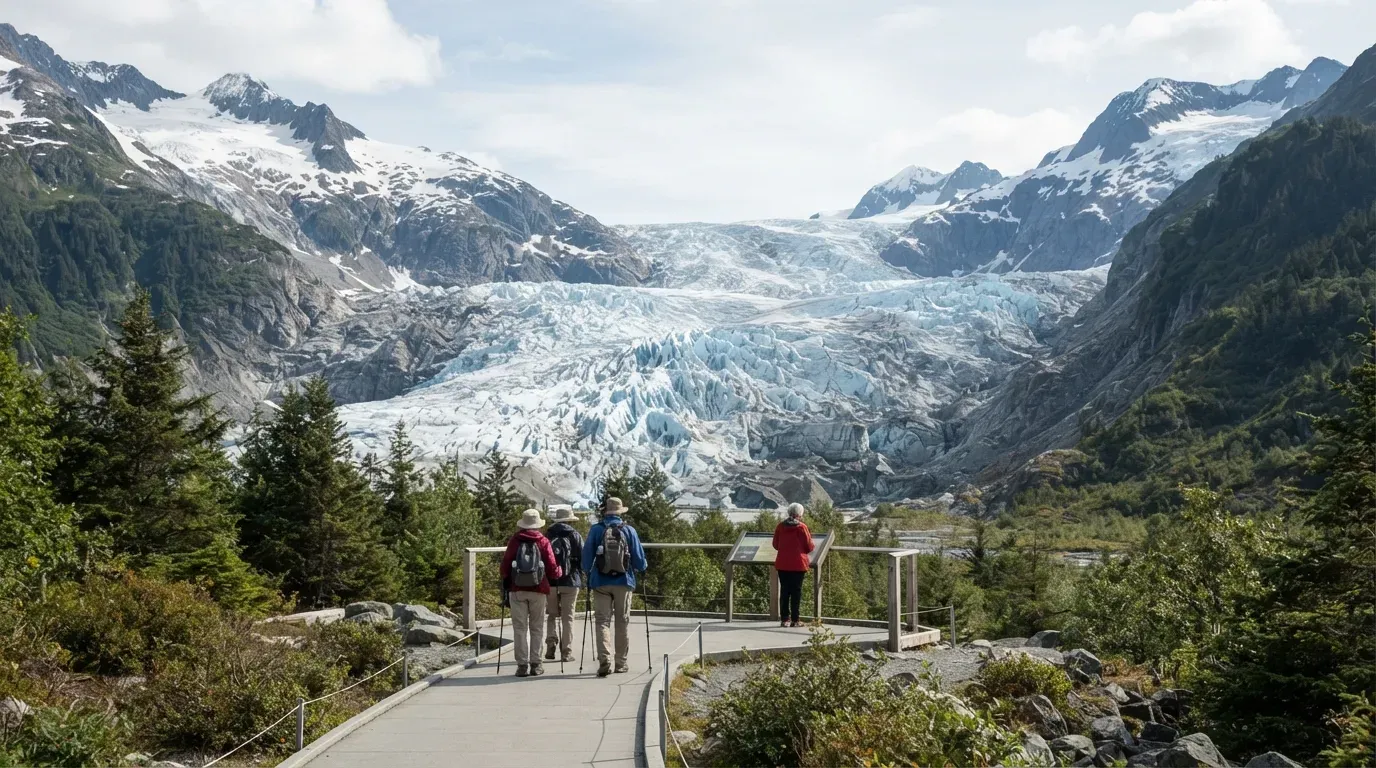
Most visitors to Kenai Fjords assume glaciers require a full-day boat charter and rough seas to witness up close. The Exit Glacier Area offers accessible paths leading straight to the glacier’s viewpoint, and the Glacier View Loop Trail is a short, paved, half-mile stretch with excellent views of the ice and the surrounding mountains. No motion sickness, no whale-watch upsell, just a flat path to a genuine ice sheet.
The park also runs ranger-led programs, a relaxed way to learn the local geology and wildlife without breaking a sweat. Seniors who skip this half-mile detour for the boat tour alone are missing the one spot in the park where you can stand still, catch your breath, and still feel the cold coming off the ice.
#14 – Denali’s Flat Trail That Skips the Shuttle Line Entirely
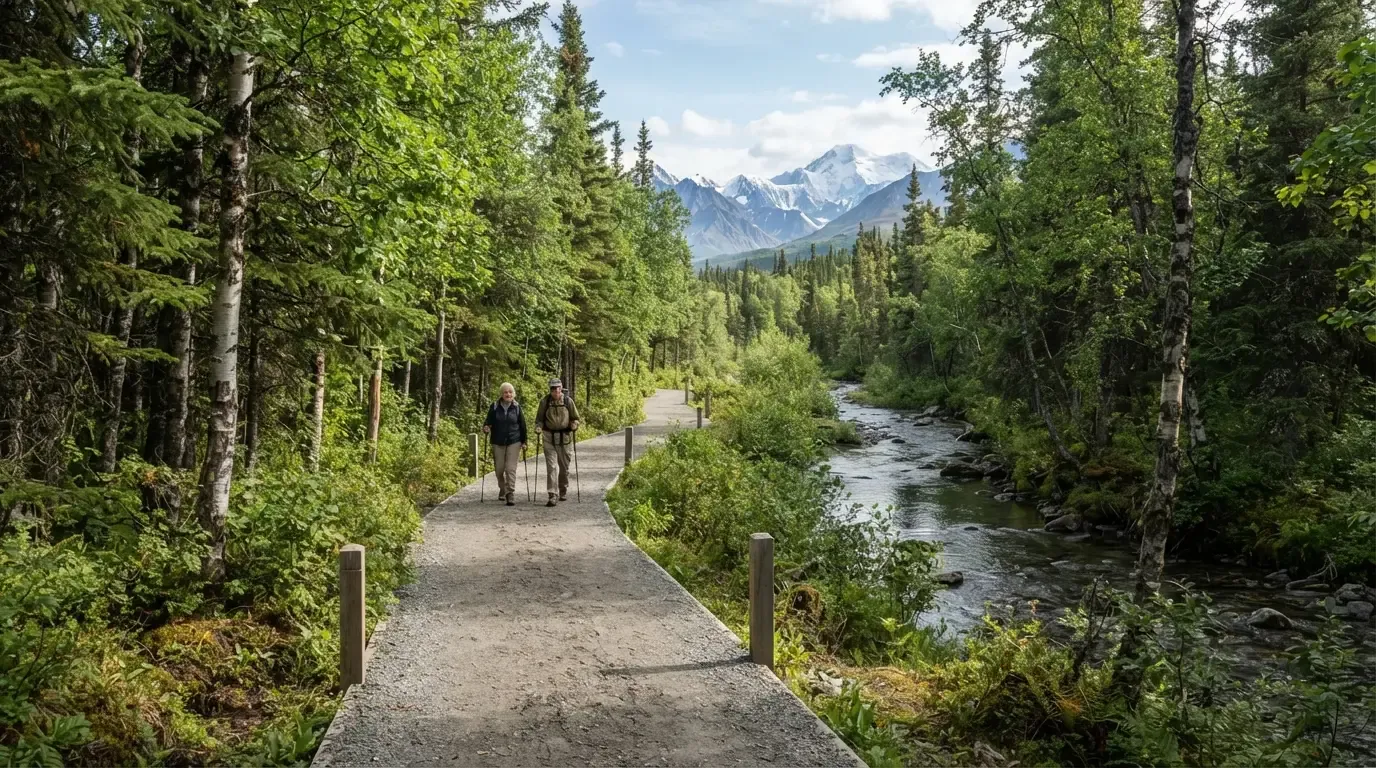
Denali has a reputation as rugged wilderness reserved for backcountry permits and grizzly encounters, which scares off plenty of older travelers before they even arrive. The McKinley Station Trail is a flat, accessible 1.6-mile path that starts at the Denali Visitor Center and winds through lush forest along Riley Creek, offering exquisite scenery without a single steep incline.
The bigger secret is the road itself. Cars aren’t allowed through most of the park anyway, so nearly everyone explores by shuttle, which quietly makes Denali one of the more accessible parks in the whole system. You get grizzly and moose sightings from a padded bus seat, not a six-hour hike.
#13 – The Badlands Boardwalks Hiding in Plain Sight
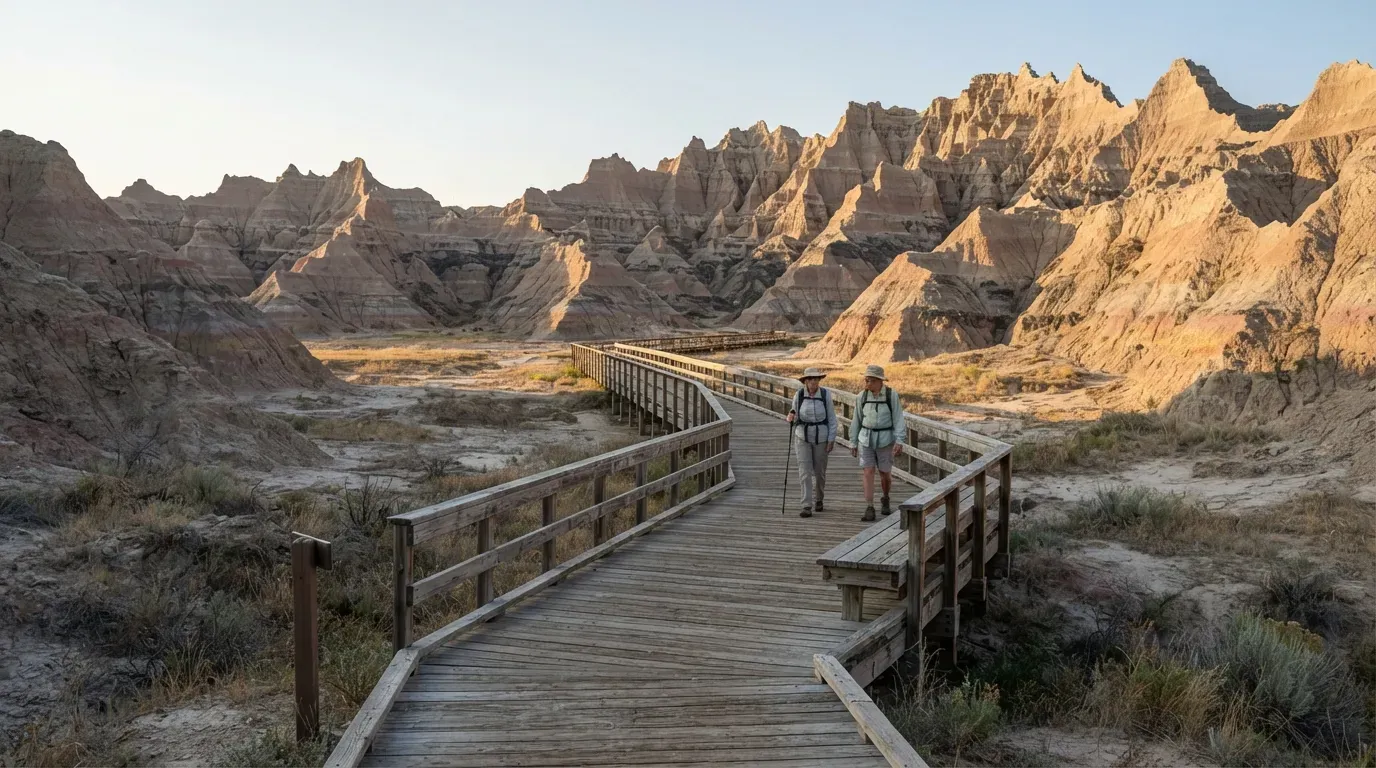
Badlands looks like a park built for young knees, all jagged spires and exposed ridgelines. The Fossil Exhibit Trail and Window Trail both run along accessible boardwalks, and the first stretches of the Door and Cliff Shelf Trails are just as easy to manage. None of it requires scrambling over rock.
What most day-trippers never realize is how brutal the weather swings get here. Summer temperatures can soar past 114°F, while winter can plunge below -40°F, and rangers quietly steer older visitors toward early-morning boardwalk visits for exactly that reason.
#12 – Carlsbad’s Underground Loop With No Climbing Required
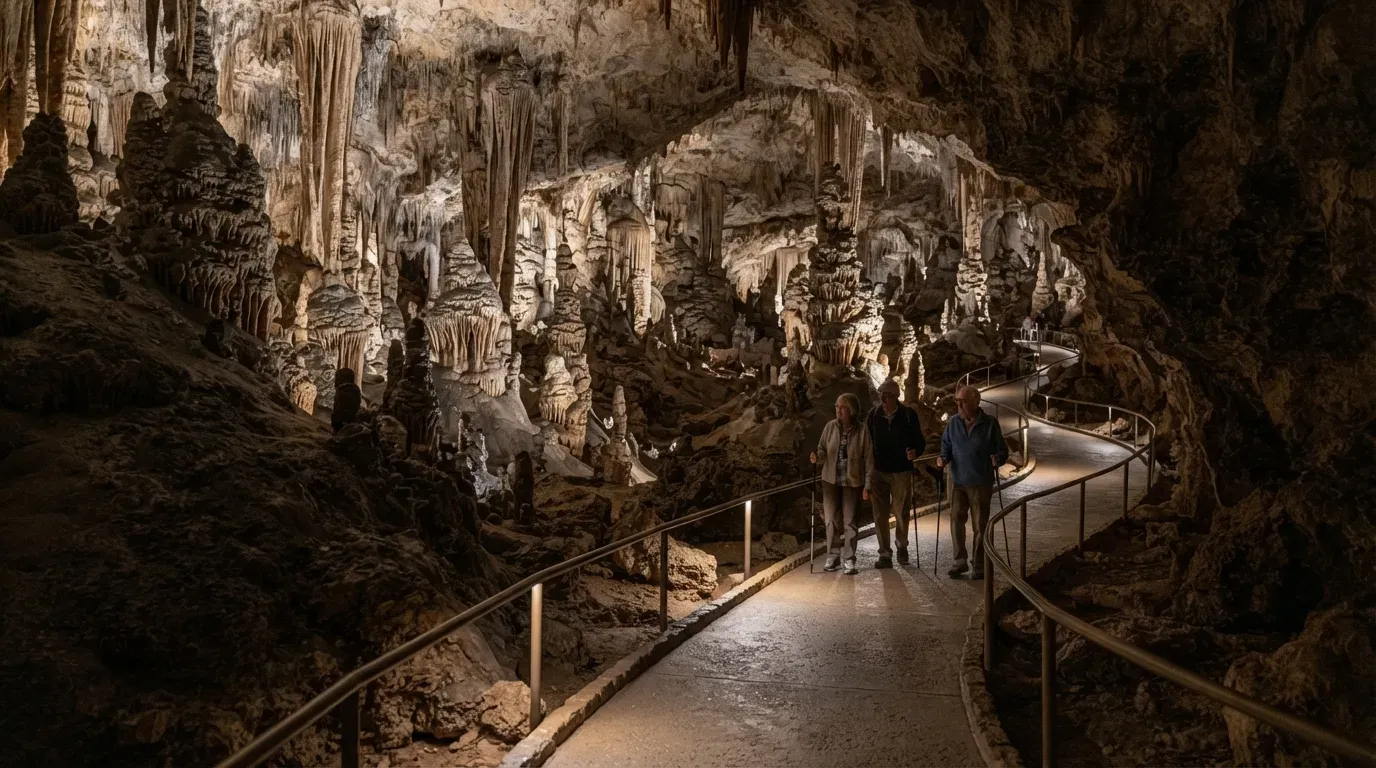
Caves sound like the last place a senior with mobility concerns should go, yet Carlsbad Caverns flips that expectation completely. Once inside, a well-maintained, mostly flat trail loops through the Big Room for roughly 1.25 miles, passing incredible stalactites and stalagmites with descriptive signs explaining the geology.
Restrooms and rest areas exist underground, and the pace stays entirely self-directed, while rangers lead deeper tours for anyone who wants more. The constant underground temperature stays refreshingly cool no matter what the desert is doing above ground, making this one of the most comfortable full afternoons in the entire park system.
Fast Facts
- An elevator drops an elevator that goes 750 feet straight down into the Big Room, skipping the steep walk-in trail entirely.
- The Natural Entrance Trail runs about 1.25 miles, time to walk 1 hour, elevation change 750 feet for anyone who prefers to walk in and ride out.
- Cave temperature holds steady, since the temperature is 56°F (13°C) year-round and humid here.
- The payoff is real size: the Carlsbad Caverns Big Room is the largest single cave chamber by volume in North America.
#11 – South Carolina’s Swamp Forest Boardwalk Most People Have Never Heard Of
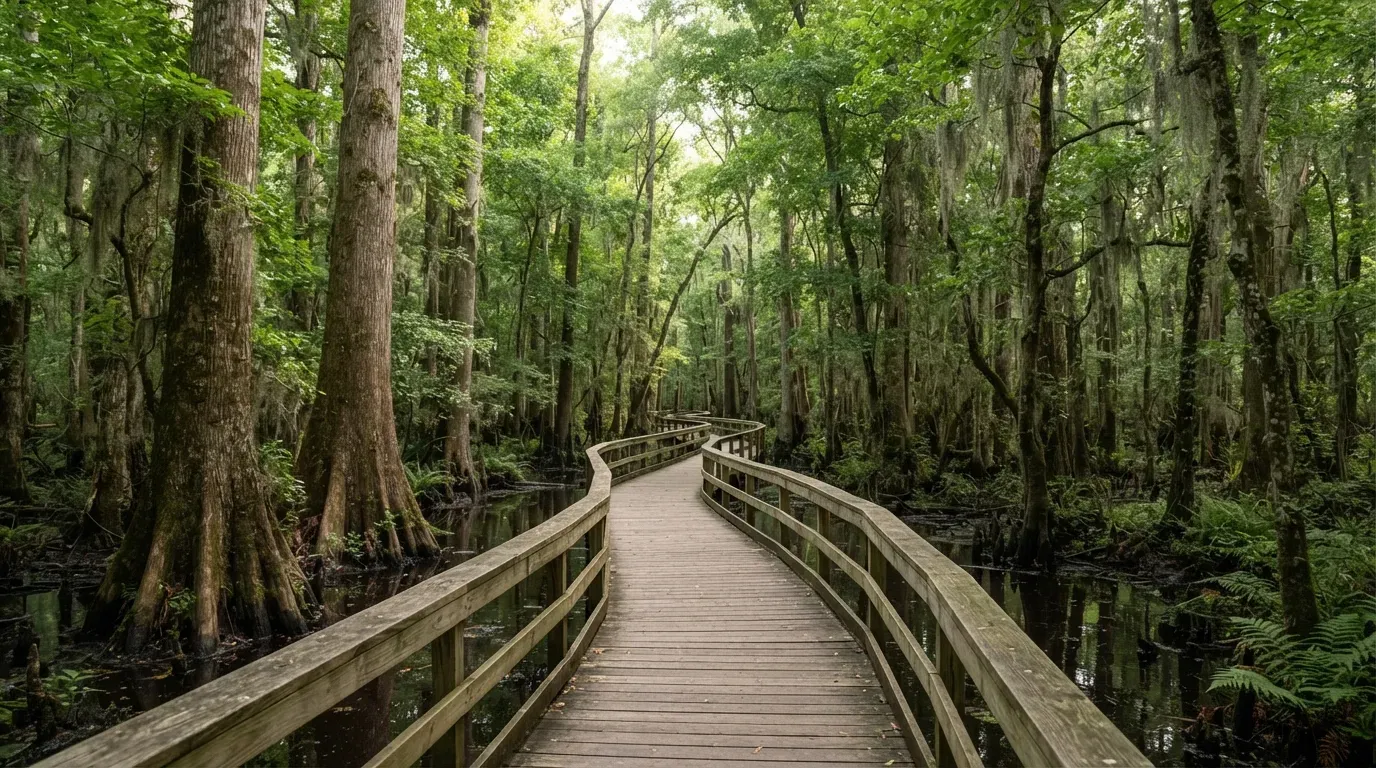
Congaree rarely makes anyone’s national park bucket list, which is exactly why it’s underused and overdelivering. Its towering old-growth canopy creates a shaded, almost cathedral-like calm, and the boardwalk trail loops through the floodplain forest without a single elevation change to worry about.
There are no crowds jostling for a photo spot and no entrance fee competing with the pricier Western parks. It’s the definition of an overlooked stop that quietly rewards anyone willing to detour off the interstate.
#10 – Acadia’s Beach Chair Nobody Mentions in the Brochures
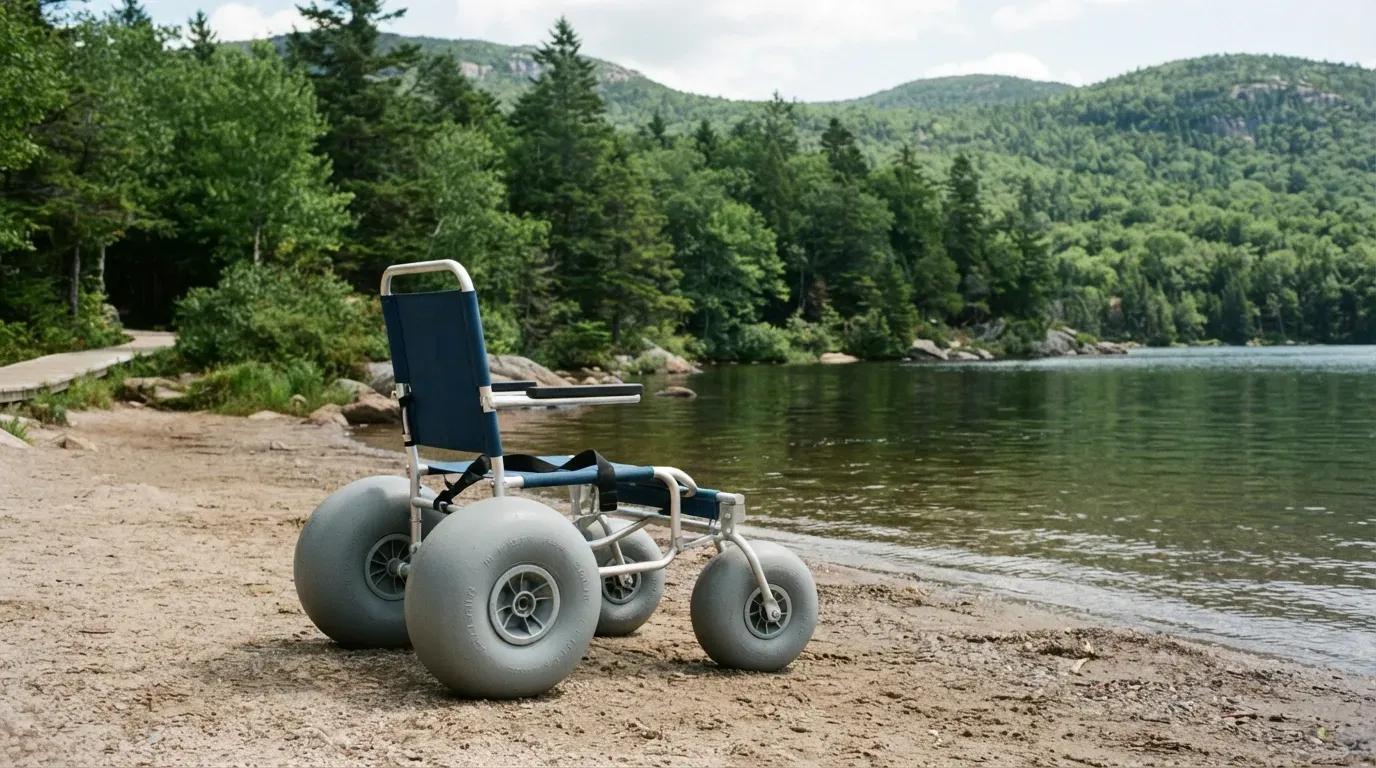
Acadia gets sold as a hiking park, but its real strength for older travelers is what’s parked at the shoreline. Along with accessible Island Explorer buses and boardwalk trails, guests can book wheelchair-accessible carriage rides, and an accessible beach chair with inflatable tires is available for public use at Echo Lake Park.
Seniors can take in the same beauty on the easy Jordan Pond Path, while Park Loop Road provides simple drive-up access to Cadillac Mountain, the highest point on the U.S. Atlantic coast. That one beach chair alone turns a rocky Maine coastline into a genuinely comfortable afternoon.
#9 – The Everglades Boardwalk That Beats Any Boat Tour
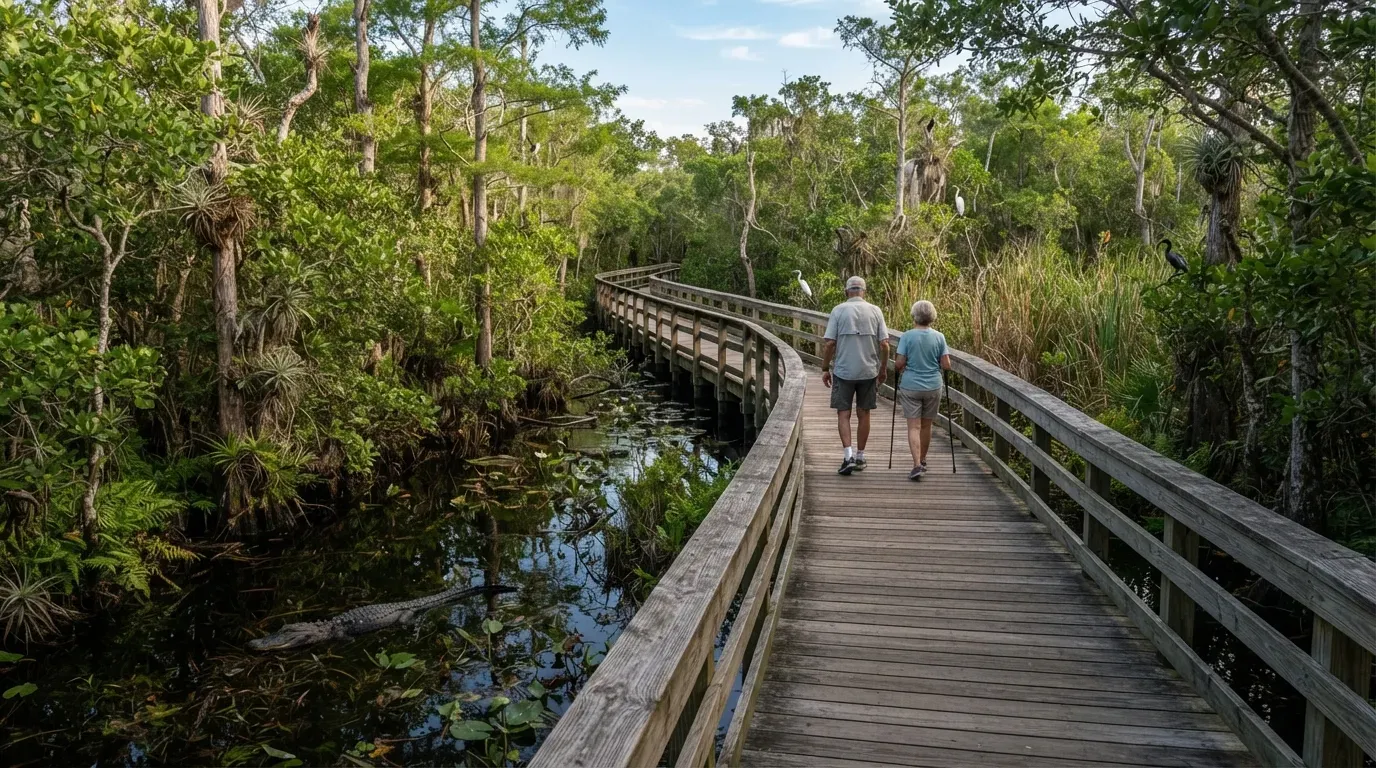
Alligators and boat tours dominate the marketing, but the boardwalks are where the real payoff sits. The Everglades ranks among the most accessible parks in the entire system, and visitors with mobility issues can take in the scenery from boat tours or the many wheelchair-friendly trails weaving through the wetlands.
At Florida’s southern tip, more than a million acres of marshland shelter endangered species like manatees, American crocodiles, and Florida panthers, offering once-in-a-lifetime wildlife views. Most first-time visitors never learn you can see all of it without ever leaving a flat, shaded path.
#8 – Arches’ Paved Road With Pull-Offs for Every Famous Arch
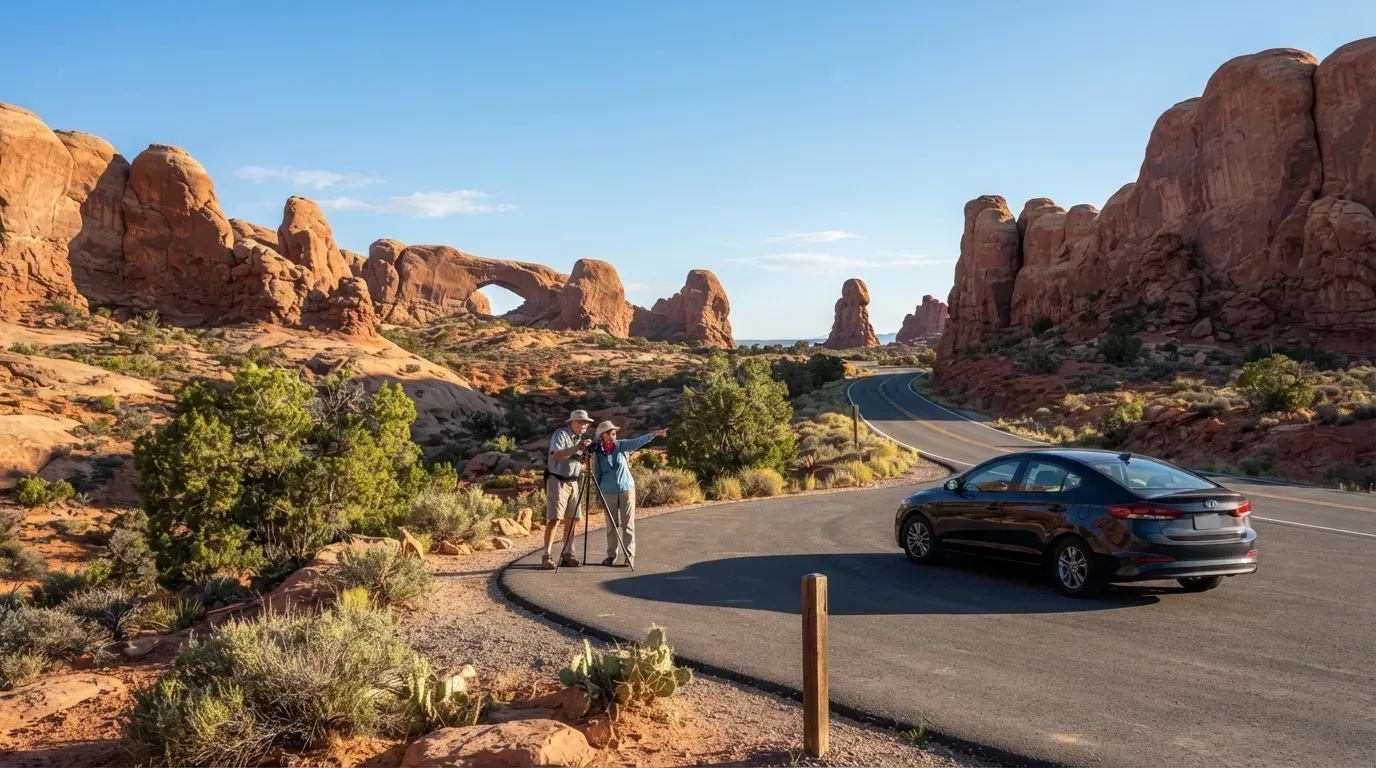
Arches looks brutal on paper, all sandstone fins and desert exposure, but the layout quietly favors car-based sightseeing. An 18-mile paved road threads past countless pullouts for viewing the arches and rock formations, plus gentle options like the Double Arch Trail, the Windows Trail, and the Devils Garden Trail.
The real danger here isn’t the terrain, it’s the heat. Summer days regularly push past 100°F, which is exactly why rangers steer older travelers toward early mornings and those paved pull-offs instead of midday hikes.
#7 – Yellowstone’s Boardwalk Loop That Skips the Crowds at Old Faithful
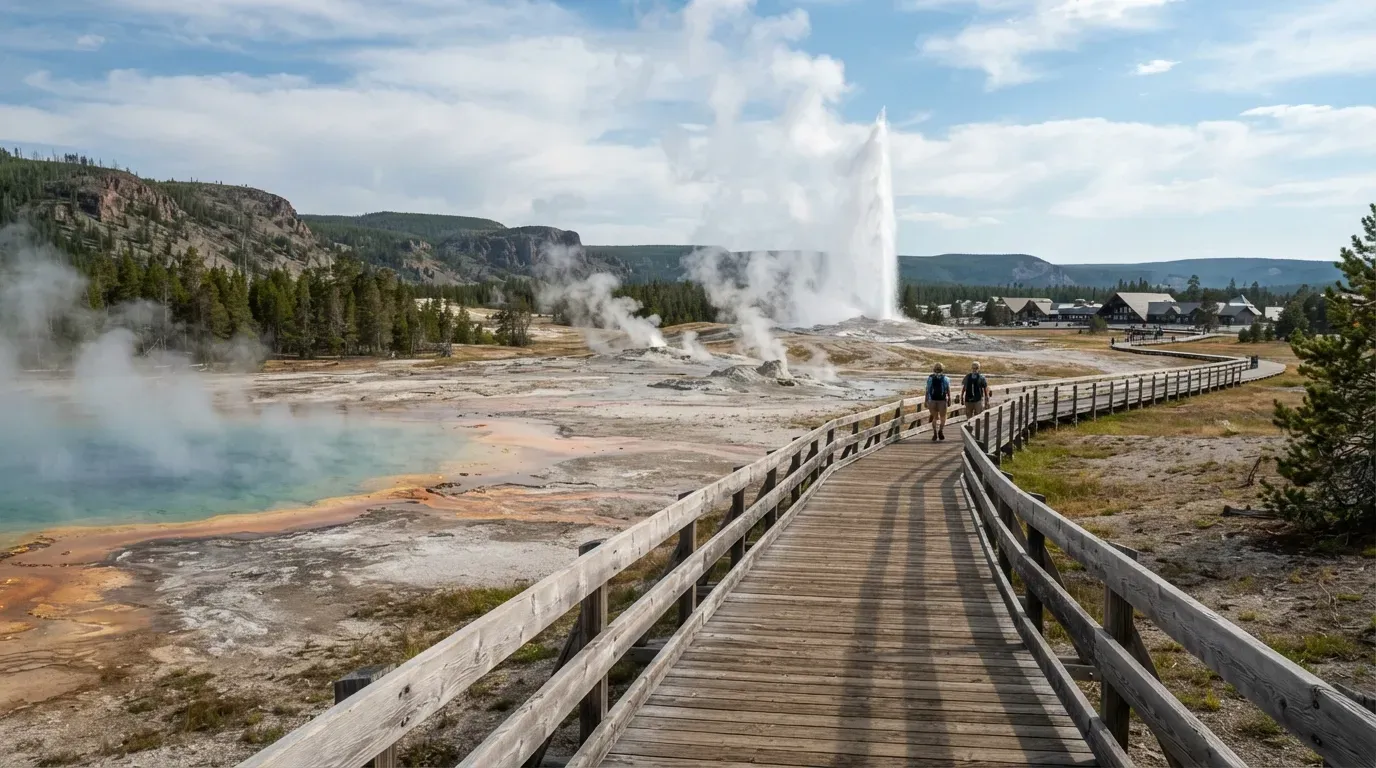
Everyone plans their Yellowstone trip around a single geyser eruption, but the better move is a short loop most tourists never wander onto. The Geyser Hill Loop is a 1.3-mile boardwalk that passes some of Yellowstone’s most famous geysers, including Old Faithful itself, on flat, easy footing the entire way.
Along the way you’ll pass bubbling hot springs, steaming fumaroles, and, if timing lines up, an eruption from one of the smaller geysers. It’s the same geothermal spectacle, minus the shoulder-to-shoulder crowd everyone else fights for at the main viewing platform.
Worth Knowing
- Old Faithful erupts roughly every 44 to 125 minutes, so patient boardwalk visitors rarely wait long.
- Geyser Hill also holds Anemone, Beehive, and Lion, three geysers most tour buses never stop for.
- The boardwalk sits close enough to feel the heat and sulfur smell without any incline to climb.
- Early morning visits mean thinner crowds and softer light for photos.
#6 – Grand Canyon’s Rim Views That Require Zero Hiking Boots
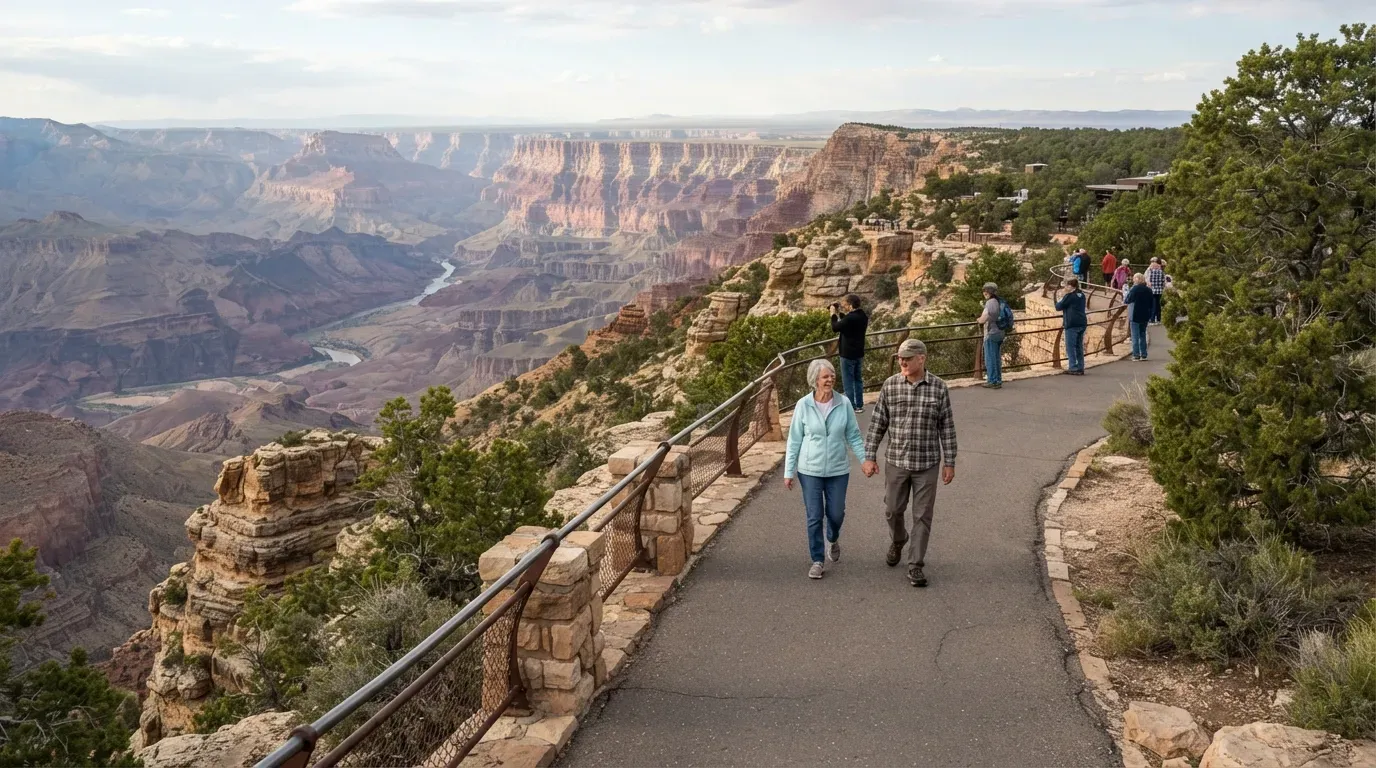
Nobody expects the Grand Canyon to be a low-effort destination, yet the South Rim quietly is. The Rim Trail is a flat, paved path stretching for miles along the canyon’s edge, and Mather Point and Yavapai Point both deliver jaw-dropping views just steps from the visitor center.
For a scenic drive, Desert View Drive offers pull-off after pull-off overlooking the canyon and the Colorado River, and the park’s shuttle system handles the rest. Most people assume the canyon demands a headlamp and hiking poles. It doesn’t.
#5 – Zion’s Paved River Walk That Skips the Narrows Entirely
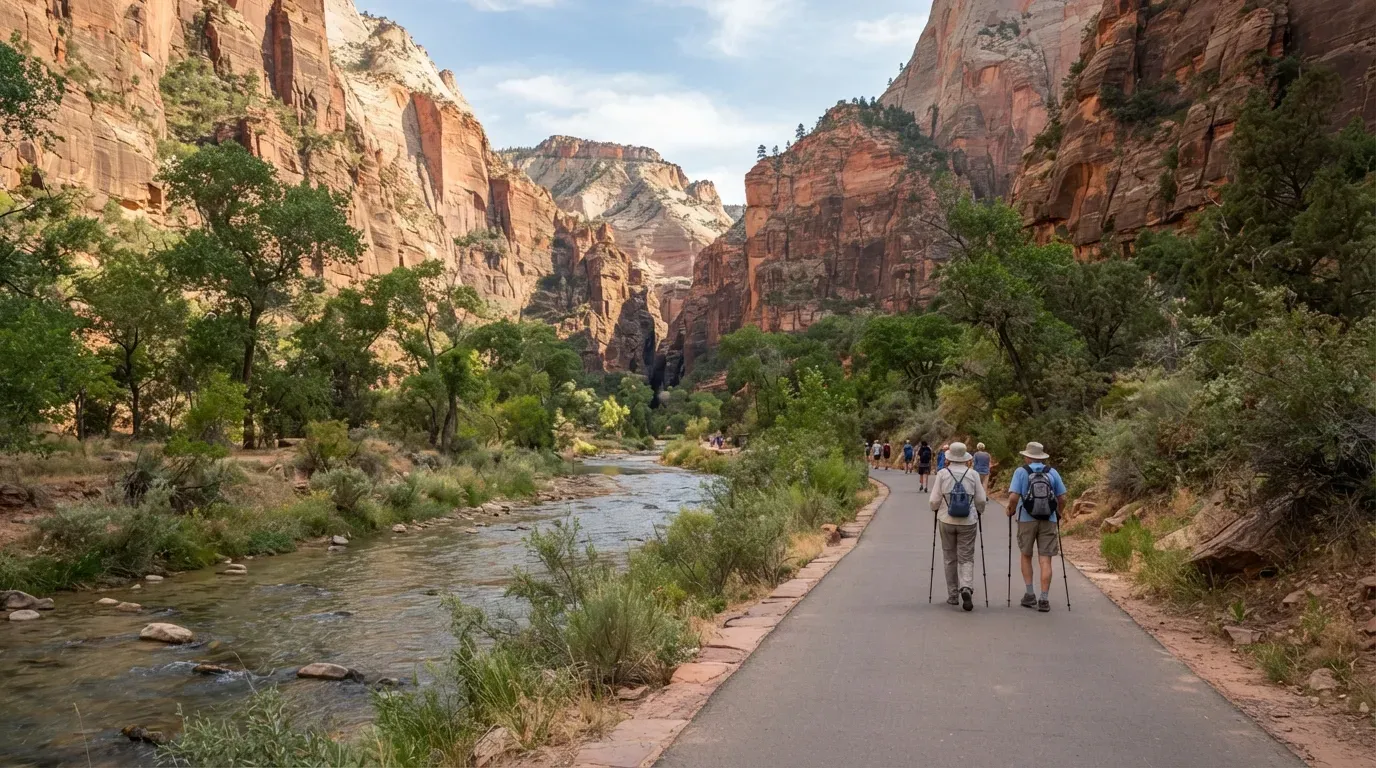
Zion’s reputation is built on the Narrows, a hike that genuinely isn’t safe for a lot of older travelers. The Riverside Walk follows the Virgin River into the heart of Zion Canyon, a 2.2-mile round-trip with towering canyon walls overhead, ending right at the entrance to the Narrows itself.
The Pa’rus Trail offers a second paved, accessible option, perfect for wheelchairs, strollers, and walkers alike. Between these two paths, you get the canyon’s signature scenery without ever getting your boots wet in the current.
#4 – Yosemite’s Meadow Loop With Half Dome Views for Free
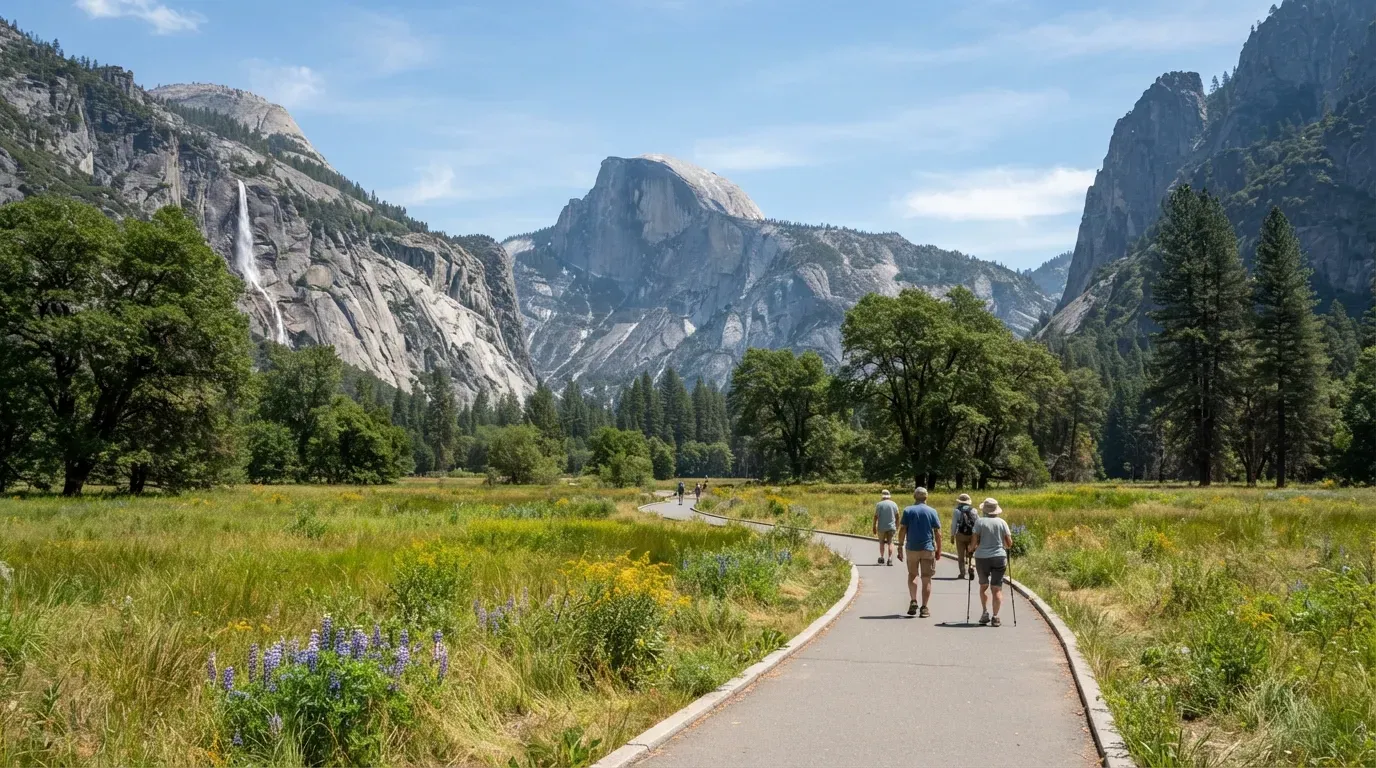
Yosemite Valley photos always feature climbers or backpackers, which quietly convinces older visitors the park isn’t built for them. The Cook’s Meadow Loop is a mostly flat, paved mile with stunning views of Yosemite Falls, Half Dome, and Sentinel Rock, all from the comfort of the valley floor.
The Lower Yosemite Fall Trail adds a short, wheelchair-accessible walk to the park’s tallest waterfall. Two short loops, and you’ve seen the park’s three most photographed landmarks without a single switchback.
Quick Compare
- Cook’s Meadow Loop: About a mile, paved and flat, with wide-open views of Half Dome, Yosemite Falls, and Sentinel Rock.
- Lower Yosemite Fall Trail: Under a mile round-trip, wheelchair accessible, ends at the base of the park’s tallest waterfall.
- Best for: Cook’s Meadow for wide valley panoramas, Lower Yosemite Fall for the mist and sound up close.
#3 – Glacier’s Cedar Grove That Feels Like a Different Park Entirely
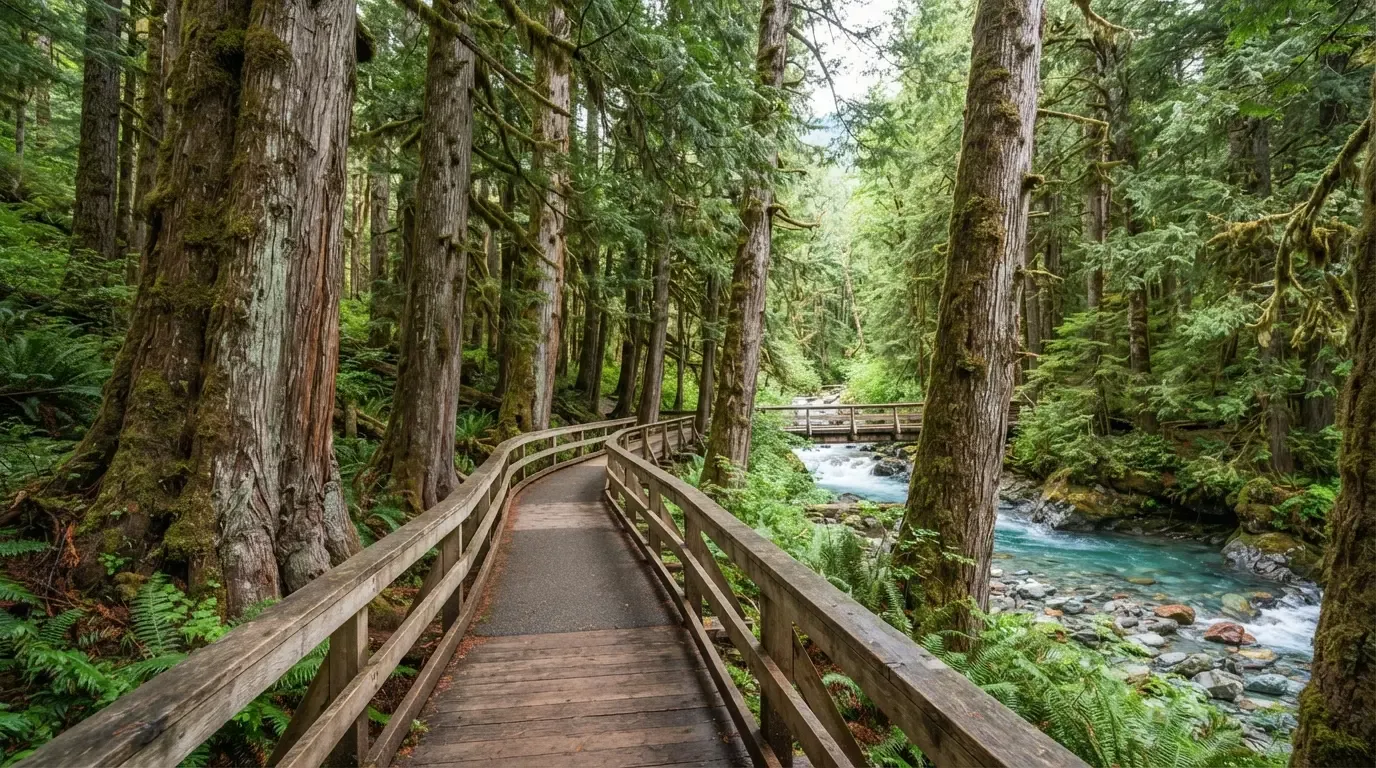
Glacier’s marketing leans hard into Going-to-the-Sun Road’s cliffside drama, which is exactly why this next spot gets overlooked. The Trail of the Cedars, just off that same road near Avalanche Creek, is a 1-mile loop of boardwalk and paved path winding through western red cedars, some more than 500 years old.
About halfway through, the trail passes Avalanche Gorge, where turquoise water carves through colorful rock. It’s one of the few spots in Glacier where the scenery matches the postcards without any altitude or exposure to worry about.
The best idea we ever had was the National Park idea. It belongs to everybody.
Bill Bryson
#2 – Olympic’s Rainforest Path That Feels Like a Different Planet
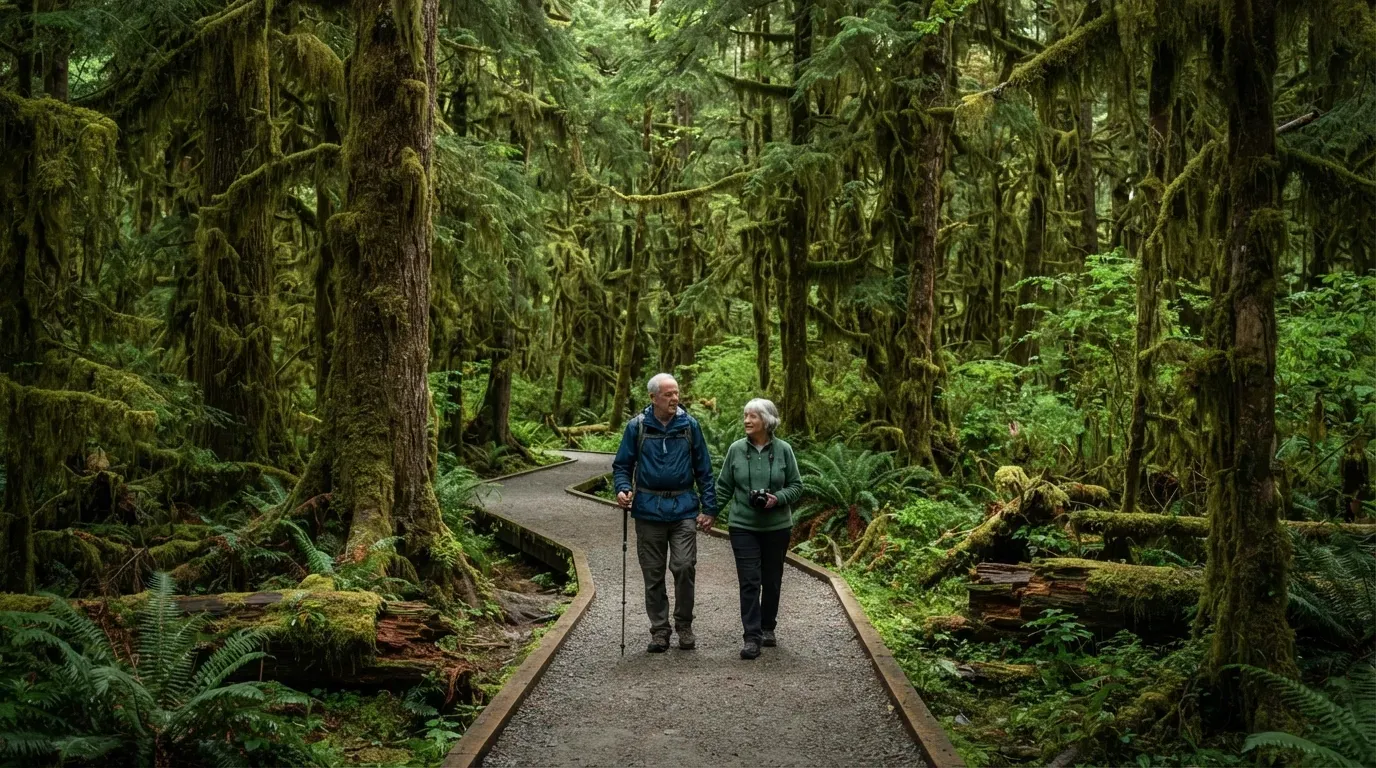
Olympic gets pitched as a coastal hiking destination, but its strangest terrain barely requires walking at all. The Hoh Rain Forest offers accessible trails that let visitors wander through moss-draped trees so thick and green the light barely gets through.
Olympic is a UNESCO World Heritage Site, recognized for its rare biodiversity and layered ecosystems. Few travelers over 60 realize a rainforest this dramatic can be reached on a level path, no permit or backcountry gear required.
#1 – Joshua Tree’s Rock Loop and Night Sky That Locals Guard Closely
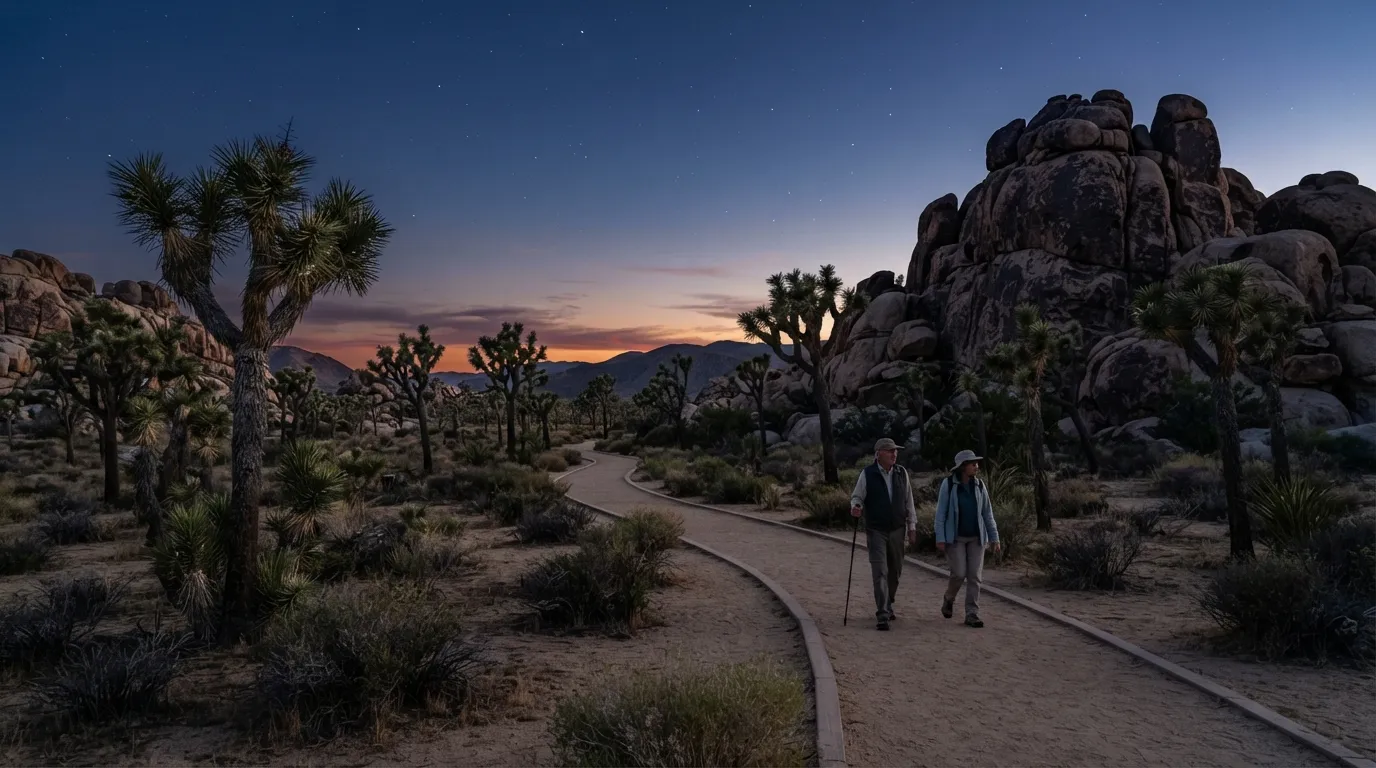
Save the best for last, because this is the spot rangers bring up most often once a visitor mentions they’re traveling solo or with limited mobility. Joshua Tree, where two distinct desert ecosystems collide, offers short, accessible trails like Hidden Valley, putting the park’s strange rock formations and iconic trees right at eye level.
Mild desert evenings make for ideal stargazing, and the park is renowned for some of the darkest, clearest night skies in Southern California. Between a flat rock-formation loop by day and that sky by night, this is the one spot that consistently surprises even repeat visitors.
Why It Stands Out
- Joshua Tree National Park earned its designation as an International Dark Sky Park in 2017, one of the closest such parks to a major U.S. city.
- The park sits within a few hours’ drive of a huge population, since it exists within a few hours’ drive for over 22 million people.
- Hidden Valley’s loop covers about a mile of flat, boulder-lined trail, no scrambling required.
- Two deserts, the Mojave and the Colorado, meet inside the park’s borders, giving the landscape its strange, layered look.
What ties all fifteen of these spots together isn’t luck, it’s design. National parks were never built exclusively for backcountry hikers, and the accessible boardwalks, paved loops, and shuttle routes prove it. U.S. citizens or residents 62 and older can also grab a Senior Lifetime Pass for a flat $80, good for life, which makes the whole idea of skipping these places for crowded, strenuous alternatives even harder to justify.
The real mistake isn’t age or ability. It’s assuming the famous trail is the only way to see the famous view. Which of these fifteen spots surprised you most, and which hidden gem did we leave off the list? Drop it in the comments.