
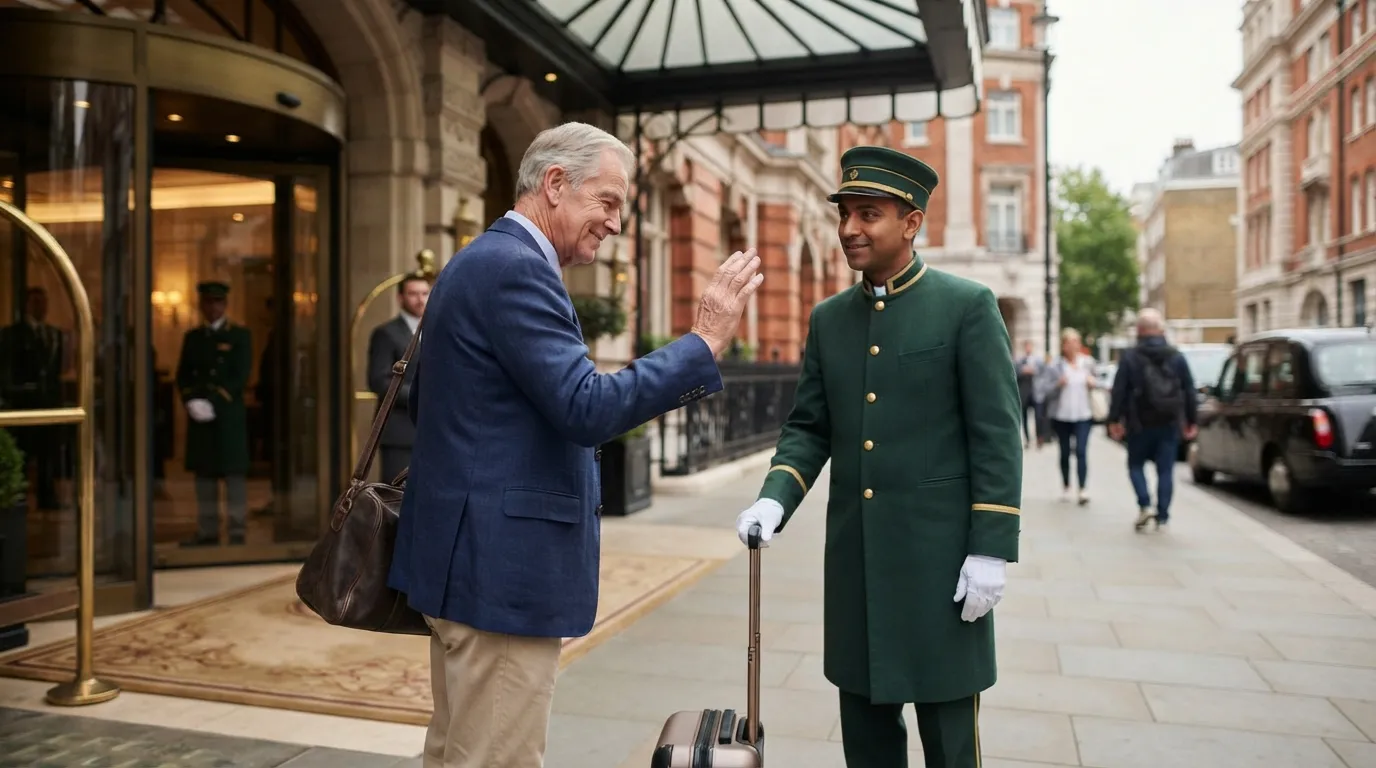
Doormen never ask your age, and hotels don’t hand out badges for it. Yet within about ten seconds of your car pulling up to the curb, the person in the uniform has already made a call about how much extra attention you’re going to get during your stay. It isn’t guesswork. It’s pattern recognition built from thousands of arrivals, and it’s shockingly accurate.
Most guests assume this kind of “reading” only happens at the front desk during check-in. But the real decision gets made earlier, at the curb, before you’ve said a single word to anyone inside. Here’s what insiders in the industry actually watch for.
#14 – The Speed of Your Exit From the Car Gives You Away First
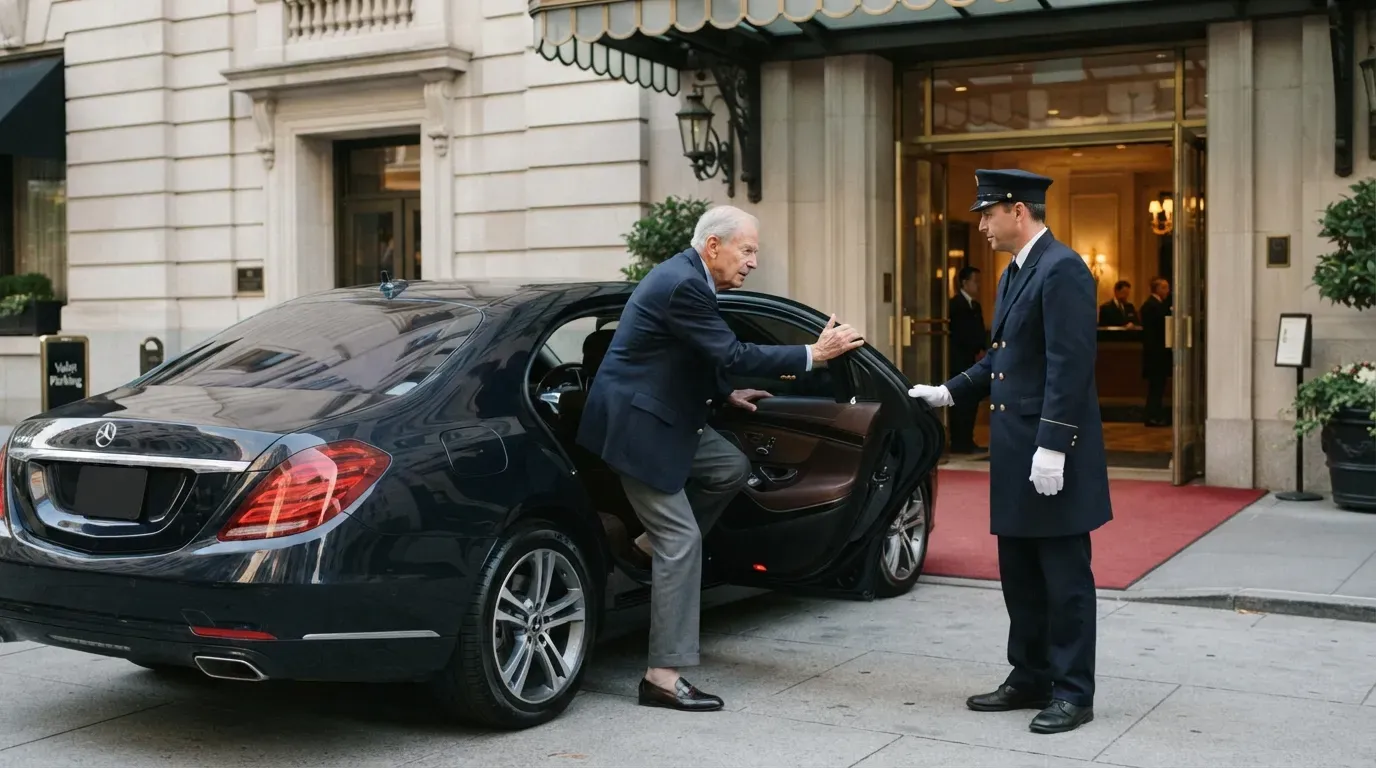
Before a doorman greets you, he’s already watching how you get out of the vehicle. A guest who swings both legs out and stands in one motion reads completely differently than someone who braces on the door frame, pauses, and pushes up slowly. That half-second pause is the single biggest tell doormen rely on.
It’s not about judgment. It’s logistics. A slower exit tells staff to slow their own pace, hold the door a beat longer, and skip the rushed “right this way” energy that younger guests expect. Doormen are trained to mirror your tempo instantly, not their own. That first read shapes the next ten minutes of your stay before you’ve even reached the lobby.
#13 – Whether You Look Up at the Building Before Looking at the Door
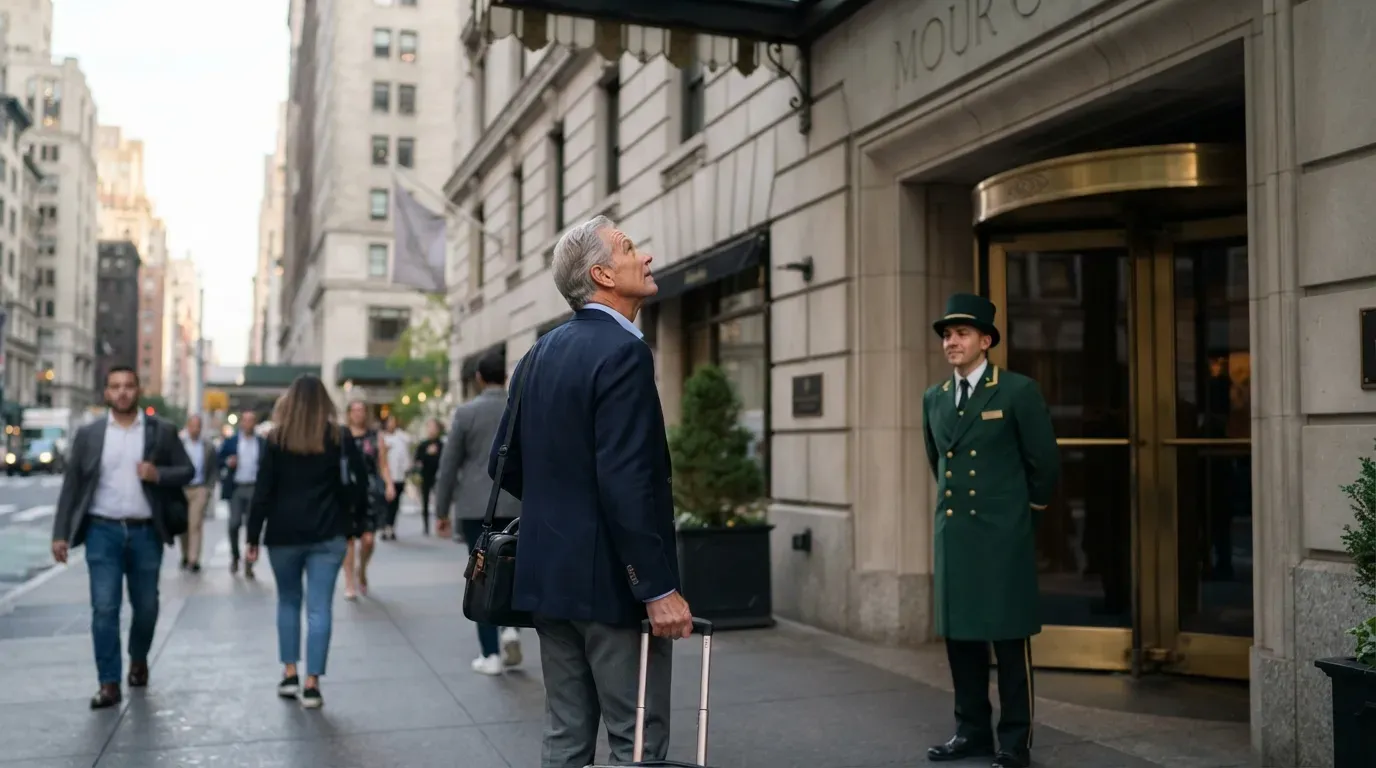
Confident, frequent travelers walk in a straight line toward the entrance without scanning the facade. Guests who pause to look up at the building, take in the signage, or glance around for the actual entrance are broadcasting something staff notice immediately: this property, or maybe hotels in general, feel slightly less automatic to navigate.
That upward glance isn’t a mobility issue, it’s an orientation one, and doormen treat it differently. They’ll often walk a few extra steps alongside you rather than simply pointing. It’s one of the fastest, least obvious signals in the entire arrival sequence. Staff log it in seconds and adjust how much verbal guidance they offer for the rest of the visit.
#12 – Reaching for Your Own Bags Instead of Waiting
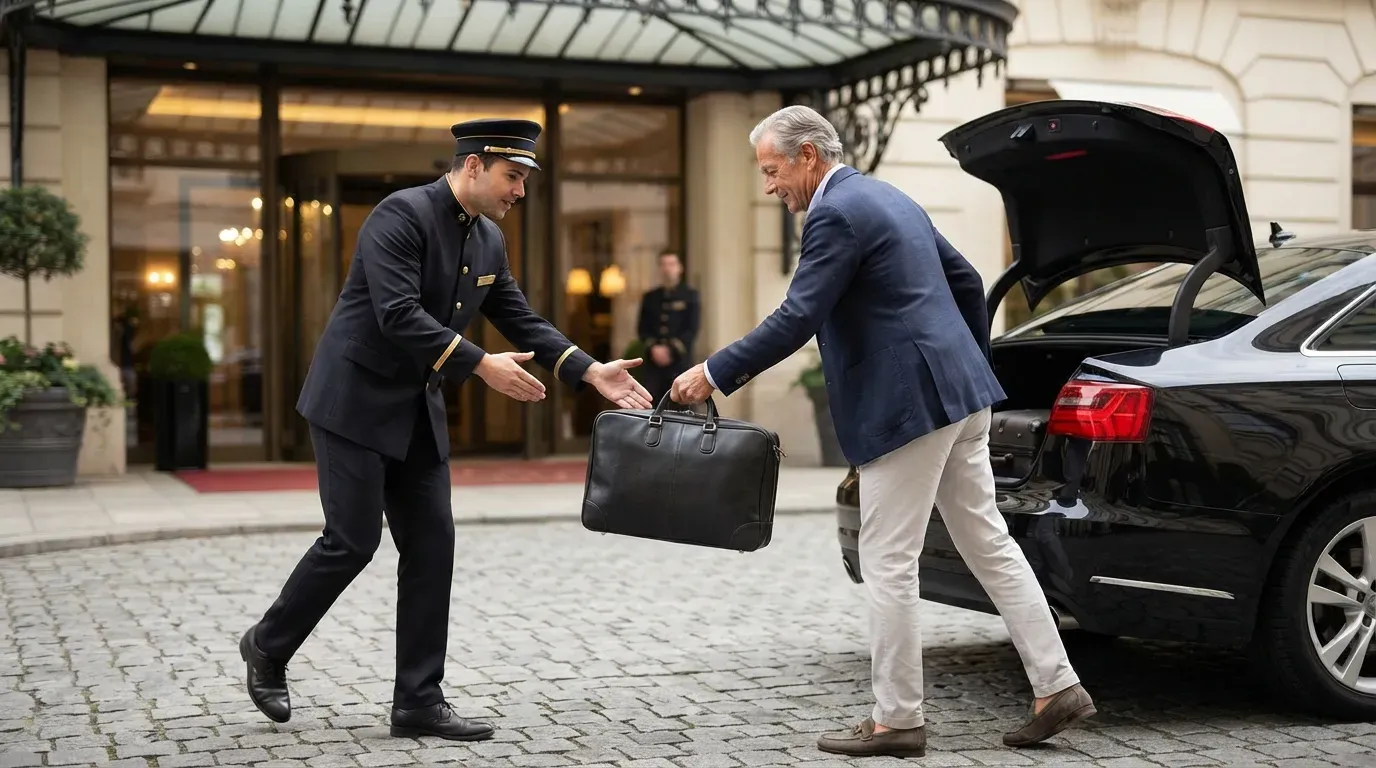
Trained bell staff are taught to intercept luggage before a guest even has to ask, spotting who needs help before anyone says a word. The moment a guest reaches for a suitcase handle out of habit rather than necessity, doormen quietly note whether that reach looks effortful.
Guests who wait patiently by the trunk are read as expecting service. Guests who immediately grab bags themselves get a different kind of attention, often a doorman moving in faster, almost protectively, to take the load before it becomes a strain. That instinctive lunge for your own suitcase is one of the clearest arrival signals there is. It tells staff far more than any comment card ever could.
#11 – Arriving With a Cane, Walker, or a Barely Noticeable Limp
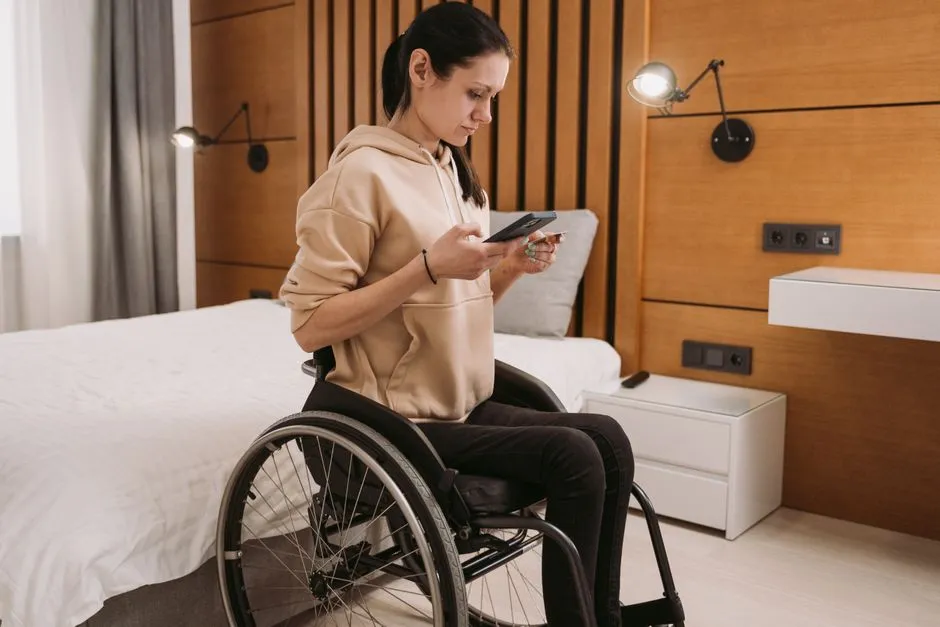
This one sounds obvious, but the response behind it isn’t. When a guest arrives with a cane, uses a walker, or visibly moves with difficulty, the entire front desk team quietly reassesses the room assignment on the spot. That reassessment often starts right at the curb, before the guest ever reaches the desk.
Doormen relay these details ahead by radio or app so the front desk is already pulling up ground-floor or near-elevator rooms before you say a word. The mobility signal moves through the building faster than you do. It’s one of the most consequential moments of the entire stay, and most guests never realize it happened.
#10 – Someone Else Opens Your Car Door Before the Doorman Can
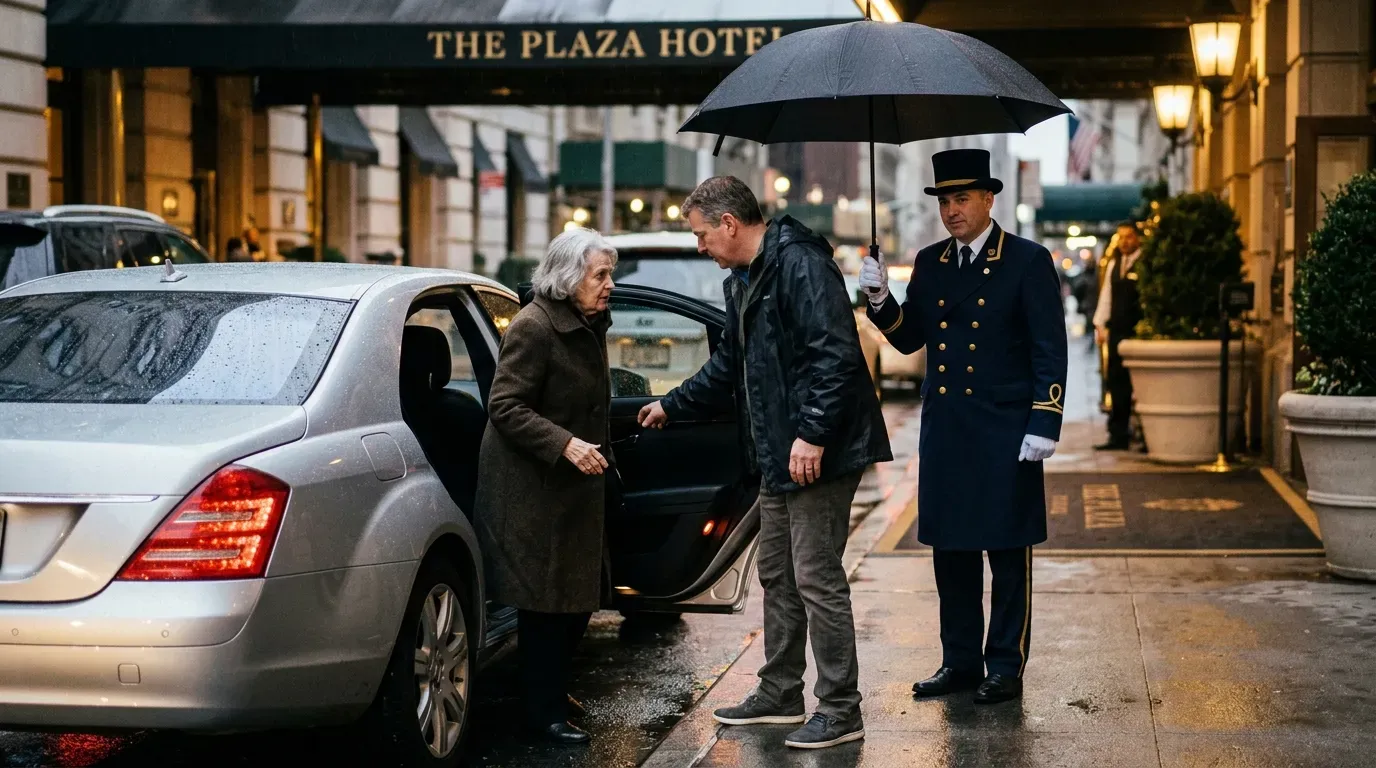
When a family member, spouse, or driver hops out to open your door first, doormen read it instantly as a caretaking dynamic. It’s a small gesture with a big signal: someone in your life has already decided you may need a hand, and staff take that cue seriously.
This is one of those genuinely useful reads. Rather than stepping back, doormen tend to lean in more, offering the arm-steady or extra beat of patience that a solo arrival might not get automatically. It’s a courtesy borrowed from your own traveling companions and quietly extended by hotel staff. The effect lasts well beyond the curb, it often colors how attentively you’re treated at breakfast the next morning too.
#9 – Practical Shoes and Layered Clothing in Unpredictable Weather
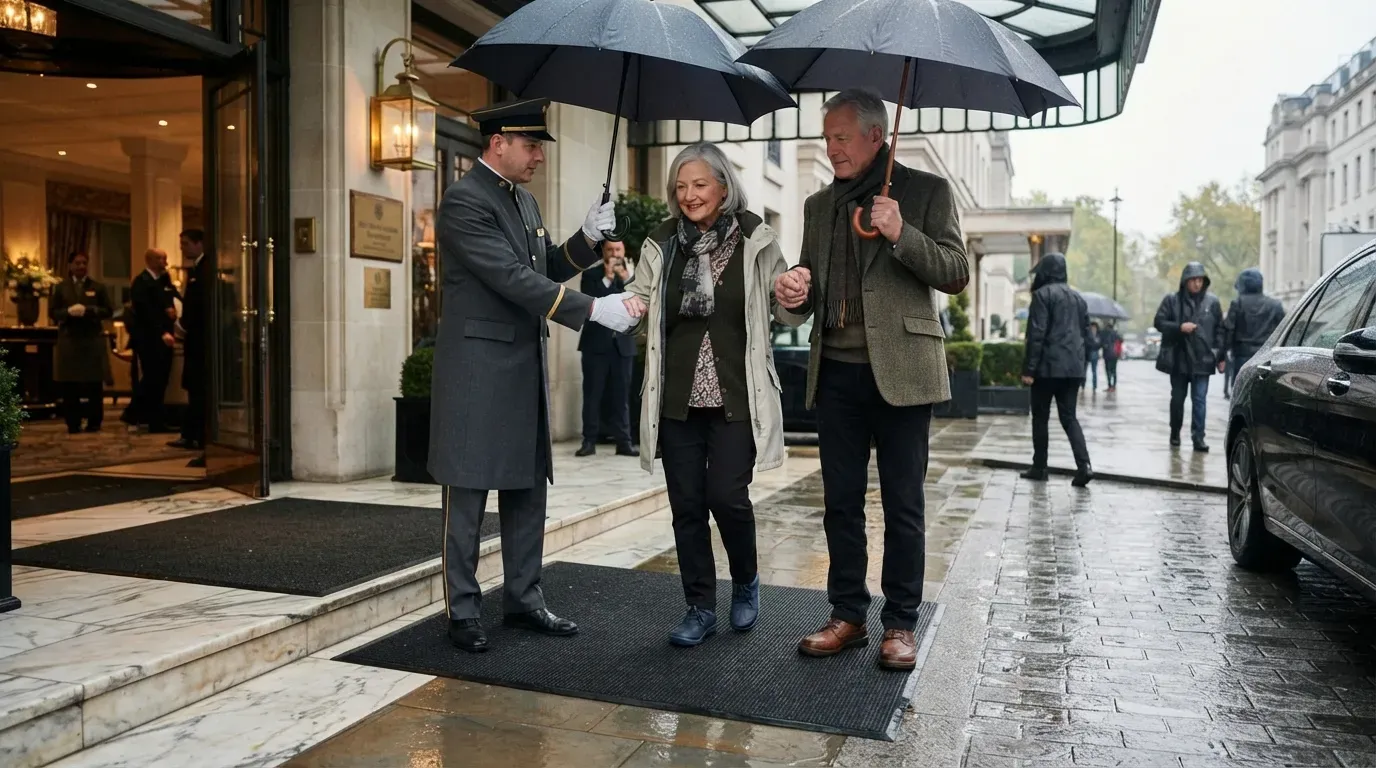
Frequent younger travelers tend to dress for the destination’s Instagram feed. Guests who show up in weather-appropriate, non-slip shoes and sensible layers are read by staff as prioritizing comfort and safety over style, a pattern doormen associate heavily with older, more experienced travelers.
This matters more than it sounds. Hotels lay out floor mats at the entrance during rainy stretches specifically to prevent slips, and that same instinct extends to how quickly a doorman will rush an umbrella or offer an arm on wet marble. Footwear alone can trigger a noticeably more careful escort into the lobby. It’s a small wardrobe choice with an outsized service payoff.
#8 – Tipping in Cash Even When Digital Tipping Exists
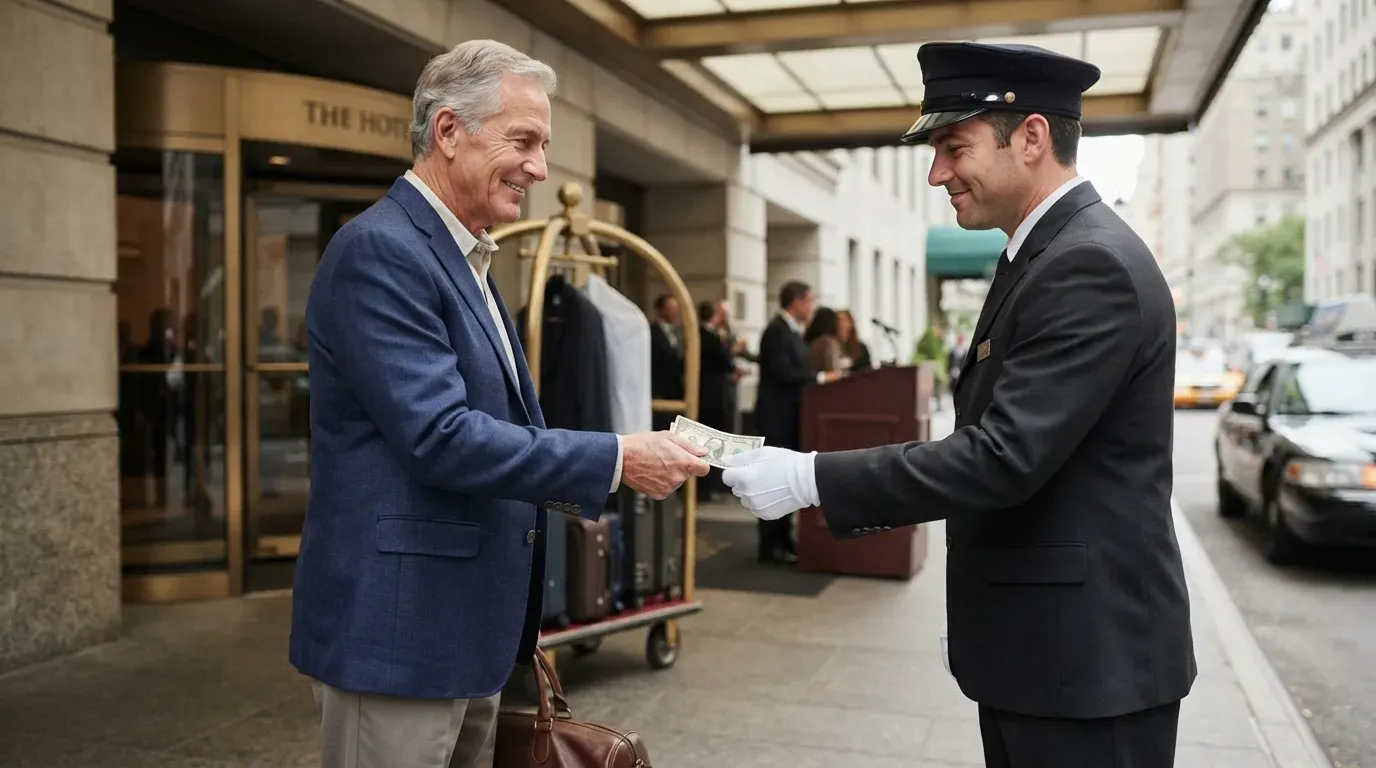
Digital tipping prompts have taken over most valet and bell stands, yet a specific type of guest still reaches for folded bills. Tipping for bell services remains a real part of a bellman’s income, and the standard practice for luggage handling is to offer roughly one to five dollars per bag.
Cash tipping is far less common among younger travelers who default to apps, so when a guest hands over bills directly, doormen clock it as an older-generation habit almost immediately. It’s one of the most reliable, least talked-about generational tells in the entire arrival sequence. Staff often respond with warmer, more personal small talk right after, cash tippers tend to get remembered by name faster than anyone else.
Fast Facts
- The American Hotel & Lodging Association suggests a tip of $1 to $5 per bag to bellmen when luggage is delivered to your room or to your car.
- Cash is still king at most hotels, since staff expect to be tipped in cash, not asked for a Venmo username.
- As society has grown more cashless, paying with cards and mobile apps instead of bills, workers who rely on cash tips have felt the pinch more than ever.
#7 – Asking for a Paper Map or Printed Directions
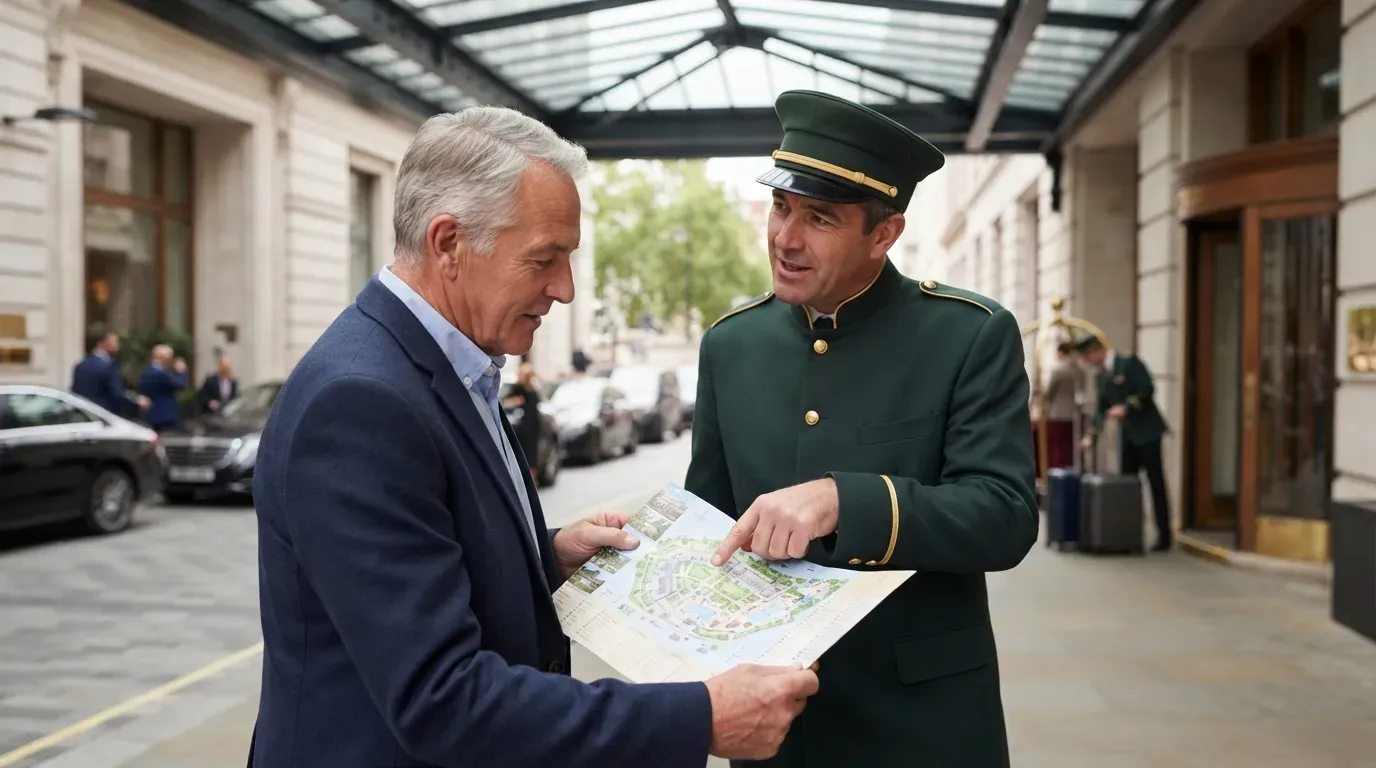
Most guests under 45 pull out a phone the second they need directions anywhere on property. A guest who asks the doorman to physically point out the route to the pool, or requests a printed hotel map, is sending a clear generational signal that gets noted without a second thought.
Doormen tend to over-explain in these moments, repeating landmarks, using physical gestures, and offering to walk guests partway rather than just gesturing vaguely. It’s one of the few signs that triggers more verbal service rather than digital shortcuts. Many veteran doormen say they actually prefer these interactions, since they allow for the kind of personal touch technology has quietly erased from most arrivals.
#6 – The Way You Say “Thank You” Changes the Whole Interaction
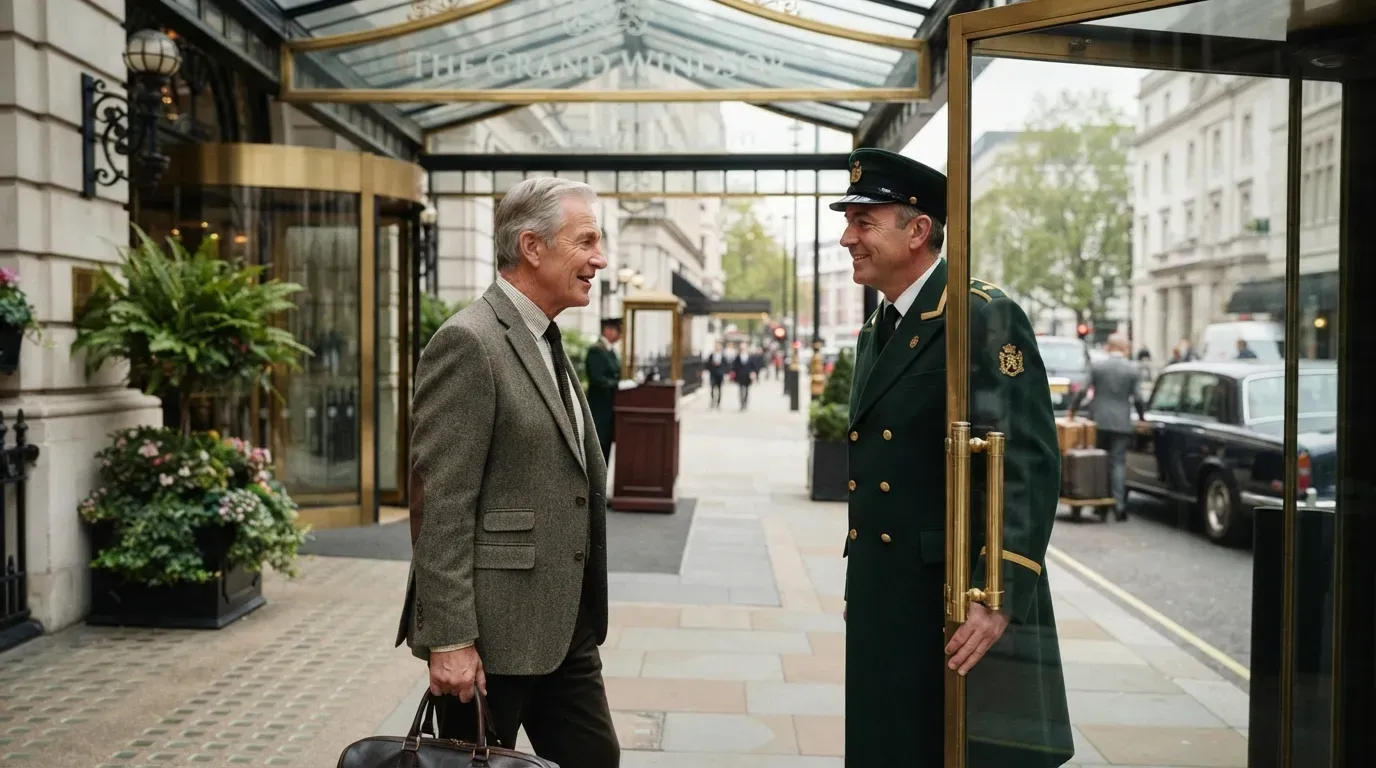
Older guests are, by a wide margin, more likely to make direct eye contact and use full, warm phrases like “thank you so much, I appreciate that” rather than a quick nod or a muttered “thanks.” Doormen notice this instantly, and it shifts the entire tone of the relationship for the rest of the stay.
This courtesy pattern is one of the strongest predictors of loyalty-style treatment from staff, not because of any policy, but because people naturally work harder for those who make them feel seen. A genuine thank-you at the curb can quietly buy you better service for the next five days. It’s an unwritten rule nobody puts in the employee handbook, but every long-tenured doorman knows it by heart.
#5 – Requesting a Room Close to the Elevator, Not the View
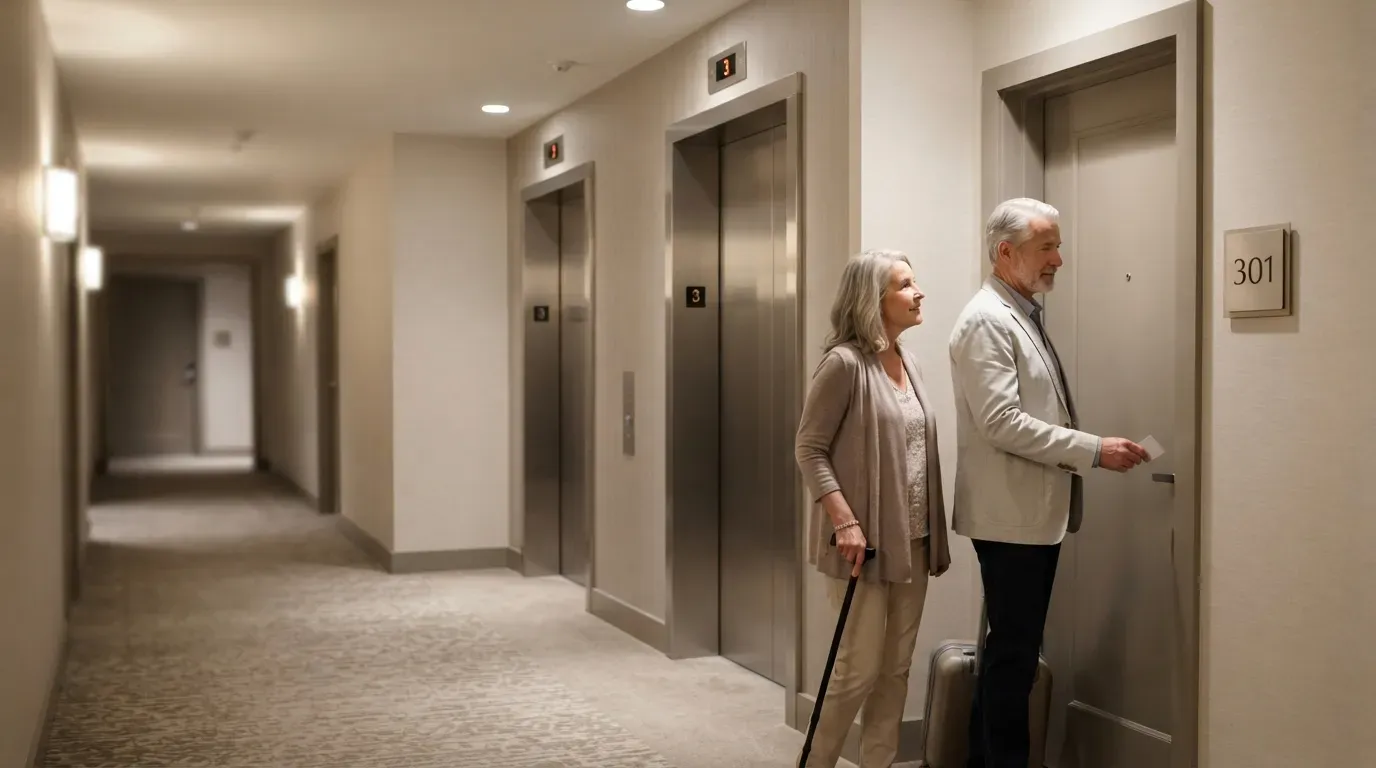
Younger guests almost always chase the view. Guests who instead specifically ask for proximity to the elevator, even at the cost of a worse room, are flagging a mobility priority that doormen and front desk staff take note of together, since the two teams usually communicate room needs in real time.
This single request lines up with a well-documented reality about how mobility concerns climb with age, and it’s exactly why the elevator-proximity request has become one of the most reliable signals in the business. It’s a practical trade-off, and staff genuinely respect it more than most guests realize.
At a Glance
- Ages 50-59: 62% cite mobility as an issue requiring accommodation
- Ages 60-69: that share climbs to 74%
- Ages 70 and older: nearly 9 in 10 guests, 89%, say the same
#4 – Arriving by Car Instead of Rideshare or Rental
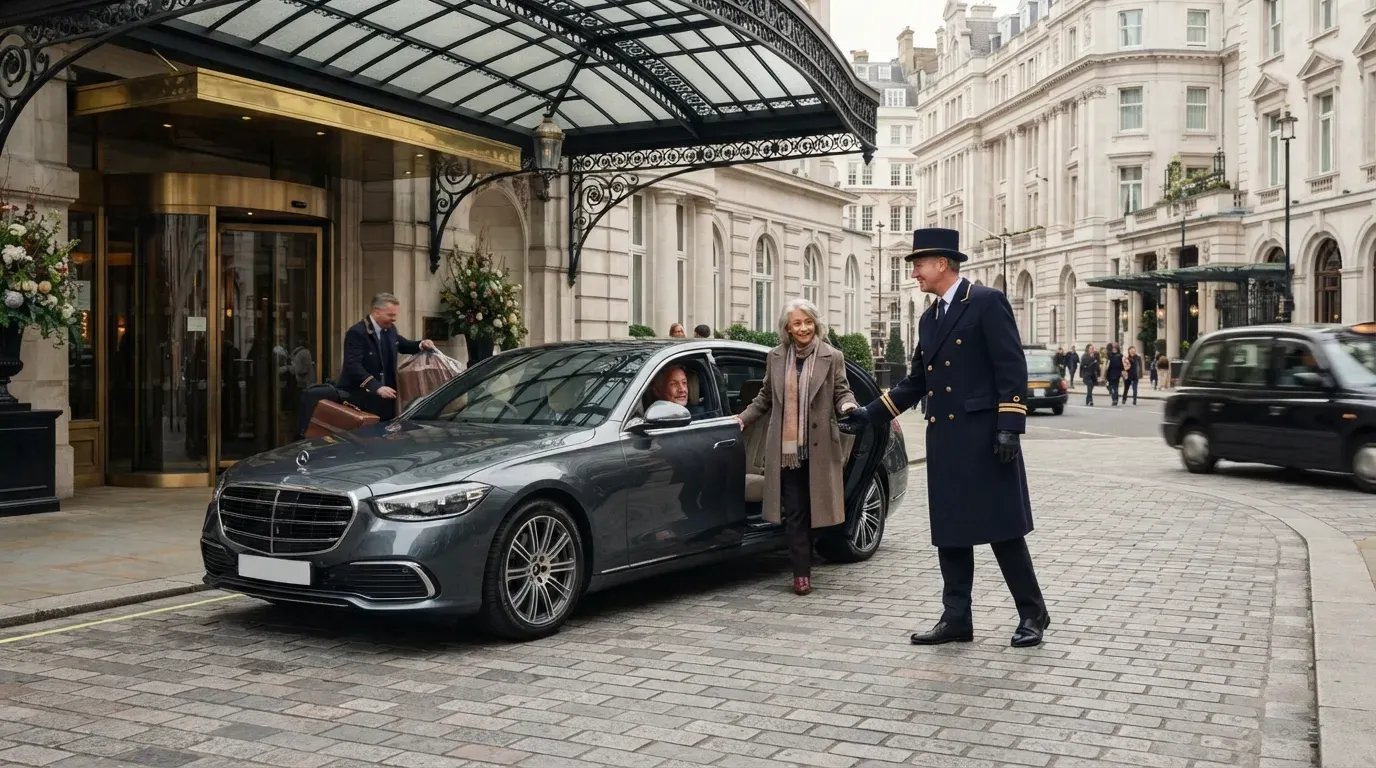
The vehicle pulling up tells its own story. Older travelers are consistently more likely to want to travel by personal vehicle than by plane, and doormen extend that same logic to the curb. Guests arriving in a personal car, often driven by a spouse or family member, get read differently than a solo guest hopping out of a rideshare with a duffel bag.
This isn’t about wealth or status, it’s about rhythm. Personal-vehicle arrivals tend to move slower, involve more luggage transfers, and give doormen more time to observe and adjust their approach before the guest even reaches the door. The type of vehicle in the driveway is a bigger tell than most people would ever guess. It sets the pace for everything that follows.
Quick Compare
- Personal car: slower pace, multiple bags, family member often helping unload
- Rideshare: quick curb drop, usually one bag, faster walk to the door
- Rental car: somewhere in between, harder for staff to predict at a glance
#3 – Hesitating at Automatic or Revolving Doors
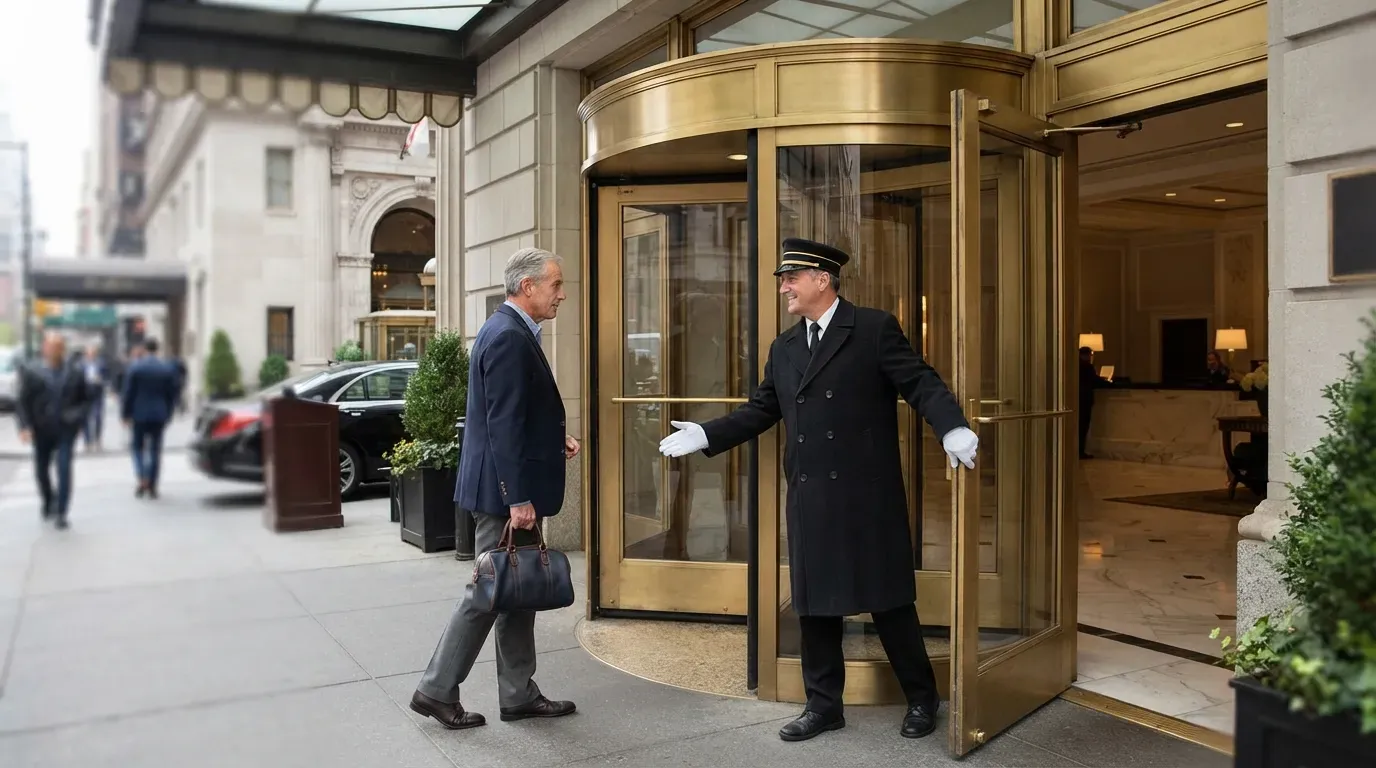
This one seems minor until you watch it happen. A guest who pauses, waits for the door to fully cycle, or visibly times their step through a revolving door is giving doormen one of the clearest physical-confidence signals in the entire arrival. Confident, frequent travelers barely slow down.
Veteran doormen almost universally step in physically here, holding a side door open manually rather than gesturing toward the automatic one, even when it would be faster for everyone involved. That quiet door-swap is one of the most deliberate, least noticed accommodations in modern hotel service. It happens in under two seconds, and most guests never even register that a decision was made on their behalf.
#2 – Traveling With a Printed Reservation Confirmation
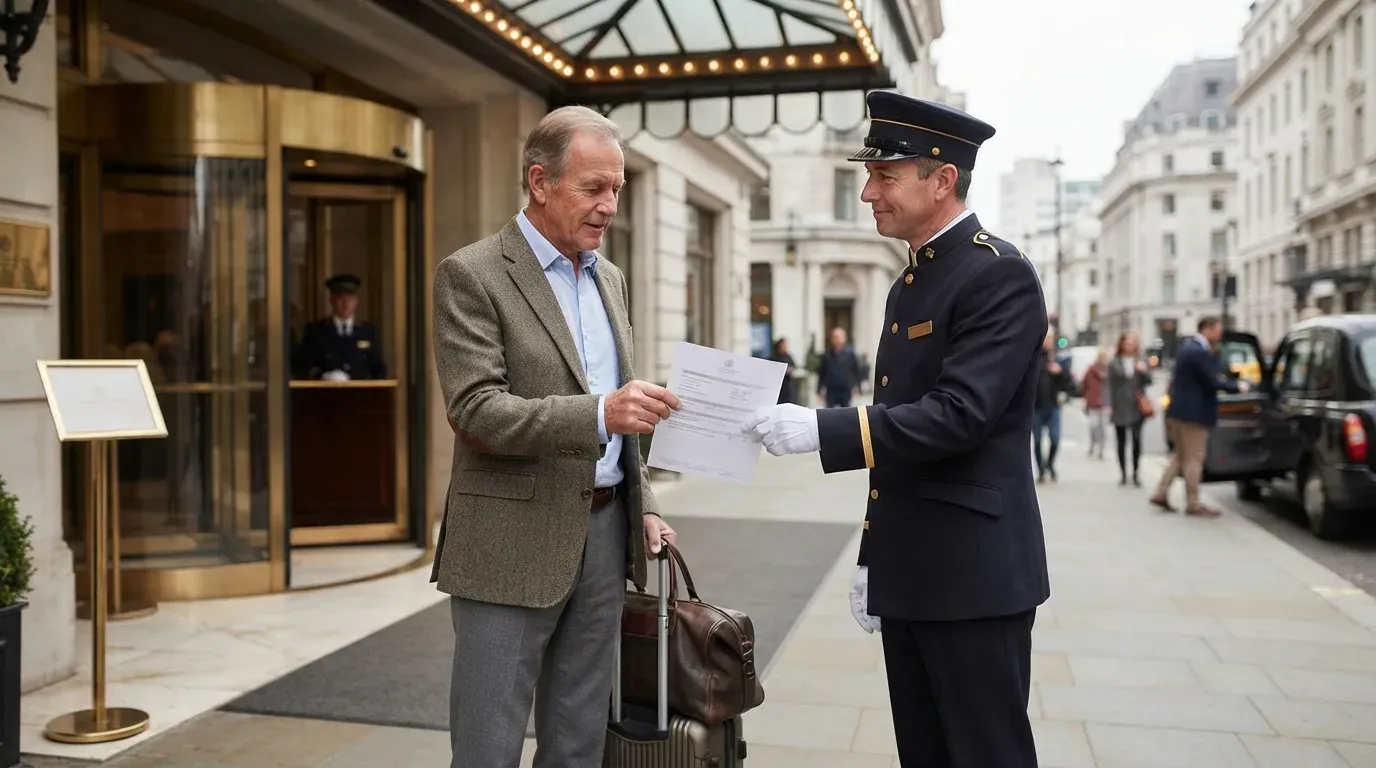
Contactless everything has become the industry default. By 2025, roughly 67 percent of hoteliers worldwide had deployed at least one contactless solution, with mobile check-in and digital keys leading the way. Against that backdrop, a guest who hands over a printed confirmation sheet at the curb or front desk stands out immediately as someone who trusts paper over apps.
Doormen and front desk staff both treat this as a strong, friendly signal to slow the whole process down and walk through things verbally rather than pointing at a QR code. It’s one of the most old-fashioned habits left in modern travel, and staff genuinely appreciate it. Many say it actually makes their job easier, since printed paperwork rarely has the login glitches that plague mobile check-ins.
Worth Knowing
- Roughly 80% of travelers say they prefer hotels that offer contactless options.
- Mobile key adoption rates in hotels could exceed 70% by 2025.
- A five-minute delay at check-in can cut guest satisfaction by up to 50%, which is a big reason properties keep pushing guests toward digital arrival.
#1 – The Slow, Deliberate Wave-Off When Offered Extra Help
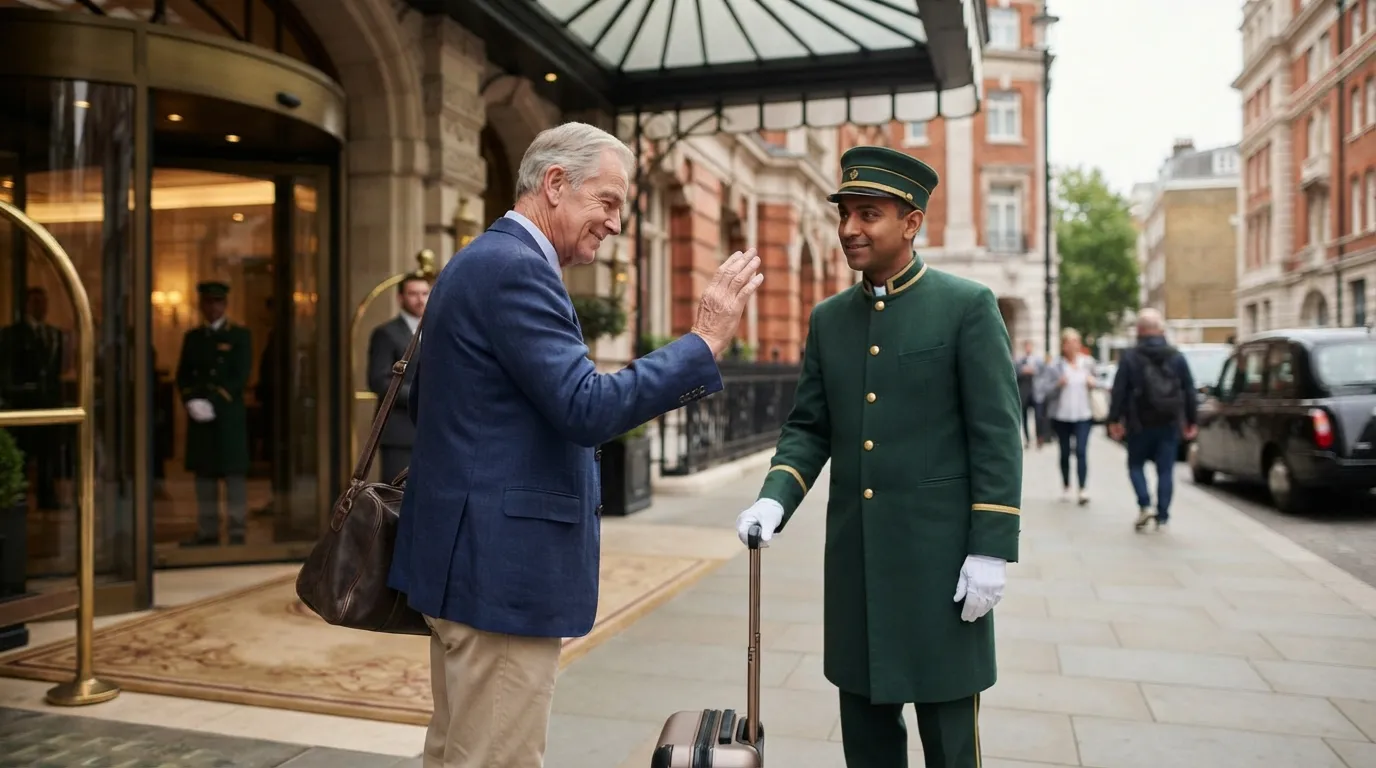
This is the big one, the moment that seals whether a doorman quietly decides to look after you for the rest of your stay. When help is offered and a guest politely, gently declines rather than brushing it off sharply, staff read it as humility rather than independence, and it tends to earn the warmest, most attentive treatment of any signal on this list.
It sounds counterintuitive, but doormen consistently say the guests who wave off help the most gracefully are the ones they go out of their way for anyway, walking a little closer, checking in a little more, remembering little details unprompted. That single moment of soft-spoken independence is, by nearly every account, the strongest “please watch out for this guest” signal in the entire industry. It costs nothing, and it changes everything about how the rest of the visit unfolds.
None of these signals require a birth certificate or a booking note. They’re built from small, human details, a pause at a revolving door, a folded confirmation sheet, a genuine thank-you at the curb, that doormen have learned to read in seconds. The system isn’t official policy anywhere, but it’s remarkably consistent from hotel to hotel across the country.
What’s most surprising isn’t that this happens. It’s how much better the service gets once it does.