
Most cruisers think the biggest shore-excursion risk is picking a “boring” tour. It’s not. The real disasters come from small logistical decisions made weeks before anyone even steps off the gangway – and they turn a $150-a-person outing into the one memory that ruins an entire cruise.
Cruise forums are full of stories about pier runners, stranded vacationers, and families who spent their entire Caribbean day stuck on a bus. The mistakes are shockingly repetitive, and almost none of them are about bad luck. Here’s what actually separates a smooth port day from the kind of afternoon people still complain about years later.
#5 – Going Independent in a Port Where Being Late Means Being Left

Here’s the mistake that costs people the most: booking an independent tour in a port where timing is genuinely tight, just to save forty bucks. The ship will not wait for you if your independent excursion runs late. That safety net only exists for tours booked directly through the cruise line.
Independent operators are usually careful, but “usually” isn’t a guarantee, and the ship doesn’t do second chances. If a cruise-sponsored excursion runs late, the ship holds the dock until it’s back – a promise no outside tour company can make. In ports where the drive is long or traffic is unpredictable, that guarantee is worth every extra dollar it costs.
Quick Compare
- Ship-sponsored tour: the ship waits if the excursion runs behind schedule
- Independent tour: no such guarantee – you’re responsible for making it back on time
- Ship-sponsored tour: usually pricier, booked through the cruise line’s excursion desk
- Independent tour: typically cheaper, but all the risk sits with you
#4 – Trusting “Ship Time” Instead of the Local Clock
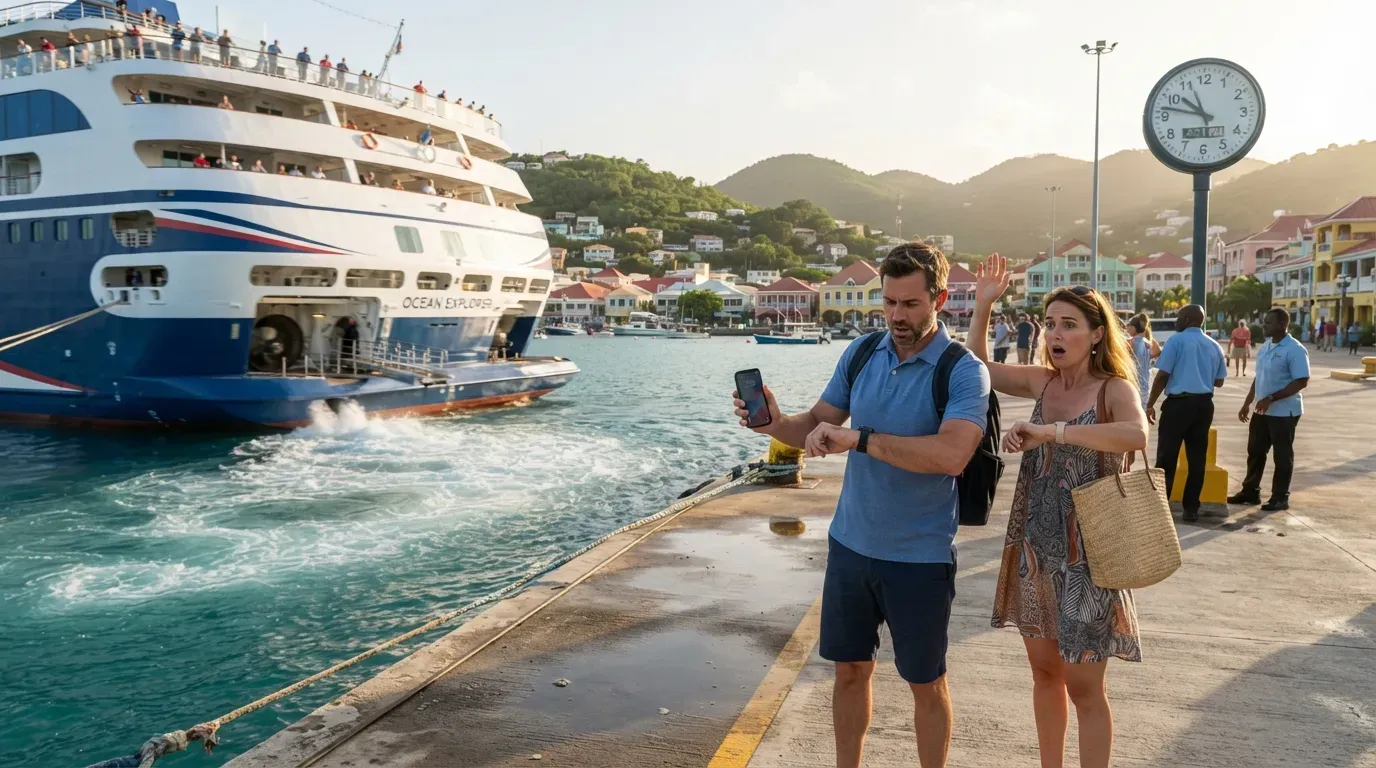
This one sounds too simple to cause real damage, but it strands people every single sailing. Confusing the ship’s clock with the port’s local clock is one of the most common – and most avoidable – reasons passengers miss the boat entirely.
It happens more than most people admit: a couple loses track of time at a beach bar, glances at a phone still set to home time, and suddenly they’re twenty minutes behind a ship that has already pulled anchor. The fix takes ten seconds and almost nobody does it. Read the daily newsletter, note any time-zone quirks for that port, and set your watch to ship time the moment you step onto the dock.
Fast Facts
- Some ports sit in a different time zone than the ship’s onboard clock
- The daily newsletter almost always lists “all aboard” time in ship time, not local time
- Phones can auto-switch to local time without you noticing, throwing off your math
- A simple watch set manually to ship time removes the guesswork entirely
#3 – Cutting the Return Window Down to the Wire
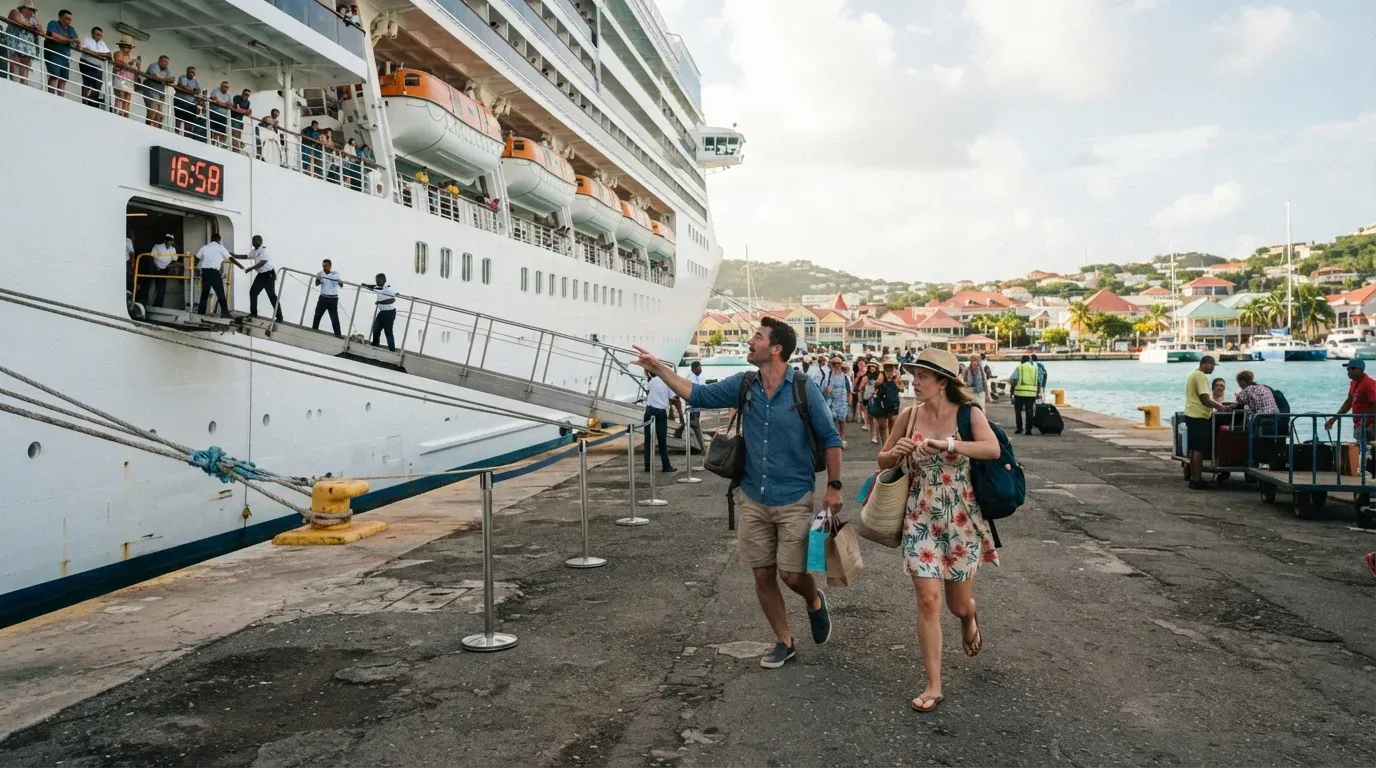
The single most repeated piece of advice from experienced cruisers is also the most ignored: don’t plan to arrive back “just in time.” Smart travelers build in an entire extra hour as insurance against traffic, weather, or one last souvenir stop that turns into thirty minutes browsing a market stall.
Showing up exactly at all-aboard time isn’t cutting it close – it’s gambling with the whole trip. Excursion planners themselves recommend padding an hour or two beyond the posted return time, especially if you wander far from the pier. A tour that gets you back with only fifteen minutes to spare might sound efficient, but it leaves zero room for a delayed bus, a closed road, or a sudden downpour – and that kind of comfort is part of what you’re actually paying for.
Worth Knowing
- Aim for 60 to 90 minutes of buffer beyond the posted return time whenever possible
- Traffic, weather, and long taxi lines are the most common reasons tours run late
- Excursion desks generally recommend erring early rather than cutting it close
- Missing the ship can mean an expensive scramble to catch up at the next port
#2 – Booking an “Excursion” That’s Really Just a Bus Ride
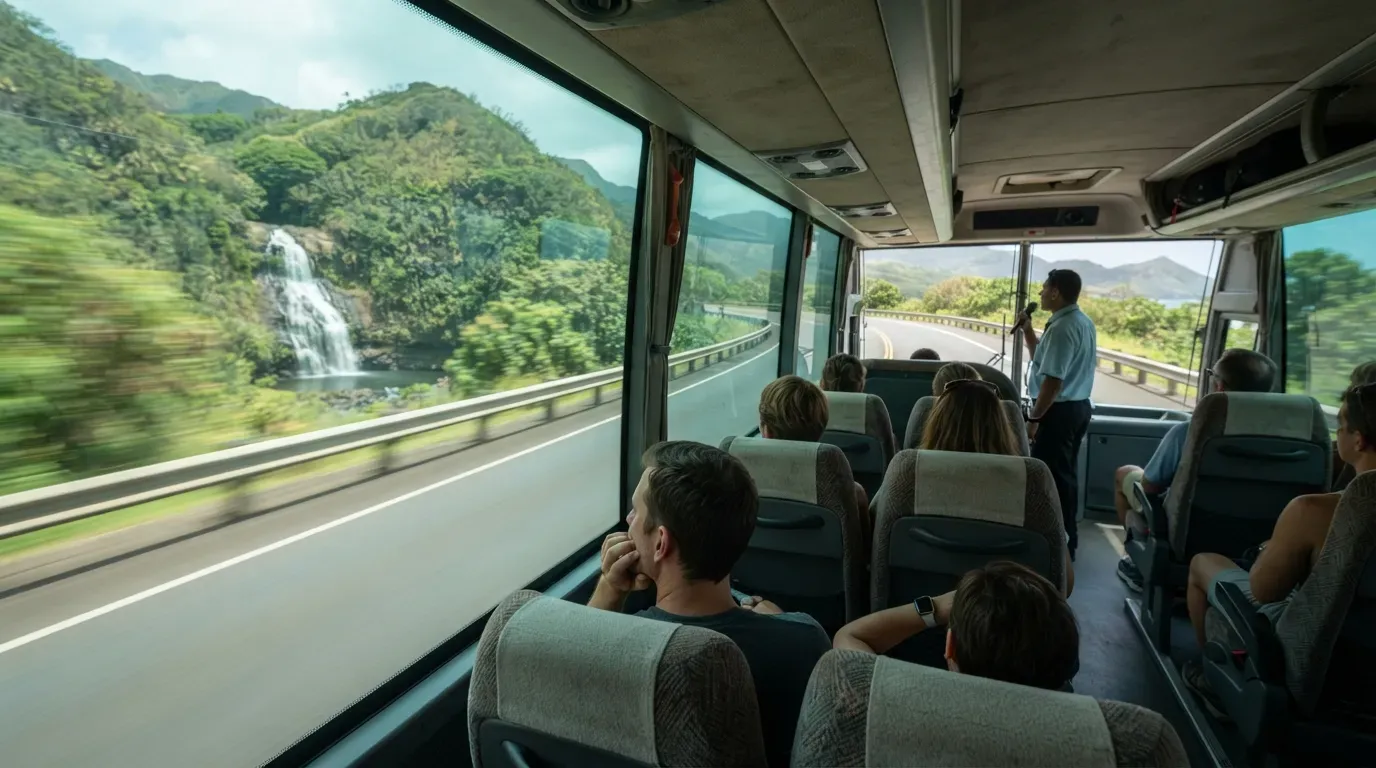
This is the mistake nobody warns you about until it’s too late: paying full price for a tour that quietly burns most of the day on the road instead of at the destination. A beautiful waterfall hike might sound perfect on paper – until you realize it’s a 90-minute drive each way, which means three hours on a bus and barely forty-five minutes actually standing near the waterfall.
This is a genuinely controversial opinion among cruisers, but it needs saying: the classic panoramic bus tour is often the worst-value excursion on the ship. Few things generate as much regret as spending a rare port day watching scenery blur past a window while a guide rattles off facts you could’ve read on your phone. Before booking anything, check the actual transit time listed in the tour description, not just the destination photos.
#1 – Assuming Every Port Needs a Paid Tour at All
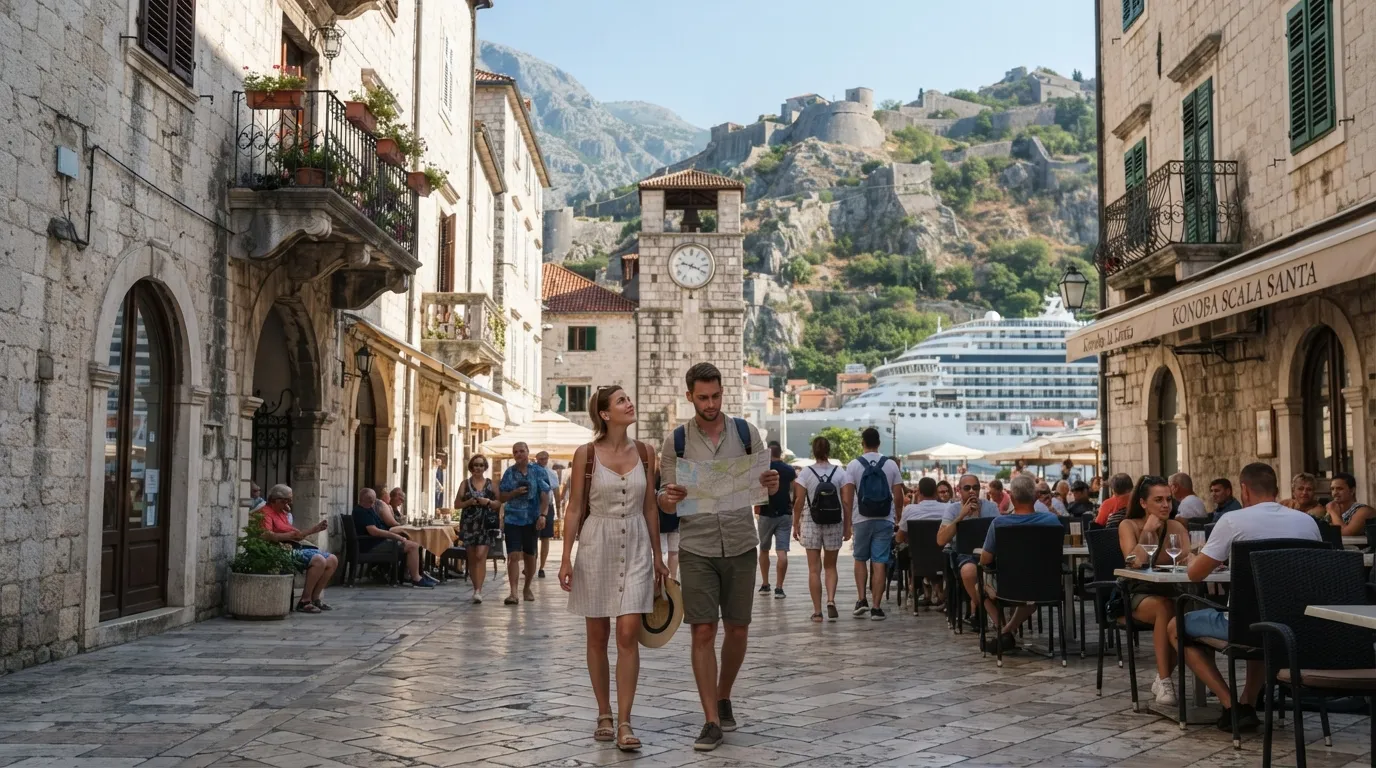
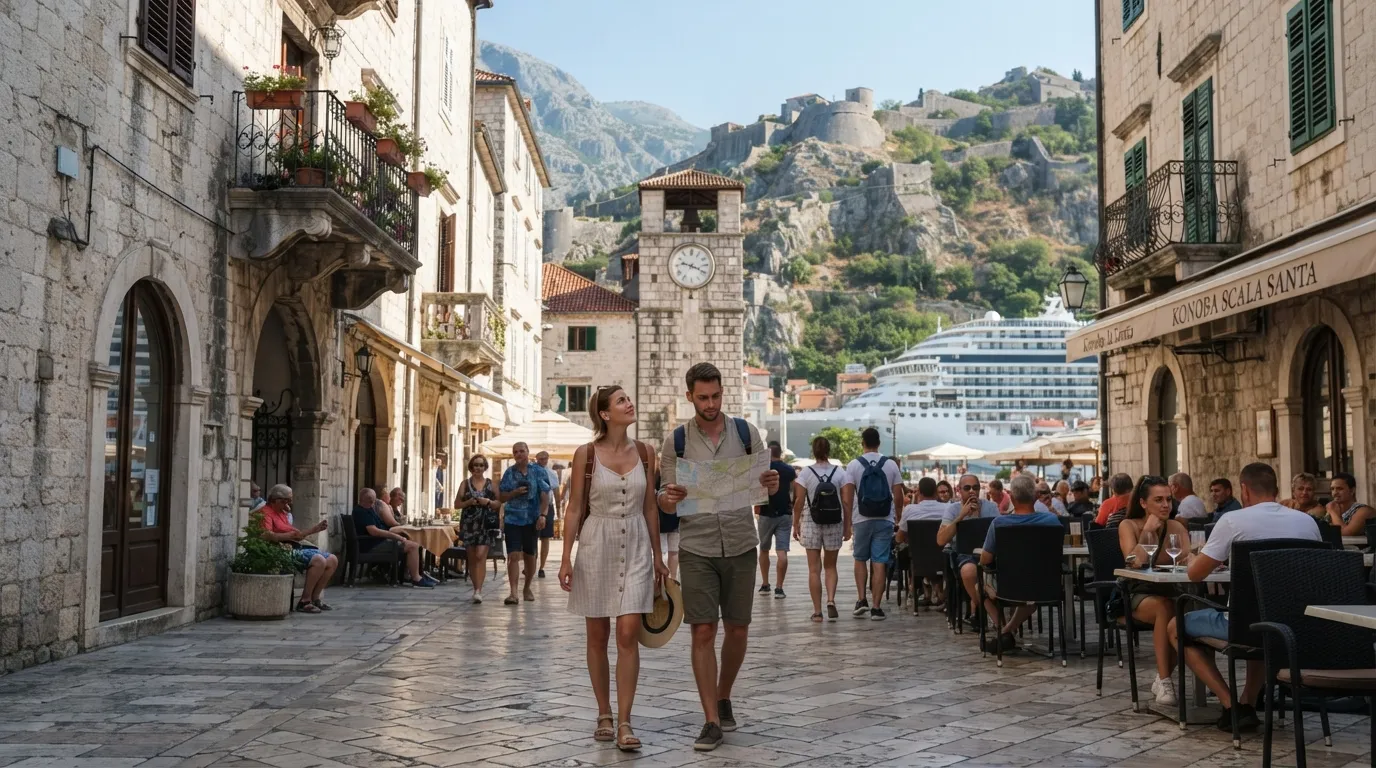
Here’s the mistake that’s secretly draining the most money from cruise vacations: booking a paid excursion for a port you could have easily explored on foot. In walkable cruise hubs, a guided “city highlights” tour can be the single worst use of a day’s budget – well-marked routes, reliable transit, and major sights are often a short walk from the dock, no guide required.
Experienced cruisers now treat unplanned wandering as the real luxury of a cruise. A market stroll with no schedule, a waterfront lunch you stumbled onto, an afternoon on the sand with nowhere to be – that’s the freedom people are actually chasing when they book the cruise in the first place. The smartest move seasoned travelers make: reserve two or three ports for planned excursions and leave the rest completely open.
At a Glance: Ports Where You Can Just Walk Off the Ship
- Nassau, Bahamas – the straw market and colonial downtown sit steps from the pier
- Cozumel, Mexico – San Miguel’s plaza and shops are just outside the terminal gates
- Key West, Florida – Duval Street’s bars and galleries are a short stroll from the dock
- Charleston, South Carolina – the historic district begins almost right at the ship
None of these mistakes are exotic. They’re small, boring, forgettable decisions – a mismatched clock, a rushed return window, a tour that’s really just a bus ride – and that’s exactly why they catch so many people off guard.
The fix isn’t spending more money on every port. It’s spending it strategically and building in more buffer than feels necessary. The cruisers who get this right end every port day relaxed on the pool deck instead of sprinting down a pier.
Which of these mistakes have you made – or watched someone else make? Tell us your pier-running story in the comments.