
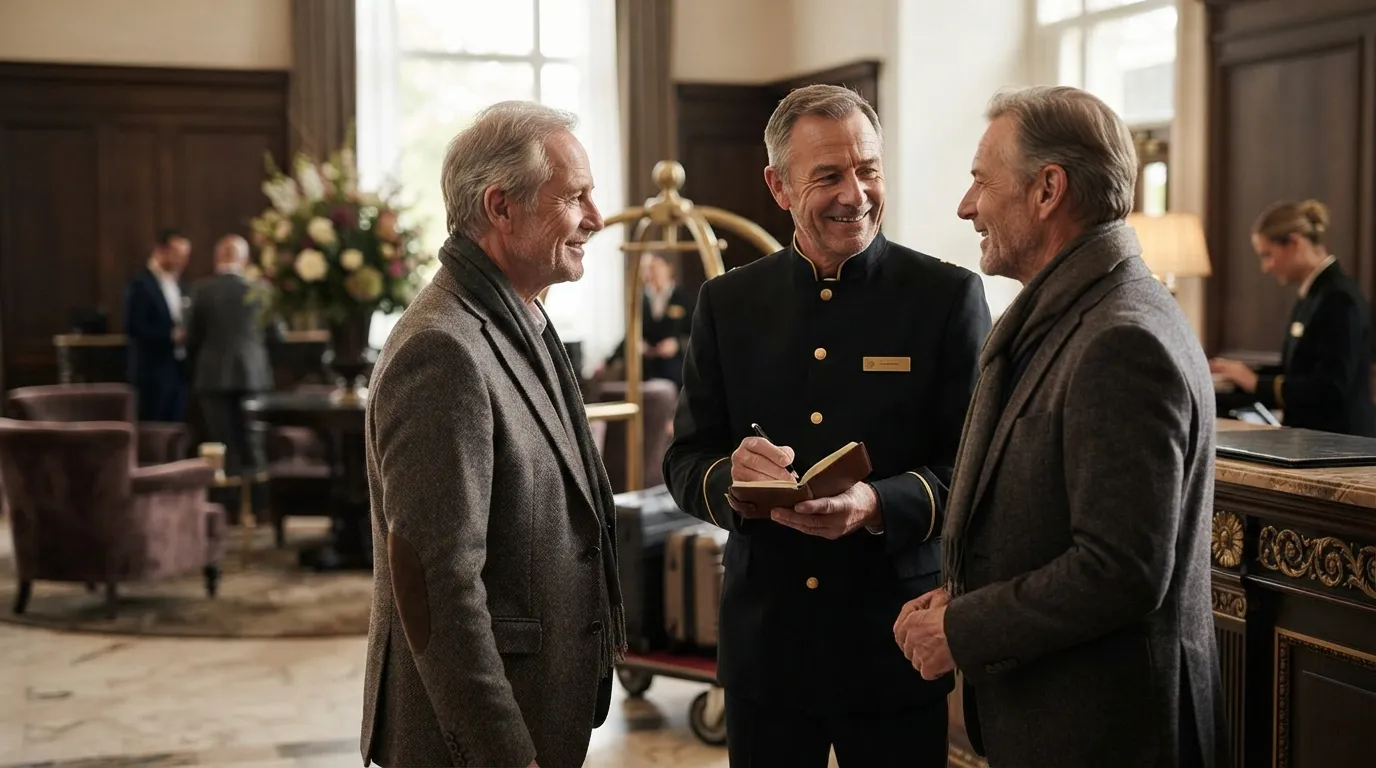
Most travelers assume a bellhop’s job ends the second the luggage hits the rack. But veteran bell staff say the real work with guests over 60 happens in the ninety seconds before that cart even stops moving – the route chosen, the pace set, the details quietly logged that never show up on any invoice. None of it costs extra, and almost none of it gets noticed in the moment.
What’s stranger is how consistent these habits are, hotel to hotel, city to city, decade after decade. Here’s what experienced bell staff actually do for older guests when nobody’s watching – and why the tenth one on this list might explain your last “surprisingly great” stay.
#15 – They Quietly Reroute You Around the Longest Walk in the Building
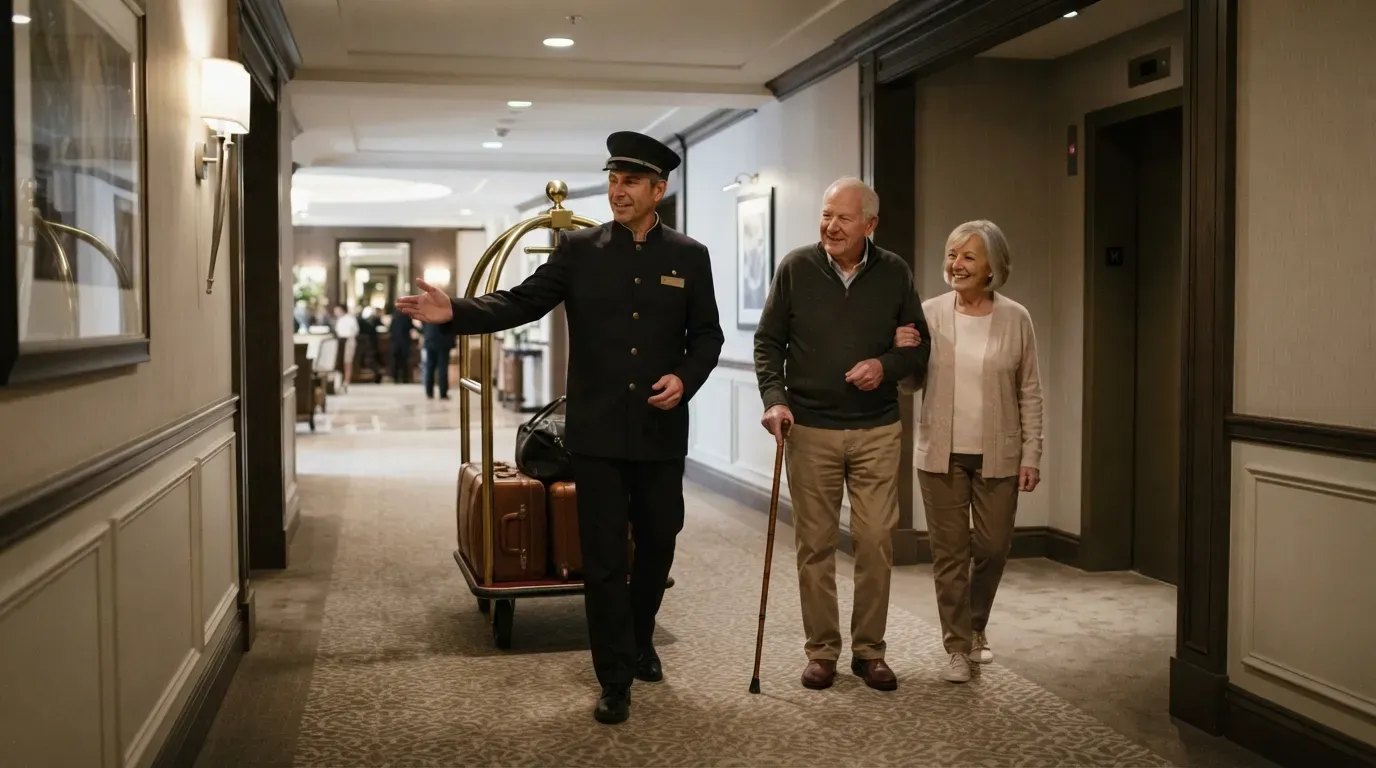
A seasoned bellhop scans the lobby layout before a guest over 60 even reaches the desk, mentally mapping which hallway, elevator bank, and entrance shaves the most steps off the walk to the room. It’s rarely announced. The guest just notices the walk felt shorter than expected, without knowing why.
The surprising part: this reroute often overrides the “standard” path management trains for new hires. Bell captains say the shortcut gets passed down almost like an oral tradition, staffer to staffer, specifically for guests who move a little slower or arrive with a cane. The next habit works the same quiet magic – just on your luggage instead of your feet.
#14 – They Load the Cart So the Heaviest Bag Never Touches the Ground Twice
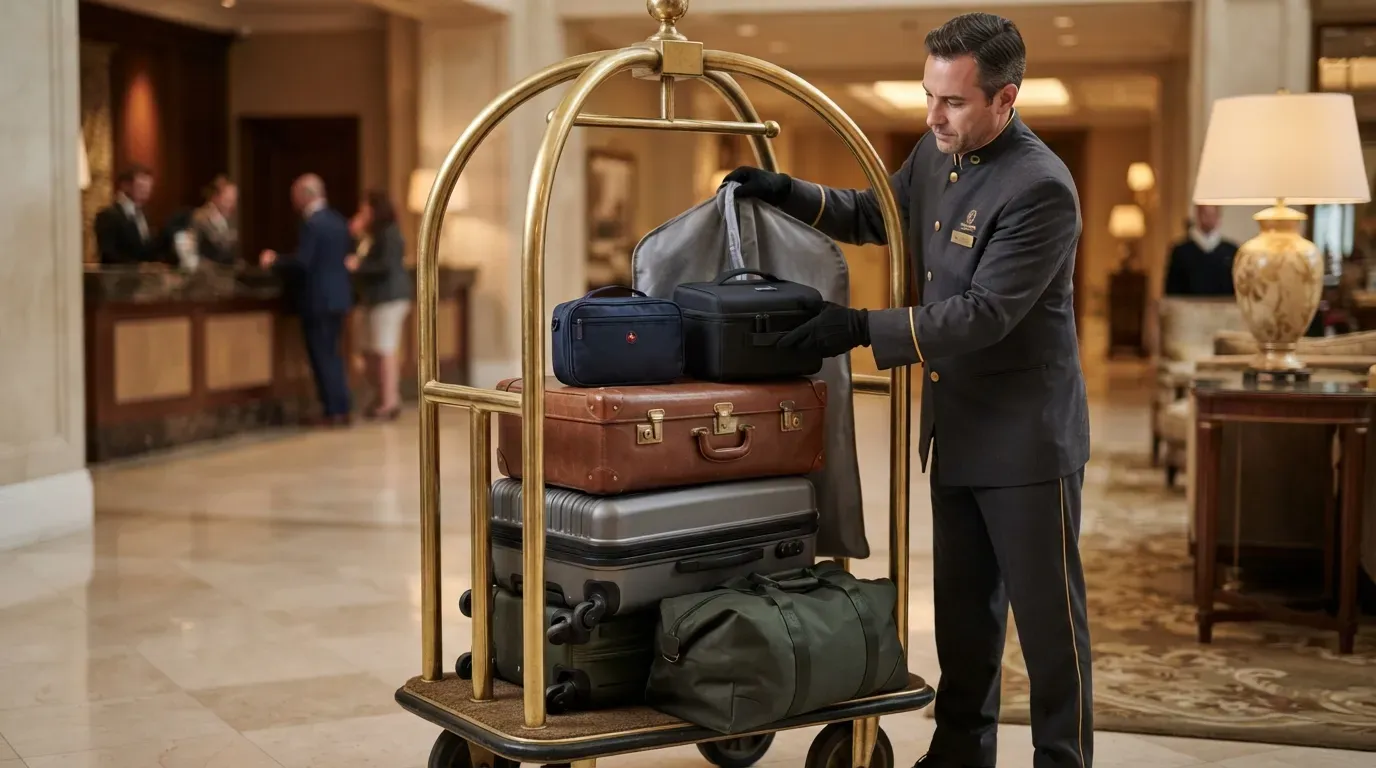
There’s an unspoken order to how a good bellhop stacks luggage, and it isn’t random. Medication bags, CPAP cases, and anything fragile go on top, closest to hand, so nothing gets buried or jostled during the ride up. It’s a habit built entirely around not making a guest ask twice.
Guests rarely see this sequencing happen because it takes seconds and looks like ordinary tidiness. Bellhops describe it as one of the few genuinely load-bearing decisions of the entire encounter – get it wrong, and a guest’s blood pressure cuff ends up crushed under a suitcase. Corridor manners come next, and they’re just as calculated.
Fast Facts
- Medication bags and CPAP cases go on top of the stack, never underneath
- Fragile or medical items stay within arm’s reach the moment the cart stops
- The heaviest bag is positioned so it never has to be set down twice
- Loading order is decided in seconds, before the cart ever leaves the lobby
#13 – They Walk Half a Step Ahead, Never a Full Stride
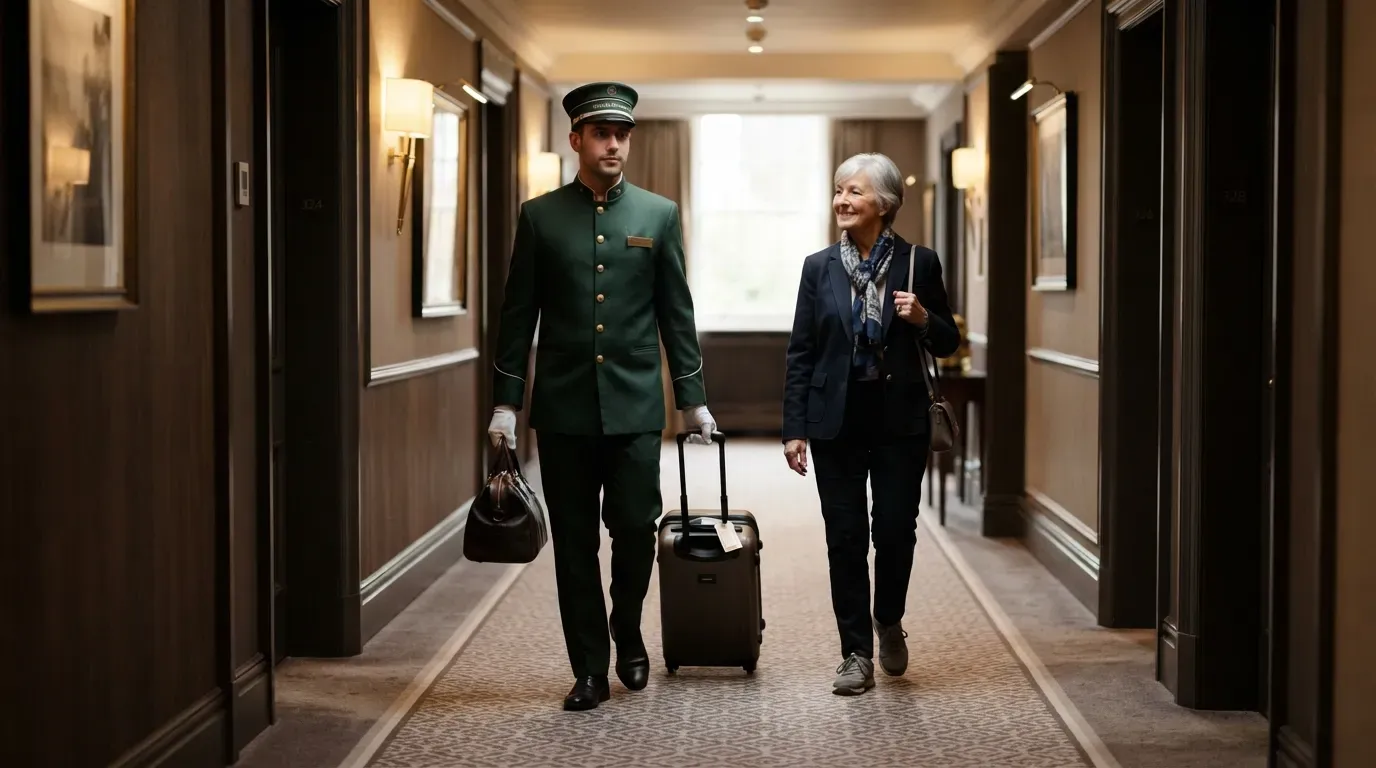
Corridor conduct sounds like a small thing until you watch it done wrong. Trained bell staff are taught to walk half a step ahead to lead, but do not rush, and to avoid loud conversation in the hallway. For guests over 60, that pacing choice is deliberate, not accidental politeness.
It lets the guest set the real tempo without ever feeling watched or hurried. Many hotels build this into training precisely because rushing an older guest through a hallway is one of the fastest ways to erode trust before the room door even opens. What happens once that door actually opens is its own small ritual.
#12 – They Point Out Every Outlet Before You Even Ask
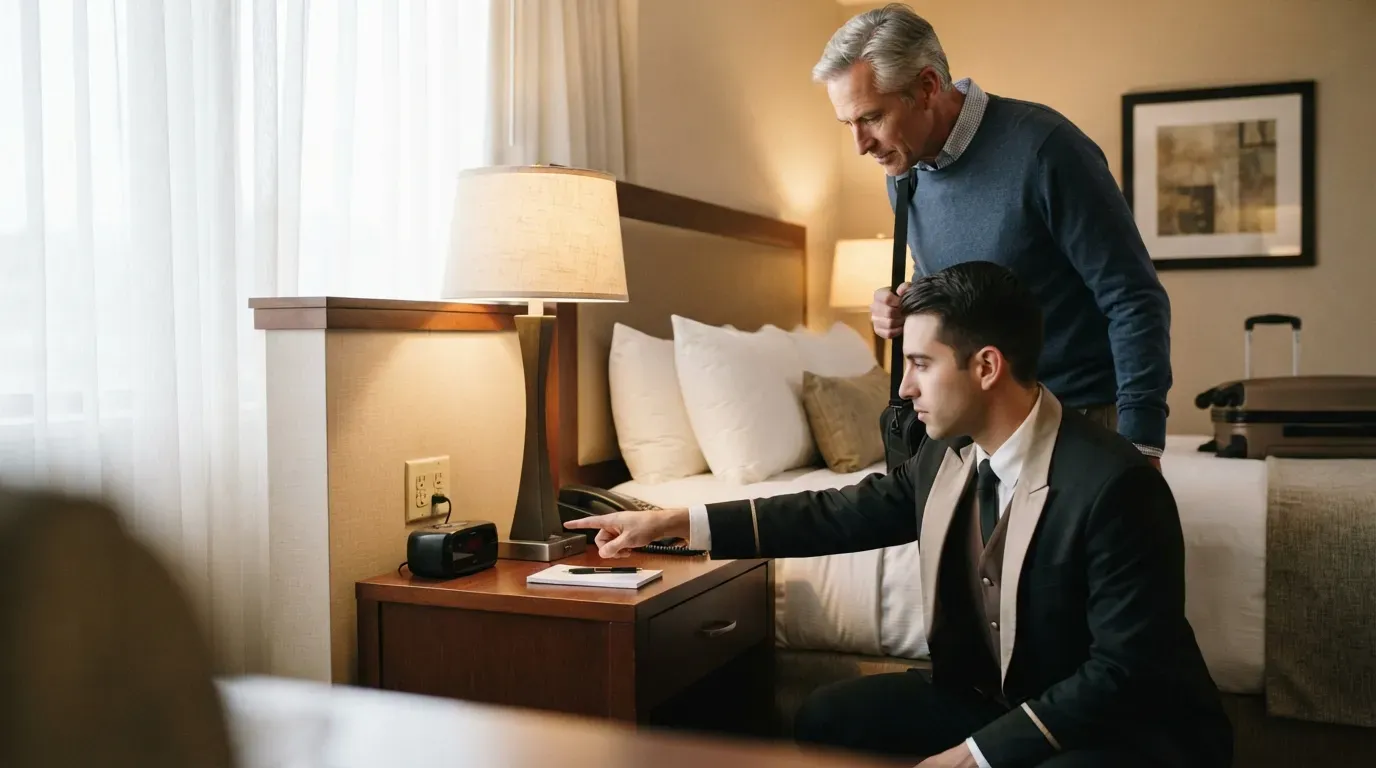
A good bellhop’s room walkthrough for an older guest quietly includes something new hires often skip: naming every outlet location, especially ones near the nightstand. It matters more than it sounds, since CPAP machines, hearing aid chargers, and medical monitors all need power within arm’s reach of the bed.
This detail almost never gets requested out loud – it’s offered. Staff say guests over 60 rarely ask directly about outlet placement, so the walkthrough becomes the only chance to solve a problem before it becomes a 2 a.m. phone call to the front desk. There’s an even quieter form of consent happening a few floors down, in the elevator.
Worth Knowing
- CPAP machines almost always need power within arm’s reach of the bed
- Hearing aid chargers are often left plugged in overnight, unattended
- Medical monitors need continuous, uninterrupted power access
- Outlet placement varies widely depending on how recently a room was renovated
#11 – They Ask Permission Before Touching the Elevator Panel
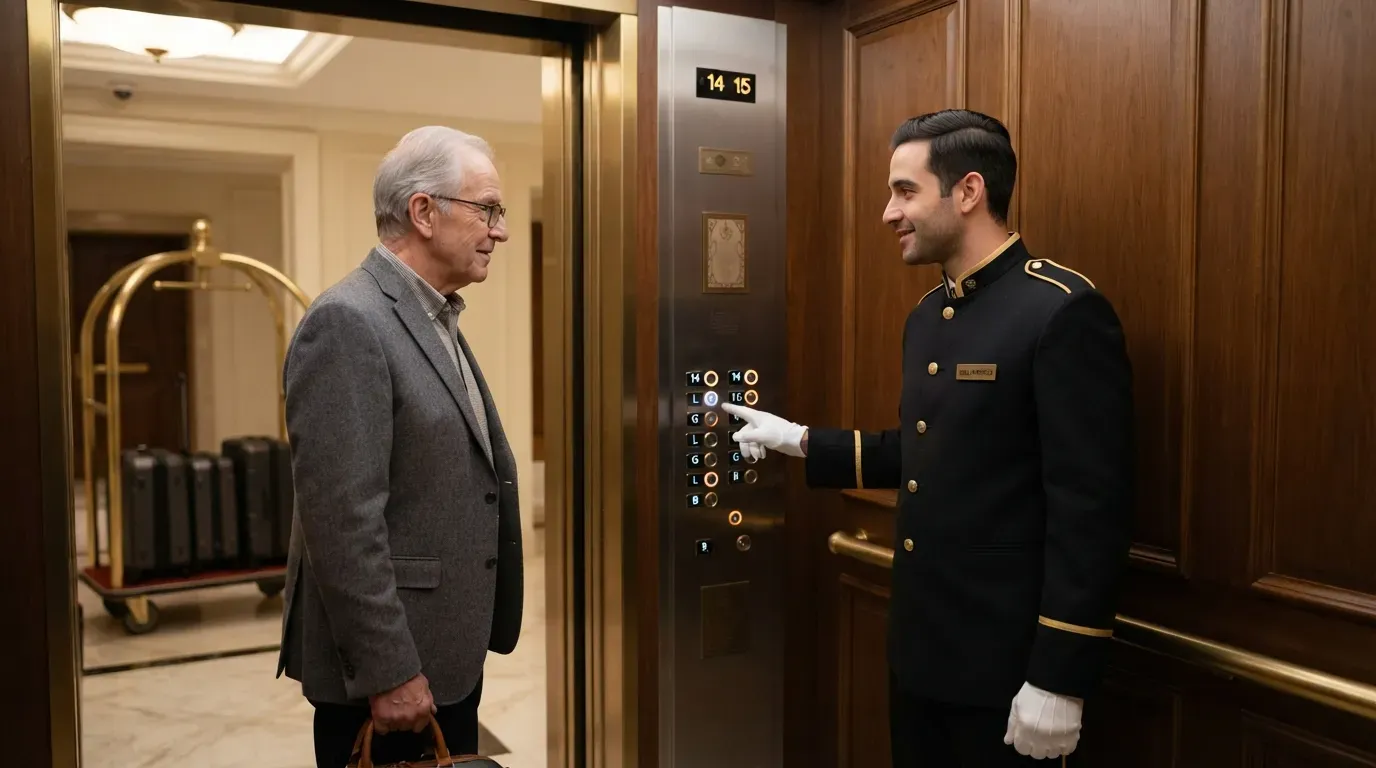
Elevator etiquette has its own quiet script, and it’s built around one specific question. Trained staff are coached to let guests enter and exit first, stand near the control panel, and ask, “Would you like me to press your floor?” rather than assuming.
It’s a tiny moment of consent that older guests notice more than younger travelers typically do. Bell staff say skipping that question – just reaching over and pressing the button unasked – is one of the small habits that quietly reads as dismissive, even when it’s meant as helpful. Somewhere between the elevator and the front desk, something even more personal is already happening.
#10 – They Remember Your Name Before You Say It
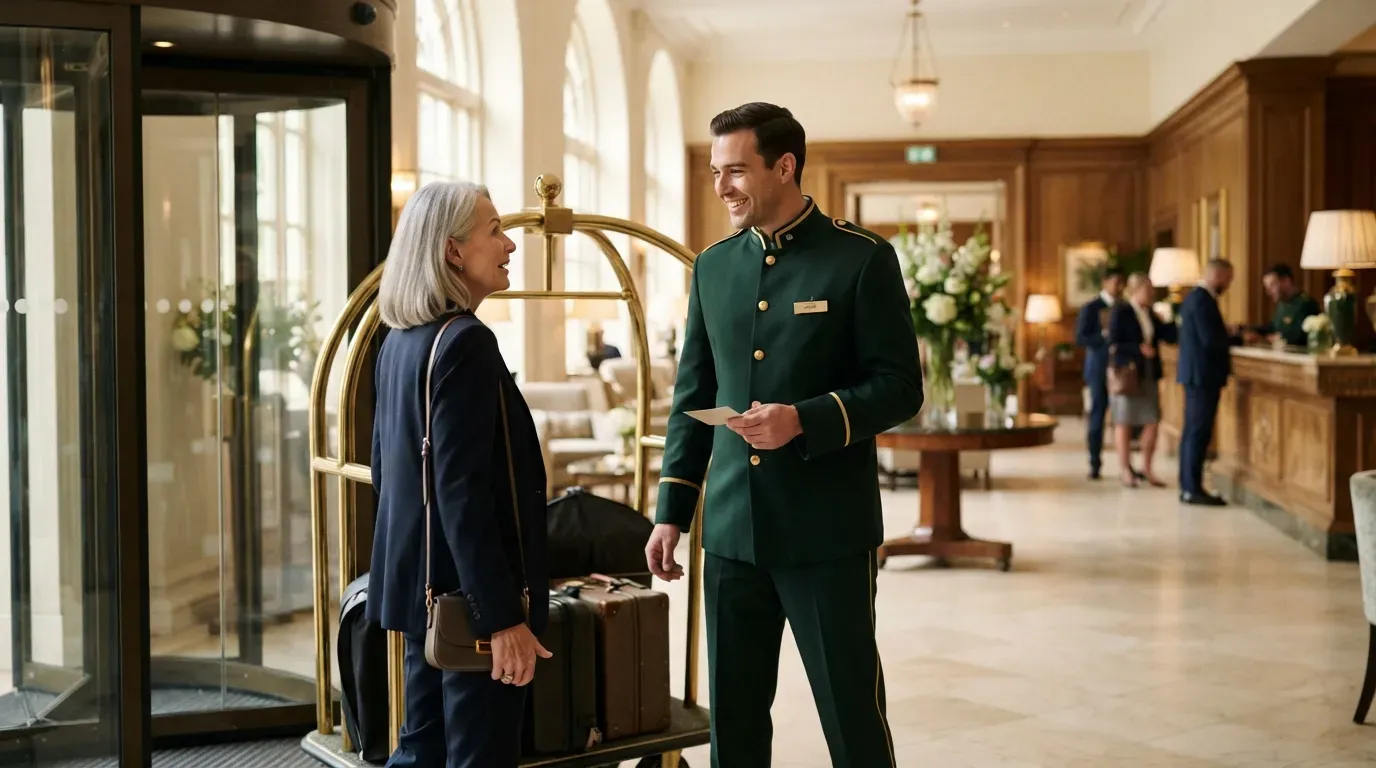
Recognition is one of the most valuable, least visible gestures in the entire building. When a returning guest walks back through the door a year later, the best staff already know who they are before the guest says their name – and the room is set up the way they like it before they even reach the front desk.
For a solo traveler over 60, that recognition changes the entire emotional tone of a stay. It isn’t just a hospitality nicety – it’s the difference between a hotel stay and feeling, for a few days, genuinely at home somewhere far from home. That memory doesn’t start the day you arrive, either.
#9 – They Flag Mobility Notes That Follow You for Years
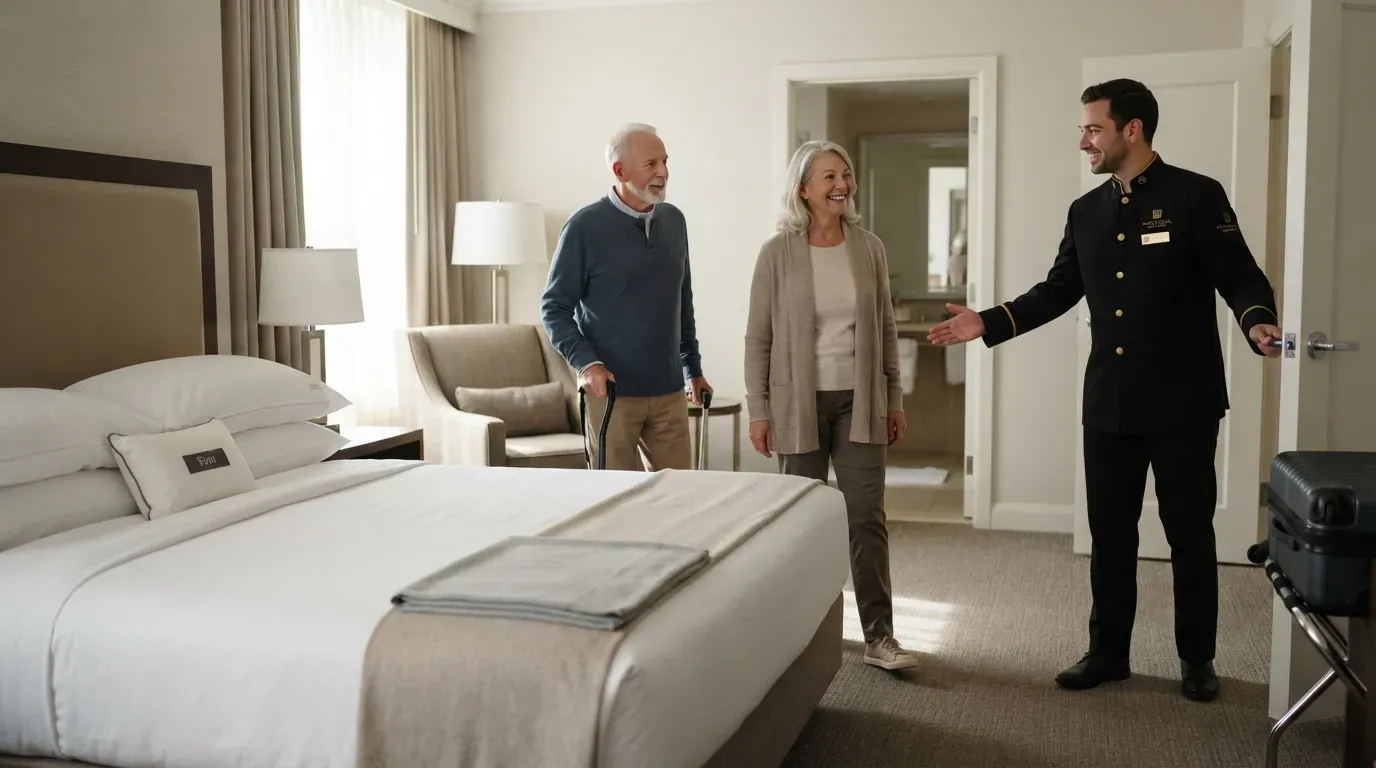
Long before a returning guest checks in, staff who genuinely pay attention are scanning notes from previous stays, flagging mobility or dietary considerations, and coordinating with housekeeping before the guest has packed a single bag. A quiet room, a firmer mattress, an easier walk from the elevator – all of it gets logged.
Most guests never realize a single preference from a stay years earlier is still sitting in the system. It’s not surveillance. It’s the accumulated memory of a property that wants a repeat guest to feel like less of a stranger every time – and sometimes that memory shows up in the bedding, not just the notes.
At a Glance
- Pillow firmness and mattress preference are often logged for future stays
- Mobility notes follow a guest across visits, sometimes for years
- Housekeeping is briefed before the guest even arrives back at the property
- None of these preferences ever appear on the final folio or receipt
#8 – They Tuck In an Extra Pillow Without Logging It as a Request
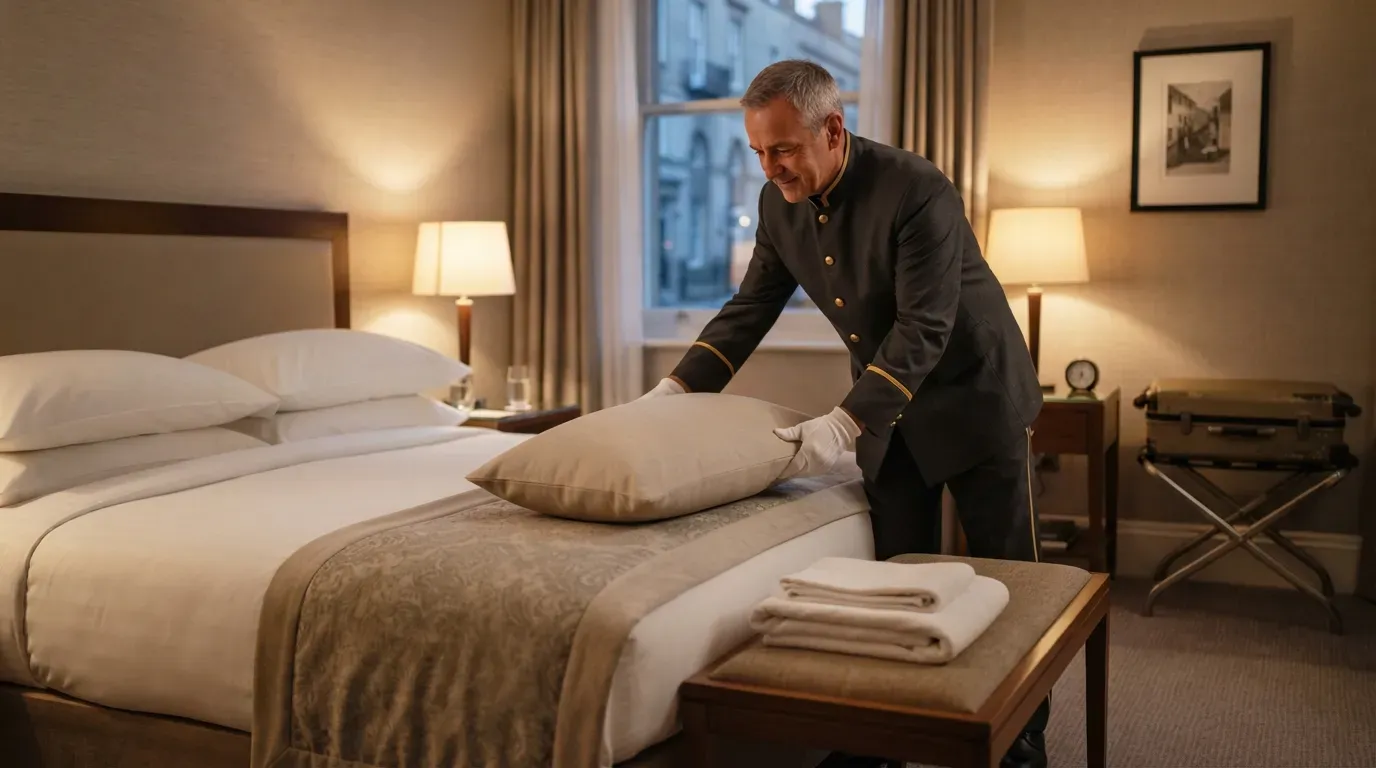
Some accommodations never make it into the official notes at all – they just happen. Bell staff who’ve worked a property for years often know, off the record, which returning guests need a firmer pillow or an extra blanket, and quietly handle it during turndown without waiting to be asked.
It sounds like nothing until you realize it means an older guest never has to make an awkward call to housekeeping over something small. Staff describe this as one of the few genuinely unpaid, unlogged favors left in modern hospitality. The next thing they quietly track isn’t in the room at all – it’s on the clock.
#7 – They Notice the 5 O’Clock Dinner Habit and Plan Around It
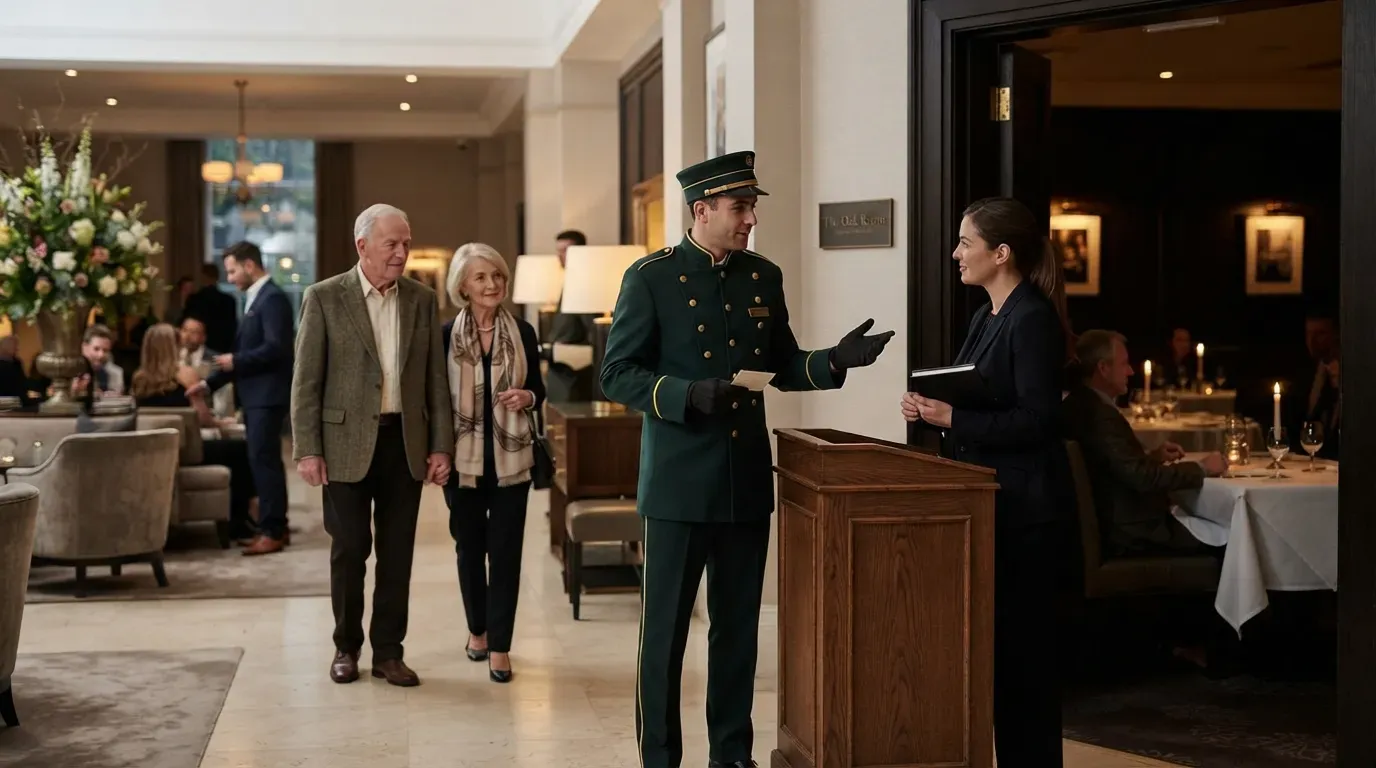
Ask an older guest about dinner plans and the answer often comes back immediate and specific. It’s often five o’clock, sometimes 5:30, rarely later – bellhops say this early-dinner habit shows up overwhelmingly among guests over 60, regardless of destination, and it’s less about appetite than a preference for structure built over a lifetime of consistent schedules.
Sharp bell staff quietly pass that detail along to the restaurant host or room service line before it’s ever requested. It saves the guest an awkward wait during a dinner rush that nobody warned them about. The next gesture happens even faster, in the space of a single handshake.
#6 – They Fold the Tip Into a Handshake So No One Sees the Moment
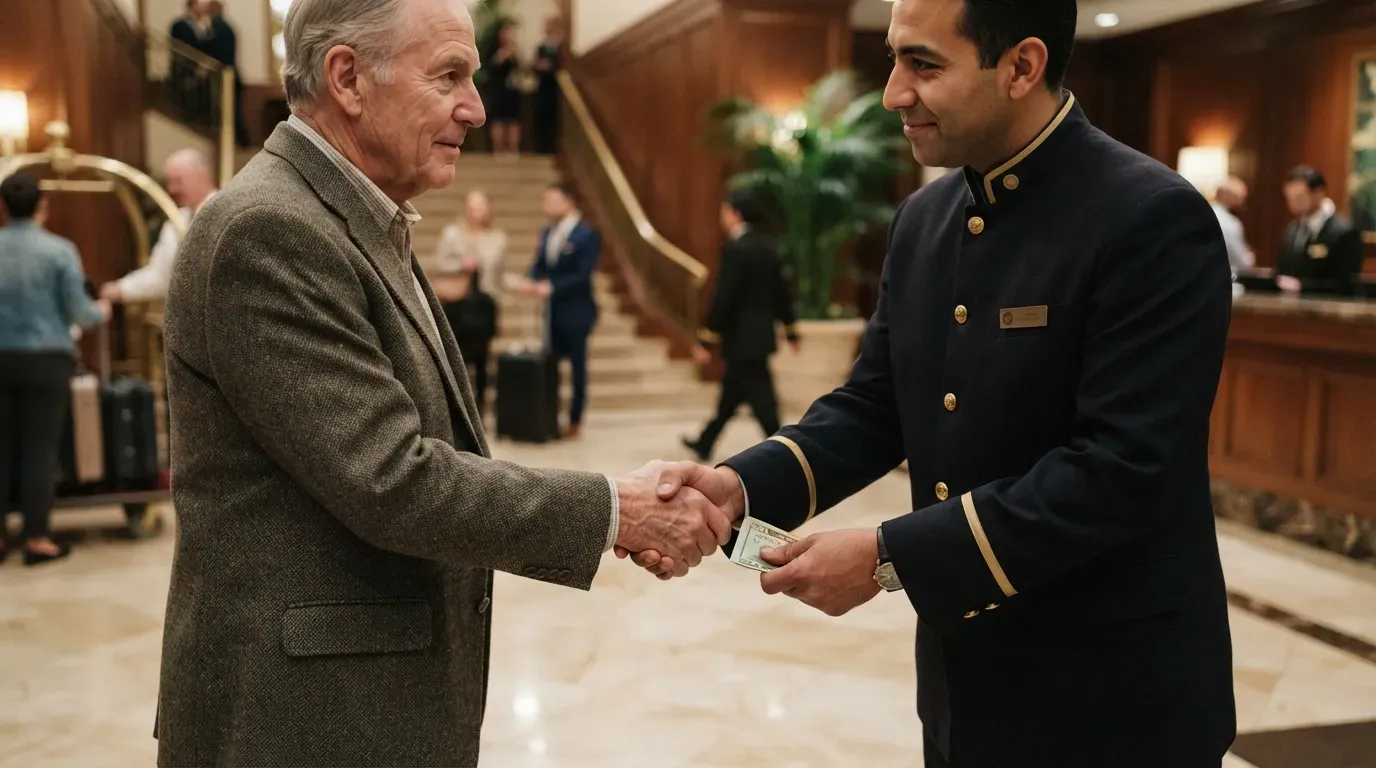
The handoff itself has its own quiet choreography. The traditional method involves a discreet handshake with cash palmed, though honestly just handing it over with a “thank you” works fine – nobody’s judging the spy-thriller technique. For guests who grew up with that custom, bellhops match the gesture instead of making it awkward.
It’s a small mutual courtesy that keeps the transaction from ever feeling transactional. Staff say guests over 60 are far more likely to initiate the discreet version than younger travelers, who tend to just hand over a folded bill without ceremony. That same old-school instinct shows up again at check-in, in a completely different form.
#5 – They Grant Early Check-In Faster When It’s Asked a Specific Way
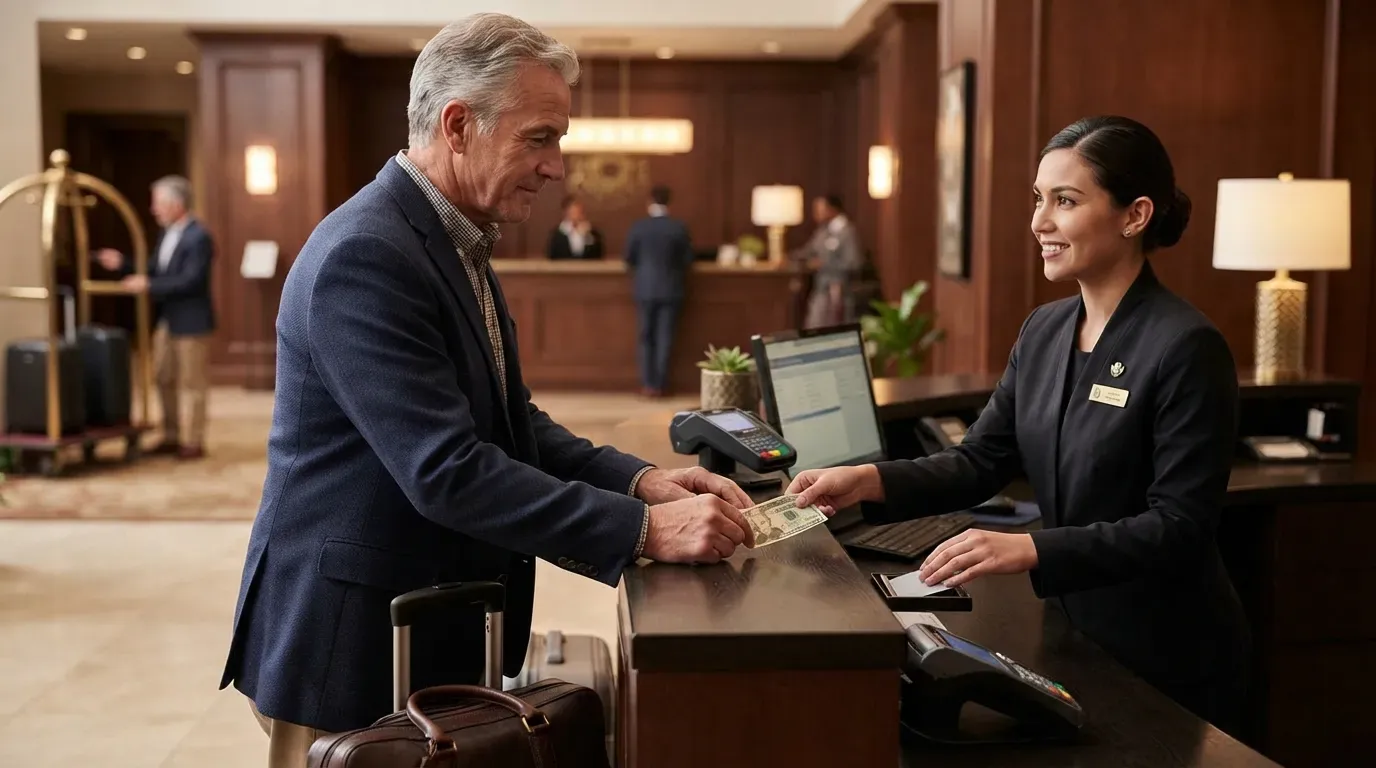
Plenty of guests ask about early check-in, but bellhops say a polite request paired with an immediate, unprompted tip shows up disproportionately among guests over 60, reflecting a certain travel philosophy: don’t wait to see if kindness gets rewarded, offer the incentive first.
Front desk staff say these requests get granted more often than guests realize, specifically because of how they’re asked – it’s less about entitlement and more about old-school negotiation etiquette. It’s a small habit that quietly works better than most modern guests expect. There’s a much quieter safeguard running underneath all of this, and it has nothing to do with the room at all.
#4 – They Keep an Unofficial Map of the Nearest Pharmacy, Just in Case

This one almost never comes up in conversation, which is exactly the point. A concierge who truly understands older guests identifies the nearest urgent care clinic, the closest late-night pharmacy, and the fastest route to the nearest hospital – and keeps it ready without ever raising the subject with the guest.
Bell staff working closely with the front desk are often looped into that same mental map. The guests who benefit most from these gestures almost never notice they’re happening – they just know the stay felt smoother and less draining than usual, without quite knowing why. That same invisible watchfulness stretches all the way into the overnight shift.
#3 – They Quietly Brief the Night Shift on Anything You Mentioned
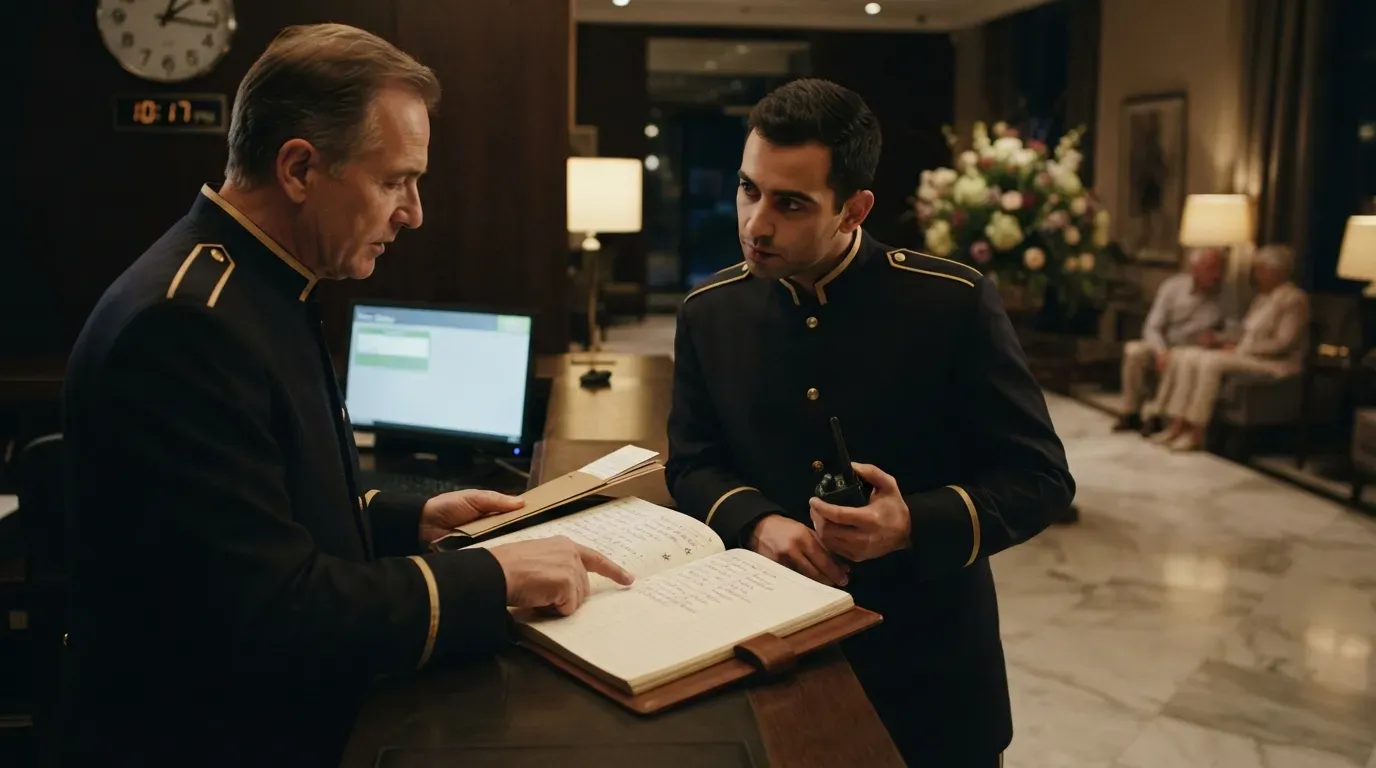
A passing comment at check-in can travel further than most guests assume. Staff confirm the room phone dials the front desk in one button, and quietly brief the night shift about a guest who mentioned they’re on blood thinners – all without ever making the guest feel monitored.
It’s a safety net built entirely on attentiveness rather than policy. Most guests never learn that a single sentence mentioned in passing got relayed to an entirely different shift hours later. A story shared in passing carries even more weight than a warning ever could.
#2 – They Treat a Returning Guest’s Story Like a Gift, Not Small Talk
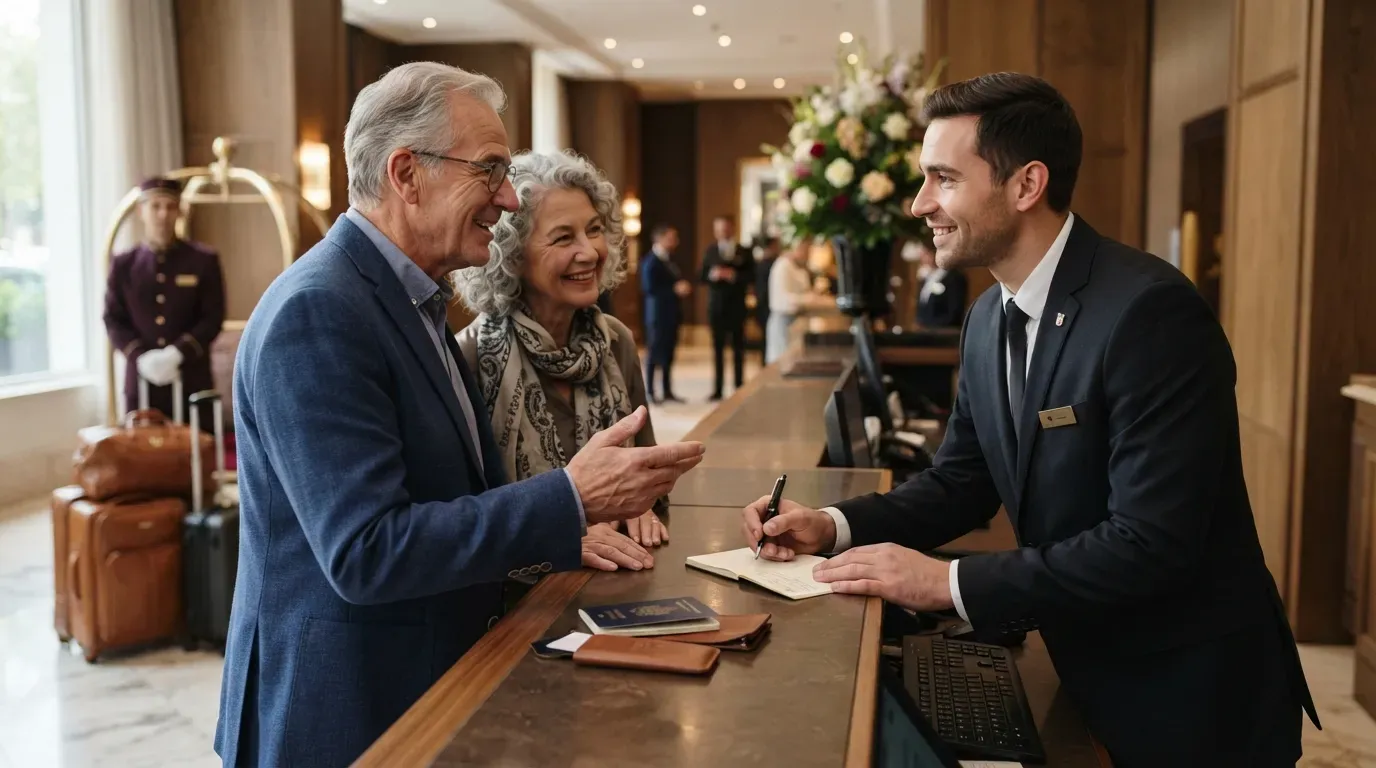
Mentioning a past visit does more work than most travelers realize. Guests over 60 who say something like “we stayed here two years ago for our anniversary” have just handed the desk agent a gift – that detail gets logged and often triggers a quiet upgrade, a preferred floor, or a room note that makes everything feel personal.
Returning guests who identify themselves confidently activate a completely different hospitality protocol than a one-time stranger does. It’s one of the few genuinely free upgrades left in modern travel – and almost nobody asks for it directly. Everything else on this list, it turns out, comes back to one final instinct.
Why It Stands Out
- Mentioning a past stay can trigger a quiet upgrade with no request made
- A preferred floor or quieter room often follows a simple shared memory
- Room notes get personalized the moment a returning guest identifies themselves
- These perks are almost never advertised, so most guests never think to ask
#1 – They Quietly Decide You’re Worth Remembering, Not Just Processing
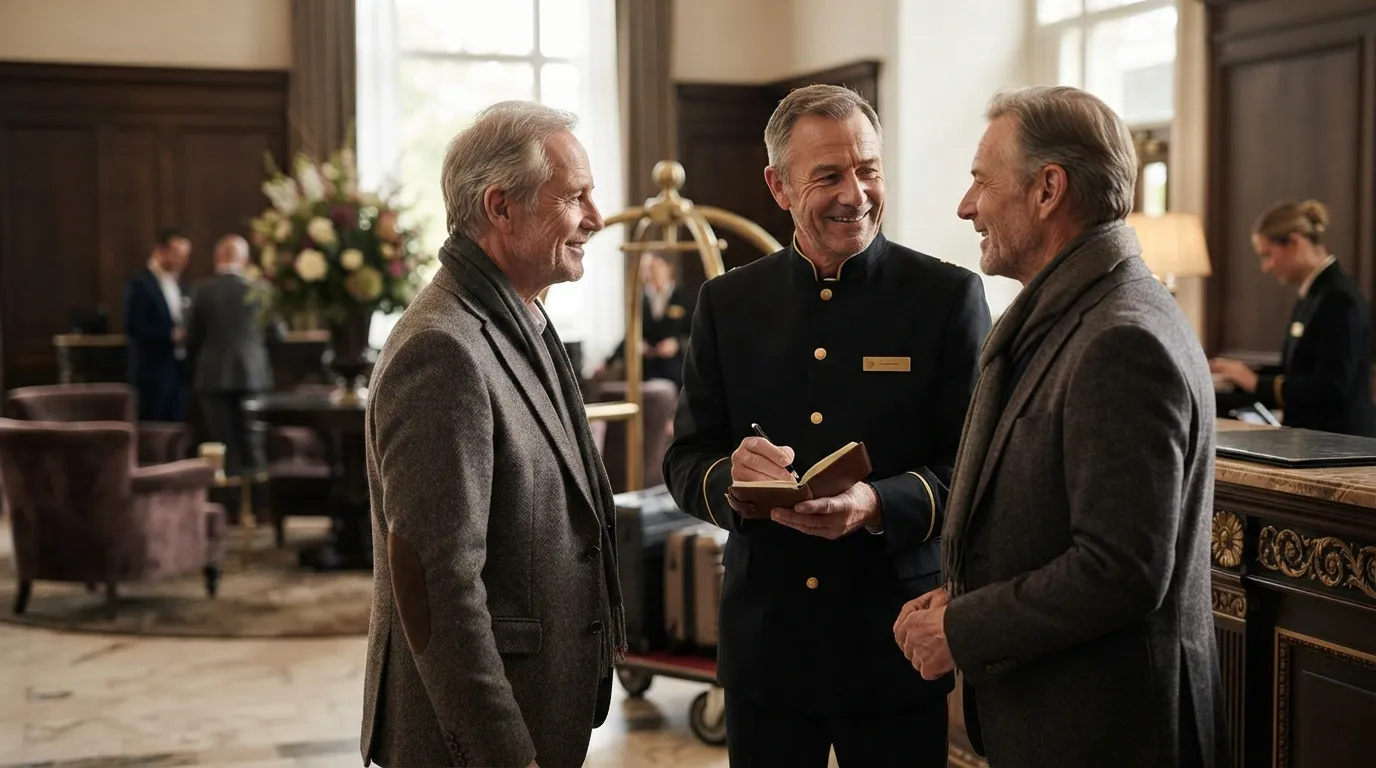
Everything on this list points to one final truth: most of these moves cost staff nothing but attention and intention, and the difference isn’t the hotel’s star rating or the room price – it’s whether the person behind that desk sees a guest as a transaction or as someone worth taking care of.
For travelers over 60, that distinction shapes the entire relationship with a property over years, not just one stay. That kind of recognition isn’t just a service – it’s a relationship, and the staff who build it are the ones guests fly back to see. It’s the one gesture on this list that was never really about the room at all.
None of these fifteen gestures show up as a line item, and most guests never clock a single one happening in real time. What ties them together isn’t policy or training manuals – it’s a specific kind of attentiveness that older travelers, often without realizing it, have learned to recognize and quietly reward with loyalty. The properties that get this right aren’t always the fanciest ones on the block; they’re the ones where staff have simply decided a guest is worth remembering. Have you noticed one of these happen on your own trips, or has a bellhop done something for you that never made this list? Drop it in the comments – chances are, someone else has a story just like it.