
Most travelers over 60 assume the airline website shows everything they’re entitled to. It doesn’t. Entire fare categories, legal protections, and boarding privileges simply never appear on a booking screen, and they exist only for the person willing to dial a phone number and ask a real human being.
Some of what phone agents can unlock sounds almost too generous to be true, and a few of these secrets have been quietly shrinking for years without much notice. Here’s what insiders, federal law, and the airlines themselves actually confirm once you skip the app and pick up the phone.
#16 – The Senior Fare Hiding in Plain Sight

Delta, United, and American all maintain age-based discounts that almost never surface in a normal online search. Delta offers senior discounts on certain markets, but they aren’t available online, so travelers have to call and ask directly. The pricing lives inside the reservation system, not the public booking engine most people scroll through.
United works the same way. It offers senior citizen discounts for passengers 65 and older on certain routes, but you have to contact reservations to find out if one applies. Most of these fares are simply invisible unless someone on the phone types the right code. That invisibility is exactly why so many members over 60 overpay without ever knowing a cheaper seat existed. But that’s nothing compared to what we found about #15.
Fast Facts
- Delta: senior fares exist but are booking-agent only, never shown online
- United: discounts apply on select routes for 65+, phone confirmation required
- Southwest: no senior fare listed on the site at all, coming up next
#15 – Why Southwest Won’t Even Whisper “Senior Discount” Online

Southwest is the airline that plays hardest to get on this topic. It may offer senior discounts for older travelers, but the details stay deliberately fuzzy, with eligibility and availability shifting depending on current promotions. There’s no dropdown menu, no filter, no hint anywhere on the homepage.
Southwest doesn’t list senior fares on its website at all. Travelers have to call reservations directly, where a phone agent can verify eligibility and quote accurate pricing. The discount essentially doesn’t exist for anyone who refuses to make a call. It’s a strange policy for a carrier that prides itself on simplicity everywhere else. But #14 shows how one phone call can change everything.
#14 – The Weird Age Cutoff That Beats 65
Most senior travel benefits kick in at 65, but Frontier quietly set its bar lower. Frontier offered 55% off base fares for passengers 55 and older, a promotion that ran through February 26, 2025. That’s a full decade earlier than the industry standard most travelers expect.
The catch is that these promotions rotate and expire without much warning. A phone agent can confirm whether the current version of the deal is still active on a given route, something a static webpage often can’t keep up with. Members who never call simply age past the window without ever knowing it existed. Wait until you see what happened to Air India’s version of this deal at #13.
#13 – Air India Cut Its Senior Break in Half – and Barely Anyone Noticed
Not every senior perk grows over time. Some quietly shrink. Air India previously offered 50% off for seniors but cut it down to 25% as of September 29, 2022.
That’s a 25-point drop with almost no public announcement, the kind of change that only becomes obvious when a phone agent reads you the current fare rules out loud. Airlines rarely send a notice when a legacy benefit gets trimmed; the old percentage simply stops being true. Members who booked the same route years ago and assumed the discount held steady are the ones most likely to get caught off guard. Next up is a discount that still runs through a completely different loyalty organization entirely.
#12 – The AARP Trick That Slices $200 Off Business Class
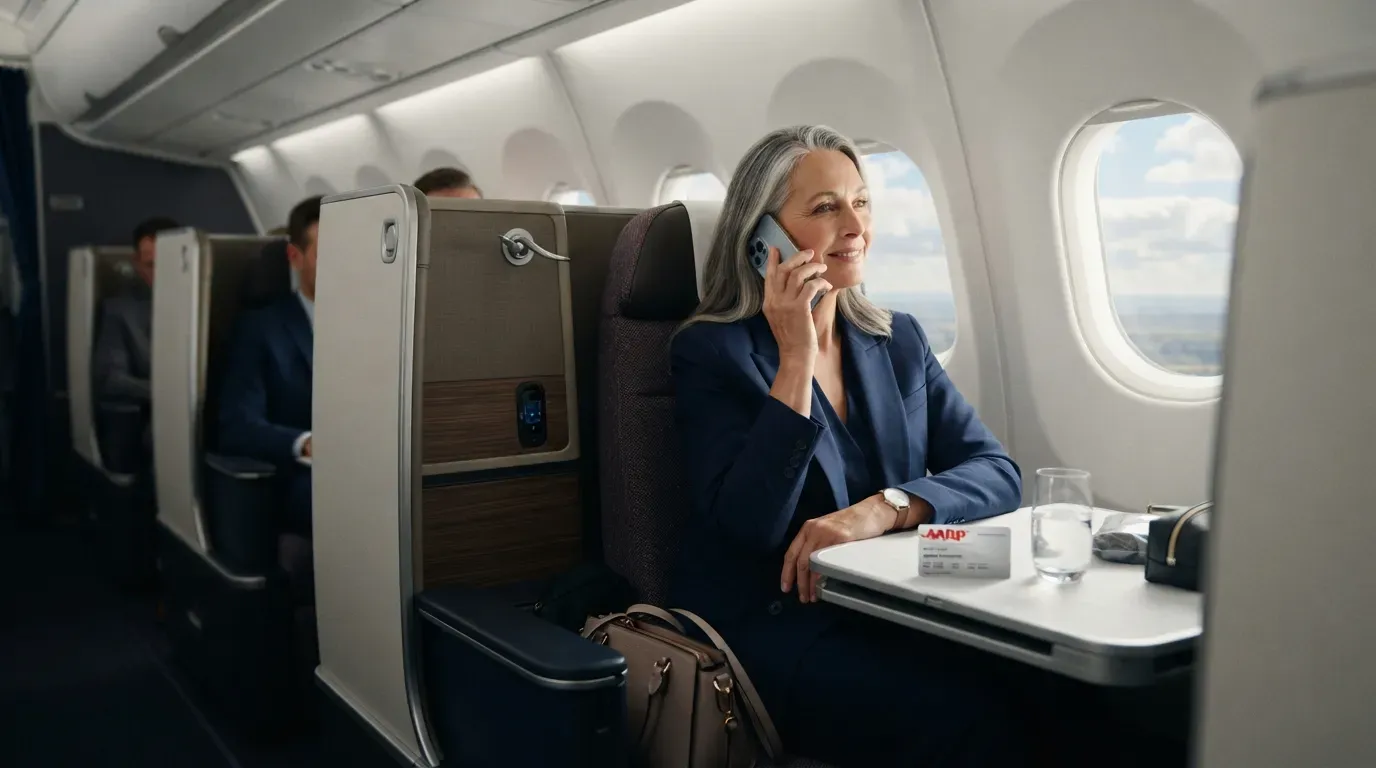
This one doesn’t even require frequent-flyer status, just an AARP card. British Airways offers up to $200 off business class fares through AARP membership, which is open to anyone 50 and older.
Fifty is notably younger than the usual 65 threshold most people picture when they hear “senior fare.” Many travelers in their 50s never think to ask because they don’t consider themselves seniors yet. The discount is real, it’s meaningful on a premium-cabin ticket, and it’s tied to a membership almost nobody associates with airline savings. What comes next has been quietly running in France for years.
#11 – France’s Answer: A Membership That Beats One-Off Deals

Instead of scattered promotions, Air France built a permanent structure. The Air France Senior Pass gives travelers 65 and older up to 30% off flights, and unlike discounts that come and go, it delivers consistent savings through a formal membership – pay once, get the discount all year.
That “pay once” model is unusual in an industry built on constantly shifting promotional fares. Most senior discounts vanish the moment a route or season changes, but a membership pass doesn’t reset every quarter. It’s a structure other carriers haven’t copied, which makes it one of the more overlooked options for anyone who flies internationally more than once a year. The next secret involves a program that technically stopped existing almost twenty years ago.
#10 – The Legacy Card Still Working Decades After It Stopped Selling
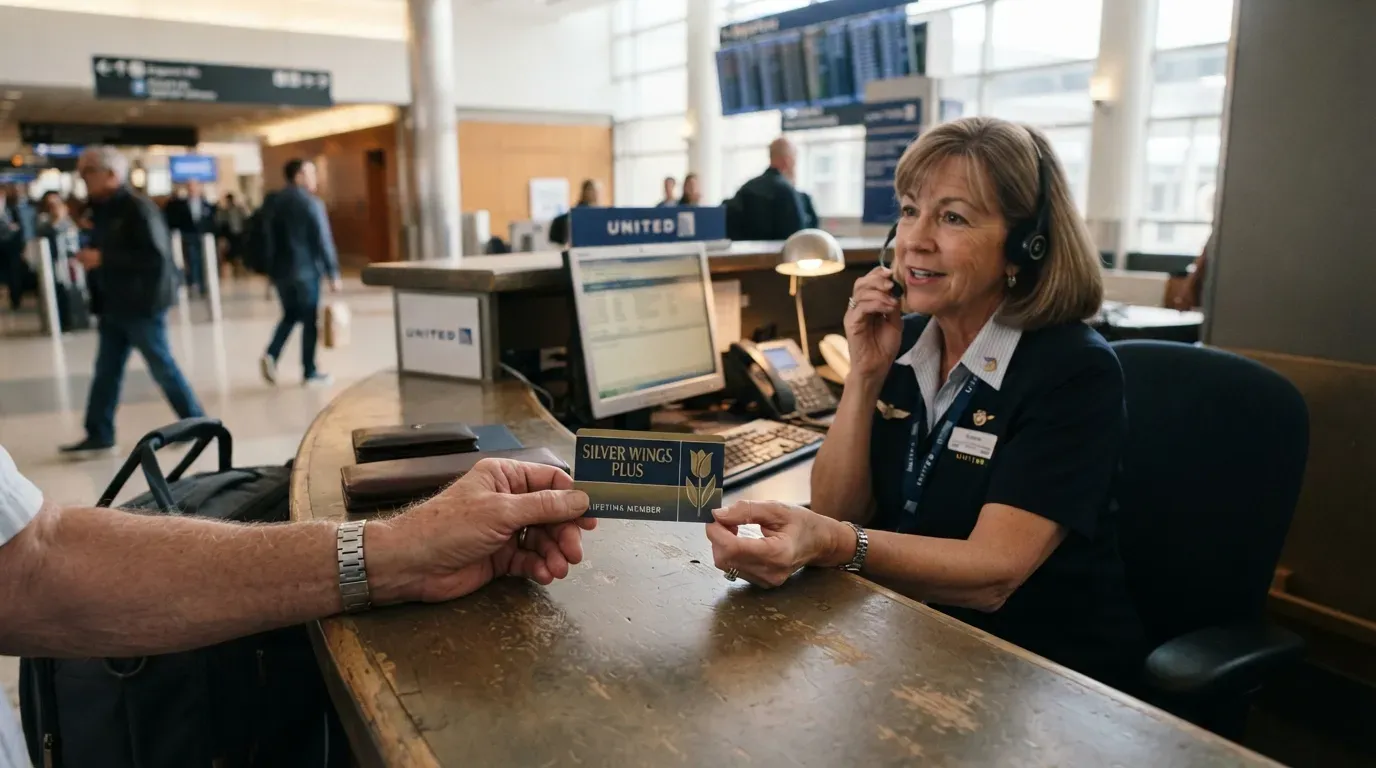
United’s old senior program should be a museum piece by now, yet it isn’t. Silver Wings Plus launched in 1986 for passengers 55 and older, grew to 560,000 members by 1996, and stopped accepting new members in 2007.
Here’s the surprising part: lifetime members who joined before September 2005 can still use it today. Between 2007 and 2016 alone, United processed 5,048 Silver Wings bookings, proof that legacy members keep using the program long after it closed. A phone agent is often the only person who can even locate an account this old in the system. A website search bar has no idea this program still breathes.
At a Glance
- 1986: Silver Wings Plus launches for travelers 55 and older
- 1996: membership grows to roughly 560,000 people
- 2007: program closes to new members entirely
- Pre-September 2005 members can still use it today
- 2007-2016: over 5,000 Silver Wings bookings still processed
#9 – A Companion Can Ride at the Same Discount, If You Know to Ask
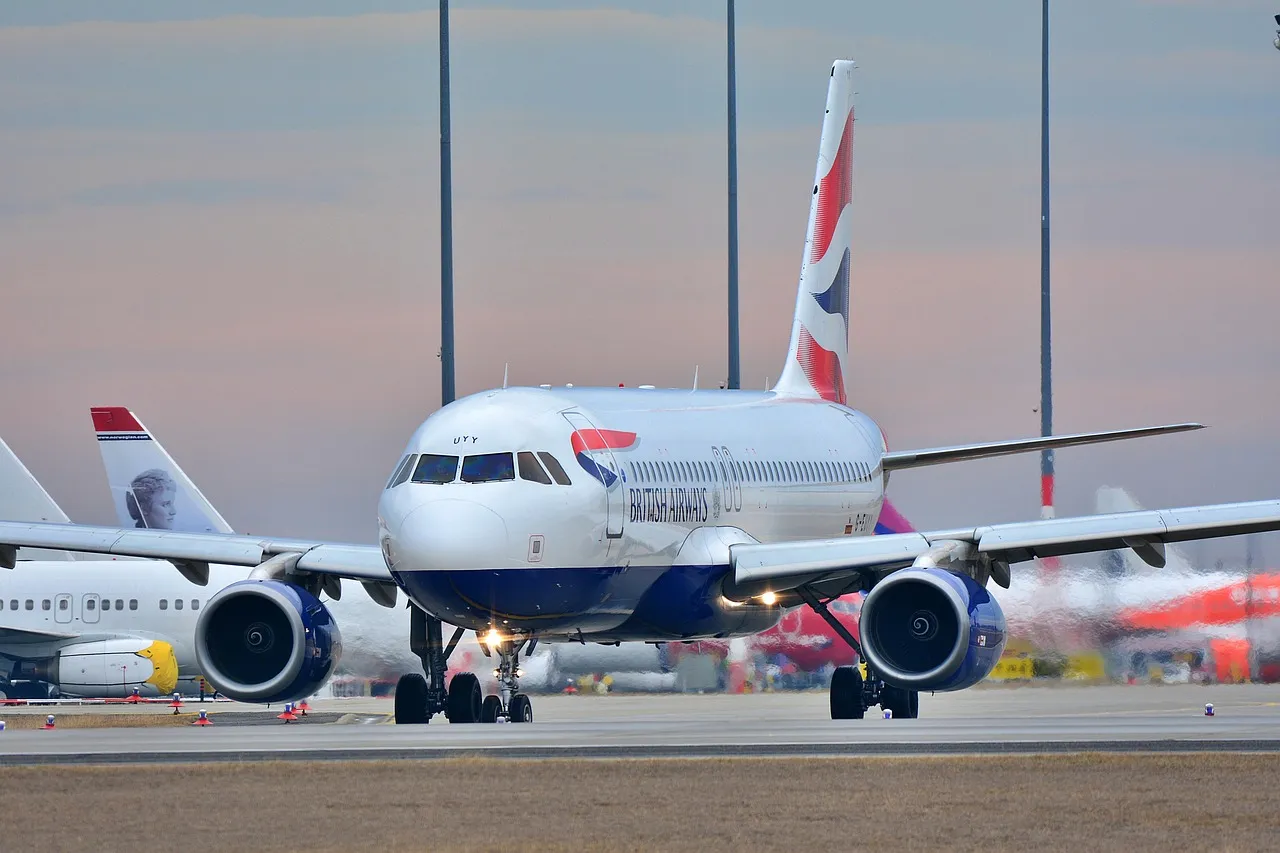
Legacy Silver Wings members carry a benefit almost nobody talks about anymore. A companion of any age can travel at the same discounted rate, and the benefit still integrates with MileagePlus for earning miles.
That means a grandchild, a spouse, or a friend under 55 can ride at the discounted rate too, something that would never occur to someone browsing a modern fare chart. These companion clauses were written into contracts decades ago and never fully phased out for existing members. Only a phone agent digging through the account history is likely to surface it. The next item is less about savings and more about skipping a line entirely.
#8 – The One Phone Note That Fast-Tracks You Through Security
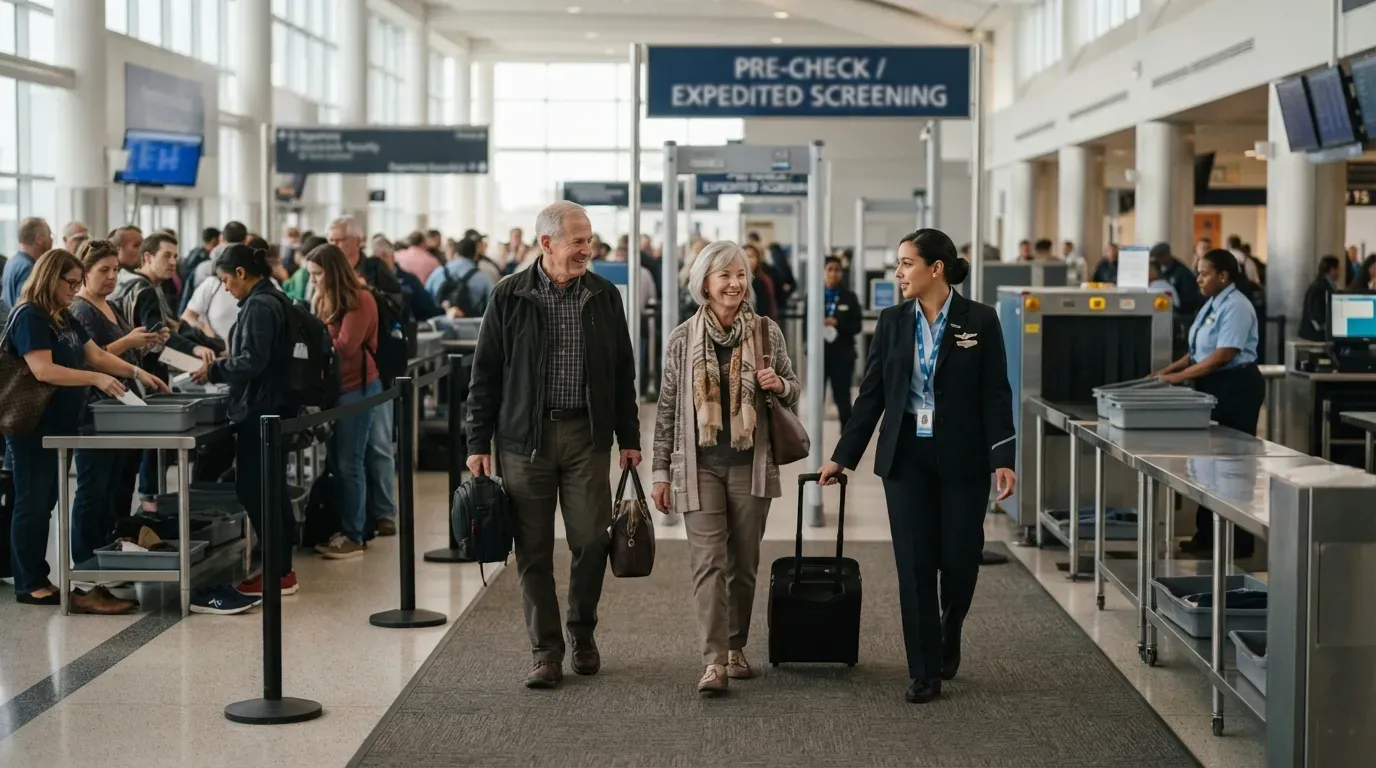
Requesting help ahead of time changes more than the boarding process. Once it’s on file, the airline assigns someone to escort you through security, help with carry-on bags, guide you through expedited screening, and get you to your seat before anyone else boards.
This escort isn’t reserved for wheelchair users only. Anyone who tells a phone agent they need extra time qualifies, and the note gets attached to the reservation before the traveler even leaves the house. Skipping the standard security shuffle is a small thing that makes a surprisingly large difference on a stressful travel day. There’s an entire desk built specifically for this kind of request, and most members never dial it.
#7 – The “Special Needs” Line Nobody Tells You Exists

Regular reservations agents aren’t always the best-equipped people to help. Most major airlines maintain a “special needs desk” dedicated to questions from disabled or elderly passengers, staffed by people trained specifically for those situations.
Since those employees are specially trained, seniors who need assistance usually get better service by contacting an airline’s special needs representative directly instead of the general line. Calling the standard customer service number often means talking to someone who has never handled a medical-equipment request before. The specialized desk exists precisely to avoid that mismatch, yet it’s rarely advertised anywhere near the homepage. What phones through next affects anyone traveling with a machine that keeps them breathing.
#6 – Your Oxygen Tank Flies Free, and It Isn’t Even Considered Luggage
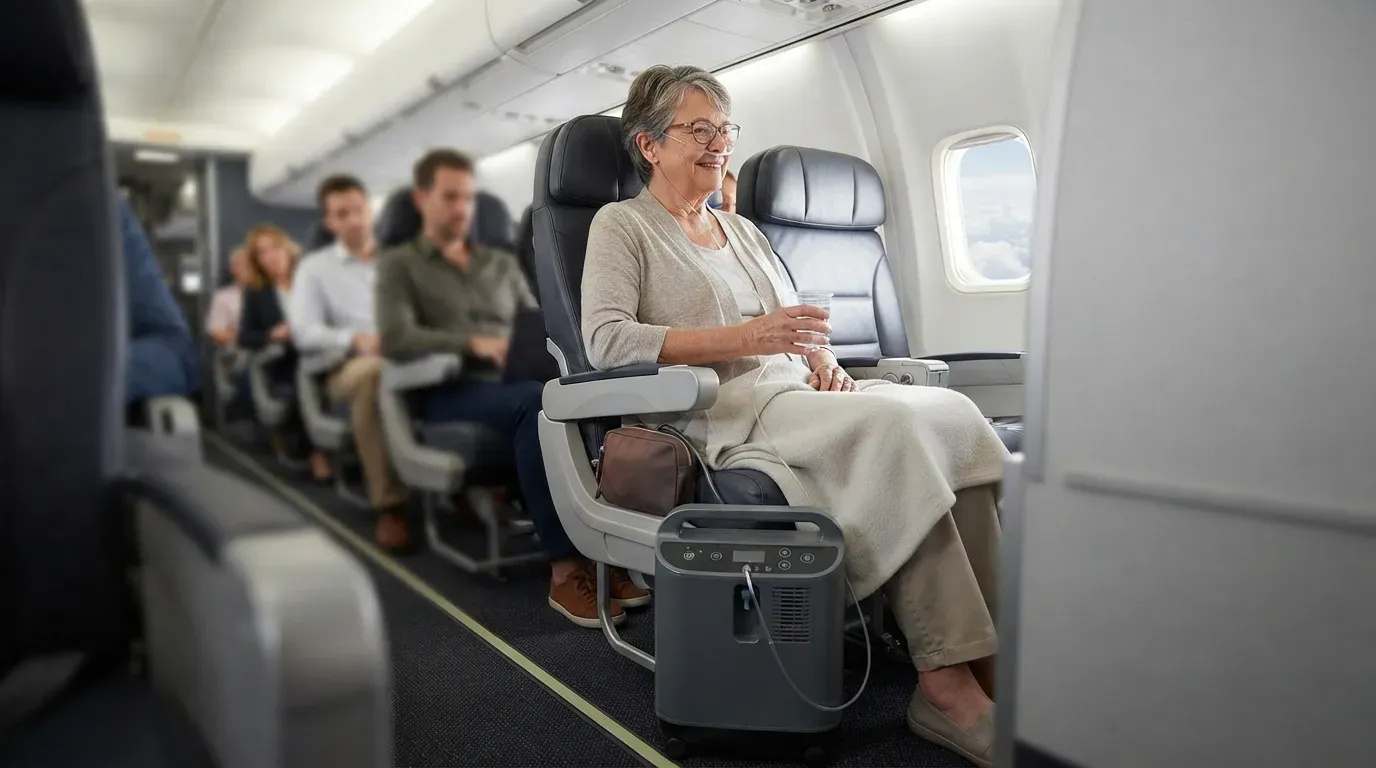
Medical equipment gets treated completely differently from a suitcase. Airlines are required to let medically necessary equipment fly free of charge, and it doesn’t count toward baggage allowance at all – CPAP machines, portable oxygen concentrators, medication coolers, and mobility aids included.
Most travelers assume they’ll be charged an oversized-item fee for a device like this. They won’t be, and most carriers require no paperwork – simply telling the agent the items are medically necessary is enough. One caution worth repeating on the phone every time: confirm your specific oxygen concentrator model is approved before departure, since not every carrier accepts every device. The next secret is uglier, and it costs people real money.
Worth Knowing
- CPAP machines, oxygen concentrators, medication coolers, and mobility aids all fly free
- None of it counts against your baggage allowance
- Most carriers ask for no paperwork, just a verbal notice
- Always confirm your specific device model is approved before you fly
#5 – The Scam Hiding in a Google Search Result

Not every phone number that looks official actually is. Fraudulent numbers have shown up attached to major airlines’ Google listings, with scammers building entire fake customer-service operations around them.
In July 2024, the Federal Trade Commission warned travelers about scammers posing as airline customer service agents on social media, targeting upset travelers and asking for personal information. The safest move is calling the number printed on your airline credit card or inside the official app, never one pulled from a random search result. This is exactly why members over 60 should trust their own paper trail more than a stranger’s phone script. What’s coming next is the legitimate version of a “special” phone line.
#4 – The Dedicated Line Elite Flyers Don’t Advertise
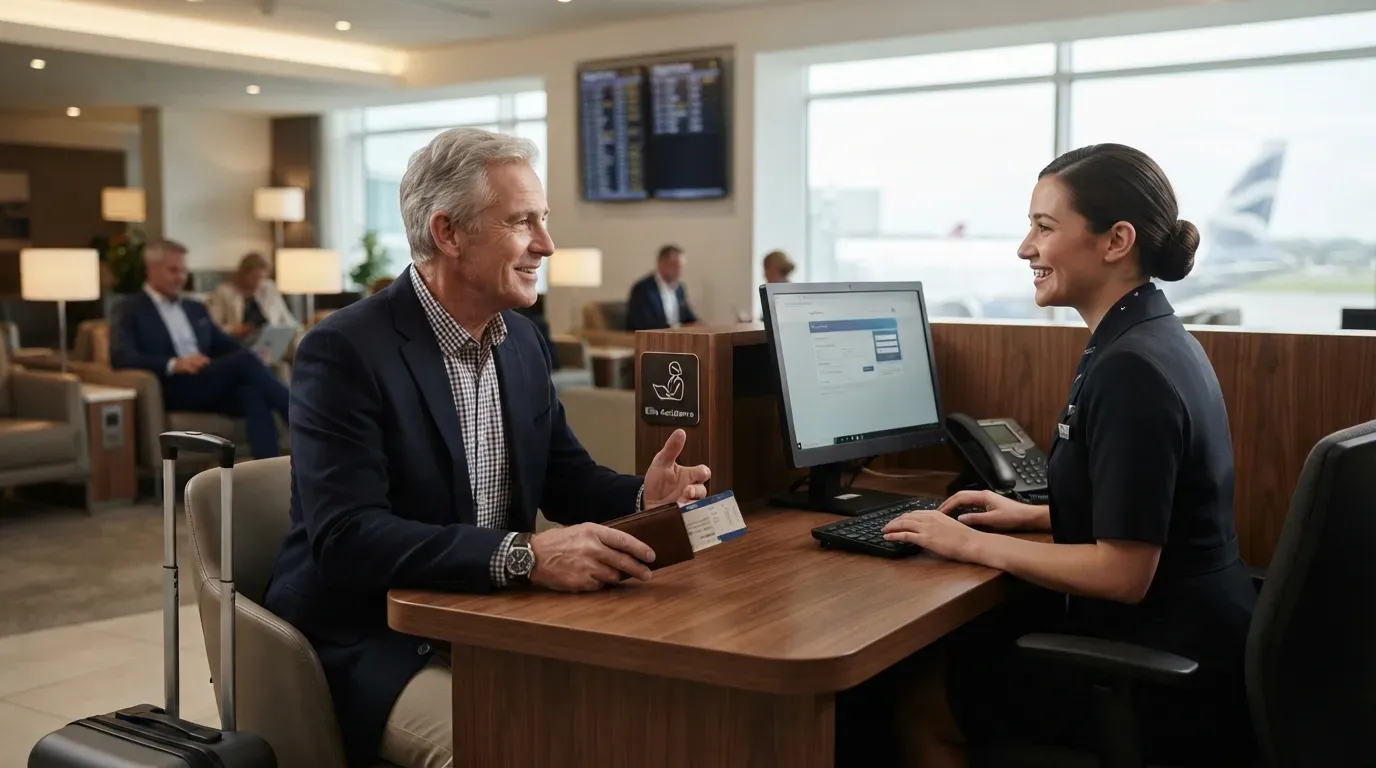
There’s a version of “calling the airline” that skips the hold music entirely. Passengers with elite status often have access to a dedicated customer service number or an airport lounge staffed with live agents and much shorter lines.
Most members don’t realize this line exists until they’ve already spent 40 minutes on hold with the general number. It’s rarely printed anywhere obvious; it’s usually buried inside the loyalty program’s member portal or on the back of a co-branded credit card. Once found, it becomes the fastest way to fix a canceled flight or rebook a connection. The next secret explains why the fare shown online is sometimes just wrong.
#3 – Fare Classes the Website Refuses to Show You

The prices displayed on a screen aren’t always the full inventory. United agents can pull up senior fares that never appear online, and American works the same way.
Not all routes display a senior fare on American’s website, but that doesn’t mean one isn’t available – you have to call and check with an agent, who can access fare classes invisible to the public site and compare senior fares against other promotions. A website simply doesn’t display every bucket of seats an airline is holding back. That gap between what’s shown and what actually exists is the entire reason this arrangement stays a secret for so many phone-averse members. The next one is a physical privilege, not a price.
#2 – Boarding Before First Class, No Elite Card Required
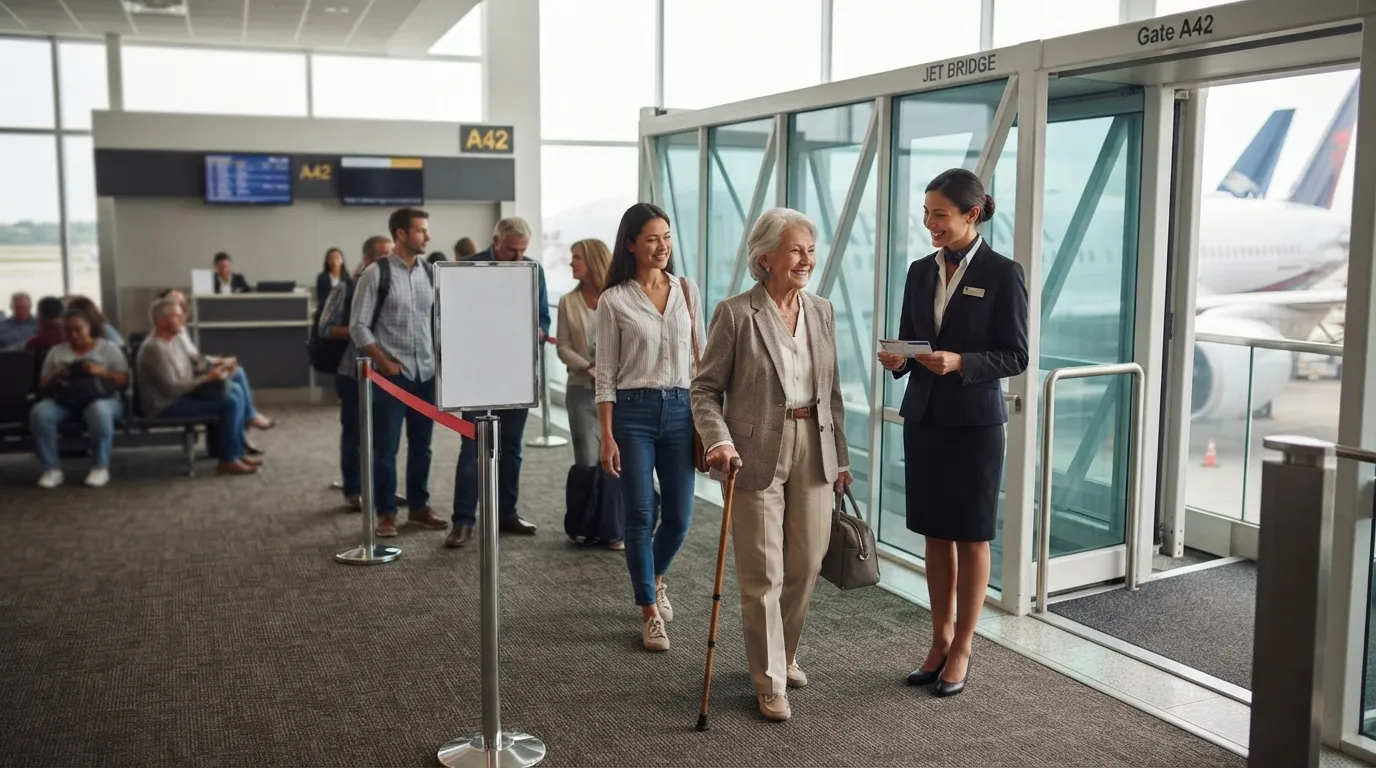
This is the part that surprises even frequent flyers. Passengers who’ve arranged assistance in advance board before first class and before elite frequent flyers, no status required.
Many travelers assume early boarding is reserved for airline elites and families with small children, but that’s simply not true. You don’t need an elite card, a wheelchair at home, or any paperwork to qualify. All it takes is asking the gate or phone agent directly, and the assignment goes on file well before you reach the airport. It’s one of the most underused perks in commercial aviation. The final secret is the legal foundation that makes all of this possible.
#1 – The Federal Law That Guarantees Help From Curb to Gate
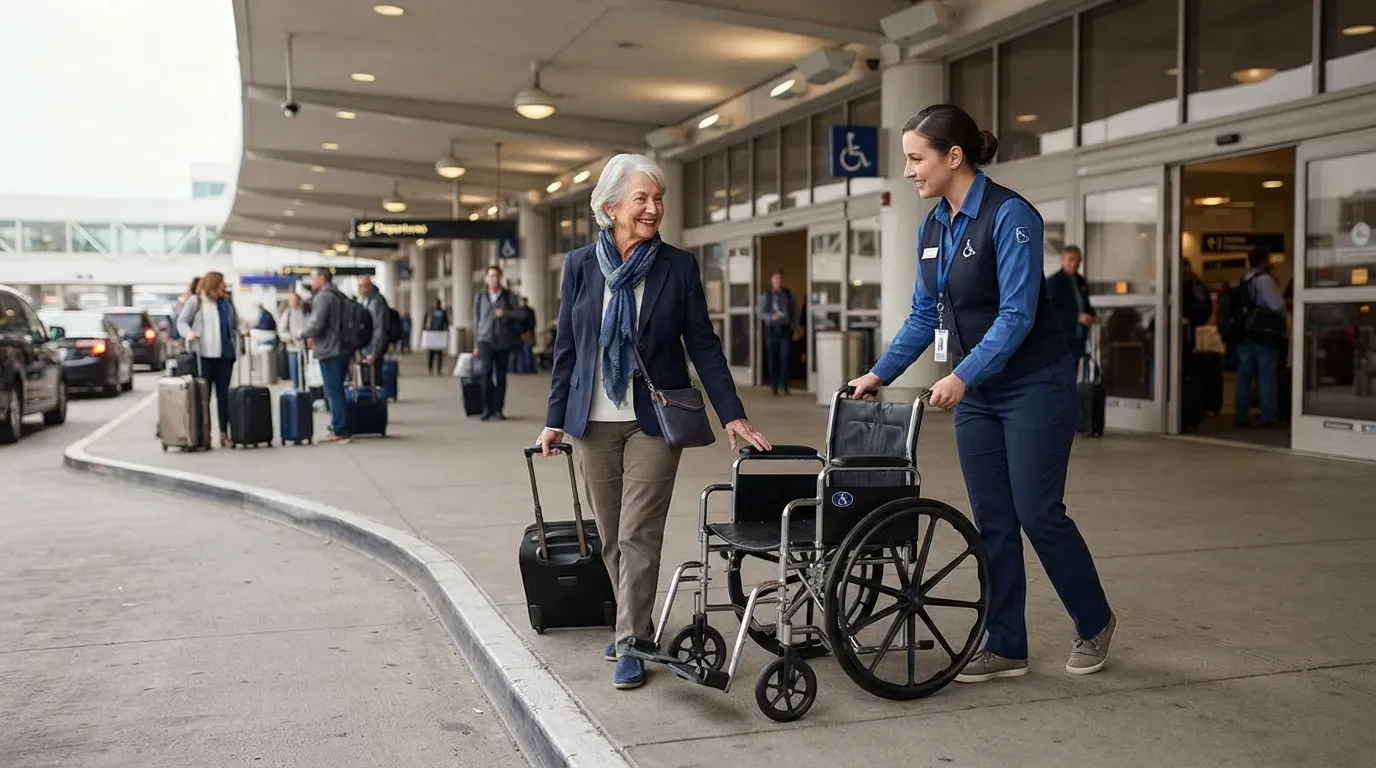
Everything on this list traces back to one piece of legislation most travelers have never read. The Air Carrier Access Act gives any passenger who needs extra time or physical help a legal right to free assistance from curb to gate, and you don’t need to use a wheelchair at home or look like you need help – you just need to ask.
No doctor’s note. No paperwork. Just ask. That’s the single biggest secret on this entire list: the law already entitles members over 60 to help most of them never request. A phone call before departure attaches this to the reservation permanently, so a crew member is already waiting when the traveler arrives at the curb. It costs nothing, requires no proof, and works every single time someone actually asks for it.
Fast Facts
- The Air Carrier Access Act guarantees free curb-to-gate assistance for anyone who needs it
- No doctor’s note, medical proof, or paperwork is required to qualify
- The right applies regardless of age, not just to travelers who already use mobility devices
- A single phone call before departure attaches the request permanently to your reservation
Every one of these 16 secrets shares the same pattern: the benefit exists, it’s often legally guaranteed or contractually real, and it almost never appears on a screen. Members over 60 who still pick up the phone are quietly accessing fares, escorts, and companion discounts that everyone else scrolls right past. Some of these perks, like the Air Carrier Access Act protections, cost nothing and require zero paperwork. Others, like legacy Silver Wings Plus benefits, are relics that keep paying off decades after the program technically closed.
The uncomfortable truth is that airlines aren’t hiding these things out of malice – they’re just not built to advertise programs most customers no longer think to use. The website is optimized for speed, not completeness. The phone line is slower, but it’s the only place where a real person can pull up a fare class, a legacy account, or a legal right the app was never designed to display.
Have you ever called an airline and gotten a discount or perk the website never showed you? Tell us what happened in the comments.