
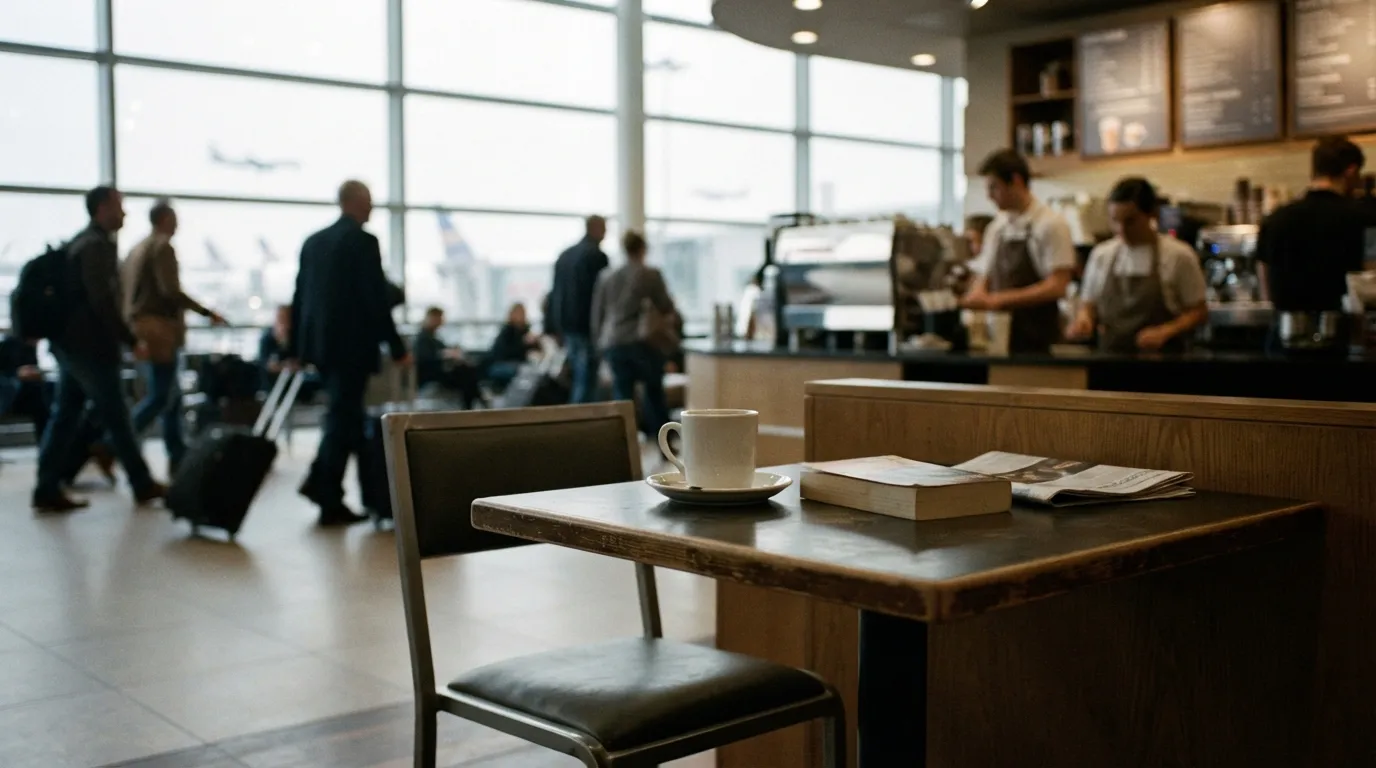
Most people assume airport café workers are too busy slinging lattes to notice anyone, let alone remember them. Talk to the baristas and cashiers working the same terminal counter for years, though, and a different picture shows up fast: the older regulars, the ones flying through the same gate area week after week, aren’t invisible at all. They’re the most memorable customers in the building.
It’s not just a friendly face they recognize. Staff pick up on tiny, specific patterns – the order that never changes, the seat that’s quietly “theirs,” the way someone’s whole posture shifts depending on where they’re headed. Here’s what airport café staff actually notice, and hold onto, about the over-60 crowd who fly often enough to become part of the furniture.
1. They order the exact same thing, in the exact same words, every time
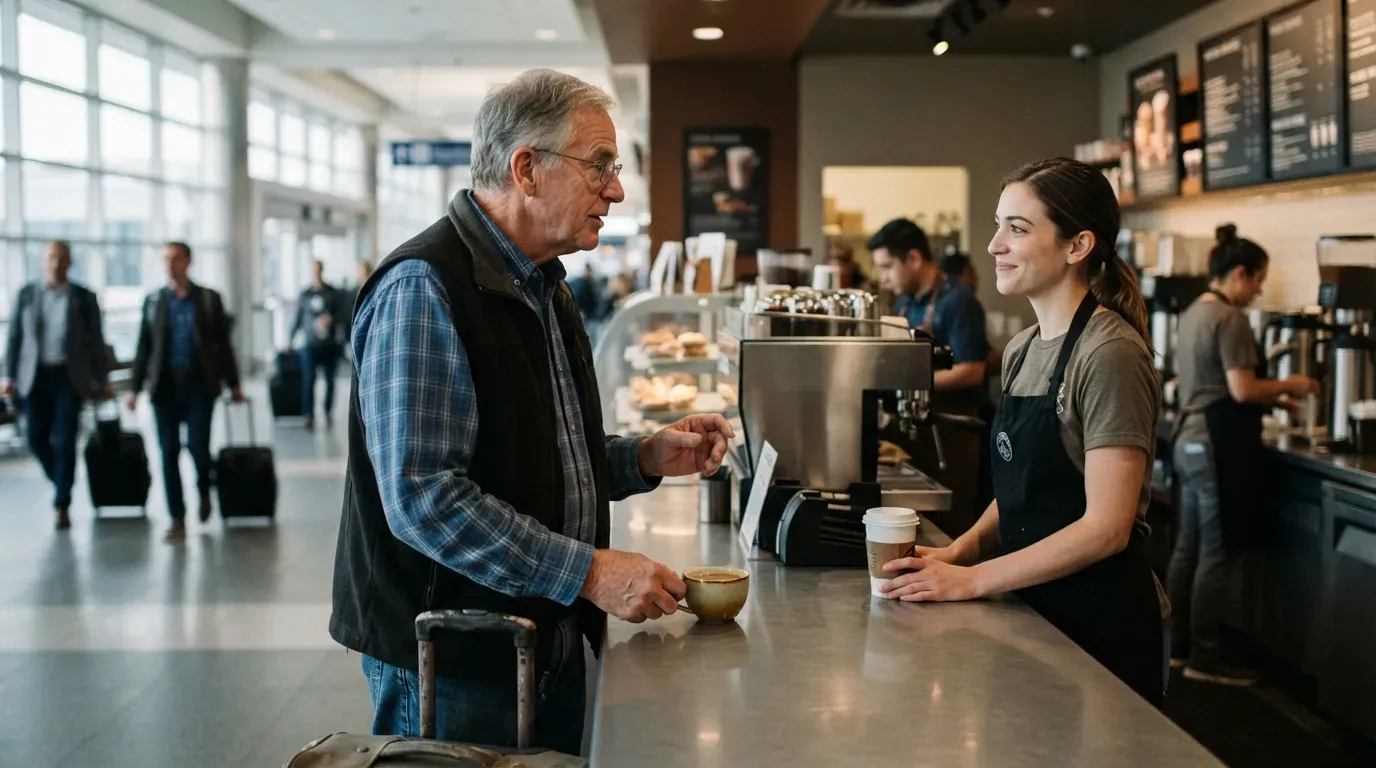
Staff say the biggest tell of a weekly regular over 60 isn’t their face – it’s their script. The same phrasing, the same size, the same “no rush” tacked onto the end, repeated almost word-for-word trip after trip. New hires learn fast that guessing wrong on a regular’s order is a bigger mistake than being slow with it.
This isn’t random pickiness. Older travelers, as a group, tend to value comfort and predictability over novelty when they’re on the move, and a familiar coffee order is one small way to control an environment that otherwise feels chaotic. It’s also why so many older fliers gravitate toward the same terminal café instead of trying whatever’s new near their gate.
2. They know staff by name long before staff catch theirs
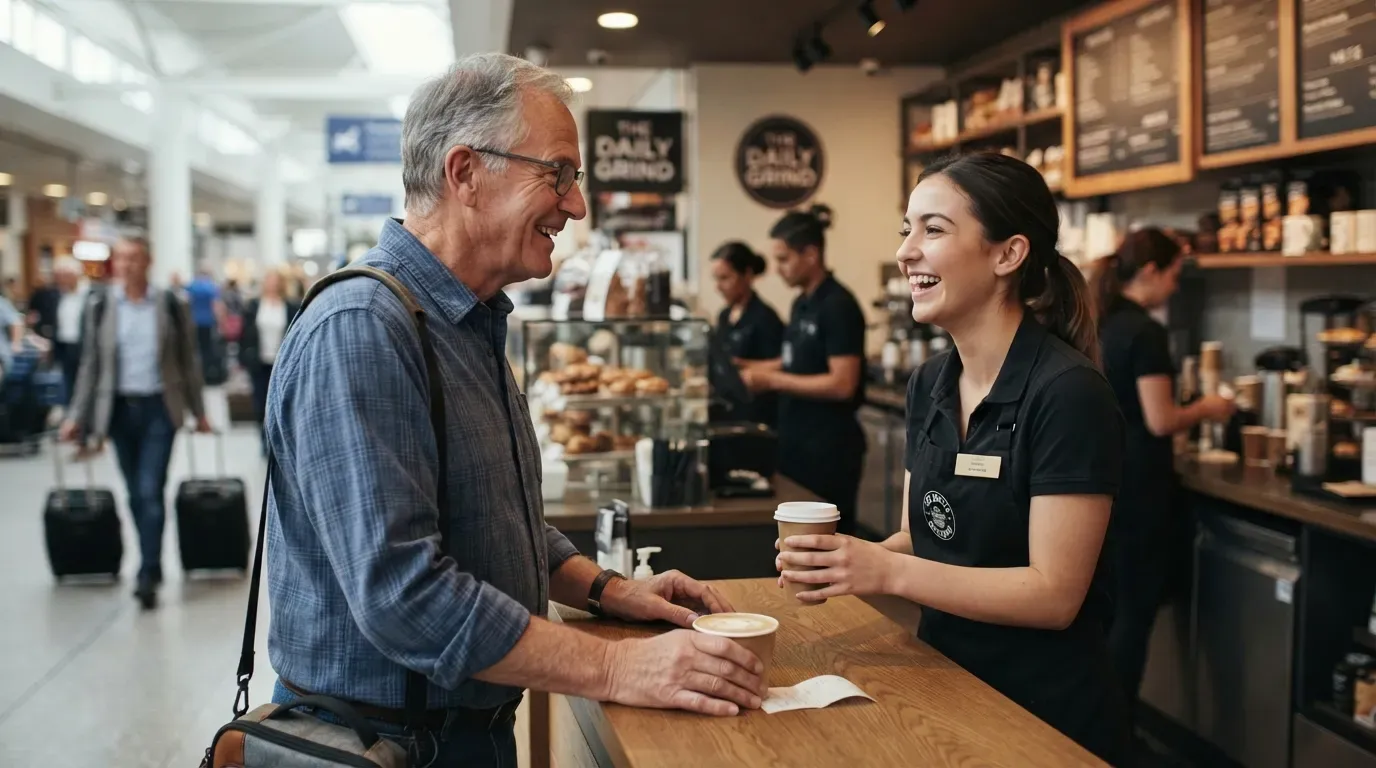
Ask any long-tenured café worker and they’ll tell you the same thing: weekly regulars over 60 usually learn an employee’s name off the badge within the first two or three visits, and use it every time after that without fail.
It’s a small habit, but it does something bigger – it turns a transaction into a relationship. Staff say these customers ask about shift schedules, remember when someone mentioned finals week or a new baby, and follow up on it unprompted months later. Younger travelers rarely do this; they’re usually heads-down on a phone before the receipt even prints.
3. They show up absurdly early, and it’s rarely about the flight
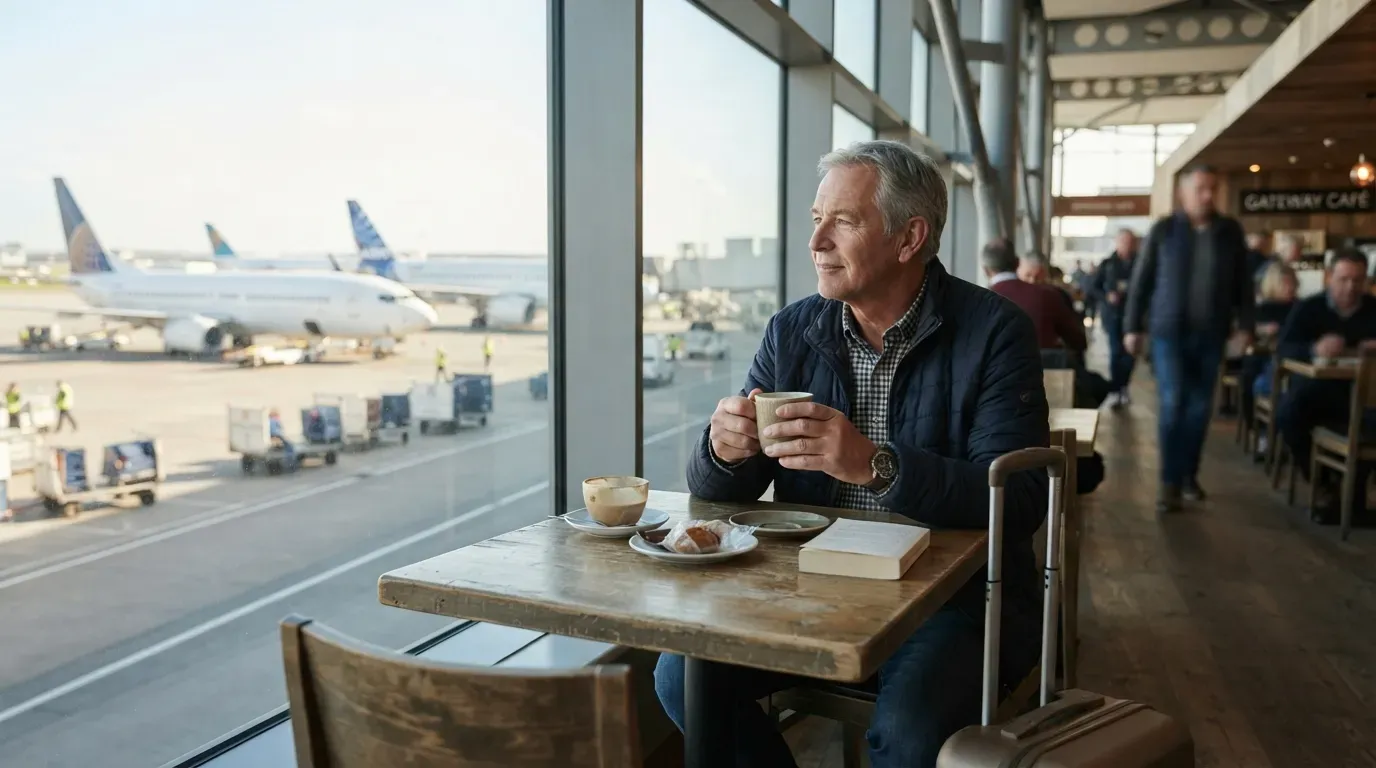
Staff notice the over-60 regulars parked at a café table well before boarding even opens, often with nowhere near enough to do to fill the time. It looks excessive until you understand the logic behind it.
Airport dwell time plays a huge role in how calm a trip actually feels, and longer time in the terminal reliably correlates with more relaxed spending and less rushing at the register. Older travelers build in that extra buffer on purpose, not out of anxiety, but as a strategy sharpened over decades of flying. Staff say it’s the regulars who arrive absurdly early who almost never look stressed by the time boarding starts.
Fast Facts
- Longer terminal dwell time is linked to calmer, less rushed spending before boarding.
- Frequent older fliers often arrive well before boarding opens, on purpose.
- Staff describe the extra buffer as a strategy, not anxiety.
4. They still tip like the transaction is a favor, not an app prompt
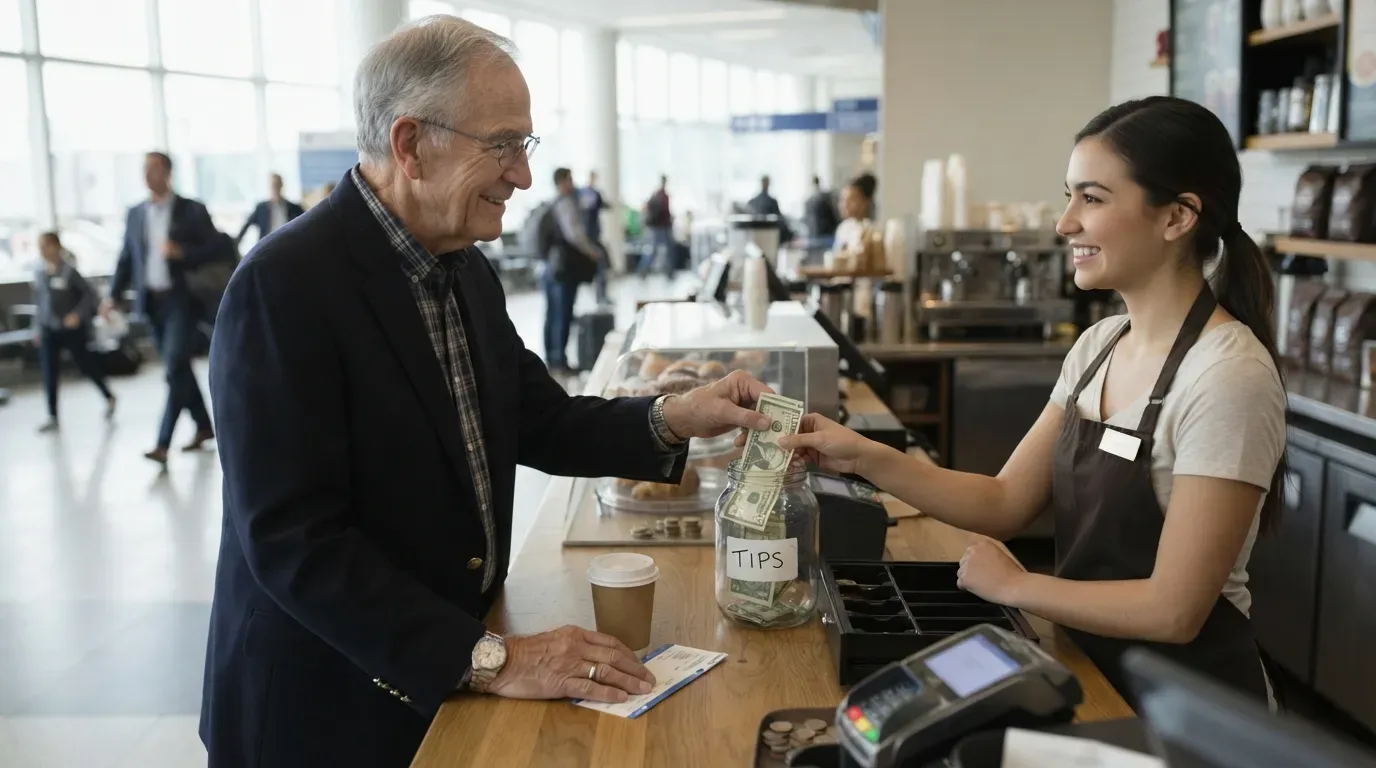
Cashiers consistently mention that older regulars treat tipping as a personal gesture rather than an automatic screen tap. Cash left deliberately in the jar, a specific dollar amount rounded up “for you,” or a verbal thank-you paired with a tip – it reads as intentional in a way that’s increasingly rare.
This tracks with broader travel research showing older generations lean toward the human side of service over the digital side. Baby boomers are more than twice as likely as other generations to prioritize a real person over a technology shortcut in hospitality settings. For café staff working a counter surrounded by self-checkout kiosks, that preference for genuine interaction – tip included – stands out fast.
5. They notice a price hike before anyone else at the register
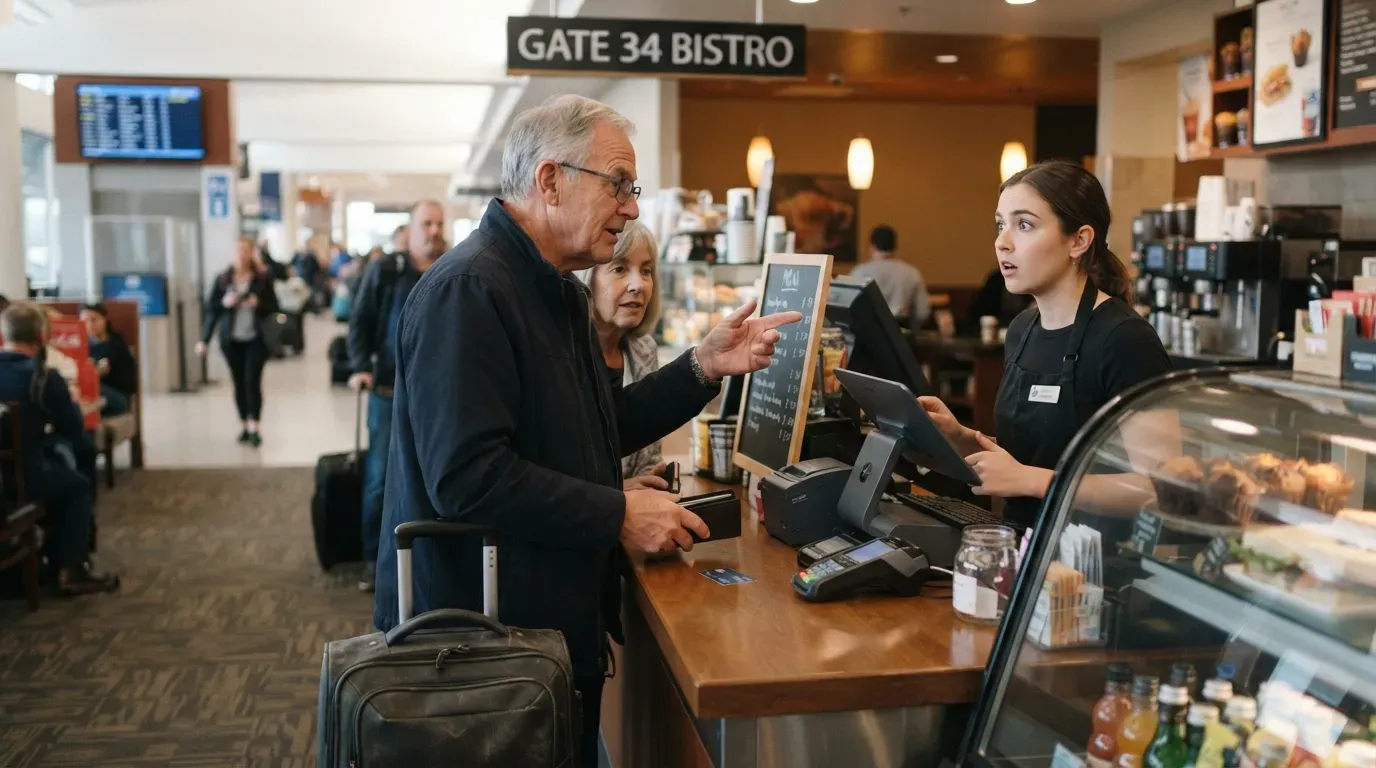
Here’s a slightly uncomfortable truth staff admit privately: the customers most likely to call out a menu price increase are the weekly regulars over 60, not younger travelers glued to their phones. They remember what a muffin cost eight months ago, and they’ll say so out loud.
They’re not wrong to notice, either. Reporting on airport pricing has found some items marked up more than double their street cost, including a chocolate bar priced 120 percent higher and a burger running 46 percent above its downtown equivalent. Older travelers who fly the same route weekly essentially become unpaid price auditors, and staff quietly respect them for it – even when the complaint lands on their own shift.
Quick Compare
- Chocolate bar: about 120% above street price
- Burger: about 46% above a downtown equivalent
- Weekly regulars often remember exact past prices, staff say
6. They have a seat, and heaven help whoever’s sitting in it
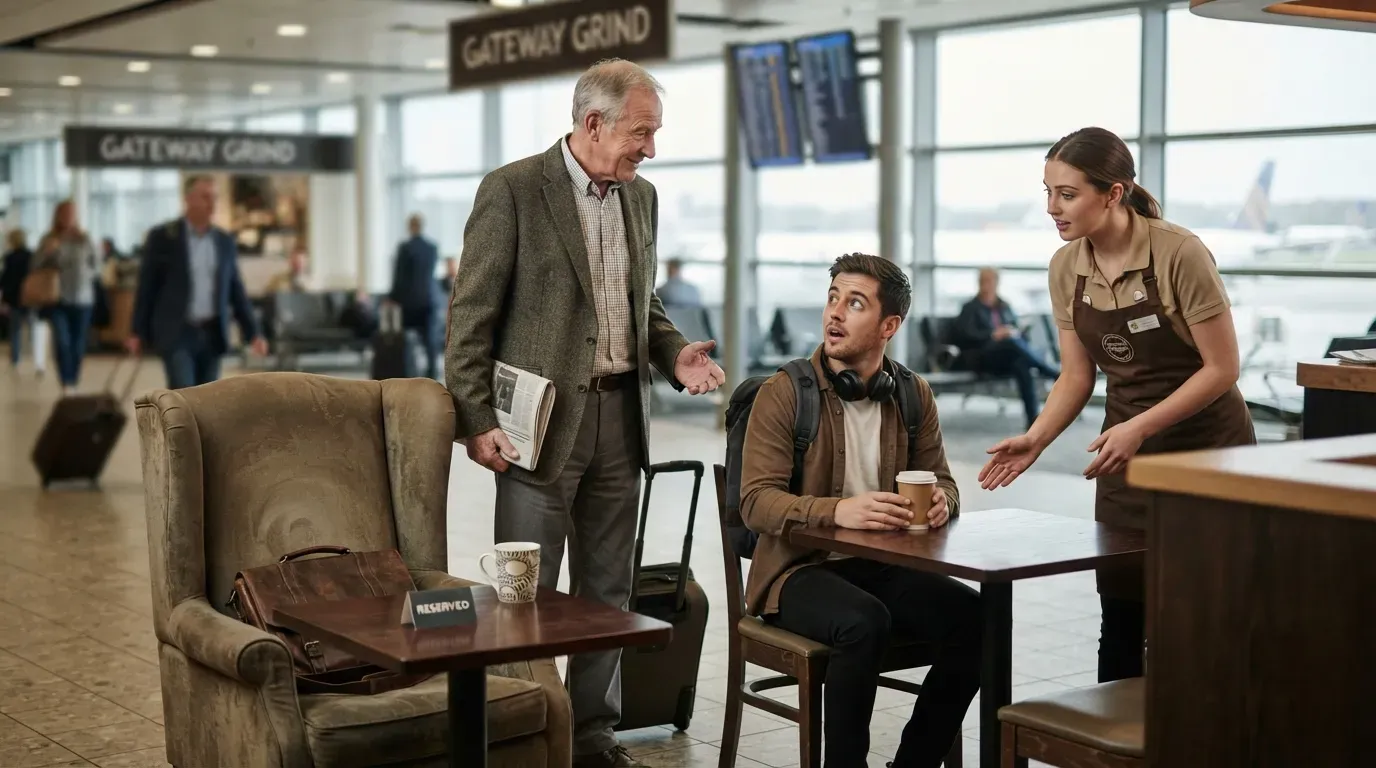
Almost every airport café with regular business travelers has at least one older customer with an unofficial claim on a specific table or barstool. Staff learn to steer new customers elsewhere before an awkward standoff happens near boarding time.
It sounds petty on paper, but staff describe it as one of the more human quirks of the job – a small ritual that makes an anonymous terminal feel like a neighborhood spot. The seat matters more than the coffee to some of these regulars, and staff say they’ve quietly rearranged furniture setups just to keep the peace during renovations.
7. They ask about your life before they ask for their order
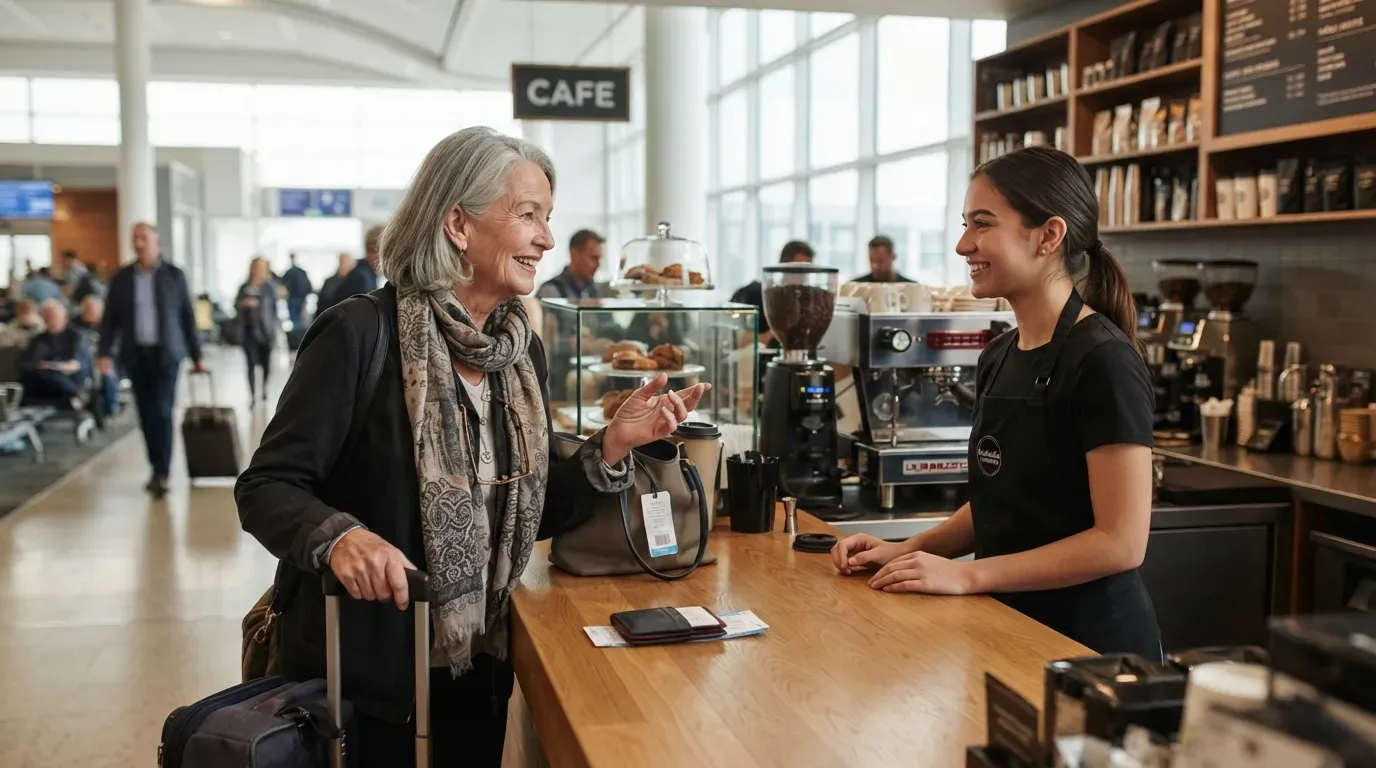
Staff describe a very specific pattern: the over-60 weekly flier who opens with “How’s your daughter doing?” or “Did you finish that class?” before ever mentioning what they actually want to drink. It flips the usual transactional order completely.
This lines up with what research says motivates older travelers in general – many take trips specifically to spend time with friends and family, not just to see new places. That same instinct for connection doesn’t switch off at the coffee counter. It just gets redirected toward whoever happens to be working that day.
Worth Knowing
- Many older travelers say connecting with friends and family is a main reason they travel at all.
- That instinct for connection often carries into small daily interactions, like ordering coffee.
- Staff say younger fliers rarely ask personal questions before placing an order.
8. Some still order for two, long after there’s an obvious reason to
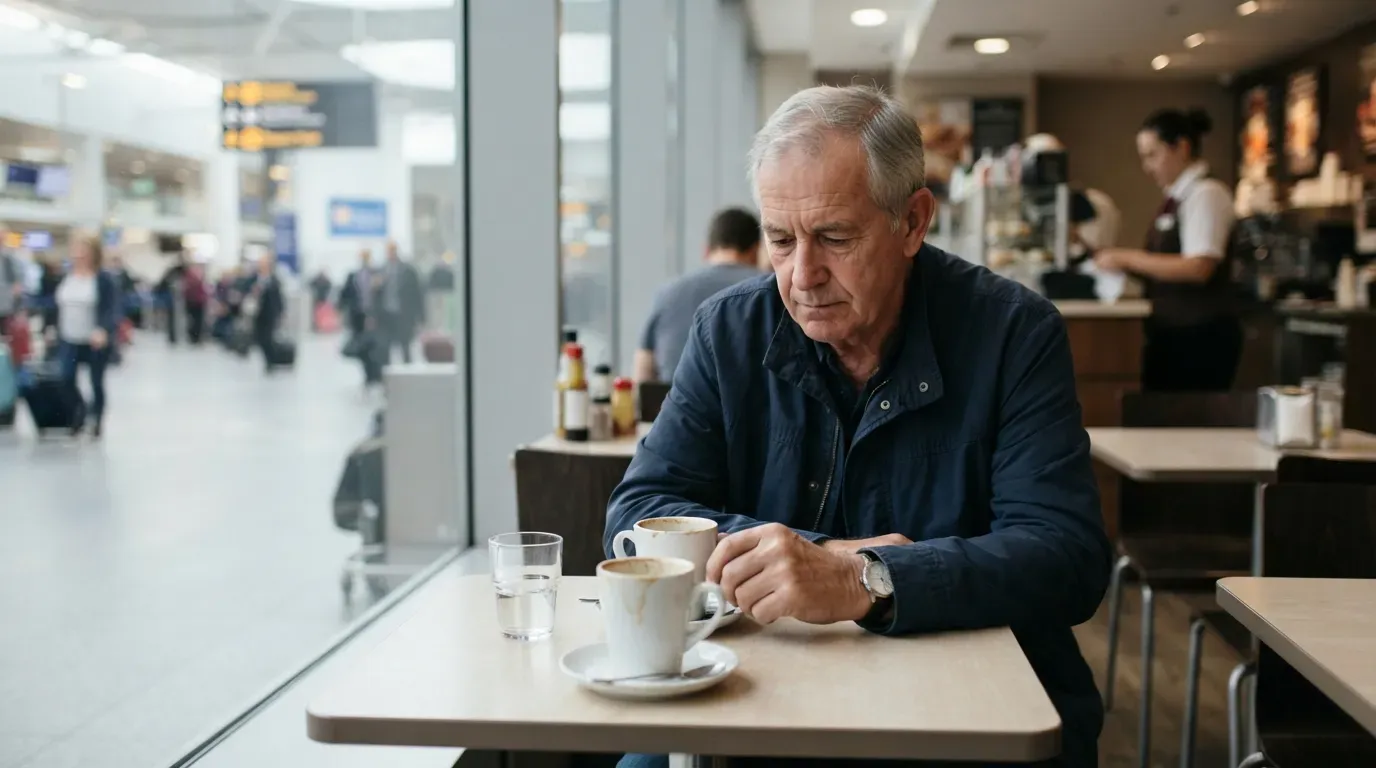
This is the one staff bring up most carefully. Regulars who once traveled or ordered with a spouse sometimes keep the habit going alone – asking for two cups, or pausing mid-order out of muscle memory, before quietly catching themselves.
Staff who’ve worked the same terminal counter for years say they notice exactly when an order shrinks from two to one, and they never ask why. It’s one of the few moments where a coffee order becomes something closer to a small act of witness – a stranger noticing a loss that was never announced out loud.
9. They’re often the calming presence next to a nervous first-time flier
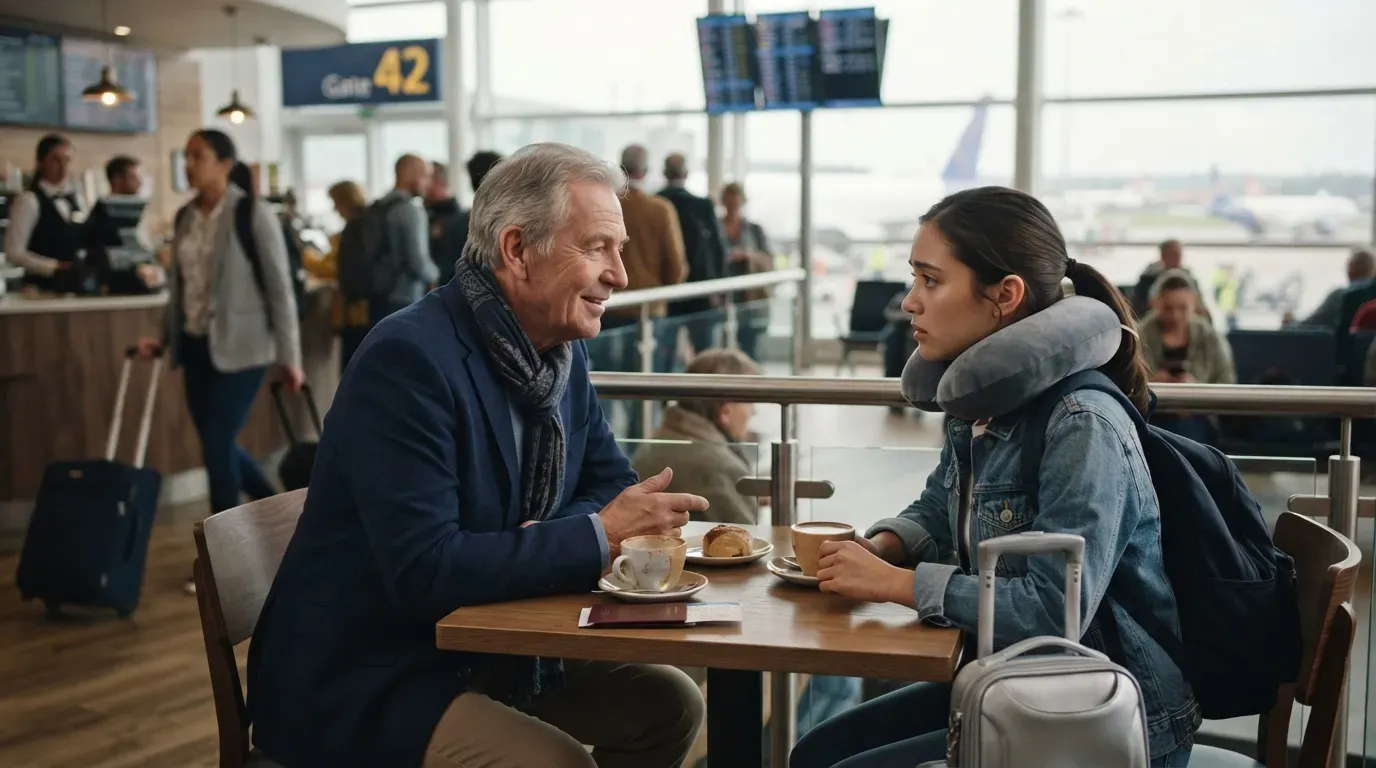
Staff say it happens more than people expect: an anxious younger traveler, visibly overwhelmed near a gate, ends up in conversation with an older regular at the next table who’s flown that exact route a hundred times before.
It’s not staged kindness – it’s just pattern recognition from decades of travel. Older fliers who’ve been through delays, missed connections, and rough turbulence tend to talk nervous strangers down without being asked, and café staff say they’ve watched entire panic spirals quietly de-escalate over a shared table and a cup of coffee.
10. Staff can tell who’s flying to a celebration and who’s flying to a funeral
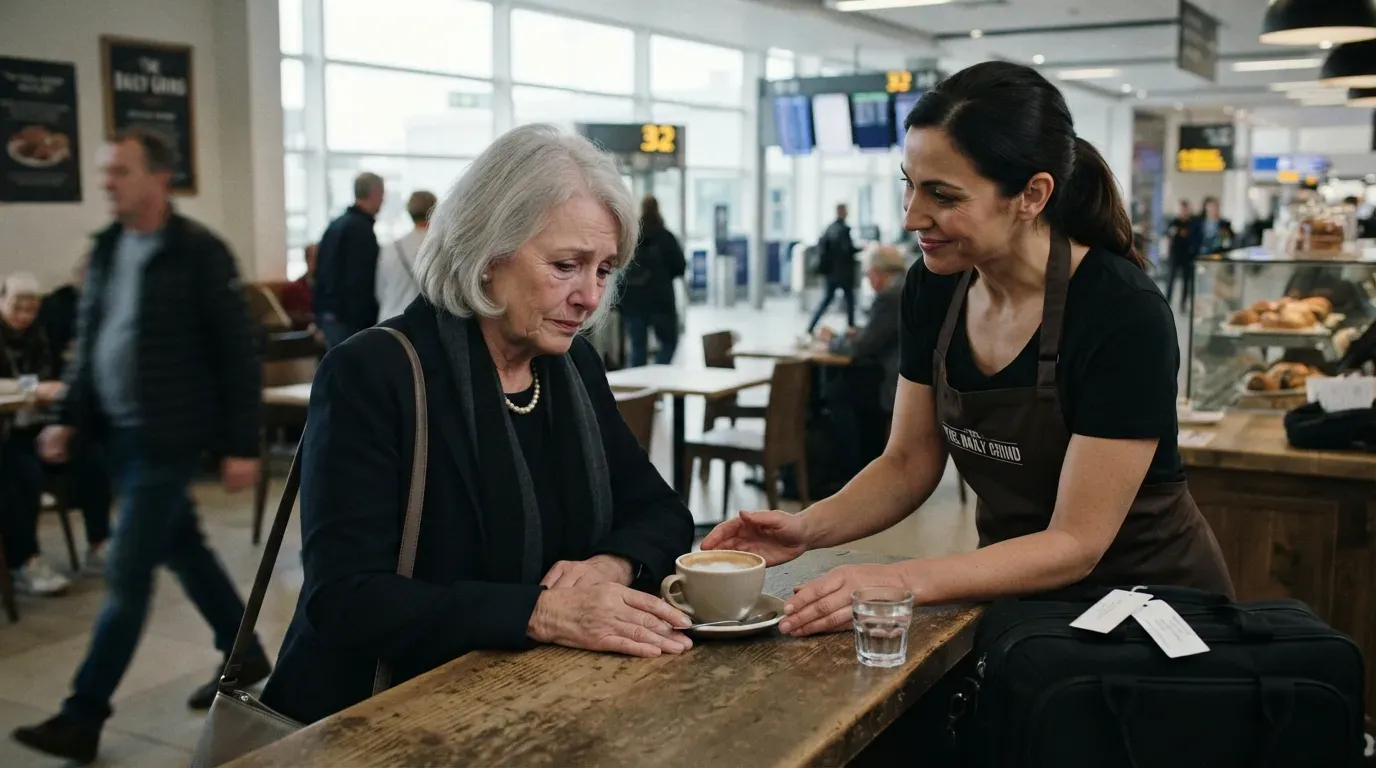
Regulars over 60 don’t hide their reason for traveling the way younger commuters often do. Staff say the difference between someone heading to a grandchild’s graduation and someone flying for a funeral is obvious within seconds – the posture, the order, whether they make eye contact at all.
Experienced staff adjust without being asked: a slower pace, a quieter tone, sometimes an order that’s “on the house” and never mentioned again. It’s an unspoken skill that has nothing to do with training and everything to do with paying attention to the same faces long enough to actually read them.
At a Glance
- Celebration trips: relaxed posture, more eye contact, lighter conversation
- Funeral trips: quieter tone, less eye contact, simpler orders
- Staff often adjust service instinctively, without ever asking why
11. When a regular stops coming, staff notice within a week
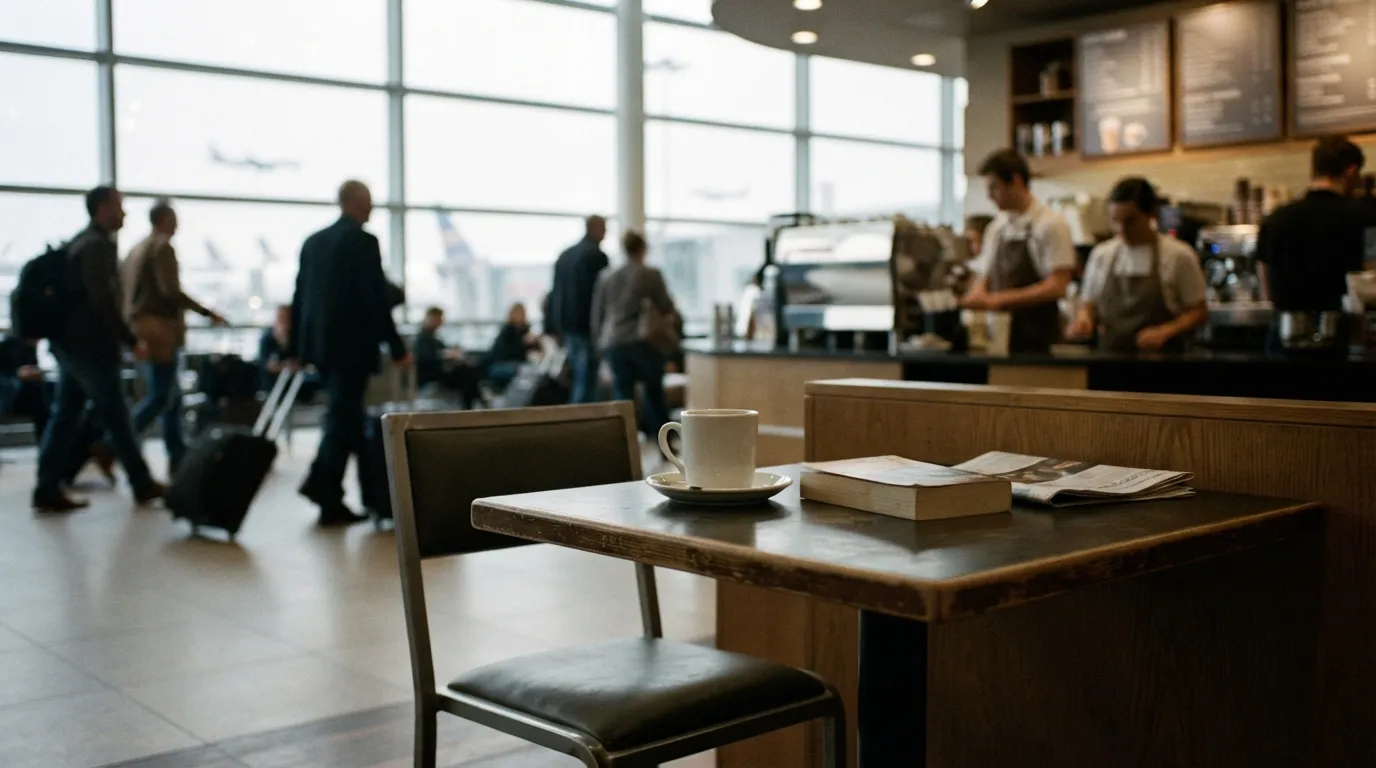
This is the pattern that sticks with café workers the longest. A weekly regular over 60 who’s been coming in for years, then simply isn’t anymore – no announcement, no goodbye, just an empty seat where someone used to sit.
Staff rarely find out what happened. Health, a move, a family change, or something more final – the reason is almost never confirmed. But longtime employees say they remember these customers precisely because the absence is so loud, proof that a relationship built entirely on a shared coffee order, week after week, ended up mattering more than either side probably realized.
Airport cafés are built to feel anonymous – fast lines, generic menus, faces that blur together by the second flight of the day. But for the travelers who show up at the same counter every single week, something quieter takes root: someone remembers how they take their coffee, where they like to sit, and who they used to order for. In a place designed to move people through as strangers, that’s not a small thing at all.