
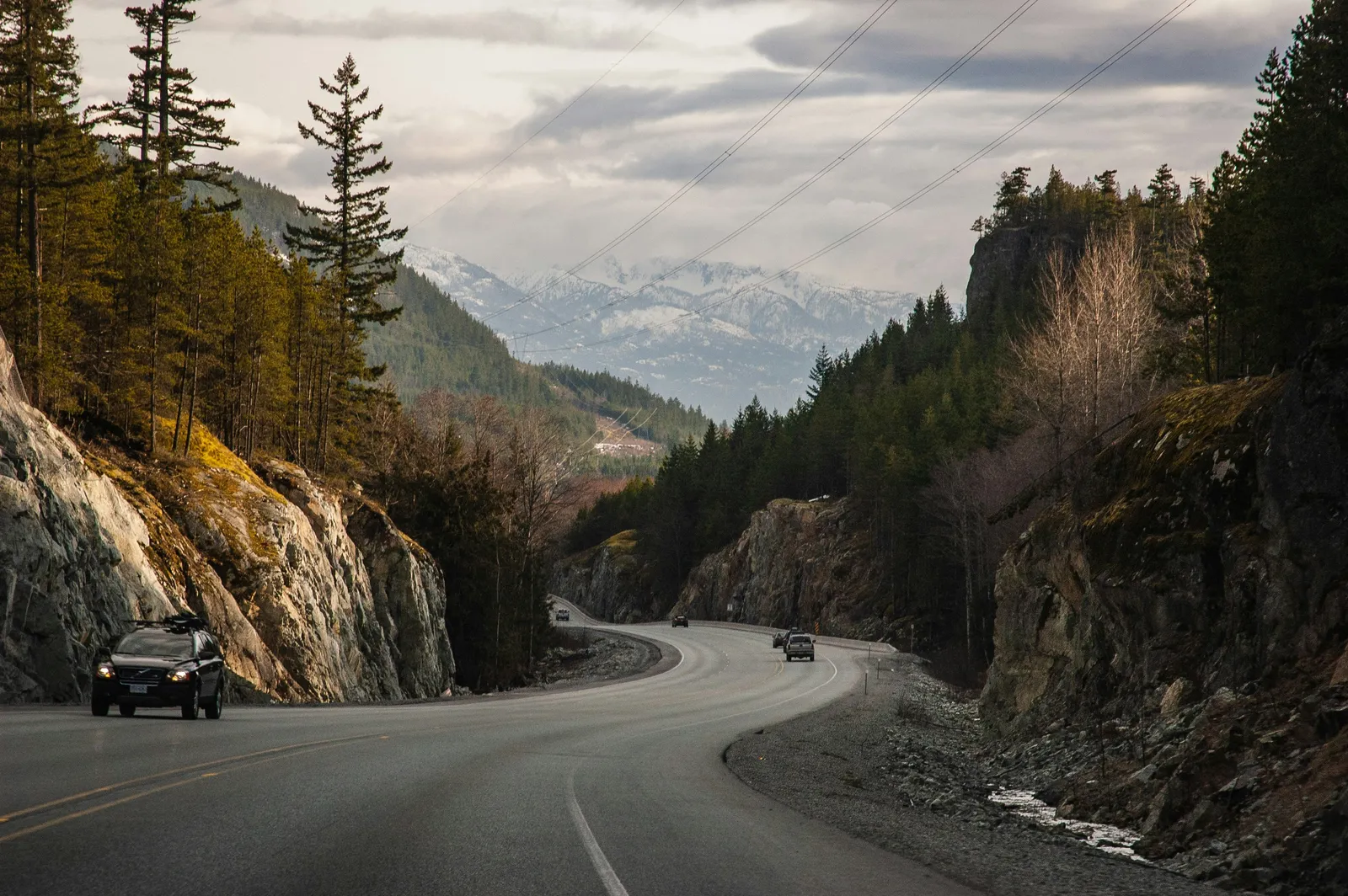
The Sea to Sky Highway has received international recognition as one of the premier routes for electric vehicle travel. The designation places the British Columbia corridor alongside other notable drives worldwide that combine scenic value with practical appeal for EV users. Travelers have long valued the route for its accessibility from Vancouver and its direct path into the Coast Mountains.
The Route and Its Landscape
The highway begins at the edge of Vancouver and follows the shoreline of Howe Sound before ascending through forested valleys and steep mountain passes. It passes several waterfalls and offers repeated views of snow-capped peaks and coastal waters. The drive continues northward toward Whistler, covering roughly 120 kilometers of varied terrain that shifts from sea level to alpine elevations. Motorists encounter a sequence of pullouts and viewpoints that allow stops without deviating far from the main road. The combination of ocean, inlet, and mountain scenery creates a compact yet diverse experience within a single day’s drive. Road conditions remain generally good year-round, though winter travel requires standard mountain precautions.
Global EV Road Trip Recognition
The recent ranking highlights the highway’s suitability for electric vehicle journeys. Industry observers note that routes with reliable infrastructure and compelling destinations are increasingly favored by drivers transitioning to battery-powered cars. The Sea to Sky Highway meets those criteria through its established tourism facilities and manageable distances between services. This acknowledgment reflects broader industry interest in identifying corridors that support low-emission travel without sacrificing visitor enjoyment. Tourism authorities in British Columbia have promoted the route for years; the new international listing adds external validation to those efforts.
Consequences for Regional Tourism
The designation is expected to draw additional attention from EV owners planning trips in western Canada. Local businesses along the corridor, including lodges, restaurants, and tour operators, stand to benefit from increased interest in sustainable travel options. Provincial tourism agencies may incorporate the ranking into future marketing campaigns aimed at both domestic and international visitors. Stakeholders such as regional chambers of commerce and parks authorities will likely monitor visitor patterns to assess any shifts in travel behavior. The timeline for measurable effects remains to be seen, though early coverage in travel media suggests prompt interest from EV-focused audiences.
Considerations for Prospective Travelers
Drivers considering the route should review current vehicle range estimates against the highway’s elevation changes. Planning stops at established communities along the way helps maintain flexibility. The scenery itself remains the primary draw, with the EV ranking serving as an added incentive rather than a change in the driving experience. The recognition underscores how established scenic drives can align with evolving transportation preferences. For many travelers, the Sea to Sky Highway continues to represent a straightforward way to experience British Columbia’s coastal mountains in a single outing.