
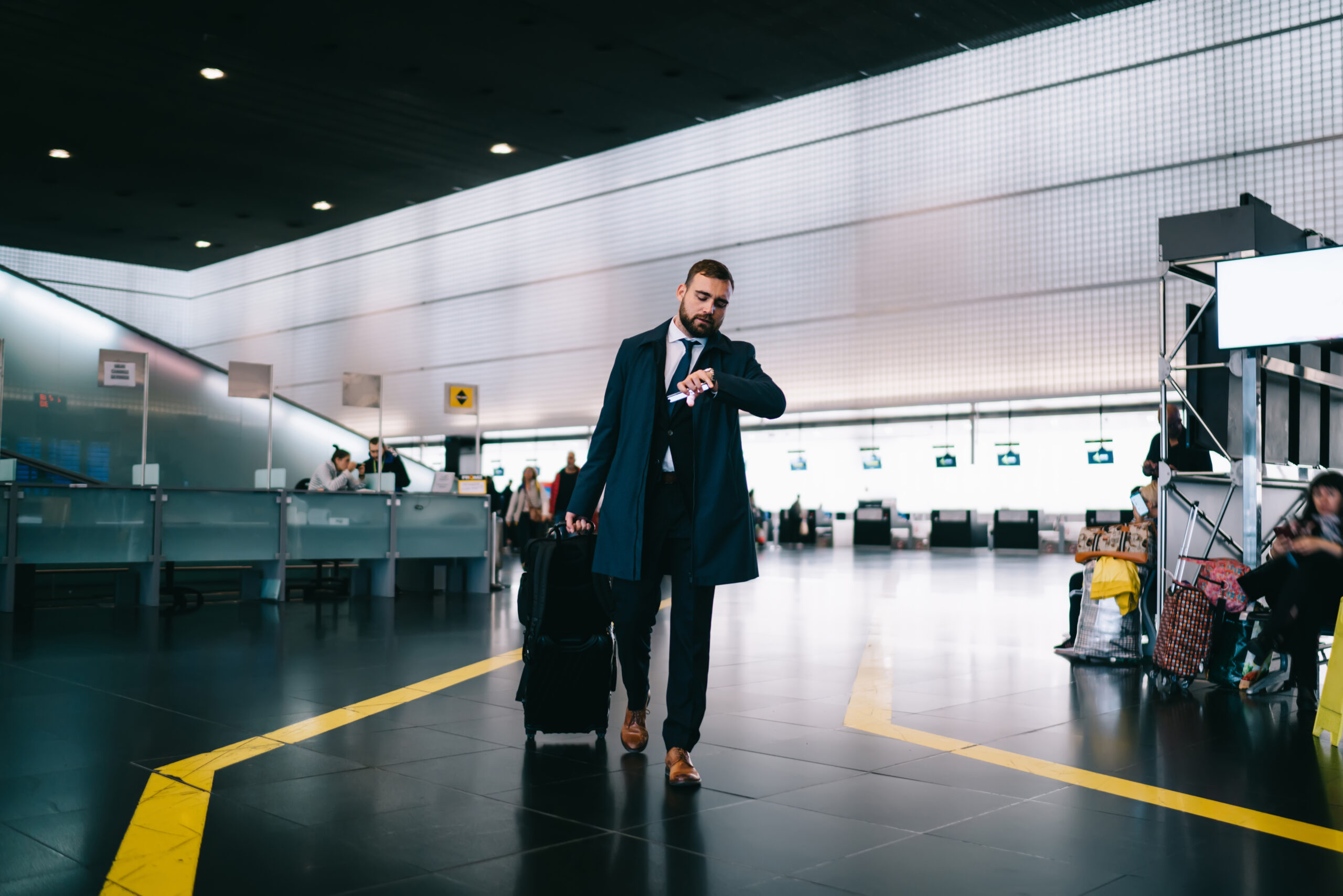
I remember the specific click of my mother’s heels on the linoleum of the Delta terminal in 1998. She wore a tailored wool coat and a silk scarf that smelled of Chanel No. 5 and nervous anticipation. To her, boarding a plane wasn’t just logistics; it was an entrance. I stood beside her in stiff Mary Janes, feeling the weight of the “specialness” of the event. We weren’t just going to visit family; we were participating in the theater of transit. The airport was a stage, and we were dressed for our roles as temporary citizens of the sky.
Today, that ritual feels like a ghost. When I walk through security now, I am a sea of polyester blends, compression socks, and oversized hoodies. The theater has been replaced by a factory. Yet, every so often, I see someone—usually tucked away in a lounge or standing defiantly by a gate—wearing a structured blazer or a crisp linen trouser.
They look beautiful, but they also look like they are grieving. If you are the person who still dresses up specifically for the airport, you aren’t just trying to look good. You are chasing a bygone era of travel that valued the journey as much as the destination. When you dress up for the airport, you are attempting to reclaim a sense of agency in a process that has become increasingly dehumanizing. The modern airport experience is designed to strip you of your identity. You are a barcode, a luggage tag, and a body to be scanned.
By choosing an outfit that demands respect, you are staging a quiet rebellion. You are refusing to be “processed.” You are signaling to yourself—and the world—that you are a traveler, not just a passenger. But this choice also suggests a deep-seated nostalgia for a time when travel was synonymous with a certain kind of social grace. You are holding onto the idea that movement should be a formal affair, even as the world around you opts for the path of least resistance.
1. The Aesthetic Preservationist

You view the world through the lens of continuity. For you, the act of boarding a plane is an extension of a historical lineage that began with the Golden Age of aviation. You believe that just because the seats have shrunk and the meals have vanished doesn’t mean our standards should follow suit.
There is a specific kind of dignity you find in a polished shoe or a well-timed lapel. To you, dressing down feels like a surrender to the chaos of modern life. You aren’t just wearing a suit; you’re wearing a shield against the homogenization of the world.
You likely find comfort in old movies and tactile objects. You are the person who still writes thank-you notes by hand and appreciates the weight of a real book over a Kindle. In the airport, you are a living museum of how things used to be before we prioritized speed over souls.
2. The Respect Solicitor
Deep down, you believe that if you look the part, the world will treat you with the grace you feel you deserve. You’ve noticed how the gate agents soften negotiate better treatment. It is a strategic application of formality used to navigate the friction of delays and cancellations.
You are highly sensitive to social cues and the “temperature” of a room. For you, getting dressed is a way to lower the ambient stress of travel by ensuring you are beyond reproach. You want to be the person who is helped, not the person who is ignored.
3. The Ritualistic Anchor
For you, the “airport outfit” is the first step in the journey. It is a psychological trigger that tells your brain the vacation has officially begun. You cannot feel “away” if you are still wearing the same leggings you use to clean your kitchen or run errands at the pharmacy.
By changing into something formal, you are drawing a line in the sand between your domestic life and your adventurous life. The discomfort of a structured waistband is a small price to pay for the mental clarity it provides. It anchors you in the present moment.
I’ve felt this shift in my own chest more times than I can count. I remember once forcing myself into a silk slip dress for a red-eye flight just because I needed to feel like the version of me that lived in Paris, rather than the version of me that was failing at my job in New York. The clothes were a bridge to the person I wanted to become.
4. The Sensory Traditionalist
You are someone who finds comfort in the familiar textures of “proper” clothing. While most people find a suit restrictive, you find it grounding. The weight of a blazer feels like a hug; You dress up because it provides a sensory “frame” for your experience.
If everyone is in pajamas, the world feels like it’s falling apart. By maintaining your personal dress code, you are maintaining a sense of internal order. You are a person who thrives on routine and clear expectations.
5. The Performance Artist
You understand that travel is, at its core, a performance. When you walk through an international terminal, you are interacting with people from a thousand different lives. You enjoy the anonymity of the airport, and you use your clothing to “typecast” yourself for the day.
Maybe today you are the “Mysterious Businessman,” and tomorrow you are the “Sophisticated Expat.” Dressing up allows you to inhabit a character that is more exciting than your Monday-through-Friday self. It is a form of creative expression that requires an audience of strangers.
You are likely an observer by nature. You enjoy people-watching because you understand the subtle language of appearance. For you, the airport is the world’s largest stage, and it would be a waste to show up without a costume.
6. The Aspiration Advocate
You dress for the life you want, not the middle seat you actually have. There is a hopeful quality to your airport attire. You believe that if you look like you belong in First Class, the universe might eventually conspire to put you there. It is a form of “manifesting” through wool and leather.
This trait often belongs to people who are in a state of transition. You might be moving to a new city, starting a new job, or ending a relationship. You are using the travel day as a “reboot.” You want your first impression in a new place to be your best possible self.
You are an optimist at heart. You see the potential in every situation, and you refuse to let the drab reality of a You believe that certain spaces—like the soaring cathedrals of modern architecture that characterize airports—demand a certain level of decorum.
You are likely someone who is very affected by your surroundings. If a room is beautiful, you want to match it. If a space is historic, you want to honor it. You feel a “spatial dissonance” when you see someone wearing flip-flops in a place as grand as a terminal.
Your clothing is a way of harmonizing with the world. You aren’t dressing up for people; you are dressing up for the architecture. You want to be a cohesive part of the visual landscape.
8. The Legacy Carrier
You grew up listening to stories of how “things used to be.” Perhaps you had a grandfather who never left the house without a hat, or a mother who believed that “how you look is how you are.” You carry their standards with you as a way of staying connected to your roots.
Dressing up is an act of filial piety. It is a way of saying that the values of your ancestors still have a place in the modern world. You feel a sense of pride in maintaining a lineage of elegance that feels like it’s slipping away.
You are the keeper of traditions. Whether it’s holiday recipes or travel etiquette, you feel a responsibility to ensure that grace doesn’t go extinct on your watch. You see your outfit as a small, quiet tribute to a gentler time.
9. The Solitude Architect
Ironically, you dress up as a way to create a barrier between yourself and the crowds. A sharp suit or a perfectly tailored dress acts as a “keep out” sign. It signals a level of self-sufficiency and formality that discourages casual intrusion.
When you look polished, people are less likely to strike up an unwanted conversation or treat you with the casual familiarity that world with a “buffer zone” of professionalism.
10. The Emotional Internalizer
You use your appearance as a way to regulate your internal emotions. If you are feeling anxious about a flight or overwhelmed by the noise of the terminal, dressing up gives you a sense of “armoring.” It is hard to feel completely fallen apart when your buttons are all done up and your shoes shine.
You are someone who struggles with sensory overload. The chaos of travel—the barking TSA agents, the crying babies, the smell of fast food—can feel like an assault. Your outfit is the one thing you can control.
By meticulously choosing your belt and your watch, you are practicing a form of mindfulness. You are focusing on the small details to avoid being swallowed by the big, messy picture. It is a quiet, private victory over the stress of the day.
11. The Romantic Fatalist
You dress up because you still believe in the “chance encounter.” You are the person who thinks that today might be the day you sit next to your soulmate or a life-changing business contact. You don’t want to be caught in your “lounge wear” when destiny finally arrives.
This is the heaviest realization of all: you are waiting for a world that no longer exists. You are holding a candle for a version of travel where people met, talked, and transitioned through life with a sense of wonder. You refuse to accept that travel has become a chore.
You see the magic in the moving map and the clouds outside the window. You are the last suits for hoodies. We have prioritized the ease of the body over the dignity of the spirit.
If you are still dressing up, you aren’t just wearing clothes. You are carrying a torch for a vanished world of civility and grace. You are refusing to let the grind of the 21st century dull your edges.
And perhaps, in that refusal, you are the most honest traveler of all. You are acknowledging that the journey matters, that the transition is sacred, and that how we show up for our lives—even in a terminal—is the only thing we truly control.