
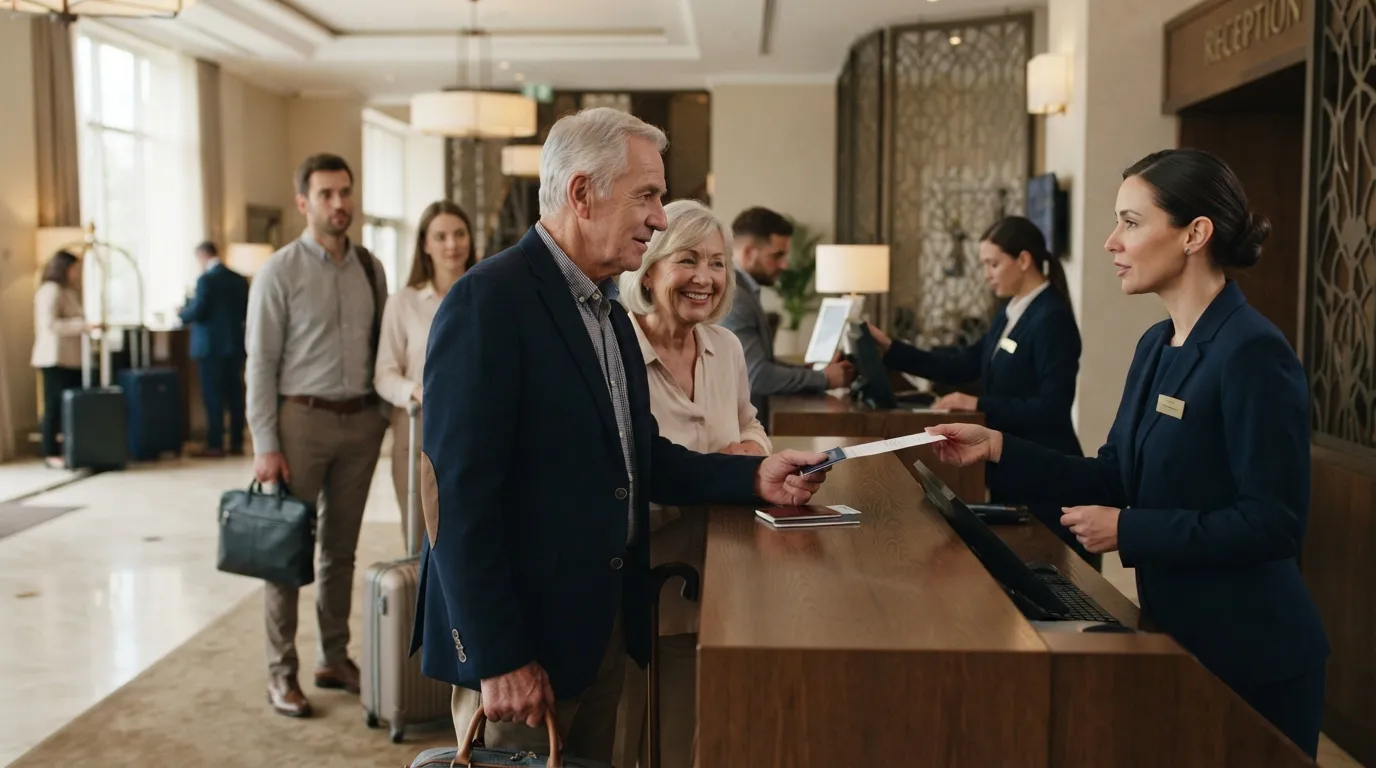
Most travelers assume checkout is checkout, that a hotel’s noon deadline is as fixed as gravity, no exceptions for anyone. But talk to enough front desk workers and a strange pattern keeps surfacing: guests over 60 who ask for something before that noon cutoff quietly get help nobody else in the lobby is offered.
None of it is written in a handbook, and no manager will ever call it a policy out loud. Here’s what actually happens once that early, calm request lands at the desk.
#12 – They Quietly Push the Checkout Clock Without Telling the System

A polite, early ask for a little extra time often gets honored on the spot, off the books, with nothing entered into the property management system. Staff know that asking right at the noon deadline is already too late, since housekeeping is usually on the floor by then. That’s exactly why an early morning request lands so differently.
When the ask comes before the crunch, front desk agents can quietly rearrange the day instead of scrambling later. Getting an extra 15 or 20 minutes is easy, but stretching that to a few hours only happens when staff have room to maneuver early. Guests over 60 who ask calmly first thing are, by staff’s own description, the easiest group to wave through, but that’s nothing compared to what happens next.
#11 – They Waive the Late Fee That’s Supposed to Apply
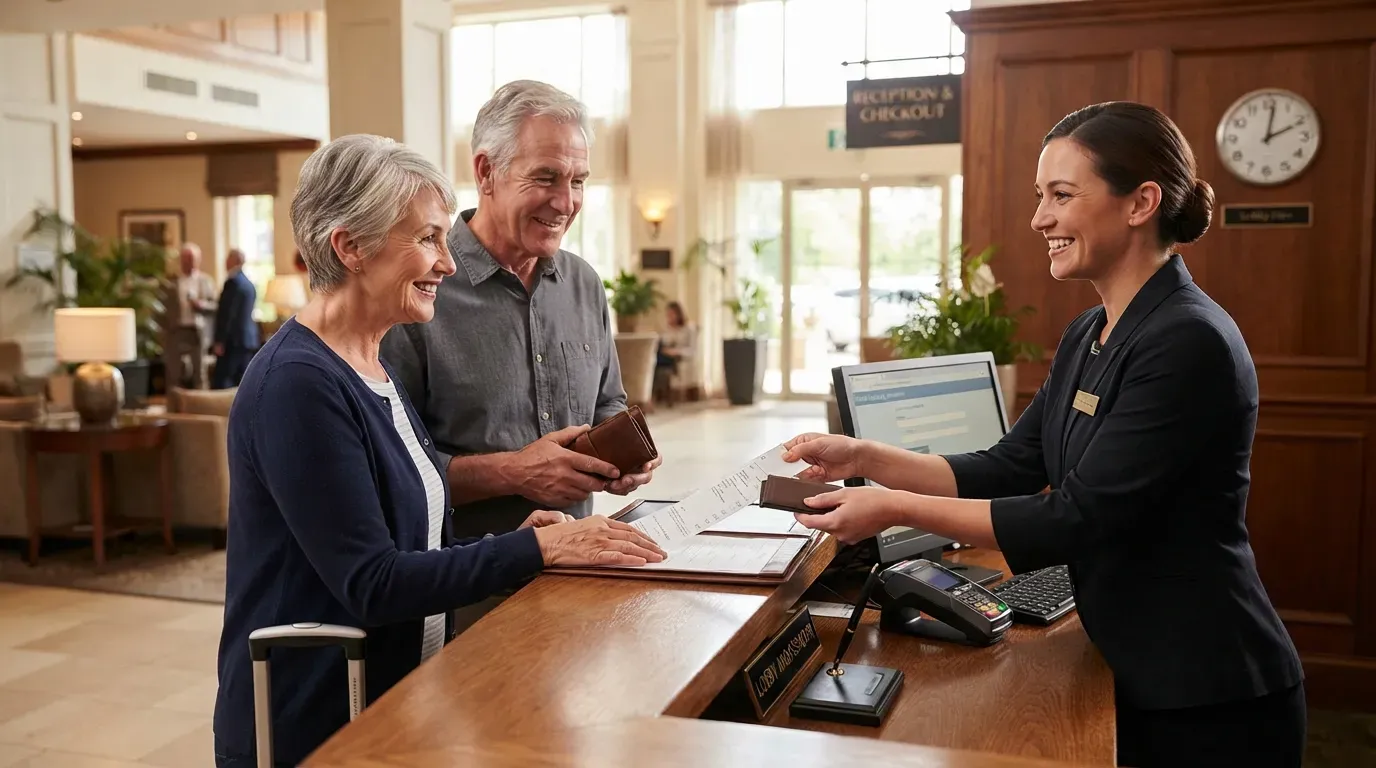
Late checkout fees are real, and they’re climbing industry-wide. A checkout between 12:01 and 2:00 p.m. can run 15% of the room rate, 2:01 to 4:00 p.m. jumps to 20%, and anything past 4:01 p.m. can hit 50%. On a $150 or $200 room, that’s not pocket change.
Yet staff quietly skip charging it far more often than corporate policy suggests. The fee is technically locked in at registration, but front desk teams routinely try to accommodate a late request at no cost whenever they can swing it. A guest who asks nicely before noon frequently walks out without ever seeing that fee on the folio, even though the hotel had every legal right to charge it.
Fast Facts
- 12:01–2:00 p.m. checkout: 15% of the room rate
- 2:01–4:00 p.m. checkout: 20% of the room rate
- After 4:01 p.m.: fees can climb to 50% of the room rate
- On a $150–$200 room, that’s real money – often waived for a calm, early ask
#10 – They Grant Loyalty-Tier Perks Even Without the Loyalty Card
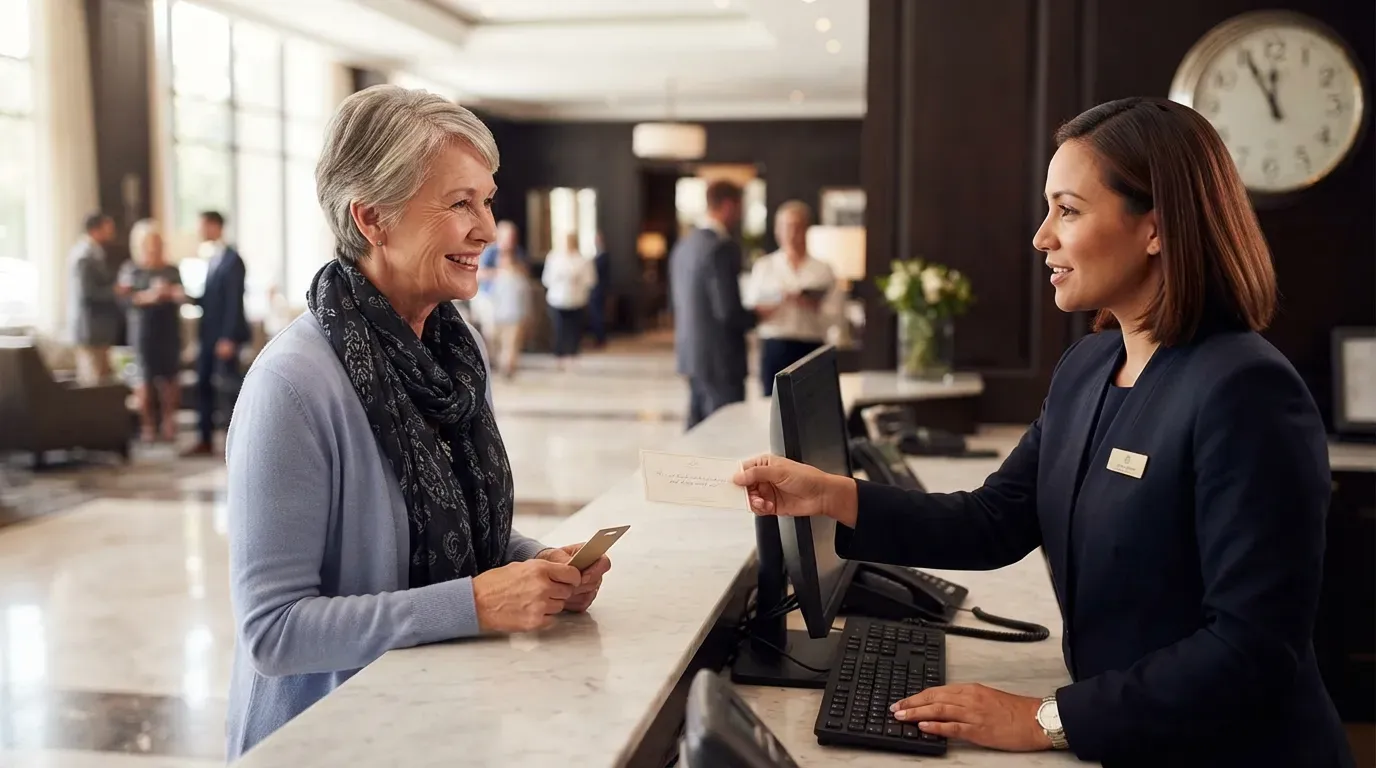
Elite hotel status usually unlocks the best checkout windows, but staff sometimes extend that privilege informally to older guests who never signed up for a rewards number at all. Officially, Hyatt Discoverist status gets a 2 p.m. checkout, Marriott Gold elites get 2 p.m., and Platinum, Titanium, and Ambassador tiers get 4 p.m. Those perks are supposed to require enrollment and stay history to unlock.
A front desk agent who sees a guest fumbling with an app or a check-in kiosk will sometimes just apply that elite window anyway, no card required. It’s an unofficial upgrade that costs the hotel nothing but goodwill. Staff describe it as a small mercy that almost never gets flagged by management, which pales next to the discount trick coming up next.
#9 – They Apply Senior or AARP Rates Without Asking for Proof First

Most senior discounts technically require an ID or membership card at check-in, but by checkout, staff often just apply the savings retroactively if a guest mentions their age before noon. The numbers vary by brand: Choice Hotels and AARP members save up to 10%, La Quinta offers up to 30% off for guests 55 and older, and Marriott knocks off 15% or more for guests 62 and up.
Some brands go even further. Hyatt seniors can save up to 50% on the Hyatt Daily Rate at participating properties across the continental U.S. and Canada. A quiet correction to a folio before checkout, made with no receipt review at all, happens more than most guests ever realize. Staff say they’d rather fix the bill than watch a longtime guest walk away frustrated.
Quick Compare
- Choice Hotels + AARP: up to 10% off
- La Quinta (55+): up to 30% off
- Marriott (62+): 15% or more off
- Hyatt seniors: up to 50% off the Hyatt Daily Rate
#8 – They Personally Carry the Bags Instead of Calling a Bellhop

At smaller properties without full-time bell staff, a front desk agent will often step around the counter and carry the luggage themselves rather than let an older guest wrestle a suitcase to the curb. It’s not a scripted service standard. It’s a judgment call made in the moment, usually for a guest who already mentioned needing help before the noon deadline.
It sounds small, but for someone managing a rolling bag, a cane, and a purse all at once, it changes the entire feel of leaving. The gesture almost never shows up in a guest satisfaction survey, because most guests don’t think to mention it. It’s simply absorbed into the goodbye, and the next favor takes that same instinct even further.
#7 – They Call the Cab Themselves Instead of Pointing to an App
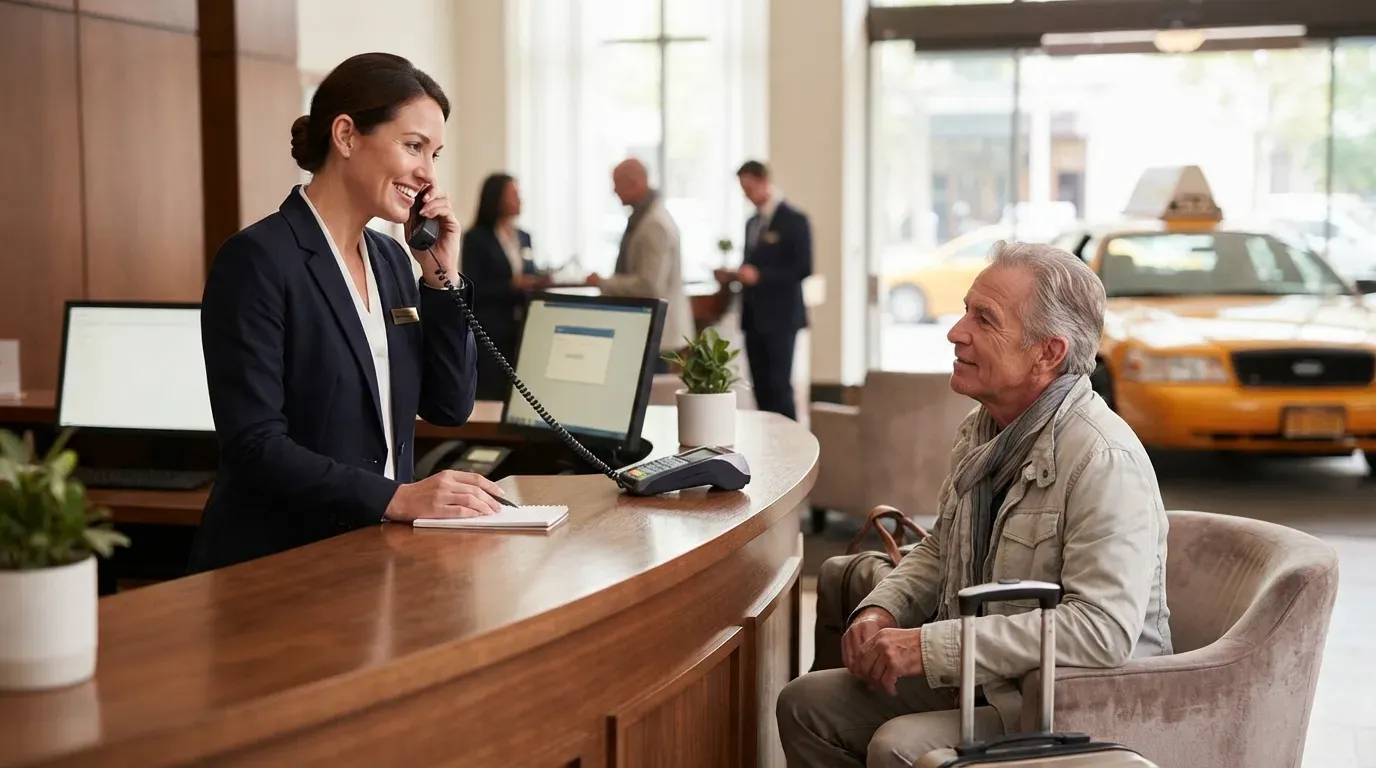
Plenty of younger travelers get handed a phone screen and told to book their own ride. Older guests who ask for transportation help before noon often get something different: the front desk agent picks up the hotel phone and calls a local car service directly, sometimes one they’ve used personally for years.
It’s faster, it skips the app confusion entirely, and it puts a familiar local driver in the loop instead of a stranger from an algorithm. Staff say they’ll often wait in the lobby with the guest until the car actually pulls up, something that isn’t part of any formal checkout procedure. That same quiet patience shows up again in a very different form next.
#6 – They Give a Heads-Up Call Before Housekeeping Knocks
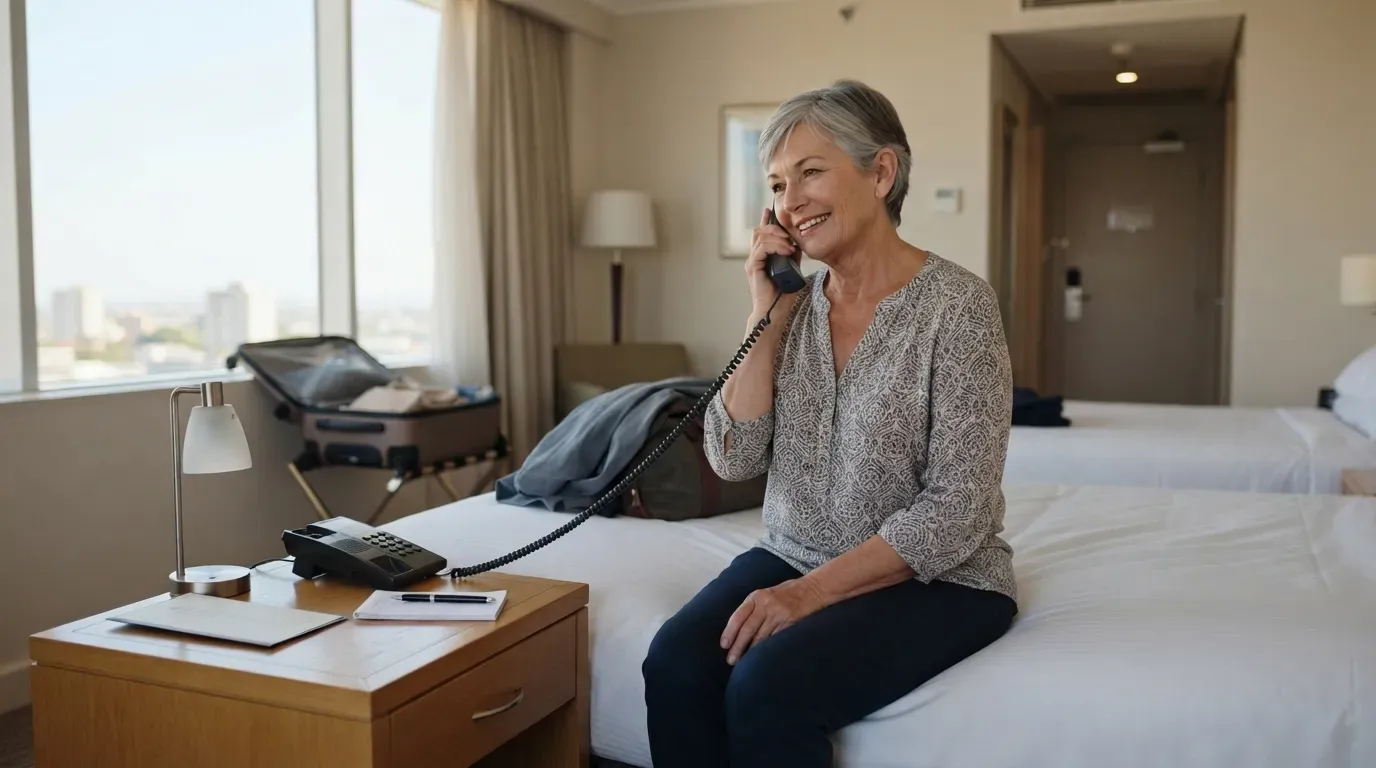
Standard procedure treats every room the same: once the clock hits the posted time, housekeeping is cleared to knock. But at the standard checkout hour, a duty manager typically prints the due-out list and calls the room to reconfirm departure instead of just sending a cleaner straight in.
For guests who called ahead before noon to say they needed more time, staff often turn that call into a real courtesy instead of a formality, a genuine warning instead of a surprise knock mid-packing. It’s a five-second phone call that prevents an awkward, rushed scramble. Most guests never realize that call was optional at all.
Worth Knowing
- Housekeeping is technically cleared to knock the moment the posted checkout time arrives
- A duty manager typically prints the due-out list before making any calls
- The courtesy call takes just seconds but heads off a rushed, awkward scramble
- That call is a judgment call, not a guaranteed guest right
#5 – They Quietly Note the Room Preference for Next Time
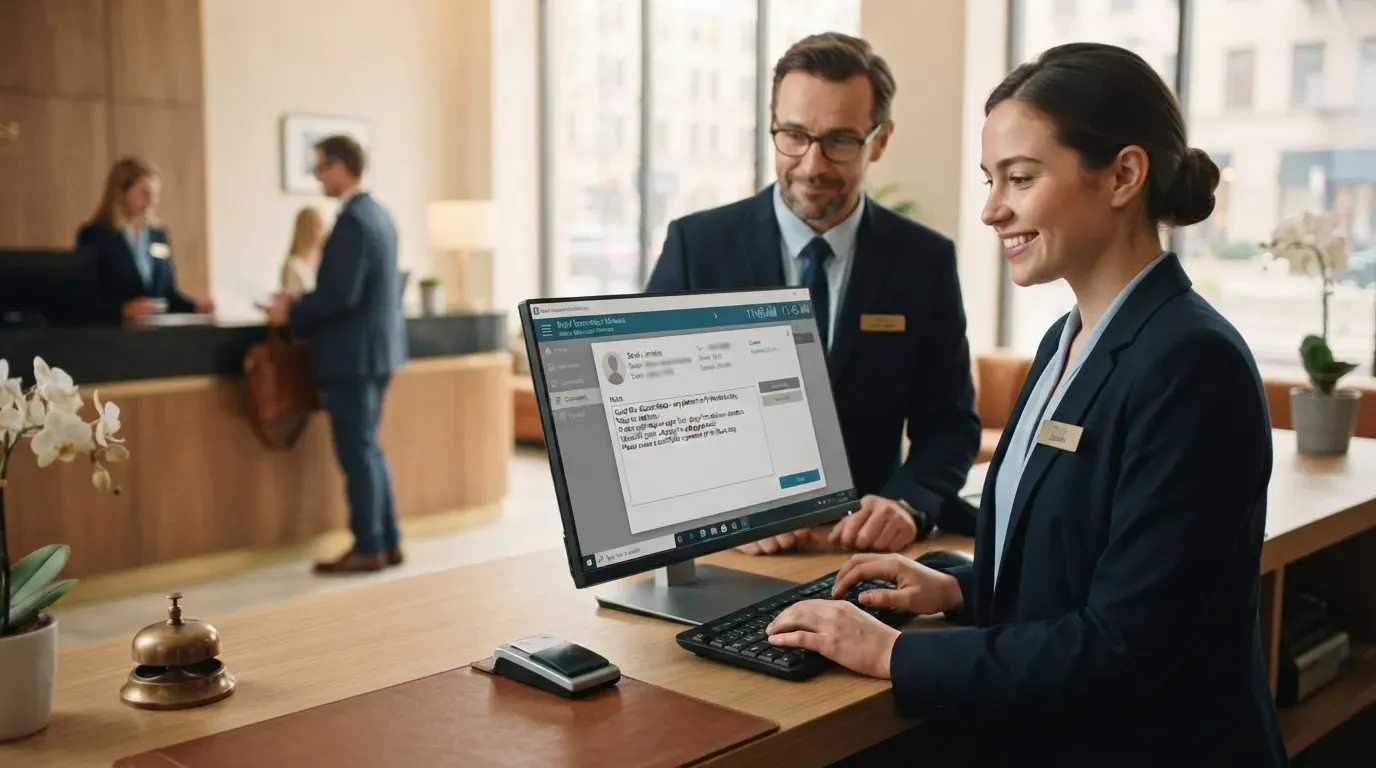
Some front desk staff add a personal note to a guest’s profile after a pleasant, early checkout, things like “prefers quiet floor,” “needs extra time,” or “wonderful guest, always polite.” These notes aren’t part of any official loyalty tier and require no enrollment in a rewards program at all.
The payoff shows up on the next stay, when a completely different employee pulls up the reservation and sees that note. A guest who’s never met that particular staff member can still get quietly upgraded or reassigned to a better room, simply because someone wrote something kind down months earlier. It’s institutional memory with nothing to do with corporate policy, and it sets up the surprisingly generous move coming next.
#4 – They Extend the Grace Period Well Past the Official Deadline

There’s no true industry standard for late checkout since every hotel sets its own rules, but most properties can typically stretch checkout up to two hours before the next guest arrives. That window exists on paper, but who actually gets it depends heavily on who’s asking and when.
Guests who reach out before noon, instead of waiting until the exact deadline, get first crack at that flexible window because staff still have time to check the incoming reservation. An early ask can turn a strict noon checkout into a genuinely relaxed 1:30 or 2 p.m. departure, no fee attached, no note on the bill. That kind of flexibility gets even more generous once loyalty status enters the picture.
#3 – They Stretch Loyalty Perks Past the Posted Limit
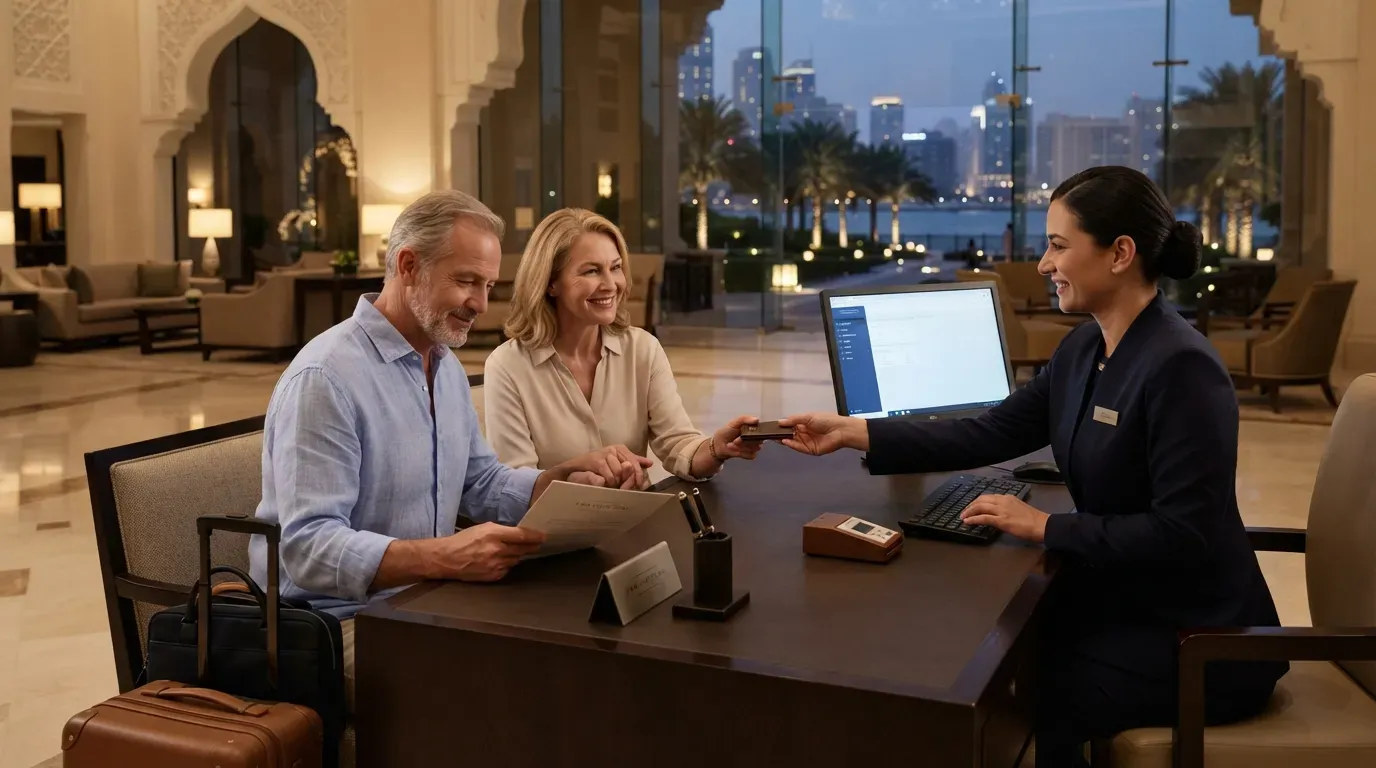
Loyalty program checkout times are supposed to be fixed, but staff have real discretion to go beyond them when occupancy allows it. One traveler was able to check out as late as 7 p.m. at the Park Hyatt Dubai thanks to Globalist status, well past the posted 4 p.m. limit for that tier.
Another guest was proactively offered a 7 p.m. checkout at the Hyatt Regency Maui Resort and Spa simply because he mentioned a late flight, no negotiating required. Staff extend these windows quietly and selectively, usually for guests who ask early, explain their situation calmly, and don’t demand anything. Older guests who fit that description get bumped ahead more often than most people would ever guess.
Why It Stands Out
- Park Hyatt Dubai: a Globalist member checked out at 7 p.m., three hours past the posted 4 p.m. limit
- Hyatt Regency Maui Resort and Spa: a 7 p.m. checkout was offered proactively for a late flight
- No negotiating, no fee – just a calm, early ask that staff had room to say yes to
#2 – They Quietly Bump Older Guests to the Front of the Line
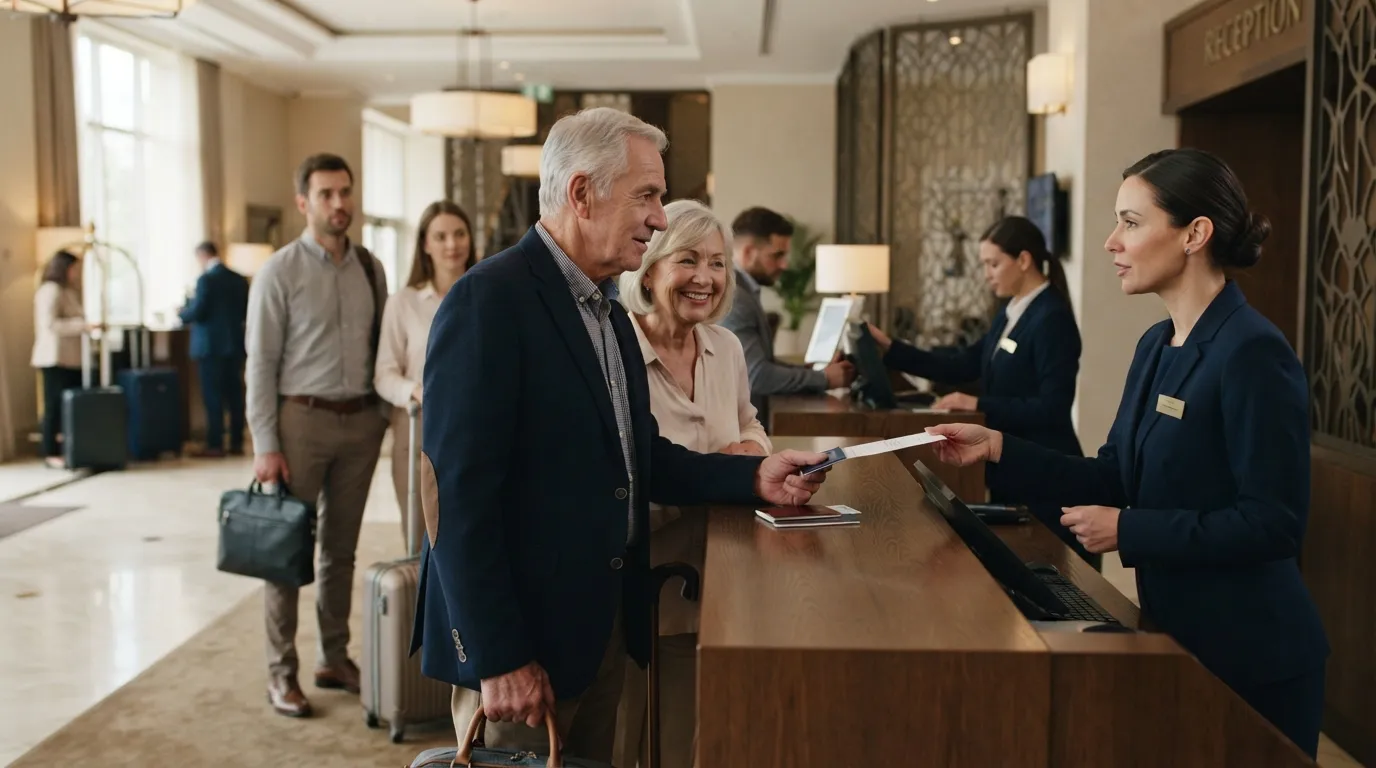
On busy mornings, multiple guests ask for late checkout at once, and somebody has to decide who gets it and who doesn’t. Guests with loyalty status typically receive priority on paper, but staff describe quietly bending that order for older guests who clearly need the room a little longer.
It’s not written anywhere. It’s the kind of call a shift manager makes in the moment, weighing who asked first, who seems to genuinely need it, and who’s been kind at the desk. A senior guest who calmly explains a medical appointment or a late flight often jumps ahead of a younger guest with elite status but no real urgency. That instinct for quiet fairness reaches its fullest expression in the very last thing staff admit to doing.
#1 – They Comp the Whole Late Checkout, No Questions Asked

The single biggest thing staff quietly do: skip the charge entirely, even when a fee is technically owed and the guest never even asks for it to be waived. Hotels typically calculate late checkout charges as a percentage of the room rate, which can reach as high as 50% of a night’s stay, but that math only applies if someone actually enters it into the system.
Front desk agents describe simply not entering the charge for older guests who asked politely before noon, treating it as a quiet act of goodwill rather than a policy exception needing approval. It’s the most consistent kindness in the entire checkout process, and it never shows up on a single review site. Guests walk away thinking they got lucky. Staff know it was never luck at all.
None of this is printed in a guest handbook, and none of it is guaranteed. It depends entirely on who’s working that morning, how busy the hotel is, and whether a guest asks with enough time to spare before noon. But the pattern is consistent enough that hospitality workers keep describing the same dozen small mercies, over and over, for the same kind of guest.
The common thread isn’t age itself. It’s the combination of asking early, staying calm, and giving staff enough room to actually help. Have you ever gotten one of these quiet favors at a hotel? Tell us what happened in the comments.